

Key Takeaways
Follow your atoms backward: cosmic history is also human history
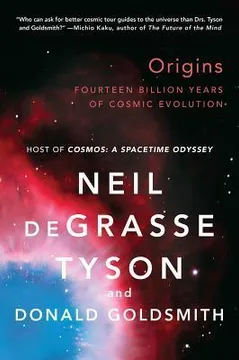
A cosmic family tree. The book traces a chain of origins: the big bang produced mostly hydrogen and helium; stars forged heavier elements; stellar debris helped build planets; and, on Earth, chemistry gave rise to life. The atoms in a human body therefore have a history far older than humanity. The Sun and Earth are not cosmic royalty, but ordinary products of a universe that has been changing for about 14 billion years.
Science joins the story. To tell this history, astrophysics draws on physics, chemistry, biology, and geology. Its account is provisional, built from evidence and open to correction, rather than a final creation tale. The striking result is that a small, evolved part of the cosmos can investigate the processes that made it.
The cosmic family-tree image makes human belonging compatible with scientific modesty. Being made from stellar material does not establish that the universe was aiming at people; it establishes a physical continuity between people and the wider cosmos. That distinction matters because origin stories often slide from explanation into purpose. The book is strongest when it lets the evidence create wonder without claiming that human existence was inevitable. Its interdisciplinary method also resembles systems science: to explain one level, from life to planets, requires understanding the levels beneath it.
Use the universe's oldest light as a fossil record
Light escapes the fog. For roughly 380,000 years after the big bang, free electrons scattered photons through an opaque cosmic haze. As the universe cooled, electrons joined atomic nuclei, allowing light to travel freely. That ancient radiation still fills space, stretched by expansion into microwaves and measured today at about 2.73 kelvin. Its patterns preserve clues about the early distribution of matter.
A prediction becomes evidence. Physicists predicted this cosmic background before it was observed. In 1964, Arno Penzias and Robert Wilson found an unexplained microwave signal from every direction. Cleaning pigeon droppings from their antenna reduced some interference, but not the persistent signal. Its temperature and uniformity matched the predicted relic. Tiny variations, roughly one part in 100,000, later helped researchers infer the seeds of cosmic structure.
This is a vivid example of how science can turn an inaccessible past into a measurable record. The background radiation is not a photograph of the first instant; it is evidence from a later moment that constrains what could have happened earlier. That distinction is useful well beyond cosmology: traces preserve some information while leaving other questions unresolved. The antenna story also shows that discovery is not simply a flash of inspiration. Instruments produce ambiguous signals, and interpreting them requires eliminating ordinary explanations before accepting a remarkable one.
Treat unseen gravity as evidence, not permission to guess
Motion reveals missing mass. In the 1930s, Fritz Zwicky found that galaxies in the Coma cluster moved too quickly for the visible matter to hold the cluster together. Decades later, Vera Rubin found that stars in the outer regions of spiral galaxies also moved faster than visible matter seemed to permit. The proposed explanation, dark matter, is matter inferred from its gravity that has not been detected through light. The book estimates that it has about six times the mass of visible matter.
Inference is not identification. Dark matter helps explain galaxy and cluster motions, and the growth of cosmic structure, but its physical nature remains unknown. Modified Newtonian Dynamics, or MOND, attempts instead to change gravity at galactic scales. The book notes that this alternative struggles with some observations, including the cosmic background radiation.
The important distinction is between confidence that an effect exists and confidence about what causes it. Astronomers can measure gravitational consequences without claiming to know the underlying substance. This resembles a recurring problem in the philosophy of science: evidence may strongly support a model while leaving its entities open to revision. Dark matter is not merely a label for ignorance, since it organizes multiple observations, but it is not a completed explanation either. The best reading preserves both facts, resisting the urge to treat a useful inference as a directly observed object.
Measure cosmic expansion before deciding the universe's fate
The expansion accelerates. Einstein added a cosmological constant to his equations in an attempt to describe a static universe, then abandoned the idea after evidence showed that the universe expands. In 1998, two teams studying distant Type Ia supernovae found that the farthest explosions appeared dimmer, and therefore more distant, than expected. Their results suggested that cosmic expansion is accelerating, an effect attributed to dark energy, a still unexplained energy associated with space itself.
Independent clues converge. Supernova measurements and maps of the cosmic background radiation supported a nearly flat universe. The book's estimates assign about 73 percent of cosmic energy density to dark energy, about 23 percent to dark matter, and about 4 percent to ordinary matter. Yet quantum calculations of vacuum energy miss the observed value by about 120 powers of ten. The expansion is better measured than its cause is understood.
This section separates three questions that are easy to conflate: whether expansion accelerates, what accounts for the acceleration, and why that cause has its observed value. Evidence can answer the first more firmly than the others. The supernova story also illustrates the strength of independent checks: competing teams scrutinized one another's results, reducing the chance that one group's mistake would overturn a whole field. The huge mismatch between theory and observation is not a reason to discard measurement. It is a precise statement of how much the explanation still needs to do.
Small quantum irregularities gave gravity a foothold in an expanding cosmos
Tiny differences grow. The early universe was remarkably smooth, but quantum fluctuations created slight variations in density. During inflation, a brief, rapid expansion, those variations were stretched across space. Later, gravity pulled more matter toward the denser regions. With dark matter's additional gravitational influence, small early differences could grow into galaxies, clusters, and the large-scale web of cosmic structure.
Maps reveal the pattern. The cosmic background radiation records density variations of about one part in 100,000. On scales around 100 million light-years, galaxy surveys reveal sheets, strands, and vast gaps; on still larger scales, the universe looks more uniform. The history of observation also changed our cosmic map: Edwin Hubble used a variable star in the Andromeda nebula to show that it lay beyond the Milky Way and was a galaxy in its own right.
The universe's structure is a striking case of small causes producing large outcomes over time. The same general logic appears in many complex systems: slight initial differences can be amplified when a system has a mechanism for growth. Here, gravity supplies that mechanism, while the background radiation offers a check on the proposed starting conditions. The analogy should not be pushed too far, since cosmic structure follows physical laws rather than biological selection. Still, the idea helps explain why present-day complexity need not have been present in the beginning.
Stars forge the periodic table, then scatter ingredients for worlds
Stellar furnaces build elements. The early universe made mostly hydrogen and helium, with small amounts of lighter elements such as lithium. Inside stars, nuclear fusion turns lighter nuclei into heavier ones, releasing energy that helps a star resist gravitational collapse. Massive stars can build elements up to iron in their cores. When they explode as supernovae, they spread these elements into surrounding space, enriching the gas and dust from which later stars and planets can form.
A cycle makes chemistry richer. The 1957 work by E. Margaret and Geoffrey Burbidge, William Fowler, and Fred Hoyle helped explain how stars and stellar explosions produce and distribute many elements heavier than hydrogen and helium. Carbon, oxygen, nitrogen, and iron are among the ingredients life and planets use. Stars are not just lights in the sky: their lives and deaths help supply the raw materials for later generations.
The stellar life cycle connects astronomy to the everyday chemistry of bodies and landscapes. It also replaces a static picture of the periodic table with a history: elements have origins, routes through space, and different degrees of cosmic abundance. The account is not a claim that every element has one simple source. The book itself describes several nuclear processes and unresolved details. Its broader insight holds without that oversimplification: planetary chemistry depends on earlier generations of stars, so a world is partly a record of what its stellar neighborhood has processed.
Planet formation's first step remains murkier than the planets themselves
Dust is not yet a planet. A young star often forms with a surrounding disk of gas, dust, and small solid particles. Models can explain how objects roughly half a mile across, called planetesimals, attract one another and grow into planetary cores and worlds. The difficult step comes before that: how dust gathers into planetesimals quickly enough. Simple sticking may be too slow; proposed swirling vortices could collect dust more rapidly, but the mechanism remains unsettled in the book.
Other systems challenge the template. Astronomers detected exoplanets by measuring the small Doppler shifts caused when an orbiting planet makes its star wobble. This technique favors massive planets close to their stars, so early discoveries were not a fair sample of all planetary systems. Some giant planets appear to have migrated inward after forming. The Moon's composition also suggests a violent beginning, involving a large impact with the young Earth.
Planet formation is a useful reminder that seeing a finished product does not mean understanding how it was assembled. The gap between dust and planetesimals is particularly revealing because it is a scale transition: processes that work for tiny particles may not work for larger clumps. Exoplanet detection adds a related lesson from statistics. A survey method shapes the sample it finds, so discoveries must be interpreted alongside the method's blind spots. That caution applies equally to scientific datasets, market research, and any list of things detected by a selective instrument.
Search for life's chemistry beyond Earth's narrow idea of a habitable world
Life needs more than sunlight. The book describes four likely requirements: an energy source, atoms capable of building complex structures, a liquid in which molecules can interact, and enough time for life to arise and evolve. Carbon is favored because it forms complex molecules and is abundant in the cosmos. Water is a strong candidate for the needed liquid, but geothermal energy and chemical reactions can sustain life without sunlight.
The beginning remains unknown. The Miller-Urey experiment produced some organic molecules under simulated early-Earth conditions, but did not create life. Two broad origin ideas remain open: chemistry in relatively mild pools, or reactions around hot deep-sea vents. Earthly extremophiles, organisms adapted to conditions that would defeat most familiar life, broaden the search. The book highlights Mars, Europa, and Titan as places to investigate for suitable liquids and possible life.
The distinction between a place suitable for life and a place that actually contains life is essential. A planet can meet plausible chemical conditions without biology ever taking hold, and Earth's single known example cannot settle the odds. Extremophiles help correct human intuition, but they do not prove that life can thrive in every harsh environment. Their value is methodological: they expand the range of conditions worth testing. The same discipline applies to origin theories. Producing life's ingredients is an important result, but it does not close the gap between chemistry and a reproducing, evolving system.
Estimate alien civilizations by exposing what you do not know
The Drake equation organizes uncertainty. It estimates the number of communicating civilizations in the Milky Way by multiplying six factors: suitable long-lived stars, planets per star, planets suitable for life, the chance life begins, the chance it becomes intelligent, and the duration of a communicating civilization. The first factors are more accessible to observation; the probabilities of life, intelligence, and long-term survival remain highly uncertain. Because the factors multiply, a small error in any one can greatly change the result.
Search for signals, not wishful visitors. The book favors radio searches as a practical way to look for distant civilizations, since radio messages travel at light speed. Enrico Fermi's question, where are the others, highlights the puzzle of expecting civilizations yet detecting none. The authors also caution that UFO memories, especially accounts associated with sleep, are weak evidence for alien contact.
The equation is useful not because it gives a reliable head count, but because it makes hidden assumptions visible. In that sense, it resembles a sensitivity analysis: readers can see which unknowns control the result and where better evidence would matter most. The Fermi question adds pressure, but silence is difficult to interpret when searches cover only a small portion of possible signals, times, and distances. Skepticism about eyewitness claims is appropriate, too, though uncertainty about a report should not be mistaken for proof that every unusual event has the same explanation.
Let measurements, not appearances, decide what the cosmos contains
Instruments extend the senses. Human eyes see only a narrow band of electromagnetic radiation. Radio, infrared, X-ray, and particle detectors reveal signals our bodies cannot perceive, while spectroscopy can disclose an object's composition and motion from its light. The discovery of Andromeda as a separate galaxy depended on measuring a variable star's brightness, not simply judging a fuzzy patch by its appearance.
Classification can mislead. Earlier astronomers grouped nebulae by shape and assumed similar-looking objects were similarly distant. Better measurements showed that some were nearby gas clouds, while others were entire galaxies far beyond the Milky Way. The book presents science as organized skepticism: claims are tested, criticized, and revised. Instruments make new discoveries possible, but interpretation still depends on methods and assumptions that can be challenged.
The book's emphasis on artificial senses is a powerful answer to the complaint that modern science does not feel intuitive. Tools expand what can be observed, but they do not provide a view from nowhere. A spectrum, image, or detector reading must be calibrated and interpreted through a model. Scientific objectivity is therefore less about eliminating human judgment than making it inspectable: other investigators can examine the instrument, repeat the measurement, and contest the inference. The history of nebula classification shows why better data can change not just an answer, but the scale of the question.
Analysis
Origins is a connected account of increasing complexity, not a catalogue of cosmic objects. Its narrative runs from the hot early universe through gravity, galaxies, stars, planets, and life, then turns toward the methods by which people reconstruct that history. The deepest unifying idea is material continuity: the same universe that produces stars also supplies the elements, planetary environments, and observers able to study them.
The book's strongest educational move is to make evidence part of the plot. A stray microwave signal, a galaxy's unexpectedly rapid motion, a supernova's dimness, and a star's shifted spectrum become clues that force scientists to revise their picture. This lets readers see scientific knowledge as a process of inference and correction, not merely a sequence of polished conclusions. Its humor and historical anecdotes make abstract measurements memorable without replacing the scientific reasoning behind them.
The account is also careful about boundaries of knowledge. Dark matter's gravitational effects are clear in the argument, while its composition is not. The ingredients for life can be made in experiments, while the transition to life remains unexplained. Planetary systems are observed, while the earliest assembly of their bodies remains difficult to model. This pattern teaches a valuable distinction between a robust phenomenon and an incomplete causal account.
Because the text dates to 2004, its numerical estimates, discoveries, and forecasts should be understood as a snapshot of cosmology and astronomy at that time, not a current reference guide. That historical limitation reinforces rather than weakens its central lesson: scientific accounts are revisable. The book's cosmic perspective also needs one guardrail. Showing that humanity is physically unexceptional does not show that human life lacks value. The evidence challenges our claim to be the universe's center; it does not dictate what meaning people should draw from that fact.
Review Summary
Reviewers largely praise Origins as an accessible, well-organized introduction to cosmic evolution, covering the Big Bang, galaxies, stars, planets, and the possibility of extraterrestrial life. Many appreciate Tyson's infectious passion, clarity, and humor, making complex topics digestible for general audiences. Some note the book sits at an intermediate level—deeper than casual reading but less technical than specialized texts. Criticisms include occasional redundancy, lack of updates since 2004, and certain sections feeling overly complex. The audiobook format disappointed at least one reader, while others enthusiastically recommend it for science enthusiasts and curious minds alike.
People Also Read





Glossary
cosmic background radiation
Relic light from the early universeThe widespread radiation released when the universe became transparent, about 380,000 years after the big bang. Cosmic expansion stretched its wavelengths from visible light into the microwave range. Small differences in its intensity across the sky preserve clues about the early distribution of matter and help scientists test models of cosmic history.
dark matter
Unseen source of gravityMatter inferred from its gravitational effects on visible objects, including the motions of stars in galaxies and galaxies in clusters. It does not appear to emit, absorb, or reflect light in detectable ways. The term describes an important gravitational contribution, but it does not identify the substance's composition.
dark energy
Energy linked to expansionThe name given to the component associated with the accelerated expansion of the universe. In the book's account, it is linked to a nonzero cosmological constant and to energy in apparently empty space. Observations support its cosmological effects, while its physical origin and measured magnitude remain unexplained.
inflationary epoch
Brief, rapid early expansionA proposed period very early in cosmic history when space expanded extraordinarily quickly. Inflation helps explain why the observable universe is broadly similar in different directions and why space appears close to flat. In the book's account, the expansion also stretched tiny fluctuations that could later become seeds of cosmic structure.
surface of last scatter
Boundary of ancient lightThe distant region from which the photons of the cosmic background radiation last scattered before traveling freely through space. It marks the era when the universe became transparent as electrons joined atomic nuclei. Its name describes the photons' last interaction with matter, not a physical wall at the edge of the universe.
Copernican principle
Assume Earth is not specialA guiding assumption that Earth and humanity do not occupy a uniquely privileged place in the cosmos. The principle encourages scientists to test whether observations made from Earth can represent broader cosmic conditions. It is a useful defense against human-centered reasoning, though it remains an assumption to assess against evidence.
Drake equation
Estimate communicating civilizationsA framework for estimating the number of civilizations in the Milky Way capable of interstellar communication. It multiplies factors for suitable stars and planets, the emergence of life and intelligence, and the duration of communicating civilizations. Several factors remain poorly known, so the equation organizes uncertainty rather than providing a settled count.
planetesimal
Small planetary building blockA relatively small solid body formed from material in a young planetary system. Once such bodies grow large enough, their gravity can help them attract other bodies and build planetary cores and planets. The book emphasizes that the transition from fine dust to planetesimals is less understood than their later growth.
panspermia
Life transferred between worldsThe hypothesis that life, or its viable precursors, can travel from one location to another, such as between planets. The book discusses the possibility that organisms could be carried in rocks ejected by impacts. The idea concerns how life might spread; it does not by itself explain how life first originated.
extremophile
Organism thriving in harsh conditionsAn organism adapted to conditions that are extreme for many forms of life, such as high temperatures or strong acidity. Extremophiles on Earth show that life does not always depend on mild surface environments or direct sunlight. Their existence widens the range of environments considered in astrobiology, without proving that life exists elsewhere.
habitable zone
Region permitting a liquid solventThe region around a star where its heat can keep a substance, especially water, in liquid form on a planet's surface. The book treats this as a useful but limited guide to life, since internal heat and chemical energy can support liquid environments beyond the zone defined by starlight.
SETI
Search for extraterrestrial intelligenceThe search for evidence of technologically capable life beyond Earth. In the book, SETI focuses mainly on detecting radio signals, either leaked from another civilization's communications or deliberately sent toward potential recipients. A signal would need to be distinguished from natural sources and verified before it could count as evidence.
Download PDF
Download EPUB
.epub digital book format is ideal for reading ebooks on phones, tablets, and e-readers.








