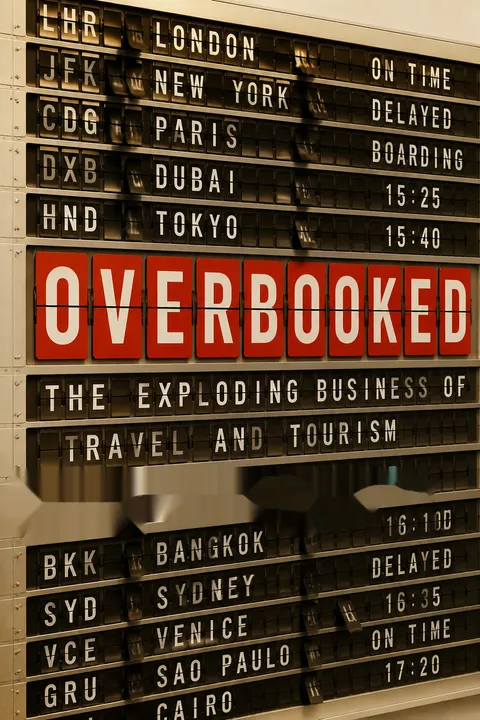


Key Takeaways
Treat tourism as an industry that reshapes nations, not a harmless pastime.
A pleasure with power. Becker begins with her mother Mavis, a widow who used her later years to travel across the world. Her story captures travel’s personal promise, then opens onto its industrial scale: international trips rose from about 25 million in 1960 to 1 billion in 2012. The industry supports roughly one in ten jobs worldwide, yet its businesses are scattered across airlines, hotels, restaurants, transport, and entertainment, so its combined power often escapes public notice.
Growth has consequences. Tourism can bring jobs and foreign money, but it can also displace residents, damage habitats, and turn cultural life into a product. The same trip may be a traveler’s freedom and a community’s burden.
Tourism is a useful case study in how ordinary consumer choices aggregate into systems with political consequences. No single visitor causes a city’s housing crisis or a beach’s degradation, but millions of individually modest choices can create both. That gap between personal intention and collective impact appears in many fields, from traffic congestion to carbon emissions. The book’s framing also cautions against treating tourism as inherently virtuous or corrupt. Its effects depend on who controls land, captures revenue, and bears costs, which makes the institutional design as important as the traveler’s motive.
Make tourism policy a government responsibility, then measure who gains and who pays.
Count the whole business. For decades, tourism appeared in national accounts as disconnected activities rather than one industry. A Tourism Satellite Account system was developed to measure spending, investment, employment, taxes, and trade connected to tourism. The book reports that tourism contributed $7 trillion to the global economy in 2007 and supported nearly 250 million jobs, excluding domestic trips.
Counting changes priorities. Governments shape the product itself: they control borders, infrastructure, permits, cultural preservation, and promotion. France coordinates these levers; the United States, by contrast, withdrew from the UN tourism organization and dismantled much of its federal tourism office in the 1990s. Without reliable measures, leaders can overlook both tourism’s economic value and the harms hidden behind headline visitor totals.
Measurement is not neutral. Once an activity receives a line in the national accounts, it becomes easier for officials to compare, budget for, and lobby around it. But conventional economic accounting can make a busy destination look successful while omitting displaced residents, damaged ecosystems, and unpaid care work. That is a familiar problem in public policy: what is easy to count can crowd out what matters. Tourism statistics are most useful when paired with distributional and environmental measures, not treated as proof that growth is beneficial by itself.
Plan for residents first, and tourism can finance a living culture.
France invested in place. Paid vacations for French workers began in 1936, widening access to travel. After World War II, the Marshall Plan helped rebuild hotels and attract American visitors. Later, public investment in museums, heritage protection, high-speed trains, festivals, and support for traditional farming strengthened the qualities that drew visitors in the first place.
Bordeaux shows the method. Mayor Alain Juppé led a long urban renewal that cleaned historic facades, reclaimed the riverfront, and built a tramway. Tourism rose alongside wine sales, rather than replacing the city’s identity. The approach was to improve the place for people who lived there, then welcome visitors. Still, France faces summer crowding and rising housing costs as foreign buyers acquire second homes.
Bordeaux illustrates a productive feedback loop: public investment improves daily life, and the improved place attracts spending that can help sustain its assets. This resembles the logic of cultural districts and historic-preservation policy, where the value lies not only in a landmark but in its surrounding streets, businesses, and routines. The model is not automatically fair. A more attractive city can also become more expensive, and the people who created its character may be priced out. Resident-first planning therefore needs housing protections and a meaningful local voice, not just better design.
Set limits before visitor numbers erase the community that made a place distinctive.
Venice became a warning. The historic city receives roughly 20 million visitors a year, while its resident population fell from about 164,000 at its peak to fewer than 60,000. Rising rents and tourist-focused zoning helped hotels and souvenir shops replace homes, groceries, bakeries, and other ordinary services. Cruise passengers add to congestion and pollution, often spending only a few hours ashore.
Local people pushed back. The group 40xVenezia protested expanded tourist accommodation under the banner that their city was not a hotel. Its members were not against visitors; they opposed losing the ability to live and work there. Their proposed remedies included enforcing housing rules, protecting local businesses, limiting cruise impacts, and publicly accounting for tourism’s costs and benefits.
Venice highlights a capacity problem that is social as well as physical. A city can preserve its buildings yet lose the residents, trades, and services that make it a functioning place rather than a scenic shell. This resembles the concept of a commons: when access is open but costs are concentrated, individual users can collectively deplete a shared resource. Visitor caps are one possible tool, but they are not sufficient if housing and commercial policy still privilege short-term tourist demand. The key question is not simply how many visitors fit, but what kind of city remains afterward.
Tourism growth can enrich elites while making the destination poorer.
Cambodia reveals the distribution gap. After decades of war, the country looked to tourism as a route to recovery, centered on Angkor’s temples and its southern beaches. Tourism came to account for about 20 percent of Cambodia’s economy and 350,000 jobs. Yet a United Nations estimate cited in the book found that only 7 percent of tourist receipts benefited poor people in Siem Reap. Many hotels imported supplies, while local workers were concentrated in low-paid jobs.
The costs were visible. Farmers were evicted to make way for resorts, and poorly regulated hotel water use threatened Angkor’s foundations. The temples’ preservation depended partly on foreign-funded restoration, while visitor numbers continued to rise. In this case, a thriving tourism sector did not mean broad local prosperity or reliable protection of the assets it sold.
The distinction between economic activity and development is central here. A visitor’s spending counts as revenue even if it flows to outside suppliers, foreign owners, or politically connected elites. Development economics often calls attention to such leakage, but the more basic lesson is that ownership and procurement shape whether tourism income circulates locally. The Cambodian example also complicates the idea that any new jobs are automatically beneficial. Without labor standards, land rights, and public accountability, employment can coexist with worsening insecurity. Growth figures describe volume, not justice.
A cheap cruise ticket can hide costs shifted onto workers and ports.
The ship is the destination. Elizabeth Becker’s Caribbean cruise offered a low upfront price, but passengers were steered toward onboard drinks, shopping, excursions, photographs, and art auctions. The modern cruise model makes the ship itself the main attraction, with port visits treated as brief add-ons. The crew’s conditions were stark: two waiters described seven-month contracts, long workdays, and base pay of about $50 a month, supplemented by tips.
Loopholes lower costs. Cruise companies register ships in countries with weak labor and tax rules, despite operating from American ports and serving American customers. Their vessels also discharge large amounts of waste, while exemptions and weak enforcement limit oversight. Ports may receive crowds without the spending or tax revenue needed to cover the public costs.
Cruises make visible a broader feature of global business: a product can be priced cheaply because some costs are moved off the balance sheet. Workers, host communities, and ecosystems may absorb the difference. This is a classic externality, meaning a cost created by a transaction but paid by someone outside it. The industry also has a valid point that lower fares open travel to people who could not afford traditional cruises. The policy challenge is not to reserve travel for the wealthy, but to prevent affordability from depending on weak protections and unpriced pollution.
Verify green claims by outcomes, not towels, labels, or scenery.
Ecotourism has a demanding definition. Ecotourism is travel intended to protect natural areas while supporting local people and economies. Costa Rica’s model grew from scientific study, public parks, and private reserves. The country contains about 5 percent of the world’s biodiversity, and more than a quarter of its land is protected. Yet a period of cattle expansion, sometimes called “hamburgerization,” brought severe deforestation, showing that conservation is a political choice, not an automatic national trait.
A label is only a start. The book describes global criteria intended to assess impacts on communities, culture, habitats, and ecosystems. But certification is voluntary, and businesses can market routine efficiency measures as sustainability. In Zambia, safaris can support conservation and local jobs, but parks also compete with farming, and public funds may be mismanaged.
The strongest version of ecotourism links ecological protection to local livelihoods, because conservation without local legitimacy is fragile. This is consistent with community-based conservation: people are more likely to defend a protected area when they share in its benefits and influence its rules. Still, the label can obscure tradeoffs. A small, high-priced lodge may reduce crowding but exclude local visitors; a popular park may fund jobs while disturbing wildlife. Credible evaluation therefore needs evidence on outcomes over time, including who participates, who earns, and what ecological conditions actually change.
China used tourism to sell modernity while scripting what visitors could see.
Travel became national strategy. After decades of isolation, Deng Xiaoping argued that tourism could earn foreign currency, create jobs, and improve China’s image. The government later opened domestic travel and guaranteed holidays known as Golden Weeks. By 2010, Chinese tourists had spent $123 billion traveling within their own country. International travel expanded too, and Chinese visitors became among the world’s largest-spending tourist groups.
The visitor experience was managed. State-linked agencies shaped itineraries and guides’ accounts of history. In Xian, Becker’s guide described polluted air as mist, while tours steered visitors through standardized meals and shopping stops. At the same time, the country invested in spectacular events and attractions. The tension is clear: tourism can open a society to outsiders while authorities tightly control the story those outsiders encounter.
Tourism is a form of public diplomacy because visitors carry impressions home, but it is not a transparent window. Guides, routes, monuments, and even the built environment influence what becomes visible. This is similar to agenda-setting in media: the frame can shape interpretation without requiring every statement to be false. The approach can deliver genuine benefits, including infrastructure and access to cultural sites, but a polished visitor narrative may conceal conflict or environmental harm. Travelers and destination governments alike benefit when historical context and independent sources remain accessible.
Post-9/11 barriers cost U.S. tourism 68 million visitors in one decade.
A welcome mat matters. After September 11, the United States tightened visas, interviews, and airport screening. A travel-industry report estimated that the country lost 68 million visitors and $509 billion in spending over the 2000s. Foreign travelers described long waits, intrusive questioning, and a hostile reception. Meanwhile, international tourism grew elsewhere, and the United States’ share of the market fell.
Policy began to shift. The 2010 Travel Promotion Act created a national campaign and a multilingual travel website, while later visa changes reduced processing delays in markets such as China and Brazil. The chapter also contrasts commercial spectacle with public nature: U.S. national parks inspired conservation systems worldwide, but theme parks drew far more visitors and revenue at home.
The American case shows how a security policy can create economic and diplomatic costs beyond its intended target. Risk management is necessary, but procedures communicate values as well as screen threats. A humiliating border encounter can undo years of public diplomacy in a few minutes. At the same time, tourism promotion is not a substitute for sound immigration policy or careful security design. The deeper lesson is institutional coordination: agencies responsible for safety, commerce, and diplomacy need shared goals, or one department’s procedures can quietly undermine another’s work.
Analysis
Overbooked reframes tourism as a political economy rather than a collection of personal holidays. Its central insight is that the destination is not merely scenery for consumption. It is also a home, a labor market, a cultural inheritance, an ecosystem, and, increasingly, a public brand. Those uses collide when visitor demand is treated as an unquestionable good.
The book’s comparative structure is its strongest analytical device. France suggests that deliberate public planning can make tourism reinforce transit, heritage, and local identity. Venice shows how a city can become economically dependent on visitors while losing the social infrastructure that makes it inhabitable. Cambodia demonstrates that national growth can coexist with local dispossession and limited income reaching poor households. Cruises reveal how prices rely on regulatory arbitrage, while Costa Rica shows that conservation can be built into a tourism economy but remains vulnerable to political reversal. China and the United States offer opposing versions of state involvement: extensive image management in one, episodic disengagement and restrictive borders in the other.
Together these cases challenge the simple debate between more tourism and less tourism. The relevant questions are who decides, who owns, who receives income, and who pays for congestion, pollution, and cultural change. The book also exposes a weakness in industry metrics: visitor counts and gross revenue can rise while local welfare declines. Better governance would pair economic accounts with measures of resident displacement, local sourcing, labor conditions, ecological stress, and public spending.
The analysis is historically situated. Its figures and forecasts describe the period around 2013, and some claims about tourism’s rank among global industries depend on definitions that economists debate. Yet that uncertainty reinforces the book’s point: the category itself is politically constructed. Counting tourism expansively can make it visible to policymakers, but broad accounting can also make diffuse and indirect activity appear more unified than it is. The enduring contribution is not a universal formula. It is a demand to treat tourism as consequential enough to govern, and complex enough that success must be judged by more than the number of arrivals.
Review Summary
Overbooked receives mixed reviews, with ratings ranging from 1 to 5 stars. Readers appreciate the book's extensive research and insights into the global tourism industry, covering topics like cruise ships, ecotourism, and cultural impacts. Many find the information eye-opening and thought-provoking. However, some criticize the author's writing style as dry, disorganized, or elitist. Several reviewers note that the book's 2013 publication date makes some information outdated. Overall, readers value the book's comprehensive look at tourism but have varying opinions on its execution and relevance.
People Also Read






Glossary
Tourism Satellite Account system
Measures tourism’s economic footprintA statistical framework for measuring tourism across industries that are usually counted separately. It estimates the economic contribution of visitor spending, investment, employment, government revenue, and trade. By connecting transport, lodging, food, entertainment, and related services, it helps governments compare tourism with other sectors and incorporate it into economic planning.
leakage
Tourism income leaving locallyThe share of tourist spending that does not benefit the destination’s local population because it goes to outside owners, imported supplies, foreign companies, or connected elites. Becker uses the term to explain why a destination can attract substantial tourism revenue and still see little improvement in local livelihoods.
MICE
Business meetings and eventsAn industry acronym for Meetings, Incentives, Conferences, and Exhibitions. The category includes conventions, academic gatherings, trade shows, and incentive trips. These events fill hotel rooms and transport seats, making them a significant part of tourism economies, though some trips described as business travel may involve lavish or questionable spending.
ecotourism
Nature travel supporting conservationTravel focused on natural areas and intended to help protect them while supporting local communities. In the book, the term represents an alternative to high-volume tourism, but it is not a guarantee of good practice. Its credibility depends on actual effects on habitats, culture, local employment, and community benefit.
flags of convenience
Foreign ship registration loopholeA practice in which shipowners register vessels in countries other than the country where the company is based or operates. Open registries can impose fewer labor, tax, and environmental requirements. Cruise companies use this arrangement to lower costs, even when their ships serve customers from, and operate out of, wealthy countries.
FAQ
What's Overbooked: The Exploding Business of Travel and Tourism about?
- Exploration of Industry: The book examines the travel and tourism industry as a major global sector, impacting economies, cultures, and environments.
- Personal and Critical Narrative: Elizabeth Becker shares personal anecdotes and provides a critical analysis of how tourism is often overlooked in economic and environmental discussions.
- Diverse Perspectives: Insights from various stakeholders, including government officials and industry professionals, highlight the complexities of tourism.
Why should I read Overbooked?
- Comprehensive Research: Based on five years of research, the book offers a detailed look at the tourism industry from economic, cultural, and environmental perspectives.
- Awareness of Issues: It raises awareness about the darker sides of tourism, such as exploitation and environmental degradation, encouraging critical thinking about travel choices.
- Global Relevance: Becker provides insights into how different countries manage tourism, making it relevant for those interested in global economics and cultural studies.
What are the key takeaways of Overbooked?
- Tourism's Dual Nature: The book highlights tourism as a double-edged sword, driving economic growth but also causing social and environmental issues.
- Government's Critical Role: Becker emphasizes the importance of government regulation in enhancing or undermining local cultures and environments.
- Consumer Responsibility: Readers are encouraged to consider their impact as tourists, understanding their choices can preserve or degrade destinations.
What are the best quotes from Overbooked and what do they mean?
- “Tourism is a frivolous pursuit...”: Reflects the common perception of tourism as leisure, contrasting with its serious economic and cultural implications.
- “Tourism has a history of confounding countries...”: Highlights the complex effects of tourism on nations, suggesting its impact is not straightforward.
- “The best and the worst of tourism have governments at the center.”: Underscores the importance of government policies in shaping sustainable tourism.
How does Elizabeth Becker define tourism in Overbooked?
- Broad Definition: Tourism is defined as activities involving travel and staying outside one's usual environment for leisure, business, and other purposes.
- Economic Activity: Becker emphasizes tourism as a significant economic activity, not just a collection of industries like airlines and hotels.
- Cultural Exchange: The definition includes cultural exchange, where travelers engage with different societies, leading to both enrichment and conflict.
What are the major issues discussed in Overbooked?
- Cultural Erosion: Tourism can undermine local cultures, leading to homogenization and loss of unique identities.
- Environmental Impact: The book addresses environmental degradation from mass tourism, including pollution and habitat destruction.
- Economic Disparities: Becker highlights economic inequalities where profits often benefit foreign corporations rather than local communities.
How does Overbooked address the concept of "dark tourism"?
- Definition and Case Study: Dark tourism is travel to sites associated with death or tragedy, with Cambodia's genocide tourism as a key example.
- Ethical Considerations: Becker raises ethical questions about commodifying suffering and the responsibilities of tourists and governments.
- Cultural Significance: These sites serve as means of confronting history and understanding human experiences.
What role do governments play in tourism according to Overbooked?
- Regulatory Authority: Governments are crucial in regulating tourism, determining who benefits and how it impacts communities and environments.
- Promotion vs. Preservation: There is tension between promoting tourism for economic gain and preserving cultural and environmental integrity.
- Case Examples: The book provides examples of successful and detrimental government policies, illustrating diverse approaches to managing tourism.
How does Overbooked illustrate the impact of tourism on local communities?
- Personal Stories: Through anecdotes and interviews, Becker shares stories of individuals and communities affected by tourism.
- Economic Analysis: Data and case studies show how tourism can create jobs but also lead to displacement and inequality.
- Cultural Reflections: Tourism changes the social fabric of communities, often leading to a loss of authenticity and identity.
What solutions does Overbooked propose for sustainable tourism?
- Regulatory Frameworks: Stronger regulations are needed to manage tourism's impact, including visitor limits and environmental protections.
- Community Involvement: Involving local communities in tourism development ensures benefits align with local needs and values.
- Education and Awareness: Campaigns to inform tourists about their travel impacts can encourage responsible behavior and support sustainability.
How does Overbooked compare different tourism models?
- Cruise vs. Ecotourism: Becker contrasts the destructive nature of cruise tourism with sustainable ecotourism practices.
- Mass vs. Responsible Tourism: The book discusses differences between mass tourism, which prioritizes profit, and responsible tourism, which focuses on sustainability.
- Global vs. Local Perspectives: Global tourism trends can clash with local needs, advocating for a localized approach that respects local voices.
What future trends in tourism does Overbooked predict?
- Shift Towards Sustainability: A growing trend towards sustainable practices as awareness of environmental issues increases.
- Technological Innovations: Technology will shape tourism, from booking systems to virtual experiences, reducing physical travel pressures.
- Changing Demographics: New markets will emerge, particularly from China and India, requiring adaptation to different cultural expectations.
Download PDF
Download EPUB
.epub digital book format is ideal for reading ebooks on phones, tablets, and e-readers.








