

Key Takeaways
Treat fear as an alarm, then test whether the danger is real
Fear is embodied. Fitzpatrick opens with a childhood memory: during a drama performance, she suddenly lost her lines, felt detached from the room, and fled the stage. Fear is not merely an idea. It can trigger a rapid bodily alarm, including a pounding heart, tense muscles, and quickened breathing. That response can protect someone from genuine danger, but it can also be set off by a danger the mind has only imagined.
The alarm feels convincing. Kathryn feared she would vomit at a shopping mall, though it had never happened. Her fear made her nauseated, which then seemed to confirm the danger. The book distinguishes the body’s genuine reaction from the accuracy of the threat it perceives, and urges readers to examine what they fear rather than treating every alarm as proof of catastrophe.
The distinction between bodily reality and situational reality is useful: a panic response is real, even when its predicted catastrophe is not. That framing can reduce the shame of experiencing intense symptoms while making room to question the story attached to them. Contemporary clinical practice also treats physical symptoms as worth assessing, not simply interpreting. The book itself recommends a medical examination to rule out physical causes. Its spiritual lens may help readers who share its Christian commitments, but a racing heart or panic episode is not, by itself, evidence of moral failure.
Interrupt fear's feedback loop before avoidance shrinks your world
Avoidance brings short relief. Kathryn stopped going to the mall to prevent panic. Another woman avoided a freeway junction because she feared freezing and crashing, despite having driven through it successfully before. In the short term, staying away removes the immediate discomfort. Over time, however, the feared situation can feel even more dangerous, and daily life becomes narrower.
Fear can become automatic. Judith’s panic around seriously ill patients seemed to come from nowhere. Looking back, she connected it to childhood caregiving fears and an earlier medical emergency at work that she had replayed in her mind. The book compares this learned response to taking stairs automatically: repeated thoughts and reactions can become habits. It also describes a physical feedback loop, where poor sleep, stress, and stimulants can intensify alarm. Gradual re-engagement and attention to basic physical care can help interrupt it.
This account anticipates a central insight of exposure-based therapy: avoiding a feared situation can bring immediate relief while teaching the brain that the situation was dangerous. Carefully planned contact with the situation can create opportunities to learn otherwise. The book’s examples support movement toward feared activities, but this is not a case for reckless exposure. The pace should fit the actual risk and the person’s capacity. Persistent panic, trauma symptoms, or major impairment may call for qualified clinical support alongside spiritual care.
Rely on Christ's power, not self-confidence, when fear paralyzes you
Fear did not disqualify them. Abraham lied to protect himself, Moses doubted his ability to lead, and Peter denied knowing Jesus when threatened. The book uses these biblical stories to challenge the idea that faithful people never feel afraid or fail under pressure. Peter’s failure was followed by forgiveness and a life of renewed service.
Strength comes from beyond the self. Fitzpatrick presents Jesus as the one who faced death and overcame it, and the Holy Spirit as the source of power for Christian change. Paul’s encouragement to Timothy is framed as a reminder that courage, love, and a disciplined mind are gifts to rely on, not achievements of self-esteem. The aim is not to pretend weakness is absent, but to seek help and act faithfully within it.
The stories make failure part of the account of faith rather than an embarrassing exception. That can loosen the belief that a single fearful response reveals a person’s permanent character. The emphasis on support beyond willpower also resonates with research on self-regulation: people often cope better when they draw on relationships, routines, and meaning rather than relying on sheer effort. The book’s account locates that support specifically in Christ and the Spirit. Its promise of change should not be mistaken for an instant cure or a guarantee that symptoms disappear.
Ask what fear is guarding: control, approval, or flawless performance
Fear can protect a hidden demand. Gina, a capable executive, believed that if she did not oversee every detail, her company would fail and she would be a failure. Nicole, a gifted singer, dreaded performing partly because she craved praise and feared criticism. Martha’s perfectionism made small domestic preferences feel like moral requirements. Their stories suggest a practical question: What outcome, reputation, or standard feels impossible to release?
The underlying pattern matters. Fitzpatrick connects fear with attempts to control circumstances, dependence on other people’s approval, and demands for perfection from oneself or others. These patterns can lead to anger, overwork, avoidance, or despair. Identifying them does not erase real pressures or past experiences. It helps clarify which response is being driven by fear and where a person may need to reconsider the beliefs and expectations shaping that response.
The three-part lens turns a vague feeling into a set of questions about motivation and behavior. Control, social acceptance, and high standards can each be adaptive in moderation; trouble arises when they become conditions for feeling safe or worthy. That distinction keeps the analysis from condemning ordinary ambition, connection, or care. A useful extension is to ask what each strategy has helped a person survive, as well as what it costs now. Understanding a pattern should invite change without turning the person into the problem.
Trust God's character when you cannot control the outcome
Sovereignty means ultimate rule. Fitzpatrick uses the term for God’s freedom and power to govern events, while insisting that this rule is consistent with God’s wisdom, holiness, love, and mercy. The claim is not that people lack responsibility, but that no event can finally defeat God’s purposes. For a Christian facing illness, loss, or upheaval, this belief is offered as a source of security when explanations are unavailable.
The cross anchors the claim. Jesus tells his disciples that they will face trouble, yet speaks of peace because he has overcome the world. The book points to his arrest and execution as events carried out by human actors within a larger divine purpose. It also tells of the author’s husband losing his job just before their child’s birth, a hardship she later understood as a lesson in trust.
The account pairs power with character, an important safeguard against imagining divine control as arbitrary domination. For believers, that pairing can make uncertainty more bearable without promising a painless life. There is also a delicate limit: interpreting a particular tragedy as a lesson or as serving a hidden purpose can comfort the sufferer, but may wound someone who is still grieving. The book’s framework is most pastorally careful when it offers hope and presence rather than claiming to know why another person’s hardship occurred.
Turn worry into prayer, gratitude, and today's next responsibility
Worry cannot do tomorrow’s work. In the book’s reading of Jesus’ teaching, anxiety cannot add time to life or change an outcome simply by rehearsing it. That does not mean ignoring practical needs. It means distinguishing what can be acted on today from what cannot be controlled. Jesus’ images of birds and flowers are used to support trust in God’s care, while his instruction to seek God’s kingdom redirects attention toward what matters most.
Give anxious thoughts somewhere to go. Fitzpatrick draws practical steps from Philippians: pray about concerns, give thanks, examine the thoughts occupying the mind, and keep practicing. She also distinguishes responsibility from worry. A task that belongs to today can be planned and done; a feared possibility outside one’s control can be brought to God rather than endlessly rehearsed.
The distinction between planning and rumination is essential. Planning identifies a problem, considers options, and leads to a next action; rumination circles the same threat without producing new information. Prayer and gratitude can help some readers interrupt that loop and reconnect with values, especially when they are part of a lived spiritual practice. Gratitude should not be used to silence grief or deny material hardship. The book is most practical when it couples trust with concrete responsibility instead of treating faith as a substitute for action.
Serve people instead of auditioning for their approval
Approval can become a trap. Nicole wanted to use her singing well, but also watched for compliments and felt crushed when praise did not arrive. The book also recalls Peter distancing himself from Gentile Christians when he feared the judgment of visiting Jewish leaders. In both cases, concern about others’ opinions affected conduct and relationships.
Love changes the question. Instead of asking how to secure admiration, Fitzpatrick urges readers to ask how to love and serve. Margot, who avoided freeways after a frightening flat tire, gradually resumed driving because her avoidance was limiting her daughters’ activities. The goal was not to prove that accidents could never happen. It was to meet her responsibilities despite fear, while trusting God with what she could not guarantee.
This shift from seeking approval to offering care is more durable than trying to convince oneself not to care what anyone thinks. Human beings need belonging, and fear of exclusion can be especially powerful where social or economic life depends on a group. The relevant question is not whether other people’s opinions matter, but whether fear of them is dictating behavior at the expense of conscience or care. Margot’s example also makes love concrete: it appears as a chosen action, not merely a warm feeling.
Let Christ's perfection free you from impossible standards
Perfectionism confuses growth with acceptance. Martha believed that a tidy home and exacting standards proved faithfulness. When her family did not meet those standards, she became angry and fearful. Fitzpatrick distinguishes justification, being accepted as righteous through Christ rather than personal achievement, from sanctification, the gradual growth toward holy living. In this Christian account, believers are accepted through Christ and still called to grow.
Test the rule before obeying it. The book asks whether a standard is clearly required by Scripture, whether it serves love, and whether the task matters more than the people involved. Cleaning a home or doing good work can be worthwhile, but personal preferences need not become divine commands. Rest, patience, and room for failure matter too. Martha’s life became more peaceful as she loosened her self-imposed rules and cared more about her family than perfect results.
The distinction between accepted identity and ongoing development can be especially helpful to people whose self-worth depends on flawless performance. It separates moral growth from the impossible project of earning love. The same distinction can make room for honest confession without collapsing into self-condemnation. Yet standards are not all arbitrary: some duties protect other people, and the book’s test of whether a rule serves love is therefore important. Persistent perfectionism can also have psychological dimensions that deserve attention beyond theological reframing.
Let reverence for God redirect fear toward faithful obedience
Not every fear points away from God. Fitzpatrick distinguishes dread that makes a person hide from God from reverence that draws a person toward worship, trust, and obedience. Shadrach, Meshach, and Abednego refused to worship a king’s statue even though they could be killed. They did not know whether God would rescue them, but they chose not to betray their convictions for safety.
Practice gives reverence shape. The book encourages readers to keep God’s promises in view, learn Scripture, obey, rest in divine love, pray, organize daily responsibilities, and depend on God’s strength. These practices are presented as a way to orient life around God rather than fear. The aim is not to eliminate every bodily feeling of alarm, but to prevent fear from becoming the final authority over a person’s choices.
The distinction between terror and reverence clarifies an important feature of the book’s spiritual psychology: fear can either isolate or orient. A deeply held value can help someone tolerate discomfort without needing to feel brave first. In secular language, this resembles values-guided action, where choices follow what matters rather than whichever emotion is strongest. The biblical story also preserves uncertainty about outcome, which makes the courage more credible. Readers should still distinguish principled risk from avoidable danger; devotion does not require ignoring evidence or safety.
Make faith visible through the next obedient step, even while afraid
Faith means trust in motion. The book distinguishes belief in a fact from reliance on the person believed. Its example is a young boy who says he trusts his father to catch him in a swimming pool, yet remains rooted at the edge. His trust becomes visible when he jumps. The point is not that every risk is wise, but that conviction can lead to action even before fear disappears.
Strength develops through practice. Hebrews 11 portrays people whose faith involved building, leaving home, resisting rulers, and persevering. Fitzpatrick connects growth in faith with Scripture, prayer, church, and Christian sacraments, while stressing that these do not earn God’s favor. They are supports for trust. A small, faithful step may matter more than a confident feeling, and the book locates the ultimate source of strength in Christ rather than in the size of one’s faith.
This account makes faith observable without reducing it to bravado. The swimming-pool image captures how a person can assent to a belief while still finding action difficult. Small steps can build confidence through experience, though the outcome of faithful action is not always success, safety, or immediate relief. That is why the book’s emphasis on trust rather than symptom control matters. Its religious practices also function as repeated reminders and communal supports, not private tests that measure whether someone is worthy of help.
Analysis
Fitzpatrick’s book is a Christian counseling guide built around a progression from recognition to action. It begins with the body’s alarm response, then traces how imagined threats, habitual reactions, and avoidance can intensify distress. The middle sections locate common fears in struggles for control, approval, and perfection. The final movement offers a theological response: trust in God’s character, reverent obedience, love of others, grace, and active faith. Personal anecdotes make the argument less abstract, while biblical figures such as Moses, Peter, Jonah, and the three men facing the furnace provide a recurring narrative claim: fear and failure do not rule out transformation.
Its distinctive contribution is the joining of emotional life to moral and spiritual formation. Fear is not treated only as a symptom to suppress; it is also a signal to examine what a person trusts, desires, or believes must be controlled. That approach can help readers move from self-monitoring toward purposeful action. The distinction between a body’s involuntary alarm and the interpretations attached to it is especially useful, as is the insistence that trust need not wait for fear to vanish.
The framework also has limits that matter in practice. The book interprets some forms of worry as sin and views suffering through divine purpose, assumptions that will be meaningful to many Christian readers but not universal. Even within that audience, panic, trauma, illness, medication effects, or chronic anxiety may need medical or psychological assessment. The text itself recommends ruling out physical causes, but its primary explanatory lens remains theological. A careful application therefore preserves both compassion and agency: neither shame people for symptoms nor treat faith as a replacement for clinical care. Read that way, the book offers a pastoral map for meaning and conduct, not a complete clinical model of anxiety.
Review Summary
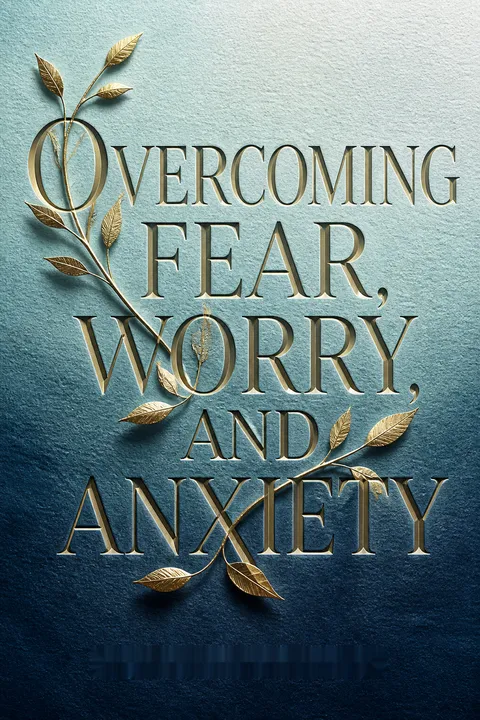
Overcoming Fear, Worry, and Anxiety received mostly positive reviews, with readers praising its biblical approach and practical advice. Many found it helpful for understanding and combating anxiety from a Christian perspective. Some appreciated the author's personal tone and scriptural references. However, a few reviewers felt it oversimplified complex issues or wasn't applicable to their specific situations. Overall, readers valued the book's emphasis on trusting God and applying biblical truths to overcome fear and worry.
People Also Read







Glossary
Fear of God
Reverent trust and obedienceFitzpatrick uses this term for a response to God that combines reverence, love, trust, worship, and willing obedience. It differs from terror that makes a person hide from God. In the book’s account, this reverence redirects attention from competing fears toward God’s character and commands.
Fear of man
Dependence on human approvalA pattern in which concern for other people’s praise, criticism, or acceptance governs choices. Fitzpatrick argues that this can lead people to hide their beliefs, compromise convictions, or become preoccupied with admiration. The proposed alternative is to value God’s approval and to act toward others with love rather than using them to secure reassurance.
Sovereignty
God's ultimate ruleIn the book, sovereignty means that God is free and powerful to govern events and accomplish his purposes. This rule is understood in connection with God’s wisdom, holiness, love, and mercy, rather than as arbitrary power. Fitzpatrick presents belief in sovereignty as a source of security when circumstances cannot be controlled or fully explained.
Justification
Acceptance through ChristThe Christian doctrine that a person is made right with God through Christ, rather than by achieving a flawless personal record. Fitzpatrick uses it to counter perfectionism and fear of rejection: a believer’s standing with God rests on Christ’s righteousness, not on daily performance. This acceptance does not mean that personal growth is unnecessary.
Sanctification
Gradual growth in holinessThe ongoing process of becoming more like Christ in character and conduct. Fitzpatrick distinguishes it from justification: sanctification involves real change over time, while justification describes a believer’s standing before God. Because growth is gradual, Christians should pursue obedience without expecting present-day perfection from themselves or others.
Faith
Trust expressed through actionFitzpatrick describes faith as more than agreeing that a claim is true. It includes reliance on God’s character and promises, and it can lead to action even while fear remains. The book illustrates this with a child who says his father will catch him in a pool, then demonstrates trust by jumping.
Download PDF
Download EPUB
.epub digital book format is ideal for reading ebooks on phones, tablets, and e-readers.








