

Key Takeaways
Treat stagnation as a failure to discover, not merely a lack of gadgets.
Progress means new capacity. The book distinguishes spreading existing knowledge from discovering something new. Bill Gates cites falling child mortality and longer lives as evidence of progress, and Gibson agrees. But better access to established medicine is different from inventing new treatments or technologies. The book argues that the pace of such discovery has slowed since around 1971, despite the dazzling rise of computers and smartphones.
The costs reach everyone. Gibson links scientific and technological progress to better living standards, then argues that education and other institutions have failed to produce enough new knowledge and capability. His central concern is not that the future is changing too quickly, but that society is struggling to escape ineffective arrangements from the past.
The distinction between spreading discoveries and making them is valuable because the two can move in opposite directions. A society may become healthier by applying known treatments more widely even as its research engine weakens. Yet the claim of broad stagnation is harder to establish than the book’s vivid examples suggest: different fields advance at different speeds, and a single date cannot explain them all. The most useful question is therefore practical: what outcomes would demonstrate genuine new capacity, rather than activity, spending, or technological spectacle?
Keep innovation alive by giving experiments somewhere to escape and compete.
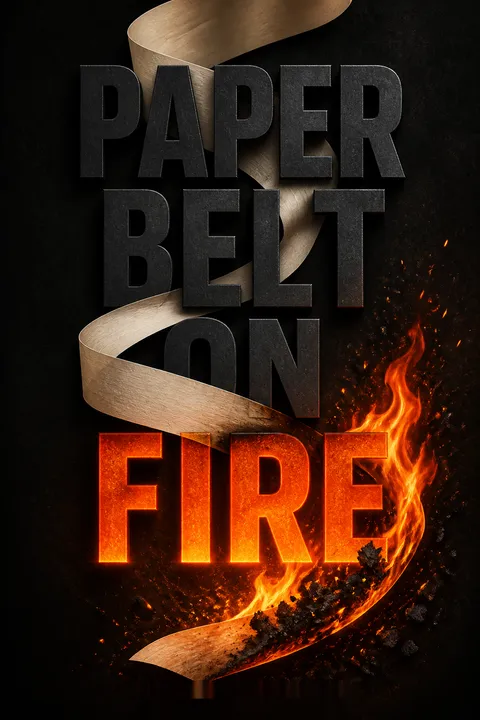
Creative centers decay. Cardwell's Law describes a recurring pattern: a country or region can lead in invention for a time, but its creative advantage eventually fades. Successful institutions accumulate insiders and rules that protect existing arrangements. Gibson calls the East Coast institutions stretching from Washington to Boston the Paper Belt, a label for organizations he sees as credential-heavy, bureaucratic, and resistant to change.
Rival systems create exits. The book contrasts centralized China, where a single decision could halt an activity across the country, with fragmented Europe, where an inventor could move to a more welcoming state. It presents Shenzhen as a modern experiment in this logic: a designated economic zone that helped China test different rules and attract activity. Competition, in this account, gives innovators a place to go when established authorities say no.
This argument makes institutional variety a tool for discovery, not just a safeguard against political domination. When one system can fail everywhere at once, alternatives matter. The same logic applies to organizations: pilots, independent teams, and local experiments can preserve options without forcing every person to accept one model. Still, competition does not automatically produce humane or effective outcomes. The key question is whether experiments can be evaluated, corrected, and copied when they work, rather than simply celebrated because they challenge the center.
A diploma often certifies persistence more reliably than learning.
Time becomes a credential. Gibson argues that a university degree often signals that someone completed a long sequence of approved tasks, not that they retained or can apply what they learned. He connects this role to the university clock tower: shared schedules made time measurable, and time spent in school became a proxy for commitment. The book cites research finding that finishing college’s final year is associated with a large wage premium, even though the last year is unlikely to double a student’s knowledge.
Learning gains are uneven. In the study Academically Adrift, 45 percent of students showed no statistically significant improvement on a critical-thinking assessment after two years, and 36 percent showed no gains after four. Those findings challenge universities’ claims, but the book also notes that students admitted to selective colleges may already possess many valuable abilities.
The distinction between learning and signaling clarifies why a credential can retain value even when its educational contribution is uncertain. Employers need ways to judge unfamiliar applicants, and persistence through a demanding process can provide information. But the signal can become self-perpetuating: a degree is valuable partly because institutions and employers treat it as valuable. The cited findings deserve attention, though they do not prove that college offers no intellectual, social, or professional benefit. They make a stronger case for measuring what students can actually do.
Hire builders for demonstrated output, not IQ scores or polished applications.
Potential is not a score. While selecting young people for the Thiel Fellowship, Gibson and his colleagues learned that test results and academic awards could not reliably reveal who would create something consequential. Lewis Terman’s celebrated study of children with high IQ scores produced many successful professionals, but no Nobel laureates. Two boys excluded for lower scores, Luis Alvarez and William Shockley, later won Nobel Prizes.
Action reveals ability. One applicant, Dylan Field, declined to submit his SAT results, arguing that the test did not capture independent thought. The fellowship accepted him, and his design company later reached a reported valuation of $10 billion. By contrast, Cipher, a technically gifted security expert, struggled to work with others. The contrast taught the team that raw intelligence can enable creation, but does not by itself make someone a founder.
The book’s strongest point is that selection systems often confuse legibility with talent. Scores and polished applications are easy to compare, while initiative and creative judgment emerge through activity. This suggests that auditions, prototypes, and extended collaboration may reveal capacities conventional screening misses. There is a caution, however: famous exceptions do not invalidate standardized measures for every purpose, and celebrated founders are unusually visible survivors. Better selection should combine multiple forms of evidence instead of replacing one narrow proxy with a romantic bias toward rule-breakers.
Select founders for adaptive character, not one-dimensional brilliance.
Resourcefulness has many forms. The Greek term polytropon describes a person capable of navigating many kinds of difficulty. Gibson uses it for founders who keep finding workable paths through uncertainty. He names edge control as the ability to test the boundary between what is known and unknown without taking reckless risks. Hyperfluency is the ability to explain a complex product and its market clearly to both experts and newcomers.
Vision needs discipline. The book also prizes founders who can learn as a company grows, work well with others, and remain committed through setbacks. Its image of a Friday-night Dyson Sphere captures a founder who combines an audacious destination with plausible steps toward it. Cipher’s technical brilliance without collaborative ability illustrates the limits of talent alone. These qualities are not a checklist guaranteeing success; they are clues to character that the team learned to notice through repeated contact.
This account resists the easy myth that founders succeed through confidence or intelligence alone. It emphasizes a difficult combination: ambition that can survive evidence, flexibility without aimlessness, and conviction without emotional dependence on a single outcome. That combination is useful well beyond startups, especially where people must learn while acting. Yet qualities such as charm and persistence can also disguise overconfidence. The book’s insistence on testing claims matters: adaptability is valuable when it changes course in response to reality, not when it merely makes a person more persuasive.
Scout the person who may create a trend, not the trend itself.
Go where talent gathers. After the Thiel Fellowship, Gibson and Danielle Strachman stopped relying mainly on applications and began visiting hacker houses, hackathons, campuses, and overlooked cities. Their aim was to meet people before their ideas became fashionable. They treated conversation and trust as essential tools because a search engine or public profile could not show a founder’s motivation, judgment, or ability to respond to difficulty.
Small bets reveal promise. The pair offered $1,000 grants to people who needed modest resources to test an idea. Noah Shutty and physicist Scott Stephenson used early support to develop speech-recognition technology that became Deepgram. The authors report that around twenty companies in their portfolio began with such grants. Often the money mattered less than an outsider’s encouragement to try. Their method made recruiting a continuing relationship, not a one-time contest.
The scouting model treats innovation as a human signal before it becomes a market signal. That is a meaningful contrast to investing only after traction makes a company easy to recognize. Small grants also function as experiments: they reveal whether a person turns support into action while limiting the cost of being wrong. The approach depends heavily on skilled judgment and travel, so it may not scale cleanly. Still, it exposes a blind spot in systems that search only where prestige and public attention have already concentrated.
Make trust verifiable instead of asking institutions to behave better.
Authority can become a vulnerability. The Nakamoto Consensus is the process Bitcoin uses to let a distributed network agree on a transaction record without relying on a single central bookkeeper. Computers compete to add verified blocks of information, while the proof-of-work process makes rewriting the record costly. The example echoes a medieval town clock: people can coordinate only if its time is both dependable and difficult for insiders to alter.
Design can replace discretion. Gibson applies this idea to institutions, which he argues can become unreliable when insiders face weak accountability. A prank by trader Josh Piestrup illustrates the problem: colleagues mistook his crude drawing for a valuable artwork after seeing it displayed alongside approved pieces. Their deference to labels and setting shaped what they thought they saw. The book’s broader proposal is to build systems where reliability is built into the rules, rather than resting only on reputation.
The useful question is not simply whether an institution has good people, but whether its structure makes honesty and competent performance easier to verify. That shift from personal virtue to system design connects the clock, blockchain, and art prank. It also warns against treating decentralization as a cure in itself. Distributed systems still depend on incentives, rules, and human decisions about what counts as valid. Their value lies in making certain forms of manipulation harder, not in eliminating the need for judgment.
Build alternatives that prove themselves by backing risky, real-world creation.
A grant became a fund. Gibson and Strachman founded 1517 to finance founders without college degrees, extending the Thiel Fellowship’s support beyond a small annual cohort. The authors say about 90 percent of their investments were in companies led by dropouts or people who never attended college. They report that the fund returned more than $200 million to investors, though the investments were still maturing when the book appeared.
The work was tangible. One example is Luminar, founded by Austin Russell, who left college to develop lidar sensors for autonomous vehicles. 1517 backed the company early, and it later went public. The founders also learned that established venture firms could pressure startups to limit early investors’ follow-on rights. Their experience shows both sides of building an alternative: outsiders can finance overlooked work, but incumbents still hold considerable power.
1517 is compelling because it turns a critique of credentialism into an operational experiment with measurable stakes. Its reported returns support the claim that nontraditional founders can create valuable companies, but one fund cannot establish that this route works for most students or in every field. The story also complicates the image of venture capital as a simple meritocracy: capital and prestige can reinforce one another, even when a newcomer has useful judgment. The broader lesson is to judge alternatives by both their outcomes and the opportunities they open.
Give young people consequential problems before credentials consume their twenties.
Start with the unsolved. The book’s coda proposes naming the hardest open problems in fields such as energy, health, transportation, education, computation, and water. Gibson takes inspiration from mathematician David Hilbert, whose public list of problems helped orient research. The goal is not to predict exactly which team will succeed, but to give ambitious learners a concrete frontier to work on rather than an abstract promise of future readiness.
Improve how learning works. The coda argues that education should measure performance, retention, and the ability to apply knowledge in new situations. It points to practice testing and distributed practice, which means spacing practice over time instead of cramming. It also highlights Benjamin Bloom’s finding that one-to-one tutoring produced much stronger results than conventional instruction, while recognizing the challenge of making tutoring affordable at scale.
A clearly stated problem can turn education from preparation for an unspecified future into meaningful work now. It also helps people see what they do not yet know, which is more informative than accumulating credentials without a defined aim. Problem lists can become stale or overly shaped by whoever controls them, however. A strong version invites many communities to revise priorities and makes progress visible through evidence. The book’s insistence on specific outcomes is especially useful in education, where broad promises often substitute for assessment.
Human resilience depends on belonging and responsibility, not detachment alone.
Survival was collective. The book contrasts popular, simplified Stoicism with Admiral James Stockdale’s experience as a prisoner of war in Vietnam. Stockdale drew strength from Epictetus, but he also credited his fellow prisoners, shared rules, and a sense of responsibility. They communicated through walls, supported one another after torture, and built a community that helped them endure isolation.
Feeling matters. Gibson also examines writer David Foster Wallace, whose advice emphasized choosing how to interpret daily frustrations. Wallace later died by suicide after years of depression and unsuccessful treatment changes. His death cannot establish that his philosophy caused his suffering. The author’s narrower point is that inner control cannot replace relationships, purpose, or effective care. He argues that pain can sometimes reveal what people value and that shared grief and commitment are part of flourishing.
This closing argument challenges the idea that a good life consists mainly of mastering one’s reactions. Emotional discipline can help people endure hardship, but belonging and responsibility give endurance a social purpose. Stockdale’s account is particularly powerful because solidarity was not a slogan; it was a practice sustained under extreme conditions. The discussion of Wallace calls for care: a person’s suicide cannot be reduced to a philosophical error. The more defensible insight is that resilience is not simply private willpower, and that suffering often requires communal and clinical support.
Analysis
The book works simultaneously as memoir, institutional critique, and founder’s case for an alternative. Its narrative engine is the unlikely partnership between a former philosopher and a former school principal. Their unconventional venture offers a human-scale counterexample to the credentialed systems they distrust. The argument gains force from specific scenes: a teenager coding faster than a large company expected, a young founder building lidar, and an early grant that helped a technical idea become a business. These episodes make the proposal feel practical rather than merely ideological.
The book is strongest when it asks whether institutions measure what they claim to value. The diploma, the IQ score, and the venture-capital pedigree each stand in for qualities that are difficult to observe directly. The author’s recurring demand is that such proxies be tested against actual learning, invention, or performance. This is a useful standard even for readers who reject his larger diagnosis.
The central weakness is the distance between examples and sweeping conclusions. A handful of successful dropouts demonstrates that degrees are not necessary for every innovator; it does not show that college is useless for most students. A profitable fund demonstrates that this investment strategy can work; it does not prove it can replace an education system. The reported stagnation since 1971 is also a broad diagnosis assembled from trends that may have different causes. Likewise, the book’s account of San Francisco’s decline is vivid but openly polemical, and its causal claims deserve independent scrutiny.
The most durable reading is neither a verdict against universities nor an endorsement of every alternative. It is a challenge to stop confusing institutional longevity, selective entry, and polished credentials with demonstrated public value. The book asks readers to create more ways for talent to emerge, then judge those routes by what people actually learn and build.
Review Summary
Paper Belt on Fire receives mixed reviews, with an average rating of 3.93/5. Readers appreciate Gibson's insider perspective on the Thiel Fellowship and 1517 Fund, praising his insights into innovation and education reform. Many find the book engaging and thought-provoking, particularly regarding the future of technology and learning. However, some criticize Gibson's writing style, lack of evidence for claims, and overreliance on exceptional examples. The book's structure and focus are also debated, with some finding it disjointed or self-serving.
People Also Read









Glossary
Cardwell's Law
Creative leadership eventually fadesA pattern, named for historian Donald Cardwell, in which nations and regions lead in creativity for a limited period before their advantages weaken. Gibson connects the decline to institutions and interest groups that protect established arrangements. The pattern supports his argument for competition and new places to experiment.
Paper Belt
Credentialed, bureaucratic institutionsGibson's label for influential paper-based institutions concentrated along the East Coast corridor from Washington, D.C., to Boston. The term includes universities, media organizations, government agencies, and other established bodies that he believes rely on credentials and procedures while resisting reform.
Nakamoto Consensus
Distributed agreement without a central bookkeeperThe method by which Bitcoin's network agrees on a shared transaction history without a central authority maintaining the ledger. Participants use proof of work to add blocks, and other computers verify them. Gibson uses this design as a model for institutions whose rules make records harder to falsify or control.
polytropon
Resourceful, many-wayed characterAn ancient Greek word associated with Odysseus in the opening of the Odyssey. Its literal sense suggests many turns, routes, or ways. Gibson uses it to describe a founder who can adapt to changing circumstances and keep finding a route through problems, rather than relying on a single strength or fixed plan.
edge control
Risk-taking without reckless collapseA founder's capacity to explore beyond what is already known while staying alert to the risk of destroying the company. It involves testing uncertain possibilities, learning where the limits are, and returning to safer ground when necessary. Gibson distinguishes it from both excessive caution and uncontrolled risk-taking.
hyperfluency
Clear command of product and marketA founder's ability to explain a complex technology, its market, past failures, and a credible route to customers with unusual clarity. In Gibson's account, the quality combines technical rigor with persuasive communication. The founder can make the idea intelligible to both specialists and newcomers.
Friday Night Dyson Sphere
Audacious vision with credible stepsGibson's name for a founder's ability to connect a modest starting product to a far-reaching ambition through plausible intermediate steps. The term refers to Freeman Dyson's imagined structure for capturing a star's energy. It also suggests that the founder is so absorbed in the work that pursuing it feels worthwhile even without immediate reward.
Invisible College
Informal network for ambitious researchGibson's proposed alternative to conventional academic pathways, named after a seventeenth-century community of natural philosophers who shared ideas informally. The modern version would find, fund, and support young people working on important problems without requiring them to follow the standard sequence of degrees, recommendations, and institutional approvals.
Bloom's two sigma problem
Tutoring's learning advantageAn education research finding associated with Benjamin Bloom. Students receiving one-to-one tutoring performed substantially better than students taught through conventional group instruction in the study discussed by Gibson. The problem is how to reproduce those gains for many students without requiring an individual tutor for every learner.
distributed practice
Practice spaced across timeA learning technique in which students return to material on a consistent schedule over time instead of concentrating practice into a single cramming session. Gibson presents it as one of the more effective ways to improve learning. It is demanding because it requires repeated effort and planning.
FAQ
What's Paper Belt on Fire about?
- Focus on Innovation Stagnation: The book explores the decline in technological and scientific progress in the U.S. since the 1970s, attributing it to a loss of the American frontier spirit.
- Critique of Higher Education: It critiques the current education system for stifling creativity and innovation, coining the term "Paper Belt" to describe these outdated institutions.
- Support for Young Innovators: The narrative highlights the Thiel Fellowship and the 1517 Fund, which support young entrepreneurs who challenge traditional educational paths.
Why should I read Paper Belt on Fire?
- Insightful Analysis: The book provides a thorough analysis of the factors contributing to innovation stagnation and offers a fresh perspective on societal challenges.
- Inspiration for Change: It serves as a call to action for young people to pursue significant problems and innovate outside traditional frameworks.
- Engaging Narrative: The author weaves personal anecdotes with broader societal critiques, making the book both informative and engaging.
What are the key takeaways of Paper Belt on Fire?
- Stagnation in Progress: The book argues that the rate of scientific and technological progress has flatlined since around 1971.
- Value of Non-Traditional Paths: It emphasizes the importance of supporting young innovators who may not follow the conventional college route.
- Critique of Credentialism: The book critiques the obsession with degrees and credentials, advocating for alternative educational paths.
What are the best quotes from Paper Belt on Fire and what do they mean?
- “We don’t believe in indulgences.”: Critiques universities for selling diplomas as the only path to success, likening it to the sale of indulgences by the Catholic Church.
- “The strong do what they can, the weak suffer what they must.”: Illustrates the harsh realities of power dynamics in venture capital.
- “Nature loves to hide her secrets.”: Advocates for seeking out hidden talent and potential in unexpected places.
How does [Author] define the "Paper Belt" in Paper Belt on Fire?
- Critique of Established Institutions: The "Paper Belt" refers to the network of outdated institutions resistant to change and innovation.
- Symbol of Stagnation: It symbolizes the bureaucratic mindset that stifles creativity and progress.
- Call for Reform: The author argues for the need to dismantle or reform these institutions to foster creativity and technological advancement.
What is the Thiel Fellowship and its significance in Paper Belt on Fire?
- Support for Young Innovators: Awards $100,000 grants to young people under 20 to pursue innovative projects instead of attending college.
- Counteracting Credentialism: Challenges the notion that a college degree is necessary for success, empowering young people to explore their ideas.
- Success Stories: Highlights successful fellows like Vitalik Buterin, showcasing the potential of investing in unconventional talent.
What is the Nakamoto Consensus as described in Paper Belt on Fire?
- Decentralized Decision-Making: Refers to a method of achieving agreement in a decentralized network, allowing for innovation without a central authority.
- Contrast to Traditional Models: Opposes the centralized power structures of traditional institutions, promoting a more democratic approach.
- Implications for Innovation: Suggests that new technologies, like blockchain, can create systems more resilient and adaptable than existing institutions.
How does Paper Belt on Fire address the failures of the education system?
- Stagnant Learning Outcomes: Presents evidence that despite increased spending, student learning outcomes have not improved significantly.
- Focus on Time Over Knowledge: Critiques the emphasis on time spent in classrooms rather than actual knowledge acquisition.
- Need for Alternative Models: Advocates for educational models prioritizing hands-on experience and innovation over traditional academic paths.
How does the author view the relationship between innovation and institutions in Paper Belt on Fire?
- Mutual Dependence: Argues that innovation and institutions are interdependent; as institutions fail to adapt, innovation suffers.
- Need for Disruption: Believes existing institutions must be disrupted or reformed to create an environment conducive to innovation.
- Role of Venture Capital: Portrays venture capital as a means to support innovative ideas outside traditional institutional frameworks.
What role do young innovators play in the future according to Paper Belt on Fire?
- Catalysts for Change: Seen as essential to breaking the cycle of stagnation and driving progress in science and technology.
- Diverse Backgrounds: Emphasizes that talent can come from unexpected places, supporting diverse paths for groundbreaking discoveries.
- Empowerment through Funding: By providing funding and resources, the Thiel Fellowship and 1517 Fund aim to empower the next generation.
How does Paper Belt on Fire address the issue of climate change?
- Critique of Current Solutions: Critiques current approaches, arguing they focus on conservation rather than innovation.
- Potential for New Technologies: Discusses technologies like fusion energy and advanced irrigation techniques to mitigate climate change.
- Call for Action: Emphasizes the need for urgency in addressing climate change through a culture of innovation.
What are the challenges faced by the 1517 Fund as described in Paper Belt on Fire?
- Skepticism from Traditional VCs: Faces skepticism from established venture capitalists questioning the viability of investing in dropouts.
- Building a Track Record: Must establish a track record of success to attract further investment and credibility.
- Navigating Institutional Resistance: Must navigate resistance from traditional institutions threatened by its unconventional approach.
Download PDF
Download EPUB
.epub digital book format is ideal for reading ebooks on phones, tablets, and e-readers.








