

Plot Summary
Prologue
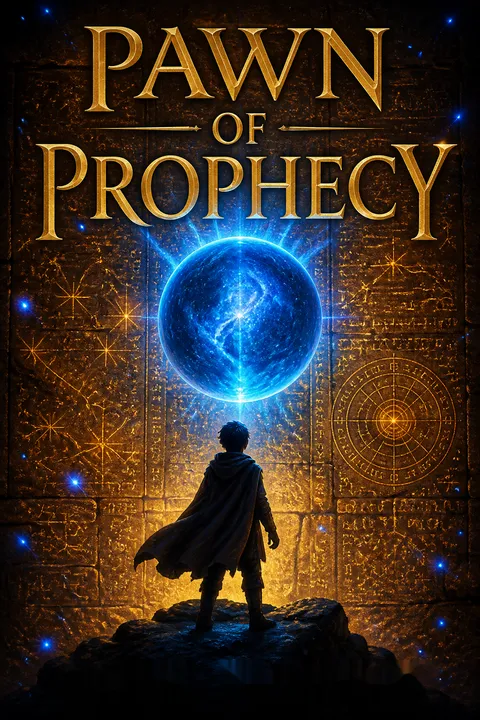
At the world’s beginning, Torak steals Aldur’s living Orb and uses it to split the earth; its fire burns away his hand and scars half his face. Centuries later, Belgarath leads Cherek and his sons into Torak’s ruined city to recover it. Only Riva can safely carry the Orb, so he and his descendants become its guardians.
The gods withdraw, trusting the Orb and Riva’s line to hold Torak in check. Belgarath’s daughter Beldaran joins that line, while her sister Polgara remains with him to keep watch. The ancient account makes the struggle over the Orb more than a war for a powerful object: it is the safeguard on which the western world depends.
The prologue gives the Orb a history of resistance as well as power. Torak’s wound follows from his attempt to make the living jewel serve his ambition, and the resulting catastrophe divides both land and peoples. By making Riva’s descendants custodians rather than owners, the history frames inheritance as an obligation carried forward, not a claim to rule. The gods’ withdrawal leaves human characters responsible for maintaining a peace they did not create. This mythic account also prepares the reader to see Garion’s ordinary childhood against a much longer history, even before he understands that the old conflict reaches into his life.
The Kitchen at Faldor’s
Garion grows up at Faldor’s farm, where Aunt Pol’s kitchen supplies food, discipline, and the closest thing he knows to a secure home. He believes she is his aunt and learns practical habits from Durnik, the patient blacksmith. When Garion asks about his dead mother, Pol comforts him but tells him little.
During a childhood accident, Garion alone notices a dark rider watching from a black horse. Later, while reenacting a battle with Rundorig, Garion suddenly attacks with a fury that leaves his friend badly beaten. Pol tends both boys, then forbids Garion to speak Torak’s name again. His ordinary farm life is still intact, but strange violence and a watcher have begun to intrude on it.
Faldor’s farm gives Garion a convincing sense of belonging before the story begins to unsettle it. Pol’s care is practical and intimate, while Durnik’s lessons connect a boy’s identity to work honestly completed. Garion’s sudden rage during play is disturbing precisely because it breaks the rules of that sheltered community: he cannot explain what overtakes him, and Pol responds with fear rather than ordinary correction. The rider’s appearance adds a second uncertainty, one Garion keeps to himself. His first home is real and loving, yet it cannot explain the forces already gathering around him.
The Storyteller’s Warning
A white-haired wanderer whom Pol calls Old Wolf returns to Faldor’s farm and tells the gathered household the old account of the gods, the Orb, and the danger posed by Torak. Garion is captivated, though Wolf insists the coming confrontation is not merely a story. On a later trip to Upper Gralt, Wolf spots two Thulls and a Murgo at a spice merchant’s shop.
When the Murgo tests Garion with questions and offers him a coin bearing Torak’s image, Garion lies about his name; Wolf secretly replaces the coin with an ordinary Sendarian penny. Back at the farm, Wolf warns Pol that the Murgo’s appearance matters, then leaves to investigate. Garion wakes the next morning to find him gone.
Wolf’s story changes the use of folklore at Faldor’s: what had seemed like inherited entertainment becomes a warning about an unfinished danger. Garion’s quick lie to the Murgo is his first deliberate step into the adults’ hidden world, and Wolf’s approval teaches him that deception can protect as well as exploit. The exchanged coin makes that lesson tangible: an object can carry allegiance and risk beyond its apparent value. Wolf’s departure leaves Pol to guard Garion without explaining why he needs protection, deepening the gap between the boy’s trust in his home and the secret history governing it.
The Mark Under His Palm
Five years pass, and Garion approaches adulthood on the farm. One autumn day, the raft he and the other children built breaks apart beneath him. He cannot swim, strikes his head, and nearly drowns before Durnik pulls him ashore. Garion glimpses the same rider nearby, but says nothing.
Later, while asking Pol about a pale circular mark on his right palm, he touches the white lock in her hair and experiences a sudden rush of sorrow, old faces, and formidable power. Pol stops the strange mental contact and tells him he is not ready to understand it. As she increases his kitchen chores, Garion notices how often questions are met with silence. His body is growing, but his origins remain deliberately out of reach.
The raft accident marks a shift from unexplained oddity to a pattern of danger: Garion survives because Durnik acts, not because the boy understands his own peril. His decision to conceal the rider suggests an emerging private self, distinct from Pol’s protection. The touch between Garion’s mark and Pol’s white lock briefly gives him access to a history too large for his childhood categories. Pol shuts that access down, showing that care can also involve control. The scene makes his curiosity psychologically consequential: knowledge is not simply withheld, it is experienced as a force that can overwhelm him.
Erastide’s Unwelcome Guest
At Erastide, a scarred Murgo arrives at Faldor’s farm to buy hams. Faldor refuses to do business on the holy day, despite pressure from his daughter Anhelda and her husband. During the household’s pageant, the Murgo reacts sharply when Durnik wears Torak’s mask, then studies Pol as if he recognizes her. The visit makes Garion’s unease about the eastern strangers harder to dismiss.
Meanwhile, adolescence redirects his attention toward Zubrette. He steals sweets to win kisses until Pol catches them and confines him to kitchen work. In spring, the unpleasant new hand Brill joins the farm. Garion avoids him, not realizing that this sour, watchful man will soon connect the farm to the Murgo’s search.
The Erastide scene places competing loyalties in the same room. Faldor’s refusal to trade on the feast day costs him a sale, while Anhelda’s commercial impatience exposes the difference between his values and hers. The Murgo’s response to the masked god and to Pol turns a supposedly routine purchase into surveillance. Garion, however, is absorbed by Zubrette and the ordinary embarrassments of growing up. That contrast matters: danger does not wait for him to be ready, and his first emotional preoccupations are as real as the larger history he cannot yet see.
Brill Draws His Sword
When Wolf returns five years after his departure, he tells Pol that someone has stolen an important object and that he must follow its trail. Pol refuses to leave Garion behind, especially after a Murgo previously questioned the farm about Wolf and a boy named Rundorig. Garion overhears their argument and later sees Brill listening at Pol’s door.
Wolf and Garion find Brill trying to escape through the stable with a sword and a purse of Angarak gold. Durnik disarms him with an ox yoke, and Wolf orders him bound and hidden rather than delayed by a formal inquiry. Pol, Wolf, and Garion prepare to leave; Durnik insists on accompanying them. Garion slips away from Faldor’s farm, his only home, with no clear account of why they must run.
The departure is driven by a collision between Pol’s protective responsibility and Wolf’s urgent pursuit. Brill’s gold converts Garion’s earlier suspicions into evidence: the danger has reached inside the farm and has purchased a place among its workers. Durnik’s choice to go matters because he acts from loyalty before he understands the mission. Garion’s excitement at adventure is quickly mixed with grief for Faldor’s farm and the people he leaves behind. His first journey is therefore not a chosen escape from home, but a forced departure that makes belonging something he must carry rather than inhabit.
Turnips Hide the Trail
Wolf’s companions meet them in the woods: Barak, a towering Cherek warrior, and Silk, a quick-witted Drasnian who knows the roads and the uses of disguise. To avoid drawing attention, the group travels as Sendarian wagoneers hauling turnips.
At Darine, Silk sells the load through a silent hand-sign language that Garion begins learning. Their business disguises the search, but it also brings them close to Asharak, a scarred Murgo who recognizes Silk’s reputation and studies Garion.
The group continues south, following Wolf’s uncertain sense of the stolen object’s passage. Garion gradually understands that they are being pursued and that the object is important enough to make ordinary travel, honest answers, and visible identities dangerous.
The wagon disguise turns concealment into daily labor: the travelers must behave plausibly, not merely hide. Silk’s hand language offers Garion a practical education in how information can travel without sound, while the turnip trade shows how commerce can serve as camouflage. Garion is learning to interpret surfaces, yet Asharak’s attention unsettles the confidence that skill alone can keep him safe. His new companions bring expertise and humor, but their secrecy leaves him dependent on partial explanations. The journey’s central tension is therefore both external and developmental: Garion must travel among people who know more than he does and learn how not to expose what he cannot yet understand.
Muros Turns to Flight
In Winold, Garion spots Brill meeting an armed stranger and warns Wolf’s party, so they leave before dawn. At a farm farther south, Silk learns that Brill has been asking after an old man, a woman, and a boy. The wagoneers reach Muros, but Brill finds them there and leads hired attackers into the streets. Barak and Durnik fight them off, while Silk saves Garion from two men closing in with weapons.
Garion reasons that Asharak could have used information from the Darine merchant to direct Brill toward them. A Grolim watches from a window, and Silk throws a dagger through the glass. With their disguise exposed, Wolf abandons the wagons. The party buys horses from the Algars and rides on through snow toward Camaar.
Garion’s observation at Winold helps the group evade one immediate trap, but the Muros attack reveals that evasion has not broken the network pursuing them. He contributes more than courage: he connects Asharak’s access to the merchants with Brill’s sudden appearance, forcing Silk to reconsider what the Murgo knows. The shift from wagons to horses is a concrete consequence of that insight and of the failed disguise. Garion’s quick thinking is beginning to matter, though the violence also exposes his tendency to enter danger physically. Competence and impulsiveness develop side by side.
The Duchess of Erat
In Camaar, Wolf finds traces showing that the stolen object passed through the city, though not by ship. Pol tires of posing as a poor traveler and enters as the Duchess of Erat, assigning Wolf, Silk, Barak, Durnik, and Garion formal household roles.
Before they can resume the trail, Captain Brendig arrives with orders from King Fulrach to take Wolf and his companions to Sendar. Pol tries to delay him, but Wolf agrees to go rather than risk a confrontation with the king’s soldiers.
At the palace, Garion hears Fulrach address Wolf as Belgarath and Pol as Polgara. He also learns that the Orb has been stolen from Riva and that the western kingdoms may be defenseless if Torak wakes. The names leave Garion feeling that his familiar life has been a deception.
Pol’s duchess persona is both a comic display of authority and a tactical answer to the group’s loss of anonymity. Yet the performance cannot protect them from a king’s summons. The revelation in Sendar rearranges Garion’s understanding of the people who raised him: Wolf and Pol are not merely eccentric adults but figures embedded in the history he heard as a child. More painful than the scale of their identities is Garion’s sense that he has been excluded from his own story. The Orb’s theft makes the adults’ secrecy understandable, but it does not immediately repair the emotional rupture that their silence has caused.
Garion Learns Their Names
At the Sendarian court, Fulrach explains that the Alorn kings have been searching for Belgarath because the Orb’s theft threatens the West. He binds himself to bring the party to their council at Val Alorn, despite Belgarath’s urgency to continue tracking the thief. Garion hears Pol described as Belgarath’s daughter and realizes that she is not his aunt by blood.
Pol gives him the names of his parents, Geran and Ildera, but not the story behind them. On the voyage north, Garion withdraws from her. When he recklessly stands at the prow as the ship crosses the dangerous Cherek Bore, Belgarath intervenes in their conflict and helps him apologize to Pol. Her embrace restores some closeness, though not the answers Garion wants.
The court scene makes political duty compete directly with the pursuit: Fulrach believes he must honor his promise to the Alorn kings, while Belgarath believes delay could be costly. Garion’s personal crisis runs beneath that public dispute. Learning his parents’ names gives him a fact, but no lineage or explanation, and his anger toward Pol is partly grief at losing the identity he thought he had. Belgarath’s intervention reframes the conflict as a matter of growing up rather than obedience alone. Pol’s embrace shows that affection can survive a broken assumption, even when trust remains incomplete.
The Cherek Bore
Greldik’s Cherek ship navigates the Bore by circling its enormous whirlpool and using the gained speed to escape the surrounding currents. Garion faces the passage beside Barak, choosing danger partly out of stubbornness after the upheaval at court. They reach Val Alorn, where a blind woman named Martje warns Barak of a coming Doom and greets Garion as a person of unusual importance.
Barak dismisses her as a troublesome fortune-teller, but her words unsettle him. At the palace, Barak’s wife Merel greets him with formal distance, revealing a strained marriage. The Alorn kings assemble to discuss the stolen Orb, while Belgarath and Pol insist that secrecy and speed matter more than raising armies.
The Bore gives Garion a physical version of the risk he has been resisting emotionally: he chooses to stand in danger, but cannot control the water or its outcome. Martje’s prediction introduces a different kind of uncertainty, one that Barak cannot dismiss as easily as he pretends. The strained greeting between Barak and Merel adds a domestic fracture to the political gathering, suggesting that royal titles do not protect people from private disappointment. Meanwhile, the council’s restraint is strategic rather than passive. Belgarath and Pol fear that mobilizing kingdoms too early could obstruct the effort to recover the Orb.
A Spy in Anheg’s Palace
While the kings meet, Garion is sent away to the armory and notices a sandy-bearded man in a green cloak moving through unused corridors. He later sees the same man enter a tavern with a hooded Murgo whom Garion recognizes as Asharak. Barak says Murgos are barred from Cherek, but Garion cannot yet explain why he is sure.
Outside the palace, Garion briefly meets Maidee, a bold girl who kisses him after he punches a boy who threatens him. At supper, Barak turns the encounter into a joke, leaving Garion embarrassed and Pol displeased. The palace remains full of secrets, but Garion’s observation has identified a danger inside the very stronghold where the kings are planning their response.
Garion’s discovery shows that his attention to small inconsistencies has become a useful form of agency. He cannot yet name the danger without resistance, but he recognizes Asharak from years of silent watching. That private recognition complicates his place among the adults: he knows something they do not, yet lacks the language to make them believe him. Maidee’s brief appearance offers a normal adolescent encounter, but it too turns into a public spectacle when Barak retells it. Garion is learning to act independently while still feeling exposed to adult judgment and laughter.
The Boar and the Bear
Garion joins Barak’s hunt despite Pol’s objections. Left alone beside a forest trail, he sees the green-cloaked spy confer with a pale-haired nobleman, later identified as the banished Earl of Jarvik. When the hunt drives a wild boar toward him, Garion braces his spear instead of moving aside. The animal breaks the shaft and batters him against a tree before Barak arrives.
Garion sees Barak as both man and enormous bear while the warrior kills the boar, then loses consciousness. Pol treats Garion’s injuries, while Barak withdraws in misery, convinced that the beast he became fulfills the Doom foretold for him. Garion survives, but his reckless bravery has exposed both his vulnerability and Barak’s frightening secret.
The hunt tests Garion’s desire to be treated as nearly grown, and he chooses the heroic posture over the safer one. The consequences are immediate: the spear injures the boar but cannot protect him from its charge. Barak’s transformation saves Garion, yet it also turns a familiar companion into someone frightened of himself. His response to the prophecy reveals how readily a person can interpret an involuntary experience as proof of an irreversible fate. Pol’s practical care and Barak’s shame leave Garion surrounded by affection that cannot erase the cost of his impulsiveness.
Asharak Wants the Boy
While Durnik is called to the council, Garion follows the green-cloaked spy through a ruined wing and overhears the kings discussing the thief and the danger of Torak’s return. Barak brings Garion before the council, where he identifies Asharak and describes the spy’s access to their conversation.
Pol removes a Grolim compulsion that had prevented Garion from speaking Asharak’s name. The Murgo then tries to seize him, but Garion resists long enough to flee into the palace. Jarvik’s armed men attack, and Garion escapes through dark corridors while warriors fight around him.
Hidden in a passage above the throne room, he overhears Jarvik confess that Asharak promised him power in exchange for Garion. At the supplied text’s stopping point, Pol hears Garion’s call but has not yet reached him.
The final sequence in the supplied text brings Garion’s private history into direct conflict with the political crisis. The compulsion explains why his silence was not a choice, while Pol’s intervention restores his ability to name the danger. Asharak’s attempt to take him confirms that Garion is more than an incidental companion to the search, but the text stops before explaining why. Jarvik’s coup also shows how private greed can open a kingdom to invasion: the promise of wealth and power turns a disgraced noble into a threat to the kings gathered around the Orb’s fate. Garion ends this portion acting alone, with rescue unresolved.
Analysis
Pawn of Prophecy builds its adventure by placing an ordinary childhood inside a history too large for the child to see. Garion’s attachment to Faldor’s farm is not disposable setup: its kitchen, practical work, and familiar friendships give him a concrete measure of what the journey costs. When Pol and Wolf withhold his origins, they may be protecting him, but the result is also an emotional injury. Garion’s anger at learning that the adults around him have concealed their identities follows naturally from his earlier dependence on them.
The book repeatedly tests the difference between courage and judgment. Garion protects Doroon, enters a street fight, faces a boar, and resists Asharak, but several of these actions expose him to danger that a more experienced person would avoid. The adults’ praise does not always help: Barak encourages boldness, while Pol tries to restrain it, and Garion must begin separating self-respect from the need to prove himself. His growing ability to observe, infer, and report is a more durable kind of courage than simply charging forward.
Secrecy is both the mission’s necessary tool and its central relational cost. The wagon disguise, Silk’s hand language, and Pol’s false title protect the group, while Garion’s mental compulsion shows that secrecy can also be imposed on him. Once he identifies Asharak and breaks through the silence, the political crisis becomes personal: Jarvik’s plot is aimed at Garion himself. The supplied text ends before the reason is explained or Garion is brought down from his hiding place. Its current endpoint therefore leaves the adventure suspended at the moment when the sheltered farm boy can no longer be treated as a bystander.
Review Summary
Pawn of Prophecy receives mixed reviews. Many readers praise it as a nostalgic, comforting fantasy with engaging characters and a fun story, perfect for young adults and fantasy newcomers. Critics find it clichéd, with simplistic writing and underdeveloped characters. Some readers appreciate its classic fantasy elements, while others find it dated. The book is often described as an introduction to a larger series, with opinions divided on whether it stands well on its own or merely sets up future installments.
People Also Read

Characters
Garion
The questioning farm boyRaised at Faldor’s farm by Aunt Pol, Garion begins with the assumptions of a practical country boy: home is a kitchen, adults know what they are doing, and stories belong to the past. His curiosity repeatedly pushes him toward information others withhold, while his instinct to act can outrun his judgment. He is observant, emotionally direct, and sensitive to being treated as a child. As unfamiliar people and dangers enter his life, he learns to lie when necessary, notice patterns, and trust his own perceptions. His most persistent need is not simply adventure but an answer to who he is and why the adults around him guard that answer.
Aunt Pol
The fierce guardianPol raises Garion at Faldor’s farm, where her skill in the kitchen and exacting discipline make her the center of his childhood. She is protective without being indulgent, quick to notice danger, and reluctant to give Garion information before she thinks he can bear it. Her sternness can feel like rejection to a boy who wants answers, but her actions repeatedly show how closely she watches over him. Away from the farm, she becomes more commanding and politically formidable. Her central tension is between protecting Garion through secrecy and helping him become capable of facing a world she cannot keep at a distance.
Mister Wolf
The wandering storytellerA white-haired storyteller with a taste for mischief, food, and old histories, Wolf moves easily between warmth and authority. He has known Pol for a long time and shares with her the responsibility of watching over Garion, though he explains little to the boy. He teaches through stories, disguises, and practical tests, treating concealment as a survival skill. His humor often masks urgency, and his patience with Garion is firmer than Pol’s but no less protective. He is a guide who believes that knowledge must arrive at the right moment, a belief that helps the mission while straining the trust of the person he is trying to prepare.
Durnik
The dependable blacksmithDurnik is the quiet smith at Faldor’s farm who befriends Garion and teaches him the dignity of finishing work well. Practical, restrained, and brave when circumstances demand it, he joins Pol and Wolf because he will not let them travel without an escort. He often serves as Garion’s most accessible adult, sharing his confusion rather than pretending to understand everything. Durnik’s steadiness contrasts with the disguises and political games around him. He measures people through conduct, not rank, and brings that grounded moral judgment into a world increasingly defined by secrecy and danger.
Silk
The Drasnian quick-change artistSilk is a small, sharp-nosed Drasnian who combines acrobatics, tradecraft, and a quick appetite for clever schemes. He knows roads, disguises, bargaining, and the silent hand-sign language used by his countrymen. His wit keeps the group moving, but his constant readiness to deceive makes trust a complicated matter. He takes an interest in Garion’s intelligence and teaches him useful skills without pretending that the world is straightforward. Behind the professional ease is a more private loneliness, visible in his attachment to Queen Porenn and his habit of turning vulnerable feelings into jokes.
Barak
The formidable Cherek warriorBarak is a huge, red-bearded Cherek warrior and Earl of Trellheim, valued by Wolf for his strength and courage. He speaks plainly, enjoys danger, and treats Garion with a rough affection that sometimes becomes reckless encouragement. His marriage to Merel is strained, and his attachment to his daughters gives him a tenderness he rarely displays openly. Barak’s confidence in battle sits beside a deep fear of what he cannot control in himself. He is loyal to his companions, but his pride and private shame can isolate him even when others are ready to help.
Asharak
The watching MurgoAsharak is a scarred Murgo whose appearances around Garion begin when the boy is still young. Patient and observant, he can disguise menace as routine business and uses other people’s ambitions to extend his reach. Garion’s repeated awareness of him creates a private dread that the boy cannot initially explain to his companions. Asharak represents the danger of being watched by someone who understands more about Garion than Garion understands about himself.
Faldor
The generous farmmasterFaldor is the kind, devout master of the farm where Garion grows up. He eats with his workers, provides carefully chosen gifts, and treats hospitality as a responsibility rather than a transaction. His refusal to conduct business on Erastide puts his principles ahead of a profitable Murgo sale. Faldor represents the stable community Garion is forced to leave, and his affection for Pol makes her departure a genuine loss for them both.
Zubrette
The farm’s young charmerZubrette is a golden-haired girl who invents games and knows how to keep the boys competing for her attention. Clever, flirtatious, and sometimes careless with others’ feelings, she gives Garion his first awkward experience of adolescent desire. Her presence makes the farm feel like a real childhood community rather than merely a safe setting.
Doroon
Garion’s restless friendDoroon is a quick, talkative boy whose energy carries him into trouble, including a fall from a tree that breaks his arm. Garion takes charge when the other children freeze, revealing his early instinct to act for a friend. Doroon’s chatter and vulnerability make him part of the ordinary childhood Garion later leaves behind.
Rundorig
The older farm companionRundorig is an older, taller Arendish boy who plays with Garion and the other children at Faldor’s farm. He is good-natured and not especially quick, and he becomes Garion’s opponent in their reenactment of a legendary battle. Their rough play reveals how suddenly Garion’s anger can exceed the situation.
Brill
The farmhand with a secretBrill arrives at Faldor’s farm as a sour, unkempt hired hand and keeps largely to himself. Garion finds him unpleasant but initially has no reason to connect him with the larger dangers around the farm. Brill’s presence shows how an apparently ordinary household can be penetrated by interests its members do not recognize.
King Fulrach
The duty-bound Sendarian kingFulrach is the King of Sendaria, a decent man who knows his kingdom is less prepared for war than its northern neighbors. He summons Wolf’s party because he is bound by a promise to the Alorn kings, even when the interruption frustrates their urgent search. His plain manner and concern for ordinary Sendars make him a ruler uneasy with the burdens of power.
King Anheg
The rough Cherek rulerAnheg rules Cherek from the ancient, sprawling palace at Val Alorn. He is blunt, politically alert, and comfortable among warriors, but he takes the danger posed by the Orb seriously. His trust in Barak and willingness to hear Garion’s observations show a king who can recognize useful information even when it comes from a boy.
Earl Jarvik
The banished Cherek nobleJarvik is a Cherek earl whose standing in the kingdom has been damaged by earlier political trouble. He seeks influence in a court already strained by the threat from the eastern kingdoms. His presence shows how ambition can turn internal rivalries into vulnerabilities at exactly the moment a realm needs unity.
Merel
Barak’s distant wifeMerel is Barak’s highborn wife, a formal and often cutting presence who treats marriage as a set of rights and duties. Their exchanges reveal years of disappointment beneath the public courtesy. She is perceptive when Garion describes the suspicious men he has seen, and she is willing to defend Barak when others might dismiss his account.
Hettar
The quiet Algar horsemanHettar is the adopted son of Cho-Hag, King of Algaria, and a capable horseman whose quiet manner carries authority. He contributes practical military judgment to the council and accompanies Barak’s hunt. His loyalty is measured rather than showy, and he is one of the few people who can help Cho-Hag move through the world.
Queen Porenn
The perceptive Drasnian queenPorenn is Queen of Drasnia, warm in manner and perceptive about the people around her. She shares an easy rapport with Pol and a playful, complicated familiarity with Silk. Her presence in the royal gathering shows that political intelligence and social observation are not confined to the kings’ council.
Martje
The blind temple prophetMartje is an elderly blind woman who appears near the Temple of Belar and speaks unsettling predictions to Barak and Garion. Barak dismisses her as a nuisance, but her certainty leaves a mark on him. She introduces prophecy as a force that can unsettle even people accustomed to danger.
Plot Devices
The Orb of Aldur
The living safeguardThe Orb is a living jewel created by Aldur, capable of immense power and hostile to those who misuse it. Torak’s attempt to wield it against the world burned and maimed him; afterward, only Riva could carry it safely. The Orb’s bond with Riva’s descendants makes it both a physical object and a hereditary responsibility. Its theft drives Wolf’s pursuit, draws the Alorn kings into council, and threatens to revive a conflict the western kingdoms believe they survived. Its status and history are disclosed in the supplied text. is_spoiler is true.
The ancient prophecy
A future held in suspenseThe prologue establishes that Torak’s return and a final struggle over the Orb are foretold, while the storyteller repeats enough of the old account to make Garion and the farmworkers feel its weight. The prophecy gives the current theft a scale beyond the immediate chase, but it does not explain exactly how the coming danger will unfold. For Garion, the tale first sounds like distant legend; events gradually make it harder to keep legend separate from his own life. The prophecy supplies urgency without settling the outcome. is_spoiler is false.
Garion’s palm mark
A concealed inheritanceA pale circular mark covers Garion’s right palm and is said to have appeared in his father’s family for generations. When it touches Pol’s white lock, Garion experiences an unexpected mental opening filled with old sorrow, faces, and a sense of immense power. Pol closes the contact and postpones explaining it. The mark links Garion’s body to a history the adults are withholding, but the supplied text does not yet explain its full meaning. It turns his questions about his parents into a mystery with physical evidence. is_spoiler is true.
The Grolim compulsion
A name locked awayGarion cannot initially speak about Asharak, even when he recognizes the Murgo and knows that the information matters. Pol identifies the obstruction as a mental compulsion and removes it by touching Garion’s hand to her white lock. The release lets Garion name Asharak before the kings, but it also alerts the Murgo that the hold has been broken. The device turns silence into evidence of an outside force rather than simple reluctance, and its removal triggers the immediate attempt to seize Garion. is_spoiler is true.
Disguises and hand signs
Cover for the pursuitWolf’s party travels as wagoneers, using turnip and ham deliveries to make their passage appear ordinary. Silk’s Drasnian hand-sign language allows him to bargain without being overheard and gives Garion a new skill during the journey. In Camaar, Pol adopts the role of a duchess, trading anonymity for speed and access to better lodging. These disguises work only while the group controls what onlookers notice. Brill’s pursuit and the attack at Muros expose their limits, forcing the party to abandon the wagons and ride. is_spoiler is false.
FAQ
Synopsis & Basic Details
What is Pawn of Prophecy about?
- A young boy's journey: The story follows Garion, a seemingly ordinary boy, as he discovers his extraordinary destiny and is drawn into a quest to protect a powerful artifact from falling into the wrong hands.
- Ancient conflict re-emerges: The narrative is set against a backdrop of an ancient conflict between gods and men, with the threat of a dark god's return looming over the kingdoms of the West.
- A diverse group's quest: Garion's journey is shared with a diverse group of companions, each with their own unique skills and secrets, as they travel through a world filled with danger and intrigue.
Why should I read Pawn of Prophecy?
- Classic fantasy adventure: It offers a classic fantasy adventure with a compelling mix of magic, swordplay, and a quest to save the world, appealing to fans of traditional fantasy.
- Engaging characters: The story features a cast of memorable characters, each with their own distinct personalities and motivations, making the journey both exciting and emotionally resonant.
- Intricate world-building: David Eddings creates a richly detailed world with its own history, cultures, and mythologies, drawing readers into a fully realized fantasy setting.
What is the background of Pawn of Prophecy?
- Mythological creation: The story's background is rooted in a mythological creation story involving seven gods, their conflicts, and the creation of the world and its various races.
- Ancient wars and divisions: The world is shaped by ancient wars and divisions, particularly the conflict between the Alorns and the Angaraks, which has left a legacy of hatred and mistrust.
- Political and cultural diversity: The kingdoms of the West are a melting pot of different cultures and races, including the Alorns, Sendars, Arends, and Tolnedrans, each with their own unique traditions and histories.
What are the most memorable quotes in Pawn of Prophecy?
- "Always finish what you set your hand to.": Durnik's advice to Garion highlights the Sendarian values of diligence and commitment, reflecting a core theme of the book.
- "There's a world beyond what we can see and touch, and that world lives by its own laws.": The storyteller's words to Garion introduce the idea of a hidden reality, foreshadowing the magical elements of the story.
- "You're too young yet.": Aunt Pol's repeated phrase to Garion emphasizes his immaturity and the secrets she keeps from him, creating a sense of mystery and anticipation.
What writing style, narrative choices, and literary techniques does David Eddings use?
- Clear and accessible prose: Eddings employs a straightforward and easy-to-read writing style, making the complex world and plot accessible to a wide audience.
- Third-person limited perspective: The narrative primarily follows Garion's point of view, allowing readers to experience the world through his eyes and share in his discoveries and emotions.
- Dialogue-driven storytelling: Eddings relies heavily on dialogue to advance the plot and reveal character, creating a fast-paced and engaging reading experience.
Hidden Details & Subtle Connections
What are some minor details that add significant meaning?
- Aunt Pol's white lock: The single white lock of hair at Aunt Pol's brow is a subtle detail that marks her as a sorceress, foreshadowing her true identity and magical abilities.
- Garion's palm mark: The perfectly round, white mark on Garion's palm is a recurring detail that hints at his connection to the Orb of Aldur and his destiny as a protector of the West.
- The storyteller's cloak: The storyteller's unusual cloak, not commonly worn in Sendaria, suggests his mysterious origins and his connection to a world beyond the ordinary.
What are some subtle foreshadowing and callbacks?
- The covered shield: The story of Brand's covered shield at the Battle of Vo Mimbre foreshadows the importance of hidden power and the unexpected ways in which battles can be won.
- The Angarak penny: The Murgo's attempt to give Garion an Angarak penny foreshadows the dangers that lie ahead and the importance of avoiding anything associated with Torak.
- The storyteller's words: The storyteller's words about the possibility of Garion being chosen for a great and noble task foreshadow his destiny and the challenges he will face.
What are some unexpected character connections?
- Aunt Pol and Mister Wolf: The hidden recognition and long history between Aunt Pol and Mister Wolf, revealed through their shared glances and knowing remarks, hints at a deeper connection beyond their roles as aunt and storyteller.
- Garion and Asharak: The recurring presence of the dark-cloaked figure watching Garion, later revealed to be Asharak, establishes a subtle connection between them, foreshadowing their future conflict.
- Durnik and Aunt Pol: Durnik's quiet admiration and respect for Aunt Pol, often expressed through his actions and words, hints at a deeper connection that goes beyond their roles on the farm.
Who are the most significant supporting characters?
- Durnik the smith: Durnik's steadfastness and practical wisdom provide a grounding influence on Garion and the group, representing the solid virtues of Sendarian society.
- Silk the Drasnian: Silk's cunning and knowledge of the world make him an invaluable ally, providing a counterpoint to the more straightforward characters and adding a layer of intrigue to the story.
- Barak the Cherek: Barak's strength and loyalty make him a formidable protector, representing the martial prowess of the Alorns and adding a sense of danger and excitement to the group's journey.
Psychological, Emotional, & Relational Analysis
What are some unspoken motivations of the characters?
- Aunt Pol's protectiveness: Aunt Pol's fierce protectiveness of Garion stems from her knowledge of his destiny and her desire to shield him from the dangers that lie ahead, even if it means keeping secrets from him.
- Mister Wolf's weariness: Mister Wolf's occasional weariness and irritability reveal the burden of his long life and the weight of his responsibility to protect the world from Torak.
- Silk's need for control: Silk's constant need to be in control and his sly manipulations stem from his past experiences and his desire to protect himself in a dangerous world.
What psychological complexities do the characters exhibit?
- Garion's internal conflict: Garion struggles with his desire for a normal life and his growing awareness of his extraordinary destiny, creating an internal conflict that drives his actions and decisions.
- Barak's melancholy: Barak's melancholy and self-doubt stem from his knowledge of his Doom and his fear of losing control, revealing a vulnerability beneath his formidable exterior.
- Aunt Pol's emotional restraint: Aunt Pol's emotional restraint and her tendency to keep her feelings hidden stem from her long life and her awareness of the burdens she carries, creating a sense of mystery and depth.
What are the major emotional turning points?
- Garion's grief over his mother: Garion's sudden grief and anguish upon learning of his mother's death mark a turning point in his emotional development, revealing his vulnerability and his need for connection.
- Garion's fight with Rundorig: Garion's violent outburst during his fight with Rundorig reveals a hidden power within him and foreshadows his future role in the conflict against Torak.
- Garion's near-drowning: Garion's near-drowning experience and Aunt Pol's subsequent overprotectiveness mark a turning point in his freedom, highlighting the dangers he faces and the lengths to which Aunt Pol will go to protect him.
How do relationship dynamics evolve?
- Garion and Aunt Pol: The relationship between Garion and Aunt Pol evolves from a simple bond of caregiver and child to a more complex dynamic of mentor and student, with Garion increasingly questioning her authority and seeking his own path.
- Garion and Mister Wolf: The relationship between Garion and Mister Wolf evolves from a simple friendship to a more complex dynamic of teacher and student, with Garion increasingly questioning the old man's motives and seeking his own understanding of the world.
- The group dynamic: The group dynamic evolves from a collection of individuals to a cohesive unit, with each member learning to rely on the others and developing a sense of shared purpose.
Interpretation & Debate
Which parts of the story remain ambiguous or open-ended?
- The nature of the Orb: The exact nature and full extent of the Orb of Aldur's power remain somewhat ambiguous, leaving room for speculation about its capabilities and limitations.
- The identity of Garion's parents: While Garion learns their names, the full details of his parents' lives and their connection to the larger conflict remain somewhat mysterious, leaving room for future revelations.
- The full extent of the prophecy: The full details of the prophecy and its implications for the future remain somewhat open-ended, leaving room for future conflicts and resolutions.
What are some debatable, controversial scenes or moments in Pawn of Prophecy?
- Aunt Pol's methods: Aunt Pol's methods of discipline and her tendency to keep secrets from Garion can be seen as both protective and manipulative, raising questions about the ethics of her actions.
- The use of deception: The group's frequent use of deception and subterfuge can be seen as both necessary for survival and morally questionable, raising questions about the nature of good and evil.
- The nature of the Gods: The portrayal of the Gods as flawed and sometimes capricious beings can be seen as both realistic and controversial, challenging traditional notions of divine perfection.
Pawn of Prophecy Ending Explained: How It Ends & What It Means
- The journey continues: While the immediate threat of the Murgo and the Earl of Jarvik is resolved, the story ends with the group embarking on a new journey, leaving the ultimate fate of the world still uncertain.
- Garion's transformation: Garion's experiences throughout the story have transformed him from an innocent farm boy into a young man with a growing awareness of his destiny and the challenges that lie ahead.
- The quest for the Orb: The quest to recover the Orb of Aldur remains the central focus of the narrative, with the group's journey to Val Alorn marking a new phase in their search for the stolen artifact.
Belgariad Universe Series
Download PDF
Download EPUB
.epub digital book format is ideal for reading ebooks on phones, tablets, and e-readers.








