

Plot Summary
A Scullion in the Keep
On the day the long-closed throne room opens again, fourteen-year-old Simon1 is hiding in the Hedge Garden, absorbed by a beetle while the castle prepares for its ailing king.8 Rachel the chambermaid drags him back to work and sends him to sweep Doctor Morgenes'3 rooms.
There Simon1 meets the old scholar's3 crowded world of books, odd instruments, and strange experiments. Across the castle, Prester John8 returns to the Dragonbone Chair after years of illness.
He confides to his jester17 Towser17 that he expects to die soon and wants his elder son5 Elias5 to inherit the kingdom. He mistrusts younger4 Josua,4 whose lost hand and guarded nature make him seem unfit to rule. Simon1 knows none of this yet; he is simply a restless servant looking for a life larger than chores.
The opening places two kinds of confinement beside each other. John is trapped by age inside the throne room; Simon is trapped by a station that seems to offer no future. Their difference in scale does not erase a shared anxiety about what remains possible. The castle's accumulated history, visible in its mismatched stones and the ancient chair, also warns that power never begins on empty ground. Simon's curiosity is his first resistance to being defined by the work assigned to him.
History Under the Floor
Simon1 brings frogs to Morgenes,3 hoping for a story, and earns the chance to return as the doctor's3 apprentice. While Simon1 sweeps, Morgenes3 recounts how iron-bearing Rimmersmen drove the Sithi from their lands and how the ancient castle of Asu'a became the Hayholt.
The history unsettles Simon1 because the stones beneath his feet have belonged to vanished peoples before they belonged to him. In the chapel, he then overhears Elias5 accusing Josua4 of bringing grief to the family, while Josua4 warns that Pryrates7 is dangerous and should not be trusted.
Elias5 dismisses him. Simon1 has now heard the private fracture behind the court's ceremony, but he cannot yet understand its stakes. At the moat, an unseen voice warns that the Sithi will reclaim what men took.
Morgenes treats history not as a pageant of great men but as a record of occupation, loss, and unfinished claims. Simon's apprenticeship begins with the humbling discovery that his home is built over someone else's world. The argument between the princes gives that history a present-tense edge: inherited authority is already unstable, and warnings can be dismissed as personal grievance. Simon's eavesdropping is not yet political intelligence. It is the beginning of learning that what adults conceal may shape the ground beneath everyone.
A Crown in Winter
Prester John8 weakens, and delegates from across Osten Ard crowd into the Hayholt while Elias5 and Josua's4 followers glare at each other. When John8 dies, the kingdom mourns the king8 who once rode freely among its people. At the funeral, Josua4 places Bright-Nail on his father's8 body, while Elias5 avoids taking the sword himself, unsettling the observers who expected it to pass to the heir.
The burial brings a brief, noisy celebration of Elias's5 coming reign. Simon,1 serving wine, sees Pryrates7 at the high table and recognizes him as the hooded driver who nearly ran him down. The night ends with a red comet streaking over the castle. Courtiers cheer it as the start of a new age; Morgenes3 watches in fear.
The funeral makes succession a visible, embodied problem. Bright-Nail is not merely a weapon but a symbol of John's authority, and Elias's refusal to claim it leaves a gap between inheritance and acceptance. The crowd tries to seal that gap with ceremony and celebration, but the comet and Morgenes's alarm interrupt their confidence. Simon, still an observer at the edge of power, notices the danger before he can name it. The scene teaches that public optimism can coexist with private foreboding.
The Cost of Elias's Court
Elias5 fills the Hayholt with tournaments and feasts while drought empties wells, the poor crowd outside the walls, and plague devastates Meremund. His King's Hand, Guthwulf, seals sick families inside their homes and burns them there to contain infection.
In Falshire, Earl Fengbald crushes a protest over confiscated sheep by burning the wool district and killing hundreds of the king's5 own subjects. Miriamele6 resists Elias's5 plan to marry her to Fengbald, but her father5 insists he needs an heir.
Simon,1 meanwhile, tries to enter military service with a forged recommendation; Morgenes3 exposes the lie and makes him face the cruelty of the life he romanticizes. The doctor's3 warnings about Pryrates7 grow urgent as Simon1 sees the priest7 kill a small dog without hesitation.
Elias's court treats spectacle as if it could replace governance. While nobles feast, drought and plague expose the limits of royal attention, and coercive solutions turn subjects into expendable material. Simon's failed enlistment is a small version of the same confusion: he mistakes violence for agency because the court has made martial glory visible and useful labor invisible. Miriamele's resistance reveals another cost of dynastic politics, as her body is treated as a remedy for Elias's insecurity. Pryrates embodies power without ordinary restraints.
The Prison Beneath the Keep
After Simon1 discovers Prince Josua4 chained in a hidden cell, he runs to Morgenes,3 who confirms the danger and helps him return through secret passages. The doctor3 breaks the prince's4 restraints, gives him food and a route through the ancient tunnels, and sends him toward Naglimund.
When Inch leads armed men and Pryrates7 to Morgenes'3 chambers, Simon1 refuses to leave his mentor. Morgenes3 instead releases six sparrows carrying messages and a ring, then uses the Art to hold the attackers back.
Pryrates7 breaks through the barrier. Morgenes3 ignites the room and throws himself at the soldiers, giving Simon1 time to escape with his manuscript and a light-bearing crystal. Simon1 flees underground, grieving and terrified, with the rescued prince4 already beyond his reach.
Morgenes' final choices convert scholarship into action. The knowledge he has taught Simon is not a weapon in the conventional sense, but it gives the boy routes, judgment, and something worth carrying forward. His sacrifice also refuses the logic Pryrates follows: power is not valuable merely because it can be used. Simon's attempt to stay beside his mentor is emotionally loyal but practically dangerous; Morgenes' insistence that he go makes survival itself an entrusted responsibility. The manuscript and ring become remnants of a relationship the fire cannot erase.
Sorrow Takes the Throne
Lost in the tunnels beneath the Hayholt, Simon1 sees fragments of an older Sithi world collapse around him before reaching the surface near Thisterborg. There he witnesses Pryrates7 and King Elias5 meeting hooded Norns beside a black wagon. Pryrates7 offers the captive Lord Constable Breyugar in place of the person promised, and Elias5 allows the exchange to proceed.
The Norns open a coffin containing a dark sword that seems to exert its own pull. Elias5 takes it and pledges himself to the Storm King, Ineluki. Simon1 escapes through the darkness with the image of a vast red presence rising over the hill. When he finally reaches open country, exhaustion and fear have made the castle he once knew feel impossibly far away.
This is the moment private political corruption becomes an alliance with a power outside ordinary human scale. Elias does not simply inherit John's rule; he accepts a new source of authority, one that arrives through ritual, substitution, and blood. Simon's position as hidden witness matters because he sees both the king's fear and his consent. His later flight cannot undo what he witnessed, but it prevents the truth from dying in the tunnel with him. The sword makes ambition tangible and dangerous.
A Fugitive Finds Company
On the road from Erchester, Simon1 meets Brother Cadrach,13 who befriends him at an inn and then steals the purse containing Simon's1 money and a kitchen errand's payment. When Simon1 later finds a Sitha10 trapped by a woodsman, he intervenes, killing the man with a rock before the Sitha10 can be executed.
The rescued stranger10 answers with a white arrow, marking a debt rather than repaying one. A small Qanuc traveler named Binabik2 soon finds Simon1 and offers food, shelter, and company on the way north. Simon1 begins to learn that wilderness survival is not the heroic freedom of his childhood stories: it means hunger, cold, and dependence on people he has only just met.
Simon repeatedly discovers that moral action does not guarantee safety. He saves the Sitha, but the act leaves him with a debt whose meaning he cannot control; he trusts Cadrach, but that trust costs him his purse. Binabik offers a different model of companionship, practical and reciprocal rather than sentimental. Simon's fantasies of adventure begin to shrink against the physical demands of the road. Yet his intervention for the Sitha marks a change: he acts not for glory, but because he cannot watch a trapped being be killed.
The Abbey's Red Ground
At Saint Hoderund's, Simon1 and Binabik2 find the abbey burned and most of its inhabitants slaughtered. Brother Langrian survives with a serious head wound, while the frightened Brother Dochais dies after raving about the Storm King and the white hounds. Duke Isgrimnur's9 patrol arrives amid a separate ambush; his men pursue the attackers, then capture Simon,1 who invents a story about being a runaway apprentice bound for Naglimund.
That night, Bukken burst from the earth and attack the Rimmersmen's camp. Simon1 fights back instead of fleeing, and Binabik2 returns on Qantaqa to pull him free. The survivors escape into the forest, carrying fresh proof that the danger reaches beyond the royal brothers' quarrel.
The abbey's destruction strips away the safety of religious refuge: the dead are not abstractions but people who had offered shelter to travelers. Simon's false story to Isgrimnur shows how quickly survival forces him into deception, while the Bukken attack makes that danger literal. His decision to help the Rimmersmen is an early act of costly solidarity. Binabik's return binds their lives more tightly, but the violence also exposes the limits of what they know. The word Storm King is no longer merely a dream's residue.
The Witch at the Lake
Simon1 and Binabik2 reach the isolated lake-house of Geloe,11 a wise woman who treats their injuries and takes in Leieth, a badly wounded girl. They have found Leieth and her companion in a tree, hiding from a Nornhound and its riders; Simon1 recognizes the companion as Malachias,6 the boy who once spied on him at the Hayholt.
Geloe11 and Binabik2 uncover the disguise: Malachias6 is actually Marya,6 the princess Miriamele,6 traveling under a boy's name with a message for Josua.4 Leieth is her handmaiden, not her sister. Miriamele6 has left Elias's5 court rather than submit to the marriage he arranged, but her escape has brought her into the path of the same hunters pursuing Simon.1
The disguise gives Miriamele a temporary freedom that court identity denies her, but it also makes her depend on secrecy and flight. Simon recognizes her only after danger has forced the disguise into the open, reversing the usual courtly order in which rank announces itself. Geloe's care for Leieth offers a contrast to the Nomhounds' violence: both bodies are vulnerable, but one is treated as worth preserving. The revelation also binds Simon's personal journey to the royal conflict he had hoped to escape.
Stormspike in the Dream
Geloe,11 Binabik,2 and Simon1 enter the Road of Dreams seeking answers. Simon1 sees Stormspike, the Norn stronghold, and a masked queen21 seated above a vast well. A book appears in his vision, then its markings resolve into three swords. Geloe11 identifies the queen21 as Utuk'ku,21 ruler of the Norns, while Binabik2 connects the book to Nisses' lost Weird of the Swords.
The vision suggests that the Norns are preparing for war and that the blades have a role in resisting Ineluki. It nearly overwhelms the travelers, especially when Simon1 struggles against the force pulling him away; Geloe's11 intervention helps bring him back. Their next task is no longer simply reaching Naglimund.
The dream does not deliver a clean prophecy so much as a set of images that force the characters to revise their sense of scale. Simon's anger makes him resist leaving the vision, but that resistance nearly costs him his life and Geloe's. The three swords turn history into a practical problem: lost objects may matter more than any single army. Yet the images remain partial, and the characters must act without certainty. The dream's power lies in making ignorance urgent rather than resolving it.
The Sithi's White City
Geloe11 sends Simon,1 Binabik,2 Miriamele,6 and Leieth toward Da'ai Chikiza, the ruined Sithi city, while Nornhounds pursue them through the forest. They escape one pack by using a fallen tree above a canyon, and later rescue Leieth and Miriamele6 from another attack. Qantaqa fights the largest hound, allowing them to reach the city, where ancient bridges and towers still rise beneath the trees.
At the river crossing, Ingen Jegger and his archers catch up. Their arrows strike Binabik,2 and Simon1 carries the wounded troll into the ruins as the party flees. Jiriki10 and other Sithi confront them, turning the White Arrow debt into an immediate question of trust.
The pursuit converts the White Arrow from a symbolic promise into a practical bond: Simon's survival now depends on the Sithi whose member he once saved. The ruined city makes that bond visible against a landscape where human and Sithi histories overlap but do not reconcile. Simon repeatedly chooses to carry or protect others, despite exhaustion and limited skill. His courage is no longer the eager fantasy of a boy imagining battle; it is the stubborn labor of keeping vulnerable companions moving while the enemy closes in.
Leobardis Betrayed at Inniscrich
While Simon's1 party struggles north, Count Eolair12 works to bring Duke Leobardis of Nabban into Josua's4 alliance. Leobardis eventually marches to support Naglimund, despite resistance from his wife and son Benigaris.20 At Inniscrich, Rimmersgarders under Skali ambush the Hernystiri. In the confusion Benigaris20 turns on his father, killing Leobardis and signaling a retreat that leaves the allied force broken.
Eolair12 survives to carry the news, while Isgrimnur's9 own land has already been handed to Skali by Elias.5 At Naglimund, Jarnauga14 tells Josua4 that the Norns are aiding the king5 and that Ineluki, the Storm King, is the deeper enemy. The political coalition is now as wounded as the land it hoped to defend.
The betrayal at Inniscrich gives the political conflict its most intimate form: the alliance fails not only under outside pressure but through a son choosing power over family. Benigaris's act echoes Elias's own estrangement from Josua, making dynastic ambition a repeating mechanism rather than an isolated flaw. Eolair and Isgrimnur remain loyal, but loyalty cannot protect them from losses arranged at court. Jarnauga's warning reframes those losses as part of a larger design, without diminishing the human choices that enable it.
The Storm King's Siege
Elias5 brings a vast army against Naglimund, whose defenders face siege towers, miners, and repeated assaults. Josua's4 men hold the walls, but their numbers and supplies are thin. A Norn force under Ingen Jegger hunts the fugitives as the supernatural pressure intensifies; Hunen giants and Bukken also enter the conflict.
When the Norns breach the defenses, Josua's4 household is forced to abandon the castle through hidden passages. The losses are severe, and Naglimund can no longer serve as the refuge its defenders trusted. Simon1 and Binabik,2 meanwhile, are pursuing the lost sword Thorn with Jiriki's10 help, even as the storm gathering around Elias's5 campaign threatens to engulf every remaining ally.
The siege joins the political and supernatural plots without making them identical. Elias's army can be counted in soldiers and engines; the Norns, Bukken, and Hunen make the threat harder to measure and therefore harder to resist. Naglimund's fall exposes the weakness of treating a stronghold as permanent safety. Josua's escape preserves a living claim to resistance, but destroys the place that had organized it. Simon's parallel search for Thorn suggests that survival may depend on knowledge and alliances as much as on walls.
The Sword Beneath Winter
After leaving Naglimund, Simon,1 Binabik,2 and their companions cross the frozen northern wastes toward Urmsheim, guided by a fragmentary clue to the sword Thorn. A storm separates and exhausts them, while the Hunen and Norn forces press close. They find the bones and belongings of the earlier seeker, Colmund, and at last reach the hidden ice-tree where Thorn rests among the dead.
When Ingen Jegger's hunters attack, Simon1 takes up the sword and faces the ancient dragon Igjarjuk. He strikes as the dragon surges from the ice, then collapses as the creature falls from sight. The group has found one of the three blades, but the cost is uncertain, and the text leaves Simon's1 fate unresolved.
The search for Thorn turns the prophecy into bodily danger. The sword is not a reward waiting safely at the end of a map; reaching it requires endurance through cold, pursuit, and the remains of someone who failed before Simon. When he finally acts, he does so without mastery or certainty, carrying a blade whose history is older and darker than his understanding. The episode binds Simon's growth to risk rather than competence: he is still frightened, but he can now choose to move toward what frightens him.
Analysis
The novel's supplied narrative turns a boy's longing for adventure into a study of what adventure costs when history is not safely past. Simon1 begins by imagining battles from the margins of the Hayholt, where the work of servants seems small and the past seems grand. Once he is driven from that shelter, he learns that hunger, cold, injury, and dependence shape every choice. His growth is not a sudden conversion into a hero. It is the gradual discovery that courage often means carrying someone weaker, admitting fear, or continuing when certainty is unavailable.
The political conflict and the older conflict are deliberately entangled. Elias's5 abuses matter in themselves: they starve communities, fracture alliances, and turn family relationships into instruments of rule. Yet his decisions also open a path for the Norns and Ineluki, whose history predates the human kingdoms. The supernatural does not erase responsibility. Pryrates7 and Elias5 still choose, and their choices let old violence acquire new power.
The swords, the archive, and the White Arrow offer three different relations to the past. Sorrow embodies a past weaponized by ambition. Nisses' book turns memory into a warning that requires interpretation. The White Arrow expresses a debt that must be honored between peoples who have reason to distrust one another. These objects do not solve the crisis by themselves; they make the characters answerable to histories they did not create.
The supplied narrative remains unresolved. Simon1 and his companions have found Thorn, but their survival and the fate of Naglimund remain uncertain. That open ending fits the book's central pressure: its characters must act before they can know whether the past is a warning, a weapon, or a road home.
Review Summary
The Dragonbone Chair receives mostly positive reviews, praised for its worldbuilding, character development, and influence on modern fantasy. Many readers appreciate Williams' prose and the slow-burn narrative, though some find the pacing challenging. The book is often compared to works by Tolkien and Martin, with readers noting its impact on the genre. While some criticize its length and pacing, many consider it a classic of epic fantasy, praising its intricate plot, memorable characters, and richly detailed world.
People Also Read





Characters
Simon
The dreaming scullionA tall, awkward servant raised among the chambermaids of the Hayholt, Simon begins as a boy whose attention wanders from every chore. Stories, ruins, animals, and hidden passages matter more to him than the narrow future his station seems to promise. Morgenes's3 apprenticeship gives his curiosity direction, though Simon initially mistakes learning for the glamorous power of magic. He is impulsive, self-doubting, and hungry for recognition, yet he repeatedly acts when someone more vulnerable is in danger. His growing courage is practical rather than polished: he carries an injured companion, endures unfamiliar country, and keeps asking questions even when the answers frighten him.
Binabik
The Qanuc guideA small troll from the northern mountains, Binabik travels with Qantaqa, a large gray wolf, and carries an education shaped by songs, practical lore, and his master Ookequk. He is cheerful without being frivolous, patient with Simon's1 questions, and blunt when danger leaves no room for comfort. His knowledge of paths, animals, and old histories makes him an indispensable guide, but he does not pretend to understand everything. Binabik values loyalty as an obligation freely accepted, and his bond with Simon1 grows through shared risk rather than sentiment alone.
Morgenes
The scholar of the HayholtDoctor Morgenes is the Hayholt's eccentric healer, historian, and keeper of forbidden curiosities. He sees Simon's1 restless intelligence beneath his clumsiness and teaches him letters, history, and caution about power. His humor makes learning feel hospitable, while his guardedness reveals that he knows more about the kingdom's dangers than he can safely explain. Morgenes distrusts Pryrates7 because he understands that curiosity without restraint can open doors that cannot be closed. He is one of the few adults who treats Simon1 as capable of becoming more than the role assigned to him.
Josua
The exiled princeJohn's8 younger son, Josua is a thoughtful, guarded prince whose missing right hand and austere manner set him apart from his bolder elder brother5. He distrusts Pryrates7 and prefers counsel to spectacle, but he can be proud, secretive, and slow to trust. Years of family conflict have made him wary of easy loyalty, even from people who risk themselves for him. Josua's instinct is to weigh consequences before acting; the crisis forces him to turn private judgment into public leadership without making him comfortable with power.
Elias
The troubled High KingElder son of Prester John8 and heir to a vast kingdom, Elias begins with the strength and confidence of a warrior accustomed to command. He enjoys display, contests, and the loyalty of young nobles, but appears increasingly detached from famine, plague, and the burdens of distant subjects. His grief over his wife and fear of leaving no heir shape his treatment of Miriamele6 and his dependence on Pryrates7. Elias is not simply careless or cruel: he is a ruler whose genuine capacity for affection and decisiveness is being bent toward choices he does not fully understand.
Miriamele
The defiant princessElias's5 daughter6 is intelligent, observant, and resistant to being treated as a marriage treaty. She longs for the sea and for a life beyond the court's guarded rooms, but her father's5 need for a political heir gives him power over her future. Miriamele can be impulsive and proud, yet she is also alert to danger and capable of acting without waiting for permission. Her relationship with Simon1 begins under a disguise that lets her move more freely, and their shared journey gives each of them a view of life beyond the roles they were born into.
Pryrates
The king's occult adviserA hairless priest and alchemist, Pryrates serves Elias5 while cultivating knowledge that other scholars regard as dangerous. His composure is unnerving, and he shows little of the ordinary fear or compassion that restrain those around him. He treats people as instruments and sees forbidden power as worth its risks. Morgenes3 recognizes in Pryrates a form of inquiry stripped of ethical limits: not the patient study of nature, but an invitation to forces that may answer without being controlled.
Prester John
The aging conquerorThe High King of Osten Ard, John is remembered as a dragon-slayer, empire-builder, and beloved ruler who once moved freely among ordinary people. In old age he is frail, grieving, and troubled by the gap between the heroic image others preserve and the complicated life he actually lived. He wants his kingdom to survive him and hopes Elias5 can hold it together, while his doubts about Josua4 reveal a father's incomplete understanding of his sons. John's reign is the standard against which every later ruler is judged, even by those who question its costs.
Isgrimnur
The loyal northern dukeDuke of Elvritshalla and an old companion of Prester John8, Isgrimnur is blunt, physically imposing, and more comfortable with an axe than an intrigue. He worries fiercely about his people, his son, and the north's failing roads, even when Elias5 keeps him at court. His temper can make him seem reckless, but beneath it is a strong sense of duty and an unwillingness to abandon those who depend on him.
Jiriki
The Sithi princeA Sithi noble with amber eyes and an ease that can turn suddenly into formidable authority, Jiriki stands between an ancient people and the human kingdoms encroaching on their remembered lands. He is curious about mortals but not sentimental about them, and his hospitality exists alongside a deep awareness of historical injury. Jiriki's humor and grace mask a careful, strategic mind. His connection to Simon1 begins through the White Arrow and an old debt, giving their alliance both personal and political weight.
Geloe
The forest wise womanGeloe lives alone in a raised house beside a hidden lake, where she tends injured travelers and understands the forest's older inhabitants. Her practical manner can seem severe, but she gives care without sentimentality and refuses to pretend that a hopeless situation is easy. She knows methods of perception unavailable to Simon1 and Binabik2, including the dangerous Road of Dreams. Geloe is not a conventional village healer: she is an experienced observer who treats the land, its creatures, and its history as sources of knowledge.
Eolair
The Hernystiri envoyCount of Nad Mullach and a trusted envoy of King Lluth18, Eolair is a tactful negotiator whose calm manner conceals a strong loyalty to his people. He understands how courtly courtesy can hide threats, and he works to keep Hemystir from being isolated by Elias's5 demands. Eolair is observant, politically patient, and more comfortable with persuasion than force, though he is not naive about the violence that may follow when diplomacy fails.
Cadrach
The wandering monkBrother Cadrach is a talkative, wine-loving monk from Hemystir whose storytelling and apparent charity make him easy to trust at first. He is funny, evasive, and difficult to read, with a persistent sense that he is watching more than he admits. His religious identity does not erase his appetite for survival or his taste for worldly pleasures. Cadrach's ability to move among strangers makes him useful in a land where roads are becoming dangerous, but his companionship carries uncertainty.
Jarnauga
The Scrollbearer from TungoldyrAn elderly Rimmersman and member of the League of the Scroll, Jarnauga has spent years watching the northern mountain Stormspike. He is spare, weather-hardened, and accustomed to solitude, but he carries knowledge that can no longer remain private. Jarnauga speaks with the gravity of someone who has waited for a danger to become real. He is not a court politician; his authority comes from patient observation and a willingness to bring unwelcome truths into rooms where people would rather discuss ordinary wars.
Vorzheva
Josua's independent companionA daughter of the Thrithings and companion to Josua4, Vorzheva is direct, proud, and unwilling to be treated as a decorative presence at court. She misses her homeland's open spaces and distrusts the northern courtiers who judge her as an outsider. Her sharp speech can provoke Josua4, but she is also perceptive about the people and loyalties surrounding him. Vorzheva's place beside the prince4 is emotionally complicated, shaped by affection and a desire to be taken seriously.
Father Strangyeard
The one-eyed archivistA priest and keeper of Naglimund's archives, Strangyeard is nervous, scholarly, and more courageous than his distracted manner suggests. He reveres books and historical records, treating their preservation as a duty rather than an academic pastime. His knowledge helps connect Morgenes's3 research to the present crisis. Strangyeard is often physically hesitant, but when the castle's safety is threatened he acts with a resolve that surprises even himself.
Towser
The king's faithful jesterOld Towser served Prester John8 for decades, using jokes and songs to speak truths that courtiers would not voice plainly. He is stubbornly loyal, wounded by Elias's5 treatment of his father's8 memory, and proud of the name he chose for himself. Beneath his comic role is a long memory of the kingdom's earlier days, including people and events that the younger generation knows only through songs.
King Lluth
The embattled king of HemystirKing of Hemystir and father to Maegwin and Gwythinn19, Lluth is a thoughtful ruler who values his people's survival over prideful display. He tries to answer Elias's5 pressure without provoking a war his country cannot afford, while drought, failed harvests, and threats from the north narrow his choices. His patience is not passivity; it is the discipline of a leader trying to keep a vulnerable nation intact.
Gwythinn
The impatient Hemystiri princeLluth's18 son is a proud, energetic young prince who loves his country and wants to answer insults with action. He is quick to anger and impatient with caution, especially when Elias5 threatens Hemystir. Gwythinn's confidence is genuine, but it sometimes blinds him to how badly outnumbered his people are. His sister Maegwin can still reach the affectionate younger brother beneath the warrior's certainty.
Benigaris
The ambitious Nabbanai heirSon of Duke Leobardis and a nephew of the legendary Camaris, Benigaris is forceful, politically alert, and conscious of his family's place in Nabban. He is more energetic and martial than his cautious father, and he sees the alliance with Erkynland as a route toward influence. His confidence can harden into impatience, especially when he believes others are preventing him from securing his future.
Utuk'ku
The Norn queenThe ancient queen of the Norns rules from Stormspike, a northern stronghold of ice and secrecy. In the visions that reach Simon1 and Geloe11, she appears masked and enthroned above a vast well, a figure of controlled stillness amid immense power. She embodies the Norns' separation from the other Sithi and their long absence from human affairs. Her presence suggests a political force older than the kingdoms now struggling across Osten Ard.
Plot Devices
The Dragonbone Chair
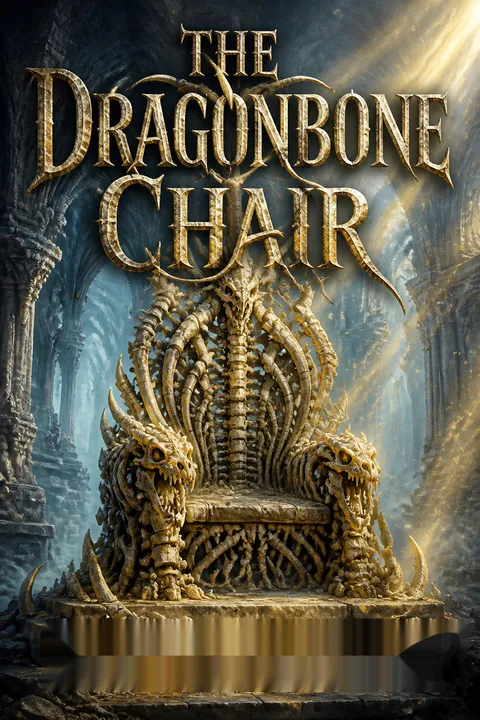
The contested seat of powerThe throne at the Hayholt is made from the bones of the dragon Shurakai, the beast Prester John8 defeated to found his rule. Its physical presence ties the human monarchy to an older, violent history, while its succession exposes the difference between lawful inheritance and moral authority. John8 hopes Elias5 will inherit it, Josua4 is pushed away from it, and Elias's5 later choices alter what the chair means to those who serve him. It is not only a symbol of kingship; it is the center of a castle built over the Sithi's former home.
The Three Swords
A prophecy made physicalNisses' lost book points to three swords: Sorrow, the blade Elias5 accepts from the Norns; Thorn, the star-metal weapon associated with Camaris; and Minneyar, the old Rimmersgard sword whose location is uncertain. The dream-road visions and Morgenes's3 notes connect these weapons to a larger struggle than the dispute between Josua4 and Elias5. Their histories cross human, Sithi, and religious traditions, making the search for them both a practical quest and a test of how the past can be used.
The White Arrow
A debt between peoplesA Sithi10 gives Simon1 a white arrow after Simon1 frees him from a woodsman's trap. The arrow is not payment but a sign that a debt remains, a custom that becomes important when Simon1 later needs the Sithi's help. Its careful carving also links it to the long memory of Sithi communities. For Simon1, it is an early lesson that a single act of mercy can create obligations whose reach he cannot predict.
The League of the Scroll
A hidden chain of knowledgeMorgenes3 and Binabik's2 master belong to a small fellowship of learned people who preserve knowledge across distance and danger. Its members exchange messages by trained birds and keep watch on events ordinary rulers overlook. The League does not command armies or claim political authority; its strength lies in observation, memory, and timely warning. Morgenes's3 ring and manuscript, and Jarnauga's14 arrival from the north, reveal how this quiet network can connect Simon's1 private escape to the larger threat gathering around Osten Ard.
Stormspike's Hounds
The hunt made uncannyThe white Nomhounds are recognizable by their Stormspike brand and their unnaturally persistent pursuit. They carry the Norns' reach beyond the frozen north and turn ordinary travel into a hunt. Their collars, however, bear a connection to Elias's5 kennels, suggesting that human power and Norn influence have become entangled. The hounds make the threat bodily and immediate: Simon's1 group cannot rely on distance or wilderness alone to stay safe.
FAQ
Synopsis & Basic Details
What is The Dragonbone Chair about?
- A scullion's unexpected destiny: The story follows Simon, an ordinary kitchen boy at the Hayholt, as he becomes entangled in events of immense importance.
- A kingdom on the edge: As King John's health fails, political tensions rise, and ancient forces stir, threatening the stability of Osten Ard.
- A journey into the unknown: Simon's apprenticeship with Doctor Morgenes and subsequent flight from the Hayholt thrust him into a world of magic, danger, and self-discovery.
Why should I read The Dragonbone Chair?
- Immersive world-building: Tad Williams crafts a richly detailed world with a deep history, diverse cultures, and intricate political systems.
- Complex characters: The story features a cast of compelling characters with believable motivations, flaws, and strengths, making their journeys emotionally resonant.
- Epic scope: The novel sets the stage for a sprawling fantasy saga, exploring themes of power, destiny, and the battle between good and evil on a grand scale.
What is the background of The Dragonbone Chair?
- Ancient Sithi heritage: The Hayholt, originally Asu'a, was built by the Sithi, a long-lived, magical race, establishing a history predating humankind's presence in Osten Ard.
- Rimmersmen invasion: The arrival of the Rimmersmen, seafarers with iron weapons, disrupted the balance of power and led to conflict with both humans and the Sithi.
- Nabbanai Imperium's influence: The once-dominant Nabbanai Imperium's decline created a power vacuum, contributing to the political instability and setting the stage for future conflicts.
What are the most memorable quotes in The Dragonbone Chair?
- "He who is certain he knows the ending of things when he is only beginning them is either extremely wise or extremely foolish; for he has put a knife in the heart of wonder.": This Qanuc proverb warns against premature assumptions and emphasizes the importance of embracing the unknown.
- "A sword, small friend, is the extension of a man's right hand . . . and the end point of his heart.": Prester John's words highlight the connection between a warrior's weapon, their actions, and their inner self, reflecting the moral weight of wielding power.
- "Avoid Assumptions.": This blunt warning, repeated by the Qanuc, underscores the dangers of preconceived notions and the need for open-mindedness when navigating the treacherous landscape of Osten Ard.
What writing style, narrative choices, and literary techniques does Tad Williams use?
- Detailed descriptions: Williams uses vivid imagery and sensory details to bring the world of Osten Ard to life, creating a rich and immersive reading experience.
- Multiple perspectives: While primarily following Simon's journey, the narrative occasionally shifts to other characters, providing glimpses into their thoughts and motivations and broadening the scope of the story.
- Foreshadowing and symbolism: Williams employs subtle hints and recurring motifs to foreshadow future events and deepen the thematic resonance of the story.
Hidden Details & Subtle Connections
What are some minor details that add significant meaning?
- The chalked symbol on Morgenes' door: This symbol, which Simon avoids touching, hints at the doctor's involvement in arcane practices and the potential dangers lurking within his chambers.
- The ravens at Kaldskryke: The mention of the raven clan and their sigil foreshadows the treachery and violence associated with Skali Sharp-nose and his followers.
- The state of the Hayholt's banners: The dusty, threadbare banners in the throne room symbolize the kingdom's decline and the fading glory of its past rulers.
What are some subtle foreshadowing and callbacks?
- Simon's "ghost boy" nickname: This foreshadows his ability to move unnoticed and his eventual role as a hidden observer and participant in key events.
- Rachel's story of finding Simon as a baby: This tale establishes Simon's mysterious origins and hints at a destiny beyond his humble beginnings.
- Morgenes' interest in the Eri-king's son: This foreshadows the importance of the Sithi and their history in the unfolding conflict, as well as the potential dangers associated with their magic.
What are some unexpected character connections?
- Morgenes and Susanna: The revelation that Morgenes knew Susanna, Simon's mother, suggests a deeper connection between the doctor and the boy's past.
- Rachel and Morgenes: The flashback to Rachel seeking Morgenes' help during Susanna's labor reveals a long-standing relationship and a shared history that shapes their interactions.
- Josua and Pryrates: The mention of Josua and Pryrates knowing each other from the Usirean seminary in Nabban hints at a shared past and a potential for conflict or alliance.
Who are the most significant supporting characters?
- Towser: As the king's jester and confidant, Towser provides insight into John's thoughts and feelings, and his eventual role in delivering Bright-Nail to Elias is crucial.
- Rachel: As Mistress of Chambermaids, Rachel's knowledge of the Hayholt and her maternal relationship with Simon make her a key figure in his life and the castle's affairs.
- Binabik: As a Qanuc troll and apprentice to Ookequk, Binabik brings unique knowledge of the land, its history, and its hidden forces, guiding Simon on his journey.
Psychological, Emotional, & Relational Analysis
What are some unspoken motivations of the characters?
- Elias's need for validation: Elias seeks to prove himself a worthy successor to his father, driving his ambition and his reliance on Pryrates' counsel.
- Josua's desire for peace: Despite his claim of not wanting the throne, Josua's actions suggest a deep concern for the kingdom's well-being and a desire to prevent further suffering.
- Rachel's protective instincts: Rachel's gruff exterior masks a deep affection for Simon, stemming from her role in his upbringing and a sense of responsibility for his well-being.
What psychological complexities do the characters exhibit?
- Prester John's internal conflict: The king grapples with his mortality, his past sins, and the weight of his responsibilities, revealing a complex and troubled psyche beneath his regal facade.
- Elias's descent into darkness: The prince's ambition and reliance on Pryrates suggest a growing vulnerability to dark influences and a potential for moral corruption.
- Josua's self-doubt: Despite his noble intentions, Josua struggles with self-doubt and a sense of inadequacy, stemming from his physical limitations and his strained relationship with his father.
What are the major emotional turning points?
- Simon's discovery of Morgenes' death: This event marks a profound loss and a turning point in Simon's journey, forcing him to confront the harsh realities of the world and embrace his destiny.
- Josua's imprisonment and escape: This experience hardens Josua's resolve and fuels his determination to oppose Elias' tyranny.
- Rachel's decision to let Simon work for Morgenes: This act of kindness and trust marks a significant moment in their relationship, allowing Simon to pursue his intellectual curiosity and discover his potential.
How do relationship dynamics evolve?
- Simon and Rachel: Their relationship evolves from one of master and servant to a more complex bond of affection and mutual respect, as Rachel recognizes Simon's potential and supports his growth.
- Elias and Josua: Their relationship deteriorates from sibling rivalry to open hostility, fueled by ambition, mistrust, and the influence of Pryrates.
- Josua and Morgenes: Their relationship is characterized by mutual respect and intellectual curiosity, with Morgenes serving as a mentor and confidant to the prince.
Interpretation & Debate
Which parts of the story remain ambiguous or open-ended?
- The true nature of the Sithi: The Sithi's motives and allegiances remain shrouded in mystery, leaving their role in the unfolding conflict open to interpretation.
- The extent of Pryrates' influence: The full scope of Pryrates' power and his control over Elias remains unclear, raising questions about the king's agency and the kingdom's future.
- The meaning of Simon's dreams: The significance of Simon's visions and their connection to the larger events of the story remain ambiguous, leaving the reader to speculate about his role as a seer or a pawn.
What are some debatable, controversial scenes or moments in The Dragonbone Chair?
- Elias' treatment of Josua: Elias' imprisonment and attempted murder of Josua spark debate about the nature of power, familial loyalty, and the justification of violence.
- The Sithi's actions and motivations: The Sithi's aloofness and their willingness to sacrifice human lives for their own purposes raise questions about their morality and their role in the conflict.
- The ending of Morgenes' life: The circumstances surrounding Morgenes' death and the extent of his knowledge about the Storm King remain open to interpretation, sparking debate about his true allegiances and the nature of his magic.
The Dragonbone Chair Ending Explained: How It Ends & What It Means
- The stage is set for war: The ending sees the kingdom divided and on the brink of open conflict, with Elias consolidating his power and Josua rallying his forces in opposition.
- Ancient forces are awakened: The reemergence of Ineluki and the Norns signals a shift from political intrigue to a battle against supernatural forces, raising the stakes for all involved.
- Simon's journey has just begun: Despite the losses and challenges he has faced, Simon is now poised to play a crucial role in the fight against darkness, armed with knowledge, newfound skills, and the support of unlikely allies.
About the Author




Download PDF
Download EPUB
.epub digital book format is ideal for reading ebooks on phones, tablets, and e-readers.








