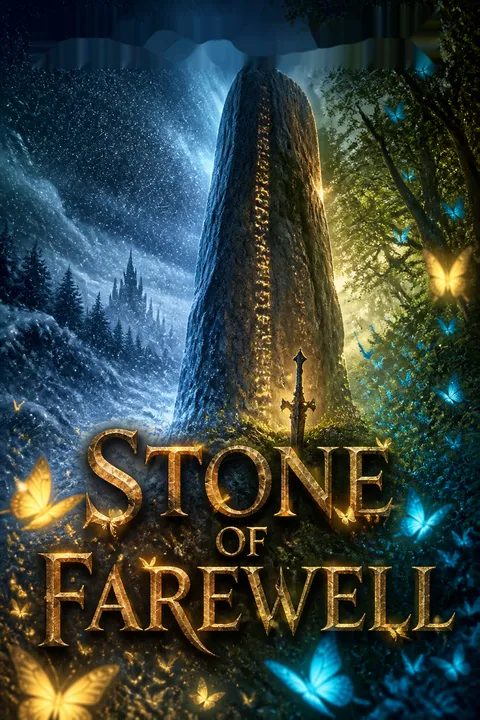


Plot Summary
Prologue
A Rimmersman monk crosses the snowbound ruins of Naglimund, convinced that the storm is divine judgment and that the castle’s abandoned defenders deserve punishment. He reaches the shattered gate expecting shelter, but finds the keep empty beneath its ice. Blue lights flicker in the towers.
Pale, graceful figures appear, and his certainty breaks when they seize him and carry him into the castle’s depths. The opening makes Naglimund’s fall feel less like a lost battle than a change of ownership, while hinting that the supernatural enemy is already moving through the wreckage.
The monk’s certainty is both his protection and his trap. He interprets disaster through familiar moral categories, so he can keep walking through a landscape that should terrify him. The Norns overturn that comfort without explaining themselves: their beauty makes the encounter more unsettling, not less. By opening with a captive’s arrival at the ruined castle, the book shifts attention from who won the siege to what has begun occupying its aftermath. The prologue also makes faith vulnerable to evidence. The monk’s belief remains intact, but the world no longer behaves in ways that let belief explain it.
A Prison Below Mintahoq
Simon wakes from the dragon battle in a cave on Mintahoq, scarred by Igjarjuk’s blood and still too weak to walk far. His companions are gone from his sight, but Binabik and Sludig are being held in a deep pit by the Qanuc. Simon learns that his friend’s people have imprisoned Binabik for breaking an oath, while Sludig is condemned simply for being a Rimmersman.
Jiriki, the Sithi prince who helped them reach Yiqanuc, cannot simply overrule the troll rulers. Simon’s recovery is therefore no refuge: he must face a court in a language he barely understands, while the two people who protected him wait below ground for judgment.
The book begins Simon’s new life by stripping away the uncomplicated reward of survival. He has lived through a dragon, but the immediate danger is social and legal, rooted in customs he cannot read. His helplessness is not a failure of courage; he lacks the language, strength, and standing to intervene. That mismatch makes his insistence on helping Binabik more significant. The scar on his face marks a transformation he does not yet understand, while his friend’s imprisonment forces him to act before he has become confident enough to feel ready.
Binabik's Oath on Trial
At the Qanuc court, the Spirit Caller accuses Binabik of failing to perform the rite that should have released winter from the Ice House. Sisqinanamook, daughter of the Herder and Huntress, adds a more personal charge: Binabik was betrothed to her, then left without explanation. He admits both offenses.
His master, Ookequk, had sent him to honor a promise to Doctor Morgenes, and Binabik believes that promise matters more than returning for his marriage or his people’s ritual. Simon tries to explain that a greater danger is spreading, but weakness overwhelms him. As he collapses, Geloe reaches him through the wounded Leieth and warns that Naglimund has fallen and Josua still lives.
Binabik’s alleged betrayal is also an act of loyalty, but the court cannot weigh a distant catastrophe against visible obligations to family and community. His refusal to deny wrongdoing gives his choice moral seriousness: he is not claiming innocence, only that he would make the same decision again. Simon’s intervention matters, yet his collapse shows how little authority he possesses. Geloe’s message widens the crisis beyond the troll court, converting a local dispute into a race toward the Stone of Farewell and confirming that the war has already reached its supernatural scale.
The Scroll Changes Judgment
The night before Binabik and Sludig are due to die, Sisqinanamook brings Simon and Haestan rope and helps them approach the prisoners. Binabik initially refuses to escape, unwilling to break another oath. When his friends tell him that Naglimund has fallen and that Geloe named the Stone of Farewell as their only refuge, he climbs from the pit.
The party returns to Ookequk’s cave, where Sisqi finds a sealed death-testament. Its message confirms that the old Singing Man foresaw a devastating winter and chose Binabik to continue his work. The Herder and Huntress release both prisoners, restore Binabik’s betrothal, and send a Qanuc escort with the travelers, though the coming storm still threatens their people.
The sealed testament changes the court’s judgment because it translates Binabik’s private choice into a responsibility his community can recognize. The resolution does not erase the hurt he caused Sisqi; instead, it gives their relationship a possible future without pretending that the broken promise was harmless. Ookequk’s authority also passes through writing, not magic: an absent teacher protects his apprentice by leaving evidence of what he believed. The Qanuc decision to help the lowlanders marks a small but consequential reversal of inherited hostility, forced by a danger too large for old boundaries.
The Norns Herd Josua
After Naglimund’s destruction, Josua leads a dwindling company through Aldheorte, pursued by Norns and their digging allies. A seemingly dead pikeman returns to their camp, but Einskaldir recognizes that the mutilated body is being used by a Red Hand spirit and cuts off its head. Deornoth then notices that the Norns repeatedly attack when the fugitives turn toward the forest’s interior, but otherwise keep them alive.
The party realizes it is being driven rather than simply hunted. Geloe appears with the wounded child Leieth and leads them through an ancient river tunnel beneath a hill, where the Norns hesitate to follow. She tells Josua that the Sithi lands offer temporary protection and directs him toward the Stone of Farewell.
Deornoth’s observation turns a sequence of frightening attacks into evidence of strategy. The Norns are not merely killing at random; their restraint is itself a clue. That discovery gives the battered fugitives a small measure of agency, because they can choose a route their pursuers would rather prevent. Geloe’s knowledge then opens a passage through history as well as geography: the old river tunnel leads into land governed by a boundary older than the human war. Josua’s survival depends on recognizing that the enemy’s behavior can be read, even when its motives remain hidden.
Sikkihoq Takes Haestan
Simon leaves Yiqanuc with Binabik, Sludig, Haestan, Sisqi, Qantaqa, and a small Qanuc escort, carrying the black sword Thorn toward the Stone of Farewell. Their descent from the Trollfells is slow and dangerous. On a talus slope, Hunen giants charge through the snow and scatter the party. Haestan pushes Simon out of a giant’s path but is struck down; several Qanuc die as well.
Simon and Sludig kill a giant together, yet Thorn’s power does not spare Haestan. The survivors build stone cairns for the dead. Simon then lashes out at Sludig’s faith, unable to accept that good people can die without justice, before apologizing and agreeing to learn the weapons he will need.
Haestan’s death breaks the comforting pattern Simon expected from heroic stories: bravery does not guarantee survival, and a powerful sword does not make its bearer master of events. His anger at Sludig is grief seeking an answer it cannot find. The funeral answers with ritual rather than explanation. By honoring Haestan through both Qanuc and Aedonite customs, the survivors make a shared loss visible without pretending that the two faiths mean the same thing. Simon’s choice to accept training marks a practical step toward adulthood, but it grows from mourning rather than confidence.
A Mirror Opens North
After the Qanuc escort turns back, Simon, Binabik, and Sludig cross the frozen Waste with Thorn and a small string of horses. Simon uses Jiriki’s mirror, expecting only his own reflection, but it reveals Amerasu, an ancient Sithi woman pleading with an unseen listener for help against a northern shadow. Utuk’ku’s silver-masked face interrupts and identifies Simon as a meddler.
Later, ravens attack a messenger bird overhead. Binabik saves a fragment of its note, which warns them to beware false messengers and says the storm is spreading. Simon recognizes the warning from a dream. The message and the mirror leave the three travelers unsure whom they can trust, even as they hurry south.
Two communication devices fail in opposite ways. The mirror makes Simon visible to powers he did not intend to contact, while the raven’s message arrives damaged and incomplete. Knowledge is therefore neither a clean gift nor a stable possession: it can expose the receiver, be intercepted, or arrive too late to interpret fully. Simon’s accidental contact with Amerasu also links him to a conflict older than human history, but gives him no control over it. The warning about false messengers deepens the travelers’ suspicion, making trust itself part of the journey’s danger.
Miriamele's Disguise Betrayed
Miriamele flees Naglimund in disguise as a monk’s young attendant, hoping to reach Nabban and persuade her uncle Leobardis to support Josua. Her companion, Cadrach, conceals their route from the ship’s captain, but Count Streawe’s agents find them in Ansis Pelippe and bring them to his house.
Streawe admits that his spies tracked her and briefly considered selling her whereabouts, then keeps her under guard while he waits on a favor owed to a religious contact. During her confinement he tells her Leobardis died in the battle before Naglimund and that Nabban has fallen under Benigaris. When Streawe finally releases her, he sends her across the bay to Father Dinivan, not to her uncle.
Miriamele’s escape is driven by a clear political purpose, yet she repeatedly discovers that other people know more about her movements than she does. Streawe’s intervention sits uneasily between protection and captivity: he can prevent her from reaching danger only by taking away her freedom. His opportunism is real, but so is his sense of obligation. For Miriamele, this is another lesson in the difference between being escorted and being empowered. She has left her father’s court, but decisions about her route still belong to strangers.
Fire Dancers Reach Nabban
Father Dinivan welcomes Miriamele in Nabban and explains that her uncle’s death has left Benigaris ruling in his place, amid rumors that he betrayed his father. The city is also troubled by Fire Dancers, who preach that a new master will overthrow the old order. One woman sets herself alight in a public square while proclaiming the Storm King’s arrival.
Miriamele then tells Lector Ranessin what she learned at Naglimund: Elias has accepted help from an ancient northern power, and the three swords may be essential to resisting it. Ranessin listens carefully, but warns that Mother Church must act with judgment. When Pryrates arrives from the Hayholt, Miriamele realizes her father’s counselor is now within the same walls.
The Fire Dancers make private dread public, turning the Storm King from rumor into a political force that ordinary people can see and fear. Their self-immolation is not simply spectacle: it demonstrates how despair can recruit people before institutions agree on what is happening. Miriamele’s testimony gives Ranessin evidence, but not certainty. His hesitation reflects a real burden of leadership: acting too soon may fracture the Church, while waiting may leave the frightened without protection. The contrast between public prophecy and guarded institutional response sharpens the book’s question of how belief should behave under crisis.
Pryrates Breaks the Sanctuary
After Ranessin publicly excommunicates Elias and Pryrates, the alchemist kills the lector and leaves the Sancellan Aedonitis in flames and confusion. Cadrach, who witnessed the danger, knocks Miriamele unconscious when she refuses to flee, then carries her through the corridors. A magical barrier briefly blocks their escape, but he breaks it and gets her away from Pryrates.
Meanwhile, Duke Isgrimnur, searching the Sancellan for Miriamele, finds Dinivan gravely wounded. The secretary tells him that she is headed toward Kwanitupul and entrusts him with a Scrollbearer’s token and a warning about false messengers. Isgrimnur must now find her without knowing what happened aboard the ship.
Cadrach’s rescue does not redeem his earlier betrayals; it shows that his loyalties are fractured rather than absent. His decision to strike Miriamele is coercive, but it also saves her from remaining in a building where Pryrates has become an immediate threat. Dinivan’s deathbed instructions connect separate journeys through a small token and a warning, not through complete knowledge. The destruction of sanctuary is especially severe because it removes a place where moral authority might have slowed political violence. Ranessin’s courage matters, but it cannot protect the institution from an enemy willing to enter its own halls.
The Swamp Takes Tiamak
In the Wran, scholar Tiamak receives two incompatible obligations. His elders send him to Nabban to protest Benigaris’s demands on the swamp clans, while a wounded messenger pigeon brings a note bearing the League of the Scroll’s sign and asks him to wait at Kwanitupul. Tiamak chooses first to represent his people, then plans to follow Morgenes’s request afterward.
On the way, he fights a crocodile for the fish caught on his line. It clamps onto his leg; Tiamak stabs its eye and escapes, but is left feverish and badly wounded. He continues toward Kwanitupul with the ancient Nisses parchment and the elders’ Summoning Stick, forced to depend on his will and the uncertain help of strangers.
Tiamak’s conflict is not between selfishness and duty, but between two forms of loyalty that cannot be honored at once. He chooses his people first, even though Morgenes’s appeal carries the weight of friendship and perhaps a larger danger. The crocodile encounter turns that ethical problem into bodily cost: his judgment does not protect him from injury, and scholarship offers no immunity in the swamp. The damaged pigeon and the nearly lost fish make communication and survival equally precarious. Tiamak’s persistence is modest, practical courage rather than heroic display.
Skodi's Abbey Turns Hostile
Simon and his companions find shelter at a ruined abbey where Skodi, a young woman caring for displaced children, welcomes them warmly. She has sent the boy Vren to guide them there, and the group accepts food and a roof despite unease about the isolated household. At night, Skodi reveals that she wants Thorn so she can bargain with the Storm King’s servants.
Her power holds Simon and his companions helpless while she tries to summon them. Vren cuts Simon across the back, spilling blood into Skodi’s circle; the resulting breach draws Bukken from the earth. Qantaqa attacks, Simon frees Binabik and Sludig, and the three fight their way out, but Simon flees on horseback alone and crashes in the forest.
Skodi’s abbey converts hospitality into a trap, but her motives grow from abandonment and a desire to make herself powerful, not from simple malice. The children around her are both victims and participants in the danger she creates. Vren’s betrayal is tangled with fear and jealousy, while the Bukken’s arrival shows that Skodi’s magic has opened a door she cannot control. Simon’s escape is an act of survival, not victory: he reaches the forest alone, separated from his friends and the sword that had become the purpose of their journey.
Fikolmij's Captive Prince
Josua’s exhausted survivors reach the High Thrithings, where randwarders seize them and bring them before Fikolmij, March-thane of the Stallion Clan. Fikolmij recognizes the prince and resents him for taking Vorzheva away without paying the agreed bride-price. Vorzheva is missing when the prisoners arrive, leaving Josua to face the clan’s anger alone.
She later returns, having been caught while traveling across her homeland, and tells her father that she is carrying Josua’s child. Fikolmij sees a way to settle the insult through his own customs: Josua must fight Utvart, the man promised Vorzheva, while the clan watches. Geloe intervenes to insist that the dispute follow Thrithings law rather than become a private execution.
Captivity forces Josua to confront the human consequences of his relationship with Vorzheva, which he had previously treated as secondary to political survival. Her return and pregnancy make their bond public and materially consequential. Fikolmij interprets the situation through clan honor and bride-price, while Josua’s earlier choices have bypassed those structures. Geloe’s intervention does not make the system just, but it gives Josua a route through its rules. The scene also complicates the idea that the Thrithings are merely a hostile wilderness: their laws can restrain violence as well as authorize it.
A Wager Wins a Bride
Wounded and weak after Fikolmij’s beating, Josua faces Utvart in the paddock. Instead of relying only on the fight, he publicly wagers his honor and the standing of his father’s house against thirteen horses and the freedom of his companions. Utvart overwhelms him with strength, but Josua survives by feigning defeat, then drives a knee into his opponent and kills him with Naidel.
The crowd witnesses the result, making it difficult for Fikolmij to ignore the wager without dishonoring himself. Josua and Vorzheva marry before the party leaves, and Hotvig warns them that Fengbald’s riders are approaching. The newly joined couple escape with their companions, while Hotvig turns against the March-thane’s wishes.
Josua’s wager transforms a private grievance into a public contract, binding Fikolmij through the same honor system he had used to threaten Vorzheva. Josua wins not by matching Utvart’s strength, but by reading the instant when the larger man believes the fight is finished. The marriage then repairs one breach even as the larger political crisis continues. Vorzheva’s insistence on being publicly recognized as Josua’s wife makes her an agent in the outcome, not a prize passed between men. Their escape depends on allies who choose principle over the immediate safety of obedience.
Mezutu'a Beneath the Mountain
In the Grianspog Mountains, Maegwin’s grief over her father and brother drives her deeper into the old mines. Eolair follows, finds her at a sealed door, and helps open it. Beyond lies Mezutu’a, a vast city carved into the mountain’s heart. Its inhabitants are not the Sithi Maegwin hoped to find but dwarrows, the long-hidden Tinukeda’ya, who fear their former masters.
They explain that a Sithi voice has asked them about Josua and the three Great Swords, including Minneyar, reforged as Bright-Nail. Their maps preserve routes through the mountains and even beneath the Hayholt. Maegwin orders Eolair to seek Josua with this knowledge, hoping the secret paths may help defeat Elias and free Hernystir.
Maegwin’s discovery partly fulfills her conviction that the old powers have not vanished, but it does not give her the rescuers she expected. The dwarrows are survivors with their own history of subjection, not a ready-made army. Their maps are more useful than a miraculous intervention, shifting the story from rescue by legend toward hard-won intelligence. Maegwin’s decision to send Eolair away is both strategic and personal: she recognizes that Josua may need the information, while her own authority at home remains precarious. Her hope has not disappeared, but it has changed shape.
Sorrow Enters Guthwulf
At the Hayholt, Guthwulf grows uneasy as Elias’s rule fills with executions, strange visitors, and rumors of Norns moving south from Naglimund. The king confirms that Josua survived and says Pryrates plans to remove Guthwulf from his side, then insists that the earl lead an expedition north.
Elias claims the red priest is necessary to a greater purpose, though he will not explain it. He also makes Guthwulf touch Sorrow. The sword overwhelms the earl with visions of its two absent brothers and a desire to join them, leaving him shaken and newly implicated in its power. Guthwulf must choose whether loyalty to Elias still means serving the friend he remembers.
Guthwulf’s conflict is a study in loyalty under radical change. He remembers the companion Elias was, but the king’s behavior and the sword’s influence make that memory an increasingly unreliable guide. Sorrow does not merely frighten him; it gives him a glimpse of belonging to something larger and more terrible, making resistance psychologically complicated. The scene also reframes the sword as an active force rather than a tool. Guthwulf’s danger lies not only in what Elias may command, but in what the blade makes him want.
Analysis
Stone of Farewell turns a political succession crisis into a collision between different ideas of time. Human characters act under immediate pressures: a siege, a failed harvest, a marriage claim, an approaching army. The Sithi and Norns carry grievances across centuries, so what humans experience as urgent may be only one moment in a much older reckoning. Yet the immortals are not simply wiser. Their long memory can preserve knowledge, but it can also preserve injury until it becomes a private theology of revenge.
The novel repeatedly makes knowledge costly. Simon’s mirror reveals more than he can interpret. Binabik’s oath protects an old promise but wounds his community. Maegwin discovers a city and maps that may help her people, but not the allies she sought. Tiamak’s learning gives him responsibilities that conflict with tribal duty. Even the three swords remain less a solution than a set of questions about inheritance, craft, and power. Objects preserve history, but they do not explain how to use it.
The emotional center is the tension between being protected and being trusted. Miriamele resents decisions made for her, while Josua’s instinct to protect others can become withdrawal. Simon wants an ordinary home even as he is drawn into extraordinary obligations. Their longing is not a retreat from the plot; it is what makes the expanding conflict matter. By the end of this portion, the characters have gained fragments of alliance and evidence, but no secure victory. The storm continues to advance, and every act of loyalty now risks becoming another form of loss.
Review Summary
Stone of Farewell continues the epic fantasy saga, building on the world of Osten Ard with rich detail and character development. While some readers found the pacing slow, many praised Williams' beautiful prose and intricate worldbuilding. The book expands on multiple character perspectives, delving deeper into the history and lore of the realm. Though it suffers from some middle-book syndrome, the story sets up an exciting conclusion for the trilogy. Readers appreciate the complex characters, especially the well-developed female roles, and the themes of friendship, legacy, and hope amidst darkness.
People Also Read







Characters
Simon
The unwilling witnessA former Hayholt scullion, Simon begins as an awkward youth who survives by watching and learning from others. His loyalty to Binabik repeatedly pushes him past his own fear, while the dragon’s scar and his strange dreams make him suspect that he is connected to events he cannot explain. Simon wants a home and ordinary affection, but the story keeps placing him among powers that treat him as a symbol or instrument. His stubbornness and capacity for empathy are strengths; his self-doubt, impatience, and tendency to feel small beside nobles and immortals often make him vulnerable.
Binabik
The oath-bound guideA Qanuc troll and apprentice to the Singing Man Ookequk, Binabik is a scholar, interpreter, diviner, and Simon’s closest companion. His learning makes him a bridge between communities that distrust one another, but his loyalty to a promise has brought him into conflict with his own people and his betrothed, Sisqi. Binabik’s humor and practical ingenuity coexist with a strong sense of responsibility. He is not an infallible guide: he admits what he does not know, and his willingness to carry burdens can become self-punishing.
Josua
The displaced princeThe younger son of Prester John, Josua is a thoughtful, restrained leader whose injured right hand and bookish habits have shaped how others see him. He prefers deliberation to display, but the collapse of his stronghold forces him to lead a small, vulnerable band through a world where hesitation can be fatal. Josua’s sense of responsibility often turns inward as guilt, making him judge himself more harshly than he judges others. His strength lies in listening and adapting; his danger is believing every defeat confirms that he is unfit to lead.
Miriamele
The runaway princessElias’s daughter is intelligent, restless, and unwilling to accept the sheltered role others assign her. Disguises and travel give her glimpses of a life beyond court, where people respond to her character rather than her title. Her determination to help Josua is mixed with grief for her mother and a longing to recover the father she once knew. Miriamele can be quick to trust, then quick to anger when she feels manipulated. Her independence is real, but the dangers of her journey repeatedly expose how little control a young woman has over the choices made around her.
Eolair
The loyal envoyCount of Nad Mullach and a trusted servant of Hernystir’s royal house, Eolair is perceptive, diplomatic, and more comfortable negotiating than fighting. His loyalty to the late King Lluth extends to Maegwin, though he struggles to help her without making her feel pitied or managed. Eolair’s patience is not passivity: he reads people carefully and understands how information can be more useful than force. His affection for Maegwin complicates his judgment, especially when her grief turns into decisions he believes are dangerous.
Maegwin
Hernystir's last hopeThe surviving daughter of King Lluth is proud, grieving, and burdened by the expectation that she must embody a kingdom after its defeat. Her sorrow makes her withdraw from other people, while her royal identity keeps demanding action from her. Maegwin fears being pitied more than being disliked, which sharpens her resistance to Eolair’s care. She is not simply fragile: she can make bold decisions and endure physical hardship. Yet her need to find meaning in loss can lead her to mistake a desperate hope for certainty.
Elias
The unraveling High KingPrester John’s elder son inherited a stable kingdom and once seemed capable of ruling it well. After his wife’s death, however, grief and isolation have altered the man his oldest friends remember. Elias now seeks an imagined golden age and accepts Pryrates’s counsel despite the fear his choices spread among his subjects. His conviction that he alone can save the realm makes him increasingly intolerant of dissent. The gap between the loving father Miriamele remembers and the king others now face gives his rule its particular sadness.
Pryrates
The king's dark counselorA hairless red-robed priest and accomplished alchemist, Pryrates serves as Elias’s closest adviser. He is controlled, ambitious, and contemptuous of religious and political limits that obstruct his aims. Unlike a crude tyrant, he treats power as knowledge to be acquired and applied, which makes his violence feel deliberate rather than impulsive. Pryrates’s relationship with Elias is mutually useful but unequal in ways the king does not fully understand. His calm manner conceals a willingness to cross boundaries that others still regard as sacred.
Cadrach
The compromised monkA wandering Aedonite monk with a sharp mind, a taste for drink, and a history he refuses to discuss, Cadrach travels with Miriamele. He can be clever and protective, but he has also accepted money for information and repeatedly conceals his motives. His knowledge of ports, people, and escape routes makes him useful; his shame and evasiveness make him difficult to trust. Cadrach appears to believe himself beyond forgiveness, yet his continued attachment to Miriamele suggests that some sense of responsibility remains alive beneath his self-contempt.
Jiriki
The Sithi princeJiriki is a young member of the Sithi ruling house, though his people do not define princely status as human nobles do. He is curious about mortals, formally courteous, and bound by obligations to his family and people that can conflict with personal friendship. His calmness often frustrates Simon, who wants direct answers, but Jiriki’s restraint reflects a long historical memory and awareness of how few Sithi remain. His bond with Simon is shaped by debt and respect, not by a promise that he can always intervene.
Aditu
The irreverent guideJiriki’s sister is quick-witted, physically graceful, and more openly playful than her brother. She treats Simon with curiosity rather than ceremony, though she is still an immortal Sitha whose assumptions differ sharply from his. Aditu’s manner can seem teasing or careless, but she takes her responsibilities seriously when the stakes demand it. Her ease in moving through the forest and among her people contrasts with Simon’s uncertainty, making her both a guide and a reminder of how foreign his situation is.
Geloe
The forest's wary seerKnown by some as a witch and by others as a wise woman, Geloe understands old boundaries, healing plants, and dangers that human courts barely recognize. She is blunt, practical, and unwilling to waste strength on performances meant to impress. Geloe helps Josua’s fugitives and reaches Simon through the injured Leieth, but she never claims to control events. Her knowledge is substantial yet incomplete, and she treats that limitation as a reason for caution rather than shame.
Tiamak
The reluctant scholarA Wrannaman scholar, Tiamak has chosen a life of learning that sets him apart from his community, even as his people rely on him to speak with outsiders. He is meticulous, self-conscious, and easily caught in overthinking, but his modest appearance hides persistence and a willingness to act when danger arrives. Tiamak’s loyalties are divided between obligations to his tribe and debts to friends in the League of the Scroll. His knowledge connects ancient texts to current events, though he does not yet understand the full pattern.
Guthwulf
The king's old companionEarl of Utanyeat and once one of Elias’s closest friends, Guthwulf is a seasoned soldier who values loyalty and direct action. He is troubled by the changes in the king but hesitates to act against the man he remembers. His toughness does not protect him from fear; rather, his military experience makes him sensitive to the signs that a familiar order has failed. Guthwulf’s role turns on the painful difference between serving a friend and serving what that friend has become.
Vorzheva
The defiant brideA woman of the High Thrithings, Vorzheva is proud, passionate, and unwilling to let Josua’s responsibilities erase her own needs. She wants love expressed plainly, not translated into protection or political caution. Her anger can be fierce, but it comes from a clear demand to be treated as a person rather than a possession or dependent. Vorzheva knows her culture’s customs and insists that her relationship with Josua be recognized within them.
Isgrimnur
The searching RimmersmanDuke of Elvritshalla, Isgrimnur is a blunt, large-hearted soldier with a deep attachment to his family and to the old king’s household. He disguises himself as a monk while searching for Miriamele, a role that tests both his patience and his ability to conceal his temper. Isgrimnur prefers practical loyalty to courtly maneuvering, though he is not immune to fear when his loved ones are endangered. His concern for Miriamele keeps him moving even when the political world around him appears to be collapsing.
Deornoth
Josua's steadfast knightA young knight sworn to Josua, Deornoth is observant, devout, and fiercely loyal. His courage is not the absence of fear; he frequently feels terror, then acts despite it. He notices patterns that more experienced leaders overlook and is willing to confront Josua when self-blame threatens to paralyze the prince. Deornoth’s sense of honor can become rigid, but it also makes him dependable when the people around him are exhausted or divided.
Sludig
The blunt RimmersmanA Rimmersman soldier, Sludig is direct, stubborn, and skilled in the practical arts of survival and combat. His inherited suspicion of trolls and Sithi is challenged by the people he travels beside, though he does not abandon his faith or culture to become agreeable. Sludig’s bluntness can hurt Simon, especially when grief erupts between them, but he also recognizes the boy’s courage and offers him serious training. He is a man shaped by old conflicts who must decide which ones still deserve his loyalty.
Haestan
Simon's steady protectorA plainspoken Erkynlandish guardsman, Haestan brings warmth and practical steadiness to Simon’s dangerous journey. He treats the boy with the rough affection of an older companion, offering help without making a ceremony of it. Haestan values duty, but his humor keeps hardship from becoming the only thing the travelers share. He represents the ordinary courage of soldiers who do not expect songs or honors, only a chance to protect the people beside them.
Skodi
The isolated keeperA young woman living in a ruined abbey with a group of abandoned children, Skodi is simultaneously needy, controlling, and hungry for recognition. She has been cast out by her own people and believes that unusual powers can earn the love and status denied her. Her charm with children and her cruelty toward them exist side by side, revealing how easily a desire for protection can turn into domination. Skodi’s isolation has narrowed her idea of justice to revenge and possession.
Ranessin
The embattled lectorLector of Mother Church, Ranessin is a patient, curious leader who prefers careful judgment to grand gestures. He listens to Miriamele’s account and understands that the crisis cannot be dismissed as rumor, yet he knows that the Church’s response carries political consequences. His gentleness is not weakness: he is capable of making a public moral stand when he believes silence would betray his office. Ranessin’s authority comes from the trust he has earned, not from force.
Dinivan
The discreet messengerRanessin’s secretary and a member of the League of the Scroll, Dinivan is warm, practical, and unusually willing to treat Miriamele as an intelligent adult. His networks carry information between people who would otherwise remain isolated. Dinivan balances discretion with a clear moral sense, though he sometimes withholds knowledge because he believes the moment is not safe. His friendship with Cadrach reaches back to a different life, giving him insight into the monk’s lost potential.
Sisqi
The Qanuc huntressSisqinanamook, usually called Sisqi, is the youngest daughter of the Qanuc Herder and Huntress. She is proud, observant, and unwilling to let hurt turn automatically into vengeance. Her betrothal to Binabik gives her a personal stake in the oath he broke, but her judgment is also shaped by her people’s needs and the danger Ookequk foresaw. Sisqi’s reserved manner conceals a strong will and a capacity to act when custom alone would leave others helpless.
Fikolmij
The Stallion March-thaneMarch-thane of the High Thrithings and Vorzheva’s father, Fikolmij is powerful, proud, and accustomed to treating personal honor as public law. He measures relationships through clan alliances, bride-price, and the strength to enforce a decision. His anger at Josua is partly political and partly personal, though he rarely separates the two. Fikolmij commands respect without being loved, and his authority depends on appearing strong before the clans who might otherwise abandon him.
Plot Devices
The Three Great Swords
A fragile counter to darknessNisses’ prophecy and Morgenes’s research suggest that three ancient swords may be needed to resist Ineluki. Sorrow, made by the Sithi and given to Elias, is already in the enemy’s hands. Thorn, forged from a fallen star and associated with Sir Camaris, is the object Simon and Binabik carry north. Minneyar, the blade of King Fingil, has become Bright-Nail, Prester John’s sword. The swords connect human history, Sithi craft, and the present war, but the characters do not yet understand how they work together or what their use will demand.
The Stone of Farewell
A temporary place of refugeSesuad’ra, called the Stone of Farewell, marks the ancient separation of the Sithi and Norns. Geloe directs Simon and Josua toward it because the old place may offer brief protection and a meeting point for people resisting Elias. It is not simply a fortress: its history, location near the ruined Sithi city Enki-e-Shao’saye, and connection to old boundaries make it politically and spiritually significant. The characters hope it can give them time to gather allies and understand the swords, but they have not yet secured it.
Sithi Witnesses
Messages across hidden distancesThe Sithi and related peoples communicate through objects called Witnesses, including Jiriki’s mirror and the Shard kept by the dwarrows. These are not ordinary mirrors or stones: they can carry voices, images, and warnings across great distances, though their use is limited and sometimes dangerous. Simon’s accidental contact with Amerasu exposes him to Utuk’ku, while the Shard draws the dwarrows into the conflict. The Witnesses make knowledge travel, but they also let hostile powers listen, interrupt, or manipulate the exchange.
The unnatural winter
A world-sized warningSnow and killing cold arrive in the months when summer should be strongest. The weather damages crops, drives families from their homes, and makes the northern journey increasingly dangerous. Characters gradually recognize that the cold is linked to the Storm King rather than ordinary seasons. Its effects reach distant places differently: the Qanuc Ice House fails to melt, the High Thrithings lose their expected warmth, and the Waste becomes nearly impassable. The winter acts as both physical threat and evidence that political disorder is only one part of a wider crisis.
The Norn pursuit
Pressure that steers the livingThe Norns and their allies do not always attack simply to kill. Their pursuit of Josua’s survivors appears designed to herd them away from certain routes, while agents and messengers seek information about the swords. This pattern forces characters to study when the enemy strikes and when it holds back. The pursuit makes geography strategic: a forest boundary, an old tunnel, or a place of Sithi power can matter as much as a weapon. It also leaves the travelers unsure whether an apparent escape is truly their own choice.
About the Author
Other books by Tad Williams





Download PDF
Download EPUB
.epub digital book format is ideal for reading ebooks on phones, tablets, and e-readers.








