

Plot Summary
A Kite Against Xana
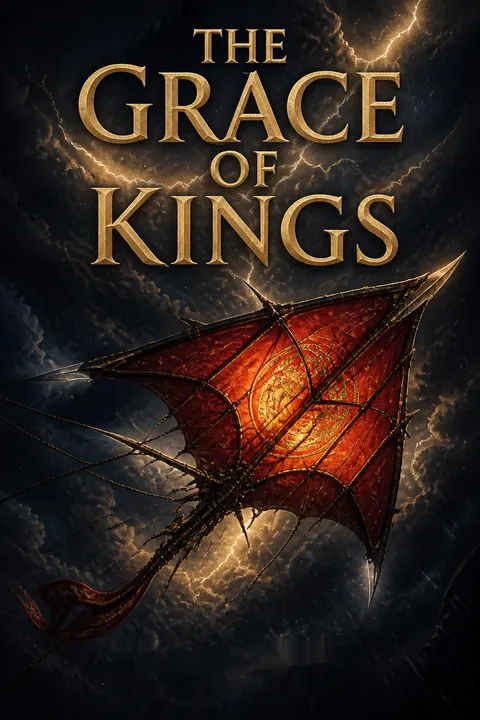
During Emperor Mapidéré’s grand procession through Zudi, fourteen-year-old Kuni Garu and his anxious friend Rin Coda push through the crowd for a better view. A huge birdlike shape approaches, then reveals a young rider suspended beneath a kite of silk and bamboo. Luan Zya, a Haan exile, drops firebombs onto the imperial platform in an attempt to kill the emperor.
The guards save Mapidéré, but burning tar and panic turn the celebration into a massacre. Kuni shields Rin from arrows and is burned in the back. He glimpses the emperor’s fear and realizes that the ruler who conquered Dara is only a vulnerable man. Luan escapes, leaving the boys with an image of rebellion that neither will forget.
The failed assassination begins the novel by breaking the spell of imperial spectacle. Mapidéré’s procession is designed to make power look inevitable, but Luan’s attack exposes both its physical fragility and the violence beneath its pageantry. Kuni’s response is telling: he protects Rin, yet his lasting revelation is not that the empire can kill, but that its emperor can fear. This early combination of nerve and attention to other people’s feelings distinguishes Kuni from a conventional insurgent. The scene also establishes that public stories can change political reality: one man’s dangerous flight becomes a private model of possibility.
The Last Chrysanthemum
Mata Zyndu is the last surviving heir of a Cocru family destroyed after his grandfather Dazu resisted Mapidéré’s conquest. Dazu’s surrender had secured the safety of his soldiers, but the Xana general broke that promise and buried them alive. The Zyndu men were executed, the women enslaved or killed, and young Phin escaped carrying the infant Mata.
He made their exile a lesson in strength and vengeance, training the boy to endure pain and telling him that the old order of noble obligations had been trampled by Xana. Years later, as a towering young man with double pupils, Mata watches Mapidéré’s procession pass through Tunoa. He sees the emperor as both fearful and guilty, and accepts that restoring his family’s honor is his destiny.
Mata’s political vision begins not in abstract philosophy but in inherited trauma. Phin’s care keeps him alive, yet turns grief into a demanding script: strength must answer humiliation, and family memory must be defended through vengeance. The boy’s reverence for the old hierarchy gives that script moral dignity in his own eyes. Unlike Kuni, who notices power’s vulnerability, Mata believes the world can be made right by restoring its proper ranks. The distinction matters because both men oppose the same empire but carry different cures for its injustices. Mata’s upbringing makes loyalty profound, but also binds his identity to a past he never experienced firsthand.
The Dandelion Meets Fire
Seven years after the procession, Kuni is a charming but drifting young man, welcome in taverns and unwelcome at home. When a corrupt corvée officer threatens to seize a poor family’s son, Kuni distracts him with food talk and pays the demanded fee using a forged note.
Jia Matiza, a sharp herbalist who witnessed the rescue, becomes curious about the man beneath his jokes. Their courtship joins her practical knowledge to his improvising intelligence, and Jia’s dandelion, hardy and useful, becomes an emblem of the life she imagines for him.
Kuni takes a dull government job to earn money for their marriage, then learns its value by building relationships across Zudi’s offices. With Jia’s trust, he begins to see opportunity as something he can prepare for, not merely wait upon.
Jia does not reform Kuni by scolding him into conventional respectability. She recognizes that his apparent laziness conceals a responsive mind and gives his talent a relational purpose. His intervention for the threatened family is important because it joins two traits that will later define his rule: performance as a tool and compassion as a motive. The dandelion offers a counter-image to Mata’s chrysanthemum. It thrives without inherited prestige and contributes practical benefits, suggesting a politics measured by what ordinary people can use. Kuni’s government appointment is therefore less a conversion to bureaucracy than a widening of his social intelligence.
The Emperor's Unfinished Dream
Years of conquest have left Mapidéré ill, exhausted, and still convinced that his grand projects will perfect Dara. On a tour of Écofi, a dream of the gods warns that his rule has spilled too much blood and that a new war is coming. His trusted Chatelain Goran Pira and Prime Minister Lügo Crupo conceal the emperor’s worsening condition and manipulate the succession.
Mapidéré orders the crown prince, Pulo, to accept poison rather than risk civil war; Pulo obeys, and General Tonyeti dies resisting the messengers who deliver it. Mapidéré dies before his son arrives. Pira and Crupo place the younger prince, Erishi, on the throne, then force officials to call a stag a horse, testing who will submit to their version of truth.
The succession turns Mapidéré’s centralized state into an instrument that can operate without its founder’s presence. Pira and Crupo do not simply deceive a child; they teach the court that survival depends on repeating power’s preferred account of events. The horse-and-stag test crystallizes how political language can make falsehood administratively real. Yet the two plotters are not interchangeable: Pira’s personal grievance and Crupo’s hunger for recognition lead them into shared opportunism. The empire’s crisis is thus both institutional and intimate. A system built to concentrate authority has no reliable way to distinguish service from manipulation once the ruler weakens.
A Prophecy in Fish
Under Erishi’s rule, higher taxes and brutal labor quotas deepen famine across Dara. Huno Krima and Zopa Shigin are ordered to deliver a group of corvée workers to the emperor’s mausoleum, with mutilation and death promised if they arrive late. When storms block the road, the two captains see that they and their families are already condemned.
A fish bought for their last meal contains a scroll proclaiming Krima will be king. The prophecy is a scheme the rebels themselves have planted, but Krima persuades the desperate workers to treat it as permission to choose a different fate. The Miro brothers kill their guards, and laborers, townspeople, and soldiers rise together in Napi, seize food and weapons, and raise the fish banner.
The uprising begins with a lie that becomes politically true through collective action. The fish scroll does not reveal destiny; it gives people with nothing to lose a shared language for refusing the emperor’s laws. Krima’s self-deception begins almost immediately, as he recasts his own invention as divine authorization. That shift foreshadows how revolutionary symbols can outgrow their makers and then serve new ambitions. The revolt’s social force comes from hunger, coercion, and exhausted loyalty, not simply from belief in prophecy. Yet the prophecy matters because it helps strangers imagine themselves as participants in a future rather than as labor assigned to someone else’s tomb.
Two Rebellions Awaken
As Napi’s revolt spreads, Xana commander Datun Zatoma summons Phin and Mata Zyndu, hoping to recruit the family’s military skill for the empire. Mata kills him with a small dagger, takes his grandfather’s sword and an old enemy’s toothed club, then fights through the garrison at the ancestral castle.
The victory raises Cocru’s flag and draws volunteers to the Zyndu cause. Farther south, Kuni discovers that fifteen prisoners have escaped during a mountain escort, leaving him exposed to punishment. He abandons his imperial post and gathers the remaining men rather than deliver them to execution.
After saving a follower from a white python, Kuni gains a reputation sharpened by rumor and prophecy. He builds a band that protects the poor, then helps Zudi’s citizens overthrow their vacillating mayor and names himself duke.
The parallel rise of Mata and Kuni gives the rebellion two competing forms of legitimacy. Mata’s authority rests on lineage, physical prowess, and the recovered symbols of his family. Kuni’s emerges from practical protection, improvisation, and the willingness of ordinary people to acclaim him. Neither path is purely spontaneous: Mata has been trained to inherit a role, while Kuni learns that reputation can organize people as effectively as formal command. Their early successes make them complements rather than rivals. But the foundations already differ. Mata looks backward for proof of rightful order; Kuni treats political identity as something that can be made through trust and action.
A King Eats His Friend
Huno Krima and Shigin restore a shepherd heir, Thufi, to Cocru’s throne, then receive titles and command the rebel army. Success changes Krima’s understanding of the fish prophecy: he begins to believe that kingship belongs to him rather than to the symbol he invented.
He declares himself king of West Cocru and has Shigin killed when his friend’s presence threatens the new version of events. At Krima’s coronation, Mata arrives to judge the rebel leaders and condemns the king as a pretender.
Guards fire on him, but a huge unruly packhorse breaks free and carries Mata out of the collapsing banquet hall. He names the horse Réfiroa, the well-matched companion he had been seeking. The escape makes Mata a folk hero and exposes the rebellion’s own appetite for power.
Krima’s rise and Shigin’s erasure demonstrate how quickly a coalition against tyranny can reproduce its methods. The invented prophecy first gives the powerless a reason to act, then becomes Krima’s private title deed. His killing of Shigin is not merely personal betrayal; it is an attempt to control the story of who founded the revolution. Mata’s escape supplies the contrasting image of embodied charisma, but his contempt for Krima also exposes a rigid belief that authority belongs to those born for it. The scene asks whether a heroic appearance guarantees moral worth. Neither popular acclaim nor noble blood can answer that question by itself.
Zudi's Gates Hold
When the hesitant mayor of Zudi seals the city against Kuni, Kuni turns the citizens against him and wins the town by popular revolt. He later meets Mata and Phin at Thufi’s court, persuading them that abandoning the northern cities would betray their residents.
The decision is tested when Lieutenant Dosa switches Zudi back to Xana, killing the loyal gatekeeper Muru. Kuni returns with Mata and an army, frees Dosa instead of executing him, and prepares the city for Tanno Namen’s assault.
During the siege, Mata’s air duel and ferocious defense rally green soldiers, while Kuni uses public feasts and decoy crowds to mislead Namen. When fire threatens the gates, Kuni and his defenders extinguish it with whatever liquid they can muster. Phin’s reinforcements arrive, and Namen retreats.
The defense of Zudi establishes the partnership at its strongest. Mata gives frightened soldiers a visible model of courage, while Kuni understands morale, appearances, and the city’s dependence on ordinary routines. Their methods differ, but here they serve the same population. Kuni’s mercy toward Dosa reveals a belief that people can be retained through responsibility rather than terror; Mata’s instinct is to judge betrayal as a threat to order. The siege does not settle which approach is better, but it lets each man recognize the other’s value. Their shared victory makes the later conflict more painful because it is built on genuine admiration, not a temporary alliance between strangers.
The River City Burns
After Zudi, the rebels besiege Dimu, whose residents fear another occupation by an undisciplined army. Mata threatens to execute prominent citizens and carries out the threat when the city falls, burying a thousand people alive despite Kuni’s objections.
Kuni then receives Jia’s news that their son has survived his first hundred days, a small joy shadowed by the slaughter. Meanwhile, Marshal Kindo Marana restores the imperial air fleet and attacks Amu across the strait.
Princess Kikomi, long treated as a symbol of beauty rather than a political mind, watches her fleet burn and bargains with Marana to spare her people. She fails to turn him against the emperor, but Captain Cano Tho frees her and King Ponadomu aboard an airship. The defeated survivors reach Cocru, carrying Amu’s loss into the rebellion’s councils.
The contrast between Dimu and Amu shows that liberation does not automatically make its army just. Mata’s punitive massacre intends to deter resistance, but it teaches the population to fear the rebels as another occupying force. Kuni’s protest matters because he can see the people beneath the category of traitor, though he cannot yet restrain his partner. Kikomi’s defeat is also a political awakening: her beauty, previously used to decorate Amu’s public identity, becomes a tool she attempts to wield in negotiation. Her failure does not make her passive. It clarifies how little room a woman has when both allies and enemies reduce her to a symbol.
The Dagger Between Kin
As the alliance prepares to fight Marana at Wolf’s Paw, Mata’s uncle Phin and Kikomi grow close. Marana has compelled the princess to divide the Zyndus by seducing them and killing one, threatening Amu if she refuses.
Kikomi chooses Phin, whom she sees as less likely than Mata to become an unstoppable avenger, and kills him with a concealed bone dagger. She then stages her death as a lover’s betrayal, hoping the rebels will blame her rather than suspect Amu.
Mata is shattered by the loss of his uncle and the woman he loved, while Kuni returns to Zudi for his mother’s funeral. In his absence, the rebellion’s command structure changes. Mata remains at the rear as the alliance sends its main force toward Wolf’s Paw, carrying private grief into a public war.
Kikomi’s choice is neither uncomplicated heroism nor simple treachery. She accepts personal infamy as the price of protecting Amu, but the strategy also manipulates the emotional vulnerabilities of two men who mistake their ideals about her for knowledge of her. Mata experiences the loss as proof that intimacy ends in betrayal; Phin’s death removes the last living witness to the gentleness beneath his family’s martial legend. The timing separates Mata from Kuni just as their alliance faces its greatest test. Private grief does not pause public history. Instead, it enters the battlefield as a force that shapes judgment and makes later violence feel like repayment.
Wolf's Paw Turns Red
On Wolf’s Paw, General Pashi Roma hesitates while Marana and Namen use mines to break the rebel defenses. The Faça army withdraws, and King Dalo prepares to flee. Mata arrives with two thousand men, kills Roma when he orders a retreat, burns every ship in the harbor, and leads a charge against forty thousand Imperial troops.
His fighters’ refusal to protect themselves turns the imperial line into a rout. After victory, Mata accepts a divine bargain: he sends twenty thousand surrendered Imperial soldiers in sealed transports into the Kishi Channel, where Tazu’s whirlpool destroys the fleet blockading the island.
The victory secures the rebellion’s survival but stains it with mass killing. Mata emerges as the war’s greatest commander and begins to believe that strength entitles him to rule without restraint.
Wolf’s Paw is the moral hinge between rebellion and conquest. Mata’s daring saves an alliance abandoned by indecision and opportunism, but the victory teaches him that spectacular force can justify almost any cost. His choice to sacrifice prisoners for Tazu’s intervention converts an old atrocity against Cocru into a rationale for repeating it against another generation. The symmetry feels emotionally satisfying to Mata because it answers inherited injury; it is ethically unstable because the dead soldiers did not commit the original crime. His growing authority is therefore inseparable from his growing isolation. He wins battles by becoming the very measure of justice he once sought to restore.
Crubens Carry Kuni
While Mata’s army recovers from Wolf’s Paw, Luan Zya persuades Kuni to strike at the imperial capital before its commanders can regroup. Kuni leads five hundred men south by riding on the backs of living crubens, then uses captured imperial airships to reach Pan.
The surprise assault overcomes the palace guards, kills Prime Minister Pira, and captures the terrified Emperor Erishi. Kuni’s victory gives him the claim to Géfica promised by King Thufi, but it also leaves him alone in the capital with too few soldiers to control it.
He permits surrendered troops to loot Pan, a calculated cruelty that binds them to him by making the citizens hate them. For ten days, the city suffers while Kuni hides in the imperial women’s quarters, intoxicated by power.
Kuni’s capture of Pan combines his defining gifts with his most dangerous temptation. He recognizes that the empire’s exposed center can be reached through an unexpected route, and he trusts Luan’s knowledge enough to risk the entire mission. Yet the victory does not instantly make him a better ruler. His indulgence in the palace shows how power can reward precisely the appetites his earlier life kept in check. The controlled looting is politically astute, but it makes other people bear the cost of his survival strategy. The scene complicates the distinction between clever statecraft and moral compromise: Kuni can understand a tactic’s consequences and still accept them when the throne seems near.
Pan's Crown Becomes Ash
Rin and Cogo pull Kuni out of his palace stupor by forcing him to face the suffering his occupation has caused. He ends the looting, reduces taxes, and begins governing Pan through practical repairs and records rescued by Cogo. But Mata arrives, furious that Kuni reached the capital first.
He retakes Pan, allows another wave of looting, burns the palace with Erishi inside, and destroys Mapidéré’s mausoleum. The rebellion’s coalition fractures as Mata claims supremacy and redraws Dara into new states, rewarding loyalists while diminishing former allies.
He assigns Kuni tiny, distant Dasu and keeps Jia and the children in Cocru as leverage. Kuni loses both his chance to share the victory with Mata and immediate access to his family, while the former friends become rulers of rival political visions.
The fall of Pan exposes the difference between taking power and learning how to use it. Kuni’s short reforming turn shows that he can govern through records, services, and restraint, but he has already compromised his claim by letting the city be looted. Mata’s destruction of the capital is vengeance staged as historical purification. He believes a clean break can restore moral order, yet his arbitrary mapmaking recreates hierarchy around his own judgment. His exile of Kuni is not only punishment; it is an attempt to contain a rival model of authority. Their friendship becomes politically impossible because each sees the other’s success as proof that his own vision is endangered.
A Prison Grows Roots
On poor, remote Dasu, Kuni distributes the few treasures he has to his followers and builds a modest court rather than a grand palace. His first covert return to Jia reveals how distance has changed them: she wants safety for their children, while he cannot ignore how Mata’s rule is renewing old wars and taxes.
They acknowledge the strain in their marriage and agree that Kuni must remain king rather than surrender his claim. He later escapes surveillance in disguise, marries the smokecrafter Risana, and recruits Gin Mazoti, a strategist dismissed by male commanders.
Kuni names Gin marshal over veterans who doubt her. She trains the army through realistic exercises, improves soldiers’ equipment, and recruits women to serve in the air force and medical corps.
Dasu begins as a sentence imposed on Kuni, but he turns it into a test of what authority can make possible. Rather than imitate Mata’s concentration of power, he gathers people excluded by rank, gender, disability, or reputation. Gin’s promotion is the clearest expression of that experiment, though Kuni’s generosity still contains political calculation: talent is also a way to survive. His marriage to Risana and his imperfect reunion with Jia reveal that private life cannot be restored by a declaration of love. Both women possess judgment and agency, but Kuni’s decisions continue to shape their risks. The new court is more open, not free from power’s asymmetries.
The Sea Opens Below
Kuni’s followers secretly complete an underground passage based on Mapidéré’s abandoned tunnel project. While a decoy shipyard distracts Marshal Marana’s surveillance, Gin’s soldiers emerge on Rui, seize the air base, and corner Marana at Kriphi.
Dafiro Miro, disguised among the deserters, kills the marshal during the confusion. Gin then uses mechanical crubens, underwater vessels built with Luan’s engineering and Dasu inventors’ work, to carry troops past the naval blockade.
The fleet destroys Cocru’s ships from beneath the waves and lands soldiers on the Big Island. Luan returns to Haan, while Kuni advances into the former imperial territories. The machinery Mapidéré once imagined as a means to bind Dara together becomes the instrument that breaks Mata’s control of the sea.
The passage beneath Rui is a material answer to inherited history. Kuni’s side does not merely reject Mapidéré’s engineering vision; it adapts abandoned tunnels and imperial knowledge for a different political purpose. The mechanical crubens likewise turn a symbol of sovereign power into a practical vehicle for soldiers who have been denied access to the surface routes. Gin’s success comes from combining deception, logistics, and technical experimentation rather than individual prowess. Yet Marana’s death shows how quickly a brilliant plan returns to the familiar grammar of assassination and force. Innovation changes who can act, but it does not automatically purify the means by which power changes hands.
The Liru Changes Hands
As Kuni’s forces move onto the Big Island, Mata is drawn east to suppress Mocri Zati’s revolt in Gan. He wins their prolonged duel and restores control, but his old allies and their territories are already slipping away.
Gin conquers Rima through tactical traps, then marches into Faça after its king tries to bargain with both sides; she executes him rather than let his double dealing endanger Dasu. Théca Kimo secures Amu and other islands for Kuni, while Puma Yemu’s raids keep Cocru’s supply lines strained.
Gin crosses the Liru using pottery vessels tied into improvised rafts, then gathers captured ships for the larger army. Kuni returns to Zudi, where Yemu rescues Jia and the children from Cocru custody. Their reunion is joyful, but the family has lived apart long enough to feel unfamiliar.
This phase turns the war from a duel between two exceptional men into a contest of systems, alliances, and neglected populations. Mata can still win a personal battle, but his divisions and rewards have alienated potential partners. Kuni’s network works because he lets capable people act, although Gin’s execution of Shilué shows the brutal edge of that trust. The pottery crossing is a small, concrete example of Dasu’s strategic imagination: everyday goods become military equipment because its army looks for advantages others overlook. Kuni’s reunion with Jia refuses a simple restoration. Political success brings them together physically, but years of separation have altered their shared life in ways victory cannot erase.
Chrysanthemums in Snow
After years of stalemate, Kuni and Mata sign a peace dividing Dara along the rivers. Luan argues that Mata’s scattered, underfed army can be crushed now, and Kuni tears up the treaty. At Rana Kida, Gin surrounds Mata’s five thousand riders with a much larger force during a blizzard.
Risana’s plan sends unarmed women from Cocru to sing a mourning song about sons lost in war. Mata’s soldiers recognize their own families in the voices and begin leaving the hill.
Mira, who has tried to make Mata see himself beyond his legend, kills herself with Kikomi’s bone dagger. Mata breaks out with a handful of riders, reaches the coast, and refuses to escape to Tunoa. Rather than surrender, he cuts his own throat; Ratho and the remaining loyalists follow him in death.
The final defeat comes through a form of knowledge Mata’s heroic code cannot easily answer. Weapons can repel an army, but the women’s song reaches the kinship networks his campaigns have ignored. It makes the human cost audible without presenting another champion for him to defeat. Mira’s death is not a tactical maneuver, though it deepens his grief; her final refusal to let him escape into legend confronts him with the lives he has failed to remember. Kuni’s broken treaty makes victory possible, but it costs him the moral certainty he sought. The ending’s force lies in that double exposure: Mata’s honor becomes self-destruction, while Kuni’s mercy has become hard to separate from calculation.
A Crown Over Dara
Kuni buries Mata with the honors of a princeps and publicly names both his courage and his cruelty. The funeral is disrupted by ravens, falcons, and wolves, and the gods carry Mata’s body away. Cogo presents the event as divine approval of Kuni, though Kuni cannot know whether the gods intended that meaning.
The scattered states gather for the new emperor’s coronation, and Kuni prepares to rule as Ragin, promising a government shaped by administration rather than inherited glory. He notices that Cogo’s new estate may be excessive but chooses a measured warning over public punishment.
Luan declines court office and returns to study, while Gin weighs her future as a powerful ruler. In a Rui village, a boy shares scarce porridge made plentiful by imperial grain shipments, suggesting how Kuni’s rule will be judged.
The coronation closes the immediate war but refuses to certify Kuni as morally victorious. The gods’ spectacle is ambiguous, and Cogo’s interpretation shows how quickly political power can claim divine endorsement. Kuni’s own uncertainty matters: he has defeated a rival, yet knows that his methods and compromises will become part of the record others inherit. The final village scene shifts the scale from crowns to food, making administration the test of imperial legitimacy. That measure echoes Kuni’s earliest act of protecting a family from conscription. Whether the new empire can reduce suffering remains unresolved, but the novel ends with a concrete sign of provision rather than a declaration of perfection.
Analysis
The Grace of Kings asks what kind of political order can replace a coercive empire without simply restoring the rival hierarchies that preceded it. Mapidéré’s rule ends the old wars among the Tiro states, but he achieves unity through forced labor, cultural suppression, and spectacular punishment. The rebellion exposes those crimes without resolving the problem of scale: once Xana weakens, old states resume their rivalries, and Mata’s attempt to impose a morally purified order produces new borders, new resentments, and renewed violence.
Kuni and Mata embody competing answers rather than a clean opposition between good and evil. Mata believes history contains a proper structure, and that a ruler’s courage and lineage can restore it. His strength is real, as is his capacity for tenderness, but he increasingly treats dissent as disorder and revenge as justice. Kuni distrusts inherited rank and learns to recruit overlooked people, administer cities, and build alliances. Yet his flexibility shades into manipulation, and his final choice to break a peace treaty reveals that practical compassion can become a rationale for betrayal.
The novel keeps asking who pays for political ideals. Soldiers become bodies on a board, women are made into symbols or instruments, and civilians are alternately promised liberation and subjected to occupation. Jia, Kikomi, Gin, Risana, Soto, and Mira each expose different limits on women’s agency, while also finding distinct ways to alter events. Their actions are not merely private subplots; they change military outcomes and challenge the stories men tell about power.
Prophecy, history, and divine signs remain open to interpretation. A fabricated fish omen helps begin a real revolt, while a divine spectacle is politically misread at the end. The book’s skepticism is not that truth is impossible, but that certainty is dangerous when rulers confuse their own interpretation with the world itself. Its most durable test of government is therefore concrete: whether people can eat, work, learn, and live without being treated as material for someone else’s grand design.
Review Summary
The Grace of Kings receives mixed reviews, with praise for its epic scope, world-building, and Chinese-inspired setting. Critics appreciate Liu's ambitious storytelling and unique "silkpunk" elements. However, some find the pacing uneven and character development lacking. The book's treatment of female characters is debated. Many readers enjoy the political intrigue and complex themes of power and leadership, while others struggle with the narrative style. Overall, it's seen as an innovative but divisive entry in the fantasy genre.
People Also Read


Characters
Kuni Garu
The improvising dandelionA farmer’s son with a gambler’s instincts, Kuni uses humor, performance, and close attention to people to move through worlds that would rather dismiss him. His early generosity is genuine, but so is his appetite for adventure and influence. Jia helps him recognize that cleverness can serve more than pleasure; governing then forces him to confront what his strategies cost others. Kuni is neither a pure idealist nor a born tyrant. He doubts his own goodness, listens to advisers, and is tempted by power even as he seeks a fairer order. His central strength is adaptability, and his central danger is believing that a beneficial goal can excuse any method.
Mata Zyndu
The lonely chrysanthemumThe last heir of a celebrated Cocru military house, Mata is physically imposing, disciplined, and shaped by stories of a family destroyed by conquest. His uncle Phin teaches him to treat strength as both inheritance and obligation. Mata’s sincerity and courage inspire fierce loyalty, but he also sees rank and history as a map of how the world ought to be ordered. He longs for recognition from people he considers worthy and struggles with the distance between his private needs and his public legend. His alliance with Kuni exposes him to a different kind of leadership, though he remains deeply attached to honor, lineage, and visible acts of valor.
Jia Matiza
The herbalist and counselorJia is a sharp-minded herbalist from a merchant family who refuses to let marriage be reduced to a transaction. She sees Kuni’s potential before his family or employers do, but never mistakes potential for perfection. Her knowledge of plants reflects a practical intelligence attentive to hidden relationships, risk, and recovery. As wife and mother, she wants intimacy and safety, yet she also understands that loving Kuni means sharing a life shaped by public danger. Jia’s humor can disarm a room; her resolve can withstand one. She does not merely support Kuni’s ambitions. She questions them, and gradually claims a role in the political world that has tried to keep her at its edges.
Gin Mazoti
The strategist from obscurityGin grows up without family protection and learns to survive through observation, patience, and controlled force. A gifted strategist, she is repeatedly underestimated because of her size and gender, and she responds by studying rather than waiting for recognition. Her experience makes her alert to the unequal costs of military decisions, even as she can be ruthless when she believes an opening must be used. Kuni’s willingness to judge her by her abilities gives her a chance to command on her own terms. Gin’s ambition is not merely a hunger for rank; it is a demand to be treated as fully capable in a world that has long treated her as disposable.
Luan Zya
The engineer of possibilitiesLuan is a Haan scholar, inventor, and exile whose family’s learning is crushed during the conquest. He answers grief first with a carefully engineered assassination attempt, then spends years testing what knowledge can accomplish. Mathematics and divination both attract him because they seek patterns, but experience teaches him that neither can remove uncertainty. Luan’s loyalty is to his homeland and, increasingly, to the people who live under its rulers rather than to any single dynasty. His inventions repeatedly reshape the balance of power, yet he is wary of becoming a permanent court adviser. He values curiosity and experimentation, even when those qualities unsettle the political order he once hoped to restore.
Phin Zyndu
Mata’s devoted guardianPhin survives the destruction of his family with the infant Mata and makes his life a project of protection. A gentle, book-loving boy by temperament, he hardens himself because he believes the last Zyndu must inherit strength along with the family’s history. His love is real, but his teaching often leaves little room for weakness or grief. Phin carries both the tenderness of the family Mata lost and the unforgiving code Mata learns to revere.
Princess Kikomi
Amu’s constrained strategistKikomi is intelligent, ambitious, and politically alert, but her court treats her beauty as more useful than her judgment. She longs to study and govern, while the people around her make her a living emblem of Amu’s refinement. Defeat forces her to use the very attention she resents as a form of leverage. Her choices are shaped by a fierce attachment to her island and by the narrow avenues available to a woman in dynastic politics.
Cogo Yelu
The practical state-builderCogo is a diligent civil servant whose administrative talent is more useful than his official rank suggests. He understands taxation, records, and public behavior, and he gives Kuni the unglamorous machinery needed to turn a successful revolt into a functioning government. His advice can be calculating, especially when he believes power must be secured before it can do good. Cogo respects Kuni’s warmth but is willing to challenge his innocence about what governing requires.
Goran Pira
The court’s hidden operatorPira is Mapidéré’s childhood friend and palace functionary, a man who knows that access to a ruler can be more powerful than formal office. Beneath his modest role, he carries grief and resentment from a life in which the emperor’s will overrides personal bonds. He becomes skilled at shaping what the young Erishi sees and whom he trusts. Pira’s loyalty to Xana is entangled with private vengeance, making service and treason difficult to separate.
Lügo Crupo
The diligent regentCrupo rises from poverty through relentless study and becomes an accomplished scholar and administrator. He believes order depends on forceful government and is painfully sensitive to being treated as second-best. His intelligence is real, but resentment steers it toward control rather than humane reform. In power, he discovers that carrying out grand ambitions also means drowning in routine decisions, a burden he never imagined when he coveted authority.
Kindo Marana
The calculating imperial marshalMarana begins as a tax official who approaches military command as a problem of inventories, morale, and resources. He is methodical, observant, and capable of learning unfamiliar technologies. His loyalty to Xana is tied to a belief in order and proper station, not simply affection for its rulers. Marana can respect opponents who outthink him, but he remains wary of any path that would require him to abandon the structures that gave his life meaning.
Tanno Namen
Xana’s veteran generalNamen is an old soldier whose long service has made duty inseparable from his sense of self. He prefers careful defense and understands the human cost of military orders, even when he cannot escape them. His affection for his homeland is sincere, but it ties him to an empire whose violence he has witnessed for decades. He respects courage wherever he finds it, including in young rulers who challenge his own side.
Huno Krima
The laborer turned kingKrima is a corvée worker who helps turn desperation into a revolt. He understands the anger of laborers because he shares their vulnerability, and he can speak convincingly to people who have been stripped of choices. As the rebellion succeeds, however, he grows attached to the prophecy that helped him act. His story shows how a leader can mistake a useful political fiction for a personal destiny.
King Thufi
The shepherd on the throneThufi is a shepherd chosen to restore the Cocru monarchy, and he approaches kingship with more patience than vanity. He understands that an army and a crown do not make a ruler wise, so he tries to unite rival states through a shared military purpose. His authority is limited by stronger commanders and competing royal interests. Thufi’s efforts reveal how fragile cooperation becomes when old states begin calculating their future gains.
Torulu Pering
The cautious military adviserPering is an elderly scholar and former merchant who studies campaigns through books, logistics, and experience of the sea. He often sees danger before commanders do, but his advice depends on leaders being willing to listen. He respects strategic discipline more than heroic display and grows frustrated when pride overrides preparation. Pering’s place beside Mata is uneasy because he can recognize the general’s gifts while fearing the cost of his rigidity.
Risana
The truth-clearing performerRisana is an entertainer and smokecrafter whose performances manipulate attention, perception, and emotion. Having learned how illusions can comfort or deceive, she prefers to help people see through self-deception. Her ease with the powerless comes from a life outside the elite courts, and she brings that perspective into Kuni’s household and government. Risana can read many people closely, but she knows that intimacy sometimes requires accepting uncertainty rather than forcing a hidden truth into view.
Soto Zyndu
The aunt behind the householdSoto is a survivor of the Zyndu family’s destruction who spends years living under an assumed identity. As Jia’s housekeeper, she offers practical care, sharp counsel, and stories of Cocru’s past. She sees that domestic life and politics cannot be neatly separated, especially for women whose labor sustains powerful men. Soto values compassion, but she is not sentimental about how much strategy survival may require.
Ratho Miro
The loyal young soldierRatho enters the revolt as a boy beside his protective older brother, Dafiro. He is impulsive, emotionally open, and drawn to leaders who make courage feel attainable. Mata’s battlefield example becomes especially powerful to him, while his bond with Dafiro keeps his loyalty rooted in family as well as glory. Ratho’s life among soldiers gives the novel a view of how grand political promises are experienced at ground level.
Dafiro Miro
The watchful older brotherDafiro is practical where his younger brother Ratho is romantic. He has learned early to protect others, assess danger, and doubt promises made by nobles. His caution does not prevent him from taking risks when people he cares about are threatened. Dafiro’s perspective repeatedly punctures heroic spectacle with the ordinary questions of food, safety, and whether a soldier will return home.
Rin Coda
Kuni’s lifelong accompliceRin is Kuni’s childhood friend, a nervous letter writer whose caution often balances Kuni’s appetite for risk. He understands language, gossip, and the informal networks that formal governments overlook. As Kuni gains power, Rin tries to protect him through intelligence work, though his schemes can outrun his judgment. Their friendship survives changes in rank, but the changing meaning of loyalty puts pressure on its old ease.
Otho Krin
The loyal household stewardOtho is a shy former prisoner who values kindness and tries to be useful wherever he is placed. He admires Jia and Kuni, and his loyalty is expressed through quiet service rather than political ambition. His awkwardness masks resilience: famine, imprisonment, and responsibility have taught him to keep going without expecting recognition. Otho helps make the Garu household a place of care amid the machinery of war.
Lady Mira
The keeper of Tunoa memoryMira is a woman of Tunoa who carries the songs, food, and domestic memories of home into the military world surrounding Mata. Her perspective is grounded in the lives of families who send sons to war and wait for their return. She is observant rather than deferential, and her art allows her to register a ruler’s inner life without being impressed by his titles. Mira’s presence connects personal grief to the political consequences of heroic ambition.
Plot Devices
The Fish Prophecy
A revolt’s invented permissionA scroll found inside a fish predicts that Huno Krima will be king. Krima and Shigin have planted it, but exhausted workers accept it as a sign that the emperor’s law can be resisted. The prophecy turns individual desperation into a common political story, then outgrows its inventors as Krima begins treating it as a true warrant for power. Its function is not to prove that fate exists, but to show how belief can create collective action and how leaders may later use that belief to rewrite their own motives.
Dandelion and Chrysanthemum
Two rival ideas of ruleJia’s dandelion represents resilience, usefulness, and a capacity to flourish without inherited status. Mata’s chrysanthemum carries the Zyndu family’s pride in noble endurance and martial distinction. The flowers shape how Kuni and Mata understand themselves, but neither symbol is merely decorative: they offer contrasting standards for political life. One values adaptation and practical service; the other values lineage, honor, and a singular ideal. Their imagery helps the reader track the friends’ divergence without reducing either man to a simple emblem.
Airships and Kite Flight
Power made visible aboveXana’s gas-filled airships provide mobility, surveillance, and a frightening advantage over ships and armies on the ground. Battle kites allow individual fighters to rise into the air and turn combat into public spectacle. Luan’s kite attack introduces this technology as a means of challenging imperial authority; later commanders adapt it for scouting, bombardment, and aerial duels. Flight repeatedly changes what seems possible in Dara, while also revealing how technology becomes political theater when crowds watch it.
Gitré Üthu
Knowledge renewed by curiosityThe strange book Luan receives from an old fisherman fills its blank pages as he learns and records new ideas. It organizes practical knowledge about geography, machines, weather, and customs, while also prompting him to see relationships among ideas he already possesses. The book does not remove uncertainty or dictate a single future. Instead, it supports Luan’s belief that understanding grows through observation, experiments, and revision. Its changing pages echo the novel’s argument that inherited systems can be studied without being treated as final answers.
The Gods and Their Pawi
Divinity filtered through mortalsThe gods of Dara influence the world through weather, animals, inspiration, and indirect signs, while their pawi embody their particular powers. Their rivalries make divine favor uncertain, and characters interpret events according to what they already fear or hope. The book’s gods can prompt or complicate human action, but they do not supply a stable moral verdict. Their interventions therefore sharpen the novel’s central uncertainty: people may live inside forces larger than themselves, yet they remain responsible for the choices they make.
FAQ
Synopsis & Basic Details
What is The Grace of Kings about?
- Epic tale of rebellion: The Grace of Kings tells the story of two unlikely friends, Kuni Garu and Mata Zyndu, who rise to prominence during a rebellion against a tyrannical empire.
- Clash of ideals: The narrative explores their diverging paths as they grapple with power, duty, and the meaning of justice, leading to a conflict that reshapes the world of Dara.
- Complex political landscape: The story is set against a backdrop of political intrigue, military strategy, and cultural clashes, as various factions vie for control of the islands.
Why should I read The Grace of Kings?
- Unique world-building: Ken Liu creates a rich and immersive world inspired by classical Chinese history and mythology, with unique cultures, technologies, and political systems.
- Complex characters: The novel features morally ambiguous characters with compelling motivations, forcing readers to question their own assumptions about good and evil.
- Thought-provoking themes: The Grace of Kings explores profound themes of power, ambition, loyalty, and the nature of justice, prompting readers to reflect on the human condition.
What is the background of The Grace of Kings?
- Inspired by Chinese history: The novel draws heavily from the historical context of the Han Dynasty, including its political structures, military strategies, and philosophical traditions.
- Mythological elements: The story incorporates elements of Chinese mythology, including gods, prophecies, and magical artifacts, adding a layer of depth and wonder to the narrative.
- Cultural diversity: The world of Dara is a melting pot of diverse cultures, each with its own unique customs, languages, and traditions, reflecting the complexities of a multi-ethnic society.
What are the most memorable quotes in The Grace of Kings?
- "We bow down, bow down, bow down to Xana, Zenith, Ruler of Air, Why resist, why persist against Lord Kiji in strife that we can't bear?": This chorus from the Imperial Procession song highlights the oppressive nature of the Xana Empire and the forced submission of the conquered states.
- "Do not forget.": This recurring phrase, spoken by Phin Zyndu to Mata, underscores the theme of vengeance and the importance of remembering the past.
- "All life is an experiment.": This quote, often repeated by Kuni Garu, reflects his pragmatic and adaptable approach to life, as well as the novel's exploration of free will and destiny.
What writing style, narrative choices, and literary techniques does Ken Liu use?
- Epic scope and pacing: Liu employs a grand, sweeping narrative style, covering a vast timeline and multiple perspectives, creating a sense of epic scale and historical depth.
- Moral ambiguity: The novel avoids clear-cut heroes and villains, presenting characters with complex motivations and flaws, forcing readers to grapple with difficult moral questions.
- Foreshadowing and symbolism: Liu uses subtle foreshadowing and recurring symbols to create a sense of interconnectedness and to hint at future events, adding layers of meaning to the narrative.
Hidden Details & Subtle Connections
What are some minor details that add significant meaning?
- The double pupils: Mata Zyndu's double pupils, initially presented as a physical oddity, are later revealed to be a sign of his connection to the gods and his destiny as a leader.
- The red flag: The red flag with the gold chrysanthemum, initially a symbol of the Zyndu Clan, becomes a symbol of rebellion and resistance against the Xana Empire.
- The dandelion: Jia's fondness for the dandelion, a seemingly ordinary weed, symbolizes her practicality, resilience, and ability to find value in the mundane, contrasting with the more ostentatious chrysanthemum.
What are some subtle foreshadowing and callbacks?
- The kite rider: The mysterious kite rider who attempts to assassinate Emperor Mapidéré in the beginning is later revealed to be Luan Zya, a key figure in the rebellion.
- The old woman's words: The old woman in Zudi who tells Kuni that "a bright and tenacious flower will not bloom in obscurity" foreshadows his eventual rise to power.
- The Lurusén poem: Kuni's interpretation of Lurusén's poem about being "sober" while the world is "drunk" foreshadows his own clarity of vision amidst the chaos of the rebellion.
What are some unexpected character connections?
- Kuni and Luan: Kuni and Luan, initially presented as separate characters with different goals, are revealed to have a shared history and a deep understanding of each other's motivations.
- Jia and Soto: Jia and Soto, initially presented as mistress and servant, develop a deep bond based on shared experiences and a mutual understanding of the world.
- Mata and Kindo Marana: Mata and Kindo Marana, initially presented as enemies, are revealed to have a shared respect for each other's abilities, despite their opposing allegiances.
Who are the most significant supporting characters?
- Torulu Pering: Mata's advisor, a scholar who understands the importance of strategy and tactics, and who tries to guide Mata's actions, often to no avail.
- Cogo Yelu: Kuni's friend and advisor, a meticulous and pragmatic bureaucrat who helps Kuni navigate the complexities of governance and politics.
- Rin Coda: Kuni's childhood friend and confidant, a loyal and resourceful companion who provides Kuni with support and advice.
Psychological, Emotional, & Relational Analysis
What are some unspoken motivations of the characters?
- Mata's need for validation: Mata's relentless pursuit of power and glory is driven by a deep-seated need to validate his family's legacy and his own worth as a warrior.
- Kuni's desire for recognition: Kuni's ambition is fueled by a desire to prove himself to his family and to the world, to show that he is more than just a charming rogue.
- Jia's yearning for agency: Jia's support for Kuni is driven by a desire to have a voice in the world, to be more than just a wife and mother, and to shape her own destiny.
What psychological complexities do the characters exhibit?
- Mata's internal conflict: Mata struggles with the conflict between his desire for vengeance and his sense of honor, leading to a series of morally ambiguous decisions.
- Kuni's self-doubt: Despite his charisma and success, Kuni is plagued by self-doubt and a fear of failure, which he tries to mask with humor and bravado.
- Phin's repressed emotions: Phin's repressed emotions and his desire to protect Mata lead him to make decisions that ultimately contribute to his own downfall.
What are the major emotional turning points?
- Mata's betrayal by Kikomi: Mata's betrayal by Kikomi, the woman he loved, shatters his sense of trust and leads him down a path of increasing ruthlessness.
- Kuni's loss of Hupé: Kuni's loss of Hupé, his loyal follower, forces him to confront the consequences of his actions and the true cost of war.
- Jia's pregnancy: Jia's pregnancy and her desire to protect her children force her to make difficult choices and to question her own values.
How do relationship dynamics evolve?
- Mata and Kuni's friendship: The friendship between Mata and Kuni evolves from a bond of shared experience to a rivalry fueled by ambition and differing ideals.
- Kuni and Jia's partnership: The relationship between Kuni and Jia evolves from a passionate romance to a partnership based on mutual respect and shared goals.
- Phin and Mata's bond: The bond between Phin and Mata, initially based on mentorship and loyalty, is tested by their differing views on the nature of power and justice.
Interpretation & Debate
Which parts of the story remain ambiguous or open-ended?
- The nature of the gods: The novel leaves the nature of the gods ambiguous, with their actions and motivations often open to interpretation, raising questions about their role in human affairs.
- The true meaning of power: The novel does not offer a clear definition of power, leaving readers to grapple with the complexities of leadership and the moral compromises that often accompany it.
- The legacy of the rebellion: The novel's ending leaves the future of Dara uncertain, with the potential for both progress and further conflict, raising questions about the long-term impact of the rebellion.
What are some debatable, controversial scenes or moments in The Grace of Kings?
- Mata's brutality at Dimu and Wolf's Paw: Mata's brutal actions at Dimu and Wolf's Paw, while presented as a means to an end, raise questions about the morality of his methods and the nature of justice.
- Kikomi's betrayal of Phin: Kikomi's betrayal of Phin, while motivated by a desire to protect her people, raises questions about the ethics of sacrificing personal relationships for political gain.
- Kuni's decision to leave Jia: Kuni's decision to leave Jia and their children behind to pursue his ambition raises questions about his priorities and the true nature of his love for his family.
The Grace of Kings Ending Explained: How It Ends & What It Means
- Kuni's rise to power: Kuni Garu, through a combination of luck, cunning, and strategic brilliance, manages to seize control of Pan and become the new emperor, but his victory is bittersweet.
- Mata's tragic fall: Mata Zyndu, consumed by his ambition and desire for vengeance, is ultimately defeated and killed, highlighting the dangers of unchecked power and the futility of seeking glory through violence.
- A new era of uncertainty: The novel's ending leaves the future of Dara uncertain, with the potential for both progress and further conflict, suggesting that the struggle for power and justice is an ongoing process.
The Dandelion Dynasty Series
About the Author

Download PDF
Download EPUB
.epub digital book format is ideal for reading ebooks on phones, tablets, and e-readers.








