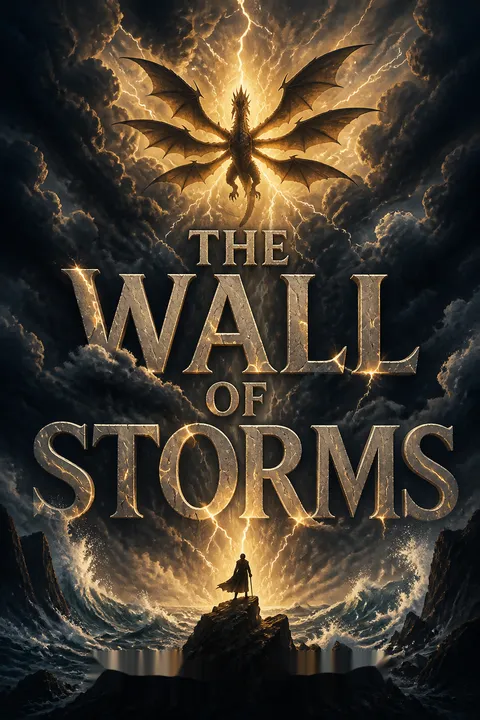


Plot Summary
The Pass Burns at Supper
During a snowbound afternoon in Pan, three imperial children sneak out to hear a storyteller praise the fallen Hegemon. A scarred stranger claims to work for the emperor’s spies and tries to fine the performer for treason. Théra, daughter of Emperor Ragin, recognizes the man’s forged authority and challenges him.
When he attacks a young scholar who has exposed him, Phyro and Théra rally the tavern patrons, who drive him out with flying cups and bowls. The scholar, Zomi Kidosu, has come to Pan for the Grand Examination. In the confusion, the impostor burns her examination pass. Timu, the eldest child, tries to restore order, while Théra and Phyro promise to find Zomi another way into the examination.
The opening turns a small act of official intimidation into a test of who is willing to intervene. The tavern crowd does not become brave through abstract principle; Théra gives its members a cue, and their first successful throws make collective resistance possible. Zomi’s burned pass converts that moral victory into a material setback, establishing the novel’s central tension between talent and access. The children are not simply rebellious royals: Timu worries about duty, Phyro acts on instinct, and Théra reads people and circumstances. Their different responses preview the political choices that will later divide the empire.
A Pearl Learns to Fly
Zomi was born Mimi, the daughter of Aki and Oga Kidosu, a poor farming and fishing family in Dasu. Her father disappears during a search for a lost prince, and her brothers die in war. At five, Mimi is struck by lightning during a vision of battling gods; the injury scars her face and paralyzes her left leg.
Years later, she challenges a scholar’s debate about the sun by insisting that claims be tested against observation. The scholar, Luan Zya, recognizes her ability and becomes her teacher.
He teaches her philosophy, engineering, writing, and careful observation, builds a brace that lets her walk, and takes her across Dara in a balloon. After helping villagers stop a forest fire, she returns to her mother and chooses the examinations over the life she knows.
Mimi’s education begins not with rescue from poverty but with a method: look closely, test what people claim, and build an explanation that works. Luan treats her disability as an engineering problem without reducing her to it, and his brace gives her practical freedom while preserving her insistence on doing things herself. Aki’s love is equally complex. She wants her daughter near her, yet recognizes that keeping her would mean denying the restless curiosity that makes her distinct. Mimi leaves home carrying both a promise of care and the burden of becoming more than her circumstances.
The Exam’s Narrow Door
In Pan, Queen Gin of Géjira gives Zomi a replacement pass after Théra and Phyro persuade her that the scholar deserves a chance. The Grand Examination confines candidates to their stalls for three days as they compose and carve essays. Zomi survives the ordeal and places among the ten scholars invited to the Palace Examination.
There, candidates present policy proposals before the emperor and the assembled lords. One scholar argues for restoring the old Tiro kingdoms; another defends merchants through a dazzling mechanical display. Zomi rejects the premise that polished argument and classical learning alone reveal talent.
She demonstrates how the examination favors established academies and wealthy families, then proposes using vernacular writing rather than requiring mastery of ancient logograms. Her challenge leaves the court arguing over what merit actually means.
The examination offers a path upward, but only through a gate whose standards were built by people already inside. Zomi’s success does not prove the system fair; her presence instead lets her expose how calligraphy, classical references, and elite schooling become mistaken for universal measures of intelligence. Her proposal is radical because it changes not just who can compete, but what knowledge counts. At the same time, her own arrival depends on Gin’s intervention, an early contradiction she will later have to face: an imperfect door can still be the only door available.
A Princess Reads Power
Théra watches the Palace Examination and begins to understand that speeches to Kuni are also signals to the nobles, generals, and ministers listening around him. The children’s mischief brings them into the hall, where Théra helps them avoid a public scandal.
Later, while helping Kuni water his garden, she interprets his mixed crop plots as a model for governing a varied empire: different regions need room to test different policies. Kuni praises her judgment but conceals his deeper plan.
He has chosen Théra as his eventual heir, believing she can unite factions that favor her brothers Timu and Phyro. He quietly supports girls’ education through the Golden Carp program and assigns the princes separate realms to learn governance. Théra, however, still faces a future others intend to arrange for her.
Kuni’s garden makes policy tangible: water, soil, and crop needs cannot be made uniform without damaging what they sustain. His private choice of Théra follows the same logic, but secrecy protects her from factional competition at the cost of keeping her uninformed. Théra’s insight is political rather than merely academic. She notices that public rituals carry messages beneath their official purpose, and she can read a room without assuming that its surface is the whole event. Her intelligence is already visible, yet her freedom remains constrained by the very plan intended to give her power.
A Court Makes Its Rebels
As Kuni’s peace unsettles the nobles and soldiers who helped win it, Empress Jia fears that personal loyalty will not hold the empire together after him. She advises Farsight Secretary Rin Coda to encourage dissidents, supply them discreetly, and expose their plots so the court can strip military power from the independent lords.
In Tunoa, disgraced former kings Noda Mi and Doru Solofi use a mirror trick to make followers believe the Hegemon is commanding them to overthrow Kuni.
In Arulugi, Duke Théca Kimo sells weapons to the rebels, then refuses Kuni’s summons and declares his own demands. Kuni’s forces defeat Kimo, who is executed. Jia uses Gin Mazoti’s sheltering of the fugitives to frame the marshal as a traitor, while Rin’s manufactured rebellion grows beyond his control.
Jia’s scheme is not simple villainy: she wants institutions to outlast the personalities and armies that founded the dynasty. But her effort to prove that trust is dangerous creates the very evidence she needs, converting political insecurity into armed rebellion. Rin’s desire to secure his office makes him an accomplice, while Kimo’s fear of losing status gives the plot real fuel. The episode exposes a perilous feature of preventive power: once a ruler manufactures threats to justify control, the distinction between containing danger and producing it begins to collapse.
The Marshal’s Stolen Name
Jia arrests Gin and presents Zomi with evidence that the marshal supposedly plotted against Kuni. Zomi knows Gin did not, but the empress reveals that Zomi’s own Grand Examination pass was stolen from the unused stack at a Dasu reception. The forgery helped Zomi reach the position that now supports her mother, her work, and her influence.
Jia can expose her and destroy her, or keep the secret if Zomi confirms the case against Gin. Zomi chooses silence and signs the accusation, believing she can still protect Gin’s daughter, Aya. Gin refuses Captain Dafiro Miro’s chance to escape because flight would leave her name stained and make her look guilty. When Rin later recognizes his role in the rebellion he fostered, he dies by suicide.
Zomi’s betrayal grows from a genuine moral injury: she stole the pass after a privileged candidate’s condescension convinced her that honest achievement would not be enough. The empress turns that old act into leverage, forcing Zomi to choose between public truth and the people she hopes to protect. Gin’s refusal to flee makes reputation more than vanity; in a political world where evidence is staged, her name is the only defense she believes she has. Rin’s death reveals the human cost of a strategy that treated rebellion as a manageable instrument.
The Hegemon’s Borrowed Face
While Phyro is sent to govern Tunoa, he and Rin discover that Noda Mi and Doru Solofi have organized thousands of followers with the help of mirrors that project an image of the Hegemon. Théra studies the phenomenon instead of dismissing it as superstition.
By comparing light patterns and testing mirror surfaces, she discovers that minute distortions in a polished mirror can project a second image. When the rebels attack Zyndu Castle, Phyro uses revered portraits of the Hegemon to halt their assault.
Théra then projects an image of the Hegemon standing beside Kuni, accompanied by a message against renewed war. The rebels lose confidence, and Mi and Solofi escape. Théra’s investigation proves that spectacle can be countered by understanding how it works.
The mirror plot makes belief a technical and political force at once. Mi and Solofi do not merely deceive their followers; they turn grief for the Hegemon into a source of authority. Théra answers them with a counter-image, not by insisting that the people are foolish, but by learning the material mechanism behind their certainty. Her method anticipates her later scientific work: investigate the apparatus, then intervene where the public meaning is made. The episode also shows that symbols cannot be dismissed as false simply because their construction is artificial.
City-Ships Reach Dara
A fleet of immense ships arrives off Dasu, pursued by terrified pirates and carrying the Lyucu, a people from beyond the Wall of Storms. Imperial Tutor Zato Ruthi leads an envoy to their leader, Tenryo Roatan, but mistakes the Lyucu’s tests of Dara’s defenses for friendly curiosity.
Tenryo kills Ruthi and uses what he learned to attack. Garinafins, enormous flying beasts that breathe fire, destroy Dara’s airships and rout the army at the coast. Timu refuses to flee, but recognizes that resistance would expose civilians to pointless slaughter.
He orders the people of Daye to surrender and warns Tenryo that he will resist any attack on them. Tenryo takes the city anyway, killing many inhabitants and enslaving survivors. Timu is captured, while the invasion overturns the peace Kuni had built.
Ruthi’s confidence in civility and moral example leaves him unable to read a military probe. His death is not a rejection of scholarship itself, but a warning that good intentions cannot substitute for attention to an adversary’s actual behavior. Timu’s decision to stop resistance shows a different kind of courage from battlefield heroics: he accepts humiliation to spare civilians. Tenryo rejects that moral vocabulary. For him, terror is an administrative tool, and the invasion reveals that the empire’s impressive machines cannot compensate for a failure to understand the enemy.
The Lost Voyage Returns
Years earlier, strategist and engineer Luan Zya sailed north to investigate wreckage linked to Emperor Mapidéré’s lost expedition. He crossed the Wall of Storms, drifted alone across the ocean, and eventually reached Ukyu, where the Lyucu imprisoned him.
There he met Oga Kidosu, Zomi’s father, one of the few survivors from Mapidéré’s city-ships. Oga explains that the Dara explorers first arrived as welcomed guests, then exploited and abused the Lyucu before Tenryo seized their ships and turned them into captives.
Luan realizes that the Lyucu have disguised this history to recruit his help finding a route back to Dara. He secretly sabotages their supply of tolyusa, a plant essential to garinafin breeding, but the Lyucu capture and torture him. After Dara retakes Kriphi, rescuers find both men chained and gravely injured.
Luan’s expedition joins the novel’s scientific curiosity to the history of imperial violence. The city-ships were not a rescue mission for immortals; they were an earlier encounter in which Dara’s representatives mistook technological advantage for moral superiority. Oga’s survival gives the invasion a human lineage, connecting Zomi’s family to the catastrophe of Mapidéré’s ambition. Luan’s delayed recognition shows that intelligence can be exploited when trust is offered selectively. His sabotage is a belated attempt to repair the harm done by his own earlier choices.
Ghost Ships Take Kriphi
Kuni sends an army to retake Rui, but the Lyucu’s garinafins make a direct assault too costly. Puma Yemu draws the beasts away from Kriphi, while Than Carucono leads mechanical crubens underwater to carry collapsible airships into range.
Pon Naye’s crews use fire-lances to attack the Lyucu city-ships at night. When garinafins destroy the airships, Naye and other crews launch explosive charges at the beasts, sacrificing themselves to break the Lyucu air force and let Dara soldiers land.
The Lyucu retreat west with their captives, including Kuni and Timu. At Naza Pass, Kuni’s army is trapped between two Lyucu forces, one of them arriving through a tunnel under the sea. Tenryo burns civilians before Kuni’s eyes; Kuni surrenders to stop the slaughter.
The counterattack succeeds because Dara’s engineers combine old tools in new ways: underwater boats become carriers, ordinary balloons become stealth weapons, and manure gas becomes firepower. Naye’s sacrifice is devastating but tactically meaningful, a choice made with full awareness rather than imposed by a commander. The second trap reverses that triumph. Kuni’s surrender is an act of protection, not an admission that Tenryo’s cause is just. Yet the spectacle of civilian deaths gives the pékyu control over what the soldiers see and how they interpret the emperor’s decision.
A Son Chooses Surrender
Captured alongside Kuni, Timu becomes close to Tenryo’s daughter, Tanvanaki, who challenges his belief that Dara’s abundance makes its rule just. She shares the brutal history of the scrublands and persuades him that the Lyucu, too, have a claim to survive.
Their intimacy, however, is shaped by captivity and unequal power. Timu begins to believe marriage can reconcile the two peoples and accepts the title Emperor Thaké. Back in Dara, Jia and the imprisoned Gin struggle over whether resistance can succeed.
Gin initially doubts it, then changes course when Soto brings volunteers who choose to fight despite the odds. Jia also drives the war effort, accepting responsibility for actions that will make her hated. The conflict now turns on whether Dara can unite before Tenryo exploits its divisions.
Timu’s choice is psychologically credible because it answers a lifelong wound: he wants to be recognized as more than the son Kuni failed to know. Tanvanaki gives him genuine intellectual challenge and emotional attention, but the surrounding captivity makes any apparent consent politically compromised. His belief in reconciliation is therefore both humane and dangerously convenient to his captors. Jia and Gin face the opposite temptation, to make peace with defeat rather than risk more lives. Their eventual choice to resist does not erase their disagreement about power; it makes them act together despite it.
Locusts Devour the Pastures
Jia’s agents send intercepted messages to Lyucu collaborators, hiding a warning in a poem about grain stores and hunger. Ra Olu and his wife Lon decipher the message and secretly help Dara by arranging for families to seal their granaries before a locust swarm arrives. The insects strip Rui and Dasu of crops and pasture, leaving the Lyucu without feed for their cattle and garinafins.
Tenryo retaliates by taking the stored grain for his animals, but the sudden change from grass to grain sickens many beasts. The sabotage buys Dara a chance to fight, though Ra Olu and Lon are executed when their role is discovered. The depleted Lyucu fleet sails for the Big Island anyway, forcing the final confrontation before either side is ready.
The coded poem works because literary knowledge and practical knowledge converge. A literary allusion becomes an operational instruction, while Théra’s ranch experience explains why the Lyucu cannot safely replace grass with grain. This is not a clean victory: the locusts also devastate the land, and the resulting famine falls hardest on civilians. Ra Olu and Lon’s decision to risk themselves complicates their earlier collaboration. Their final loyalty does not undo their harm, but it shows that people can change direction even after helping build an oppressive system.
Lightning Breaks the Fleet
At Zathin Gulf, Dara’s new airships reveal giant crossbows that fire bolts packed with charged jars and explosives. They destroy several garinafins, while bamboo caltrops prevent others from breathing fire.
When the airships form a defensive box, Tanvanaki breaks it by luring them into attacking one another, and Noda Mi betrays Dara by using fire arrows to ignite their exposed gasbags. Gin’s flagship crashes into Tenryo’s ship. Dafiro Miro holds the pékyu in place while Gin drives Na-aroénna toward him; Zomi completes the strike with a silkmotic charge that kills Tenryo.
Dafiro and Gin die, but Zomi raises Gin’s body with the Dara banner so the fleet believes its marshal still leads them. The Lyucu retreat, and the battle ends with victory bought at terrible cost.
The battle’s decisive weapon is not a single miracle but a chain of discoveries: garinafin anatomy, silkmotic force, explosive timing, and the discipline to combine them. Yet cleverness cannot prevent betrayal or guarantee survival. Noda’s reversal shows that political trust remains fragile even after the larger enemy becomes clear. Gin’s final tactic accepts that a leader can become a symbol beyond her living body. Zomi’s use of the marshal’s corpse is a brutal act of theater, but it gives the surviving Dara crews the seconds they need to continue fighting.
The Lotus Crosses the Storm
After the battle, Timu remains with Tanvanaki, and the Lyucu retain Rui and Dasu under a tense agreement. Jia governs in Pan while Phyro becomes emperor, and Théra refuses to inherit the throne permanently.
She chooses instead to travel with Takval Aragoz, a descendant of the defeated Agon, who offers garinafin eggs and a possible alliance against the Lyucu. Zomi stays behind as Imperial Farsight Secretary, carrying forward the work she began with Luan. Théra and Takval sail toward the Wall of Storms with a small fleet, hoping to help the Agon reclaim their freedom.
The gods debate whether they can follow beyond Dara; Lutho chooses to leave his divine home and join the voyage. The ending opens a new struggle rather than pretending the first war has settled everything.
The resolution refuses a simple restoration. Dara survives, but the enemy still holds two islands, Timu remains politically entangled with Tanvanaki, and the succession passes to Phyro under Jia’s regency. Théra’s departure is not a rejection of responsibility; it is a choice to serve a different future beyond the inherited throne. Her bond with Zomi remains meaningful without becoming the sole definition of either life. The final voyage extends the book’s central question: whether knowledge and cooperation can cross boundaries that power, history, and even the gods have treated as fixed.
Analysis
The novel’s central problem is not how to defeat an enemy with superior weapons, but how a society defines the right to wield power. Kuni builds Dara through trust, improvisation, and an uneasy balance among regions and factions. Jia fears that such a system depends too heavily on one charismatic ruler, so she tries to replace personal loyalty with durable institutions. Her strategy identifies a real danger but manufactures the rebellions meant to justify her response. The cost is not only political: Rin, Kimo, Gin, and ordinary people become collateral in a plan designed to prevent future bloodshed.
Zomi and Théra offer a different route through that conflict. They treat knowledge as something assembled from observation, inherited systems, practical work, and new combinations. Zomi’s challenge to the examinations asks who gets to count as talented; Théra’s scientific work insists that even the terrifying garinafins have observable limits. Their discoveries do not make violence disappear. Instead, they give people choices that were previously unavailable, while forcing them to accept the consequences of using those choices.
The Lyucu invasion also overturns Dara’s self-image. The people who call themselves civilized have their own history of conquest, exploitation, and selective memory. Tenryo’s brutality is not excused by that history, but it cannot be understood without it. The novel refuses the comfort of a clean moral boundary between civilized and barbarian, just as it refuses the belief that education automatically produces wisdom.
By the end, victory is partial and expensive. The Lyucu retain conquered territory, Dara’s leadership changes, and Théra chooses a future beyond the throne. The book’s hope lies not in a final settlement but in continued learning: people must revise their inherited stories, test their assumptions, and build relationships capable of surviving difference without pretending that history has been erased.
Review Summary
The Wall of Storms is a highly praised sequel that surpasses its predecessor in many aspects. Readers commend Liu's intricate worldbuilding, complex characters, and compelling storylines. The book is lauded for its strong female characters, political intrigue, and epic battle scenes. Many reviewers appreciate the blend of Eastern-inspired fantasy with scientific and engineering elements. While some found the pacing slow at times, most agree that the novel is a masterful continuation of the series, with several calling it one of the best fantasy books they've read.
People Also Read


Characters
Zomi Kidosu
The fire-minded scholarBorn Mimi to a poor family in Dasu, Zomi combines practical intelligence with an appetite for ideas. A childhood lightning strike leaves her scarred and with a weakened leg, but neither condition defines her ambitions. She notices patterns others overlook, tests claims against evidence, and treats engineering as a way to change material conditions. Her directness can become arrogance, especially when she believes merit alone should protect her. Luan teaches her to discipline her mind without extinguishing its originality. Zomi’s deepest conflict is between self-reliance and obligation: she wants success on her own terms, yet repeatedly discovers that the lives of people she loves are bound to her choices.
Luan Zya
The wandering strategistLuan is an engineer, philosopher, and former strategist who has withdrawn from court to study the natural world. His curiosity is both a moral strength and an escape from the consequences of power: he prefers to advise rulers rather than command those who must carry out their plans. He teaches Zomi by linking abstract ideas to observation, machines, and lived experience. His affection is patient but not possessive; he builds a brace for Zomi without forcing gratitude or dependence. Luan believes the universe can be understood through careful attention, yet his past decisions leave him uneasy about whether knowledge can ever be separated from responsibility.
Kuni Garu
The balancing emperorKuni rises from an unimportant background to unite Dara, relying on humor, improvisation, and trust in people who have little reason to trust one another. As Emperor Ragin, he tries to balance nobles, generals, scholars, merchants, and farmers without allowing any one group to dominate. He favors practical solutions over rigid doctrine, but his instinct to make competing interests coexist can become indecision. His private hopes for his children reveal both tenderness and political calculation. Kuni knows that every victory carries a cost, and he is often haunted by the betrayals and deaths that made his rule possible.
Empress Jia
The architect of orderJia is a skilled herbalist, a disciplined political thinker, and Kuni’s partner in building the Dandelion court. She believes personal loyalty is too fragile to sustain peace, so she seeks durable institutions and rules. Her intelligence often works through private channels because a woman’s formal authority is constrained by custom. Jia’s commitment to stability is sincere, but it can make her treat people as pieces in a long strategy. She accepts that history may judge her harshly if her methods protect the population. Her care for her family and her public vision are inseparable, which makes it difficult even for those closest to her to know where one ends and the other begins.
Gin Mazoti
The iron-willed marshalGin is Dara’s foremost battlefield commander, a self-made leader who values competence, courage, and the lives of the soldiers under her command. She distrusts courtly maneuvering and prefers decisions that can be tested in the open, but her pride makes it hard for her to seek help or admit uncertainty. Gin’s loyalty to Kuni is grounded in what she believes he can accomplish for ordinary people, not in a wish to possess power for its own sake. She is blunt with children and generals alike, and her apparent hardness conceals a strong sense of responsibility toward those who follow her.
Princess Théra
The unappointed heirThéra is observant, politically perceptive, and restless within the narrow role assigned to imperial daughters. She reads performance as carefully as policy, recognizing that courtly jokes, examinations, and family rituals can carry messages beyond their surface meaning. Her curiosity ranges from philosophy to engineering, and she learns by watching how systems work. Théra’s warmth and humor keep her from becoming only a strategist, while her impatience can lead her to push others before they are ready. She wants a life shaped by her own judgment, not merely by the plans of her father, mother, or court.
Prince Timu
The dutiful firstbornTimu is studious, conscientious, and deeply shaped by the Moralism of his tutor, Zato Ruthi. He values loyalty and proper conduct, but his caution can make him slow to read the emotional and political currents around him. His distance from Kuni leaves him hungry for approval, while his closeness to Jia gives him a strong scholarly foundation. Timu is not naturally a warrior, and he often measures himself against siblings whose gifts are more visible. His thoughtful nature can become a source of courage when he accepts responsibility for people more vulnerable than himself.
Prince Phyro
The eager younger princePhyro is energetic, charming, and drawn to stories of battle and heroic action. His instincts resemble Kuni’s youthful daring, but he has not yet learned the patience or restraint required to govern. He is quick to act for people in immediate danger and often makes others laugh, though he can mistake confidence for judgment. His bond with Risana gives him emotional security, while Gin’s stories feed his fascination with military life. Phyro must learn that courage is not simply charging toward a threat; it also means listening, planning, and accepting consequences.
Pékyu Tenryo Roatan
The conquering strategistTenryo is the leader of the Lyucu, a people whose survival on the harsh scrublands has shaped their military culture. He is calculating, disciplined, and willing to use terror when he believes it will secure his people’s future. His experiences as a hostage teach him that affection can coexist with political vulnerability, and he responds by placing control above trust. Tenryo does not see himself as cruel for cruelty’s sake; he regards conquest as a necessary path to a more secure homeland. That conviction makes him both formidable and dangerous, because he can turn almost any human cost into evidence that his course is justified.
Vadyu Roatan
The fearless garinafin pilotKnown among the Lyucu as Tanvanaki, Vadyu is a gifted pilot and a decisive battlefield thinker. She understands the garinafins not only as weapons but as living partners whose limits and instincts shape what an army can do. Her upbringing in the brutal scrublands gives her a different measure of justice from the scholars of Dara. Vadyu can be candid, bold, and unexpectedly curious about the people she fights. She is also her father’s daughter in her willingness to make hard choices for the survival of her people, even when those choices wound individuals she has come to value.
Oga Kidosu
The fisherman storytellerOga is a fisherman and an instinctive storyteller from Dasu. His life is shaped by loyalty to his family and by a gift for turning hardship into memorable tales. He is not formally educated, yet his stories preserve knowledge and lift the spirits of people who have little power over their circumstances. His absence leaves his family without a provider, but his voice continues to shape Zomi’s sense of wonder and narrative. Oga embodies the importance of knowledge that does not come from schools or official records.
Aki Kidosu
The steadfast motherAki raises her children through poverty, loss, and relentless labor, relying on practical skill and stubborn hope. She does not romanticize hardship, but she knows how to make a meal from what others discard and how to keep going when no authority offers help. Her love for Mimi is deep but not possessive; she understands that her daughter’s gifts may lead her away from home. Aki’s stories give Mimi her first models of how people interpret a world that often offers no clear answers.
Consort Risana
The reader of heartsRisana is a musician, performer, and skilled observer of what people want but cannot say plainly. Her warmth makes others feel attended to, and her smokecraft shows how spectacle can guide an audience’s feelings. She supports Phyro and shares Kuni’s burdens, yet she is less comfortable than Jia with the calculated violence of politics. Risana’s compassion is a political strength, but it also makes her vulnerable to anyone who knows how to turn love into leverage.
Cogo Yelu
The patient administratorCogo is the prime minister and the architect of much of Dara’s civil administration. He thinks in systems, budgets, and second-order consequences, and he knows that governance often means choosing among imperfect outcomes. His calm manner can conceal anxiety, and his loyalty is expressed through compromise rather than grand declarations. Cogo often serves as a bridge between Kuni’s improvisational instincts and the practical demands of running an empire.
Rin Coda
The emperor’s farseerRin is Kuni’s childhood friend and the head of the imperial intelligence service. He is resourceful, socially observant, and comfortable using informants and criminal networks that more respectable officials would avoid. His position gives him power but also leaves him insecure about whether he has earned his place. Rin can recognize danger in others more readily than the compromises in his own work.
Zato Ruthi
The stern imperial tutorRuthi is a renowned Moralist scholar who believes ritual and education can shape a just society. He is exacting with the imperial children and proud of the examination system he helps administer. His respect for scholarship is genuine, but it can make him overconfident when facing people or forms of knowledge he does not understand. Ruthi’s relationship with his students is more forgiving than his severity first suggests.
Dafiro Miro
The loyal palace captainDafiro is captain of the palace guards and one of Kuni’s most trusted servants. He is observant, quick to improvise, and often more politically perceptive than his modest position suggests. His loyalty is personal but not blind; he understands that protecting the imperial family sometimes requires deception, risk, and difficult choices. His memories of his brother and his friendships across cultures give him a quiet tenderness beneath his soldier’s discipline.
Takval Aragoz
The exiled Agon princeTakval descends from the defeated rulers of the Agon, the southern people of the scrublands. He is practical, determined, and shaped by stories of a homeland under Lyucu control. His request for an alliance with Dara is both personal and political: he seeks freedom for his people, but understands that the struggle cannot be won by memory or vengeance alone. He offers knowledge and a possible partnership across cultures.
Noda Mi
The opportunist kingmakerNoda is a clever former ruler who understands how crowds behave and how belief can be organized for profit or power. He can make ordinary people feel chosen by turning ritual into competition, and he is adept at reading the desires of the disgruntled. His hunger for status is matched by a talent for improvisation. Noda rarely regards loyalty as permanent when a more advantageous alignment appears.
Doru Solofi
The disgraced strongmanDoru is a former Tiro king whose size and physical intimidation once helped him command a crowd. He is more direct than Noda and less patient with long plans, drawn to the comforts and status he has lost. Beneath his bluster is a man aware that he has fallen far from power, though he continues to hope that another alliance might restore it.
Plot Devices
The Imperial examinations
A gate to public serviceThe examination system is Kuni’s attempt to recruit talent regardless of sex or social rank. Candidates advance through town and provincial tests before the Grand Examination and a final audience with the emperor. In practice, the system rewards access to schools, familiarity with classical texts, and the writing styles preferred by established judges. Zomi’s experience exposes the conflict between a meritocratic ideal and the habits that define merit. The examinations also create a political forum: scholars use their presentations to signal grievances to the entire court, not merely to answer the emperor’s questions.
Ano logograms
Machines for shaping ideasThe ancient logograms are both a writing system and a way of organizing knowledge. Their components combine into new meanings, much as parts of a machine can be assembled to perform a new task. Luan teaches Zomi to read them as evidence of how people have modeled the world, including its accumulated errors. Their beauty preserves a connection to the past, but the years of study required to master them exclude many poor students. Zomi’s proposal to use vernacular writing challenges that barrier without claiming that the older system has no value.
Magic mirrors
Spectacle made politicalNoda Mi and Doru Solofi use specially polished bronze mirrors to project images of the Hegemon, convincing followers that he is directing their rebellion. Théra investigates the optical effect and learns that minute irregularities in the mirror surface reproduce a design embossed on its back. She uses that discovery to project a counter-image of the Hegemon alongside Kuni, weakening the rebels’ certainty. The mirrors show how a technical trick can become a political fact once people organize their actions around what they believe they see.
The Wall of Storms
A barrier and a routeThe Wall of Storms encircles Dara with vast cyclones and separates the islands from distant lands. It has stopped earlier expeditions, yet patterns in the storms create temporary passages. Luan studies those patterns, and the Lyucu exploit his calculations to bring their invasion fleet through. His later coded work obscures the true timing of another opening, while Théra and Takval sail toward the same boundary in hopes of reaching the Agon. The Wall makes geography an active force in the politics of the novel: it can isolate peoples, enable invasion, or permit a risky new alliance.
Silkmotic force
Lightning turned into weaponsThe silkmotic force, first used by street performers and healers, is generated by rubbing materials such as silk and glass. Miza Crun explains how Ogé jars can store it, and Zomi helps adapt that knowledge for battle. Charged jars hidden inside bamboo bolts shock garinafins, while a larger system of coiled, gold-coated intestines stores lightning for the airships’ lances. The discovery depends on observation, experimentation, and collaboration between scholars, a princess, and a street magician. It is powerful, but its use demands careful design and exact timing.
FAQ
Synopsis & Basic Details
What is The Wall of Storms about?
- Epic Silkpunk Saga Continues: The Wall of Storms by Ken Liu is the second volume in The Dandelion Dynasty, continuing the saga of Emperor Ragin (Kuni Garu) as he strives to solidify his empire, Dara, against internal dissent and a looming external threat. The narrative intricately weaves together political intrigue, technological innovation, and deep philosophical debates, exploring the challenges of governance in a diverse and rapidly changing world.
- Internal Strife & Succession: The story delves into the complex dynamics of Kuni's court, particularly the growing rivalry between his wives, Empress Jia and Consort Risana, and their respective sons, Prince Timu and Prince Phyro, for succession. This internal struggle is exacerbated by the ambitions of Kuni's generals and ministers, who jockey for influence and power, testing the fragile peace Kuni has established.
- Invasion from Beyond the Wall: A new, formidable enemy, the Lyucu, emerges from beyond the mythical Wall of Storms, threatening Dara with their fire-breathing garinafins and ruthless military tactics. The invasion forces Dara's leaders to confront their deepest fears, make impossible sacrifices, and innovate new technologies and strategies to defend their homeland, culminating in a desperate struggle for survival.
Why should I read The Wall of Storms?
- Deep Philosophical Exploration: Readers seeking a fantasy epic that transcends typical sword-and-sorcery will find The Wall of Storms intellectually stimulating. Ken Liu masterfully integrates the Hundred Schools of philosophy (Moralism, Fluxism, Patternism, Incentivism) into the characters' motivations and the empire's governance, offering profound insights into human nature, societal structures, and the ethics of power.
- Rich World-building & Innovation: The novel expands on the unique "silkpunk" aesthetic, showcasing ingenious inventions like mechanical crubens, collapsible airships, and silkmotic weapons. The detailed descriptions of Dara's diverse islands, cultures, and technological advancements create a vibrant and immersive world that feels both fantastical and grounded in plausible scientific principles.
- Complex, Evolving Characters: The characters are morally ambiguous and undergo significant psychological development, making their journeys compelling. From Empress Jia's ruthless pragmatism to Zomi Kidosu's quest for justice and Théra's emergence as a visionary leader, their internal conflicts and evolving relationships drive the narrative, offering a nuanced exploration of love, duty, and sacrifice.
What is the background of The Wall of Storms?
- Post-Unification Dara: The story is set years after Kuni Garu unified the Islands of Dara, establishing the Dandelion Dynasty. While the Xana Empire has fallen and the chaos of the Chrysanthemum-Dandelion War has subsided, the empire is still young and its peace fragile, grappling with the integration of diverse cultures and the ambitions of newly enfeoffed nobles.
- Philosophical Foundations: Dara's society is heavily influenced by the Hundred Schools of philosophy, particularly the four major ones: Moralism (Kon Fiji), Fluxism (Ra Oji), Patternism (Na Moji), and Incentivism (Gi Anji). These schools provide frameworks for understanding the world, governance, and individual conduct, often clashing in their interpretations and applications, shaping political debates and personal choices.
- Geographical & Mythological Context: The world of Dara is a collection of islands, each with distinct cultures, resources, and patron gods. The mythical "Wall of Storms" to the north serves as a physical and symbolic barrier, separating Dara from unknown lands and the Lyucu, whose own creation myths and deities (All-Father, Every-Mother, Péa, Cudyufin, Nalyufin) offer a contrasting worldview.
What are the most memorable quotes in The Wall of Storms?
- "Talent is like a pretty feather in the tail of a peacock, daughter. It brings joy to the powerful but only sorrow to the bird." (Chapter 7): This quote, spoken by Aki Kidosu to young Zomi, encapsulates the precariousness of talent for the powerless in a hierarchical society. It foreshadows Zomi's struggles with ambition and the dangers of being noticed by those in power, a central theme in The Wall of Storms regarding meritocracy and social mobility.
- "The grace of kings does not glitter like precious gold or shine like gentle jade. It's forged from iron and blood." (Chapter 61): Empress Jia delivers this stark declaration to Risana, revealing her pragmatic and often brutal philosophy of leadership. This quote highlights the harsh realities of maintaining power and the sacrifices required, contrasting with Kuni's more idealistic vision of "The Grace of Kings" and offering a key insight into Empress Jia's motivations.
- "True courage comes not from being certain and unafraid, but from doing what must be done even while being terrified and full of doubts." (Chapter 52): Soto Zyndu offers this profound definition of courage to Gin Mazoti, urging her to lead Dara's resistance despite overwhelming odds. This quote challenges conventional notions of heroism and underscores the emotional depth of characters who act out of duty and love, even in the face of despair, a powerful theme in The Wall of Storms about resilience.
What writing style, narrative choices, and literary techniques does Ken Liu use?
- Polyphonic Narrative Structure: Liu employs a multi-perspective narrative, shifting between numerous characters, including Kuni, Jia, Risana, Gin, Zomi, Théra, and Luan, as well as minor figures and even the gods. This allows for a comprehensive view of events, revealing conflicting motivations and interpretations, enriching the analysis of the story's complex political landscape.
- Seamless Integration of Philosophy and Technology: The novel's "silkpunk" aesthetic is not merely decorative; it's deeply interwoven with the philosophical underpinnings. Technological innovations (like airships, mechanical crubens, silkmotic devices) are often direct applications or reflections of the Hundred Schools' principles, demonstrating how ideas shape the material world and vice versa, a core literary technique that defines the series.
- Intertextual Allusions and Myth-making: Liu frequently references ancient Ano sagas, folk tales, and historical events within the narrative, blurring the lines between history, myth, and propaganda. Characters often interpret these stories to justify their actions or understand their world, highlighting the power of narrative in shaping reality and perception. This technique adds layers of symbolism and invites readers to question the "truth" of historical accounts.
Hidden Details & Subtle Connections
What are some minor details that add significant meaning?
- Children's Nursing Names: The nursing names of Kuni's children (Toto-tika, Rata-tika, Hudo-tika, Ada-tika) are a subtle callback to the first book, The Grace of Kings, and a cultural detail that humanizes the Imperial family. This detail, often overlooked, emphasizes their childhood innocence before they are thrust into the harsh realities of court politics and war, highlighting the contrast with their later, more formal roles.
- Luan's Gitré Üthu: Luan Zya's constantly carried book, Gitré Üthu ("know thyself"), initially seems a personal affectation but becomes a crucial plot device and symbol. Its blank pages after his journey through the Wall of Storms, and later his coded message within it, represent both a cleansing of past burdens and a testament to his enduring intellect, revealing his deep character motivations and his commitment to knowledge.
- The Three-Legged Jug: The pub where the Imperial children first encounter Zomi Kidosu, the "Three-Legged Jug," is a recurring, seemingly minor setting that gains symbolic weight. It represents a space of commonality and unexpected encounters, where social hierarchies are temporarily suspended, allowing for genuine human connection and the forging of unlikely alliances, a subtle commentary on social class and opportunity in Dara.
What are some subtle foreshadowing and callbacks?
- Zomi's Lightning Scar: Zomi's childhood lightning strike and subsequent paralysis, detailed in Chapter 5, is a profound piece of foreshadowing for her later connection to the silkmotic force. This early trauma, which she initially views as a curse, becomes the foundation for her unique understanding of electrical phenomena, directly leading to the development of Dara's most potent weapon against the Lyucu. It's a powerful example of how personal adversity can lead to unexpected strengths, a key theme in The Wall of Storms.
- Kuni's "Cruben-Wolf" Analogy: Kita Thu's theatrical presentation of Kuni's empire as a "cruben-wolf" (Chapter 11), a creature at home nowhere, subtly foreshadows the empire's inherent instability and Kuni's own internal conflicts. This early critique of Kuni's hybrid governance system (part noble fiefs, part Imperial provinces) highlights the deep-seated tensions that later erupt into rebellion and challenge the empire's unity, offering a critical analysis of Kuni's political choices.
- The Gods' Debates: The intermittent, overheard conversations of the gods (e.g., Chapters 2, 40, 45, 60) serve as subtle foreshadowing and thematic commentary. Their bickering and philosophical discussions often mirror the mortal conflicts, hinting at divine interventions or, conversely, their detachment. Their debate over the "Wall of Storms" and Luan's passage through it, for instance, foreshadows the Lyucu invasion and the changing nature of divine influence in Dara.
What are some unexpected character connections?
- Luan Zya and Oga Kidosu: The revelation that Luan Zya and Oga Kidosu (Zomi's father) were imprisoned together by the Lyucu (Chapter 47) is a deeply emotional and unexpected connection. This shared captivity and the exchange of their life stories forge a profound bond, making Luan Zya Zomi's "parent of the mind" and Oga her "author of the body." This connection underscores the personal stakes of the Lyucu invasion and provides Zomi with a powerful, tragic motivation for her actions.
- Jia's Ladies-in-Waiting as Spies: The seemingly minor detail that Empress Jia's former ladies-in-waiting, like Ragi, are now married to influential figures (Chapter 21) reveals a sophisticated network of loyalty and intelligence. These women, often underestimated, become crucial conduits for Jia's covert operations, demonstrating her long-term strategic planning and the hidden power dynamics within the court, offering a fresh perspective on Empress Jia's motivations.
- Théra's Connection to Kikomi: Princess Théra's insistence on studying Princess Kikomi (Chapter 21), a figure often maligned in Dara's history, reveals a deeper connection to themes of misunderstood female agency and sacrifice. Théra's reinterpretation of Kikomi's actions as strategic rather than romantic foreshadows her own future choices and her challenge to traditional gender roles in leadership, providing a nuanced character analysis of Théra.
Who are the most significant supporting characters?
- Soto Zyndu, Jia's Confidante: Soto acts as Empress Jia's moral compass and loyal enforcer, often questioning Jia's ruthless methods while remaining steadfastly by her side. Her role in guiding the Imperial children and her deep understanding of Jia's complex motivations make her a crucial, albeit often silent, force in palace politics. Her unwavering loyalty highlights the personal cost of Jia's grand schemes.
- Kita Thu, the Mathematical Administrator: Initially presented as a rigid Moralist scholar, Kita Thu evolves into a brilliant leader of the Imperial laboratories, adept at fulfilling unusual needs. His ingenuity in designing the garinafin dissection lab and his collaboration with Théra and Zomi are vital to Dara's defense, showcasing the practical application of scholarly talent beyond traditional governance.
- Miza Crun, the Street Magician: Miza Crun, the inventor of the silkmotic devices, is a seemingly minor character who provides the key technological breakthrough against the garinafins. His background as a street performer and healer, combined with his scientific curiosity, embodies the novel's blend of folk wisdom and advanced engineering, demonstrating how unexpected sources of knowledge can yield powerful solutions.
Psychological, Emotional, & Relational Analysis
What are some unspoken motivations of the characters?
- Jia's Quest for Institutional Stability: Beyond simply securing Timu's succession, Empress Jia's deepest motivation is to dismantle the reliance on individual charisma and loyalty that defined Kuni's reign, replacing it with robust, impersonal institutions. Her ruthless actions against the nobles and her manipulation of Rin Coda and Gin Mazoti stem from a belief that only a system, not individuals, can guarantee lasting peace, a core theme in The Wall of Storms and a complex aspect of Empress Jia's motivations.
- Kuni's Guilt and Atonement: Emperor Ragin's indulgence of his children, particularly Phyro, and his reluctance to confront Jia's machinations are subtly driven by guilt over his past betrayals (of Mata Zyndu and Timu's mother, Jia, during the war). He seeks to atone by allowing his family to pursue their own paths, even if it means compromising his empire's stability, revealing a profound internal conflict in Emperor Ragin (Kuni Garu)'s character analysis.
- Gin's Pride and Need for Validation: Queen Gin's initial refusal to fight for Dara, despite the Lyucu threat, is rooted in her profound pride and a deep-seated need for Kuni to publicly acknowledge her innocence and value. Her "stubbornness" is less about disloyalty and more about a demand for justice and recognition for her sacrifices, highlighting the emotional complexities of her relationship with Kuni and her character motivations.
What psychological complexities do the characters exhibit?
- Timu's Search for Identity: Prince Timu struggles with a profound sense of inadequacy and a desperate need for his father's approval, leading him to embrace the Lyucu's "Audacious Freedom" philosophy. His initial bookishness and later "betrayal" are complex psychological responses to feeling overshadowed and misunderstood, showcasing his journey from a dutiful but timid prince to a figure seeking his own path, a key aspect of Prince Timu's character analysis.
- Zomi's Internalized Class Conflict: Zomi Kidosu, despite her brilliance, grapples with internalized class shame and a fierce pride in her humble origins. Her initial rudeness towards Théra, her impulsive theft of the examination pass, and her later self-recrimination after betraying Gin are all manifestations of her struggle to reconcile her peasant identity with her rise to power, revealing the psychological impact of social mobility and the themes in The Wall of Storms related to class.
- Luan Zya's Detachment and Compassion: Luan Zya, the brilliant strategist, exhibits a complex detachment from political intrigue, preferring the "solitude of the wilderness." Yet, his ultimate sacrifice for Oga Kidosu and his coded message for Zomi reveal a deep, underlying compassion that contradicts his intellectual aloofness. This duality highlights the tension between rational calculation and human emotion, a central aspect of Luan Zya's character analysis.
What are the major emotional turning points?
- Kuni's Abdication and Sacrifice: Emperor Ragin (Kuni Garu)'s public abdication and subsequent self-sacrifice by plunging into the sea (Chapter 58) is a pivotal emotional turning point. Driven by guilt over past decisions and a desperate need to inspire his people, he chooses a dramatic, symbolic death. This act, witnessed by Théra, profoundly shapes the future of Dara and the motivations of his children, marking a tragic but heroic moment in Emperor Ragin (Kuni Garu)'s character arc.
- Gin's Acceptance of Sacrifice: Marshal Gin Mazoti's decision to lead the hopeless battle against the Lyucu, knowing it means her death and the potential tarnishing of her name (Chapter 52), is a powerful emotional climax. Her conversation with Soto Zyndu, where she confronts her pride and accepts the necessity of sacrifice for Dara, reveals her profound loyalty and courage, making her death a truly heroic act and a key moment in Gin Mazoti's motivations.
- Théra and Zomi's Confession of Love: The intimate moment between Princess Théra and Zomi Kidosu where they confess their love (Chapter 59) is a significant emotional turning point, offering a counterpoint to the pervasive political and military struggles. This personal connection, born amidst shared trauma and intellectual collaboration, symbolizes hope for a future Dara that values diverse forms of love and partnership, enriching the themes in The Wall of Storms about relationships and identity.
How do relationship dynamics evolve?
- Kuni and Jia's Divergent Paths: Kuni and Jia's relationship evolves from a loving partnership to one of profound ideological divergence and mutual manipulation. While Kuni values personal loyalty and compromise, Jia prioritizes institutional stability, even at the cost of personal relationships. Their final, unspoken understanding before Kuni's death highlights the tragic depth of their love and their differing visions for Dara, a central relationship analysis in the novel.
- Théra and Zomi's Intellectual and Romantic Bond: The relationship between Princess Théra and Zomi Kidosu transforms from a mentor-protégée dynamic to a deep intellectual partnership and eventually a romantic one. Their shared passion for knowledge, engineering, and a just Dara, combined with their mutual respect and vulnerability, creates a powerful bond that challenges societal norms and offers a vision of progressive leadership, a key relationship analysis and character development for both.
- Timu and Tanvanaki's Coerced Affection: Prince Timu's relationship with Lyucu Princess Tanvanaki begins as a forced alliance but evolves into a complex, ambiguous affection. While initially a tool of Lyucu conquest, their bond, particularly after the birth of their child, represents a potential path to reconciliation between the two peoples, albeit one born from violence and manipulation. This dynamic explores the blurred lines between love, duty, and survival in wartime, a crucial character motivation for Timu.
Interpretation & Debate
Which parts of the story remain ambiguous or open-ended?
- The True Nature of Divine Intervention: While the gods of Dara frequently comment on mortal affairs and sometimes appear to intervene (e.g., Lutho saving Luan, Tututika's birds, Fithowéo's guidance), the extent and nature of their direct influence remain ambiguous. Are they truly guiding events, or are their "interventions" merely symbolic reflections of mortal actions and beliefs? This leaves readers to debate the role of fate versus free will, a central theme in The Wall of Storms.
- The Long-Term Success of Théra's Alliance: Princess Théra's decision to marry Prince Takval of Agon and lead an expedition to Ukyu and Gondé is presented as a hopeful new path, but its ultimate success is left open-ended. The challenges of integrating two vastly different cultures and overcoming centuries of conflict are immense, leaving the reader to ponder whether this alliance will truly bring lasting peace or merely sow the seeds for future strife, a key point for The Wall of Storms ending explained.
- The Morality of Jia's Actions: Empress Jia's ruthless political maneuvering, including her manipulation of Rin Coda and her role in Gin Mazoti's downfall, is deeply controversial. While she claims her actions are for the greater good of Dara's institutional stability, the human cost is immense. The novel leaves it to the reader to judge whether her ends justify her means, prompting a debate on the ethics of leadership and the nature of "good" governance, a significant aspect of Empress Jia's motivations analysis.
What are some debatable, controversial scenes or moments in The Wall of Storms?
- Timu's "Betrayal" and Marriage to Tanvanaki: Prince Timu's decision to marry Lyucu Princess Tanvanaki and become "Emperor Thaké" is highly debatable. Is it a genuine betrayal of Dara and his family, or a pragmatic attempt to find a path to peace and protect his people from further bloodshed? His internal struggle and eventual embrace of Tanvanaki's philosophy challenge traditional notions of loyalty and patriotism, inviting readers to consider the complexities of survival and
Hidden Details & Subtle Connections
What are some minor details that add significant meaning?
- Children's Nursing Names: The nursing names of Kuni's children (Toto-tika, Rata-tika, Hudo-tika, Ada-tika) are a subtle callback to the first book, The Grace of Kings, and a cultural detail that humanizes the Imperial family. This detail, often overlooked, emphasizes their childhood innocence before they are thrust into the harsh realities of court politics and war, highlighting the contrast with their later, more formal roles.
- Luan's Gitré Üthu: Luan Zya's constantly carried book, Gitré Üthu ("know thyself"), initially seems a personal affectation but becomes a crucial plot device and symbol. Its blank pages after his journey through the Wall of Storms, and later his coded message within it, represent both a cleansing of past burdens and a testament to his enduring intellect, revealing his deep character motivations and his commitment to knowledge.
- The Three-Legged Jug: The pub where the Imperial children first encounter Zomi Kidosu, the "Three-Legged Jug," is a recurring, seemingly minor setting that gains symbolic weight. It represents a space of commonality and unexpected encounters, where social hierarchies are temporarily suspended, allowing for genuine human connection and the forging of unlikely alliances, a subtle commentary on social class and opportunity in Dara.
What are some subtle foreshadowing and callbacks?
The Dandelion Dynasty Series
About the Author

Download PDF
Download EPUB
.epub digital book format is ideal for reading ebooks on phones, tablets, and e-readers.








