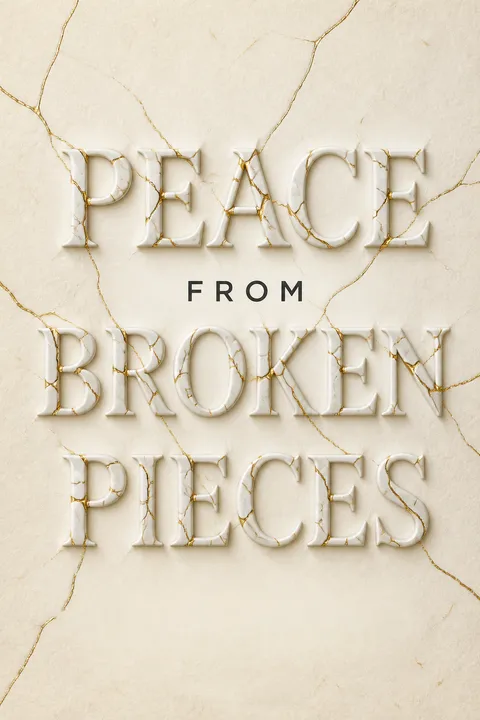


Key Takeaways
Find peace by rebuilding what collapse reveals was never sound
Collapse exposes foundations. On Christmas morning, Iyanla Vanzant’s daughter Gemmia died after a long illness. Vanzant describes the loss as the end of more than a life: her marriage, career, ministry, family identity, and sense of purpose seemed to collapse with it. She came to understand life’s breakdowns not as divine punishment, but as evidence that something underneath needs rebuilding. That interpretation does not make the pain small. It gives her a way to face it without pretending she can restore the life she had before.
Surrender makes room. At one desperate point, Vanzant considers suicide, then allows herself to cry and yield to what she cannot control. Her recovery is slow, measured in years, not a sudden transformation. The book’s central promise is that peace can be made from what remains, even when the old self and old life are gone.
The rebuilding metaphor is powerful because it treats collapse as information rather than a verdict on character. It invites a practical question: what was the old life asking someone to tolerate or conceal? Yet the spiritual claim that a life falls apart because it needs rebuilding should remain an interpretation, not a universal explanation. Some losses are neither chosen nor instructive. The useful part is the permission to reconstruct meaning after catastrophe, without needing to call the catastrophe good.
Trace inherited family patterns before mistaking them for your identity
Patterns travel silently. Vanzant uses “pathology” for the painful beliefs and behaviors learned in a family and repeated across generations. Her childhood included a mother’s early death, a grandmother’s violence, an emotionally absent father, and sexual abuse by a caregiver. Adults rarely explained what was happening, so she built her own conclusions: asking for help was unsafe, mistreatment was normal, and other people’s anger must be her fault.
Awareness creates choice. As an adult, she recognized echoes of those lessons in her relationships and parenting. She describes this inheritance as emotional DNA or generational karma, a spiritual and family-pattern metaphor rather than a proven genetic mechanism. The point is not to blame ancestors or excuse present harm. It is to notice which beliefs were absorbed in childhood, name their costs, and decide whether they deserve to continue.
The most useful shift here is from “this is who I am” to “this is what I learned to do to stay safe.” That reframing can create room for accountability without turning a person into a defective object. It also preserves compassion for family members whose own histories shaped their behavior. Still, tracing a pattern does not establish a complete cause. A family story can illuminate repeated choices while leaving room for temperament, circumstance, and social conditions.
Stop asking wounded love to prove you are worthy
A partner became a verdict. Vanzant fell in love with Eden as a teenager, when his attention made her feel seen and protected. Their relationship resumed years later, but he was still tied to his previous family and had other partners. For 37 years, she kept hoping that being chosen by him would prove she was worthy of love, especially the approval she had wanted from her father. She describes the attachment as less about who Eden was than what she needed him to repair.
Affection is not compatibility. She ignored signs that the relationship lacked commitment and a shared future. The pain fed the belief that she did not deserve better, which made her hold on more tightly. One of her hardest lessons was that a person can have good qualities and still be a poor partner, or two people can care for one another without being suited to a life together.
The memoir makes a sharp distinction between loving someone and using their response as a measure of personal worth. That distinction matters because devotion can disguise a bargain: if this person finally chooses me, my old shame will disappear. Naming the bargain does not erase affection, but it can restore choice. The account should not be read as a diagnosis of every intense relationship. Its value lies in asking what a person is trying to obtain through the bond, beyond companionship itself.
Notice when a dependable child is carrying the family's unspoken load
Reliability can hide need. Vanzant’s daughter Gemmia was quiet, capable, and rarely demanded attention. As Vanzant worked, studied, and built a career, Gemmia took on household tasks and became an assistant mother to her siblings. Vanzant did not recognize how much responsibility her daughter carried or how often the family’s most reliable child went emotionally unseen. In adulthood, Gemmia told her that she had felt ignored and had sometimes put her own ambitions aside to support her mother.
Good intentions are not enough. Vanzant had tried to give her children security and opportunity, but she also repeated parts of her own upbringing: emotional absence, unspoken family truths, and expectations that children adapt to adult needs. Gemmia’s account complicated Vanzant’s belief that she had either been a terrible mother or a successful one. Both care and harm had been present, and listening to her daughter required facing both.
This section challenges the comforting idea that a child who behaves well must be doing well. Competence can be a survival strategy, and a child’s low demand for attention is not proof that the need is absent. At the same time, the account avoids reducing a parent to a single failure: Vanzant provided materially and worked hard, while missing some emotional needs. The practical lesson is to ask children directly what they experience, rather than infer their well-being from obedience.
Name the private belief that keeps success from feeling deserved
Success did not settle the question. Vanzant published bestsellers, won an award, and became a guest on Oprah Winfrey’s show, yet she often felt numb rather than proud. Her term “personal lie” means a deep belief about who someone is and what they deserve, shaped by experience and repeated until it seems like fact. Hers was the belief that she was not good enough. Praise and income could briefly quiet it, but they could not make it disappear.
The lie shaped decisions. Even as television executives courted her, she struggled to trust her own judgment and worth. She eventually approached Oprah with a request that contributed to the end of that opportunity. Vanzant reads this as self-sabotage driven by the old belief. The concept asks readers to identify the story beneath their reactions, then test whether it is truth or an inherited conclusion.
The “personal lie” is a useful name for the gap between external evidence and internal conviction. It explains why achievement can fail to produce lasting security: the person keeps interpreting new evidence through an old story. But the framework should not turn every setback into self-sabotage. Vanzant also faced racialized gatekeeping and a television system in which other people controlled important decisions. A careful reading distinguishes an internal belief that limits action from external barriers that require different remedies.
Make spiritual practice a daily anchor, not an emergency phone call
Practice sustained her. Vanzant describes prayer, meditation, ritual, and study as ways to stay connected to God and steady herself through upheaval. She also drew on both Christian and Yoruba traditions, resisting the idea that spiritual wisdom had to belong to only one religious system. When work and marriage consumed her attention, she let many of these practices lapse and felt increasingly unmoored.
A tool for difficult moments. She used the Emotional Freedom Technique, or EFT, which she describes as tapping with the fingertips on parts of the body while repeating affirmations. She turned to it during grief and fear, alongside prayer and support from friends. The book presents EFT as a tool that helped her; it does not establish it as medical treatment. In Gemmia’s illness, Vanzant ultimately supported her daughter’s decision to pursue chemotherapy after trying other approaches.
A regular practice can offer a dependable pause when life is chaotic, especially when it combines reflection with a repeated physical or verbal ritual. Vanzant’s account also shows how easily a practice becomes something reserved for emergencies, when it is harder to access. The important boundary is between spiritual support and medical care. Prayer or tapping may help someone cope, but neither should be treated as evidence that a serious illness has a spiritual cause or a substitute for clinical advice.
Protect your voice when success asks you to become someone else
Visibility came with a price. After appearing on Oprah, Vanzant hosted her own daytime television show. Producers pushed the program toward topics and formats they believed would attract viewers, while her own work and perspective were often sidelined. She felt pressured to change her style and defer to an executive producer who dismissed her instincts. The show ended after one season, despite the money and effort invested in it.
A boundary clarified the lesson. When the executive producer rejected experts she had chosen for a series based on her book, Vanzant refused to proceed without them. She later saw the show as an expensive education in how easily she could surrender her vision to gain approval. The story does not suggest that every compromise is betrayal. It shows the cost of making a project successful by removing the creator’s judgment and purpose.
The conflict is not simply between artistic purity and commercial compromise. Television production requires collaboration, and audiences matter. The deeper problem is that collaboration becomes one-sided when the person whose name anchors a project has little influence over its substance. Vanzant’s boundary makes the costs visible: she loses the show, but regains a clearer sense of what she is willing to represent. The broader question is whether an opportunity expands a person’s work or merely borrows their identity.
Build a circle that can carry practical weight, not just offer praise
Support became tangible. Vanzant’s Inner Visions community grew from a small prayer team into a group of women who helped run workshops, care for children, and sustain the organization. They prayed, handled logistics, and stayed close through Gemmia’s illness and death. When the organization struggled financially, some staff members accepted reduced pay or volunteered rather than abandon the work. Their care was not merely encouraging words; it showed up as time, labor, and practical help.
Trust needs structure. The community was not flawless. Jimmy, a staff member and Gemmia’s former partner, became involved with students, creating serious questions about boundaries and the school’s integrity. Vanzant had to address the harm as a mother, leader, and administrator. The contrast matters: a loving community can provide essential belonging, but shared purpose does not remove the need for clear responsibilities and ethical safeguards.
The book’s strongest picture of community is operational: someone drives, cooks, watches a child, or stays through a difficult night. Such care is more durable than admiration because it redistributes actual burdens. Yet intimacy can blur roles, especially in a setting where students are vulnerable and staff hold authority. The story makes a useful distinction between emotional closeness and institutional trust. A circle can be loving and still require rules that protect the people who depend on it.
Turn inherited pain into a different choice for the next child
Grief did not end the pattern. After Gemmia’s death, Vanzant read her journals and confronted the ways her daughter had felt overlooked, betrayed, and burdened. She also found evidence of their affection, shared work, and deep connection. Vanzant interpreted Gemmia’s death through her faith, including a belief that her daughter had helped heal generations of women’s suffering. That is her spiritual meaning-making, not a factual explanation for why Gemmia died.
Agency can pass forward. Years later, Vanzant supported her granddaughter Niamoja as she prepared to ask her father for help pursuing a school she wanted to attend. The grandmother could not control his response, but she could help the girl speak clearly and stand by her request. In the book’s closing image, the work of healing is not a perfect family or a life without loss. It is a younger person being better equipped to choose and speak for herself.
Meaning-making can help a bereaved person survive what otherwise feels unbearable, and Vanzant’s interpretation gave her a way to honor her daughter. The crucial distinction is between meaning and causation: Gemmia’s death should not be treated as necessary, deserved, or required to heal a family. The more transferable legacy is visible in the grandmother’s support for Niamoja’s agency. That is a concrete interruption of inherited silence, one choice at a time.
Analysis
This memoir moves from a daughter’s death back through the family history and adult choices that Vanzant believes shaped her life. Its structure is not a step-by-step program. The reader learns through accumulated scenes: a child adapting to violence and silence, an adult seeking love as proof of worth, a successful public figure who cannot absorb success, and a mother forced to hear her daughter’s account of their relationship. The recurring concepts of pathology and the personal lie give those scenes a vocabulary, while spiritual practice supplies the book’s method for enduring what cannot be repaired.
The book’s greatest strength is its willingness to place the narrator on both sides of injury. Vanzant recounts abuse and neglect, but also admits that she repeated emotional patterns with her children. Gemmia is not merely a symbol in her mother’s transformation; her journals and testimony complicate the mother’s preferred account. That tension makes the story more credible and more useful than a simple triumph narrative. The reader sees that love and harm, provision and absence, can coexist in a family.
Its spiritual framework also requires careful distinction. Ideas such as a soul choosing its family, a daughter healing generations through death, or anger causing cancer express Vanzant’s beliefs and meaning-making. They are not established explanations for illness or loss. The cancer narrative includes medical treatment, a period of alternative approaches, and eventual chemotherapy, but the book cannot demonstrate that emotional or spiritual practices caused a medical outcome. Likewise, the language of self-sabotage should not obscure the racial, economic, gendered, and institutional constraints present in her story.
The most durable insight is therefore not that every crisis has a divine purpose. It is that inherited stories can be named, challenged, and prevented from dictating every next choice. Prayer, honest listening, community, and boundaries become tools for that work, while grief remains real and unresolved. The ending offers a modest measure of hope: not a healed past, but a grandmother helping a child speak with more agency than the generations before her were taught to claim.
Review Summary
Peace from Broken Pieces received mixed reviews, with many praising Vanzant's raw honesty and inspirational message, while others found it repetitive and self-pitying. Readers appreciated her vulnerability in sharing personal struggles and life lessons. Some found the book deeply moving and transformative, while others felt it lacked practical advice. Critics noted issues with organization and writing quality. Overall, fans of Vanzant's work tended to rate it highly, while those unfamiliar with her found it less impactful.
People Also Read


Glossary
Pathology
Inherited family patternsVanzant uses pathology to mean painful beliefs, emotional habits, and behaviors that circulate within a family, often without being openly discussed. A child may absorb lessons about love, safety, or worth from how adults behave, then carry those lessons into later relationships and parenting. The term is her family and spiritual framework, not a clinical diagnosis.
Personal lie
A limiting core beliefA personal lie is Vanzant’s term for a deeply held story about who a person is and what that person deserves. It develops from family messages, lived experiences, and conclusions made in response to them. Because it feels like truth, it can shape choices and interpretations without the person recognizing its influence. Vanzant identifies her own as the belief that she was not good enough.
spiritual curriculum
A soul’s lessonsVanzant describes each life as having a spiritual curriculum: lessons and experiences through which a soul is meant to grow, heal, and reconnect with God. She encourages readers to look for learning rather than judge every experience as fair or unfair. This is a faith-based interpretation of life’s difficulties, not a claim that suffering is deserved or divinely proven to be necessary.
soul becoming
A soul before earthly lifeIn Vanzant’s spiritual account, a soul becoming is the divine essence that exists before taking human form. She imagines souls choosing life assignments and the challenges through which they will learn. The idea helps her narrate why she believes she was born into a painful family history. It is presented as spiritual storytelling, not as verifiable evidence about birth or memory.
Emotional Freedom Technique
Tapping with affirmationsThe Emotional Freedom Technique, abbreviated EFT, is a method Vanzant uses to address distress. She describes tapping with fingertips on selected points of the body while repeating affirmations about the issue at hand. In her account, the practice helps her manage emotional intensity and focus her thoughts. The book presents her experience with EFT, not proof that it treats illness or replaces medical care.
High Watch
Group prayer vigilA High Watch is a period of sustained group prayer, remembered by Vanzant from church and later adapted for her workshops. Prayer partners remain present and pray for the emotional safety of participants and the healing work underway. The practice gives spiritual support a defined role in a gathering, rather than leaving it as an unspoken hope.
GPS
God’s Protective SystemVanzant uses GPS as an abbreviation for “God’s Protective System,” a metaphor for inner spiritual guidance. She describes becoming still, asking for clarity, and listening for direction when she feels lost or overwhelmed. The term expresses her faith that guidance is available within a person’s relationship with God; it is not a literal navigational system or a promise of certainty.
FAQ
What's Peace from Broken Pieces about?
- Personal Journey of Healing: Iyanla Vanzant shares her experiences with personal loss, trauma, and the process of rebuilding her life. The narrative includes her struggles with grief, relationships, and self-discovery.
- Spiritual and Emotional Growth: The book emphasizes the importance of spiritual practices and emotional healing. Vanzant explores how these elements helped her find peace amidst chaos and brokenness.
- Generational Patterns: Vanzant discusses the impact of family dynamics and generational trauma. She highlights how these patterns influence identity and relationships.
Why should I read Peace from Broken Pieces?
- Inspiration and Empowerment: Vanzant's resilience in overcoming adversity offers inspiration. Her story is a testament to the possibility of healing, no matter how broken one feels.
- Practical Advice: The book provides practical tools and insights for personal application. Vanzant shares methods for achieving emotional freedom and spiritual connection.
- Relatable Experiences: Many readers may find Vanzant's struggles relatable. Her candid storytelling invites reflection on one's own life and healing journey.
What are the key takeaways of Peace from Broken Pieces?
- Healing is a Process: Vanzant emphasizes that healing requires time and active participation. She encourages embracing pain and working through it rather than avoiding it.
- Power of Surrender: Trusting a higher power and surrendering to life's process is crucial. Vanzant highlights the importance of faith in personal growth.
- Self-Discovery and Acceptance: The journey of self-discovery is essential for growth. Vanzant urges readers to confront personal lies and embrace their true selves.
What are the best quotes from Peace from Broken Pieces and what do they mean?
- "You don’t throw away a whole life just because it’s banged up a little.": This quote underscores resilience and the importance of perseverance through life's challenges.
- "When your life is going downhill, it doesn’t get better just because you want it to.": Change requires action and effort, not just desire. It highlights personal responsibility in the healing process.
- "A broken life is a test of faith of the highest order.": Struggles can lead to deeper faith and understanding. Challenges are opportunities for growth.
How does Peace from Broken Pieces address generational trauma?
- Understanding Family Patterns: Vanzant explores how family dynamics and unresolved issues are passed down. Recognizing and breaking these patterns is essential for healing.
- Personal Responsibility: Acknowledging the impact of generational trauma is the first step toward freedom. Vanzant encourages taking responsibility for one's healing journey.
- Empowerment through Awareness: Awareness of these patterns empowers individuals to make different choices. Vanzant illustrates this through her experiences and family lessons.
What role does spirituality play in Peace from Broken Pieces?
- Connection to a Higher Power: Vanzant emphasizes connecting with a higher power for guidance. Surrendering to God can lead to profound healing and transformation.
- Spiritual Practices: Practices like prayer and meditation are crucial. They foster a deeper connection to oneself and the divine.
- Faith as a Foundation: Faith serves as a foundation for resilience and strength. Cultivating faith helps navigate life's challenges.
How does Iyanla Vanzant describe her relationship with her children in Peace from Broken Pieces?
- Motherhood and Guilt: Vanzant reflects on the guilt she felt as a mother. Balancing career and family life posed challenges.
- Supportive Relationships: She highlights the strong bond with her children, especially Gemmia. Her children have been a source of support and inspiration.
- Learning from Mistakes: Vanzant candidly discusses her parenting mistakes. Open communication and presence are emphasized.
What challenges does Iyanla Vanzant face in Peace from Broken Pieces?
- Loss and Grief: Vanzant deals with the loss of her daughter, Gemmia. She shares her emotional struggles and the impact on her life.
- Relationship Struggles: Tumultuous relationships with men and emerging patterns are discussed. Lessons learned shaped her understanding of love.
- Self-Doubt and Insecurity: Vanzant confronts feelings of unworthiness. Her journey toward self-acceptance highlights recognizing one's value.
How does Peace from Broken Pieces encourage readers to find their own peace?
- Embracing Pain: Pain is a necessary part of healing. Acknowledging and working through it leads to greater peace and understanding.
- Personal Reflection: Self-reflection and journaling are tools for finding peace. Examining thoughts and feelings provides clarity and insight.
- Spiritual Connection: Cultivating a spiritual connection aids in finding peace. Surrendering to a higher power offers comfort and guidance.
How does Iyanla Vanzant define healing in Peace from Broken Pieces?
- Healing as a Process: Confronting and processing pain is essential. Healing occurs on intellectual, emotional, and spiritual levels.
- Self-Acceptance and Love: Loving oneself despite flaws is crucial. Self-honoring choices and true identity acceptance are emphasized.
- Community Support: A supportive community is vital. The love and support of others aid in the healing journey.
What methods does Vanzant suggest for personal growth in Peace from Broken Pieces?
- Journaling and Reflection: Journaling aids self-reflection and emotional processing. It provides insight into life and choices.
- Emotional Freedom Technique (EFT): EFT helps manage emotions and promote healing. Tapping releases negative energy and facilitates well-being.
- Prayer and Meditation: These practices foster personal growth and spiritual connection. Incorporating them into daily life brings clarity and peace.
How does Peace from Broken Pieces address the theme of loss?
- Navigating Grief: Vanzant shares her experiences with loss, particularly her daughter's death. Grief is a natural process requiring time and self-compassion.
- Finding Meaning in Loss: Loss can lead to personal transformation. Vanzant reflects on how it prompted reevaluation of life and priorities.
- Legacy of Love: Honoring loved ones through acts of love and service is important. Lessons learned from those who have passed are carried forward.
About the Author
Other books by Iyanla Vanzant

Download PDF
Download EPUB
.epub digital book format is ideal for reading ebooks on phones, tablets, and e-readers.








