

Key Takeaways
Let a life falling apart expose the truths denial kept hidden.
Success can conceal distress. Vanzant recalls having the career, home, and relationship she thought she wanted, then waking to the truth: she hated her job, felt isolated, was involved with a married man, and carried shame about her parenting. Keeping busy had helped her avoid those facts, but the relationship ended and her carefully managed life unraveled. She describes this kind of denial and struggle for control as spiritual “insanity,” a metaphor for losing touch with inner needs, not a medical diagnosis.
Stay open to change. Her central invitation is to treat upheaval as a chance to examine what is no longer working, rather than proof that life is over. Her own life changed repeatedly before she found steadier ground. The first task is not to explain every setback, but to tell the truth about what is happening.
What's useful here is the distinction between outward success and inward fit. A life can look admirable by conventional measures while quietly violating a person's values or needs. That insight connects with psychological research on self-discrepancy, the strain that can arise when lived behavior diverges from one's sense of self. Still, distress is not reliable proof that events are spiritually ordered, and crisis can require material help, not only reflection. The strongest reading is practical: let discomfort prompt honest assessment, while seeking appropriate support and avoiding the assumption that suffering is deserved or necessary.
Seek the divine within, not a punitive authority outside yourself.
Change the picture of God. Vanzant describes growing up with an image of God as an external judge, ready to punish her for ordinary human mistakes. That belief fed fear and distance rather than trust. Her spiritual shift came through recognizing the Divine as present within people, including herself, and as a source of wisdom and strength rather than surveillance.
Question inherited beliefs. The book urges readers to examine what they were taught about worth, gender, punishment, and who deserves spiritual attention. Its “Truth Postulates” gather recurring convictions: the Divine is present in living beings, people are not punished by God, and each person has a purpose and the capacity to move toward it. Readers are invited to test such claims against experience, not merely repeat them.
This inward conception of the sacred offers a direct challenge to shame: a person need not earn basic dignity by becoming flawless. It also resembles humanistic psychology, which treats self-understanding and personal agency as resources for growth. The approach is spiritually specific, not a neutral account of reality, and its claims about divine purpose cannot be verified in the same way as observable behavior. Its practical value can still reach readers outside that theology: question beliefs that make you feel inherently condemned, and look for forms of meaning that increase honesty, responsibility, and care.
Give spiritual reflection a daily structure, not just crisis-time attention.
Make reflection repeatable. Vanzant proposes a forty-day practice requiring about thirty minutes a day: twenty in the morning and ten in the evening. Each day centers on a spiritual principle. The reader considers its definition and commentary, records reactions, reads an affirmation, and carries a short reminder into the day. In the evening, the reader reviews where the principle did or did not fit their actions.
Adapt instead of abandoning. The author recommends preparing a book and writing tools by the bed, before morning distractions take over. A principle can be repeated when it needs more attention, and the sequence can be adjusted to meet a reader's needs. The point is sustained attention, not perfect performance. The process turns abstract ideas into observations about choices, relationships, and habits.
The routine's strength is its feedback loop: read, notice, act, review. That structure resembles reflective journaling and implementation planning, where a broad intention becomes something observable in daily life. Repeating a principle can also make it easier to catch familiar patterns in real time. Yet a strict schedule can become another standard for self-criticism, especially for readers already overwhelmed. The book's permission to slow down is therefore essential. A useful adaptation keeps the reflection, but treats missed days as information about barriers, not evidence of personal failure.
Treat emotions as signals to understand, not orders to obey.
Pause before reacting. Vanzant argues that feelings deserve acknowledgment, even when a person's eventual action must be restrained. When anger or fear rises, she recommends breathing, suspending self-judgment, and allowing the first wave of emotion to pass before responding. Her memorable technique, KYBYS, is a cue to stop speaking long enough to regain perspective.
Find the need beneath the feeling. The book's “Emotional Neutralization Process” offers temporary steps for states such as anger, confusion, fear, and guilt. For anger, it suggests breathing, considering the other person's perspective, and choosing whether to continue the conversation. For confusion, it asks the reader to name what they want and make a plan. Journaling can help turn an emotional reaction into something that can be examined rather than automatically acted out.
This is a psychologically astute distinction: validating an emotion does not require obeying its first impulse. Emotion labeling and a deliberate pause can create room between arousal and behavior, supporting more considered responses. The author's spiritual explanation of feelings as energy seeking balance is one interpretation, not an established universal mechanism. The practical method does not depend on accepting that theory. It works as a prompt to notice bodily signals, identify what matters, and choose a response that protects both dignity and safety.
Accept reality before choosing your next move.
Recognition is not approval. In one story, Vanzant knows her husband is unfaithful but refuses to face it because she fears having no money and losing the family she wants to preserve. When the other woman arrives at her home, denial becomes impossible. Vanzant's point is that accepting what is happening gives a person the information needed to decide what to do. It does not mean liking the situation or excusing anyone's behavior.
Choose rather than default. The book treats acceptance as a route out of reactive anger and fear. It asks readers to separate the observable facts from their interpretations, then consider available choices. Vanzant also presents a spiritual model of creativity in which thought, speech, and action shape results. In everyday terms, awareness of one's choices makes it easier to change a pattern instead of repeating it unconsciously.
Acceptance has a useful overlap with acceptance-based therapies: making room for facts can reduce the energy spent denying them and restore attention to possible action. The distinction between acceptance and approval is especially important in harmful relationships. A reader can recognize reality while seeking safety, justice, or change. The book's language about people creating their outer lives through thought and action can be empowering when applied to one's own behavior, but it risks overstating personal control. Poverty, illness, abuse, and discrimination are not simply products of a person's mindset.
Honor yourself by speaking honestly and setting limits.
Stop appeasing the “big people.” Vanzant remembers learning as a child to suppress preferences and feelings to avoid upsetting adults. As an adult, she carried that habit into dating, work, and family life, often pretending to be comfortable when she was not. In an empowerment workshop, a minister asks her what she thinks and presses her to answer honestly, but with care. The experience helps her see self-respect as the ability to express truth without using it as a weapon.
Draw a clear line. Boundaries define what a person is willing to do and where others do not have permission to intrude. Vanzant recognizes that her caretaking often masked a desire to control outcomes. In a friendship, she sets a limit on lending money to an intoxicated friend while remaining available for other forms of support. A boundary can protect both the relationship and each person's responsibility.
The chapter links self-respect with communication rather than mere self-assertion. That is a valuable distinction: directness can preserve connection when it names a need without contempt. Boundaries also interrupt patterns in which one person routinely manages another's consequences. The complication is that asserting a limit is not equally safe or easy in every relationship, especially where there is a power imbalance. The principle should not become a demand to confront someone at any cost. Careful timing, outside support, and attention to safety are part of honoring oneself.
Support people without stealing the choices they need to make.
Care does not mean rescue. Vanzant describes her distress over her brother's long struggle with addiction and the ways she had tried to persuade him to change. During a drive, she recognizes that her wish to save him is tangled with fear, anger, shame, and her own expectations. She cannot make his decisions for him. She can pray, offer help she can genuinely give, and acknowledge when she cannot help.
Let support preserve agency. The book distinguishes compassion from taking over. A compassionate person can listen, offer resources, and stand beside someone without doing the work that person must do themselves. This does not require pretending harmful behavior is harmless. It means responding clearly, rather than treating another adult as a project or assuming that love grants control over their choices.
This idea speaks to a central tension in caregiving: support can sustain another person's agency, or quietly displace it. Family systems approaches often emphasize that patterns of rescuing and dependence can reinforce each other, even when the rescuer's intentions are loving. The book's emphasis on respecting choice is humane, but addiction and other crises may call for more than a hands-off posture. Compassion can include firm limits, treatment options, and emergency intervention. Respecting someone's agency does not require abandoning them or financing behavior that causes harm.
Forgiveness and closure free attention without rewriting harm.
Say what remained unsaid. After her father's death, Vanzant is left with questions about his absence and the affection she wanted but did not receive. She writes him a letter describing the hurt, anger, and resentment, then recalls what she valued about him and what she learned. The letter is not meant to change the past or reach the dead. It gives her a way to express what she had held inside.
Release without erasing. Vanzant presents forgiveness as letting go of the continuing grip of anger, not declaring that the injury was acceptable. Closure, in her account, means becoming emotionally complete enough to move forward. Writing can help name what happened, what was lost, and what the person wants to carry instead. The work belongs to the person seeking release, whether or not the other party apologizes or participates.
The letter is a concrete example of expressive writing used to organize unresolved experience. It gives grief a form and allows conflicting truths to coexist: a parent caused pain and also mattered. That complexity is more persuasive than forced positivity. Forgiveness, however, is not a universal obligation or a substitute for accountability. Some people need distance rather than reconciliation, and some harms remain consequential even after anger eases. The chapter is most useful when release is understood as reclaiming attention, not as pressure to excuse, forget, or resume contact.
Build spiritual strength through patience, discipline, and balanced living.
Practice while waiting. Vanzant tells of her son in prison, frustrated that prayer and meditation have not brought him home. After he gets into a fight over a borrowed book, she reminds him that spiritual practice does not control timing or erase consequences. Patience, as she frames it, means staying steady through uncertainty while continuing to learn and act responsibly. It is not simply waiting for events to go one's way.
Make growth sustainable. The book pairs patience with discipline, which it defines as doing what needs doing before consequences force the issue. It also warns against measuring worth by constant busyness. Work, rest, play, service, learning, giving, and receiving all belong in a balanced life. These principles keep spiritual growth connected to ordinary conduct, rather than making it another performance or a reason to neglect the body and practical responsibilities.
This section balances inward trust with outward effort. Patience can reduce frantic attempts to control outcomes, while discipline turns intentions into repeated behavior. The son's story makes clear that spiritual practices do not guarantee parole or immunity from consequences. That caveat matters: faith can help someone endure uncertainty, but it should not replace practical planning or accountability. The emphasis on rest and play also challenges a productivity culture that treats exhaustion as virtue. A durable practice needs rhythms of effort and recovery, not endless self-improvement.
Choose love, gratitude, and joy as practices, not outcomes.
Notice what is already here. Vanzant separates joy, which she describes as an inner steadiness, from happiness that depends more directly on circumstances. Gratitude is a way to attend to the ordinary gifts of being alive, such as breathing, movement, and the ability to connect with others. These practices do not promise a life without grief or fear. They offer ways to stay connected to what remains valuable while difficulty is present.
Let love reveal fear. When a partner offers her steady affection, Vanzant tries to find flaws and push him away because being loved exposes beliefs that she is unworthy. She comes to see unconditional love as accepting care without first proving perfection. The book's closing invitation is to bring more love into daily actions and words, then notice where fear, judgment, or control gets in the way.
The emphasis on joy and gratitude is strongest when treated as attention practices, not guarantees that a person can think their way out of hardship. Research on well-being distinguishes momentary positive emotion from more durable sources of meaning and connection, echoing the book's contrast between happiness and joy. Gratitude can make overlooked resources visible, while self-compassion can soften shame enough for change. These practices should not become tests of spiritual worth. Pain is not evidence of insufficient gratitude, and loving someone does not mean tolerating harm.
Analysis
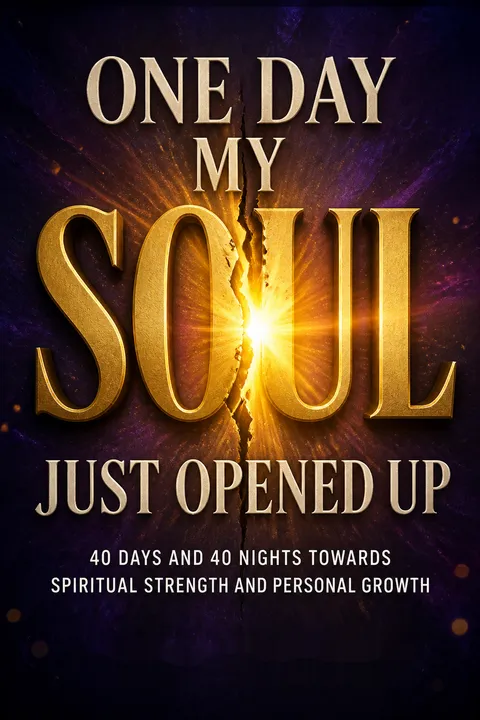
One Day My Soul Just Opened Up is a spiritual self-help book built from memoir, reflection, and daily exercises. Its narrative engine is a movement from apparent achievement and private misery toward the admission of difficult truths. Vanzant's experiences with family conflict, intimate relationships, addiction, grief, and work give each principle a human setting. The forty-day format then turns those reflections into a repeatable practice of reading, journaling, affirmation, and review.
The book's strongest through-line is agency without self-condemnation. Readers are asked to acknowledge what they feel, accept what is happening, and make a conscious choice, while also loosening the urge to manage other people's lives. Its practical insights are often sharper than its metaphysical explanations. Pausing before reacting, setting a boundary, writing an unsent letter, and conserving energy are usable tools whether or not a reader believes in divine order or an inner Divine presence.
That distinction matters because the book makes sweeping spiritual claims: that events unfold according to purpose, that thoughts help create circumstances, and that people possess what they need for their mission. These beliefs can offer hope and coherence, but they can also be misread as implying that suffering is deserved or that material constraints can be overcome by attitude alone. A careful adaptation preserves the book's invitation to find meaning without treating every hardship as a lesson one chose.
The work is most convincing when it asks for honest self-observation and most debatable when it universalizes its theology. Its repeated permission to move slowly, repeat a principle, and choose again helps counter the risk of turning spirituality into another perfection project. At its best, the book offers a practical discipline for meeting ordinary turmoil with more clarity, self-respect, and compassion, while leaving readers room to interpret the sacred in their own terms.
Review Summary
One Day My Soul Just Opened Up receives mostly positive reviews, with readers praising its inspirational and transformative content. Many found it helpful during difficult times, appreciating Vanzant's honesty and practical approach to spiritual growth. The book's 40-day format and exercises are seen as valuable tools for self-reflection and personal development. Some readers felt the content was repetitive or basic, while others struggled with the religious overtones. Overall, reviewers recommend it for those seeking spiritual guidance and self-improvement.
People Also Read







Glossary
Truth Postulates
Core spiritual propositionsVanzant's name for recurring spiritual claims she gathers from religious and personal-growth writing. They include the presence of the Divine in living beings, the idea that people are not punished by God, and the belief that each person has a purpose. The book presents these as propositions readers can examine and attempt to live by.
KYBYS
Pause before reactingA brief reminder used when strong emotion threatens to take over a conversation. The reader is encouraged to stop speaking, breathe, and regain enough perspective to choose a response. Vanzant presents the pause as a way to avoid escalating a moment of anger, not as a demand to deny or suppress the feeling.
Emotional Neutralization Process
Steps for emotional reliefA set of short practices Vanzant offers for temporarily easing the force of emotions such as anger, fear, confusion, guilt, and loneliness. The steps include breathing, naming what is wanted, examining expectations, seeking guidance, and writing. The process is presented as temporary support, not a complete substitute for deeper emotional work.
living faith
Trust expressed in actionVanzant's term for confidence in spiritual principles that shows up in choices, words, and behavior. It is not merely optimism or a request for a desired outcome. Living faith involves acting with good intent, accepting uncertainty, and trusting that spiritual law and divine guidance support what is aligned with one's purpose.
spiritual insanity
Denial and struggle for controlA metaphor Vanzant uses for patterns such as denying one's distress, staying in damaging situations, and trying to control other people or outcomes. She does not use the phrase as a clinical diagnosis. In her account, recognizing the pattern can begin a process of honest reflection and change.
FAQ
What's One Day My Soul Just Opened Up about?
- Spiritual Growth Journey: The book is a 40-day program designed to guide readers through personal growth and spiritual strength.
- Daily Practices: Each day focuses on a specific spiritual principle, with exercises, affirmations, and reflections to integrate these concepts into daily life.
- Author's Personal Insights: Iyanla Vanzant shares her experiences and struggles, providing a relatable framework for readers to reflect on their own lives.
Why should I read One Day My Soul Just Opened Up?
- Transformative Experience: The book facilitates profound personal transformation through self-reflection and spiritual practices.
- Practical Guidance: It offers exercises and affirmations that can be easily incorporated into daily routines for personal growth.
- Empowerment: Vanzant emphasizes self-empowerment and taking responsibility for one’s life, inspiring actionable steps toward goals.
What are the key takeaways of One Day My Soul Just Opened Up?
- Self-Awareness is Crucial: Awareness of thoughts, feelings, and behaviors is foundational for personal growth.
- Embrace Spiritual Principles: The 40 principles guide understanding and integrating spiritual truths into everyday life.
- Surrender and Let Go: Letting go of control and trusting a higher power leads to peace and clarity.
What are the best quotes from One Day My Soul Just Opened Up and what do they mean?
- “If you know who walks beside you, you can never be afraid!”: Emphasizes faith and trust in divine presence, reassuring readers they are not alone.
- “Your days are numbered!”: A wake-up call to take action on personal growth and live authentically.
- “Honor yourself!”: Encourages self-respect and prioritizing one’s own needs, promoting ownership of one’s life.
What specific methods or exercises does One Day My Soul Just Opened Up include?
- Daily Affirmations: Morning affirmations reinforce daily principles, setting a positive tone and encouraging empowerment.
- Journaling Prompts: Prompts for reflection and journaling foster deeper self-exploration and document progress.
- Meditation and Stillness: Encourages incorporating meditation to connect with the divine and gain clarity.
How does Iyanla Vanzant define truth in One Day My Soul Just Opened Up?
- Universal Principle: Truth aligns with divine will, existing at the core of every being, and is eternal and unchanging.
- Self-Reflection: Encourages examining beliefs against universal truth for greater authenticity.
- Healing Power: Embracing truth liberates individuals from past pain, empowering them to live authentically.
What role does surrender play in personal growth according to One Day My Soul Just Opened Up?
- Letting Go of Control: Surrender involves releasing control and trusting a higher power, leading to peace.
- Emotional Release: Allows processing emotions without being overwhelmed, creating space for healing.
- Alignment with Divine Will: Aligns individuals with the divine plan, leading to unexpected blessings.
How does One Day My Soul Just Opened Up address the concept of boundaries?
- Defining Personal Space: Establishing boundaries protects emotional and mental well-being.
- Empowerment through Boundaries: Clear boundaries honor personal needs and foster healthier relationships.
- Avoiding Resentment: Prevents feeling used or taken advantage of, promoting mutual respect.
What is the significance of compassion in One Day My Soul Just Opened Up?
- Connection with Others: Compassion fosters deeper connections and understanding in relationships.
- Selflessness without Depletion: True compassion involves giving without feeling depleted, recognizing one’s needs.
- Empowerment through Compassion: Creates a cycle of healing and support, benefiting both giver and receiver.
How can I apply the principles from One Day My Soul Just Opened Up in my daily life?
- Daily Practice: Incorporate exercises and affirmations consistently for transformation.
- Self-Reflection: Use journaling prompts to explore thoughts and deepen spiritual understanding.
- Mindfulness and Awareness: Cultivate mindfulness to make conscious choices aligned with your true self.
What does One Day My Soul Just Opened Up suggest about the importance of self-awareness?
- Foundation for Growth: Self-awareness is crucial for recognizing patterns that hold you back.
- Understanding Emotions: Helps in understanding and managing emotions effectively.
- Conscious Living: Encourages living consciously and making informed decisions.
How does One Day My Soul Just Opened Up encourage readers to confront their fears?
- Facing Limitations: Encourages exploring inner fears and limitations as part of the growth journey.
- Empowerment through Courage: Confronting fears leads to empowerment and personal strength.
- Transformative Process: Viewing fear as a transformative process that can lead to personal breakthroughs.
About the Author
Other books by Iyanla Vanzant




Download PDF
Download EPUB
.epub digital book format is ideal for reading ebooks on phones, tablets, and e-readers.








