

Key Takeaways
Treat highs and lows as changing conditions, not verdicts on your worth
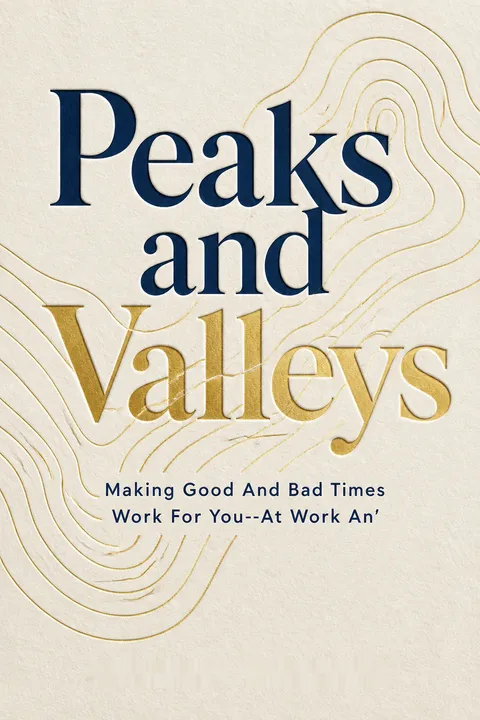
A landscape, not a label. The story follows a young man who leaves an unhappy valley to climb toward a peak, hoping the view will solve his problems. The old man he meets explains that personal Peaks and Valleys are the highs and lows people feel at work and in life. They can last minutes or months, and they are shaped not only by events but by how people interpret and respond to them.
Change your point of view. When the young man finally reaches the summit after sunset, he fixates on what he missed and overlooks the stars. The place has not changed, but his attention has. The distinction matters: a setback need not become a judgment about a person's value, and a success need not be ruined by comparison.
This framing resembles psychological decentering: noticing an emotion or circumstance without treating it as a complete description of the self. That distance can make better choices possible, especially when a disappointment feels total. The useful limit is that interpretation cannot erase material hardship. A lost job still threatens income, and illness remains painful. The approach works best when perspective supports practical action, rather than when people are pressured to feel grateful for circumstances that deserve to be changed.
Use downturns to find the neglected truth and build your next improvement
A setback can expose a flaw. The young man returns to work just as his company begins losing customer shipments. Instead of treating the crisis only as a disaster, he proposes examining the order-tracking system. His team discovers weaknesses, builds a more reliable and less expensive process, and helps win customers back.
Look for usable information. In the story's model, Peaks and Valleys connect: careless choices during success can contribute to later trouble, while wise action in a bad period can create better conditions. Finding the useful part of a Valley does not mean calling the damage good. It means asking what the setback reveals, then acting on what can be repaired or improved.
The team's response resembles a blameless after-action review: examine what failed, identify the process behind it, and change the system rather than merely scolding individuals. That is especially powerful when the crisis produces information that ordinary routines conceal. The approach should not imply that every hardship contains a convenient lesson. Some losses are primarily losses. Its strongest claim is narrower and more practical: when a problem reveals something actionable, learning from it can prevent the same weakness from shaping what comes next.
On good runs, keep doing the unglamorous work that made them possible
Success can make people careless. After the young man's first improvement at work, he grows confident, stops listening, and becomes boastful. Meanwhile, his company spends freely and assumes its good results will continue. As conditions worsen, layoffs follow, and the young man finds himself in a deeper Valley.
Prepare while conditions are favorable. The old man's guidance for managing a Peak is concrete: stay humble and grateful, continue the practices that produced success, keep improving, serve others, and reserve resources for harder periods. In the story, prosperity is not a permanent destination. It is a chance to strengthen the foundations that can carry people through the next downturn.
This insight treats success as a management problem, not merely a reward. It connects personal humility with organizational resilience: a good quarter can conceal fragile processes just as a promotion can conceal deteriorating relationships. Saving resources and continuing to listen create slack, the capacity to absorb surprises without immediate collapse. Gratitude alone is not a strategy, however. The practical test is whether appreciation coexists with honest performance checks and willingness to change.
Trade fear-driven forecasts for a realistic future you can act toward
Picture a destination that makes sense. The old man calls this a sensible vision: a future that is desirable, believable, and specific enough to guide choices. On a dangerous river crossing, the young man first imagines drowning. He then pictures reaching the peak beyond the river, using sensory detail to make that future feel real, and finds the resolve to plan a crossing.
Vision must lead to action. He uses a rope to secure a route across the current. The story's point is not that imagining success makes obstacles disappear. A useful vision draws attention toward a goal and helps a person keep taking steps when fear narrows attention to immediate danger.
Detailed mental rehearsal can make an abstract goal easier to approach because it turns an outcome into something a person can plan around. The river scene is persuasive precisely because the young man still needs a rope, a target, and repeated attempts. That keeps the idea from becoming mere positive thinking. A useful check is whether the imagined future clarifies the next action and likely obstacles. If it only offers a pleasant mental escape, it is a wish, not a working guide.
Ask what is true before trusting either your triumph or your panic
Ego bends the view. The old man explains that pride can make a person see a Peak as more secure than it is, while fear can make a Valley seem permanent. He recalls a famous company whose leaders trusted its reputation and ignored rising costs and falling sales. They failed to face the central fact: customers were no longer getting what they needed.
Start with reality. The old man asks what is actually happening, then what would make the situation more useful to others. He leaves the failing company and builds a business around better service. The young man learns to examine facts before defending himself, celebrating too soon, or assuming disaster is inevitable.
This is a compact antidote to motivated reasoning, the tendency to favor interpretations that protect pride or soothe fear. Asking what is true can shift attention from self-protection to evidence and response. Yet reality is often contested, especially in organizations where status affects whose account is believed. The question becomes stronger when paired with outside perspectives, customer feedback, or observable results. Humility is not self-doubt for its own sake; it is a willingness to revise a comfortable story.
Make rest a deliberate pause, not an anesthetic
A Plateau can restore perspective. In the story, a Plateau is a relatively neutral period between emotional highs and lows. The young man initially visits one to escape discouragement by dulling his feelings. The flat, lifeless setting eventually leaves him bored and depleted. Later, the old man helps him see that a Plateau can also be a healthy time to rest, reflect, and renew.
Notice what the pause does. The old man compares a life without ups and downs to a flat heartbeat, suggesting that change is part of being alive. Rest is not failure, and it need not be productive every moment. The distinction is whether a break helps someone recover and see more clearly, or merely postpones contact with a problem.
The distinction between restoration and avoidance is useful because both can look like stepping away. A pause that reduces strain and makes the next decision clearer serves a different function from numbing that keeps the same problem untouched. The book's heartbeat image makes the point memorable, though it should not be read as a demand for constant emotional intensity. Quiet, ordinary periods can be valuable in their own right, even when they do not prepare anyone for a new achievement.
Get outside yourself by serving better at work and loving better at home
Self-focus can deepen a Valley. After his first success, the young man becomes so impressed with his own insight that colleagues withdraw and his personal relationships cool. His confidence has turned into behavior that makes cooperation harder. The old man suggests that one way out is to shift attention toward what other people need.
Make the shift concrete. At work, the young man and his team improve service rather than blame rivals or defend their status. In his personal life, he stops criticizing the woman he cares about and begins acting with more humility and care. The advice is not to control another person's response. It is to choose conduct that makes the young man more useful, loving, and trustworthy.
Turning attention outward can interrupt the closed loop of rumination, in which every event becomes evidence about the self. Service gives a person something observable to do, while care in relationships is demonstrated through repeated behavior rather than claims of good intention. The book's emphasis is constructive, but the principle needs boundaries: being helpful does not require accepting mistreatment or carrying every burden alone. Other people's needs matter, and so do the limits that make sustainable care possible.
Turn competitive threats into customer insight, not internal panic
Ask better questions together. When a larger competitor prepares a cheaper version of its product, the young man's company fears being pushed out. He gathers his department around two questions: what is true about the threat, and what useful possibility might it reveal? The team recognizes that it knows its customers and product well, while the competitor has a larger marketing budget.
Compete where you have an edge. The team realizes the rival's advertising could make more people aware of the product category. They listen to customers, improve features people value, and strengthen service. The story shows how a team can turn a threat into a prompt for learning, then share a clear goal and act on it together.
This is strategic reframing with evidence attached. The team does not deny the competitor's advantage; it identifies a different asset, knowledge of existing customers, and tests that asset through listening and product changes. That is more credible than insisting every threat is secretly an opportunity. Some competitors do overwhelm smaller firms, and optimism cannot replace a realistic assessment of resources. The useful practice is to separate what the threat makes true from the response the team can still choose.
Let loss change what you appreciate without pretending it doesn't hurt
Grief and gratitude can coexist. Near the end of the story, the old man dies. The young man feels the absence sharply, then remembers what his friend taught him and recognizes that those lessons remain available to use. His sadness does not vanish; appreciation becomes possible alongside it.
Do not confuse acceptance with replacement. The story's Peaks and Valleys metaphor treats longing for what is missing as part of a Valley, and appreciation for what remains as part of a Peak. In this case, the young man cannot bring his friend back. He can honor the relationship by carrying forward its gifts and sharing the approach with others.
This resembles meaning-making after loss: a person may preserve an ongoing connection through memory, values, or practices without denying that someone is gone. The story offers a humane alternative to the idea that recovery means forgetting. Its language of finding a Peak in grief should be handled gently, though. Loss does not need to yield a lesson on schedule, and gratitude must not be used to silence sorrow. Both emotions can be real at once.
Analysis
Johnson builds a practical philosophy inside a repeating story. A discouraged young man climbs out of his valley, mistakes reaching a peak for permanent security, falls into another valley, and learns to move through the cycle with greater attention and skill. The mountain landscape makes an abstract claim easy to remember: good and bad periods are connected, and a person's response to one can shape the conditions of the next.
The framework's strongest contribution is its symmetry. It does not treat hardship as the only danger. Fear can make a low period feel endless, but success can produce arrogance, waste, and inattention. The advice therefore changes with the conditions: learn from adversity, maintain good habits during success, rest without hiding from reality, and use a concrete future goal to guide action. The story's workplace examples translate these ideas into recognizable choices, from repairing a failed shipping process to responding to a better-funded competitor by listening more closely to customers.
The approach also draws a valuable boundary between events and self-worth. That distinction can create room for agency without requiring a person to control everything that happens. Still, the book sometimes risks making adversity sound self-created or readily useful. Its own story allows that illness, loss, and other misfortunes can be outside a person's control, but readers may overapply the idea of finding hidden good and blame themselves when no such opportunity is visible. A more careful reading distinguishes responsibility for circumstances from responsibility for one's next response.
The sensible vision is most convincing when treated as a prompt for planning, not as a guarantee. The young man reaches the far bank because he imagines a destination and then finds a practical way across. Overall, the book offers a memorable set of questions rather than a precise theory: What is actually happening? What can this teach or change? What action would help? Its simplicity aids recall, while honest attention to constraints keeps the advice grounded.
Review Summary
Peaks and Valleys received mixed reviews, with an average rating of 4.04 out of 5. Many readers found it insightful and helpful for managing life's ups and downs, praising its simplicity and practical wisdom. Some appreciated the book's quick read and motivational aspects. However, critics found it repetitive, cliché, and lacking depth. Several reviewers noted similarities to Johnson's other works. The book's allegorical style and focus on personal growth resonated with some readers, while others felt it was too basic or predictable.
People Also Read








Glossary
Peaks and Valleys approach
Managing life's ups and downsA way of interpreting and responding to good and bad periods at work and in personal life. Peaks and Valleys are not only external events; they also describe how people feel and act in response. The approach emphasizes facing present conditions, learning from difficult periods, managing success carefully, and using a realistic future goal to guide action.
sensible vision
Believable future guiding actionA clear, realistic picture of a future a person genuinely wants and believes can be reached. In the book, imagining that future in specific sensory detail helps focus attention and motivation. A sensible vision is different from a wish because it encourages concrete behavior that can move the person toward the imagined outcome.
Plateau
Resting interval between extremesA comparatively neutral period between a personal high and low. The book distinguishes a healthy Plateau, used to rest, reflect, and renew, from an unhealthy one used to escape reality by dulling awareness. The distinction depends on whether the pause helps a person recover and see the situation more clearly.
FAQ
What's "Peaks and Valleys" about?
- Story of Personal Growth: "Peaks and Valleys" by Spencer Johnson is a story about a young man who learns to navigate the ups and downs of life by visiting an old man on a peak.
- Metaphor for Life's Highs and Lows: The book uses the metaphor of peaks and valleys to represent the good and bad times in life and work.
- Practical Lessons: Through the narrative, the book offers practical lessons on how to make the most of both good and bad times.
- Self-Discovery and Change: It emphasizes self-discovery and the importance of changing one's perspective to improve personal and professional life.
Why should I read "Peaks and Valleys"?
- Simple Yet Profound: The book presents complex life lessons in a simple, engaging story format that is easy to understand and apply.
- Universal Relevance: Its lessons are applicable to anyone experiencing life's inevitable ups and downs, making it universally relevant.
- Practical Advice: It provides actionable advice on how to handle both success and failure effectively.
- Inspiration for Change: The story inspires readers to change their perspective and approach to life's challenges.
What are the key takeaways of "Peaks and Valleys"?
- Peaks and Valleys Connection: Good and bad times are connected; the actions you take in good times can create future bad times, and vice versa.
- Manage Your Emotions: How you feel about and respond to events can change your experience of them.
- Sensible Vision: Creating and following a sensible vision can help you navigate through valleys and reach new peaks.
- Service and Love: Being of service at work and more loving in life can help you get out of valleys sooner.
How does the "Peaks and Valleys" approach work?
- Recognize Patterns: Understand that peaks and valleys are natural and connected, and learn to recognize the patterns in your life.
- Change Perspective: Change how you view and respond to situations to transform valleys into peaks.
- Create a Vision: Develop a clear, sensible vision of your future to guide you through difficult times.
- Practical Application: Apply the lessons learned to both personal and professional situations for better outcomes.
What are the best quotes from "Peaks and Valleys" and what do they mean?
- "Peaks and Valleys are connected." This quote emphasizes the idea that the actions you take during good times can lead to bad times and vice versa.
- "You change your Valley into a Peak when you find and use the good that is hidden in the bad time." It suggests that every bad time has hidden opportunities that can lead to future success.
- "The Path Out Of The Valley Appears When You Choose To See Things Differently." This means that changing your perspective can help you find solutions to problems.
- "A Personal Peak Is A Triumph Over Fear." It highlights that overcoming fear is a significant achievement that can lead to personal growth.
How can I apply the lessons from "Peaks and Valleys" in my life?
- Identify Patterns: Start by identifying the patterns of peaks and valleys in your life and how they are connected.
- Shift Perspective: Practice changing your perspective on challenging situations to find hidden opportunities.
- Set Goals: Create a sensible vision for your future that is realistic and motivating.
- Be Proactive: Take proactive steps to manage your emotions and actions during both good and bad times.
What is the "Sensible Vision" concept in "Peaks and Valleys"?
- Future-Oriented: A sensible vision is a realistic and detailed picture of a better future that you want to achieve.
- Use All Senses: It involves using all five senses to imagine this future vividly, making it feel attainable.
- Guiding Force: This vision acts as a guiding force that pulls you through difficult times and motivates you to take action.
- Practical Application: By following this vision, you can navigate valleys more effectively and reach new peaks.
How does "Peaks and Valleys" suggest handling success?
- Be Humble and Grateful: Appreciate your success and remain humble to avoid complacency.
- Continue Improving: Keep doing what got you to the peak and look for ways to make things even better.
- Help Others: Use your success to be of service to others, which can lead to more fulfilling experiences.
- Prepare for Valleys: Save resources and prepare for future challenges to maintain your success longer.
How does "Peaks and Valleys" suggest handling failure?
- Find Hidden Good: Look for the hidden opportunities in bad times and use them to your advantage.
- Change Perspective: Shift your perspective to see the situation differently and find new solutions.
- Be of Service: Focus on being of greater service at work and more loving in life to move out of valleys sooner.
- Learn and Grow: Use failures as learning experiences to grow and improve for the future.
What role does fear play in "Peaks and Valleys"?
- Fear as a Barrier: Fear is often a barrier that keeps you trapped in valleys and prevents you from reaching peaks.
- Triumph Over Fear: Overcoming fear is seen as a personal peak and a significant achievement.
- Vision vs. Fear: A sensible vision can help dissolve fear by providing clarity and motivation.
- Ego and Fear: The book suggests that ego can amplify fear, making valleys seem worse than they are.
How does "Peaks and Valleys" relate to personal and professional life?
- Universal Application: The principles apply to both personal and professional situations, helping you navigate life's ups and downs.
- Workplace Success: It offers strategies for managing success and failure at work, leading to better career outcomes.
- Personal Growth: The lessons encourage personal growth by changing how you view and respond to life's challenges.
- Balanced Life: By applying these principles, you can achieve a more balanced and fulfilling life.
What is the significance of sharing the "Peaks and Valleys" approach with others?
- Mutual Benefit: Sharing the approach helps others manage their good and bad times, creating a more supportive environment.
- Reinforces Learning: Teaching others reinforces your understanding and application of the principles.
- Positive Impact: It can have a positive impact on both personal relationships and professional collaborations.
- Legacy of Wisdom: Sharing the approach continues the legacy of wisdom, as seen in the story's narrative.
About the Author
Other books by Spencer Johnson

Download PDF
Download EPUB
.epub digital book format is ideal for reading ebooks on phones, tablets, and e-readers.








