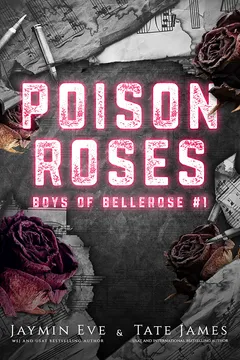


Plot Summary
Prologue
Billie1 remembers the bright-blue house where she grew up, the pool she shared with the boys next door, and the childhood that bound her to Jace3 and Angelo.5 Jace3 arrived when she was four, sweet-faced until he tried to drown her; later, the three children became inseparable, and Jace3 became the boy she loved.3
In retrospect, Billie1 divides her life into a sunlit Before and a wreckage-strewn After. She says one choice she made shattered their shared future, but she does not yet explain what drove her to make it.
The prologue establishes memory as both shelter and trap. Billie can still summon the house, the pool, and the boys as a lost world, but even its earliest recollection contains danger: Jace's childhood tenderness is interrupted by attempted violence. Her claim that one choice broke their future invites readers to treat her as a culpable narrator, while her refusal to name that choice preserves the possibility that guilt has distorted her account. The Before and After divide is not merely chronological. It is the story's central wound, a way Billie has learned to organize grief when she cannot yet explain it.
Rent Ends, Blood Begins
Evicted in Siena and unwilling to touch the inheritance she fears may draw her parents' killers, Billie1 accepts a last-minute waitressing shift from Liz,8 a neighbor who offers both cash and a place to sleep. Only after changing into uniform does Billie1 realize the restaurant belongs to the Ricci family, Angelo's5 powerful clan.
The crowded shift keeps her busy until a late booking erupts into gunfire. From a bathroom doorway, she sees Angelo5 lead armed men and watches them shoot a man in the alley. She tries to escape, but finds Liz8 dead behind the bar and is seized by a gunman. Before he can kill her, Billie1 faints at the sight of blood.
Billie's first crisis is economic before it becomes criminal: refusing inherited money leaves her exposed to the ordinary machinery of poverty, and her attempt to survive puts her back inside the world she has avoided. Liz's help briefly interrupts that isolation, but the restaurant's ownership turns a practical favor into a lethal coincidence. Billie's fainting is a bodily limit, not a moral failure; it makes her vulnerable at precisely the moment when she has witnessed enough to become dangerous. The scene binds financial precarity to the Riccis' power without suggesting Billie chose the violence she encounters.
The Stranger in the Alley
Billie1 wakes locked in a restaurant office while Angelo's5 men question someone nearby. She pries open a painted-shut window with a letter opener, slips into the alley, and runs until a gunman follows her toward a nightclub. There she collides with Rhett,2 a tattooed guitarist who does not recognize her and does not yet know she has fled a murder scene.
When he notices Liz's8 blood on her clothes, he gives Billie1 his shirt and offers a safe place to sleep. She calls herself Thorn and keeps her history to herself. Rhett2 takes her to the VIP area, where his bandmates are waiting, believing that leaving her alone would put her back in danger.
The encounter begins with a small but consequential act of trust: Rhett gives Billie clothing and shelter before he knows whether her story is true. Billie, meanwhile, manages danger through concealment, offering a nickname instead of a biography and choosing the risk she can see over the one pursuing her. The club's noise and celebrity crowd briefly provide cover, but they also make anonymity fragile. Their attraction develops within an ethical imbalance: Rhett has resources and protection, while Billie has little leverage beyond her judgment. His willingness to help is meaningful, but it cannot erase the power difference that structures their first hours together.
The Name Bellerose
At the VIP table, Billie1 learns that Rhett2 is the lead guitarist of Bellerose, the band built around Jace's3 story of her. Jace3 appears and recognizes her at once. Eight years earlier, on her sixteenth birthday, Billie1 ended their relationship and Jace3 concluded that she had chosen Angelo;5 he left convinced she had deceived him.
She never explains her choice now, even as he insults her and insists she leave. Rhett2 believes she was genuinely ignorant of the band's identity and refuses to send her back into the night. When Billie1 admits Angelo's5 men are hunting her, Rhett2 offers his hotel room and protection, despite the damage this reunion may do to his friendship with Jace.3
The mistaken identity collapses two forms of danger into one room: Billie is threatened by the Riccis outside and condemned by Jace inside. Jace's certainty gives him emotional control over the shared past, since the band has turned his interpretation into public art while Billie has remained silent. Rhett's belief in her does not establish what happened; it creates the first space in which her version might eventually exist. Billie's refusal to explain is not simply evasiveness. She is exhausted, frightened, and unwilling to expose a history that Jace has already decided how to read.
A Tour Becomes Cover
In the morning, Rhett2 proposes hiding Billie with Bellerose until the tour reaches New York, where she can disappear into a larger city. Jace3 refuses, then relents when Billie1 makes clear that Angelo's5 men will likely kill her if she is put back on the street. He insists she have her own room, work for the crew, and stay away from the band.
Billie1 accepts the cleaning job rather than live on Rhett's2 charity. She also threatens to expose her contribution to Bellerose's first album, including songs she says she co-wrote and royalties she never received. Rhett2 takes that claim seriously and promises to press the band's lawyers, giving Billie1 a practical path toward independence as well as temporary safety.
The tour offers protection, but Jace makes that protection conditional on Billie accepting a subordinate place in the group. Her insistence on work is a defense of agency: earning her keep lets her receive help without surrendering all control. The royalty dispute complicates the band's moral position. Bellerose's success may be built partly on Billie's labor, while the person whose name anchors the band has been left without money. Her threat is strategic rather than predatory, and Rhett's response suggests that accountability can coexist with care.
Roger Turns on Her
Billie1 cleans the tour buses under Dora's9 supervision and begins adjusting to the crew, though her roommate Kristie10 resents her connection to Rhett.2 At Bellerose's Siena concert, Jace3 orders Billie1 to attend despite her wish to avoid songs about their breakup. After the show, Roger,11 Jace's bodyguard,11 grabs her and says he is taking her to Angelo.5
He pins her against a wall and threatens sexual assault. Billie1 vomits into his mouth, giving Grayson4 time to strike him. Roger11 falls, hits his head, and dies. Grayson4 says he acted to protect her, while the band and tour manager Tom7 manage the police questioning as an apparent accident. Rhett2 then kisses Billie1 in the elevator, and she returns the kiss.
The attack exposes how easily institutional trust can become a weapon: Roger's authority as Jace's guard lets him isolate Billie in a supposedly protected venue. Billie's quick use of her own body to interrupt the assault matters, but Grayson's intervention carries lethal consequences that the band's influence then helps contain. The kiss with Rhett arrives amid shock, not in a separate romantic refuge. Its force comes partly from Billie choosing intimacy after others have tried to control her body, though trauma and consent remain more complicated than the scene's emotional relief.
The Bus Holds Old Wounds
After Jace3 insults her again, Billie1 leaves Rhett's2 penthouse room and sleeps in her assigned staff room; Rhett2 follows and holds her through the night. As Bellerose leaves Siena, Jace3 insists Billie1 travel on the main bus, where he can keep her under watch. Rhett2 gives her a private bedroom and clothes.
On the road, Billie1 finally tells him that a fire destroyed her childhood home eight years earlier. Her parents died, she spent a month in intensive care, and she learned of their deaths only after their funeral. Jace3 never visited. Florence6 invites Billie1 to share food and speaks warmly about the band, while Grayson4 quietly lends her a romance novel and headphones to blunt the pain of Jace's songs.
The bus compresses public celebrity and private injury into one small moving space. Billie's scars become a history rather than a spectacle when she chooses to tell Rhett about the fire, yet the detail that Jace never came to the hospital sharpens the gap between his grievance and her losses. Florence's food and Grayson's book are modest gestures, but they offer forms of care that do not demand confession. The band becomes more than Jace's domain, even as every bunk and hallway keeps Billie physically close to the past she is trying to survive.
Grayson Blocks the Road
A state roadblock halts the tour buses near the border. Troopers show Grayson4 a restaurant surveillance image of Billie1 and claim she is wanted for the murders of Liz8 and the restaurant manager. Grayson4 hides that she is aboard and persuades them to search the other buses instead. Once they cross into Ohio, he tells Billie1 the Riccis have framed her as a killer.
At a later show, he gives her headphones and a well-read romance novel so she can avoid Jace's lyrics. Rhett2 receives an anonymous message warning him that the Riccis want Billie returned, alive or dead, and that Jace3 knows what happens to people who interfere. The band quietly increases security while Billie1 senses everyone withholding something from her.
The roadblock turns Billie's private flight into an official story, showing how power can borrow the state's language to make a victim appear guilty. Grayson protects her by lying, but the protection also deepens her dependence on people whose plans she cannot see. His book and headphones respect her need to choose what she hears, a gentler counterpoint to the police image that reduces her to a suspect. The anonymous warning confirms that the danger reaches beyond Siena, while the band's silence repeats the larger problem of other people deciding what Billie is allowed to know.
A Fan Brings a Gun
At a meet-and-greet, a fan points a handgun at Rhett,2 convinced a photograph of him kissing Billie1 proves they were meant to be together. Billie1 steps into the line of danger and draws the fan's attention away from Rhett.2 Grayson4 lunges, disarms her, and sends Billie1 back to the bus. While the others handle police and security, Angelo5 slips aboard unseen.
He says his father12 believes Billie1 overheard a conversation at the restaurant and wants her alive until he learns what she knows. Angelo5 warns that the Riccis will keep pursuing her, then escapes through the bus's open skylight. He leaves a phone number in her pocket, but Billie1 does not tell the band he came.
The gunwoman's fixation turns a public photograph into a threat, making celebrity visibility dangerous even when the people pictured have not chosen to tell their story publicly. Billie again risks herself to protect someone else, this time Rhett, while Grayson's response confirms how quickly the band's protective instincts become physical. Angelo's secret visit changes the stakes: the Riccis are not merely silencing a witness but pursuing information Billie may not possess. Her silence afterward preserves an old attachment and avoids provoking the band, but it also leaves her alone with knowledge that could alter everyone's choices.
The Riccis Find Her Again
After reaching a hotel outside New York, Billie1 goes with Florence6 to a café while security waits nearby. When Florence6 steps inside to use the restroom, gunmen attack. They kill two guards and target Billie.1 Grayson4 arrives by car, pulls her out of the gunfire, and drives away. Convinced her presence will get the band killed, Billie1 demands that he stop and runs into an alley.
Grayson4 catches her, calms her, and brings her back. At the hotel, Rhett2 and Grayson4 agree not to compete over her while the Riccis remain an active threat. Billie1 keeps Angelo's5 warning to herself, even as she decides she must leave Bellerose before another attack costs someone else a life.
The ambush strips away the reassurance that distance and celebrity security can make Billie safe. Her attempt to run is an act of care distorted by trauma: she treats her own disappearance as the only way to protect others, even though she has no workable escape plan. Grayson physically returns her to the group, but the decision among the men to suspend romantic rivalry recognizes that desire cannot be separated from immediate danger. Billie's secrecy about Angelo further isolates her, leaving her to shoulder responsibility for a threat whose full source and purpose remain unclear.
Billie Leaves the Stage
On the day Bellerose reaches New York, Florence6 prepares Billie1 for the Madison Square Garden concert, while Tom7 needles her about the danger she brings. Billie1 decides to leave after the show, hoping to draw the Riccis away from the band. At the concert, Jace3 finds her in the crowd and sings the song that recalls their shared past; she slips away during the set.
Tom7 has allowed her to leave the VIP area, claiming he will make it easy for her. When the band finishes, Billie1 is nowhere to be found. Tom7 says she chose to abandon them. Jace3 returns alone to the stage and performs an unfinished song, then sees Florence6 waiting in the wings, crying and admitting she has made a serious mistake.
Billie's departure is framed as sacrifice, but the circumstances prevent the reader from knowing whether she has chosen freely or been manipulated. Tom's offer exploits her guilt, while her belief that leaving will protect the band repeats the self-erasure that has shaped her survival. Jace's performance breaks through his usual public control: the unfinished song gives him a form of grief he cannot yet direct at Billie. Florence's confession signals that the disappearance is not a simple abandonment, but the section withholds what she did, preserving the tension between Billie's agency and the band's failure to keep her safe.
Angelo's Impossible Proof
Billie1 wakes battered inside a cage in an abandoned nightclub, where Ricci men have tortured her for information about the restaurant. Angelo5 arrives, shoots the men holding her, and carries her to a private room with medical care.
When he speaks with his father,12 Giovanni,12 he insists that Billie1 must not be harmed because she is carrying his child. He supports the claim with an old sonogram, an image from eight years earlier that he had kept after Billie1 lost the pregnancy on the night her parents died.
Angelo5 has altered the date and sends the image to Giovanni12 as proof. Billie1 realizes the evidence is false, but it may be the only thing preventing the Riccis from killing her. The story ends with her trapped between Angelo's5 protection and his lie.
Angelo's rescue is inseparable from another act of control: he saves Billie by turning her lost pregnancy into leverage over his father. The sonogram carries a private grief that Billie had never been able to revisit, so its reappearance makes survival emotionally costly even as it may secure her safety. Angelo's lie is neither simple tenderness nor uncomplicated manipulation; it binds him to Billie through a claim she did not choose and cannot easily disprove. The cliffhanger leaves protection morally unstable. Billie is alive, but the means of keeping her alive may make her future belong to the Ricci family.
Analysis
Poison Roses makes control over a story as consequential as control over a body. Jace3 turns his teenage heartbreak into Bellerose's public mythology, and the band's name and songs preserve his account long after Billie1 has lost the chance to answer it. Her silence is not proof that his version is true. It is a survival strategy shaped by trauma, poverty, and the knowledge that explanation can be used against her. Rhett2 and Grayson4 offer care in sharply different forms, but the book also tests the limits of protection: shelter can become a new kind of dependence when Billie1 cannot choose where she goes or what she is told.
The novel repeatedly places intimacy beside coercion. Billie's1 attraction to the musicians gives her pleasure and connection, yet it unfolds while she is fleeing violence and relying on their resources. Her impulse to leave after each attack is not simple rejection. She believes that removing herself will prevent others from being hurt, a logic learned by someone who has repeatedly experienced loss as something she should have prevented. Her choices are brave, but they are also shaped by a habit of making herself expendable.
Music operates as memory, labor, and ownership. Billie1 says she helped write the band's first songs, while Jace's3 fame is built partly on material that narrates her as a betrayer. The royalty dispute makes that emotional injustice concrete: credit and money are not abstractions but the difference between celebrity wealth and Billie's1 struggle to pay rent. The rose imagery likewise shifts with its speaker, from Jace's3 beloved Rose to Rhett's2 guarded Thorn, refusing to settle into one fixed identity.
The ending offers no clean rescue. Angelo5 saves Billie1 from torture by repurposing the sonogram of her lost pregnancy, converting grief into a lie that may buy her time. Survival therefore arrives with a cost and a new uncertainty. The book's central question remains unresolved: can Billie1 be protected without becoming someone else's possession, and can the people who love her learn to hear her story before deciding what it means?
Review Summary
Poison Roses is a polarizing rockstar/mafia reverse harem romance. Many readers praise its addictive plot, intriguing characters, and blend of genres. They appreciate the emotional depth, angst, and spicy scenes. However, some criticize the insta-love, lack of character development for Billie, and repetitive plot. The cliffhanger ending leaves readers eager for the next book. Overall, it's a fast-paced, entertaining read that has garnered a mix of passionate fans and disappointed critics.
Characters
Billie Bellerose
The fugitive songwriterBillie is a resourceful young woman who has survived poverty, bereavement, and years of moving from place to place. She works whatever jobs she can find, distrusts the inheritance left by her parents, and guards the history behind her separation from Jace3. Her refusal to explain herself is partly shame, partly self-protection, and partly a hard-won insistence that other people do not own her story. She is quick with sarcasm and alert to danger, yet her instinct to protect others often overrides her own safety. Around Rhett2 and Grayson4, she begins to accept care without surrendering her independence. Music remains a language she understands even when Bellerose's songs make her past hurt.
Rhett Silver
The protective guitaristRhett is Bellerose's lead guitarist, a charismatic performer with a generous impulse that predates his meeting with Billie1. He notices fear quickly and responds with practical care: a shirt, a bed, food, and a route out of danger. His protectiveness is tied to old pain of his own, and helping Billie1 gives that instinct a focus, though it can make him overconfident about what she needs. Rhett respects her right to withhold her past and believes her when Jace3 does not. His attraction to Billie1 grows alongside his concern for his band and his closest friend3, forcing him to distinguish loyalty from obedience.
Jace Adams
The wounded frontmanJace is Bellerose's lead singer and the childhood love3 Billie1 left at sixteen. He has turned his heartbreak into songs and made the band's name a public reminder of their history. His talent and magnetic stage presence coexist with a stubborn dependence on the story he has told himself about Billie1. Anger protects him from the possibility that his interpretation was incomplete, but it also makes him cruel to someone he once loved. Jace is fiercely attached to Bellerose and treats its success as both a personal achievement and a monument to the past. Beneath his hostility, his capacity for devotion remains visible in the music he cannot stop writing.
Grayson Taylor
The guarded drummerGrayson is Bellerose's imposing drummer, a man of few words whose quiet attention often says more than his speech. He watches people closely, favors practical gestures over reassurance, and offers Billie1 a book and headphones rather than demanding that she explain her distress. His reserve is not indifference; it is a form of control that keeps other people from seeing how much he notices. Grayson is protective of the band and especially wary when someone is in danger. His interest in Billie1 unsettles his habit of keeping relationships casual, while his directness gives her a different kind of safety from Rhett's2 warmth.
Angelo Ricci
The dangerous childhood loveAngelo grew up beside Billie1 and Jace3, becoming both a close friend and Billie's first love5. As an adult, he belongs to the powerful Ricci family and moves through the world with the guarded authority of someone accustomed to violence and influence. His history with Billie1 is marked by tenderness, protection, and choices that neither can simply recover. He speaks little and reveals less, leaving his motives difficult to read even when he approaches her directly. Angelo remains tied to the family that threatens her, but his personal attachment complicates every encounter. His nickname from Billie recalls a boy she once trusted, though the man before her is far harder to recognize.
Florence Foster
The band's steadfast bassistFlorence, usually called Flo, is Bellerose's bassist and one of the few women in the band's inner circle. She is energetic, perceptive, and generous with Billie1, offering food and companionship when the men make the bus feel like contested territory. Her kindness exists alongside a strained relationship with Tom7, whose influence complicates her choices. Flo wants to keep the band intact and cares deeply for its members, but her loyalty can pull her into decisions she later regrets. Her attention to Billie1 suggests a desire for female friendship in a life dominated by touring, public scrutiny, and the band's intense male bonds.
Tom Tucker
The controlling tour managerTom is Bellerose's temporary tour manager and Flo's boyfriend7. He is slick, status-conscious, and quick to treat people as liabilities when they threaten his control of the band's business. He resents Billie's1 presence and questions her motives, especially when her claims could affect the band's finances or public image. His relationship with Flo6 gives him influence beyond his formal job, and he often uses that position to steer decisions. Tom's contempt is not subtle, but the band has not yet settled how much authority he should retain.
Liz
The neighbor who helpsLiz lives in Billie's1 building and offers her a cash waitressing shift when eviction leaves her with nowhere to go. Practical and quick to act, she sees a chance to solve the restaurant's staffing problem and give Billie1 an immediate lifeline. Her simple kindness changes the course of Billie's1 night by bringing her back into the Ricci world.
Dora
The crew's steady supervisorDora leads the tour's small cleaning crew and judges new workers by their effort rather than their background. She gives Billie1 a job, explains the routines, and expects her to meet the same standards as everyone else. Her matter-of-fact attitude offers Billie1 a rare stretch of ordinary work amid the celebrity and danger surrounding the band.
Kristie
Billie's wary roommateKristie is a member of the tour cleaning crew and Billie's1 temporary roommate. Initially tired and hostile, she resents the attention Billie1 receives from Rhett2 and treats her as a romantic rival. Her suspicion reflects the competitive atmosphere around the band, where proximity to the musicians can be mistaken for opportunity.
Roger
The compromised bodyguardRoger works as Jace's personal security guard11 and uses that trusted position to approach Billie1 after a concert. He is crude, predatory, and willing to exploit the band's hostility toward her. His presence demonstrates that danger can come from inside the protective circle, not only from the Ricci family.
Giovanni Ricci
The unseen family patriarchGiovanni is Angelo's father12 and the head of the Ricci family, whose influence reaches businesses, police, and the streets of Siena. He is not often physically present, but his wishes shape the decisions of the men around him. His interest in what Billie1 may have overheard makes him a distant but formidable force in her life.
Plot Devices
The rose and thorn names
Names track changing bondsBillie's names mark how different relationships frame her. Jace3 knows her as Rose, Angelo5 as Bella, and Rhett2 calls her Thorn after meeting her while she is frightened and defensive. Bellerose turns her name into the band's public identity, while the song Poison Roses transforms the image of a beloved flower into an accusation. These names do more than provide romantic symbolism: they show who gets to define Billie1 and whether a name belongs to intimacy, memory, or public narrative. As the old names return, the story keeps asking whether she can become more than the version of herself each man remembers.
Bellerose's songs
Music makes heartbreak publicJace3 uses Bellerose's music to tell the story of his breakup with Billie1, and the band's fame carries that version far beyond their childhood circle. Billie1 helped shape some early songs, but she says she was never credited or paid. The songs therefore function as both emotional evidence and contested property: they let Jace3 turn pain into art while preserving an account Billie1 has not been able to answer. Their lyrics follow her onto the tour, making ordinary concerts feel like public trials. Rhett's2 guitar and Grayson's4 headphones offer other ways to hear the music, separating the band's shared artistry from Jace's3 accusation.
The tour as refuge
Forced proximity delays escapeRhett's2 offer to hide Billie1 on Bellerose's tour creates a moving shelter with its own crew, security, vehicles, and routines. It keeps her away from the Riccis while placing her in close quarters with Jace3, whose anger has never cooled, and with Rhett2 and Grayson4, whose attraction grows. The tour gives Billie1 paid work and access to resources, but it cannot provide true anonymity: fans, photographs, and venue staff repeatedly expose her location. Each departure promises distance, yet the same visibility that protects the band can also make Billie1 easier to find.
The Ricci witness hunt
A missing fact fuels pursuitThe Riccis pursue Billie1 after the restaurant shooting, first treating her as someone who must be silenced and later claiming she may have overheard information important to Giovanni12. The uncertainty over what she knows keeps the threat active without giving Billie1 a clear way to resolve it. A corrupt security guard, a false murder accusation, a state roadblock, and a public ambush each show the family's reach through different institutions. Angelo's5 warnings suggest that Billie1 may be safer under Ricci control, but his connection to the family makes that promise impossible to trust. The danger is both physical and informational: Billie1 cannot explain what she never heard.
The old sonogram
Grief becomes false protectionAt the end of the book, Angelo5 produces a sonogram from the pregnancy Billie1 lost eight years earlier, on the night her parents died. He alters its date and presents it to Giovanni12 as evidence that Billie1 is carrying his child, hoping the claim will stop his father12 from allowing her to be harmed. The image turns an intimate bereavement into a tool of survival, but it also creates a new danger: Angelo's5 lie may protect Billie1 only by binding her to him and the Ricci family. Because the story ends before Giovanni's12 response is known, the sonogram serves as both a revelation and an unstable shield.
About the Author
Other books by Jaymin Eve







Download PDF
Download EPUB
.epub digital book format is ideal for reading ebooks on phones, tablets, and e-readers.








