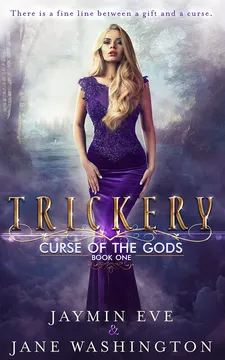


Plot Summary
Two Names on the List
In a world where privileged sols rule over enslaved dwellers, Willa Knight1 expects the village selection ceremony to send her gifted best friend, Emmy,2 away alone. Willa1 has been branded a disaster after accidents, including making a teacher bald, and was expelled before graduation.
To keep Emmy2 close, she altered the school records, raising both their marks and making Emmy her sister2 on paper. The village leader15 names them as its two recruits for Blesswood Academy.
Emmy,2 who has spent years preparing for this chance, is delighted they can go together; Willa1 fears her clumsiness will get her killed among the elite. They leave their village with little more than bags, Willa's absent mother14 unaware they are gone, and a new life neither girl can refuse.
The selection begins as a victory manufactured by Willa's refusal to accept separation. Her fraud is comic, but its emotional logic is serious: she would rather risk punishment than lose the one person who has made family feel dependable. Emmy's ambition is not shallow status-seeking; preparation gives her a way to make a constrained life legible and purposeful. The contrast establishes the book's central tension between assigned place and chosen attachment. Willa thinks of herself as a curse and Emmy as the capable one, yet Willa's meddling is precisely what brings them both to the threshold of change.
A Welcome Under Crossbow
The journey inward shows Willa1 how radically the wealthy sol cities differ from her dry village, but Blesswood's beauty offers little comfort when she arrives. At the gate, the brothers3 Coen3 and Siret7 turn a reckless crossbow game toward the recruits; Emmy2 knocks Willa1 down just before a bolt strikes the gate behind her.
Jerath13 explains that the brothers3 are among the academy's most powerful students, and Willa1 soon sees the other three,3 Rome,4 Aros,5 and Yael.6 The academy sorts recruits into underground quarters, assigns duties, and insists dwellers serve without being seen or heard.
Willa's1 assignment places her in the male dormitory, a mistake caused by her masculine name on the village form. Her first hours make clear that arrival has not earned her safety or respect.
Blesswood's splendor is framed through Willa's body: she is shoved, inspected, nearly shot, and hurried underground. The academy's rules turn hospitality into a system of managed invisibility, while the crossbow game shows that the privileged can make a dweller's life a casual wager. Willa's wrong assignment is both bureaucratic farce and a practical threat, exposing how little the institution knows or cares about the people who serve it. Her instinct to joke does not erase fear; it gives her a brief means of speaking back in a place where direct resistance can be fatal.
The Wrong Dormitory
During the commencement feast, Willa1 watches Yael6 use his Persuasion gift to make new recruits strip for the sols' amusement. She steps away from the wall to object, and Siret7 notices her. Later, Aros's5 Seduction gift leaves her shaken, while resident dweller Atti9 warns that the five brothers3 make a sport of driving their assigned servants away.
The next morning, Willa1 reaches the male dorms in Atti's9 borrowed clothes and discovers that all five Abcurses3 occupy her assigned rooms. Rome,4 gifted with Strength, refuses her request for reassignment and orders her to clean.
When Willa1 complains loudly in the dining hall, Yael6 uses Persuasion to erase the incident from the surrounding sols' attention. Their protection is as unnerving as their cruelty, and Willa1 is now conspicuous to the very people she hoped to avoid.
Willa's first resistance is not a planned rebellion but an inability to watch humiliation without acting. That impulse attracts the brothers' attention, and the academy's hierarchy makes even protection feel dangerous: Yael can save her from punishment by taking control of what everyone remembers. The scene establishes the brothers as a collective force with distinct gifts, not simply five interchangeable suitors. Willa's bluntness unsettles them because it refuses the expected script of silent service. Atti's warning supplies a credible counterweight to their charm, reminding Willa and the reader that attention from powerful people may be costly.
A Cup in Topia
Willa1 catches the brothers3 leaving their dorms and learns they need her help because a dweller can cross into Topia without alerting its gods. They lead her through a hidden passage into the divine realm, where she sees the paradise sols hope to reach after death.
Her task is to retrieve a cup from a god attending a feast. A servant called Jeffrey identifies it as the Trophy of Staviti, though Willa1 does not understand its importance. Disguised in a servant's covering, she reaches the god's table, cuts the cup free, and causes a commotion while escaping.
In the confusion, she accidentally stabs another god. The god in purple11 throws her away from the floating platform, but Willa1 returns to the brothers3 with the trophy, alive and carrying a fresh injury.
The theft reverses the social geography Willa has been taught to accept: a dweller enters the world treated as the sols' unreachable reward, while the powerful brothers must stay behind because their gifts would expose them. Willa's lack of status becomes tactical access, even as her impulsiveness turns a covert errand into an assault on a god. The cup matters to the brothers, but the story withholds the full political stakes, leaving Willa to act on partial knowledge. Jeffrey's presence complicates the idea of paradise: Topia is beautiful, yet its servants exist to serve eternally, so ascent may reproduce rather than abolish Minatsol's hierarchy.
Rau's Storm
The escape route leads through a banishment cave crowded with the shadow remnants of beings rejected by the gods. On the long walk back toward Blesswood, a storm darkens the land and Rau, the god of Chaos,10 confronts the brothers.3
He wants them to find his missing Beta, the partner whose power could let Chaos grow, and warns that refusal has consequences. Later, Rau10 attacks again in a cave, forming a glowing sphere that Willa1 hits when she trips while trying to reach the brothers.3
The blow brands her chest and knocks her unconscious. When she wakes, the pain eases as the five brothers3 gather around her. She discovers that distance from them makes her chest hurt, while contact relieves it. They carry her back to Blesswood, uncertain what Rau's magic has done.
Rau makes the gods' political conflict bodily real: his demand concerns cosmic power, but the consequence arrives as pain in Willa's chest. The cave's rejected spirits also expose the cost hidden beneath the promise of divine ascent. Willa responds to danger by trying to reach the brothers, not because she understands their world but because attachment has already become action. The new bond makes that attachment involuntary, complicating any easy reading of closeness as romance or choice. Rau's interference gives the story an external threat, while the brothers' uncertainty ensures that their apparent power cannot immediately solve what has happened.
A Soul in Five
Back at Blesswood, Willa1 finds that separation from the brothers3 brings sickness as well as chest pain, and she finally admits the bond to them. Her thoughts also reach them, though she cannot hear theirs.
In a dream inside Rome's4 mind, she overhears the brothers3 conclude that Rau's curse was meant for one of them: it shattered Willa's1 essence and intertwined it with all five. They fear the damage and consider seeking help, while Willa1 realizes her independent life may be slipping away. When her reactions to Aros's5 and Coen's3 powers nearly turn dangerous, Siret7 proposes boundaries.
The brothers3 agree to treat Willa1 as part of their group but forbid romance, sex, or further corruption. Willa1 is hurt that they decide her place without asking her, yet accepts their protection rather than risk losing the only people she cannot leave.
The bond converts an unequal social arrangement into mutual vulnerability: Willa needs the brothers physically, but they now carry parts of her essence and cannot treat her as disposable. Their agreement to limit intimacy reveals fear beneath their confidence. They understand that their gifts can overwhelm her, so restraint becomes a form of care, though deciding her boundaries without her repeats the paternalism of the academy. Willa's hurt is psychologically precise: she has gained belonging but still expects to be ranked beneath those she loves. The scene's tension comes from the gap between chosen loyalty and magical dependence, a gap none of them can yet close.
The Arena Names Willa
At the moon-cycle trials, the Abcurses3 take their assigned bouts while Willa1 watches from the dangerous front row. The gods then place her name opposite Coen's,3 forcing the dweller into the Sacred Sand arena.
Coen3 tries to end the match without killing her, but Willa1 dodges his first strike, runs for the barrier, and resists surrender. She distracts him, knees him, and throws sand at his face, even as the gods prevent her from speaking the words that would end the fight.
Coen3 realizes the spectacle is being manipulated and uses his Pain gift to knock her unconscious rather than continue hurting her. Willa1 wakes below the arena with Emmy,2 bruised but alive. The episode proves that her defiance can reach the gods' stage, though it cannot make her equal in strength.
The arena makes the academy's ideology literal: sols perform violence in hopes of being noticed, while Willa is turned into a spectacle without consent. Her resistance is both courageous and strategically limited. She cannot overpower Coen, but she can disrupt his concentration and expose the gods' control over the rules, including her ability to surrender. Coen's decision to end the fight quickly marks an ethical distinction within a system that rewards injury. Willa's survival does not count as a conventional victory; it matters because she refuses to behave as a passive prop, forcing the brothers to confront the cruelty of the spectacle.
A Cell Without a Door
After the trials, Willa1 tries to reach the Abcurses3 and is intercepted by Elowin, head of dweller relations.8 Elowin8 has her gagged, hooded, and taken to a sealed chamber in a forgotten wing, planning to make everyone believe Willa1 ran away.
She argues that the academy's strict boundary between sols and dwellers must be restored and expects the brothers3 to accept her authority. The enchanted room blocks Willa's1 calls and hides her from the Abcurses,3 while the growing distance makes her bond dangerously painful.
Willa1 studies the door, breaks off its handle, sharpens the metal against the weakened stone, and pries an opening in the magically strained frame. She escapes into the academy corridors and finds Emmy,2 who has been searching for her. Willa1 follows the pull of the bond toward the brothers.3
Elowin's captivity is not merely personal revenge; it is an attempt to make Willa disappear in a way that restores the institution's preferred story. The false report of escape is as important as the locked room, because social power operates through who is believed. Willa survives by combining stubbornness with material attention: magic makes the door seem absolute, but it also weakens the structure that she can physically attack. Her escape is an assertion of agency under conditions she did not choose. Emmy's search preserves their old bond, even as Willa's new bond draws her toward a different, increasingly entangled community.
The False Willa Falls
Willa1 reaches the common room as the Abcurses3 confront a woman wearing her face and claiming she wants to leave. They do not initially recognize the deception, but Rome4 senses that the supposed Willa12 carries the wrong energy.
Emmy2 can see the real Willa,1 while the brothers3 use their gifts to find her despite Elowin's device making her invisible to gifted beings. The impostor is Karyn,12 a sol enlisted to distract the brothers3 and stage Willa's1 apparent departure. Willa1 punches Karyn12 when she learns the plan included seducing the Abcurses,3 and Yael,6 Siret,7 and the others3 expose the trick.
Willa's1 attempt to stop Coen3 from hurting Karyn12 brings her into contact with his power; Aros5 counters it with Seduction, and the dangerous exchange leaves the brothers3 alarmed about what their gifts can do to her.
The impersonation turns Willa's fear of being replaceable into a literal plot: someone can wear her appearance and exploit the brothers' uncertainty about her. Recognition comes not from sight but from relational knowledge, particularly Rome's sense that the impostor lacks Willa's specific presence. Willa's punch is comic revenge, yet her intervention when Coen hurts Karyn shows that belonging has not erased her moral independence. The brothers' powers can protect her and endanger her in the same moment. This scene therefore sharpens the story's central question: how can Willa be included in a powerful group without becoming an object the group controls?
Elowin's Last Stand
Atti9 helps the brothers3 locate Elowin's8 home in Soldel, and they travel there intending to confront her. Willa1 asks them not to kill Elowin,8 but Elowin8 opens the door and takes Willa1 hostage with a knife at her throat. Yael6 uses Persuasion to make her release Willa,1 then the brothers3 question her about the kidnapping.
Elowin8 reveals her own fire gift and attacks, while Rau's10 red smoke blocks the exit and brings other sols into the fight. The brothers3 force a path out, but Siret7 is stabbed in the heart by a blade made in Death's workshop. Willa1 reaches him as he collapses, and the others3 carry him back toward Topia. Elowin8 is left dead in the wreckage, while Willa's1 emotions are muted by Yael's power during the frantic journey.
The confrontation collapses the line between order and violence. Elowin claims to defend social stability, yet she uses kidnapping and a blade; the Abcurses arrive ready to kill her, while Willa still tries to prevent that outcome. Rau's intervention demonstrates that the local conflict is nested inside a larger divine contest, and Siret's wound makes the cost immediate. Willa's emotional numbness is not recovery but imposed control, a reminder that the group's protective gifts can silence the person they mean to save. Her grief returns in fragments, showing that emotional intensity is part of her agency, not simply a problem to be managed.
The Father in Purple
At the hidden entrance to Topia, Rome4 calls for Abil, the god whose trophy Willa stole.11 Abil11 heals Siret7 with a shattered glass object that closes the wound, then orders the brothers3 back to Minatsol before their banishment is extended. Willa1 hears him call them his sons and demands an explanation.
The brothers3 finally admit that Abil11 and the goddess Adeline16 are their parents, making the five3 gods rather than merely gifted sols. They explain that Siret's7 prank on Staviti, the Creator, caused their one-life-cycle banishment: he disguised one of Bestiary's creations as Pica, the goddess Staviti loves, and tricked Staviti into granting Adeline16 two pregnancies.
The revelation reframes their authority and explains why Minatsol weakens them. Willa1 retreats in panic, then returns to the group once Siret7 reminds her that Rau's curse would have killed her without them.
The lineage revelation rearranges the hierarchy Willa has been navigating: the brothers are not aspiring toward divine status but living under punishment imposed by a godly family politics. Their power does not make them free; banishment has weakened them and confined their choices. The origin story is absurdly comic, yet its consequences are severe, because a prank becomes the cause of prolonged separation from home. Willa's panic reflects more than awe at their status. She fears that her own life and identity have become entangled with beings from a world she cannot belong to. The brothers' insistence that they remain together offers the first answer.
A Chosen Pack
Willa's1 shock gives way to a practical question about what comes next. Siret7 explains that the brothers3 have one life-cycle left in Minatsol, and they intend to keep her with them when they eventually return to Topia.
Their punishment came from Siret's7 deception of Staviti, but the others3 chose to share the exile rather than abandon him. Willa1 understands that the brothers'3 pact against romance does not cancel their commitment to her; she is still hurt by its limits, but she has also found a place where her oddness is not a reason for rejection.
The brothers3 promise to keep her safe, and Siret7 says she will attend classes with the sols. Willa1 accepts that learning is unavoidable and that whatever danger the gods send next, she will meet it alongside the five brothers.3
The ending resolves the opening's fear of abandonment without pretending to solve the inequalities that created it. Willa once altered records to avoid leaving Emmy; now the Abcurses choose collective exile rather than leave one another behind. Their solidarity offers a model of belonging based on repeated action, not rank or divine approval. The romance pact remains a real limit, and Willa's disappointment is not erased by the group's affection. What changes is her expectation that she must face every consequence alone. The final promise is provisional, not triumphant: she has a place and a future, but the gods' politics and her altered soul remain unresolved.
Analysis
Trickery makes a joke of hierarchy without pretending that humor dissolves it. Willa's1 accidents are comic, but the consequences are physical and political: she is expelled, misassigned, nearly killed, and repeatedly treated as a replaceable servant. Her humor lets her resist humiliation, yet it also functions as armor against the expectation that nobody will choose her. The story's emotional movement begins with Willa1 altering records to avoid separation from Emmy2 and ends with her accepting another form of belonging among the Abcurse brothers.3 That change is not a simple ascent from outsider to chosen one. Her new community is created through a magical bond that restricts her freedom, and the brothers'3 powers can protect her while also overriding her judgment. The novel keeps affection and coercion close together, asking whether care is meaningful when the cared-for person cannot leave. Its answer remains unsettled: the brothers3 make a pact to limit their power over Willa,1 but they make it without her participation. Their solidarity offers a counter-model to the society's rigid ranks, yet still contains possessiveness and paternal control. The class structure also reaches beyond Minatsol. Topia's beauty conceals its own machinery of service and punishment, so becoming a god is not presented as escape from hierarchy so much as entry into a more powerful version of it. Willa's1 most disruptive quality is therefore not clumsiness but her refusal to accept the roles others give her. She protects recruits, questions divine rules, and intervenes even for people who have harmed her. By the ending, she has not solved the curse, class order, or the gods'10 conflict. She has instead found a group that promises not to leave one another behind, and a reason to face the next danger without pretending she can do it alone.
Review Summary
Trickery receives mostly positive reviews, with readers praising its humor, entertaining characters, and unique reverse harem concept. Many found the protagonist Willa's clumsiness endearing, while others felt it was overdone. Reviewers enjoyed the dynamic between Willa and the five Abcurse brothers, appreciating their banter and slow-burn romance. Some critics noted a lack of substantial plot and world-building. Despite its flaws, many readers found the book addictive and fun, eagerly anticipating the next installment in the series.
Characters
Willa Knight
The accident-prone rule-breakerA dweller from an outlying village, Willa expects little from the world and jokes before anyone can pity her. Her clumsiness has made her a local embarrassment, but it has not made her passive: she alters records to stay beside Emmy2, protests when recruits are humiliated, and speaks to powerful sols as if their status does not make them right. Her humor is a survival method, not proof that she feels no fear. Beneath the bravado is a person who has learned to expect rejection and often tries to leave first, emotionally or physically. Loyalty gradually pushes her past self-protection. She is impulsive, observant in unexpected ways, and unwilling to mistake obedience for goodness.
Emmy Knight
Willa's steadfast best friendEmmy is Willa's1 closest friend and chosen family, an intelligent, disciplined dweller who has prepared for the possibility of attending Blesswood since childhood. She is practical where Willa1 is improvisational, and her knowledge of the rings and their customs helps them navigate a world designed to keep dwellers uninformed. Emmy's ambition coexists with deep loyalty: she wants a future beyond the village, but she has often questioned whether pursuing it means abandoning Willa1. Her care can become controlling when she is frightened, especially because she knows how readily Willa1 runs into danger. Still, Emmy does not merely protect Willa1. She recognizes her courage, challenges her self-contempt, and encourages her to accept affection rather than assume she is unwanted.
Coen Abcurse
The dangerous Pain masterCoen is one of five Abcurse brothers3 and possesses a gift for Pain. His imposing strength and controlled manner make him seem merciless, especially when he treats conflict as a test of endurance. Beneath that severity, he is alert to consequences and capable of restraint, as shown when he refuses to let a manipulated arena match become a killing. Coen often expresses care through practical protection rather than reassurance, a style that can feel like command to someone already denied choices. Willa's1 refusal to be intimidated interests him because it disrupts the obedience he expects from dwellers. He is competitive, protective of his brothers3, and wary of how their power affects anyone less formidable.
Rome Abcurse
The formidable Strength brotherRome is the physically strongest of the brothers3, a blunt and watchful presence whose size makes others move aside before he asks. He is less interested in charm than in assessing danger, and his first instinct is often to control a situation by force. Yet he notices distinctions others overlook, including the difference between Willa1 and someone imitating her12. His irritation with Willa's1 dependence is tangled with concern for what the bond means for both of them. Rome is deeply loyal to his brothers3 and distrustful of outside authority, particularly when it threatens their group. He rarely explains his feelings, so small acts of gentleness carry unusual weight.
Aros Abcurse
The golden Seduction brotherAros carries a gift for Seduction that can intensify another person's desire and attention, making him both magnetic and potentially dangerous. He understands that his power can overwhelm someone, and the possibility of harming Willa1 makes him unusually cautious. His warmth is genuine, but it is difficult for Willa1 to separate it from the supernatural force behind his presence. Aros often becomes the first to catch her when her clumsiness sends her falling, and he is quick to respond when she is hurt. He is physically confident, emotionally perceptive, and more restrained than his charm suggests. His conflict lies in caring for Willa1 while knowing that even affection can become coercive through his gift.
Yael Abcurse
The commanding Persuasion brotherYael's gift for Persuasion lets him influence what others think and do, a power he uses casually enough to make Willa1 wary. He is competitive, perceptive, and skilled at reading a room, but his confidence can slide into deciding what is best for someone else. When Willa's1 safety is at stake, he uses his gift to calm or redirect her, even when she has not asked him to. His desire to be first among his brothers3 gives his teasing a sharp edge, and Willa1 is one of the few people who openly challenges it. Yael is drawn to her independence because it resists his usual tools of control, forcing him to negotiate rather than simply command.
Siret Abcurse
The unpredictable Trickery brotherSiret's gift for Trickery makes him the most openly playful and difficult to trust of the brothers3. He enjoys confusion, surprises, and the reactions his schemes produce, but his humor also disguises a careful understanding of how power works. Willa's1 unpredictability delights him because she does not behave like a servant who has been trained to anticipate a sol's wishes. He is often the one who catches her before she falls and the brother most willing to meet her banter on its own terms. His loyalty to his brothers3 runs deep, and his mischief can have consequences well beyond the joke he intended.
Elowin
The guardian of hierarchyElowin leads Blesswood's dweller-relations committee and treats the boundary between sols and dwellers as essential to social stability. Composed, status-conscious, and accustomed to giving orders, she sees personal exceptions as threats to the entire structure she maintains. Her polished authority is reinforced by the people who serve under her and by the academy's rules. Elowin's certainty leaves little room for the possibility that a dweller might belong among sols without becoming a danger to order. She is not motivated by affection for the institution's vulnerable members so much as by a conviction that hierarchy itself keeps the world functioning.
Atti
The informed resident dwellerAtti is a resident dweller at Blesswood who understands its routines and the risks that new recruits face. He lends Willa1 clothes to hide her mistaken assignment and warns her about the Abcurse brothers'3 reputation, offering practical help without pretending the academy is fair. His knowledge comes from living inside the system rather than from the privileged education given to sols. Atti is friendly and observant, and his gentle interest in Emmy2 suggests a capacity for connection beyond work and survival. He also helps the Abcurses3 locate Elowin8, showing that resident dwellers can quietly influence events even when official rules insist they should remain unseen.
Rau
The god of ChaosRau is an Original God associated with Chaos, a volatile force whose power grows with disorder. He approaches the Abcurse brothers3 with a demand that they locate his missing Beta, and he treats threats and manipulation as natural tools. His interest in the brothers3 is political, but his interference reaches Willa1 directly, making her an unintended part of his plans. Rau's instability is not mere temper: he believes that a missing partner limits his power and leaves him vulnerable to the other gods. He can appear and vanish with little warning, turning ordinary travel into a scene of danger. His presence makes the divine world feel less like distant perfection and more like a contest among powerful beings.
Abil
A god of TrickeryAbil is a Topian god associated with Trickery and owns the trophy that the Abcurse brothers3 seek. He commands attention through beauty and authority, but his role is not simply that of an enemy: he can heal and negotiate, and he is willing to address the brothers3 directly. His presence connects their secret excursions into Topia with the larger divine order that has punished them. Abil speaks carefully about limits and consequences, representing a power that can be more measured than Rau's10. Willa's1 dealings with him are shaped by her lack of status and by her talent for stumbling into sacred matters she scarcely understands.
Karyn
A gifted academy solKaryn is a sol at Blesswood with a talent for illusion or disguise and a practiced ability to perform a role. She is controlled and unsentimental, treating deception as a job rather than an emotional act. Her poised appearance contrasts with Willa's1 messy candor, and she understands how easily the academy's expectations can be used against the people who live within them. Karyn represents the polished, strategic side of sol power, where appearance can become a weapon and a person's identity can be manipulated for advantage.
Jerath
The recruits' escortJerath escorts Willa1 and Emmy2 from their village to Blesswood. He is practical and generally good-humored, but his authority hardens once he reaches the academy and begins directing recruits through its rules. As a dweller trusted with a task close to the sols, he occupies a narrow position between the people he transports and the hierarchy they must enter.
Willa's mother
The absent village parentWilla's mother is an alcoholic who is often absent from their cottage and leaves much of Willa's1 care to Emmy2. She represents the unstable home Willa1 is reluctant to abandon: flawed and unreliable, yet still part of the small circle she calls hers.
Leader Graham
The village's self-important leaderLeader Graham announces the village's selections and represents its limited local authority. He is eager to make the settlement appear successful, but remains distant from the ordinary lives of the people he governs. His reliance on paperwork makes Willa's1 tampering consequential.
Adeline
A goddess beyond MinatsolAdeline is a goddess whose presence is tied to the Abcurse brothers'3 wider divine world. Although she does not appear directly in Willa's1 life at Blesswood, her name belongs to the family and political history that shapes the brothers'3 place among the gods.
Plot Devices
The Soul-Splinter Bond
Forced closeness, shared dangerRau's10 magic strikes Willa1 in a cave and intertwines her essence with the five Abcurse brothers3. Distance from them causes intense pain, while their touch brings relief; the brothers3 can also hear some of her thoughts, though she cannot hear theirs. The bond forces a practical alliance before anyone knows whether it can be undone. It complicates the difference between affection and dependence, and makes the brothers'3 gifts physically consequential to Willa1. Their concern for her is real, but their ability to decide where she goes or calm her emotions raises questions about consent and control.
Gifts of the Sols
Power with personal costSols possess supernatural gifts such as Pain, Strength, Seduction, Persuasion, and Trickery. Each gift shapes how its bearer relates to other people: Yael6 can influence choices, Aros5 can intensify desire, and Coen3 can inflict pain. The powers grant the Abcurses3 immense authority, but their effects can also injure or overwhelm Willa1, who has no comparable defense. The brothers'3 restraint becomes as important as their strength. Gifts are not just tools for action; they externalize personality, turn intimacy into a risk, and expose how easily power can imitate consent.
Minatsol's Service Order
Class made into routineThe world divides dwellers, sols, and gods into a hierarchy that appears in law, geography, and daily labor. Dwellers from outlying villages are selected to serve at Blesswood, where they clean rooms, attend classes, and are told not to be seen or heard. The prosperous center holds water, technology, and opportunity unavailable to the outer rings. This arrangement explains why Willa's1 arrival matters and why Elowin8 regards her closeness to the Abcurses3 as a threat. The system's rituals make inequality seem natural, while Willa's1 informal defiance repeatedly reveals it as something people actively maintain.
Topia's Hidden Passage
A shortcut into divine politicsThe brothers3 use concealed routes to enter Topia without following the expected path through death and divine selection. They can cross safely only with a dweller who lacks a gift that would alert the gods, which makes Willa1 essential to their theft. The passage opens access to a beautiful world, but also to banishment caves, godly rivalries, and rules that the sols of Blesswood barely understand. Its use links the intimate plot of Willa's1 bond to the larger conflict over Rau's10 power and the missing Beta. Topia is both a destination and a dangerous political landscape.
The Imitation Device
Identity turned into a weaponA small jeweled device hides Willa1 from gifted beings and supports a sol's12 disguise as her. While Willa1 is missing, the impostor12 can exploit the Abcurses'3 uncertainty and make her disappearance look voluntary. The deception works because the academy treats dwellers as interchangeable servants, but it fails when the brothers3 recognize that the false Willa12 lacks the real one's1 particular energy and behavior. The device literalizes the threat of being erased or replaced. Willa's1 identity is ultimately restored not through official records but through the specific relationships and habits that the impostor12 cannot convincingly reproduce.
About the Author
Other books by Jaymin Eve






Download PDF
Download EPUB
.epub digital book format is ideal for reading ebooks on phones, tablets, and e-readers.








