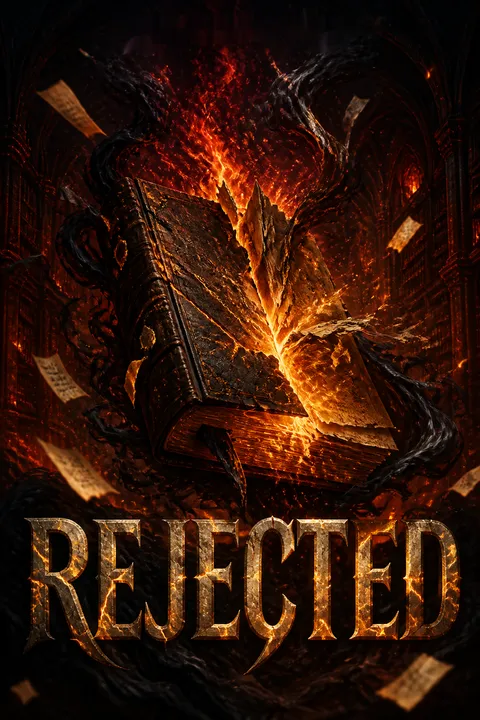


Plot Summary
The Callahan Outcast
At twenty-two, Mera Callahan lives under the shadow of her father’s failed attempt to kill Alpha Victor, ruler of the Torma pack. Victor’s men killed Mera’s father, and the pack has punished Mera and her alcoholic mother ever since.
At school, future alpha Torin Wolfe lets his friends bully her; Jaxson Heathcliffe, once Mera’s childhood companion, cuts her with his claws and tells her his father wanted her family dead. Only Simone, Mera’s loyal friend, stands beside her. Mera keeps her head down, saves her wages, and plans to leave as soon as her first shift gives her a wolf’s strength. Her dream of escape is no longer impatience. It is survival.
Mera’s disgrace is inherited rather than chosen, but the pack makes that inheritance feel like a moral verdict. Her father’s actions become permission for everyone else to mistreat her, while the alpha’s authority protects the hierarchy from scrutiny. Mera responds by turning endurance into a private strategy: she saves money, avoids displaying fear, and refuses to let her tormentors define her inner life. The damaged friendship with Jaxson sharpens the injury. His cruelty hurts because it comes from someone who once knew her before the pack rewrote their relationship.
Leaving Before Moonrise
At a pack gathering, Alpha Victor announces that the coming solstice shifts will take place far from the pack house. Mera sees the run as a rare chance to disappear while the wolves are away. Simone begs her to wait until after her first shift, when an alpha could guide her through the dangerous change, but Mera recognizes that fear has kept her trapped for years.
She promises to reconsider, then leaves Torma without saying goodbye to Simone or Dannie, the kind bookseller who has treated her like family. Mera reaches Hood River, Oregon, invents the name Lucy Jones, and finds work at a diner. For the first time, she wakes without the pack’s threats waiting outside her door.
Mera’s departure is an act of agency, but not a clean break from attachment. She knows Simone and Dannie love her, yet believes that staying for them would mean surrendering the only chance she has to live beyond Torma’s control. The decision carries guilt alongside relief. Her false name and isolated cabin are not signs of confidence so much as improvised protections; freedom initially means distance, anonymity, and the ability to choose where she sleeps. The cost of escape is that she must face her first shift without the communal support her culture treats as essential.
Lucy’s Cover Breaks
In Hood River, Mera enjoys serving truckers, buying food, and living among people who do not know her history. Her wolf presses closer as the solstice approaches, while she tries to prepare for a first shift alone. Then her boss mentions that a visitor from California has been asking for Lucy.
Mera recognizes that the pack has found her and rushes to her cabin for the money she left behind. She checks the forest, slips through a window, and escapes with her packed bag. Torin and Jaxson intercept her before she can reach town. A female wolf attacks, Mera stabs Torin in the chest, and Jaxson’s wolf bites her throat. Believing she is dying, Mera loses consciousness.
The diner offers Mera a brief experience of ordinary social life, but the false name cannot protect her once the pack’s reach crosses state lines. Her careful preparations show how much of her freedom depends on anticipation: packed bags, hidden cash, a cabin near the forest. Even so, she is outmatched when the men who know her best become her hunters. Stabbing Torin is both self-defense and a refusal to be carried quietly back into the system that harmed her. The apparent fatality that follows makes the cost of choosing escape brutally concrete.
The River Escape
Mera wakes in a torture cell beneath the pack house, where Torin’s mother, Glendra, threatens to hurt her before handing her to Victor. Mera knocks Glendra unconscious and escapes through a little-used kitchen exit, then dives into a freezing creek to hide her scent. Jaxson catches her downstream.
He explains that a passing shifter alerted the pack and that he made the throat wound look fatal to conceal his decision to bring Mera back alive. He says Torin is still badly injured and Victor wants Mera present for her first shift. Mera distrusts him, but she is too weak to resist as he carries her back. Victor strikes her and orders her locked away until the solstice.
Jaxson’s rescue is morally compromised from the beginning: he preserves Mera’s life but also returns her to the people she fled. His private tenderness cannot erase his public participation in her suffering, and Mera refuses to mistake the two for reconciliation. Her escape through the river repeats her earlier choice to survive by relying on her own judgment, while her recapture exposes the limits of that strategy against a pack with superior numbers and power. Victor’s violence clarifies that Mera’s return is not a homecoming. The pack needs her for its ritual, not because it intends to protect her.
A Mate’s Public Rejection
On the solstice, Mera undergoes her first shift with the new wolves, watched by Alpha Victor, beta Dean Heathcliffe, and Dannie. As a red-and-white wolf, she regains awareness unusually early and considers fleeing, but Jaxson draws her into hours of playful pack bonding. At dawn, her wolf recognizes Torin as her true mate.
Sisily Longeran attacks before they can connect, and Torin tells Victor to banish Mera, then kisses Sisily to make his rejection unmistakable. When Dean tries to kill her, Mera’s howl stops the pack. Her vision opens onto hidden shadow forms, and she touches one, knocking the gathered wolves unconscious. She tries to escape, but the alpha’s control brings her down.
The mate bond promises Mera an escape from the stigma attached to her name, but Torin makes that promise another instrument of rejection. His choice wounds her more deeply than the pack’s physical attacks because it turns an apparently sacred bond into public humiliation. Yet the rejection also precipitates a different awakening. Mera’s power emerges when the pack attempts to kill her, making survival itself the trigger for a perception no ordinary shifter possesses. Her first shift therefore delivers both belonging and its denial, then replaces the expected wolf identity with a dangerous, unexplained connection to shadow.
The Beast Claims Mera
As Victor orders his pack to kill Mera, a vast darkness covers the grounds and the shifters fall silent beneath its force. Shadow Beast, the deity shifters worship, appears and recognizes that Mera has touched the Shadow Realm. Victor tries to bargain for her, while Torin argues that his mate bond gives him a claim.
Mera rejects both men and chooses to leave with Shadow Beast rather than remain in Torma. When Victor sends wolves after them, Shadow Beast burns the alpha alive and condemns his rule. He carries Mera through a passage between worlds to the Library of Knowledge, where doorways connect to supernatural lands and its goblin concierge, Gaster, introduces her to a universe she had not known existed.
Shadow Beast’s arrival overturns the scale of Mera’s conflict: the alpha who once seemed untouchable is suddenly only one mortal among many. Yet rescue does not equal consent. Mera chooses the danger she prefers, but Shadow Beast still takes control of her movement and future. Her willingness to leave Torma marks a decisive rejection of the pack’s authority, while Victor’s death removes the person who embodied its old order. The library widens the story from social oppression into cosmology, but it does not make Mera safer. It gives her new worlds to navigate while placing her under the power of a deity whose motives remain obscure.
A Library of Worlds
Shadow Beast keeps Mera in his lair and orders her to discover how she touched the Shadow Realm. He claims she released dangerous creatures, so she must help capture them before they devastate Earth.
Mera learns the Library of Knowledge serves travelers from worlds including Faerie, Karn, Brolder, and Honor Meadows, while Gaster explains its directory and rules. On their first hunt, Shadow Beast finds an abervoq, a blood-stealing beast that has killed hundreds of animals on a frozen lake.
Mera clings to it while Shadow Beast subdues it, and her touch helps him contain the creature. She later befriends Angel, a solitary being from Honor Meadows, who lets Mera run freely in her homeland. Mera discovers her wolf can enter the abervoq’s prison without being attacked.
The library makes knowledge both a refuge and a workplace. Mera’s love of books becomes useful, but Shadow Beast initially reduces her to an instrument for solving a crisis she does not understand. Her irreverence and curiosity help her adapt without surrendering judgment. The abervoq complicates the simple division between monster and victim: it is dangerous, yet its response to Mera suggests recognition or trust rather than pure aggression. Angel’s offer of a safe place gives Mera a rare relationship not founded on pack hierarchy or captivity. Together, these encounters begin to suggest that Mera’s unusual power may be relational, not merely destructive.
The Bet for Freedom
Mera’s days in the library alternate between menial sweeping, study, and hunts for shadow creatures. Shadow Beast brings her to meet his five powerful friends: Len, a fae prince; Reece, a desert deity; Alstair, a water-world warrior; Galleli, an oracle; and Lucien, a vampire master.
When Shadow Beast tries to restrict Mera’s choices, she bets that she can lose her virginity within two weeks; if she wins, he must let her return to see her friends. He counters that she must stop resisting him if she loses. Shadow Beast then makes the library’s visitors avoid her, sabotaging her chances. Mera studies the locked Shadow Realm books and realizes her strange double vision may be the key to reaching it.
The wager converts a private question about sexual autonomy into a contest over who controls Mera’s body. She is not simply seeking sex; she is trying to create an exit from captivity using the rules available to her. Shadow Beast’s counteroffer exposes the asymmetry between them, since he can manipulate the social world around her while she cannot. Her research provides a competing form of agency. Rather than accept that her power is inexplicable, she treats her own history of dissociation and doubled vision as evidence, turning a symptom she once feared into a possible instrument.
The Door Bites Back
Shadow Beast forces Mera to revisit the grief of Torin’s rejection so she can touch the Shadow Realm again. Her wolf reaches the sealed doorway, but a spell overwhelms them with living darkness. Shadow Beast drags Mera away and warms her in a shower before she loses consciousness. Later, Mera’s dream carries her into the realm, where a shadow creature follows her back into her room.
The creature, Igorna, proves to be a royal of Shadow Beast’s world, not an ordinary monster. While Shadow Beast confronts him, two shadow hunters attack the library. Mera and Angel fight them together, and Mera can touch their cloaks without losing her soul. With Shadow Beast missing, Len takes Mera to his protected garden in Faerie.
Mera’s power advances through danger, but the cost is not incidental: the sealed realm can consume her identity before she understands what she is doing. Shadow Beast’s coercive experiment makes their unequal relationship especially stark, even as he intervenes to save her. The creatures that cross over are not interchangeable threats. Igorna’s status and the hunters’ pursuit reveal a political order in the Shadow Realm that Mera has disrupted. Her ability to touch what should destroy a mortal becomes both a defensive gift and evidence that her origins may not be what she assumes.
Faerie’s Dangerous Shelter
In Len’s garden, Mera avoids Faerie’s living plants and waits for Shadow Beast, who arrives unharmed after dealing with Igorna. He explains that his family betrayed him, stole his place as the next Supreme Being, and sealed him away from the Shadow Realm. The door’s intelligent spell has resisted every attempt to break it. Shadow Beast believes Mera can bypass that barrier, though he cannot explain why.
When Faerie’s rare lunar convergence begins its fertility season, the music overwhelms Mera with painful arousal. Shadow Beast stays with her through the night, using sexual touch to ease the spell’s effects without allowing her to touch him. The next day, he and Len resume their work, and Mera returns to the library with Shadow Beast.
The revelation gives Shadow Beast’s controlling behavior a history without absolving it. He is not merely a god protecting order; he is an exile trying to reclaim a stolen life and punish the family that dispossessed him. Mera can understand the force of that grievance because she, too, was made to bear the consequences of someone else’s choices. Their intimacy in Faerie is caring in its immediate purpose, but it remains carefully bounded by Shadow Beast. The scene increases physical trust while preserving emotional inequality: he can comfort her, yet still decides what she is allowed to know and give.
Torma Takes Her Back
Shadow Beast gathers the escaped creatures inside a ring of fire and brings them to Torma, hoping Mera can help open a path back to their realm. Torin confronts her, insists their mate bond should be restored, and kisses her without consent. Mera fights him and rejects his attempt to claim her. Shadow Beast intervenes, warns Torin away, and takes Mera back to the library.
Mera demands news of Dannie, whom Torin has threatened to harm, but Shadow Beast refuses to explain and locks Mera in her room until she opens the Shadow Realm. While confined, Mera dreams her way into the realm, and Igorna crosses into her room. Shadow Beast confronts the royal intruder as Mera escapes and finds the library under attack.
Torin’s new interest in Mera does not erase the earlier rejection; it changes the form of his entitlement. He now treats the bond as a source of power and a claim he can enforce, while Mera insists that destiny cannot substitute for consent. Shadow Beast protects her from Torin but repeats the same coercive structure by confining her and withholding information about Dannie. Mera’s dream passage shows that her access to the Shadow Realm is developing beyond deliberate effort. The story’s central tension sharpens: Mera is resisting several powerful men, each of whom believes his purpose justifies control.
Simone Finds Mera
After escaping her room, Mera helps Angel defeat two shadow hunters, but Shadow Beast is nowhere to be found. Len takes her to Faerie for protection, and Shadow Beast eventually joins her there before they return to the library. At Torma, the captured creatures are secured, but Torin and Jaxson ambush Shadow Beast and Mera with a magical powder.
The pair awaken in Torma, where Mera learns that Jaxson and Torin intend to make her the alpha’s mate. Simone reaches her and promises she will not leave Mera behind again. Mera learns that her mother has died and that Dannie was held by the pack. She escapes her guards long enough to join Simone above a secret meeting of Torma’s leaders.
The rescue reverses Mera’s apparent escape without restoring the old balance: she returns to Torma with new knowledge, new allies, and a power the pack does not understand. Simone’s reunion gives Mera the emotional recognition she has missed, but it cannot repair the loss of time or protect her from the pack’s plans. The deaths and disappearances around Mera expose how little the hierarchy values her relationships. Her mother’s death confirms that the family she left behind has been eroding in her absence. Climbing above the secret meeting, Mera chooses witness over passivity, preparing to learn what her captors have done.
Dannie’s Final Price
From the theater rafters, Mera and Simone hear Dean Heathcliffe describe the powder used to block the library’s portal. He says the spell required a virgin sacrifice and the blood of a shadow-whore, identifying Dannie as the price.
The leaders celebrate that Shadow Beast may now be weakened and unable to return. Dean also boasts that the deity helped lay the groundwork for his own defeat. Grief overwhelms Mera, who believes Shadow Beast’s secrecy left Dannie exposed.
Her anger ignites a new power: flames spread across her skin, and shadow mists gather around her. The Torma wolves collapse as Shadow Beast arrives, but the darkness separates him from Mera. She crosses through the barrier and begs him for help, while the mists continue expanding beyond her control.
The meeting turns private grief into political evidence. Dannie’s death is presented as a calculated sacrifice by the pack, not an incidental loss, and the leaders celebrate a power they believe can contain Shadow Beast. Mera’s anger is directed outward, especially at the man she trusted, but it is also bound to guilt over failing to protect her friend. Her new ability makes that grief materially consequential: the mists answer her, yet she cannot command them with confidence. The climax refuses easy catharsis. Mera gains enormous power at the exact moment she most needs restraint, and the book ends before she knows whether she can prevent the catastrophe she has begun.
The Mists Answer Mera
Shadow Beast tells Mera that she has summoned the mists, a force tied to the Shadow Realm and capable of drawing every creature from that world into the others. Mera realizes her grief has opened a path she cannot simply close. She reaches toward the living darkness, sensing that it is more than smoke: it is a creative power that formed the Shadow Realm and sustains beings such as Inky.
Shadow Beast warns that she cannot dominate it, but Mera persists, asks the mists to return to their home, and opens the passage. The mists resist before a voice promises their paths will cross again. Then they withdraw through the realm’s opening. Mera is left alive, shaken, and still unable to explain her own origin.
The closing movement offers a limited victory rather than resolution. Mera does not overpower the mists; she persuades them to return, suggesting that her capacity lies in connection and recognition more than command. That distinction matters in a story where authority has repeatedly been confused with ownership. The promise of another encounter keeps the danger alive, while Mera’s unanswered origins prevent her new abilities from settling into a stable identity. Her trajectory has changed nonetheless: the isolated young woman who once planned only to escape now acts across worlds, accepting responsibility for consequences she did not fully understand.
Analysis
Rejected makes the language of destiny collide with the lived reality of coercion. Mera begins inside a pack that treats her father’s rebellion as a permanent debt she must pay. The alpha’s authority, schoolyard bullying, and mate-bond customs all reinforce the same assumption: a person’s place can be assigned by someone stronger. Mera’s resistance is therefore practical before it is heroic. She saves money, leaves town, uses humor to preserve dignity, and measures safety by whether she can make her own decisions.
The supernatural expansion does not erase that social problem. Shadow Beast rescues Mera from Torma, but he also kidnaps her, restricts her choices, and withholds the history she needs to understand her task. His behavior echoes the pack’s hierarchy even as his exile makes him sympathetic. The story is most interesting when it lets care and domination occupy the same relationship. Mera may feel attraction, gratitude, or curiosity without those feelings converting captivity into consent.
Her unusual power grows through experiences that would ordinarily be framed as weakness: grief, fear, dissociation, and the bodily shock of transformation. The book does not make trauma a clean source of strength. It gives Mera capacities that are useful but volatile, and repeatedly shows the cost of being forced to endure more than she can control. Her ability to calm or return shadow beings also suggests an alternative to the command structures surrounding her. Recognition and connection sometimes accomplish what force cannot.
The ending refuses a neat resolution. Mera answers the immediate crisis by sending the mists back, but Dannie’s death, Shadow Beast’s betrayal, and Mera’s origins remain entangled. Her transformation is not simply from victim to weapon; it is from someone seeking a safe place to someone whose choices can alter several worlds. The cliffhanger asks whether power can be used without reproducing the violence that first made it necessary.
Review Summary
Rejected received mixed reviews. Some praised its unique world-building, engaging characters, and Mera's sassy personality. Others found it repetitive, juvenile, and lacking in romance. The book's pacing and character development were criticized, with many feeling the plot became chaotic. Readers enjoyed the paranormal elements but were divided on the love interests. The cliffhanger ending frustrated some. Despite issues, many found it entertaining and looked forward to the sequel. Overall, opinions varied widely, with some loving it and others disappointed.
People Also Read



Characters
Mera Callahan
The defiant wolfMera is a twenty-two-year-old shifter raised in Torma, where her family is shunned because her father attacked the alpha. Sharp-witted, bookish, and stubbornly observant, she uses humor to deny bullies the satisfaction of seeing her fear. Her plans are practical: save money, leave, and survive her first shift. Beneath her sarcasm is a fierce attachment to the few people who have shown her care. Mera mistrusts authority because she has repeatedly experienced protection as another form of control, yet she remains curious about unfamiliar people and worlds. Her central struggle is to claim agency without becoming isolated from the relationships that make survival meaningful.
Shadow Beast
The exiled shifter deityShadow Beast is the deity worshipped by shifters and the keeper of the Library of Knowledge. Immensely powerful, secretive, and accustomed to obedience, he often treats Mera as a problem to manage rather than a person entitled to choices. He is also disciplined, protective of the worlds under his care, and capable of unexpected tenderness. His past gives him a personal stake in the sealed Shadow Realm, though he reveals information only when he chooses. The tension between his protective instincts and his need for control defines his relationship with Mera. He is difficult to read because he rarely separates care from command.
Torin Wolfe
The future alphaTorin is Alpha Victor’s son and the heir to Torma’s leadership. His inherited authority gives his commands force throughout the pack, and his good looks and status make him a focus of attention. He is closely connected to Jaxson and expected to lead by the rules his father established. Torin’s early treatment of Mera reflects the pack’s judgment of her family, while his later attempts to define their bond reveal how readily he confuses destiny with entitlement. He is not simply a bully or a romantic ideal; his decisions expose the difficulty of distinguishing personal desire from the privileges built into his position.
Jaxson Heathcliffe
Mera’s broken childhood friendJaxson is the son of Torma’s beta and grew up close to Mera because their fathers were friends. After Mera’s father turned against the alpha, Jaxson became one of her harshest tormentors, using his physical control to hurt without necessarily killing her. His history with Mera is therefore full of contradiction: remembered affection sits beside years of cruelty and betrayal. Jaxson values loyalty, strength, and his place in the pack, but he is also shaped by pressures he rarely explains. His connection to Mera remains emotionally charged because neither their shared past nor his later choices can be reduced to a simple story of friendship or enmity.
Simone
Mera’s ride-or-die friendSimone is Mera’s closest friend in Torma and the daughter of pack enforcers. Her loyalty survives the social risks of standing beside a shunned family, and she repeatedly tries to protect Mera without taking away her right to choose. Simone is candid, emotionally expressive, and determined to imagine a life beyond the pack’s boundaries. Her friendship offers Mera a rare bond based on affection rather than rank or obligation. She can be frightened by Mera’s choices, but she does not mistake fear for authority over her friend. Simone’s warmth and practical courage make her an important counterweight to Torma’s punitive culture.
Dannie
The wandering booksellerDannie runs Torma’s only bookstore and becomes a maternal presence for Mera, offering work, books, and kindness when the rest of the pack treats her as an outcast. She is eccentric, perceptive, and difficult to categorize; her travels and knowledge suggest a life much larger than the town knows. Dannie’s comfort comes without demands, allowing Mera to feel valued without having to earn a place through obedience. She is also willing to speak against abusive authority, even when doing so could bring danger. Her role links books and refuge, while her guarded history makes her one of the story’s most intriguing figures.
Victor
Torma’s absolute alphaVictor has ruled Torma for decades and leads the American packs. He treats hierarchy as proof of his own rightness, using alpha power to compel obedience and violence to punish defiance. Mera’s father’s attack gives Victor a justification to stigmatize the Callahans, while the pack’s dependence on his authority keeps that punishment in place. His immense estate and public certainty make him the visible face of Torma’s political order. Victor’s leadership is built less on mutual trust than on command, fear, and the assumption that no one beneath him may question his decisions.
Glendra
The alpha’s cruel mateGlendra is Victor’s mate and Torin’s mother. She is volatile, vindictive, and invested in defending her family’s place at the top of Torma. Her hostility toward Mera draws on the Callahan disgrace, but also on her own appetite for power and influence. Glendra does not offer the protections expected from a parent or pack leader; she uses her position to threaten and punish. Her presence makes clear that cruelty in Torma is not confined to the alpha’s formal commands. It is also carried out through the personal ambitions of those who benefit from his rule.
Sisily Longeran
Torma’s reigning bullySisily is a prominent young shifter who targets Mera and expects to become Torin’s mate. She uses beauty, confidence, and social standing to reinforce her place among Torma’s favored wolves. Her cruelty toward Mera is public and physical, shaped by a culture that rewards dominance and treats weakness as permission to attack. Sisily’s confidence depends on the expectations surrounding her future, and she reacts fiercely when those expectations are challenged. She is not merely a rival in romance; she represents the everyday social force that makes Mera’s exclusion visible in school and pack life.
Angel
The solitary guardianAngel is a powerful being from Honor Meadows who initially keeps to herself in the library’s dining hall. She is disciplined, guarded, and burdened by painful memories, yet she responds to Mera’s directness and kindness. Her ability to fight makes her formidable, but her deeper strength lies in choosing connection after a long period of isolation. Angel gives Mera a place to run as a wolf and later forms a bond of chosen family with her. She is a friend who respects Mera’s independence, even while worrying about her safety. Her reserved nature gradually opens to humor, affection, and trust.
Len
The silver fae princeLen is a prince of Faerie and one of Shadow Beast’s oldest friends. Charming and quick to flirt, he also carries the responsibilities of his family and kingdom, including concern over a stolen source of power. Len is confident enough to tease Shadow Beast but respects the risks of crossing him. He helps Mera navigate unfamiliar danger, though his instinct to act on her behalf can override her consent. That tension reveals the difference between good intentions and respectful choices. Len’s humor makes him approachable, while his long life and royal duties keep him firmly embedded in Faerie’s complicated politics.
Reece
The brooding desert deityReece is a deity from the Desert Lands and one of Shadow Beast’s trusted companions. He is restrained, physically imposing, and more comfortable observing than explaining. Reece understands the supernatural politics surrounding the Shadow Realm and offers Mera limited but important information when she asks directly. His loyalty to Shadow Beast does not prevent him from recognizing Mera’s unusual significance. He approaches her with guarded respect, seeing her as more than an accidental intruder even before her full abilities become clear. Reece’s quiet presence contrasts with Len’s banter and helps anchor the group’s more serious deliberations.
Gaster
The library’s goblin guideGaster is a goblin from Faerie and the cheerful concierge of the Library of Knowledge. He guides visitors, explains the worlds connected to the library, and helps Mera learn how its systems work. His enthusiasm can make him seem naïve, but he is diligent and takes the library’s rules seriously. Gaster offers Mera practical support and a friendly presence in a place where she is otherwise under Shadow Beast’s control. He is also careful about boundaries around classified knowledge, reflecting the library’s role as both a welcoming resource and a guarded institution.
Igorna
The shadow realm royalIgorna is an upper-level figure from the Shadow Realm whose arrival exposes the political importance of the beings crossing into the library’s world. He is powerful, proud, and angered by being separated from his homeland. His encounter with Mera suggests that her presence can draw shadow beings across boundaries, even when she does not consciously intend it. Igorna’s status distinguishes him from the more animalistic creatures Shadow Beast has captured and hints at conflicts within the realm that Mera barely understands.
Lucinda Callahan
Mera’s absent motherLucinda is Mera’s mother, a shifter whose grief after her mate’s death gives way to alcoholism and emotional withdrawal. She remains physically present in Mera’s early life but cannot provide the steady care her daughter needs. Mera’s feelings toward her are complicated by pity, anger, and the loss of the parent she might have had. Lucinda embodies the way the father’s rebellion damages the entire family, leaving Mera to search for maternal care elsewhere.
Plot Devices
The first-shift solstice
A fixed coming-of-age thresholdShifters undergo their first transformation at twenty-two during the winter solstice full moon. Before that change, Mera lacks the strength and healing that might help her escape Torma; afterward, the wolf can act independently and gives her access to new senses and powers. The tradition also ties young shifters to pack supervision, making the event both a biological passage and a political mechanism. Mera’s decision to leave before the solstice rejects the idea that safety must come from obedience, while her eventual first shift changes the scale of the conflict.
The true mate bond
Fate tested against consentA supernatural bond identifies a shifter’s destined partner when both wolves meet after shifting. In Torma, the bond is treated as sacred and socially decisive, but Mera’s experience exposes the gap between predestination and mutual choice. Torin rejects her publicly, then later tries to reclaim the bond when it may benefit his leadership. The device therefore does more than create romantic tension: it tests whether a culturally revered connection can justify coercion. The bond remains emotionally powerful even when Mera resists it, complicating her effort to define herself outside pack expectations.
The Shadow Realm
A sealed source of dangerThe Shadow Realm is a world barred from the Library of Knowledge by an intelligent spell. Shadow Beast has been exiled from it, while its creatures and mists can cross into other worlds through Mera’s unusual abilities. Her double vision, first experienced during moments of extreme distress, lets her perceive and touch shadow forms. Each accidental opening brings new threats and new evidence about her nature. The realm’s barrier is both a literal obstacle and the central mystery connecting Mera’s transformation to Shadow Beast’s lost home. Its dangers remain unresolved at the book’s end.
The Library of Knowledge
A crossroads between worldsThe library links Earth to multiple supernatural lands through doors and a navigable directory. It provides Mera with information, food, work, and access to potential allies, while also serving as Shadow Beast’s domain and a holding place for escaped creatures. The contrast between its welcoming shelves and its master’s strict control makes it both refuge and captivity. Its rules determine who can travel, what knowledge can be accessed, and which threats may be contained. As Mera learns to use the library, knowledge becomes a form of leverage, though not a guarantee of freedom.
The living mists
Creation turned catastropheThe mists are a powerful, sentient force tied to the Shadow Realm and to Shadow Beast’s companion, Inky. They sustain the shadow world and can carry its creatures into other lands. Mera’s grief and developing connection allow her to summon a vast mass of them, but she cannot simply command their power. In the climax, she must open a path and persuade the mists to return, discovering a relationship based on contact rather than domination. Their promise to meet again keeps the danger and mystery alive beyond the book’s final scene.
Shadow Beast Shifters Series Series

About the Author
Other books by Jaymin Eve




Download PDF
Download EPUB
.epub digital book format is ideal for reading ebooks on phones, tablets, and e-readers.








