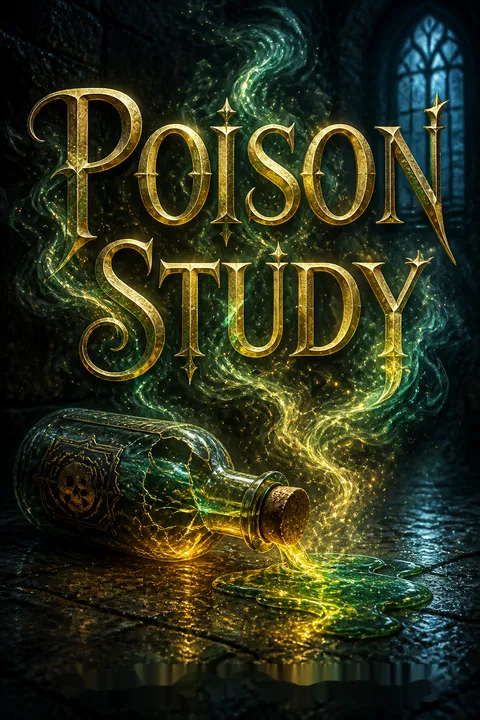


Plot Summary
The Executioner's Offer
After five seasons in the dungeon, Yelena is dragged into the light to face execution for killing Reyad, the son of General Brazell. The Commander’s security chief, Valek, offers her a different sentence: become the Commander’s food taster or die at the gallows. Yelena accepts, choosing a dangerous chance to live over the certainty of a noose.
Her first lesson proves the bargain’s cruelty. Valek gives her a drink laced with Butterfly’s Dust, then reveals that she must return daily for its antidote. The poison is both training hazard and leash. Freed from her chains, Yelena is taken to a room in the castle, where clean clothes and a proper bed cannot disguise that her life now depends on Valek.
The offer converts punishment into employment without making it freedom. Yelena’s consent is real only in the narrow sense that she chooses between two forms of death, a structure that gives the military system a veneer of fairness while preserving its control. The daily antidote turns dependency into routine: survival requires punctual obedience, not trust. Yet Yelena’s decision also marks a first act of agency. She does not claim innocence or ask for mercy; she chooses the risk she can inhabit. That pragmatic choice becomes the foundation of her later ability to act under pressure.
Breakfast Becomes Training
Valek trains Yelena to detect poisons by smell, taste, and careful sampling, sometimes making her suffer the effects herself. A dose of My Love leaves her hallucinating and violently ill, while Brazell’s guards lurk outside her room, waiting for a chance to assault her.
She survives the night and meets Rand, the castle cook, whose warmth and food offer a fragile contrast to Valek’s cold discipline. When Brazell’s men seize Yelena in the corridors, she escapes by triggering the strange buzzing force that once saved her from Reyad’s torture.
Valek knocks the pursuers unconscious and brings her before Commander Ambrose. Though Brazell demands her death, Ambrose orders his General to leave the food taster alone, preserving the life Yelena has barely begun to reclaim.
The castle teaches Yelena to treat perception as a survival skill. A scent, an aftertaste, or a soldier’s movement may be the difference between danger noticed and danger endured. Her body is still an object others use, but she begins to gather knowledge that can make it harder to control. Rand’s kindness matters because it arrives through ordinary acts, food and company, rather than declarations of rescue. The unexplained buzzing complicates her self-understanding: what she has called instinct may be something more powerful. For now, its cost is uncertainty, and its benefit is one more escape from a corner.
The Festival Strangling
Valek enters the fire festival disguised as a drunk and fights off the men who abduct Yelena, but their employer escapes after using a song to overwhelm her will. Valek identifies the woman as a Sitian magician, then tells Yelena that the unexplained force she has used is magic.
The magician, Irys, later finds Yelena during Valek’s fugitive-training exercise and offers to take her south for instruction. She explains that Yelena’s uncontrolled power could eventually destroy her and damage magic itself.
Irys gives her a year before she will consider the risk intolerable. Yelena refuses immediate asylum because the antidote still binds her to the castle. She returns from the exercise with evidence of an illegal southern caravan, while her endurance earns the Commander’s respect.
The revelation gives Yelena’s survival instinct a new meaning, but not a reassuring one. Magic is not simply a hidden gift: it is a force she may not control, and Irys frames that lack of control as a danger to Yelena and others. The year-long reprieve creates a deadline without solving the practical obstacle of the antidote. Yelena’s refusal to flee is not loyalty to Ixia; it is a calculation that escape without preparation could merely exchange one captor for another. Her successful fugitive run offers a counterweight to the revelation: she can learn, adapt, and make decisions rather than wait to be carried toward safety.
A Friend on the Hook
Yelena starts training with Captains Ari and Janco, then joins the skilled archer Maren, building the strength and confidence she lacked when she first entered the castle. Meanwhile, she and Valek follow a leak to Captain Star, who pays for information about the Commander.
Yelena thinks Margg is the traitor, but Valek reveals that Margg is his planted informant. The real source is Rand, whose gambling debt has left him selling secrets while trying to shield Yelena from the worst consequences.
His betrayal shakes the trust she had begun to place in him. Yelena also fights off Nix, a soldier working for Brazell who tries to stop her training. Each new skill matters, but so does the lesson that apparent kindness and apparent hostility can both conceal more complicated motives.
This section turns trust into a problem of evidence rather than feeling. Yelena’s instinct to bond is understandable after isolation, but the castle’s intelligence culture makes intimacy vulnerable to surveillance and leverage. Rand’s divided conduct is especially painful because his care does not erase his betrayal, and his betrayal does not make every caring act false. Valek’s loyalty tests deepen the same wound: he asks Yelena to trust a system that keeps information from her. Training offers a different kind of security. Unlike affection, a learned movement belongs to her, even when other people’s motives remain unreadable.
The Successor's Secret
As the Generals gather, Valek discovers that Commander Ambrose has changed the secret successor, and Yelena’s decoding work reveals that Brazell is the new choice. Brazell’s Criollo dessert becomes a political sensation, while Valek suspects it has altered the Commander’s behavior.
During the ceremonial feast, someone poisons the cognac with My Love; Yelena identifies it before swallowing enough to become delirious. Valek hides the incident and keeps the negotiations moving.
The poisoner’s identity remains uncertain, but the attack strengthens suspicion around the Sitian delegation and the growing struggle over succession. Yelena’s vision of the Commander as a woman in white furs also hints at a concealed history, though she cannot yet tell whether it is memory, magic, or a dream.
Power in Ixia depends on controlled information: the successor’s identity is encoded, diplomatic policy is debated in ritualized meetings, and the Commander’s private self remains inaccessible. Criollo unsettles that order because its pleasurable taste obscures its political function. The feast’s poison makes the food taster’s role suddenly public and consequential, but Yelena can identify the threat only after it has entered her body. Her vision of the Commander is not yet knowledge; it is an intuition she cannot safely interpret. The section links appetite, authority, and secrecy, showing how the same senses used to detect poison may also register truths that reason has not caught up with.
The Orphanage's Hidden Circle
At Brazell’s manor, Yelena discovers that Mogkan has taken control of the Commander and uses Criollo, also called Theobroma, to weaken people’s mental defenses. Irys explains that the sweet can make a mind easier for magic to enter. Yelena learns that Mogkan, using the name Kangom, has been directing Star’s efforts and has ties to the attack on the delegation.
When Yelena and Valek search Reyad’s abandoned rooms, they find former orphanage children chained in painted circles, their minds emptied so Mogkan can draw on their power. Mogkan catches them before they can free the captives. Brazell’s guards imprison both Yelena and Valek, while Mogkan takes the Commander’s antidote supply and threatens to use Yelena’s dependence to control her.
The captives reveal the system beneath Brazell’s respectable orphanage: children were not merely exploited as labor or experimental subjects, but selected and emptied to become instruments of power. The discovery redefines Yelena’s past and makes her survival an exception with an immediate responsibility attached. Mogkan’s use of Criollo extends coercion from the body to the mind, disguising assault as a pleasurable indulgence. Valek’s imprisonment matters because his usual competence cannot simply undo this structure. Yelena must now face the consequences of what she has learned without relying on the person who has most often controlled the room.
The Poison Was Pretend
In the dungeon, Yelena explains the years of torture that led her to kill Reyad, including the moment she chose to stop him from hurting another girl. Valek listens without trying to make her experience smaller.
He then reveals that Butterfly’s Dust was invented: the daily liquid was a harmless but painful drug called White Fright, used to keep food tasters from fleeing. Its withdrawal causes the cramps that torment Yelena, but it will not kill her.
When guards arrive to remove her apparently dead body, Yelena and Valek use the confusion to overpower them, recover their belongings, and hide in an empty cell while search parties leave. Valek’s confession frees Yelena from the false poison, but she still faces Mogkan, the captive children, and an ensorcelled Commander.
The false poison exposes the difference between physical captivity and the story a captor tells about it. Valek’s deception gave Yelena a reason to return, but it also denied her informed choice and made ordinary dependence feel fatal. His confession does not erase that betrayal; it changes what Yelena can do next. More importantly, she tells him the truth about Reyad, replacing the official label of murderer with the history that produced it. The disclosure is not a cure for trauma, but it shifts their relationship from command and suspicion toward mutual knowledge. Their escape begins only after that history is spoken.
The Mind Behind the Curtain
Yelena reveals her magic to Valek and explains that Irys may be able to help them break Mogkan’s hold. With Ari and Janco joining them, she leads a rescue plan that sends Irys toward the chained captives while Valek fights Mogkan’s guards. Yelena builds a mental shield around herself and the Commander, but Mogkan breaks through and uses the captive children’s power to crush her defenses.
Irys intervenes, letting Yelena push Mogkan away long enough for the fight to continue. Brazell attacks Yelena with a sword; she uses a broken bedpost to knock him unconscious rather than kill him. When Mogkan turns on Valek, Yelena’s own magic finally pins him in place, allowing Valek to kill him. Janco is gravely wounded, but survives the battle.
Yelena’s power becomes meaningful when it is joined to a chosen purpose. She does not merely erupt in response to fear; she protects the Commander, coordinates allies, and holds a defense long enough for others to act. The scene also tests whether survival must reproduce violence. Yelena disables Brazell without killing him, while Valek kills Mogkan when no safer opening remains. Her choices are not morally identical, but they are no longer automatic. Janco’s injury keeps victory from becoming clean or costless, grounding magical spectacle in the bodily consequences of resistance.
Ambrosia Returns to Herself
The Commander remains lost in a mental landscape after Mogkan’s defeat, so Yelena enters his mind and finds Ambrosia surrounded by soldiers who embody her shame about being a woman. She reminds Ambrosia that the snow-cat hunt was part of her own history, not a disguise that must be rejected.
Ambrosia takes up her sword, fights beside Yelena, and returns to waking consciousness. The Commander then confirms Brazell’s conspiracy: he and Mogkan planned a coup and intended to invade Sitia.
Brazell is stripped of rank and sentenced to life in the dungeon. The captive children remain mindless, including Carra, while May is alive and ready to travel south. The Commander’s recovery resolves the immediate crisis, but not the damage left in the people Mogkan used.
Ambrosia’s return depends on integration rather than denial. Yelena does not tell the Commander to abandon the woman she once was; she helps her recognize that identity as part of the same person who now rules. This mirrors Yelena’s own struggle to reclaim a self she thought trauma had driven away. The Commander’s public authority survives, but the captives’ minds do not recover, making political victory an incomplete form of repair. The ending refuses a simple equation between defeating the perpetrator and restoring every victim. Some injuries persist beyond the reach of the plot’s most powerful magic.
A Choice Beyond Ixia
Although Yelena helped save him, the Commander says Ixia’s Code of Behavior requires her execution because she has magic. Valek refuses to accept the written order, and the Commander grants Yelena and Irys time to leave before naming someone to carry it out. Yelena prepares to go south with Irys and the surviving children from Brazell’s orphanage, while Ari and Janco promise to follow when Janco has recovered.
Valek stays behind because the Commander still needs him. Before she departs, Valek gives Yelena a butterfly he carved, and later meets her in the forest for a private farewell. Yelena leaves with the antidote no longer controlling her, her magic newly awakened, and the unresolved hope of finding her family in Sitia.
The final conflict is not a reversal of the victory but a collision between personal gratitude and institutional consistency. The Commander’s order follows the same Code that once offered Yelena the food-taster position, revealing the law’s capacity to save and endanger her without changing its terms. Valek’s refusal is costly because his loyalty to the Commander remains genuine, yet he does not treat Yelena as property to keep. Her departure is therefore not a simple escape from danger. It is a chosen separation that lets her pursue training, family, and a life not organized around the castle’s needs.
Analysis
Poison Study makes survival a discipline before it makes it a triumph. Yelena begins with almost no control over her body, schedule, or future. She gains leverage by learning to detect poisons, read routes, pick locks, and fight. These are not interchangeable skills: each lets her reclaim a different kind of agency. Her eventual magic matters most when it joins those practical forms of knowledge, enabling her to protect the Commander and coordinate allies rather than simply overpower an enemy.
The book also treats care as ethically complicated. Valek protects Yelena while deceiving her with a false poison; Rand offers genuine warmth while selling information under pressure. Neither fact cancels the other. Their contradictions force Yelena to replace the simple categories of safe and dangerous with a more difficult judgment about motives, actions, and accountability. Her trauma likewise cannot be erased by victory. Carra and the other captives remain mentally absent, so defeating Mogkan does not restore everyone he harmed.
Ixia’s Code is the novel’s central political paradox. It limits arbitrary punishment and opens roles to people excluded under the monarchy, yet its inflexibility can reproduce cruelty in the name of consistency. Ambrose’s decision to order Yelena’s execution shows that personal gratitude cannot easily bend a state built on rules. The conclusion therefore gives Yelena no effortless reconciliation with Ixia. She must leave to learn magic and seek her family, while Valek stays with the Commander. Her departure is neither simple rejection nor romantic surrender. It is the hard-won recognition that loyalty can include separation, and that a life reclaimed must be directed by the person living it.
Review Summary
Poison Study receives mostly positive reviews, with readers praising its compelling plot, strong characters, and unique world-building. Many appreciate the slow-burn romance and the protagonist Yelena's growth. Some criticize the writing style as simplistic or inconsistent. The book is often compared favorably to other fantasy novels, particularly in the young adult genre. While some readers find certain plot elements predictable, most enjoy the intrigue, magic, and political elements. Overall, it's considered an engaging and enjoyable fantasy read.
People Also Read






Characters
Yelena
The reluctant food tasterAn orphan raised at General Brazell’s manor, Yelena is observant, educated, and practiced at hiding fear behind calculation. Her experience of cruelty has made trust difficult, but it has not erased her instinct to protect the children she considers family. She approaches danger as a puzzle to be solved, studying poisons, routes, locks, and people because knowledge gives her options. Her emerging magic unsettles her belief that survival depends only on vigilance and endurance. Yelena’s defining tension is between escape and responsibility: she wants a life beyond the threats that surround her, yet repeatedly chooses to act when another person is in danger.
Valek
The Commander’s lethal protectorValek is the Commander’s security chief, assassin, and spymaster, a man whose work depends on anticipating betrayal before it becomes visible. He is controlled, exacting, and capable of frightening violence, yet his private craftsmanship and occasional acts of mercy complicate that hard public role. He trains Yelena while keeping her under close watch, partly because her past and abilities create risks he cannot predict. Valek values loyalty as a discipline rather than a sentiment, which makes his growing attachment to Yelena difficult for him to separate from duty. His central struggle is how to protect someone without turning protection into another form of control.
Commander Ambrose
The austere military rulerAmbrose governs Ixia through a strict Code of Behavior and expects officials to follow rules consistently, even when circumstances invite exceptions. The Commander distrusts magic and the former monarchy, having built a government that prizes skill over inherited rank and gender. Their plain offices and direct decisions reflect a belief that authority should serve practical ends rather than personal display. Ambrose is difficult to read, but not indifferent: the Commander listens to arguments and sometimes gives people opportunities that the law’s severity would deny. The tension between private identity and public authority shapes the Commander’s relationship to power, safety, and the system they created.
Irys
The Sitian master magicianIrys is a powerful magician from Sitia who first approaches Yelena as a threat, then offers her a chance to survive through training. She is direct and pragmatic, willing to frighten Yelena with demonstrations when persuasion fails, but her urgency comes from concern about uncontrolled magic and the damage it could cause. Irys has responsibilities beyond one young woman, including a diplomatic mission and the broader safety of her people. She treats magic as a discipline with ethical obligations, not merely a weapon. Her alliance with Yelena asks the young woman to trust a stranger who has both the ability and the stated intention to end her life if necessary.
General Brazell
The respected false benefactorBrazell is a powerful General who presents himself as a patron of orphaned children and a capable administrator of his district. His respectable public image conceals an appetite for control, especially over young people who depend on his shelter and education. He values status, political advantage, and the obedience of those around him, and sees resistance as a personal insult. His relationship with Yelena begins under the language of protection, making the difference between care and possession one of her hardest lessons. Brazell’s ambition also reaches beyond the manor, placing his private cruelties within a wider struggle for political authority.
Mogkan
The hidden magical conspiratorMogkan is Brazell’s adviser, a composed strategist who understands how to make coercion look like assistance. He uses magic to influence minds and pursues power through secrecy, stolen children, and political manipulation. His connection to the orphanage makes him part of Yelena’s earliest history, though she does not initially know it. Mogkan regards people as resources to be shaped or consumed, a view that stands opposite Irys’s insistence on ethical limits. His intelligence makes him dangerous not because he is unpredictable, but because he turns ordinary institutions and appetites into tools for control.
Reyad
Brazell’s cruel sonReyad is Brazell’s son and the person whose violence dominates Yelena’s memories of the manor. He is sadistic, entitled, and adept at disguising cruelty as training or experiment. His attention isolates Yelena from the other children and makes obedience feel like the only available protection. Reyad’s influence persists in her fear, anger, and doubts about her own worth, shaping how she understands intimacy and violence.
Rand
The inventive castle cookRand is a gifted cook whose lively talk, culinary ambition, and physical limp make him a familiar presence in the castle kitchens. He treats food as both craft and pleasure, and his friendship gives Yelena access to ordinary companionship after years of isolation. Beneath his genial manner lie old grief, gambling trouble, and a history of conflict with the Commander’s regime. Rand’s loyalties are complicated by the pressures he faces, making him more than the safe, cheerful friend Yelena first hopes he is.
Ari
The steadfast soldierAri is a strong, disciplined Captain whose protectiveness is matched by a patient understanding of what Yelena needs to learn. He teaches her practical self-defense and pushes her to stop treating retreat as her only option. His partnership with Janco is built on trust and an easy familiarity that Yelena notices with longing. Ari’s confidence is not bluster; it comes from a clear sense of duty and a willingness to stand beside someone others dismiss.
Janco
The quick-witted scoutJanco is a nimble Captain whose jokes and rhyming battle habits conceal a sharp tactical mind. He teaches Yelena how to pick locks and encourages her to acquire tools that suit her size and skills. His playful manner can make him seem unserious, but he is alert to danger and loyal to his friends. Alongside Ari, he offers Yelena a model of friendship grounded in action rather than pity.
Maren
The ambitious archerMaren is an accomplished archer and determined soldier who wants to prove herself against Valek. She is blunt, competitive, and initially measures Yelena by rumor rather than reputation. Training with Yelena and the Captains gives her a chance to refine tactics as well as technique. Maren’s pride can make her prickly, but it also fuels her discipline and willingness to keep learning.
Dilana
The castle seamstressDilana is a warm, resourceful seamstress who helps Yelena feel human through practical kindness: fitted clothes, boots, nightwear, and ribbons. Her cheerful manner does not mean she is naive; she knows how to stand up to Margg and protect her own dignity. Dilana’s affection for Rand gives her a personal stake in the kitchen’s shifting tensions, while her generosity offers Yelena a rare experience of care without an immediate demand in return.
Margg
The prickly housekeeperMargg serves as housekeeper to Valek and the Commander, enforcing routines with a sharp tongue and little patience for newcomers. She initially treats Yelena as a nuisance, and her bluntness makes it hard to tell whether she is hostile or simply testing boundaries. Margg values competence and loyalty more than charm. Her presence reminds Yelena that people in the castle often have responsibilities and allegiances hidden beneath their uniforms.
Captain Star
The information brokerStar runs an illicit information network from a Castletown home and pays informants according to the value of what they learn. Sharp, self-possessed, and openly mercenary, she treats personal loyalties as liabilities unless they can be used. Her influence reaches into the castle kitchens and military circles, making her a threat even when she is not physically present. Star’s claims of magical power add another layer of intimidation to her business.
Nix
The resentful guardNix is a soldier in Captain Parffet’s unit who resents Yelena’s growing support and uses his position to intimidate her. He relies on threats and surprise rather than honor, revealing how easily military authority can be used for private cruelty.
Carra
Yelena’s childhood sisterCarra is one of the children Yelena loved and cared for at Brazell’s orphanage. Her closeness to Yelena helps explain why the older girl endured danger while fearing what might happen to the others.
May
Yelena’s younger sisterMay is a spirited child from the orphanage whose untidy hair and clothes are familiar comforts to Yelena. Her affection shows how Yelena’s sense of family grew from shared life and care, not only blood ties.
Plot Devices
The Food Taster's Code
A job instead of executionIxia’s Code of Behavior requires that a condemned murderer be offered the food-taster position before execution. The rule saves Yelena from the gallows, but the job places her beside the Commander and makes her responsible for sampling every meal. It also gives Valek a reason to train her in poisons and observe her closely. The Code therefore operates in two directions: it provides a narrow route out of punishment, while the strictness of its logic helps justify surveillance and control. Yelena’s changing relationship to the job turns it from a sentence she accepts under duress into a role in which her knowledge can protect others.
Butterfly’s Dust
A leash disguised as medicineValek tells Yelena that Butterfly’s Dust is a lethal poison and that she must take a daily antidote to survive. The threat forces her to report to him every morning and appears to make escape impossible. Much later, he reveals that the poison is invented and the antidote is White Fright, a drug that causes painful withdrawal symptoms but does not kill. The deception gives Valek control over Yelena while keeping her close to the Commander. It also makes the eventual truth more than a simple escape trick: Yelena must reckon with the fact that the man she increasingly trusts built their relationship on a lie.
Criollo and Theobroma
A sweet that loosens mindsBrazell’s imported dessert, Criollo, is made from southern ingredients and carries the name Theobroma among magicians. Its flavor conceals its magical use: it weakens mental defenses, allowing a magician to influence a mind more easily. Mogkan uses it to ensnare the Commander and other officials while presenting the factory as a harmless or useful enterprise. The dessert links trade policy to magical coercion, so the forbidden goods are not merely luxury items. Yelena’s food-tasting skill, her research into the beans, and her observations of the Commander’s behavior gradually expose what the sweet is doing.
The Power Source
Magic with a breaking pointMagic comes from a world-spanning source that magicians draw upon through mental connection. Yelena’s power surfaces without her control, and Irys warns that uncontrolled drawing could cause a destructive flameout. Mogkan intensifies his abilities by exploiting the power of captive people with magical potential, while Yelena learns to build a mental wall that resists intrusion. The system makes magic both an internal danger and a political resource. Its rules explain why training matters, why Irys wants Yelena in Sitia, and why the captives in Brazell’s manor are not simply prisoners but part of Mogkan’s machinery.
The Successor's Cipher
Secrecy governs successionThe Commander’s chosen successor is concealed through a puzzle divided among eight Generals. Valek keeps the key needed to decode the assembled message, preventing any one General from knowing who will inherit power. During the Generals’ meeting, he secretly copies the pieces and works with Yelena to decipher them. The revelation that Brazell has been selected gives his ambition a political path and sharpens the danger around Yelena. The cipher reflects a government built on controlled access to information, but its secrecy cannot prevent manipulation once Mogkan begins influencing the Commander and the Generals around him.
FAQ
Synopsis & Basic Details
What is Poison Study about?
- A Food Taster's Perilous Journey: Poison Study follows Yelena, a young woman who, to avoid execution, becomes the food taster for the Commander of Ixia, a position fraught with danger and political intrigue.
- Training and Survival: The story details Yelena's rigorous training in poison detection, her navigation of complex relationships, and her struggle to survive in a world where trust is a rare commodity.
- Magic and Self-Discovery: As the plot unfolds, Yelena discovers she possesses magical abilities, adding another layer of complexity to her already perilous existence and forcing her to confront her past and future.
Why should I read Poison Study?
- Intriguing World-Building: The novel presents a unique world with a strict military structure, a complex political landscape, and a fascinating system of magic, drawing readers into its immersive setting.
- Strong Female Lead: Yelena is a compelling protagonist, showcasing resilience, intelligence, and a fierce determination to survive, making her a character readers will root for.
- Fast-Paced Plot: The story is filled with suspense, action, and unexpected twists, keeping readers engaged and eager to turn the page, making it a captivating read.
What is the background of Poison Study?
- Military Rule: The story is set in the Territory of Ixia, a land governed by a strict military regime that enforces a rigid Code of Behavior, shaping the social and political landscape.
- Post-Monarchy Era: The narrative takes place after a military takeover, where the Commander has replaced the monarchy, leading to significant changes in the social structure and the lives of the citizens.
- Geopolitical Tensions: The story hints at tensions with the southern lands of Sitia, a place where magic is practiced, adding a layer of geopolitical conflict and cultural differences to the setting.
What are the most memorable quotes in Poison Study?
- "A fool would refuse the job.": This quote, spoken by Yelena when offered the position of food taster, highlights her pragmatic nature and her willingness to take risks to survive, setting the tone for her character.
- "You need a daily dose of this to stay alive.": Valek's chilling words about the antidote to Butterfly's Dust underscore the precariousness of Yelena's situation and the control he wields over her life, emphasizing the power dynamics at play.
- "In my experience, shortcuts usually lead to death.": This quote from Valek reveals his cautious nature and his understanding of the dangers inherent in their world, foreshadowing the many challenges Yelena will face.
What writing style, narrative choices, and literary techniques does Maria V. Snyder use?
- First-Person Perspective: The story is told from Yelena's point of view, allowing readers to intimately experience her thoughts, emotions, and perceptions, creating a strong connection with the protagonist.
- Fast-Paced and Action-Oriented: Snyder employs a brisk pace, filled with action sequences, suspenseful moments, and quick transitions, keeping the reader engaged and invested in the plot.
- Foreshadowing and Symbolism: The author uses subtle foreshadowing and recurring symbols, such as the color red and the image of a snow cat, to hint at future events and deepen the thematic layers of the story.
Hidden Details & Subtle Connections
What are some minor details that add significant meaning?
- The Black Statues: The small, black statues of animals and flowers with silver streaks that appear in Valek's office and living quarters foreshadow his connection to the Commander and his artistic side, hinting at a deeper, more complex personality.
- The Tapestries: The torn and soiled tapestries in the castle, once symbols of the old kingdom, represent the Commander's rejection of the past and the drastic changes he has brought to Ixia, highlighting the theme of power and transition.
- The Uniforms: The specific colors and diamond patterns on the uniforms of Ixia's citizens reveal their rank and district, emphasizing the rigid social structure and the Commander's control over the territory.
What are some subtle foreshadowing and callbacks?
- The Buzzing Sound: The buzzing sound that Yelena experiences during moments of extreme stress foreshadows her magical abilities and her connection to a power source, hinting at a deeper, more complex destiny.
- The Fire Festival: The fire festival, initially a source of joy for Yelena, becomes a recurring motif, linking her past, her present, and her future, and foreshadowing the dangers she will face.
- The Butterfly's Dust: The initial lesson on Butterfly's Dust, while seemingly a training exercise, foreshadows the control Valek has over Yelena's life and the constant threat of poison that she must navigate.
What are some unexpected character connections?
- Rand and Oscove: The cook, Rand, reveals a close friendship with the previous food taster, Oscove, adding a layer of complexity to his character and hinting at a possible motive for his actions, creating a sense of unease.
- Margg and the Commander: The housekeeper, Margg, is revealed to be a long-time associate of the Commander, highlighting her loyalty and her role as a trusted confidante, adding depth to her seemingly simple character.
- Dilana and Oscove: The seamstress, Dilana, reveals that she made clothes for the previous food taster, Oscove, adding a layer of sadness and loss to her character and highlighting the dangers of the food taster position.
Who are the most significant supporting characters?
- Ari and Janco: These two soldiers, initially presented as minor characters, become important allies to Yelena, providing her with training, support, and a sense of camaraderie, highlighting the theme of friendship and loyalty.
- Rand: The castle cook, Rand, is a complex character who serves as both a friend and a potential threat to Yelena, adding layers of intrigue and uncertainty to the plot, and highlighting the theme of betrayal.
- Irys: The southern magician, Irys, is a crucial character who introduces Yelena to her magical abilities and offers her a path to freedom, highlighting the theme of self-discovery and empowerment.
Psychological, Emotional, & Relational Analysis
What are some unspoken motivations of the characters?
- Valek's Need for Control: Valek's actions are often driven by a need to maintain control, stemming from his past traumas and his responsibility to protect the Commander, which is why he tests Yelena's loyalty and skills.
- Brazell's Desire for Power: General Brazell's actions are motivated by a deep-seated desire for power and revenge, which is why he seeks to undermine the Commander and eliminate Yelena, highlighting his ambition and ruthlessness.
- Yelena's Yearning for Freedom: Yelena's choices are driven by a yearning for freedom and self-determination, which is why she is willing to take risks and challenge authority, highlighting her resilience and independence.
What psychological complexities do the characters exhibit?
- Valek's Internal Conflict: Valek struggles with his loyalty to the Commander and his growing feelings for Yelena, creating an internal conflict that adds depth to his character and makes him more than just a skilled assassin.
- Yelena's Trauma and Resilience: Yelena's past experiences with abuse and imprisonment have left her with deep emotional scars, but she demonstrates remarkable resilience and a determination to overcome her trauma, highlighting her strength and vulnerability.
- Rand's Conflicted Loyalties: Rand's internal conflict between his loyalty to his friend Oscove and his growing friendship with Yelena, coupled with his gambling addiction, makes him a complex and unpredictable character, highlighting the theme of betrayal.
What are the major emotional turning points?
- Yelena's Acceptance of Magic: Yelena's acceptance of her magical abilities marks a significant emotional turning point, as she moves from fear and denial to a sense of empowerment and self-discovery.
- Valek's Confession of Love: Valek's confession of love for Yelena is a major emotional turning point, revealing his vulnerability and adding a new dimension to their relationship, highlighting the theme of love and connection.
- Yelena's Betrayal by Rand: Yelena's discovery of Rand's betrayal is a major emotional turning point, causing her to question her judgment and highlighting the theme of trust and deception.
How do relationship dynamics evolve?
- Yelena and Valek: Their relationship evolves from a mentor-student dynamic to a deep bond of trust and affection, marked by mutual respect and a shared understanding of the dangers they face, highlighting the theme of love and connection.
- Yelena and Rand: Their friendship, initially based on shared interests and mutual support, is tested by Rand's betrayal, highlighting the fragility of trust and the complexities of human relationships.
- Yelena and Ari and Janco: Their relationship evolves from a training partnership to a deep bond of loyalty and friendship, highlighting the theme of camaraderie and mutual respect.
Interpretation & Debate
Which parts of the story remain ambiguous or open-ended?
- The Source of Yelena's Magic: The exact origin and nature of Yelena's magical abilities remain somewhat ambiguous, leaving room for further exploration in future books and sparking debate about the nature of magic in the world.
- The Commander's True Nature: The Commander's true identity as a woman and his motivations for maintaining a male persona are left somewhat open-ended, inviting readers to speculate about his past and his future actions.
- The Future of Ixia: The long-term consequences of the events in the book, particularly the political landscape and the future of the relationship between Ixia and Sitia, are left open-ended, allowing for further exploration in future installments.
What are some debatable, controversial scenes or moments in Poison Study?
- Valek's Methods: Valek's harsh training methods and his willingness to use poison and manipulation raise questions about the morality of his actions, sparking debate about the ends justifying the means.
- Yelena's Use of Violence: Yelena's increasing use of violence, particularly her killing of Reyad and the guards, raises questions about the nature of justice and the consequences of her actions, sparking debate about the morality of violence.
- The Commander's Decisions: The Commander's decisions, particularly his strict adherence to the Code of Behavior and his treatment of magicians, raise questions about the nature of power and the consequences of rigid ideologies, sparking debate about the nature of leadership.
Poison Study Ending Explained: How It Ends & What It Means
- Yelena's Departure: Yelena's decision to leave Ixia and embark on a journey to Sitia signifies her embrace of her magical abilities and her desire for freedom, highlighting the theme of self-discovery and empowerment.
- Valek's Sacrifice: Valek's decision to remain in Ixia and protect the Commander, despite his feelings for Yelena, underscores his loyalty and his commitment to his duty, highlighting the theme of sacrifice and responsibility.
- A New Beginning: The ending, while bittersweet, offers a sense of hope for the future, as Yelena sets out on a new path, leaving behind the constraints of her past and embracing the possibilities of her future, highlighting the theme of hope and new beginnings.
Download PDF
Download EPUB
.epub digital book format is ideal for reading ebooks on phones, tablets, and e-readers.








