

Key Takeaways
Treat survival reactions as learned body strategies, not character flaws.
Three routes through stress. Dana presents the autonomic nervous system as moving among three broad patterns: ventral vagal connection and social engagement, sympathetic mobilization for fight or flight, and dorsal vagal shutdown or disconnection. These responses are ways the body tries to protect itself, not evidence of weakness. A response that once helped someone endure a dangerous environment may persist even when circumstances change.
Small events can be final straws. Dana describes dropping a carefully prepared salad bowl and freezing in numbness. The reaction seemed disproportionate until she recognized it as the last demand on an already overloaded system. The practical shift is to ask what a reaction is doing for survival before judging it. The book's aim is not to eliminate every stress response, but to build more flexibility in returning to connection.
This reframing can loosen shame, which often adds a second layer of distress to an already difficult reaction. It also resembles functional approaches in behavioral science: a behavior becomes easier to understand when examined in context, including what it protects someone from. The three-state map is useful as a shared clinical vocabulary, but it should not be treated as a complete account of every emotion or as a diagnosis. Similar outward behaviors can have different causes, and the person's own experience matters.
Ask what your body detected before believing the story it produced.
The alarm comes first. Neuroception is Dana's term for the nervous system's automatic detection of cues of safety, danger, or life-threat. It takes in signals from inside the body, the surrounding environment, and interactions with other people, often before conscious thought catches up. A tight throat, a sudden urge to leave, or a softened breath may be clues to a state shift.
Trace the story upstream. Dana describes experience as a sequence: an implicit cue influences autonomic state, which shapes feelings and behavior, and then informs the story a person tells about what happened. When a raised voice sparks panic, for instance, a present-day disagreement may be interpreted through an older expectation of danger. Noticing the cue and checking whether danger is present now can create room to respond differently.
The useful move is not to dismiss a body's alarm, but to distinguish alarm from proof. This resembles the difference between a signal and an interpretation: bodily information can be valuable while still being incomplete or shaped by past experience. That distinction protects both sides of the problem. Treating every alarm as accurate can reinforce avoidance, while treating it as meaningless can silence important information about actual risk. Present context, personal history, and observable evidence belong in the same assessment.
Build self-regulation through safe, repaired connection with other people.
Regulation is relational. Co-regulation means two people influence each other's state through interaction, helping create a shared experience of safety. Dana argues that the ability to regulate alone develops through repeated experiences of being regulated with a responsive other. Early caregiver interactions matter, but the need for connection continues through adulthood.
Repair matters more than perfection. The book cites research suggesting caregiver and infant attunement need not be continuous; what matters is that mismatches can be noticed and repaired. That is a practical model for adult relationships too. A supportive person may listen, respond warmly, and help someone settle after distress. Advice or contact alone may not feel connecting if it arrives without attunement. Dana also distinguishes felt social connection from practical support: a person can receive help and still feel profoundly alone.
This view puts relationships inside the account of regulation, rather than treating them as optional comfort added after an individual has recovered. Attachment research similarly emphasizes that dependable relationships can support exploration and recovery from stress. The repair point is especially humane: no relationship offers perfect attunement, and expecting perfection would make ordinary missteps look like failure. Still, connection is not universally safe. A regulating relationship requires consent, trust, and attention to whether the interaction actually feels welcome.
Use BASIC to turn nervous-system awareness into daily practice.
A sequence, not a cure. BASIC is Dana's framework for practicing autonomic change: Befriend the body's responses, Attend to shifts and patterns, Shape new responses, Integrate them into everyday life, and Connect with others. The steps move from curiosity about what is happening toward practicing new ways of responding and building relationships that support safety.
Practice between sessions. The book is written for clinicians and clients, with exercises designed for use both in therapy and at home. Dana recommends choosing practices that engage the client rather than treating them as assignments to complete correctly. She calls this spirit home-play. Repetition matters: the introduction cites habit research finding that a new action took an average of 66 days to become automatic, while emphasizing that missing a day is not a failure. Progress trackers help make subtle shifts visible.
The framework's strength is its order: observation comes before intervention, and intervention is followed by consolidation and relationship. That resembles skills-based learning, where feedback and repeated practice help a technique transfer beyond the training setting. The home-play framing also recognizes that a practice assigned without choice can feel like another demand. A five-part sequence should remain a guide, not a rigid protocol. A person may need to return to earlier steps, skip an exercise, or work with a qualified clinician.
Name the state before interpreting the event.
Make vague shifts legible. Dana treats naming an autonomic state as a first step toward choice. Instead of stopping at a judgment such as
Putting a name to an experience can create useful distance from it. In emotion research, labeling feelings is often studied as a way to organize attention and make reactions easier to examine. Dana's exercises make that skill concrete: they help clients notice bodily qualities, triggers, and transitions, rather than reducing a day to a single label such as good or bad. Yet self-monitoring can become another source of pressure. The goal is useful information, not perfect classification.
Collect glimmers so threat does not monopolize your attention.
Notice the small openings. A glimmer is Dana's name for a brief moment of ventral vagal safety or connection, such as a friendly face, a soothing sound, or a pleasant detail in the surroundings. The book argues that negative experiences readily capture attention, so positive moments may pass without being registered. The exercise is simple: spot a glimmer, pause, and acknowledge it, perhaps with a word or small gesture.
Let a moment deepen. Dana distinguishes a quick glimmer from savoring, which means holding attention on a positive moment for around 20 to 30 seconds. If that feels difficult, she suggests beginning with only a few seconds. A journal or brief end-of-day review can help people notice moments they otherwise missed. The point is not to pretend hardship is absent, but to give safety and pleasure a place in the record too.
This practice addresses an attentional imbalance without demanding relentless optimism. In learning, what receives attention is more likely to be remembered and noticed again; pausing over a positive experience can therefore make it more available to awareness. The boundary is important: a glimmer practice should not be used to explain away genuine danger, grief, or structural hardship. Its value lies in widening the field of attention, not replacing an honest account of pain with forced positivity.
Match the practice to your state and available energy.
No single reset fits all. Dana asks clients to choose actions that suit the energy they have, rather than applying one calming technique to every state. Someone feeling shut down may need a small, gentle movement or a safe person's presence. Someone highly activated may benefit from using that energy in an organized way. When connection is already present, an action can deepen it instead of trying to manufacture calm.
Build a personal menu. The book offers options involving breath, movement, music, voice, writing, art, nature, and changes to a home or work space. A person might first track how different breathing patterns affect their state, then choose a rhythm that feels supportive. Dana's Energy and Actions Map sorts possible resources from passive to active, and from self-regulation to co-regulation. Small challenges are preferred to overwhelming ones.
The emphasis on fit is a strong alternative to universal wellness prescriptions. A breath exercise that helps one person may feel uncomfortable or expose distress for another; choice and gradual experimentation matter. This is consistent with individualized care, where an intervention is evaluated by its effects for a particular person rather than by its popularity. The book's many options are best treated as experiments, not guarantees. Persistent or severe symptoms call for appropriate professional care, not a longer list of self-help techniques.
Use if-then plans to make regulation available under pressure.
Translate intention into action. An implementation intention is a plan that links a recognizable cue to a specific response. Dana suggests writing plans for both external triggers, such as a stressful setting, and internal signals, such as the beginning of disconnection. A plan might connect noticing an early state shift with reaching for a previously identified resource. The cue-response link reduces the need to invent a response while distressed.
Measure resilience by recovery. Dana defines resilience not as staying calm at all times, but as returning to a regulated state after activation or shutdown. Her vagal brake metaphor describes adjusting energy while retaining a sense of connection, rather than swinging between complete calm and overwhelm. The exercises start with ordinary, low-intensity challenges and practice returning to regulation. Tracking what changed, including reactions that did not occur, can make gradual recovery easier to recognize.
Cue-linked plans are useful because intention alone is vulnerable to distraction and stress. A specific response rehearsed in advance can make action more accessible when attention narrows. The brake metaphor also avoids making calmness the only acceptable state: alertness, excitement, and purposeful energy can coexist with a sense of safety. Still, a plan cannot control every environment or every reaction. If the cue signals real danger, the priority is protection and practical help, not regulating oneself into tolerating it.
Design connection around reciprocity, safe solitude, and meaningful belonging.
Count fit, not contacts. Dana separates the number of people around someone from the felt quality of connection. Practical support, such as advice or assistance, can be valuable without meeting the need to feel known and accompanied. Her reciprocity exercises ask people to notice when they have spent too long alone, when social demands have become too much, and what balance feels nourishing. Connection needs differ, so the aim is not to copy someone else's social calendar.
Distinguish solitude from loneliness. In Dana's model, solitude is chosen time alone that feels safe and restorative; loneliness is a painful sense of separation. Her connection plans map who feels supportive, what activities create closeness, and how often contact is wanted. The book also describes gratitude, compassion, and awe as ways to feel connected beyond immediate relationships, including through nature, art, and ordinary acts of kindness.
This is a useful correction to the assumption that a larger network automatically means greater belonging. The subjective quality of relationships, and whether a person can choose both closeness and time alone, are central to the book's practical approach. The distinction also discourages treating solitude as inherently pathological. One caution is that social needs can change with illness, culture, disability, and circumstance. A connection plan should be revisable, and lack of contact should not be mistaken for an individual failure when access to community is constrained.
Analysis
This book is best understood as a clinician-oriented practice manual built around a physiological map. Its narrative arc moves from interpreting reactions as protective patterns, to noticing the cues that precede them, to practicing responses that support safety and connection. The central practical contribution is not any single breathing or journaling exercise. It is the insistence on sequence: build awareness, approach bodily experience with compassion, select a tolerable action, repeat it in daily life, and use relationships as part of regulation.
The BASIC framework gives that sequence a memorable shape, while the fifty exercises translate it into many entry points. Mapping a day, tracking a cue, revisiting a pleasant moment, or planning a response to an early state shift can all make subtle change more visible. The book's emphasis on choice and small steps is particularly important for trauma work, where attention to the body or stillness may not feel safe. In clinical use, exercises need to be adapted to the individual, and distressing reactions may call for professional support rather than unsupervised experimentation.
The framework is compelling as a therapeutic lens, but its physiological explanations should be kept distinct from settled measurement. Polyvagal Theory's account of autonomic evolution and its mapping of specific states onto everyday experience remain debated in neuroscience. Heart rate variability can reflect several influences and cannot, by itself, identify a person's emotional state or establish a diagnosis. This limits how literally some explanations should be read, not necessarily the usefulness of noticing sensations, practicing emotion labeling, seeking attuned relationships, or finding personally meaningful resources.
The strongest reading, then, treats the theory as an organizing map rather than a precise instrument. Its value lies in turning self-judgment into inquiry and inquiry into repeatable practice. The map can guide attention, while the person's lived experience, context, safety, and clinical judgment determine the route.
Review Summary
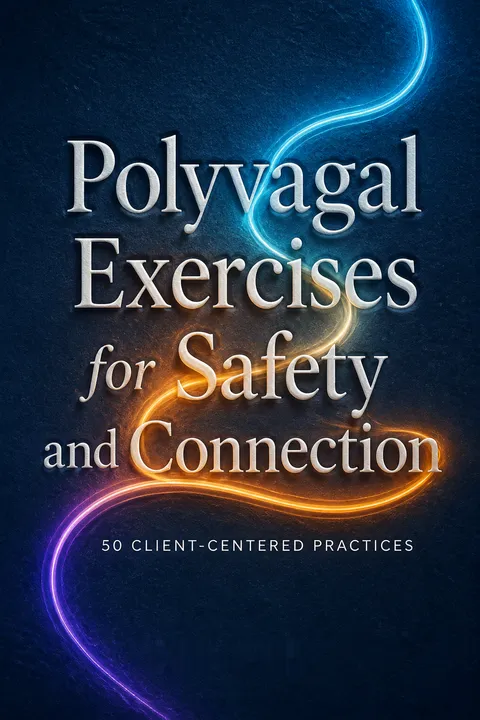
Readers generally found Polyvagal Exercises for Safety and Connection helpful, praising its practical exercises and accessible explanation of polyvagal theory. Many appreciated its usefulness for therapists and individuals seeking self-regulation techniques. Some criticisms included an overreliance on cognitive behavioral therapy approaches and repetition of exercises. Several reviewers noted the book's value for trauma therapy and stress management. Overall, most found it a valuable resource for understanding and applying polyvagal theory, despite a few shortcomings.
People Also Read





Glossary
Polyvagal Theory
Map of autonomic responseA theory developed by Stephen Porges that describes autonomic responses through three broad pathways associated with connection, mobilization, and immobilization. Dana uses the theory to explain how perceived safety or threat can influence bodily state, emotions, behavior, and social engagement. In the book, it serves as a clinical framework for understanding protective reactions and practicing greater flexibility.
autonomic hierarchy
Three patterns of responseWithin the Polyvagal Theory framework, the autonomic hierarchy describes three broad response patterns: ventral vagal social engagement, sympathetic mobilization associated with fight or flight, and dorsal vagal immobilization or shutdown. Dana uses the hierarchy to help clients identify changes in state and understand them as protective responses rather than moral shortcomings.
neuroception
Automatic safety detectionA term used in Polyvagal Theory for the nervous system's detection of cues of safety, danger, or life-threat outside conscious awareness. The cues may come from the body, the physical environment, or interactions with other people. Dana's exercises help clients bring attention to these implicit signals and consider how they influence reactions and interpretations.
co-regulation
Regulation through connectionThe process by which people influence and support each other's regulation through interaction. In Dana's account, responsive relationships provide experiences of safety that help develop self-regulation. Co-regulation does not require perfect attunement: recognizing and repairing moments of mismatch is an important part of building trust and flexibility.
BASIC framework
Five steps for practiceDana's sequence for autonomic exercises: Befriend, Attend, Shape, Integrate, and Connect. It begins with approaching bodily responses with curiosity, builds the ability to notice states and their patterns, and uses repeated practices to develop new responses. The final emphasis is on incorporating those responses into daily life and relationships.
ventral vagal anchor
Reminder of felt safetyA person, activity, place, or moment associated with a felt sense of safety and connection. Dana suggests identifying anchors across these categories and keeping a personal collection for easy recall. An anchor may be experienced directly or brought to mind as a memory, helping a person reconnect with a regulating experience.
glimmer
Brief moment of safetyDana's term for a brief, often overlooked experience associated with ventral vagal safety or connection. Examples include noticing a welcoming expression, a soothing sound, or something pleasing in the environment. Her practice is to recognize the moment, pause, and attend to it, rather than letting it pass unnoticed.
vagal brake
Flexible adjustment of energyA metaphor for the ventral vagal influence on heart rhythm and the regulation of mobilizing energy. Dana describes a functioning vagal brake as allowing a person to engage with a challenge, then return toward calm and connection. Her exercise uses images, movement, and breath to practice adjusting activation in response to manageable challenges.
FAQ
What's Polyvagal Exercises for Safety and Connection about?
- Focus on Autonomic Nervous System: The book delves into the Polyvagal Theory, explaining how the autonomic nervous system affects our sense of safety and ability to connect with others.
- Practical Exercises: It offers 50 client-centered exercises aimed at helping individuals recognize and reshape their autonomic responses to promote safety and connection.
- Therapeutic Application: The exercises are designed for both therapists and clients, enhancing understanding and management of emotional and physiological states for improved mental health.
Why should I read Polyvagal Exercises for Safety and Connection?
- Enhance Therapeutic Skills: Therapists can find valuable tools to incorporate Polyvagal Theory into their practice, aiding clients in managing autonomic states.
- Personal Growth: Readers can apply the exercises to foster self-awareness and emotional regulation, leading to better relationships and well-being.
- Scientific Foundation: The book is grounded in the latest research on the autonomic nervous system, providing a credible source for understanding the link between physiology and emotional health.
What are the key takeaways of Polyvagal Exercises for Safety and Connection?
- Understanding Neuroception: The book highlights neuroception, the body's ability to detect safety and danger without conscious awareness, crucial for recognizing autonomic responses.
- BASIC Framework: Exercises are organized around the BASIC framework (Befriend, Attend, Shape, Integrate, Connect), guiding readers in developing skills for autonomic regulation.
- Integration of Theory and Practice: It bridges theoretical knowledge with practical application, enabling readers to implement strategies that promote safety and connection.
What are the best quotes from Polyvagal Exercises for Safety and Connection and what do they mean?
- “The body will reorganize when it feels safe.”: Emphasizes the importance of safety in facilitating change and healing within the autonomic nervous system.
- “Joy lowers the neural threshold for perceiving life events as being positive and hopeful.”: Highlights the role of positive emotions in enhancing our perception of experiences.
- “The natural healing force within each one of us is the greatest force in getting well.”: Reflects the belief in the body's innate ability to heal when provided with safety and connection.
What is the Polyvagal Theory as explained in Polyvagal Exercises for Safety and Connection?
- Three Autonomic States: The theory describes the autonomic nervous system as having three hierarchical states: ventral vagal (safety), sympathetic (fight or flight), and dorsal vagal (shutdown).
- Evolutionary Perspective: It provides an evolutionary framework for understanding these states, with the ventral vagal system being the most recent and linked to social connection.
- Impact on Therapy: Understanding these states aids therapists and clients in recognizing physiological responses to stress and trauma for more effective interventions.
How does Polyvagal Exercises for Safety and Connection define neuroception?
- Detection Without Awareness: Neuroception is the autonomic nervous system's ability to detect safety and danger without conscious thought, influencing physiological and emotional responses.
- Influence on Behavior: It shapes how individuals respond to their environment, often leading to automatic survival responses based on past experiences.
- Therapeutic Relevance: By bringing neuroception into awareness, clients can learn to identify and reshape their responses, fostering safety and connection.
What exercises are included in Polyvagal Exercises for Safety and Connection?
- Diverse Practices: Includes exercises like "Autonomic Landmarks," "Ventral Vagal Anchors," and "Body Language," each designed to explore autonomic states.
- Structured Framework: Exercises are organized within the BASIC framework, providing a systematic approach to developing skills in autonomic regulation.
- Practical Application: Each exercise comes with clear instructions and intended outcomes, making them easy to implement in real-life situations.
How can I apply the concepts from Polyvagal Exercises for Safety and Connection in my daily life?
- Practice Self-Awareness: Use exercises like the "Daily Tracker" or "Neuroception Notebook" to enhance awareness of your autonomic responses.
- Create Ventral Vagal Spaces: Designate areas that promote safety and connection, incorporating elements that resonate with your ventral vagal state.
- Engage in Regular Exercises: Incorporate exercises like "Finding Glimmers" or "Savoring Snapshots" to cultivate positive experiences and connect with your autonomic responses.
What is the BASIC framework mentioned in Polyvagal Exercises for Safety and Connection?
- Befriend: Focuses on developing a relationship with your autonomic nervous system, recognizing and accepting physiological states with curiosity.
- Attend: Emphasizes tracking and noticing shifts in autonomic states, fostering awareness for better emotional regulation.
- Shape, Integrate, Connect: Guides individuals in reshaping autonomic responses, integrating new patterns, and fostering connections to enhance well-being.
How does Polyvagal Exercises for Safety and Connection address the concept of resilience?
- Building Resilience: Emphasizes that resilience can be learned through experiences of co-regulation and safety, with exercises to strengthen it.
- Vagal Brake: Introduces the vagal brake as a mechanism for regulating emotional responses, with exercises to enhance its function.
- Personalized Resilience Routines: Encourages creating routines that support resilience, helping navigate challenges effectively.
How does Polyvagal Exercises for Safety and Connection define the ventral vagal state?
- State of Safety and Connection: Characterized by feelings of safety, social engagement, and emotional regulation, allowing for healthy interactions.
- Physiological Basis: Linked to the vagus nerve, influencing heart rate and promoting calmness and connection.
- Importance in Therapy: Emphasizes fostering this state in clients to help navigate stress and build resilience.
What role does art play in the exercises presented in Polyvagal Exercises for Safety and Connection?
- Art as a Therapeutic Tool: Engaging with art facilitates emotional expression and enhances the ventral vagal state, promoting safety and connection.
- Creative Exploration: Encourages exploring autonomic experiences creatively, allowing for deeper self-reflection and understanding.
- Connection to Nature: Highlights the importance of nature and art in fostering well-being, suggesting integration into daily practices for emotional regulation.
About the Author


Download PDF
Download EPUB
.epub digital book format is ideal for reading ebooks on phones, tablets, and e-readers.








