

Plot Summary
Prologue
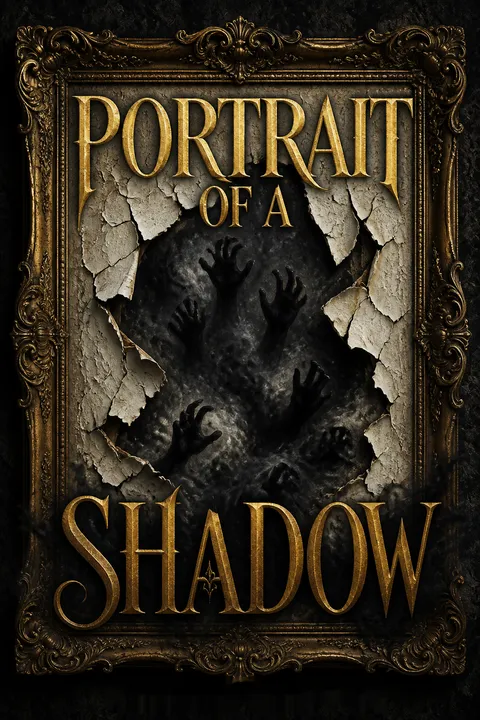
In 1891, painter Delphine Lefroy finishes a self-portrait that feels more vivid than her own reflection. Unable to bear its gaze, she covers it with white paint and leaves the studio.
The gold frame still catches the morning light, but one corner of the paint begins to lift, exposing a blue layer beneath. The painting is left behind, blank to anyone who does not know what lies under its surface.
Delphine’s act of covering her portrait turns concealment into the story’s first physical event. She does not destroy the image; she hides it, leaving the possibility of return embedded in the canvas. The curling corner makes that suppression unstable from the outset. Her unease also links looking with danger: the painting seems to know her too intimately, so she tries to erase the image rather than face it. The prologue offers no explanation, but its small visible flaw gives the later search a concrete beginning.
The Studio Behind the Door
Seven months after her older sister Inez disappears, eighteen-year-old Mae persuades her worried parents to let her pack Inez’s Brooklyn studio before a donation company clears it out. She finds Dev, Inez’s neighbor, tending the plants, and accepts his help despite knowing little about him.
The apartment’s disorder and sealed blackout curtains unsettle her; Inez’s research papers focus obsessively on white paintings. Remembering how her sister once hid a diary beneath a loose floorboard, Mae searches under the rug and finds a notebook dated back four years.
Its last pages sketch a particular gold-framed painting, which she discovers hidden in the closet. A business card tucked into its frame names Boston art dealer Henry Hallward, giving Mae her first lead.
Mae’s investigation begins as an act of care, not confidence in the police. She wants to preserve Inez’s belongings, but the studio makes absence tangible: unfinished laundry, dead plants, and research left midstream. Her childhood knowledge of Inez becomes a practical investigative skill when she recalls the hidden floorboard. At the same time, Dev’s presence exposes the limits of sibling intimacy. Mae thought she knew Inez’s habits and relationships, yet the neighbor knows parts of her life that Mae never saw. The clues therefore do more than launch a mystery; they unsettle Mae’s belief that love means complete knowledge.
The Call She Missed
Mae and Dev set off for Boston, following the card while Mae tries to ignore her guilt about the last time Inez called. At a party the night Inez vanished, Mae had ended her sister’s call to kiss a boy she wanted; she planned to call back the next day. By then, Inez was gone. Mae finally plays the saved voicemail for Dev.
Inez had sounded urgent and uncertain, saying she needed to show or tell Mae something, but the message offers no explanation. Dev comforts Mae without pretending to know what it means. Their shared hope for Inez draws them closer, even as Mae notices his guardedness and begins to feel an attraction she fears will distract her from the search.
The voicemail makes Mae’s guilt specific: she did not simply fail to notice a warning, she chose a romantic moment over returning her sister’s call. That choice cannot be undone, so the search becomes both an attempt to find Inez and a way to keep the missed moment from becoming the last word between them. Dev’s comfort matters because he does not dismiss Mae’s responsibility or claim certainty. Yet his own reticence introduces a parallel problem: both young people are trying to build trust while carrying information they have not shared.
Hallward's Secret Ledger
At Hallward’s gallery, Henry recognizes the white painting and identifies it as the work of Delphine Lefroy, an artist who disappeared after completing it in 1891. He refuses to reveal his clients’ names, even after Mae explains that Inez is missing. Mae slips behind his desk and searches the gallery database while Dev blocks the view.
The record shows that Henry sold the painting to Anthony Mason in 2013, then sold it anonymously in 2023. A note attached to the file says to contact Ravi. Mae writes Mason’s address on her arm, but Henry spots the theft and signals his guard. Mae and Dev escape with the painting and the names, leaving them with a route to the previous owner and a new, unexplained connection to Ravi.
Hallward’s refusal turns Mae’s search from polite inquiry into trespass. Her choice to take the information reflects the urgency created by institutional delay: the police have stopped producing leads, and the gallery’s privacy rules protect a chain of ownership that may matter to Inez. Dev’s role as lookout makes their partnership active rather than merely emotional. The database also expands the mystery in two directions. Anthony Mason offers a person to question, while Ravi’s unexplained appearance in the record suggests that Inez’s research touched a wider history than Mae can yet see.
Ava's Unwelcome Visitor
At Anthony Mason’s estate outside Ottawa, his former wife Ava says he vanished years earlier after a pattern of affairs, though she cannot say where he went. She remembers the white painting as his favorite and describes how he could stare at it for hours. When someone arrives at the door, Dev loses his composure and leads Mae out through the backyard before the visitor can enter.
Mae sees the newcomer clearly enough to recognize his resemblance to Dev: he is Dev’s twin brother, Ravi. Dev refuses to explain why he ran. His silence leaves Mae without the answers Ava might have offered, and the brothers’ encounter makes clear that the painting’s history is also a family history Dev has been keeping from her.
Ava’s account turns the painting from an obscure art object into the focus of an intimate fixation. Her memories of Anthony suggest that looking at the canvas can become consuming, though she herself does not understand why. Dev’s sudden flight is more consequential than Ava’s incomplete answers: Mae sees that he recognizes the visitor and has reasons to hide from him. The resemblance between the twins makes the secret impossible to dismiss as a stranger’s business. Mae’s trust now has a cost, because continuing with Dev means accepting that he may be withholding the very information she needs.
The Notebook Names Dev
At a motel near Montreal, Mae searches Inez’s notebook while Dev sleeps and finds an entry identifying him as the painting’s owner. She wakes him and confronts him with the evidence. Before he can explain, Ravi arrives. The twins fight in the parking lot, and Ravi leaves Dev unconscious before driving away in Mae’s car with the painting, her backpack, and Inez’s packed belongings.
Mae checks Dev’s pulse, cleans his wounds, and takes him to a diner. There, Dev admits that he and Ravi have lived through repeated cycles tied to the painting: when victims are drawn into it, their bodies reset to the age at which the bargain began. He says Ravi made the bargain, giving Mae a partial account that she has no way to verify.
The notebook gives Mae the first hard proof that Dev’s ignorance was an act, and Ravi’s arrival immediately turns that breach of trust into physical danger. Losing the car and Inez’s belongings strips Mae of the safety she had built around the search, but the notebook survives. Dev’s confession offers a framework for the strange evidence, yet his explanation also asks Mae to accept his version of a history she cannot check. The scene’s emotional hinge is not simply that Dev lied. Mae must decide whether his injuries and apparent vulnerability make him trustworthy, or whether they are another reason to keep asking questions.
The Phone Leads Home
After Dev recovers enough to move, Mae and Dev search Ravi’s abandoned truck and find cash, several passports, and Inez’s. Mae also finds the keys and realizes her stolen phone can be tracked through its locator app. They cross back into the United States using Inez’s passport for Mae, then follow the phone’s signal until it stops beside a Vermont road.
Dev recognizes the region as the place where he grew up and concludes that Ravi is heading toward Rowan Manor, the family estate he has avoided for more than a century. They drive there in Ravi’s truck. On the approach, Mae chooses to kiss Dev, then follows him into the overgrown greenhouse, where a light reveals someone waiting among the plants.
The truck search converts the loss of Mae’s car into a new route forward. Inez’s passport is both evidence of her connection to Ravi and a means of crossing the border, while the phone tracker turns a discarded object into a trail. Dev’s recognition of Vermont adds an emotional dimension to the pursuit: the next destination is not only Ravi’s likely refuge but the home Dev has spent generations avoiding. Mae’s kiss does not resolve her distrust; it shows that intimacy and suspicion are advancing together. By entering the greenhouse, she chooses to face the past rather than wait outside it.
A Bargain Beneath Rowan
In the greenhouse, Ravi tells Mae that Dev’s diner story reversed their roles. In 1891, Dev, Ravi, and their friend Niklaus Rowan followed a shadowy woman’s promise to Delphine’s painting. Dev wanted to escape death and accepted a bargain that tied the twins’ lives to sacrifices made through the canvas.
The first victim was Nik, whom Dev knowingly surrendered despite loving him; Ravi opposed the choice. In the present, Ravi says he and Inez had planned to take the painting from Dev without sacrificing anyone.
He loved Inez, but she broke with him after feeling used. Dev admits that he knew Inez might be drawn into the painting and had given it to her anyway. Mae realizes her sister is trapped inside it, and that Dev’s pursuit of the canvas was never the rescue he claimed.
The revelation changes the moral shape of the story. Dev’s longevity is not merely a punishment imposed by Ravi; it began with Dev’s own decision to purchase escape at Nik’s expense. Ravi is implicated too, but his account distinguishes complicity from choice, and the twins’ shared curse has preserved their conflict rather than settling it. Inez’s relationship with Ravi complicates Mae’s assumptions about both of them. She was not simply a scholar who stumbled into danger, nor only a victim in someone else’s feud. Yet the precise extent of her knowledge remains uncertain, leaving Mae with grief and unanswered questions at once.
The Portrait Takes Dev
Furious at Dev, Mae attacks him as the twins resume their fight. She crawls toward the painting, determined to take it and search for a way to free Inez. When she stumbles, her hand catches the peeling corner. The paint parts enough for Mae to hear Inez among the trapped voices and glimpse her sister’s eyes beneath the white surface.
Dev’s own painted likeness then reaches out and drags him into the canvas. Ravi tries to hold on to his brother, but loses his grip. From inside the painting, Dev is forced to take up a brush and cover the exposed image with white paint. The voices fall silent; Inez remains imprisoned, and Dev joins the people sealed behind the canvas.
The climax makes Mae’s love for Inez both a source of courage and a danger: she reaches for the one visible opening without knowing how the painting works. The brief sight of Inez rewards her search, but not with rescue. Dev’s capture reverses his old bargain: the man who once chose survival at another person’s expense is now unable to control his own body or escape the canvas. His forced whitewashing is especially cruel because it conceals the evidence Mae has just uncovered. The painting preserves desire by turning it into an image, then denies the living any reliable way to retrieve what they want.
The Canvas Goes With Mae
With Dev gone, Ravi lets Mae keep the painting after she insists she will search for a way to free Inez. He explains that Inez had studied stories in which darkness, deep desire, and a powerful object might summon the shadowy woman who made the original bargain.
Mae connects that theory to Inez’s nailed-up blackout curtains and the repeated notes in her hidden notebook. Ravi also reveals that the inscription in Inez’s copy of The Picture of Dorian Gray was his, a trace of their relationship.
He apologizes for involving her, but Mae does not tell him what she suspects about Inez’s independent research. She leaves with the painting and notebook, choosing to pursue the rescue herself rather than let Ravi destroy the canvas or end his own life.
Mae’s decision keeps the ending unresolved without leaving her passive. Ravi offers an ending shaped by his own exhaustion, but Mae refuses to let his need for absolution determine Inez’s fate. The clues about darkness give her a possible method, not a guarantee, and she protects that fragile possibility by withholding her suspicions from Ravi. Her departure also marks a shift in how she understands responsibility. She can love Inez without pretending she can control the outcome, and she can choose a future without waiting for her family to become stable first.
Chicago Holds the Question
The closing glimpse moves years ahead. Mae takes the painting with her to Chicago and continues Inez’s research into strange objects and stories about the shadowy woman. She keeps the canvas close but does not pull back its peeling corner. The painting remains inhabited by the people trapped inside, including Inez and Dev, and Mae sometimes senses their presence behind the white surface.
She waits to offer her parents hope until she can support it with proof. The story ends with no escape from the painting yet, but Mae has chosen a life organized around finding one. The search that began in a cluttered Brooklyn studio has become a long commitment rather than a two-day drive.
The final glimpse refuses the easy comfort of a solved mystery. Mae’s years of research preserve hope while recognizing that hope alone cannot justify disturbing the painting again. Her restraint contrasts with the impulsive bargain and desperate curiosity that have repeatedly exposed people to its power. Taking the painting to Chicago also converts Inez’s unfinished work into Mae’s chosen vocation, linking grief to an emerging future rather than freezing Mae in the moment of loss. The ending leaves the rescue uncertain, but makes Mae’s agency clear: she will not confuse possession of the clue with possession of the answer.
Epilogue
Years later, Mae brings the painting to Chicago and continues investigating the shadowy woman and the objects associated with her. She does not pull back the curled edge again, though she knows Inez and Dev remain inside.
Instead, she keeps the canvas near while gathering evidence, unwilling to give her family hope before she can prove that a rescue is possible. The painting stays closed, but the search continues.
The closing interlude extends the consequence of Mae’s choice beyond the immediate danger. She does not mistake proximity to the painting for control over it; keeping it closed becomes an act of patience rather than surrender. Her research also gives her a future that is not simply an extension of her parents’ expectations. She carries Inez’s work forward while allowing uncertainty to remain. The ending’s hope is therefore disciplined: Mae believes an answer may exist, but she refuses to promise a rescue she cannot yet deliver.
Analysis
Portrait of a Shadow makes the desire to escape consequence its central horror. The painting offers a way out of illness, aging, grief, or powerlessness, but it does not erase suffering; it redistributes it. Dev’s bargain binds his survival to other lives, and the generations-long cycle preserves the original choice rather than allowing it to pass into history. The canvas literalizes a familiar psychological defense: what cannot be faced is covered over, not resolved. Its blank surface is therefore both concealment and invitation.
Mae’s investigation develops a counter-ethic. She begins by believing that persistence will bring Inez back, and her guilt makes that belief almost compulsory. As she discovers Inez’s secrets and Dev’s betrayals, she has to separate love from the fantasy of total knowledge. She cannot undo the missed call, control her parents’ marriage, or force Inez’s rescue. What she can do is make choices about what to pursue and what future to claim. Her decision to keep researching, rather than promise an easy solution, gives hope a form sturdy enough to survive uncertainty.
The relationships deepen this argument. Dev and Ravi are twins bound together by a bargain one brother chose and the other never wanted; their shared longevity turns resentment into a life sentence. Inez and Ravi’s relationship reveals how easily an urgent cause can make a person feel used, even when love is real. Mae and Dev’s attraction grows amid secrets, so tenderness never functions as proof of innocence. Across these bonds, the novel asks whether protection becomes another kind of control when it withholds truth. Its answer is uneasy but precise: care requires responsibility, yet it cannot make another person’s choices on their behalf.
Review Summary
Portrait of a Shadow received mixed reviews, with an average rating of 3.30 out of 5. Many readers found the concept intriguing but felt the execution was lacking. The dual timeline and diverse characters were praised, but some found the plot predictable and character development weak. Several reviewers noted that the second half of the book was stronger than the first. While some enjoyed the mystery and twist ending, others felt the horror elements were underwhelming. Overall, opinions were divided on the book's strengths and weaknesses.
People Also Read





Characters
Mae
The searching younger sisterMae is eighteen, an observant artist who has spent months trying to keep her worried parents from falling further apart after Inez disappears. She loves her older sister deeply, but her devotion carries guilt: she ignored Inez’s final call while caught up in a moment of romantic attention. Mae is quick to notice physical details and willing to act on incomplete evidence, though anxiety often makes her second-guess herself. Her central struggle is not a lack of desire, but the fear that choosing her own future will hurt the people around her. Inez’s disappearance forces Mae to investigate both the mystery and the habits of self-denial that have kept her life small.
Inez
The absent art historianInez is Mae’s older sister, an art-history graduate student whose independence strained her relationship with their Tunisian American parents. She is curious, self-directed, and capable of keeping parts of her life private, even from the sister she loves. Her research into white paintings began years before her disappearance, suggesting a sustained fascination rather than a last-minute academic project. Inez’s affection for Mae includes a clear respect for her uncertainty about the future; she does not try to force Mae into a ready-made plan. Her absence reshapes the family and turns her notebooks, possessions, and past relationships into the only map Mae has.
Dev
The guarded neighborDev is Inez’s neighbor, a young man with a cane, a sharp eye for other people, and a history he is reluctant to explain. He is attentive and often gentle, but his silences complicate every attempt to trust him. His strained relationship with his twin brother and his long experience of family illness have shaped a person who can be both compassionate and evasive. Dev understands what it means to feel trapped by circumstances, yet he does not always distinguish protecting someone from deciding what they are allowed to know. Mae’s search brings his buried past into the open and tests the kindness he shows her.
Ravi
Dev's estranged twinRavi is Dev’s twin brother, a resourceful man whose history is knotted with Dev’s and whose presence unsettles Mae from their first encounter. He can be charming and composed, but he also carries old anger and a strong desire to direct events before they can hurt him. His relationship with Inez gives him a connection to Mae’s search that predates her arrival. Ravi’s practicality helps him survive, yet his habit of treating people as pieces in a plan has damaged his closest relationships. He is neither a simple guide nor an uncomplicated enemy; his version of the past is shaped by genuine grief and self-interest.
Niklaus Rowan
The artist among the twinsKnown as Nik, he is the Rowan family heir and a close childhood friend of Dev and Ravi. A sensitive observer, he studies plants and draws the people and places around him. His friendship with the brothers crosses a sharp divide in class: he belongs to the estate, while they are the gardener’s sons. Nik’s family pressures him to abandon the interests that make him feel most like himself. His quiet generosity and perceptiveness help him recognize what Dev and Ravi cannot comfortably say about their loyalties.
The woman with no name
The shadowed bargain-makerA mysterious figure associated with darkness, desire, and impossible bargains, she appears to people whose wants have become difficult to contain. She can seem almost human, yet her shifting shadows and knowledge of private longing make her presence unsettling. She offers no simple gifts: what she gives is bound to a cost. The woman’s power lies partly in exposing what people most want, including desires they have tried to disguise from themselves.
Henry Hallward
The gallery's guarded ownerHenry Hallward is a Boston art dealer who has handled the white painting more than once. He is protective of his clients’ privacy and speaks about the artwork with the confidence of a collector who believes its history matters. His records provide Mae with her first traceable chain of ownership.
Ava
Anthony Mason's former wifeAva is Anthony Mason’s former wife, living amid the wealth he left behind. Sharp and unsentimental, she describes their marriage as a life of material comfort and repeated infidelity. The white painting remained a source of anger because Anthony fixed his attention on it. Ava is candid about what she knows, but has no desire to reopen her connection to him.
Mae's parents
An anxious householdMae’s Tunisian American parents have spent months searching for Inez while struggling with the cost of keeping her apartment and with their own unresolved conflict. Their fear for Mae becomes overprotectiveness, making it difficult for her to take ordinary steps toward independence. They love both daughters, but their expectations about education, family duty, and living away from home have helped create the distance that shaped Inez’s departure.
Plot Devices
The White Expanse
A bargain made visibleDelphine Lefroy’s gold-framed white painting appears blank, but its layered, curling surface conceals images and people. It passes through galleries, private homes, and Inez’s apartment before becoming the focus of Mae’s search. Its peeling edge invites a viewer to look beneath the surface, while its power links desire to sacrifice. The painting is not merely a clue or a container: it makes the act of wanting something visible, then turns that desire into a danger that can outlast the person who felt it.
Inez's hidden notebook
A map through obsessionHidden beneath a loose floorboard in Inez’s Brooklyn studio, the notebook records years of research into white paintings and Delphine Lefroy. Its increasingly frantic entries connect the painting to a chain of owners and to stories of a woman associated with darkness. The notebook gives Mae a way to trace Inez’s investigation, but its difficult handwriting and missing context prevent it from becoming a complete explanation. It preserves Inez’s intelligence and private reasoning while also showing how thoroughly the mystery occupied her life.
The curling corner
Curiosity becomes a thresholdA corner of the painting’s white surface has begun to lift, revealing color beneath. Its changing appearance draws attention from Mae, Dev, and earlier owners. The edge is the visible invitation into the painting’s hidden layer, but touching it carries consequences that the characters do not fully understand. Its gradual peeling also gives the mystery a physical clock: the painting’s surface changes as its power and the lives connected to it shift.
The Picture of Dorian Gray
A private message in printA first edition of Oscar Wilde’s novel lies open in Inez’s apartment, carrying a personal inscription that links the book to someone from her hidden life. Mae later recognizes that the inscription points toward Ravi. The book quietly connects Inez’s private relationships to the painting’s history, while its interest in art, appearance, and the costs of preserving youth echoes the larger mystery. It serves as a clue without explaining the people or events behind it.
Download PDF
Download EPUB
.epub digital book format is ideal for reading ebooks on phones, tablets, and e-readers.








