

Key Takeaways
Watch how power changes form, not just who holds it
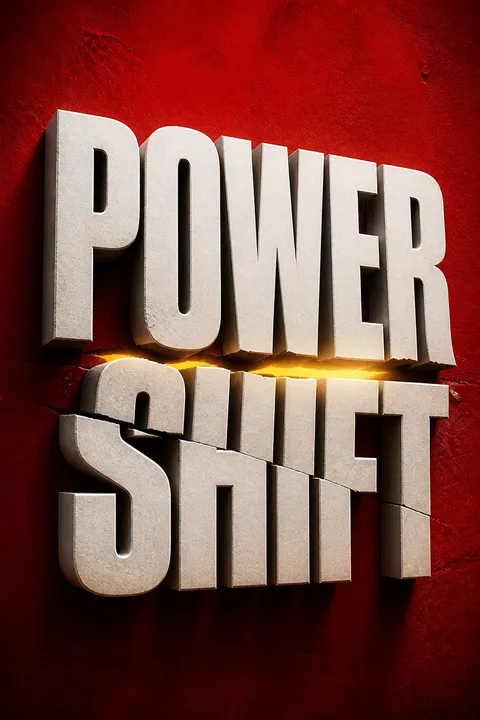
A deeper transfer. A routine transfer of power puts a new person or institution in charge. A powershift changes the tools and rules by which power works. Toffler traces that change through apparently separate events: patients challenge doctors, once-dominant corporations falter, and the Soviet empire loses its grip. A common thread, he argues, is the transition from industrial production to an economy organized around information and knowledge.
The old order fractures. Industrial society concentrated authority in large corporations, government bureaucracies, and professional gatekeepers. As communication spreads and economic activity becomes more complex, their command weakens. This is not simply a story of new winners replacing old ones. The structure of influence itself is being remade, from the workplace to world politics.
The book’s most useful move is to treat change as connected rather than as a pile of unrelated headlines. That approach resembles systems thinking: a shift in one part of a network can alter incentives and authority elsewhere. It encourages readers to look for shared causes beneath institutional crises. The risk is that one large explanation can make different events seem more unified than they are. The model works best as a map for asking questions, not as a claim that every upheaval has one cause.
Use knowledge to shape choices before force or money is needed
Three levers of control. The power triad is Toffler’s model of social power: violence, wealth, and knowledge. Violence can punish or threaten. Wealth can reward as well as punish. Knowledge can do both, but can also persuade people to accept a course of action or help prevent a conflict altogether. The three tools can be converted into one another: money can buy information, while information can help direct money or force.
Quality beats quantity. Toffler calls knowledge the highest-quality power because it can achieve a goal with fewer resources and more flexibility. His examples range from a government using law backed by force to a parent shaping a child’s values. Power, in this account, is the ability to influence what people do, whether in a family, business, or state.
This framework clarifies why influence is not measured only by budgets, weapons, or formal rank. In negotiation, for example, information about each side’s needs can create options that a threat cannot. The framework also connects to behavioral science: people can be guided by how choices are framed, what information is available, and whom they trust. Still, knowledge is not automatically humane or efficient. Persuasion can become manipulation, and the person who defines what counts as knowledge can exercise power without appearing to do so.
Treat ideas and information as productive assets, not corporate overhead
Wealth moves from matter to symbols. In an agricultural economy, land was the central asset. Industrial wealth rested on machines, factories, and raw materials. In the emerging economy Toffler describes, a company’s value increasingly depends on its people’s expertise, organization, design, and ability to use information. Capital itself becomes more abstract, represented by paper claims, electronic records, and financial instruments built from other claims.
Knowledge replaces inputs. Information can reduce the need for inventory, materials, energy, time, and money. Merloni, an Italian appliance maker, used computer links and better production information to cut inventory costs by 60 percent while increasing output. The point is not that factories disappear. Manufacturing becomes more knowledge-intensive, so fewer workers may produce the same or greater output.
Toffler’s account anticipates a central challenge in modern accounting: organizational know-how and data can create value while remaining hard to measure or own. The idea that knowledge can be reused also distinguishes it from a physical input that one user consumes. Yet calling knowledge inexhaustible can obscure its limits. Attention, skilled labor, reliable data, and time to learn are scarce, and digital systems require costly infrastructure. The insight is strongest when it shifts attention from head counts and tangible assets to the capabilities that let an organization combine them.
Follow the customer data to find where bargaining power is moving
A barcode changes the deal. Supermarket scanners began as a way to speed checkout and reduce accounting errors. Once retailers could track sales item by item, they gained information that manufacturers had long controlled through advertising and sales networks. Stores could judge which products earned shelf space, set terms for suppliers, and charge for prominent placement. By the late 1980s, barcodes covered about 95 percent of U.S. food items.
Customers supply value too. A purchase reveals brands, timing, combinations of goods, and, when linked to a payment card, personal details. Retailers and manufacturers can use these records to infer customer patterns and target offers. Toffler calls attention to the consumer’s second contribution: not just money, but useful information. The unresolved questions are who controls that data, who profits from it, and whether the customer receives any return.
The checkout counter shows how infrastructure quietly reallocates power. A scanner is not merely a convenience; it changes who can observe demand and negotiate from evidence. This connects to the economic idea of information asymmetry, where one party’s advantage comes from knowing more than another. The consumer-data question remains sharper than the book’s early examples suggest: collection can improve matching and reduce waste, but it can also enable surveillance and unequal treatment. Efficiency is not a substitute for rules about consent, access, and accountability.
Rebuild organizations around changing information, not fixed departmental boxes
Bureaucracy stores knowledge in boxes. Toffler describes departments as cubbyholes that hold specialized information, while managers control the channels through which it moves. This arrangement can work when markets and jobs change slowly. In a turbulent environment, information becomes outdated, new problems cross department lines, and formal reporting routes clog. Employees then use unofficial contacts or back channels, while turf disputes delay decisions.
Allow connections to change. Newer relational and hypermedia databases let users link information in different ways rather than forcing it into a single fixed hierarchy. The goal is freer access and unexpected combinations. A designer might need to connect technical records with customer feedback, costs, and transport schedules. This can support discovery, but it also shifts power away from specialists and managers who once controlled separate stores of information.
The argument is a strong organizational counterpart to the book’s economic thesis: structures built for stable tasks become costly when knowledge is dispersed and perishable. Modern collaboration tools make cross-functional work easier, but software alone does not remove political bottlenecks. Access can remain unequal, and unstructured information can overwhelm attention. A useful test for redesign is whether the people closest to a problem can find relevant knowledge and act on it, while retaining clear responsibility for decisions.
Give skilled workers information and authority to solve problems where they arise
Thinking moves closer to the work. Industrial factories often divided managers who planned from workers who followed instructions. Knowledge-intensive production weakens that separation because technologies change quickly and workers must understand more than one repetitive task. At a General Electric plant in North Carolina, production teams made scheduling, hiring, and repair decisions. The plant cut worker-hours per unit by two thirds and reduced delivery time by 90 percent.
Autonomy has a business logic. A worker who can spot a defect, adjust a process, or share an improvement may prevent delays that a distant supervisor cannot see in time. As jobs become more specialized, employees are also harder to replace. Toffler argues that this makes individual skill a source of bargaining power, not merely an input purchased by the employer.
The case links workplace voice to operational performance rather than treating participation as a decorative benefit. It also fits research on distributed cognition, the idea that problem-solving depends on people, tools, and local context rather than on a single expert at the top. Autonomy is not suitable for every task, and handing workers responsibility without training, influence, or fair compensation can simply transfer risk downward. The key distinction is between meaningful decision rights and management asking employees to absorb extra duties while keeping control.
Mix organizational forms instead of forcing every team into one hierarchy
The flex-firm varies its structure. A flex-firm is Toffler’s proposed organization made of different units suited to different tasks. It may include a stable administrative bureaucracy, a temporary project team, a family-run business unit, and an autonomous research group. The U.S. Census Bureau offers one example of a pulsating organization: it expands dramatically to conduct a census, then shrinks back to a small permanent staff.
Power forms a mosaic. Inside companies, profit centers and smaller teams gain room to act. Outside them, suppliers, customers, and partners create value through relationships. The Atlanta airport, with tens of thousands of workers across airlines, services, and public agencies, illustrates wealth produced by coordination among organizations rather than by one company alone. A network can help, but it is not a universal answer.
Organizational variety is a useful alternative to the familiar choice between rigid hierarchy and total informality. Contingency theory makes a similar point: structures should fit the uncertainty and coordination needs of the work. The mosaic image also directs attention to relationships that accounting statements often miss. But variety has costs. Different units can compete, duplicate work, or lose a shared sense of responsibility. Flexibility works when leaders make boundaries, accountability, and cooperation explicit rather than assuming that looseness will organize itself.
Question how political data were made before trusting the number
Information arrives pre-shaped. Toffler calls familiar political maneuvers such as secrecy, leaks, and source concealment info-tactics. He calls subtler interventions meta-tactics: changing the assumptions, categories, or models that shape data before decision-makers see it. A statistic can look neutral while reflecting contested choices about what to count and how to classify it.
Measurement carries consequences. Census estimates, for example, can affect funding and representation. When information is missing, the Census Bureau used a method that inferred characteristics from nearby households. That choice could change how many seats a state received in Congress. To assess a claim, readers should ask who collected the data, what was excluded, how categories were designed, and which assumptions produced the final figure.
This is an enduring lesson in statistical literacy: numbers do not speak without definitions, sampling decisions, and models. It also resonates with the sociology of measurement, which studies how indicators shape the institutions they claim merely to describe. Suspicion alone is not enough, however. A model can be imperfect yet more accurate than an uncorrected count, and transparency does not guarantee public understanding. The practical aim is to make assumptions inspectable and contestable, not to dismiss quantitative evidence as inherently political.
Protect plural media and broad access as foundations of democratic power
Communication can break a monopoly. Toffler contrasts mass media, which send similar messages to large audiences, with a more varied system of channels and formats. During political upheavals in Eastern Europe and China, video, fax, satellite broadcasts, and foreign reporting helped circulate images and accounts that authorities tried to suppress. In the Philippines, television coverage of an election dispute also influenced opinion abroad and put pressure on the government.
More channels mean more choice. This expanded media environment can help citizens compare accounts and organize across borders. But it can also fragment audiences and make shared facts harder to establish. Toffler’s political argument is that mass democracy must adapt to diverse groups and fast-moving issues, rather than assume a single public voice or a few dominant broadcasters.
The book persuasively treats communication systems as political infrastructure, not simply entertainment. A recording can make an abuse visible, while a network can let dispersed people recognize common concerns. At the same time, multiplicity alone does not guarantee informed participation. More channels can amplify rumor, reinforce isolated audiences, or concentrate attention around the most emotionally charged material. Democratic resilience therefore depends not only on access, but on verification, media literacy, and institutions that preserve room for disagreement without treating every claim as equally credible.
Build knowledge speed, because cheap labor and raw materials lose leverage
The fast and the slow. Toffler predicts a widening divide between economies that can move information, decisions, and products quickly and those that cannot. As companies value rapid delivery and flexible production, low wages alone become less attractive. A shirtmaker that can replenish stores in days may beat a distant supplier whose orders require months of planning. Knowledge can also reduce the need for bulk materials and inventories.
Industrial planning can become a trap. The book connects this shift to developing countries that rely on commodity exports or labor-intensive factories, and to socialist economies whose centralized planners struggled to gather and act on local information. Its prescription is to build education, communications, and the capacity to learn, rather than assuming that cheap inputs will guarantee development.
The speed argument usefully broadens competitiveness beyond hourly wages to include logistics, feedback, and decision quality. It also points toward a distributional danger: regions that lack infrastructure can be excluded even when their workers are capable. The framework should not be read as saying every economy must copy the same technology path. Institutions, public investment, and local priorities shape what kinds of speed are useful. Economic development requires access to knowledge and the ability to apply it, not speed for its own sake.
Include powerful nonstate actors when designing global rules
States no longer act alone. Toffler calls powerful forces outside national governments Global Gladiators. He includes transnational corporations, religious movements, criminal networks, and other organizations with cross-border reach. Their resources and communications can rival those of governments, while their leaders may be harder to identify or hold accountable. The Rushdie affair illustrates a religious authority claiming influence over people and laws beyond its own country.
Governance must match the new players. Global finance, media, and business networks cross borders faster than many national institutions can respond. Toffler argues that international arrangements designed only for governments may no longer fit. New rules must address nonstate power while protecting civil liberties and preventing corporations, religious authorities, or criminal groups from gaining unaccountable control.
The move beyond a state-only picture of world politics is one of the book’s most prescient themes. Cross-border organizations can provide services, expertise, or solidarity that governments cannot, but they can also evade public oversight. The difficult design question is representation: participation in rule-making should not automatically become an entitlement to govern. A durable global system would need transparent obligations, avenues for affected communities to challenge decisions, and safeguards against treating wealth or reach as a substitute for legitimacy.
Analysis
Powershift is best read as a systems argument about the relationship among technology, economic production, and authority. Its central claim is not simply that information matters more in a new economy. It is that changing how wealth is produced changes where knowledge sits, how institutions coordinate, and who can influence decisions. The book’s connective method is its strength: the barcode at a supermarket, a factory team’s authority, computer standards, and the breakup of a political bloc become examples of the same structural transition.
The power triad gives the argument a memorable backbone. Violence, wealth, and knowledge are not treated as isolated resources, but as tools that amplify and convert into one another. This helps explain why information control can matter even where no explicit censorship occurs: access rules, data categories, technical standards, and models can quietly determine what choices are visible.
The framework also has limits. The text sometimes treats the knowledge economy as a broad historical wave, which risks understating persistent material constraints and the uneven distribution of its benefits. Information may be reusable, but expertise, attention, infrastructure, and the labor that maintains systems remain scarce. Likewise, proliferating communication channels can weaken centralized control without automatically producing democratic judgment. The author’s own evidence about political manipulation points to that tension.
Written in 1990, the book’s examples are period-specific, but its questions travel. Contemporary platforms, cloud services, and artificial intelligence sharpen the same issues: who controls the systems that classify information, who can audit their assumptions, and how much authority should be delegated to automated processes? Toffler’s most durable contribution is a habit of analysis: when power appears to move, inspect the knowledge systems beneath it. Ask who can see, interpret, distribute, and alter the information on which decisions depend. Then ask whether the resulting order is necessary for collective life or merely advantageous to its gatekeepers.
Review Summary
Powershift is highly regarded for its prescient analysis of how knowledge and information are becoming the primary sources of power in the modern world. Readers praise Toffler's insights into changing power dynamics, the impact of technology, and the shift towards a knowledge-based economy. Many find the book's predictions remarkably accurate decades later. While some consider it dated, most appreciate its enduring relevance in understanding global politics, economics, and social structures. The book is seen as essential reading for those interested in futurism and societal change.
People Also Read









Glossary
Powershift
Change in power’s natureA powershift is more than a transfer of control from one person or institution to another. It is a fundamental change in the kinds of tools used to exercise power and in how those tools work together. Toffler argues that the growing role of knowledge transforms the relationship among force, wealth, and influence.
Power triad
Force, wealth, and knowledgeThe power triad is Toffler’s model of the three primary tools used to influence people: violence or force, wealth, and knowledge. Force can punish, wealth can reward or punish, and knowledge can persuade, inform, or help avoid conflict. The tools can reinforce or convert into one another, and Toffler ranks knowledge as the most flexible.
High-quality power
Efficient, flexible influenceHigh-quality power achieves an intended result while using fewer resources and offering more flexibility. Toffler contrasts brute force, which mainly punishes, and wealth, which can reward or punish, with knowledge, which can also persuade, prevent conflict, or turn an opponent into an ally. The term describes the quality of a power tool, not whether its use is ethical.
Super-symbolic economy
Knowledge-centered wealth creationToffler’s term for an economy increasingly dependent on data, information, symbols, and specialized knowledge to create wealth. It includes computerized production, customized goods, rapid communication, and services that add value through coordination and expertise. It does not mean manufacturing disappears; rather, production itself becomes more information-intensive.
Extra-intelligence
Networks that transform messagesExtra-intelligence describes communication networks that do more than transmit a message unchanged. They can combine incoming data with other information, analyze it, and deliver an altered or enhanced result. Toffler uses Value Added Networks as an example and warns that embedded software assumptions can influence outcomes while remaining difficult for users to see.
Meta-tactics
Manipulation of data assumptionsMeta-tactics are power maneuvers that shape information at a deeper level than familiar tactics such as secrecy or leaks. They influence what enters a data set, how information is categorized, which variables a model uses, or how those variables are weighted. The resulting numbers may appear neutral even though choices made upstream affect political decisions.
Flex-firm
Organization with varied structuresA flex-firm is Toffler’s proposed organization that combines different arrangements for different kinds of work. It may contain bureaucratic functions alongside temporary project teams, autonomous units, family businesses, or networks. The model rejects the assumption that every task should use the same hierarchy, while retaining the need for coordination and accountability.
Power-mosaic
Power distributed through relationshipsA power-mosaic is an economic structure in which authority and value are distributed across interacting units rather than concentrated in a single corporate hierarchy. Profit centers, small firms, suppliers, customers, and alliances can all contribute. Power depends on the relationships and information links among them, not simply on the size of the largest organization.
Mosaic democracy
Politics of diverse constituenciesMosaic democracy is Toffler’s name for political life shaped by many varied, shifting groups rather than a few large, stable mass constituencies. Customized markets, diverse media, regional interests, and identity-based movements make coalitions harder to assemble and maintain. The idea highlights both greater political choice and the risk that small groups can gain disproportionate influence.
Pivotal minorities
Small groups with outsized influencePivotal minorities are small groups that can exert influence disproportionate to their size, particularly when political systems are unstable or majorities are divided. Media attention, outside support, or strategic timing can amplify them. Toffler emphasizes that such groups may advance constructive causes or undermine democratic institutions.
The fast and the slow
Economies divided by response speedToffler’s phrase for the widening divide between economies able to exchange information, make decisions, and deliver products quickly and those that cannot. In the fast economy, speed and coordination can outweigh low wages or access to raw materials. The distinction describes economic capacity, not a simple moral ranking of nations.
Global Gladiators
Powerful cross-border actorsGlobal Gladiators are organizations or movements that exercise substantial influence across national borders without being ordinary nation-states. Toffler includes transnational corporations, religious movements, and criminal networks. Their reach can challenge government authority, while their distance from national institutions makes questions of representation, accountability, and legal control harder to resolve.
FAQ
What's Powershift: Knowledge, Wealth, and Power at the Edge of the 21st Century about?
- Exploration of Power Dynamics: Alvin Toffler's Powershift examines the transformation of power in society, focusing on the shift from traditional sources like violence and wealth to knowledge.
- Historical Context: It is the final part of a trilogy that includes Future Shock and The Third Wave, each addressing different aspects of societal change.
- Emerging Conflicts: The book highlights the conflicts arising from the clash between old power structures and new forms of power, particularly in business and politics.
Why should I read Powershift by Alvin Toffler?
- Understanding Modern Dynamics: The book provides insights into the fundamental changes occurring in society due to technological advancements and the information age.
- Strategic Insights for Businesses: It offers valuable perspectives for business leaders on navigating the complexities of a post-bureaucratic world.
- Cultural and Political Relevance: Toffler's analysis extends beyond business to include cultural and political implications, making it relevant for anyone interested in governance and societal organization.
What are the key takeaways of Powershift?
- Knowledge as Power: The book emphasizes that knowledge is now the most critical resource for wealth creation and social progress.
- Shift from State to Individual: Power is shifting from centralized state control to individual empowerment, facilitated by technology and communication.
- Potential for Chaos: Toffler warns that without proper management of these power shifts, societies could descend into chaos.
What are the best quotes from Powershift and what do they mean?
- "Knowledge itself is power.": This encapsulates the book's thesis that access to knowledge is a key driver of power in the modern world.
- "A powershift does not merely transfer power. It transforms it.": Highlights the transformative impact of knowledge on societal structures.
- “The new wealth-creation system will compel politicians...to rethink all political ideas developed during the smokestack era.”: Suggests a paradigm shift in political thought as societies transition to a knowledge-based economy.
How does Powershift define the Powershift Era?
- Definition of the Era: Characterized by the disintegration of traditional power structures and the rise of new forms of power based on knowledge and information.
- Global Implications: This shift is occurring at all levels of society, from local businesses to global politics.
- Conflict and Change: Marked by conflict, as established powers resist changes brought about by new knowledge-based systems.
What is the "flex-firm" concept in Powershift?
- Definition of Flex-Firm: An organization that embraces flexibility in its structure and operations, allowing it to adapt quickly to changing market conditions.
- Diverse Organizational Forms: Flex-firms can incorporate various organizational styles, reflecting the diverse needs of the modern economy.
- Enhanced Communication: They prioritize open communication and collaboration, fostering a culture of creativity and responsiveness.
How does Powershift address the decline of bureaucracy?
- Critique of Bureaucratic Structures: Toffler critiques traditional bureaucratic organizations for their rigidity and inability to adapt to rapid changes.
- Emergence of New Models: Discusses the rise of alternative organizational models, such as family firms and decentralized units.
- Need for Adaptability: Emphasizes that organizations must become more adaptable and less reliant on bureaucratic processes.
What role does technology play in Powershift?
- Catalyst for Change: Technology is portrayed as a driving force behind the transformation of society, influencing how knowledge is created, shared, and utilized.
- Information Overload: Highlights the challenges posed by the sheer volume of information generated by modern technologies.
- New Communication Channels: Discusses how technology facilitates new forms of communication and collaboration.
What is the "information divide" mentioned in Powershift?
- Definition of Information Divide: Refers to the gap between those who have access to information and knowledge and those who do not.
- Impact on Employment: As the economy becomes more knowledge-based, the skills required for employment are increasing, exacerbating social inequality.
- Cultural Understanding: The divide also encompasses cultural knowledge, essential for navigating modern society.
How does Powershift define the new alliance in the knowledge-based economy?
- Coalition of Interests: Described as a coalition between intellectuals, scientists, artists, and business leaders.
- Rethinking Political Ideas: This alliance will lead to a rethinking of political ideas developed during the industrial era.
- Mutual Benefit: Recognizes the importance of knowledge for economic advancement, fostering innovation and adaptation.
What is the "K-Factor" in Powershift?
- Definition of K-Factor: Refers to the role of knowledge as a critical source of power in global dynamics.
- Impact on Global Power Shifts: A key driver behind the fragmentation of power in the world, affecting traditional powers and new economic players.
- Knowledge as a Competitive Advantage: Underscores the importance of knowledge in maintaining competitive advantages in military and economic contexts.
How does Powershift suggest societies can avoid descending into chaos?
- Emphasizing Education and Access: Advocates for a focus on education and universal access to information technology.
- Encouraging Freedom of Expression: Stresses the importance of protecting freedom of expression to promote innovation and dissent.
- Building New Political Structures: Suggests new forms of political organization, such as electronic parties and interactive governance, to engage citizens effectively.
About the Author
Other books by Alvin Toffler



Download PDF
Download EPUB
.epub digital book format is ideal for reading ebooks on phones, tablets, and e-readers.








