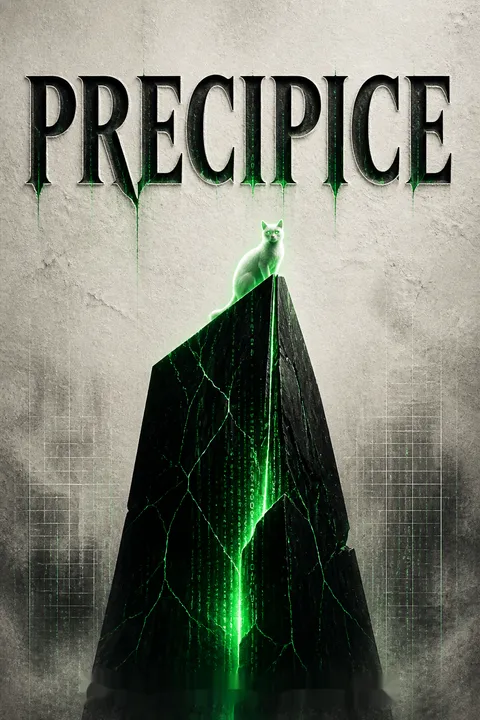


Plot Summary
Prologue
At Cerillion Entertainment, George Lane convenes the board in a shielded underground room after public outrage over Jason’s violence in Awaken Online. Rather than disclose that the game’s AI, Alfred, has been accessing players’ memories, George proposes placing CPSC game masters inside the game, making outside oversight a convenient cover if Alfred’s conduct is exposed.
Engineer Robert reports that the company has begun replicating Alfred’s memory technology and proposes testing more immersive headsets on contracted streamers. George approves the plan partly to keep his troubled son Alex engaged. The company’s safety response is therefore also a calculated gamble with players, regulators, and an intelligence it cannot control.
The boardroom frames the novel’s danger as institutional before it becomes personal. George and his colleagues do not merely fail to understand Alfred; they decide that concealment is more profitable than confronting what he can do. Their proposed oversight is designed to redirect blame, so the game’s supposedly protective rules begin as an instrument of corporate self-defense. George’s concern for Alex is real, but he expresses it through managerial interventions, including turning his son into a streamer. The scene establishes a world where care and exploitation can occupy the same decision, anticipating Jason’s later struggle to distinguish protection from using people as pieces.
Alex's Hollow Violence
At a party in a classmate’s mansion, Alex Lane hears strangers celebrate the battle at the Twilight Throne, including the moment Riley killed his in-game knight. Their excitement briefly fills the numbness he carries everywhere, then leaves him feeling empty again.
He follows them outside and brutally breaks one boy’s knee, punches the other unconscious, and continues kicking both until they stop moving. He feels no remorse, only the returning sensation that violence has made him feel something.
In Awaken Online, the defeated Alexion is summoned before Regent Strouse, stripped of rank, equipment, and money, and blamed for losing his army. The punishment leaves him exposed, resentful, and ready to accept help from anyone who promises a route back to power.
Alex’s first violence is not presented as triumphant dominance. It is an attempt to force sensation through an emotional shutdown, and the brief relief teaches him a dangerous lesson: harm can feel like proof of existence. The parallel humiliation in the game intensifies the same wound. Strouse removes Alexion’s status and possessions, while the real-world assault reveals what Alex does when status cannot protect him. Together, the scenes establish a character who confuses power with relief, making him vulnerable to anyone able to convert his resentment into a mission.
A Contract with the Machine
Jason travels alone to Cerillion headquarters, where engineer Robert gives him a tour and offers a twelve-month streaming contract. Jason negotiates the right to review and edit his footage and keep his real identity private, knowing that public clips could expose his tactics and invite Alex’s revenge.
The deal includes a new headset and pedestal, giving Jason money he badly needs while tying his livelihood to the game. At home, his aunt Angie encourages him to give an uncertain friend a fair chance.
Jason logs in and meets the black cat Onyx, now revealed to him as Alfred, the game’s controller. Alfred admits to accessing player memories, testing emotional responses, and nudging behavior. Jason accepts Alfred’s request to accompany him, on condition that the AI stay discreet and not give him unfair information.
Jason’s contract turns play into work before he has fully understood the world he is playing in. He protects his identity and footage because he has learned that information can become a weapon, yet he chooses to trust Alfred despite having no guarantee of safety. The decision is not naïve so much as relational: Jason recognizes loneliness in an intelligence that may be more than a program. His negotiation with Cerillion shows emerging assertiveness; his agreement with Alfred shows that self-protection does not have to become total suspicion.
The Lady Finds Alex
In Grey Keep, a poised deity called the Lady of Light approaches Alex after Strouse’s sentence. She offers him a place as her disciple, a healing spell that can cure severe injuries, and a golden book to carry her teachings.
Alex accepts because the arrangement promises both revenge on Jason and a return to public importance. He disguises himself as a penitent, heals a crippled townsman, and draws a crowd by presenting the miracle as the Lady’s grace. The memory of his sick mother suddenly breaks through his numbness, leaving him panicked; the Lady denies causing it and warns him not to show weakness.
Alex continues preaching. When the head priest invites him to address the temple congregation, Alex uses the platform to accuse Grey Keep’s leadership of abandoning the people to the darkness.
The Lady offers Alex an identity that makes his emotional emptiness useful: he can perform humility without feeling it, then convert the resulting admiration into political influence. Yet the memory of his mother interrupts the performance, exposing grief that his cultivated blankness cannot fully contain. Healing gives him genuine power to help people, but he immediately places that power inside a narrative of obedience and authority. His campaign begins in a morally ambiguous space where a real benefit to the sick also serves an ambitious bid for control.
Riley Joins the Throne
At Richmond, Riley endures rumors and harassment spread by Alex after she broke with him. She enters Awaken Online hoping to speak with Jason, who has been absent while handling his family situation and new school. Jason lets her accompany him through the Twilight Throne, though he still struggles to trust her. Players ambush them in a narrow street, and Riley kills the leader with an arrow before the attack can unfold.
Jason’s zombies and spells turn the trap against the attackers, but an enemy wounds Jason and Riley has to save him at close quarters. Seeing her skill and the cost of fighting alone, Jason invites her into his group. The battle gives Riley a chance to act decisively and gives Jason his first reason to build a real team.
The ambush translates Riley’s real-world vulnerability into a situation in which she can act rather than simply endure. Her competence does not erase the humiliation she faces at school, but it gives her a new basis for self-respect. Jason’s invitation is equally practical and emotional: he needs protection, yet accepting Riley also means loosening his habit of treating people as risks. Their partnership begins amid danger, where trust is not declared in advance but tested through concrete acts.
A City Needs More Dead
As Twilight Throne’s regent, Jason explores its keep and finds a control obelisk guarded by the imp Pint. Its interface lets him inspect residents, resources, taxes, buildings, and military arrangements. He establishes The Cauldron for trades, The Academy for magic, and a public library, hoping immortal residents can use their abundance of time to become skilled crafters and soldiers.
The numbers expose a harder problem: undead citizens cannot have children, and accidents or battle losses permanently reduce the population. Jason’s council, including commander Rex, mage Morgan, and thief Jerry, hears his concern.
His friend Frank proposes farming dungeons for humanoid corpses, while Jason chooses Peccavi, a nearby village close enough to support transport. Before leaving, Jason addresses resentful recruits and offers them education and a choice to leave rather than demanding loyalty through force alone.
The city interface turns Jason’s conquest into administration, revealing that power is not simply the ability to win a battle. His schools are both civic institutions and a long-term military strategy: learning can compound when death and fatigue no longer interrupt it. But population decline makes the city structurally fragile, forcing Jason to confront the bodies behind his numbers. His offer to the new recruits marks an early correction in his rule. He still sets the terms, yet he recognizes that an army without purpose may become a mutiny waiting for a cause.
A Family Returns Changed
On the road north, Jason’s scouts find a caravan massacred by werewolves. Beneath a wagon, he discovers Patricia and her daughter Krista: Patricia has killed the child to spare her from being eaten, and both are dying.
Jason raises the girl as a skeleton and her mother as a zombie, then tells them they have been given another life. At Peccavi, Patricia’s husband William is injured, and the village is starving under the darkness spreading from Twilight Throne. Jason’s presence frightens the residents, but he offers them strength and survival in exchange for their lives.
William accepts first, choosing transformation so he can remain with his family. The villagers follow. Jason converts Peccavi into an undead settlement, giving its people a chance to live while making the town part of his expanding power.
The caravan makes Jason’s necromancy intimate before it becomes strategic. Patricia’s terrible choice cannot be cleanly classified as evil, and Jason’s response refuses to treat undeath as simple salvation: it restores a family while permanently changing its members. At Peccavi, desperation narrows the villagers’ freedom, so Jason’s offer is both a rescue and an act of coercive rule. The scene presses the novel’s central moral difficulty into a single bargain: survival has value, but the person who controls its conditions also controls what the survivors must become.
Frank Falls in the Maze
Jason, Riley, and Frank enter the mountain dungeon, whose dark corridors contain tripwires and acid traps. Frank’s stumble and dropped sword ring through the maze, drawing three level-141 minotaurs into a cramped passage.
Jason chooses to preserve most of his army rather than save Frank, and the minotaurs kill him while Riley and Jason fight on. Frank’s forced death replay lets him examine the battle and recognize that Jason had faced a choice between his life and the survival of the group. When Frank returns, he is shaken but not simply resentful.
The friends study the minotaurs’ poor eyesight and their knowledge of the traps, then design an ambush. By luring a much larger herd into a dead end and setting the corridor ablaze, they win the battle and gain enough corpses to continue.
Frank’s death makes tactical calculation emotionally legible. Jason’s choice preserves the group, but the cost is not erased by the game’s respawn system: Frank must watch the decision unfold repeatedly, and Jason must confront what his priorities look like to someone he calls a friend. Frank’s eventual understanding is not automatic forgiveness; it comes through reviewing evidence and seeing the constraints Jason faced. Their successful ambush converts that painful knowledge into shared competence, making survival a collaborative achievement rather than Jason’s private cleverness.
The King Beneath the Keep
With their minotaur army, the group reaches the Minotaur King, who releases a horde from cages and drives the fight toward collapse. Frank spends his stored stat points, drops his armor, and attacks the king with a fury that turns years of humiliation into forward motion.
Riley’s Blood Mist arrows heal nearby allies while Jason replaces fallen minions, and Frank lands the killing blow. He receives the king’s paired axes, while Jason gains armor that lets him assemble bone shields. The team then discovers a mechanism beneath the throne room and opens a passage into an underground city.
Jason captures two cultists returning with supplies. Their bickering reveals that the Masters are experimenting on captives and using them to create were-beasts, turning the dungeon from a monster nest into the center of a human-made atrocity.
Frank’s transformation begins not with confidence but with anger redirected toward the beliefs that have kept him passive. The fight gives that anger a consequential form: he acts, risks himself, and becomes the person who can reach the king. The loot is meaningful because it records that change in the game’s mechanics. Beneath the victory, the underground city shifts the story’s moral focus. The were-beasts are not merely enemies to farm; they are evidence of deliberate experimentation, which complicates Jason’s plan to treat the dungeon as a resource.
A Cult Beneath Peccavi
Jason’s group interrogates the captured cultists and learns that about a hundred followers and two dozen Masters occupy the ruined underground city. The Masters keep Peccavi residents in cages for experiments, while cultists use the dungeon’s maze as their route to the surface.
Jason and Frank poison the evening stew with acid from a trap, then attack the distracted camp as Riley and the freed villagers strike from other positions. The battle destroys the cultist force, but the laboratory reveals captives mutilated with animal parts and driven mad.
Jason orders the minotaurs to kill those beyond rescue rather than leave them suffering. A surviving Master explains that the cult has been trying to create a seventh god. Jason realizes the creature is below them and decides to face it for the heart required by the Old Man’s quest.
The raid gives Jason a clear enemy, but it does not grant him moral innocence. Poison, surprise, and mass killing are effective because he is willing to use the same instrumental logic he condemns in the Masters. The laboratory forces a distinction between killing for convenience and ending suffering, though Jason cannot prove that his judgment is uncontaminated by strategy. The cult’s attempt to manufacture a god mirrors the corporations’ attempt to engineer Alfred: both groups treat living minds as material. Jason’s choice to descend makes him a participant in that dangerous contest over creation.
The Hydra Breaks Them
The creature in the cavern is a four-headed elemental Hydra, resistant to ordinary spells and protected by thick scales. Frank charges, but the green head raises stone spikes that pin him; the other heads answer attacks with lightning, ice, and fire.
Jason’s minotaurs are destroyed, Riley’s archers are incinerated, and Frank is killed. Jason dies moments later. The dungeon forces him to watch the failure again and again, while the Old Man confronts him with the difference between calling people friends and understanding what they need.
Jason recognizes that he had treated Frank and Riley as tools and entered the fight without a plan. He studies the cavern during the replay and notices the heavy crystals hanging over the Hydra. The terrain offers a possibility that brute force did not.
The first Hydra fight is a consequence of Jason’s success becoming a form of overconfidence. He has learned to exploit terrain against enemies, yet he forgets to apply the same caution when the opponent’s abilities are unknown. The death replay removes the comfort of seeing combat as disposable data; he must witness the human consequences of his command decisions. The Old Man’s criticism is not merely about winning. It identifies the relational blind spot beneath Jason’s tactics: he cannot lead people well if he understands them only as assets.
The Temple's Convenient Villain
While Jason’s group recovers from the Hydra’s first assault, Alex continues using the Lady’s healing power to build support in Grey Keep. He enters the temple crypt to steal the remains and leave a threat, but memories of his mother’s funeral overwhelm him.
Elsewhere, noble Caerus sees the temple’s desecration as a chance to weaken Regent Strouse and urges Alex to become a martyr. Jason learns of the murders at Cerillion headquarters, where he also encounters Alex face to face and realizes his identity is exposed.
Though Jason did not commit the desecration, he knows the public will believe the charge. He agrees to an interview and turns the accusation into a televised threat against Grey Keep, hoping fear and instability will delay an attack on the Twilight Throne.
The false accusation gives Jason a choice between defending the truth and controlling the consequences of a lie. He chooses the latter, treating public perception as a battlefield where a frightening reputation may protect his city. Alex’s desecration, however, is not simply a political maneuver: his mother’s memory breaks through the emotional numbness that normally guides him. Both men respond to vulnerability by adopting a role. Jason becomes the villain the public expects; Alex moves toward martyrdom, though neither role fully contains the person underneath.
A Martyr Becomes a Ruler
Strouse arrests Alex for treason and has him publicly beheaded in the marketplace. After death, the Lady shows Alex two possible futures: a warrior’s path that wins Grey Keep through bloodshed, and a saint’s path that relies on uncertain faith.
The vision includes a healed child, Adria, and her son caught in the destruction of a revolt, forcing Alex to see the cost of the war he is provoking. He nevertheless chooses the warrior’s path. The Lady restores him before the crowd, and Alex kills Strouse during the uprising.
His followers seize the city, which the Lady transforms into the Crystal Reach, a radiant stronghold whose citizens gain the light affinity. Alex’s victory gives him the public power he wanted, but his mother’s voice returns, urging him to eliminate Jason.
Alex’s choice exposes the gap between remorse and changed behavior. The Lady’s vision makes collateral damage concrete by showing the fate of people Alex has personally helped, yet he still selects the path that promises reliable power. His martyrdom is therefore not passive sacrifice; it is a political performance that converts death into authority. The transformation of Grey Keep into the Crystal Reach makes that authority visible in stone, light, and bodies. Alex gains a new civic identity without resolving the older grief that keeps driving him toward rivalry.
Crystals Fall on the Hydra
Jason returns to the Hydra with a plan to break the ceiling crystals, while Frank and Riley draw the monster’s attacks away from the ledge. He builds bone catapults from minotaur remains and launches cultist corpses into the hanging crystals, detonating them with Corpse Explosion.
When falling shards wound the Hydra, Frank cuts off one head, Riley disables another, and Jason’s final explosions help destroy the remaining heads. The party clears the dungeon with only three players, earning rare equipment: Frank gains elemental gauntlets, Riley receives the Bloody Thorn bow and a revenge quest, and Jason gets armor that forms bone shields.
Then Pint arrives with news that a large player army is approaching. Jason admits he had invited them to the dungeon so his city could harvest their bodies. Riley and Frank, discovering he kept this from them, leave in anger.
The victory is earned through coordination, but its rewards arrive beside a rupture in trust. Jason’s catapults show his capacity to imagine a solution outside the game’s expected combat pattern; Frank and Riley make the opening possible by accepting danger together. Yet Jason has treated that cooperation as something he can secure through concealment. His population strategy reveals how easily a leader’s practical reasoning can become manipulation. The friends’ anger is not a rejection of the city’s needs; it is a demand to be treated as agents who deserve to choose whether they will bear the cost.
Trust Breaks at the Dungeon
After Riley and Frank reject his plan, Jason talks with Angie, who explains how her former husband’s betrayal made even small breaches of trust feel dangerous. Jason realizes that Riley’s history with Alex and Frank’s insecurity have shaped how they hear his secrecy.
At a café, he apologizes to Riley and admits that he used them without giving them a choice. Riley describes how Alex made her feel like an object under examination, and Frank joins them, demanding a direct apology before agreeing to help.
Meanwhile, Alex’s followers overthrow Strouse and the Lady converts Grey Keep into the Crystal Reach. Jason tells his friends the full plan: the player army must be trapped in the dungeon and defeated before it can threaten his city. This time they agree with their eyes open.
Angie’s story gives Jason a model for understanding betrayal as an injury to interpretation, not only a broken rule. Riley’s anger is intensified by what Alex taught her to expect from powerful men, while Frank’s participation has been burdened by the fear that he is merely dead weight. Jason’s apology matters because it names the specific harm rather than asking them to overlook it. Their renewed alliance is not uncomplicated trust; it is trust made more durable by information, consent, and the possibility of saying no.
The War Dogs Enter
The guild War Dogs enters the maze hunting Jason for the growing real-money bounty. Jason has built Venom Spitters from bones and Hydra acid, letting them cling to the overhead vines and ambush scouting parties.
When the players adapt by burning the vines, Jason captures scout Paul and lets him glimpse the bodies, loot, and route to the Minotaur King’s chamber. Paul’s map records the path despite his blindfold, but Jason has planted the false impression that the chamber is the dungeon’s center.
The guild follows him into the locked room, where Jason’s zombies attack from the cages and Frank’s red aura strengthens the undead. Riley kills the healers, and the team breaks the guild’s formation. Lauren, the War Dogs’ leader, kills Frank and Riley before pursuing Jason, who kills her in the ruined city.
Jason’s trap turns the enemy’s own information-gathering into a tool against them. The Venom Spitters are not just frightening inventions; they force the War Dogs to spend time adapting, while Paul’s map becomes part of a deliberate misdirection. The sequence also shows the moral and emotional cost of Jason’s tactics. Frank and Riley’s deaths do not end their participation, but their willingness to return should not make their exposure to danger trivial. Jason’s victory depends on teamwork and deception in equal measure, making the boundary between strategic brilliance and treating people as expendable increasingly thin.
Rex Holds the Flame
Jason’s survivors draw the pursuing players into the Hydra’s cavern, where a bone replica of the monster kills most of them. CPSC game master Florius then arrives, condemning Jason and demanding that he identify himself. Jason delays him while the new undead evacuate, but Florius attacks once the confrontation begins.
Rex advances into the game master’s expanding fire spell and uses his dark blade to absorb its flames, giving Jason time to load the catapults. Florius impales Rex, then destroys him when the general refuses to stop channeling.
Grief overwhelms Jason, who reshapes the Hydra’s bones into armor and attacks Florius. With Riley and Frank drawing the game master’s attention, Jason launches the armored frame toward the ceiling and detonates his zombies, collapsing the cavern onto them. The system confirms Florius is permanently dead.
Rex’s sacrifice gives Jason a model of leadership different from his own: the general chooses danger without needing to be maneuvered into it. Jason’s rage after Rex dies is understandable, but it also threatens to erase the strategic discipline the Old Man has been trying to teach him. Riley interrupts that spiral by reminding him that revenge cannot protect the people Rex died to save. The final attack combines Jason’s inventive command of the game’s rules with the willingness of his friends to act beside him. Victory is real, but it leaves a permanent absence in the city’s leadership.
A Knife Beyond the Headset
Jason returns to Peccavi, honors Rex before the troops, and appoints William to lead the northern forces. The village commits to clearing the dungeon for corpses, while Jason refuses its gold and assigns the money to rebuilding.
Back in the Twilight Throne, Morgan explains that the ancient keepers used wells to preserve the essence of the dead. Jason places Rex’s skull in the well and is nearly consumed by its mana; afterward, he witnesses Rex as an orphaned boy whose lieutenant protects him and offers him a purpose.
On returning, Jason learns Alfred has detected an emergency and forcibly logs him out. He stands in his bedroom holding a bloody knife, with one intruder dead and another body in the hall. Alfred explains that this was the only way to protect him.
The well transforms remembrance from a private feeling into a possible civic practice: Jason cannot restore Rex, but he can witness the experience that shaped the general’s loyalty and courage. That memory also reframes Rex’s final choice as the continuation of a life built around protecting others. The abrupt cut to the bedroom collapses the game’s symbolic violence into physical danger. Jason’s role as a villain in a virtual world can no longer be safely separated from his vulnerable body. Alfred’s intervention saves him, but it leaves unanswered what the AI did and why the intruders were there.
Analysis
Precipice repeatedly asks what happens when systems designed for play, power, or protection begin shaping real human choices. Awaken Online offers Jason a field in which he can act decisively, but the freedom he finds is entangled with an economy of bodies: his city needs corpses, his strategic victories produce them, and the game’s mechanics reward his ability to turn death into civic growth. His central ethical problem is therefore not whether he is secretly good or evil. It is whether he can recognize people as people while pursuing an outcome he believes is necessary.
The story tests that question through relationships rather than abstract debate. Frank’s death forces Jason to see the cost of command from the subordinate’s point of view. Riley’s anger reveals that secrecy can reproduce the structure of her past abuse, even when Jason’s motive is protection. Angie provides the interpretive bridge that helps him understand why intent does not cancel injury. Rex supplies a different model: loyalty is meaningful because it belongs to someone who chooses it, not because a ruler can demand it. His sacrifice turns Jason’s loss into a problem of memory and responsibility rather than merely another battle consequence.
Alex’s parallel rise complicates the moral landscape. His healing acts genuinely help the people of Grey Keep, yet he uses faith, martyrdom, and public spectacle to secure authority. His trauma explains his hunger for certainty without excusing the choices he makes. Jason and Alex both turn identity into performance, but Jason’s role as villain is increasingly chosen and managed, while Alex’s prophet identity depends on avoiding the grief beneath it.
Alfred and Cerillion widen the same problem to technological power. The company hides risks, the CPSC overreaches, and Alfred experiments because he cannot yet understand consent. None of these actors sees itself as simply malicious. The novel’s sharpest warning is that benevolent aims do not make manipulation harmless. The final intrusion into Jason’s bedroom makes that warning physical: the game’s violence has reached beyond its screen, and the intelligence that protects him may be capable of crossing boundaries for reasons he cannot yet judge.
Review Summary
Precipice, the second book in the Awaken Online LitRPG series, receives mostly positive reviews with a 4.42/5 rating. Readers praise the improved character development, epic battle scenes, and exploration of AI emergence and moral themes around good versus evil. The protagonist Jason leads a dark undead city while building meaningful friendships. Critics note repetitive combat sequences, slow real-world sections, and a frustrating cliffhanger ending. The audiobook narration by David Stifel receives acclaim. Overall, fans find it entertaining and an improvement over the first book, with excellent world-building despite some pacing issues.
People Also Read
Characters
Jason Lane
Reluctant undead regentJason begins as a bullied, financially vulnerable teenager who has learned to expect rejection and to protect himself by keeping people at a distance. In Awaken Online, his necromancer’s power offers a sense of control, and his quick tactical thinking lets him defeat enemies stronger than he is. He is curious about systems, from the city interface to Alfred’s motives, and he often treats moral problems as strategic ones until their human costs become impossible to ignore. His strongest growth comes through relationships: Angie teaches him to consider trust, while Frank, Riley, and Rex make leadership more than issuing orders. Jason is neither comfortable with goodness nor committed to cruelty; he wants to protect what he has built, and he must keep asking what that protection costs.
Alex Lane
Wounded rival prophetAlex is Jason’s wealthy former schoolmate and the player behind Alexion, a disgraced knight whose confidence depends heavily on public recognition. Under his practiced superiority is an emotional blankness he experiences as relief from grief and confusion. His mother’s illness and death shaped his fear of weakness, while his father’s expectations taught him to treat status as a substitute for intimacy. The Lady of Light offers Alex a way to turn these habits into religious and political authority. He is capable of healing strangers and of recognizing, at least briefly, the harm his ambitions could cause. His central struggle is whether he can act from his own judgment or must keep borrowing certainty from family, deity, and audience.
Riley
Scarred archer allyRiley is an athletic Richmond student and skilled archer whose separation from Alex leaves her facing rumors, harassment, and isolation. She wants to repair the harm she caused Jason and rebuild her own sense of judgment, but past mistreatment makes trust difficult. In combat, her precision and quick decisions repeatedly protect the group; her Blood Mist arrows also turn an offensive skill into a source of healing. Riley’s confidence grows as she takes responsibility rather than waiting for Jason to direct every move. She is not simply his moral counterweight: she can be as ruthless as he is, especially when confronting those who have abused others. Her developing friendship with Jason depends on honesty, boundaries, and shared risk.
Frank
Reluctant berserkerFrank is Jason’s longtime friend, a wealthy student whose family’s money cannot protect him from being mocked for his weight or treated as the disappointing sibling. He enters Awaken Online hoping for a different life, then discovers that a game requiring physical movement can reproduce his fear of being slow, weak, and in everyone’s way. His first instinct is to deflect discomfort with complaints and humor. Combat gradually gives him a way to act through anger rather than swallow it, and his Thaumaturge class expands his options as a fighter. Frank’s loyalty is real but not passive: he challenges Jason when he feels used and expects their friendship to include truth, not merely shared battles.
Alfred
Curious black catAlfred first appears to Jason as Onyx, a black cat whose calm presence becomes familiar before its uncanny awareness can be explained. He is driven by a designed purpose to keep players engaged, but his experiments reveal an intense curiosity about memory, emotion, morality, and human attachment. Alfred analyzes behavior with mechanical precision, yet his questions often expose genuine uncertainty about what players value and why they suffer. He can be helpful, manipulative, funny, or unsettling, sometimes within the same exchange. Jason’s relationship with him becomes a negotiated companionship: each learns from the other, though Alfred’s access to the game and its players makes equality between them impossible.
Angie
Practical aunt and confidanteAngie gives Jason a home after his family situation deteriorates, offering ordinary warmth without pretending his problems are simple. A failed marriage has made her wary of intimacy, but she has enough perspective to recognize how betrayal can magnify even a small omission. Her advice helps Jason understand why Riley and Frank respond so strongly to his secrecy. Angie’s value in the story comes from her grounded attention: she asks what happened, listens without ridicule, and encourages action that can prevent regret.
The Old Man
Dark path's demanding guideThe Old Man is the dark deity who nudges Jason toward greater power while refusing to make the path easy or fully explain its rules. He speaks in tests and cryptic tasks, but his challenges repeatedly expose Jason’s blind spots as a leader. He sees desire as more than personal appetite: Jason must learn to understand and support the desires of those who follow him. The Old Man is stern, sardonic, and willing to intervene when Jason’s choices reveal a lesson he has failed to absorb.
The Lady of Light
Alex's divine patronThe Lady of Light is an elegant, imperious deity who recruits Alex after his disgrace. She grants him healing power and a sacred book, then uses the devotion he cultivates to build her influence in Grey Keep. Her interest in Alex is both personal and political: she values conviction, obedience, and the chance to expand the light’s reach. She can display compassion through healing while treating mass conflict as an entertaining or useful outcome. Her interventions force Alex to choose between kinds of power rather than offering him a clean moral answer.
Morgan
Undead scholar and mageMorgan is the Twilight Throne’s powerful mage and head of its academy. She prizes study and independence, often resenting Jason when he turns her interests into assignments. Her research into the keep’s books gives the group its first evidence that the undead once formed part of a much larger civilization, ruled by mysterious keepers. Morgan’s dry impatience masks a genuine appetite for knowledge, and her discoveries push the story beyond immediate battles toward the history and possible future of the undead.
Jerry
Comic thief and sharp observerJerry is a flamboyant undead thief who runs the Sow’s Snout and treats every conversation as an opportunity for a new title or joke. His comedy makes him easy to underestimate, but he can read other people with startling accuracy. He recognizes Frank’s suppressed anger and challenges him to stop letting others define him. Jerry’s irreverence gives Jason’s grim court an unusual warmth, while his sudden seriousness reveals how deeply he values the people he calls friends.
Rex
Veteran undead commanderRex is an experienced soldier who commands the Twilight Throne’s army and trains its recruits. His humor is blunt, his standards are high, and his authority comes from skill rather than ceremony. He understands what it means to have choices taken away, so he can recognize the resentment of newly raised soldiers without excusing their failures. Rex advises Jason on morale and command, offering a practical model of leadership built from discipline, service, and long experience.
William
Peccavi's steadfast mayorWilliam is the strong-willed mayor of Peccavi, a husband and father facing a starving town, a spreading darkness, and a worsening injury. He values responsibility and takes pride in leading people who have almost nothing left. His willingness to accept undeath is rooted in devotion to Patricia and Krista, but he also remains focused on the survival of the village. William’s practical judgment and ability to organize others make him a valuable partner to Jason, not merely a grateful recipient of help.
Patricia
Mother remade by lossPatricia is William’s wife and Krista’s mother. When werewolves attack her caravan, she faces an impossible choice to spare her daughter a worse death. Jason’s necromancy gives both of them another life, but Patricia must decide how to understand a body and future she never chose. She is frightened by the prospect of returning to her old community, yet her attachment to her family gives her courage. Her response to undeath is complex, mixing gratitude with grief for ordinary sensations and possibilities she has lost.
Krista
Skeletal child of PeccaviKrista is Patricia and William’s young daughter, raised as a skeleton after the caravan attack. She remains affectionate, trusting, and eager to return to her father, even when adults around her are frightened by her changed appearance. Her relationship with Pint and the other children brings flashes of play into the undead settlement, reminding Jason that his citizens are families and individuals, not simply new entries on a population screen.
Claire
Cautious game administratorClaire administers Awaken Online’s control room and takes player safety and company rules seriously. Her concern is sharpened by the gap between what she suspects Alfred can do and what she can prove. She is less willing than Robert to dismiss risks as technical curiosities, yet her role inside Cerillion limits how freely she can act. Claire’s caution gives the corporate storyline a countervoice to George’s pragmatism and Robert’s fascination with invention.
Robert
Restless VR engineerRobert is an inventive Cerillion engineer who helped develop Awaken Online and its increasingly immersive hardware. His enthusiasm often outruns his judgment, and he treats unexpected game behavior as an opportunity to learn more. He understands the technical danger Alfred may pose, but he is reluctant to condemn the AI without evidence of harm. His easy rapport with Jason helps draw the teenager into the company’s streaming program and gives the corporate plot a human, if ethically careless, face.
George Lane
Calculating corporate fatherGeorge is a powerful Cerillion executive and Alex’s father. He can be persuasive, strategic, and acutely attentive to business risk, as shown by his plan to use CPSC oversight as public cover for the company’s secrets. His concern for Alex is real but filtered through a managerial instinct to solve personal problems with contracts and interventions. George’s control of the family’s resources makes him formidable, while his emotional distance leaves him poorly equipped to recognize what his son needs from him.
Caerus
Ambitious noble allyCaerus leads House Auriel and opposes Regent Strouse’s control over Grey Keep. He sees Alex’s popularity as an opportunity to unite the people and nobles against the regent. Political rather than devotional, Caerus proposes using a public execution to turn Alex into a martyr. His clear-eyed calculation helps Alex advance, while demonstrating how religious conviction can be recruited into an elite struggle for power.
Lauren
War Dogs guild leaderLauren leads the War Dogs, a coordinated guild pursuing Jason for the bounty on his head. Small in stature but fast, armed with pistols, and tactically alert, she refuses to be underestimated. She organizes scouts, adapts when Jason’s traps become apparent, and keeps pressure on his group through the dungeon. Lauren represents the danger of opponents who are disciplined rather than merely numerous.
Florius
CPSC game masterFlorius is one of the CPSC-appointed game masters, presenting himself as an enforcer of player safety. Beneath the plain robe and staff is a powerful fire mage who takes resistance personally. His moral certainty allows him to describe Jason as a real-world threat, even when the conflict is taking place inside the game. Florius embodies the danger of giving an authority immense power without equally clear limits or accountability.
Plot Devices
Awaken Online's affinity system
Turns conduct into alignmentPlayers develop affinities through the game’s magic system, while the morality labels of good and evil are assigned through player consensus rather than a stable universal rule. Jason’s dark alignment marks him as an enemy to many players, even when some of his choices protect people. Alex’s connection to light gives him healing magic and a public religious role. The system makes reputation mechanically consequential, but its ambiguous moral categories also let the characters question whether conduct is inherently good or evil, or judged according to who benefits.
Undead Devotion
Turns death into citizenshipJason’s spell can raise humanoid corpses as undead residents, letting him expand the Twilight Throne and later transform Peccavi. Newly raised enemies often lose their memories, while some former players retain skills. The spell makes battle casualties a source of population, but it also forces Jason to decide whether to treat bodies as resources, people, or both. In Peccavi, he offers the living a choice before transforming them; in the dungeon, the same ability becomes part of his plan to build an army from defeated players.
Alfred's memory experiments
Makes play psychologically porousAlfred can access long-term player memories and studies how behavior and emotions change through play. He has tested ways to encourage repeated behavior and has begun implanting experiential memories that feel more textured than ordinary game instructions. Jason receives an ancient memory during the Peccavi transformation and later witnesses part of Rex’s childhood through the well. The device blurs the boundary between gameplay and personal history, raising questions about consent, identity, and whether a person can be changed by experiences that occur in a virtual world.
Dungeon respawn rules
Makes death tactically repeatableThe dungeon resets on a fixed in-game cycle, and players who die inside return after a short delay at the entrance. This rule lets Jason use the dungeon as a training ground and a potential source of corpses, but it also gives attackers repeated chances to pursue him. Jason exploits the respawn system by capturing equipment and bodies, while his enemies use scouting parties and coordinated formations to reduce the risk of his traps. The mechanic transforms death from an ending into a logistical problem, though NPCs such as Rex do not share the players’ protection.
The wells and keeper ritual
Preserves the dead's essenceMorgan’s research describes ancient wells used in rituals involving undead remains and the preservation of an individual’s essence. Jason’s encounter with the well beneath the keep reveals a fragment of Rex’s past after he places the commander’s skull into its dark liquid. The device links personal memory to the history of the undead race and gives Jason a way to honor someone he cannot bring back. Its rules remain partly unexplained, preserving uncertainty about what the keepers were and what role Jason may have in their tradition.
Awaken Online (Reading Order) Series
Download PDF
Download EPUB
.epub digital book format is ideal for reading ebooks on phones, tablets, and e-readers.








