

Plot Summary
Prologue
Marissa Dahl opens by questioning the neat arithmetic people attach to pictures. A film is made of so many frames that meaning can disappear beneath the information, she argues, unless an editor selects, cuts, and rearranges what matters.
Her work is not merely technical: she searches images for the story they conceal. That conviction will guide her through a murder mystery, even as the events force her to question whether finding a compelling story is the same as finding the truth.
The prologue gives Marissa both a craft and a defense. Editing offers her a way to manage overwhelming material by choosing what to include and in what order, a skill that also shapes how she interprets people. Her confidence in the image is not simple faith in visual evidence: she knows framing, focus, and sequence can manufacture meaning. That awareness prepares the novel’s central tension. Marissa is unusually good at reading constructed images, but the mystery asks whether she can resist turning real people into characters in a story she already wants to solve.
The Editor Reads a Corpse
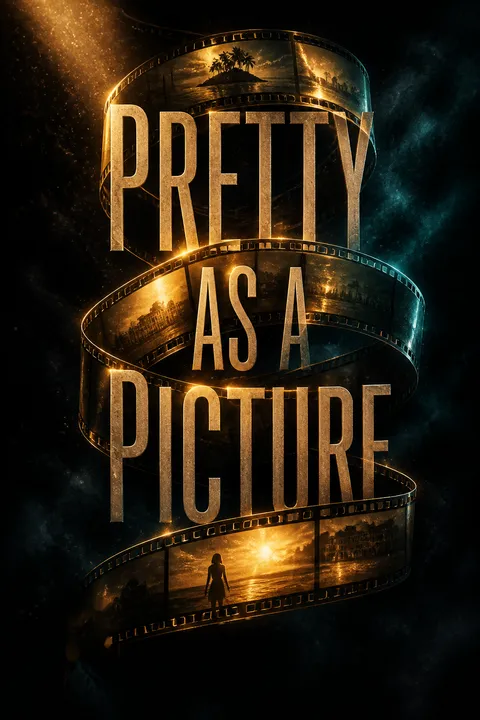
After separating from her longtime collaborator and closest friend, Amy Evans, Marissa Dahl needs work and accepts an urgent interview arranged by her agent, Nell. The studio executive gives her no script, only a photograph of actress Liza May lying on a beach.
Marissa reads the split-focus composition as a clue that someone is meant to discover her, then notices details suggesting a period true-crime story. Her certainty impresses the unseen director on speakerphone, who hires her.
Only afterward does Marissa learn she will replace editor Paul Collins on Tony Rees’s production. She remembers meeting Tony in Venice, where an awkward collision sent them both into a fountain, and assumes the demanding director will remember her for all the wrong reasons.
Marissa’s talent first appears as a form of inference: she reads what a frame asks an audience to anticipate, rather than treating it as a neutral image. The skill earns her a career opportunity, but it also exposes her to the story’s trap. She can identify cinematic intention with unusual precision; that does not mean she can distinguish intention from reality. Her professional break arrives precisely because she makes confident claims about a murder she knows nothing about, while her private life is already unsettled by distance from Amy. The novel begins by putting her two vulnerabilities together: a hunger to be useful and a tendency to mistake interpretation for certainty.
The Island Ferry
Marissa’s driver, Isaiah Greening, takes her from Philadelphia toward Delaware, revealing little about his work beyond his former military service. At the ferry terminal, a clerk claims the regular boat is unavailable, forcing Isaiah to hire a private charter.
On the dock, three local men corner the captain, Billy Lyle, and taunt him about the movie and what he has done. Isaiah intervenes before the encounter turns physical, but Billy leaves without explaining the accusation.
The boat carries Marissa and Isaiah to Kickout Island, where producer Anjali Bhattacharya meets them with irritation about the improvised crossing. The island’s hotel will serve as both lodging and set. Marissa has arrived in a place where the production’s subject is already personal to its residents.
The crossing makes the island more than a location. Its dependence on ferries and a single road gives local relationships practical force, while the men’s treatment of Billy shows that the old case still governs daily life. Marissa, who is accustomed to understanding productions through scripts and schedules, enters a community whose rules are unspoken and whose history precedes the film. Isaiah’s protective competence contrasts with her uncertainty, but his secrecy also repeats the production’s habit of controlling information. The journey therefore establishes the book’s central problem in miniature: Marissa is carried into a story by other people, yet she has not been told what story she has entered.
A Set Goes Dark
At the hotel, Marissa meets actor Gavin Davies, hotel owner Wade Metcalf, and the production’s tightly managed crew. Tony leads her through the hotel theater to a makeshift editing room, explaining that his film concerns Caitlyn Kelly, a young woman murdered on Kickout Island decades earlier.
No one was charged, and Tony insists that Marissa remain apart from the cast and locals because people connected to the case are nearby. During a rehearsal in the theater, the projection fails and the lights begin popping, showering glass around Liza and veteran actress Eileen Fox.
Isaiah appears armed with other security staff. Tony calls the malfunction a freak accident, reassures Liza, and dismisses Marissa from the set. The breakdown leaves her unsure whether the danger is technical, deliberate, or both.
Tony’s demand for isolation is framed as protection of an objective artistic process, but it also consolidates his control over what Marissa can know. The malfunction turns that abstract restriction into a physical threat: the film’s environment can injure the people performing inside it. Tony’s calm authority after the lights fail does not settle the question of responsibility; it makes his power more visible. Marissa recognizes that a set is not a sealed fiction when glass falls on actors, yet she still lacks the evidence to name what she has witnessed. The scene complicates the prestige of meticulous filmmaking by showing how aesthetic authority can normalize risk.
Two Girls, One Case
Hungry and unable to use her smartphone, Marissa slips into the hotel kitchen and meets Suzy Koh and Grace Portillo, teenage daughters of the pastry chef and executive chef. They are secretly researching Caitlyn Kelly’s murder while working around Tony’s restrictions on the actors.
Caitlyn, a Philadelphia college student and aspiring actress, spent summers on the island. Billy, a socially isolated boathouse worker, was arrested after police found disturbing material and photographs, but prosecutors lacked enough evidence to convict him.
The girls suspect Caitlyn’s boyfriend, Tom, and mention Violet, an elderly former actress who last saw Caitlyn rehearsing at the hotel. Marissa agrees to help the girls seek the research behind Tony’s film, provided they avoid Billy and stay safe.
Suzy and Grace offer Marissa a way into the case that does not depend on Tony’s authority. Their youthful certainty is often premature, but their questions expose how easily a community’s repeated accusation can replace proof. Billy’s isolation becomes evidence against him not because it establishes what he did, but because his difference makes him legible as a suspect. Marissa recognizes the weakness of the girls’ legal reasoning while sharing their suspicion that the accepted account is too tidy. Her agreement is both ethical and personal: she wants to prevent a film from reinforcing a possibly false conviction, and she is beginning to participate in a world beyond the editing room.
Billy’s Hidden Friendship
Gavin, who is playing Billy, secretly takes Marissa to meet the real man in a sea cave. Marissa must push through a narrow passage despite her childhood trauma from nearly drowning in a flooded cave. Billy says he and Caitlyn were friends, not lovers, and resents the assumption that friendship was a lesser prize. He shows them her school photograph and insists he did not kill her.
Gavin explains that the island has long treated Billy as guilty, and that locals once beat him so badly he needed extensive medical care. Billy, however, wants the harassment to stop more than he wants to persuade anyone. Marissa believes his account but cannot yet separate sympathy from evidence, a distinction Isaiah will soon demand.
Billy’s account unsettles the familiar crime-story equation between obsession and desire. He describes friendship as meaningful in itself, while others reduce his bond with Caitlyn to a rejected suitor’s motive. His social isolation makes that reduction easy to sustain. Marissa recognizes something of her own estrangement in his claim that people judge what they cannot interpret, which creates empathy but also risks distorting her reasoning. The cave intensifies this ambiguity: it is both a private refuge and a setting that could support a crime. Marissa’s physical fear does not stop her from entering, but the effort also marks a shift from analyzing a case at a distance to accepting personal risk.
Forty-Seven Post-Its
Script supervisor Kim tells Marissa that Paul Collins left forty-seven notes on a scene set at an amusement park. The production had learned the roller coaster was closed in 1994, making Tony’s carefully written sequence historically wrong.
After the derailment during filming, Tony fired Paul and several crew members. The teamsters confirm that the old coaster had been broken for years and that a boy had once lost a leg on it. Marissa also learns that assistant director Ryan Kassowitz was dismissed after assaulting an extra.
Paul’s final notes ask what the editor is seeing and missing, so Marissa tries to contact him. Before she can get answers, Gavin rebels against Tony’s repeated takes and walks off set, leaving the crew uncertain whether the film can continue.
The production’s failures make the film’s claim to factual authority increasingly suspect. Tony’s insistence on exactness exists alongside a script that ignores a consequential piece of local history, while his response to disagreement is to remove people rather than revise his certainty. Paul’s questions become a compact inheritance for Marissa: the problem may not be insufficient footage but the assumptions guiding its interpretation. The incident also establishes that physical danger and workplace coercion are not isolated anomalies. Yet the teamsters’ account counters a conspiracy reflex by offering a mundane explanation for the coaster accident. Marissa must hold both possibilities open rather than letting either a dramatic plot or an easy dismissal settle the facts.
The Stolen Cut
After Liza privately warns Marissa to leave the production, Marissa searches online and learns that Tony’s wife, Annemieke Janssen, has left him over his commitment to the film. That night, Marissa returns to the theater to inspect footage.
An intruder attacks her in the dark projection room, steals the computer containing Paul’s rough cuts, and locks her inside. She escapes through a projection port, then crosses a dangerous walkway and a tidal cave despite her fear of water and enclosed spaces.
On the beach, she finds Liza posed in the orange swimsuit from the film, dead. Marissa calls emergency services and reaches the hotel injured. The police arrive, but their attention quickly turns to Billy after Caitlyn’s photograph is found on his boat.
The murder collapses the comfortable boundary between Marissa’s professional material and her own body. She has treated images as objects to examine; now an unseen person uses the production space to injure her and remove part of its record. Her escape depends on practical knowledge of the old projector and her willingness to enter the cave she fears, but survival does not give her control over the story. Finding Liza makes the film’s subject immediate and human. The discovery of Billy’s photograph then threatens to convert a genuine clue from his life into another shortcut toward blaming him, repeating the mechanism that has shaped the original case.
The Computer in the Cave
Isaiah stays with Marissa while police search the hotel, and the two begin tracing the attack. Marissa admits she had met Billy in the cave; Isaiah, frustrated by her omissions, still agrees to investigate with her and Suzy and Grace. Revisiting the theater, they find signs that the intruder dragged the computer down the unstable staircase.
They follow Marissa’s route to the cave, where Isaiah recovers the stolen machine from the water. The police nevertheless arrest Billy after finding Caitlyn’s photograph on his boat, and Detective Nick Decker treats him as the obvious link between both murders. The evidence points to Billy’s presence and his theft, but it does not yet explain Liza’s death or prove that he killed either woman.
The recovered computer is a material clue, but its meaning remains contested. Billy has a plausible connection to the stolen footage, and the photograph makes him look guilty to investigators already primed by the earlier case. Marissa and Isaiah’s partnership begins in distrust: she has withheld information to protect someone she sympathizes with, while he sees that withholding as an investigative liability. Their shared reconstruction nevertheless shows the value of combining her attention to sound and visual detail with his security expertise. The episode resists the fantasy that one clever clue will solve everything. Evidence becomes useful only when the investigator asks what it can establish, and what it cannot.
Annemieke Names the Pattern
A phone number left in Paul’s notes leads Marissa to Annemieke, Tony’s estranged wife. Annemieke explains that Paul suspected Tony of engineering on-set accidents to keep Liza frightened and emotionally exposed.
She confirms that Tony was sleeping with Liza and says his methods have long involved manipulating actresses in pursuit of performances. Marissa realizes the coaster derailment and theater failures may not have been random. In the same stretch of calls, Amy confronts Marissa about an old kiss Marissa had hidden from her, a secret Josh has used to provoke both women.
Marissa and Amy’s friendship fractures under the revelation. With Tony’s private conduct now connected to the dangerous set, Marissa decides she must act rather than wait for the production to explain itself.
Annemieke reframes the set’s accidents as a pattern of coercion rather than eccentric craftsmanship. Her account makes clear that an artistic result can be purchased through fear, while the language of performance disguises who bears the cost. Marissa’s own complicity becomes harder to avoid: she accepted the job for prestige without asking what Tony’s reputation meant in practice. At the same time, the buried kiss reveals how Marissa’s habit of withholding difficult truths has injured the friendship she most depends on. The personal and professional plots converge around the same avoidance. Marissa wants other people to tell her what they feel, yet she has concealed facts that would let them respond honestly.
Tony’s Face in the Footage
Anjali shows Marissa footage from the amusement park scene, including the moment the coaster derailed. The camera held on Liza’s terrified face, suggesting Tony had anticipated the danger. While examining another take, Marissa recognizes the actor playing Tom, Caitlyn’s boyfriend: his green eyes and St. Christopher medal match Tony’s appearance in Venice.
The film has quietly cast Tony into Caitlyn’s past. Marissa and Suzy then reach Billy in the police station by sneaking inside. He admits he stole the computer because he wanted to see the film, but says he did not kill Liza. He identifies Tony as Caitlyn’s boyfriend and says the island’s powerful residents have protected him. Nick, meanwhile, admits he once joined the assault on Billy.
The clue works because it is not hidden in obscure forensic data but embedded in the film’s own visual construction. Marissa’s expertise lets her connect a face, a distinctive medal, and a remembered encounter; her conclusion is powerful precisely because Tony’s production has reproduced details from his own life. Still, recognition is not proof of murder. Billy’s account adds a social dimension to the evidence: the island’s consensus may be maintained by people with histories and loyalties, not merely by facts. Nick’s admission complicates the authority of the police without making him a simple villain. Marissa’s investigation now has to confront both individual wrongdoing and the community that made it survivable.
Violet’s Red Lipstick
At the police station, Suzy produces the original crime-scene photographs. Caitlyn’s body is slumped and wears red lipstick; Liza’s is arranged more elegantly and has bare lips. Marissa realizes Liza’s pose copied the movie’s image of Liza, not Caitlyn’s original scene.
Back at the hotel, elderly actress Violet tells Marissa that Caitlyn had rehearsed with her in the theater. Violet recalls the broken projector and the dangerous stairs, then describes the hotel’s financial peril after an earlier amusement-park injury.
Marissa understands that Caitlyn likely fell and died in the theater, and Violet moved her body to the beach to protect the hotel from liability. Violet’s red lipstick and her decision to make Caitlyn presentable explain the difference between the two scenes.
The visual discrepancy dismantles the assumption that a repeated pose means a repeated killer. Marissa has to abandon her first, attractive interpretation and attend to unglamorous distinctions: posture, lipstick, and the practical history of a building. Violet’s concealment is morally compromised, but it arises from fear for the hotel and affection for Caitlyn rather than a predatory motive. Her choice to dress the body also turns care into evidence, a gesture that is tender and disturbing at once. The novel does not make truth synonymous with innocence. Violet hid what happened, Nick helped punish the wrong man, and Tony built a film around a certainty that the evidence did not support.
Marissa Faces Tony
Marissa returns to the projection room and finds Tony working alone. When she tries to confront him, he grabs her, throws her against the wall, and threatens her for exposing what he has done.
Marissa lays out two possibilities: Tony may have killed Liza while trying to provoke a performance, or he may have killed her to frame Billy. She cannot establish which motive is true, but Tony’s attack confirms his willingness to silence her. Isaiah arrives and knocks Tony down before he can continue.
Police take Tony for medical treatment under guard, while Marissa tells Nick that Caitlyn died in an accidental fall and Violet moved her body. The immediate danger ends, though the exact circumstances of Liza’s death remain less clear than Tony’s responsibility for it.
The confrontation strips away the distance that has protected Tony’s reputation. Marissa cannot offer a complete account of his motive, but she no longer needs a polished theory to recognize the danger in front of her. Her effort to reason with him is not a clever trap; it is an attempt to keep herself alive while refusing his authority over the story. Isaiah’s intervention provides physical rescue, but Marissa’s willingness to speak is its own decisive action. The scene also distinguishes two kinds of uncertainty: the original murder can be explained through evidence, while Liza’s death retains ambiguity about intention. The novel allows moral judgment without pretending every factual gap has closed.
The Island Lets Go
Investigators spend nearly two weeks interviewing the cast and crew, and the studio proposes turning the failed feature into a documentary. Marissa refuses, unwilling to let Liza’s death become another production asset.
She repairs her friendship with Amy after finally answering a long, affectionate email, and she accepts a goodbye hug from Suzy and Grace despite her discomfort with touch. Anjali returns to work, while Gavin leaves without ceremony.
Marissa departs Kickout on Billy’s boat with the hotel cat, choosing to spend the crossing beside him rather than flee alone. She still plans to contact Amy and hopes to reach Isaiah, though neither task feels easy. In the late light, she lets herself move closer to Billy, without turning the moment into a promise.
The resolution refuses the clean transformation that a conventional character arc might demand. Marissa does not suddenly become socially effortless or abandon her routines; she chooses a few acts of contact while remaining recognizably herself. Her refusal of the documentary matters because it rejects the industry’s instinct to convert tragedy into a new format and renewed profit. The repaired friendship with Amy rests on honesty and enduring affection, not on the disappearance of past hurt. Billy’s boat offers no grand cure for loneliness, only company that does not demand performance. The ending’s modesty is deliberate: connection becomes possible when Marissa stops requiring it to resemble a perfectly edited conclusion.
Analysis
Pretty as a Picture is a mystery about the authority of stories, especially when those stories are built from real people’s suffering. Tony claims that meticulous filmmaking can bring audiences closer to truth, but his production repeatedly shows how control over images can become control over people. He restricts access, directs fear as if it were a usable performance tool, and lets a preferred theory dictate what the film will mean. Marissa’s editing expertise gives her a way to notice visual evidence, yet the novel refuses to treat expertise as immunity from bias. Her first interpretations are often shaped by the story she wants: a compelling mystery, a chance to be indispensable, a role in which her unusual attention finally makes her special. Isaiah challenges this impulse by insisting that real life is less narratively neat than movies. The challenge is not to stop interpreting, but to distinguish a plausible story from a supported conclusion. The two deaths make that distinction ethically urgent. Caitlyn’s death was hidden to protect a hotel; Billy was punished by a community that found his difference easier to read as guilt; Liza’s image was arranged to resemble a cinematic version of events. In each case, people use representation to manage what others will believe. The novel also treats intimacy as a problem of interpretation. Marissa reads silences and gestures obsessively but avoids saying what she needs, while her friendship with Amy suffers from the truths she withholds. Her eventual progress does not require becoming socially effortless or abandoning her routines. It requires tolerating uncertainty, speaking despite embarrassment, and letting relationships exist without forcing them into a finished plot. The final crossing with Billy offers no grand cure. It offers a brief, shared interval in which neither person has to pretend to be someone else.
Review Summary
Pretty as a Picture is a character-driven mystery featuring Marissa Dahl, a socially awkward film editor. Set on an isolated island during a movie shoot, the story combines humor, film industry insights, and a murder investigation. Readers praised Marissa's unique voice and the witty dialogue, though some found the mystery predictable. The book's pacing and tone divide opinions, with some enjoying its lighter approach to the thriller genre, while others found it slow or confusing. Overall, it's an entertaining read for those who appreciate quirky characters and movie references.
People Also Read


Characters
Marissa Dahl
The image-reading editorA skilled film editor, Marissa reads images with precision but struggles to speak under pressure and to interpret ordinary social cues. She relies on routines, patterns, and movie references to manage anxiety, and her habit of imagining the most compelling explanation can cloud her judgment. Her professional life has been intertwined with director Amy Evans, whose friendship gives Marissa security as well as a reason to avoid change. Marissa wants to be useful without becoming a burden, so she often hides what she needs and what she fears. Her story asks whether close attention can become genuine understanding when the observer is willing to question her own preferred interpretation.
Tony Rees
The exacting directorA celebrated filmmaker known for meticulous control, Tony treats a production as an extension of his vision. He speaks softly, demands dedication, and restricts access to information in the name of process. His work is admired for its visual precision, which makes it difficult for colleagues to separate artistic rigor from the power he exercises over actors and crew. Tony is married to actress Annemieke Janssen and has a daughter. He is drawn to stories that let him shape how an audience sees people, and his confidence in his own interpretation makes him resistant to perspectives he cannot control.
Isaiah Greening
The guarded protectorA former Navy SEAL who now works in private security, Isaiah is hired to protect the production and its people. His reserve and operational habits make him seem difficult to read, but he uses humor to ease tension and pays careful attention to risk. He initially keeps Marissa uninformed because he believes managing fear is part of his job; that protective instinct can also deny her agency. His growing respect for her comes from seeing how closely she observes details, even when she doubts her own usefulness. Isaiah offers steadiness without demanding that Marissa become less anxious or more conventionally sociable.
Amy Evans
Marissa’s closest collaboratorAn award-winning film director and Marissa’s longtime best friend, Amy built a creative partnership that also became the center of Marissa’s social world. She is perceptive, ambitious, and protective of her cast and crew, though her care does not prevent conflict. Amy wants Marissa to take risks and speak honestly, while Marissa fears that honesty may cost her the friendship. Their relationship is unusually intimate but not effortless: practical collaboration has sometimes substituted for direct conversations about jealousy, independence, and hurt. Amy’s warmth gives Marissa a secure point of return, but it cannot spare her from having to communicate.
Anjali Bhattacharya
The producer holding the setAnjali is the production’s capable, sharp-tongued producer and one of Tony’s closest professional collaborators. She keeps a chaotic shoot moving through force of will, rapid decisions, and a keen sense of which problems can threaten the film. Her history with Tony gives her influence but also places her inside the system she is trying to manage. Anjali can be impatient with Marissa and protective of the production, yet she is not simply an extension of the director’s wishes. She understands the practical costs of stopping a film and the personal costs of letting it continue, and her loyalties are shaped by both.
Gavin Davies
The star playing BillyA famous Welsh actor with a reputation for choosing disturbing roles, Gavin is cast as Billy Lyle. He is theatrical, self-aware, and hungry for serious recognition, but beneath his showmanship he is genuinely troubled by the way the film may affect Billy’s life. Preparing for the role brings him into contact with the real man, whose account unsettles Gavin’s assumptions. He uses performance and wit to control social encounters, then occasionally drops both when he needs help. His insistence on playing Billy with humanity puts him at odds with Tony’s preferred version of the character.
Billy Lyle
The island’s longtime suspectBilly is a solitary boatman who has lived under suspicion since Caitlyn Kelly’s death. Quiet, particular, and uncomfortable in many social situations, he does not easily persuade people who have already decided what his reserve means. He remembers Caitlyn as a friend and resists the assumption that friendship must conceal romantic longing. His attachment to Kickout is complicated: the island is home, but it is also where people have treated him as a threat. Billy values being left alone, while still wanting the kind of connection that does not require him to perform normality.
Suzy Koh
The teenage case hunterSuzy, the pastry chef’s teenage daughter, is bold, curious, and quick to turn a question into an investigation. She and Grace research Caitlyn’s murder while adults try to keep them away from the production. Suzy’s confidence can outrun her evidence, but she is resourceful and loyal to her friend. Her willingness to challenge authority gives Marissa an unexpected model of directness.
Grace Portillo
Suzy’s fearless partnerGrace is the teenage daughter of the hotel’s executive chef and Suzy’s close companion. She brings warmth, persistence, and a taste for practical problem-solving to their amateur investigation. Her bond with Suzy is unusually open and affectionate, which makes Marissa notice how much of her own life is organized around avoiding vulnerability. Grace is brave, though not always cautious, and her loyalty can propel the girls into situations they have not fully considered.
Liza May
The film’s leading actressLiza is an acclaimed young actress cast as Caitlyn in Tony’s film. Her public image is polished and approachable, but the production places her under intense artistic and personal pressure. Tony’s exacting direction leaves her struggling to meet his expectations, while the crew’s instability makes it difficult to know whom she can trust. Liza is more than the role she is asked to inhabit: her unease and efforts to warn Marissa suggest an awareness that something about the set is wrong.
Annemieke Janssen
Tony’s actress wifeAnnemieke is a celebrated actress and Tony’s wife, admired for her beauty and professional achievement. Her long experience working with him gives her a clear-eyed understanding of his methods and the limits of his public reputation. She is controlled, witty, and unwilling to confuse artistic success with private virtue. Her separation from Tony signals that his devotion to filmmaking has strained the life around him, while her candid perspective gives Marissa context the production has withheld.
Nick Decker
The island detectiveNick is a local police detective investigating Liza’s death and revisiting Caitlyn’s old case. He is disciplined and committed to doing the work properly, but his history with the island complicates his authority. He has known Tony and Billy for years, and local loyalties have shaped what he once believed. Nick resists being treated as an inferior investigator by the production’s security team, yet must confront how past assumptions can damage the people he is meant to protect.
Violet
The former actress at the hotelViolet is an elderly former actress who lives at the hotel with her granddaughter’s family. She remains attentive to appearance, theatrical ritual, and the small courtesies that help people face the world. Her memories connect Caitlyn to the hotel’s old theater and to the family that has kept the business alive. Violet is proud, perceptive, and difficult to read, with a performer’s instinct for what a story leaves unsaid.
Wade Metcalf
The hotel’s genial hostWade is a cheerful, talkative hotel employee who welcomes guests and tries to keep the household running smoothly. He is married to Francie and has spent decades on Kickout Island, where Caitlyn’s murder remains part of local memory. His hospitality can soften difficult encounters, though his instinct to protect the hotel’s reputation sometimes makes him evasive. Wade is more comfortable offering food and practical help than discussing painful history.
Francie
The hotel’s practical anchorFrancie is Wade’s wife, a capable presence in the hotel and Violet’s granddaughter. She is direct, protective of her family, and committed to the place they have built together. The hotel’s history and financial stability matter deeply to her, shaping how she responds to a film crew reopening an old tragedy. Francie’s attachment to Violet is affectionate but does not mean she sees every family decision clearly.
Kim
Tony’s script supervisorKim, known on set as Scripty, tracks scripts, continuity, and production changes for Tony’s film. She is experienced enough to recognize the strain of the job and candid enough to share what she knows with Marissa. Her orderly notes and recollections help reveal how the production has deteriorated. Kim’s role places her between the director’s demands and the practical record of what was actually filmed.
Josh
Amy’s dismissive boyfriendJosh is a cinematographer who is dating Amy and has a strained relationship with Marissa. He sees himself as protective and helpful, but his advice often arrives wrapped in condescension. Marissa resents his confidence and fears his influence over Amy, while her undisclosed history with him makes their hostility more complicated than either openly acknowledges.
Plot Devices
The editor’s eye
Images become evidenceMarissa applies the habits of film editing to the mystery. She studies framing, focus, continuity, costume, and performance to infer what a scene is designed to make viewers see. This method helps her notice that the production’s images contain clues, but it also tempts her to impose a satisfying narrative on incomplete evidence. The book repeatedly tests the difference between visual interpretation and factual proof. Marissa’s skill becomes most valuable when she revises an interpretation after comparing the movie’s images with records and testimony.
Caitlyn’s old case
The original mysteryCaitlyn Kelly’s unsolved death is the reason Tony’s crew comes to Kickout Island and the source of its residents’ long-standing hostility toward Billy. The case supplies an apparent suspect, a disputed timeline, a missing account of the night she died, and the film’s claim to pursue justice. It also allows the production to reshape a real person into a dramatic character. As Marissa compares the screenplay, photographs, and local memories, the old case exposes how communal certainty can survive the absence of a conviction.
The isolated production
A closed island worldThe hotel, ferry routes, and island road limit movement and information. Tony’s restrictions keep Marissa away from people connected to Caitlyn, while the production’s nondisclosure rules remove her ordinary means of checking facts. At the same time, local residents, crew members, and security staff all possess fragments of history that the official investigation has not assembled. The setting makes practical escape difficult and turns ordinary access into a source of suspense. Its enclosed geography also magnifies the power of old relationships and local loyalties.
Paul’s Post-Its
Questions outlast the editorPaul Collins leaves behind meticulous notes on the footage, including a cluster of questions about what a viewer is seeing and missing. The notes first look like continuity concerns, but their concentration on a scene that may never be used suggests that Paul recognized a problem beyond ordinary editing. A phone number among his materials leads Marissa to Annemieke. The notes function as both a trail of evidence and a warning that the production’s official account is incomplete.
The repeated beach image
A pose invites comparisonThe opening still of Liza posed on a beach appears to echo Caitlyn’s death scene, encouraging Marissa and others to assume a direct connection between the two murders. Its careful composition gives the image an authority it does not deserve. Later, the original police photographs reveal differences in posture and makeup, forcing Marissa to reassess what was copied and why. The image device makes the novel’s concern with representation concrete: resemblance can suggest a connection while concealing who shaped it.
Download PDF
Download EPUB
.epub digital book format is ideal for reading ebooks on phones, tablets, and e-readers.








