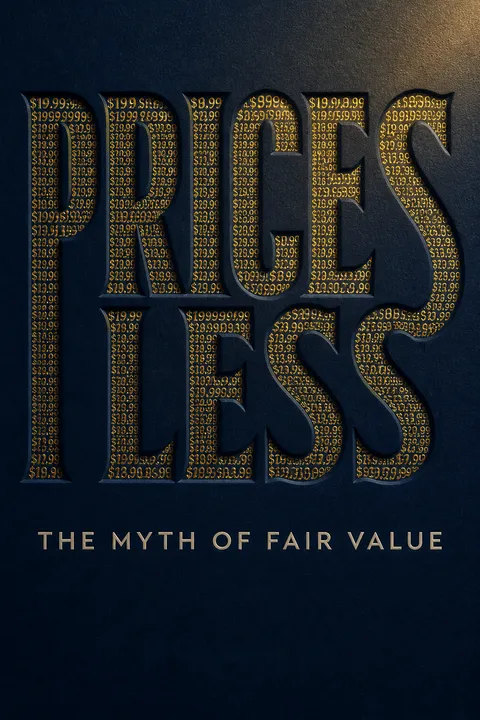


Key Takeaways
Stop treating a price as a fact your mind simply discovers
Prices are constructed. The book’s central idea, coherent arbitrariness, means people can agree about which of two things is worth more while remaining unsure what either should cost. Their dollar estimates are shaped by surrounding cues, not retrieved from a precise internal price list.
The Stella Liebeck coffee case shows how far a number can travel. Her lawyer asked jurors to consider one or two days of McDonald’s coffee sales as a penalty. The jury awarded $2.7 million in punitive damages, about two days’ sales by his estimate. Everyday pricing uses quieter versions of the same logic: Skippy reduced a peanut butter jar from 18 ounces to 16.3 while keeping its price unchanged. People often notice a comparison more readily than a change in the absolute amount.
What's striking is that uncertainty does not make people helpless. It makes context more influential. That distinction matters in consumer protection: clearer unit prices and comparable product sizes give people better evidence on which to build a judgment. The legal example also warns against treating a jury's dollar figure as a direct measurement of harm. A memorable proposed scale can shape the number even when jurors sincerely intend to be fair.
Use relative comparisons because perception tracks change better than absolutes
The senses work relationally. Psychophysics studies how physical stimuli relate to subjective experience. Its findings help explain why a price feels different depending on what came before it. Ernst Weber found that a noticeable change in weight depends on the percentage change, not simply the number of grams added. S. S. Stevens found related patterns across sensations, and money judgments also show diminishing returns: Harvard students thought about $40, on average, would make them twice as happy as an unexpected $10.
The same product can seem cheap or costly beside different alternatives. A $480 theater ticket can make a lower-priced seat feel like a bargain, while a one-dollar Hollywood Bowl seat may seem inferior despite offering the same music and a better view of the sunset. Context colors judgment; it does not establish objective quality.
This is a useful bridge between perception science and shopping: the mind is good at detecting change, not automatically good at calibrating absolute value. A personal benchmark, such as cost per ounce or the price of a comparable seat, can restore some scale. Yet comparisons need care too. A carefully chosen benchmark can mislead just as effectively as no benchmark at all.
Put a credible first number on the table, then challenge it
Anchors pull estimates. Anchoring and adjustment is the tendency for an initial number to influence a later estimate, even when the first number is arbitrary. In the famous United Nations experiment, students who saw a wheel stop at 10 guessed that African nations made up 25 percent of UN members; those who saw 65 guessed 45 percent. The correct share was about 23 percent.
The effect reaches consequential judgments. In an experiment, real estate professionals inspecting the same house estimated its value higher when given a higher fictional listing price. In negotiation, a well-supported opening offer can shift the other side’s sense of a reasonable outcome. When someone else anchors first, pause and list reasons that figure could be wrong before countering. This technique, called consider the opposite, reduced anchoring in experiments with mechanics and students.
The practical lesson is not simply to ask for more. A number that is wildly implausible may be ignored, and an aggressive opening can damage trust. The stronger strategy is a defensible anchor backed by independent information, followed by active scrutiny of the other side's figure. This resembles scientific debiasing: a deliberate search for disconfirming evidence can correct a first impression, though it cannot guarantee immunity.
Never assume a choice reveals the price someone truly values
Preferences can reverse. A preference reversal occurs when people choose one option but assign a higher price to another. In one example, most participants preferred a bet with an 80 percent chance of winning $5 over a 10 percent chance of winning $40. Both bets had the same expected value, $4. Yet participants commonly valued the larger-prize bet more highly when asked to name a price.
Sarah Lichtenstein and Paul Slovic observed the same pattern in a Las Vegas casino. Players risked their own money, but their choices and prices still conflicted. The mismatch creates a theoretical money pump: someone could repeatedly trade a bet the player prefers for one the player prices more highly, collecting money at each switch. The result challenges the idea that a stable private value always sits behind every choice, waiting to be measured.
A useful implication extends beyond gambling. Asking someone what they prefer and asking what they would pay are different measurement tasks, each directing attention to different features. The contradiction need not mean dishonesty or stupidity. It can reveal that the decision is assembled in the moment. Researchers, managers, and policymakers should avoid treating one response format as a transparent window into a person's settled priorities.
Assess risk from the reference point, not the final payoff alone
Starting points change risk. Prospect theory describes how people evaluate gains and losses relative to a reference point, rather than simply comparing final wealth. Loss aversion is the tendency for a loss to hurt more than an equivalent gain pleases. In a coin-toss bet with a possible $100 loss, many people wanted about $200 in possible winnings before accepting the risk.
People also react differently to certainty than to a merely high probability. They may prefer a sure gain to a larger gamble, but take a risky chance to avoid a sure loss. On Deal or No Deal, contestants sometimes refused generous offers after bad luck made those offers feel like losses against their earlier hopes. Prospect theory predicted contestants’ choices more accurately than the expected-utility model in the study described, 85 percent versus 76 percent.
Reference points explain why the same financial choice can feel prudent one day and reckless the next. They also suggest a useful decision habit: write down the actual outcomes before deciding, then identify what comparison is making one outcome feel like a loss. Still, loss aversion is a tendency, not a universal law. Stakes, experience, and the way a decision is made can all change how strongly it appears.
Account for fairness: people sometimes reject money to punish an insult
Cash is not the only motive. In the ultimatum game, one player proposes how to divide a sum, and the other can accept or reject. Rejection means both get nothing. A narrowly self-interested responder should accept even a tiny offer. In experiments with $10, however, offers averaged about $4.50, and responders were generally willing to reject offers below roughly $2.30.
People also judge prices by perceived fairness. When a store raised snow-shovel prices after a storm, most surveyed customers called the increase unfair, even though demand had risen. Such judgments vary across societies. In some market-based communities, sharing close to evenly was common; in a small, relatively isolated community studied in Peru, low offers were often accepted. Fairness norms are real, but they are not identical everywhere.
The game reveals that refusing a bad deal can be a form of costly punishment, not a calculation aimed at immediate gain. Such behavior may protect cooperation by making exploitation risky. But a lab division of $10 strips away history, need, and bargaining power. Fairness judgments in actual markets require those details, and a norm that supports trust in one community may not transfer cleanly to another.
Inspect the comparison set before believing a deal is cheap
Choices can be engineered. Retailers influence judgment by arranging comparisons, not merely by changing the item itself. In one beer experiment, adding a very cheap, low-quality option made the original bargain beer more attractive. Adding an expensive, slightly better option pushed choices toward the premium beer. The extra choice acted as a decoy, shifting attention toward a convenient comparison.
Zero can be an especially powerful price. When Hershey Kisses cost one cent and Lindt truffles cost 15 cents, most buyers chose the truffles. After both prices fell by a cent, making the Kiss free and the truffle 14 cents, most chose the Kiss instead. Menus, bundles, flat-rate phone plans, and luxury items priced far above ordinary goods use related cues. Ask what you would choose without the decoy, bundle, or supposedly free extra.
These tactics are best understood as choice architecture: the arrangement of options changes which features come to mind. That can be helpful when a well-designed default makes a good choice easier, but it can also obscure the total cost or steer customers toward excess. A practical defense is to compare the full price per unit or use, then decide whether the added features matter independently of the discount story.
Protect decisions from cues that quietly shift attention or bargaining power
Small cues can have large effects. A web-shopping experiment found that background images changed which sofas and cars people chose. A money-themed image increased the share choosing the cheaper sofa from 39 to 56 percent, though most participants denied that the background influenced them. In another study, a woman’s headshot on a lender’s letter to men had an effect on loan applications comparable to lowering the quoted monthly interest rate by 4.5 percentage points.
Bargaining power is also shaped by social expectations. In one ultimatum-game study, people offered women less than men. A classic experiment by Solomon Asch found that a single supportive ally sharply reduced the pressure to agree with an obviously wrong group. Before a consequential negotiation, bring an informed second person and write down the criteria that matter before seeing the offer.
What's important here is that influence need not involve a lie. A background, a face, or a confident group can redirect attention while leaving every stated fact intact. That makes procedural safeguards valuable: independent comparisons, written criteria, and a trusted companion reduce reliance on a single social cue. Still, experimental effects are averages; they should prompt scrutiny, not assumptions about how any one person will behave.
Treat money figures as stories, especially in markets and pay
Nominal dollars can mislead. The money illusion is the tendency to focus on the amount printed in dollars while neglecting what those dollars can buy. During German hyperinflation, an shopkeeper explained that she had made a profit selling a shirt because she bought it for less, even though inflation meant the sale did not preserve its purchasing power. The number had risen; real value had not.
Stock prices and salaries also depend on shared expectations, not just measurable fundamentals. The book notes that the S&P’s price-to-earnings ratio ranged from below 5 to above 44 across the previous century. A US law limiting tax deductions for executive salaries above $1 million coincided with that threshold becoming a salient benchmark, rather than restraining pay. Compare purchasing power, performance, and relevant alternatives before treating a large number as proof of value.
Money is both a measuring tool and a social signal. Inflation-adjusted comparisons help separate changes in purchasing power from changes in labels, while market comparisons expose how much prices depend on collective expectations. The caution is that no single adjustment settles questions of value: a stock, salary, or artwork can carry status and future expectations as well as cash flow. Precision about dollars is not the same as certainty about worth.
Analysis
Priceless is a history of an intellectual reversal: economics often treated preferences as stable facts that choices and prices could reveal, while decision research found that people construct judgments from context. The book makes this claim tangible through a sequence of increasingly consequential settings. A changed package, a jury award, a casino wager, a real estate listing, and a stock market may look like unrelated problems. Each asks people to translate uncertain value into a number, and each gives context an opportunity to shape that translation.
The strongest contribution is not the claim that people are irrational in every decision. It is the more precise claim that judgment depends on the task. Choosing between gambles draws attention to winning chances; naming a price foregrounds money amounts. A price is therefore not a neutral readout of desire. This framework explains why market behavior can remain coherent, such as preserving relative rankings among products, while the dollar figures attached to those rankings vary dramatically.
That distinction also guards against a simplistic conclusion. If values are constructed, it does not follow that every value is equally arbitrary. Knowledge, experience, clear comparisons, and feedback can constrain judgment. Experts in the real estate study were less affected by false listing prices than amateurs, even though they were not immune. The evidence supports fallibility, not helplessness.
The book also exposes an ethical tension. The same knowledge can improve a decision environment or exploit attention. A comparison that clarifies cost can help; a decoy that hides it can sell more. Because influence is often subtle and unconscious, transparency and meaningful comparison become more than matters of courtesy. They are safeguards for autonomy. The practical message is modest but demanding: treat the first price, preference, or fairness judgment as evidence to examine, not as a revelation of what something is worth.
Review Summary
Priceless explores the psychology of pricing, revealing how irrational and manipulable our perception of value can be. Readers found the book's insights into behavioral economics fascinating, particularly concepts like anchoring and prospect theory. Many appreciated the real-world examples and practical applications. Some felt the book was dense or repetitive, while others praised its thoroughness. Overall, reviewers found the book eye-opening, though opinions varied on its readability and structure. Most agreed it offers valuable insights for both consumers and business professionals.
People Also Read










Glossary
Coherent arbitrariness
Stable rankings, unstable pricesA pattern in which people maintain consistent relative preferences while assigning uncertain or changeable dollar values. Someone may reliably prefer one item to another without having a firm internal answer to what either should cost. The phrase is associated with research by Dan Ariely, George Loewenstein, and Drazen Prelec.
Psychophysics
Sensation measured against stimuliThe study of how physical stimuli, such as weight, brightness, sound, or heat, relate to subjective perception. Psychophysicists found that judgments often respond more reliably to relative changes than to absolute quantities. The book uses this field to explain why prices and other valuations can depend heavily on comparisons.
Anchoring and adjustment
An initial number shifts estimatesA judgment process in which an initial value influences an estimate of an unknown quantity. People may adjust away from the starting number but often do not adjust enough. Anchors can be relevant, such as an asking price, or arbitrary, such as a number produced by a wheel.
Preference reversal
Choice and price disagreeA finding in which a person chooses one option over another but assigns the rejected option a higher price. In gambling studies, people often chose bets with a higher chance of winning while valuing more highly bets with larger possible prizes. The pattern challenged the idea that choices consistently reveal underlying preferences.
Prospect theory
Judgments depend on gains and lossesA theory of decision-making under risk developed by Daniel Kahneman and Amos Tversky. It describes how people evaluate outcomes relative to a reference point, respond more strongly to losses than equivalent gains, and treat certainty differently from probability. These patterns help explain why risk-taking changes when a decision is framed as a gain or a loss.
Reference point
A benchmark for gains and lossesThe comparison level against which a person judges an outcome. A change above the reference point feels like a gain, while a change below it feels like a loss. Expectations, previous prices, and earlier outcomes can all become reference points, changing how attractive the same offer appears.
Loss aversion
Losses weigh more than equal gainsThe tendency for a loss to have a stronger psychological effect than a gain of the same size. In the book’s examples, people often require a possible gain substantially larger than a possible loss before accepting an even-chance bet. Loss aversion helps explain reluctance to sell, insure, or accept offers framed as losses.
Ultimatum game
One offer, accept or rejectA bargaining experiment in which one player proposes how to divide a sum and a second player can accept or reject the proposal. If the responder rejects it, neither player receives anything. Many responders reject small offers, demonstrating that fairness and punishment can matter more than taking any available cash.
Transaction utility
The perceived quality of a dealA concept developed by Richard Thaler describing the satisfaction or dissatisfaction attached to the terms of a purchase, separate from the value of the item itself. A buyer may feel good because the price seems below a perceived reference value, or refuse an item because its price feels unfair, even when the buyer wants and can afford it.
Money illusion
Confusing dollars with purchasing powerThe tendency to focus on nominal amounts rather than on what those amounts can buy. During inflation, a wage increase can look like a gain while purchasing power falls. The book extends the idea beyond inflation, showing how attention to dollar figures can eclipse the underlying value they are meant to represent.
Flat-rate bias
Preference for one bundled feeA tendency to prefer a fixed fee over payment for each use, even when the fixed plan may cost more overall. A flat charge makes each additional use feel free, while per-use charges keep making the cost visible. The book connects this preference to phone plans, entertainment subscriptions, and other pricing structures.
FAQ
What's Priceless: The Myth of Fair Value about?
- Explores pricing psychology: The book examines how consumers perceive prices and the psychological tricks that influence their willingness to pay.
- Behavioral economics focus: It integrates concepts from behavioral economics, particularly the work of Kahneman and Tversky, to explain irrational financial decisions.
- Real-world applications: The author uses examples like the McDonald’s coffee case and Super Bowl ticket pricing to illustrate pricing strategies.
Why should I read Priceless: The Myth of Fair Value?
- Understanding consumer behavior: Essential for those interested in marketing, economics, or psychology, revealing factors driving consumer decisions.
- Practical insights for businesses: Offers valuable strategies for setting prices effectively and understanding customer perceptions.
- Engaging storytelling: Complex concepts are presented in an accessible and entertaining manner, making it enjoyable for all readers.
What are the key takeaways of Priceless: The Myth of Fair Value?
- Value is subjective: Perceived value is often arbitrary and context-driven, not an absolute measure.
- Anchoring effect: Initial exposure to a number influences subsequent judgments, affecting perceived affordability.
- Loss aversion: People feel losses more acutely than equivalent gains, impacting responses to pricing changes.
What are the best quotes from Priceless: The Myth of Fair Value and what do they mean?
- “The more you ask for, the more you get.” Highlights that higher initial demands can lead to better outcomes in negotiations.
- “Prices are made-up numbers that don’t always carry much conviction.” Reflects the theme that consumer perceptions are often influenced by arbitrary factors.
- “Anchoring can’t happen to me.” Illustrates the misconception that individuals are immune to cognitive biases.
How does Priceless explain the anchoring effect?
- Anchoring defined: A cognitive bias where initial information influences subsequent judgments and decisions.
- Impact on pricing decisions: Consumers often base perceptions of value on initial price anchors, skewing willingness to pay.
- Real-world examples: High initial prices can make subsequent lower prices seem like bargains, manipulating consumer behavior.
What is the concept of "coherent arbitrariness" in Priceless?
- Definition of coherent arbitrariness: Consumers have stable relative valuations, but absolute price judgments are arbitrary.
- Example in pricing: Changes in product packaging without price alteration can maintain perceived value.
- Implications for businesses: Allows manipulation of value perceptions through strategic pricing and packaging.
What role does loss aversion play in consumer pricing according to Priceless?
- Understanding loss aversion: People experience losses more intensely than equivalent gains, affecting reactions to price changes.
- Impact on pricing strategies: Businesses can frame offers to emphasize potential losses, encouraging purchases.
- Examples in marketing: Creating urgency by highlighting potential losses can drive consumer action.
How does Priceless relate to the concept of fairness in pricing?
- Fairness perceptions: Consumers often reject offers perceived as unfair, even if financially beneficial.
- Experiments on fairness: The ultimatum game shows people sacrifice financial gain to punish perceived unfairness.
- Implications for businesses: Setting prices that are perceived as fair fosters loyalty and repeat business.
What is the significance of the ultimatum game in Priceless?
- Definition of the ultimatum game: A bargaining scenario where one player proposes a division of money, and the other can accept or reject it.
- Findings from the game: People often reject unfair offers, showing emotions and social norms in economic decisions.
- Broader implications: Highlights the importance of perceived fairness in negotiation dynamics and consumer behavior.
What is the concept of transaction utility in Priceless: The Myth of Fair Value?
- Definition of transaction utility: Perceived value of a purchase compared to its price, influencing decision-making.
- Positive and negative utility: Positive utility leads to purchases; negative utility results in rejection.
- Real-life implications: Helps businesses set prices that maximize consumer satisfaction and sales.
How can I apply the lessons from Priceless: The Myth of Fair Value in my daily life?
- Be aware of anchors: Evaluate products based on actual worth rather than initial prices.
- Evaluate transaction utility: Assess whether a price feels like a bargain or a rip-off.
- Negotiate effectively: Use fairness and emotional responses to craft offers perceived as fair.
What role do emotions play in pricing decisions according to Priceless: The Myth of Fair Value?
- Emotional responses to pricing: Emotions significantly influence perceptions and decisions, with feelings of outrage affecting willingness to buy.
- Loss aversion: People react more strongly to high prices than low prices, impacting purchasing behavior.
- Balancing emotions and rationality: Understanding emotional aspects helps businesses create resonant strategies.
About the Author
Other books by William Poundstone





Download PDF
Download EPUB
.epub digital book format is ideal for reading ebooks on phones, tablets, and e-readers.








