

Key Takeaways
The Army built a psychic spy program before it could explain what it was testing
A strange report changed course. In 1988, Army Captain David Morehouse told a unit psychologist about an out-of-body experience during a camping trip. The psychologist showed him classified reports on a military project investigating psychic perception. Morehouse joined the unit, despite warnings that the assignment could damage his career. The book uses his story to open a history of remote viewing, the claimed ability to describe a distant or hidden target without ordinary sensory access.
An unusual assignment. The unit trained military personnel to produce descriptions that intelligence agencies might use. Its members worked in secrecy, under shifting code names and uncertain institutional support. Marrs presents their work as both a government experiment and a personal upheaval: viewers said the experience altered how they understood the mind, reality, and their place in the universe.
The opening works because it begins with a career decision, not a paranormal claim in the abstract. Morehouse's military background makes the unit's existence legible as an institutional fact, while his experience remains a report requiring verification. That distinction is useful beyond this story: a government can seriously investigate an idea without proving it true. The narrative's strongest question is therefore not simply whether psychic perception exists, but how a secret program turns an extraordinary claim into a testable intelligence practice.
Treat remote viewing as a claim to test, not a marvel to believe
Old stories are not proof. Marrs links remote viewing to accounts of prophecy, visions, divination, and out-of-body experiences across cultures and centuries. He describes figures such as the biblical prophet Deborah, Nostradamus, and nineteenth-century psychometry researcher William Denton. The connective idea is that people have long reported gaining information outside the ordinary senses. But similar stories across eras do not, by themselves, establish that the same mechanism produced them.
Laboratories raise the standard. The book then turns to parapsychology research, including J. B. Rhine's card and dice experiments and the Ganzfeld technique, which reduces ordinary sensory distractions during ESP tests. A review of Ganzfeld results found an effect above chance, according to the studies discussed. Marrs treats this as evidence worth investigating, while the deeper question remains whether an observed effect has a reliable explanation.
Historical continuity can make an unfamiliar claim feel less alien, but it can also blur important differences between religious visions, folklore, and controlled experiments. The book is strongest when it moves from reports to procedures that could, in principle, be repeated. The Ganzfeld example also illustrates a general principle in science: combining many studies can reveal a pattern that single experiments miss. Yet statistical consistency is not the same as a settled explanation, and that gap matters especially when the claim challenges ordinary assumptions about perception.
The strongest case depended on blind targets, independent judging, and feedback
Design against ordinary cues. At Stanford Research Institute, researchers led by Hal Puthoff and Russell Targ worked with viewers including Ingo Swann. In a standard test, a target team traveled to a randomly chosen nearby site while a viewer stayed behind and recorded impressions. The viewer did not know the destination. Afterward, independent judges compared the description with possible target locations, and the viewer received feedback about the actual site.
Specific safeguards mattered. The researchers tried to prevent viewers and experimenters from knowing the target in advance, reducing opportunities for ordinary information to leak into a session. Swann's coordinate experiments and descriptions of hidden locations helped persuade some skeptical officials, including a CIA case officer. The book emphasizes that feedback was essential: without confirmation, a vivid account could remain an untested story rather than evidence of a successful viewing.
This is the book's most transferable lesson about evaluating anomalous claims: the process matters as much as the result. Blinding, random selection, independent evaluation, and prompt feedback each address a different route by which expectation can shape an answer. These controls do not guarantee that a phenomenon is real, but they make failure and success more informative. A remaining challenge is reproducibility across teams and settings. A compelling demonstration may justify further study; it cannot substitute for a durable record of repeated performance.
A Soviet psychic gap, real or imagined, pushed Washington toward experiments
Fear supplied the urgency. In 1960, a French magazine claimed that a submerged U.S. submarine had tested telepathy. The story was later alleged to be a hoax, but Soviet researchers used it to argue for renewed study of ESP. By the 1970s, books describing Soviet and Eastern European psychic research had fueled American concern that the other side might gain an intelligence advantage.
Research became national security work. The CIA funded early SRI experiments, including Project SCANATE, a name derived from scanning by coordinates. When the CIA withdrew, Army intelligence took up the work, forming a small unit known as GRILL FLAME. Marrs portrays the program as a Cold War response to a perceived capability gap: officials did not need to agree on how psychic perception worked to wonder whether it could be useful.
The program's origin shows how strategic anxiety can make fringe research institutionally plausible. In a competition where the cost of overlooking a capability might seem greater than the cost of testing it, even weakly understood ideas can attract funding. The alleged submarine hoax is especially instructive: a false report can still have real consequences if decision-makers treat it as a warning. That does not make the resulting research irrational, but it means the origin story is evidence of threat perception, not evidence that the threat itself was genuine.
Structure was meant to separate faint signal from imagination and noise
Interpretation can outrun perception. The viewers used analytical overlay, or AOL, to describe the mind's tendency to turn an initial impression into a confident interpretation. A tall cylindrical shape might first suggest a factory chimney, even if the target is something else. The unit therefore tried to keep viewers recording basic sensations and shapes before naming or explaining what they saw.
A disciplined session. Ingo Swann developed a staged method that moved from an initial mark on the page through sensory and dimensional impressions toward more detailed descriptions. Monitors watched for speculation, confusion, or distractions and could call a pause. Marrs reports that viewers found the structure more useful than relying on spontaneous psychic flashes, which the book describes as inconsistent. The aim was not to make every session accurate, but to make the work more orderly and assessable.
The method resembles a broader discipline of separating observation from inference. In fields from intelligence analysis to clinical diagnosis, premature labeling can make later evidence seem to confirm an initial guess. Requiring raw descriptions first is a practical defense against that tendency. At the same time, structure can create its own expectations: a viewer and monitor may learn what kinds of answers the process rewards. Blinding and independent scoring remain necessary, because procedural rigor is valuable only when it limits bias rather than giving bias a more formal vocabulary.
The program's operational value remained harder to prove than its dramatic sessions
Useful-looking results were reported. Military viewers described targets including a Soviet submarine, a suspected biochemical facility, and sites connected to the Iranian hostage crisis. The book also recounts an exercise in which viewers reportedly described a secret U.S. aircraft when officials had framed the target as a possible Soviet plane. Such episodes made the work appear potentially valuable, especially when viewers said they had access to information unavailable through ordinary channels.
Verification was often missing. Viewers complained that intelligence agencies rarely provided feedback, even after they had worked on consequential requests. Without that information, the unit could not reliably assess whether a description was accurate or useful. In 1995, a government review acknowledged statistically significant results in laboratory experiments but concluded that remote viewing had not demonstrated value in intelligence operations. Marrs disputes the review's fairness, yet the gap between striking sessions and proven operational benefit remains central.
Intelligence work presents a difficult measurement problem: useful information can be hard to validate when sources and targets are classified. But secrecy cuts both ways. It protects sensitive operations while making external assessment nearly impossible, and claims of success become difficult to distinguish from selective reporting. A fair evaluation needs more than anecdotes from insiders or a dismissive summary from skeptics. It needs predefined criteria, complete records, and a clear account of whether the information changed a decision or improved an outcome.
Secrecy protected the work, but also made independent verification harder
A program without a stable home. Marrs traces the unit through successive names, including GRILL FLAME, CENTER LANE, SUN STREAK, and STAR GATE. Its sponsorship shifted from the CIA to Army intelligence and then the Defense Intelligence Agency. The book describes repeated funding uncertainty, oversight reviews, and disagreements over whether the unit was research or operational intelligence.
Control changed the culture. Former viewers say the unit lost focus when civilian managers gained influence and when different approaches to psychic work competed with the structured method. They also describe a 1988 inspection during which records were reportedly destroyed to make the project appear limited to research. Those accounts are part of Marrs's reporting, not independent proof of a deliberate cover-up. The wider point is that a secret program can be vulnerable to bureaucratic incentives as well as scientific doubt.
Institutional secrecy is not automatically evidence of suppression, but it complicates almost every claim about a classified program. The same walls that protect sources can prevent replication, public scrutiny, and accountability for weak results. The book's account of shifting agencies and code names helps explain why participants felt insecure and ignored. It also raises a useful question: when a project cannot openly demonstrate its value, what evidence should justify its continuation? In the absence of transparent standards, both proponents and critics can selectively interpret the same opaque record.
Treat the Phobos II story as a test of evidence, not proof of aliens
A startling claim met an ambiguous image. In 1991, former remote viewers reported that a mysterious object had approached the Soviet Phobos II probe near Mars and damaged it. They also described a structure on Mars and possible life beneath the surface. The account sounded extraordinary, but the later evidence was limited: a former Soviet cosmonaut displayed a photograph showing an unexplained object near the probe.
Unexplained is not identified. The photograph did not establish what the object was or whether it had caused the spacecraft's loss. Marrs treats it as feedback consistent with the viewers' account and connects the case to the disappearance of the Mars Observer. The book's Enigma Files extend remote viewing to UFOs, other planets, and historical mysteries. Their stories are memorable, but the most extraordinary claims remain the least independently verified.
The Phobos II episode captures the boundary between a suggestive match and a demonstrated explanation. A prior description that resembles a later image can be intriguing, but the image itself may support several interpretations. Stronger evidence would require clearly dated predictions, access to original records, and independent analysis that could rule out ordinary explanations. The book is valuable as a record of what participants believed and reported. Its conclusions about extraterrestrial activity, however, depend on a much higher evidentiary bar than the existence of the remote viewing program.
Analysis
PSI Spies is part history of a classified research program, part participant-centered narrative, and part argument for the reality of remote viewing. Its most compelling story is institutional: a perceived Soviet advantage helped move an idea from controversial laboratory work into military intelligence. Morehouse's recruitment gives that history a human entrance, while the changing code names, agency transfers, and disputes over feedback reveal how difficult it was to turn an unusual claim into a dependable tool.
The book's evidentiary case is uneven. It describes careful controls at SRI, including blind target selection and independent judging, and it reports experiments that supporters interpreted as significant. It also relies heavily on testimony from former viewers, selected successes, and episodes for which feedback was limited or ambiguous. This matters because a reported session, a statistically unusual laboratory result, and operationally useful intelligence are three different claims. Evidence for one does not automatically establish the others.
Marrs's skeptical targets are often government secrecy and scientific gatekeeping. Those concerns deserve attention, but the book sometimes treats dismissal as evidence of concealment and treats a suggestive match as confirmation. The same discipline should apply in both directions: critics should not reject a result merely because it challenges conventional assumptions, and proponents should not infer a hidden cause from unexplained data alone.
The book's lasting value lies in the questions it forces into view. What counts as reliable intelligence when the source cannot be named? How should a program be judged when its clients withhold feedback? And how can unusual findings be tested without either ridicule or credulity? Its most persuasive contribution is not proof that psychic spying worked, but a vivid account of the people, methods, incentives, and evidentiary uncertainties surrounding a government effort to find out.
Review Summary
PSI Spies receives generally positive reviews, with readers praising its exploration of remote viewing and government psychic programs. Many find it fascinating and well-researched, appreciating Marrs' investigative journalism. Some reviewers note the book's depth and importance in understanding covert operations. Critics mention information overload and skepticism about certain claims. Overall, readers recommend it for those interested in conspiracy theories, the occult, and government secrets, though a few find it becomes tedious towards the end.
People Also Read

Glossary
Remote viewing
Describing distant targets psychicallyA claimed ability to describe a person, place, or object without ordinary sensory access to it. In the military program discussed in the book, a viewer was usually given limited cues, such as coordinates, and recorded impressions for comparison with a concealed target. The term describes the practice, not proof that psychic perception occurred.
Coordinate Remote Viewing
Structured coordinate-based viewingA structured remote viewing approach in which coordinates identify a target without giving the viewer its name or nature. The viewer records impressions in a sequence intended to move from basic sensory and spatial details toward more specific descriptions. The method was developed to reduce guesswork and make sessions easier to evaluate.
Analytical overlay
Premature interpretation of impressionsA term used for a viewer's conscious interpretation of an impression before the target has been established. For instance, a shape might be labeled a chimney even when it could represent another tall structure. The training approach described in the book seeks to identify such interpretation and keep it separate from raw descriptions.
Ganzfeld Technique
Sensory-reduced ESP testingA laboratory approach to ESP testing that reduces ordinary sensory input, often through soft lighting, sound, and a quiet setting. Researchers use the conditions to limit distractions while a participant attempts to identify a target. The book discusses aggregated results from Ganzfeld studies as evidence that merits investigation, while noting that the mechanism remains unexplained.
Project SCANATE
CIA-sponsored coordinate viewing researchAn early U.S. government remote viewing project conducted with researchers at Stanford Research Institute. Its name was derived from scanning by coordinates. The project used viewers to describe targets identified by geographic coordinates and helped establish the research program that was subsequently supported by Army and defense intelligence organizations.
GRILL FLAME
Army remote viewing programA code name for an Army-linked program that investigated remote viewing and trained military personnel in its use. The program developed from earlier government-supported research and included operational-style testing. The book traces its changing institutional status and its later succession by other code-named efforts.
Meta-analysis
Statistical synthesis of studiesA method for combining results from separate studies to assess the overall pattern across a body of research. In the book, meta-analysis is used to evaluate whether ESP experiments, including Ganzfeld studies, show results beyond chance across multiple trials. A combined statistical effect can support further study, but does not by itself explain its cause.
FAQ
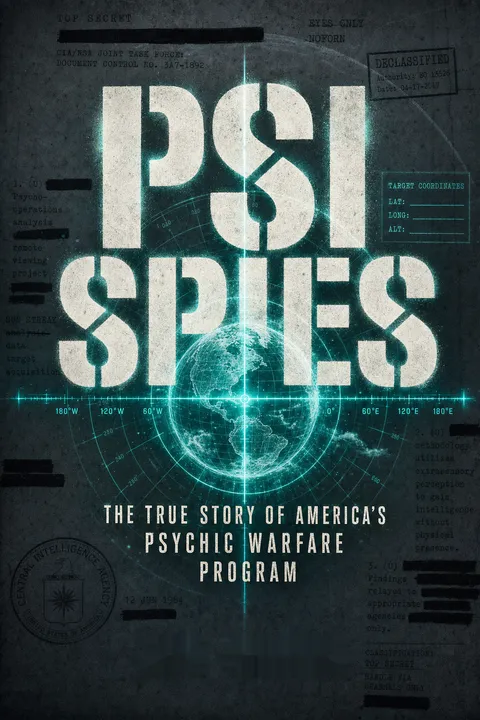
What is PSI Spies: The True Story of America's Psychic Warfare Program by Jim Marrs about?
- Secret U.S. psychic program: The book uncovers the U.S. military’s classified remote viewing (RV) program, where soldiers were trained to use psychic abilities for intelligence gathering.
- Historical and scientific context: Marrs traces the roots of psychic phenomena from ancient traditions to modern scientific research, showing how remote viewing evolved into a government-funded project.
- Personal stories and secrecy: The narrative includes firsthand accounts from key participants, highlighting the secrecy, challenges, and controversies surrounding the program.
Why should I read PSI Spies by Jim Marrs?
- Reveals hidden government secrets: The book exposes a little-known chapter of U.S. intelligence history, offering insights into psychic espionage and government experimentation.
- Balanced perspective: Marrs presents both evidence and skepticism, allowing readers to weigh the credibility and limitations of remote viewing.
- Engaging and well-researched: Written by an investigative journalist, the book combines compelling storytelling with thorough documentation, appealing to fans of military history, parapsychology, and conspiracy.
What are the key takeaways from PSI Spies by Jim Marrs?
- Remote viewing is real but complex: The military demonstrated that psychic intelligence can be trained and used, but it requires strict protocols and feedback.
- Secrecy and controversy: The program faced internal resistance, political challenges, and was shrouded in secrecy, limiting its public acknowledgment and operational use.
- Lasting legacy: Despite official closures, remote viewing influenced intelligence practices and continues to inspire interest in psychic phenomena.
What is remote viewing (RV) as defined and developed in PSI Spies by Jim Marrs?
- Definition and origins: Remote viewing is a psychic ability to perceive and describe distant or unseen targets using only the mind, with roots in ancient clairvoyance and prophecy.
- Scientific development: The method was formalized and tested at Stanford Research Institute (SRI) by researchers like Ingo Swann and Harold Puthoff, then operationalized by the U.S. Army.
- Structured methodology: RV involves a disciplined, multi-stage process—such as ideogram formation and detailed sketches—requiring feedback and control of mental distractions.
How did the U.S. government become involved in psychic research, according to PSI Spies by Jim Marrs?
- Cold War competition: Reports of Soviet psychic research spurred U.S. intelligence agencies to investigate and develop their own psychic espionage programs.
- CIA and Army programs: The CIA funded early research at SRI, leading to projects like SCANATE and GRILL FLAME, which trained soldiers as psychic spies.
- Secrecy and oversight: These programs operated under strict secrecy, with oversight committees and shifting support within government agencies.
Who were the key figures in America’s psychic warfare program as described in PSI Spies by Jim Marrs?
- Ingo Swann: A pioneering psychic who developed much of the remote viewing methodology and trained many viewers.
- David Morehouse and Mel Riley: Army officers who became prominent Psi Spies after personal psychic experiences and extensive training.
- Harold Puthoff and Russell Targ: Physicists at SRI who conducted foundational experiments and brought remote viewing to government attention.
- Military advocates: Leaders like Gen. Albert Stubblebine and Col. John Alexander supported and advanced the program within the Army.
What was Army Captain David Morehouse’s experience with remote viewing in PSI Spies by Jim Marrs?
- Out-of-body experience: Morehouse had a profound out-of-body event that led him to seek help and eventually be introduced to psychic research.
- Recruitment and training: He was brought into the classified GRILL FLAME program, where he received formal training in remote viewing.
- Personal transformation: Morehouse’s journey highlights the psychological and professional challenges faced by Psi Spies, including skepticism and secrecy.
How did the Psi Spies program operate during the Cold War, according to Jim Marrs?
- Formation and evolution: The Army’s psychic unit began as GRILL FLAME in the 1970s, later renamed several times (CENTER LANE, SUN STREAK, STAR GATE).
- Operational missions: Psi Spies used remote viewing to gather intelligence on Soviet military targets, chemical weapons, and even extraterrestrial phenomena.
- Psychic warfare with Soviets: The program engaged in a psychic “cat and mouse” game with Soviet extrasensors, including counter-surveillance and psychic countermeasures.
What were the main challenges and limitations of remote viewing described in PSI Spies by Jim Marrs?
- Signal-to-noise problem: Remote viewers struggled with mental “noise” that interfered with psychic impressions, requiring discipline and structured protocols.
- Analytical overlay (AOL): The tendency to interpret or guess about impressions often led to errors, making it crucial to recognize and minimize AOL.
- Need for feedback: Timely feedback was essential for learning and accuracy, but was often lacking in operational settings, limiting effectiveness.
What scientific and skeptical responses to remote viewing are discussed in PSI Spies by Jim Marrs?
- Critical reports: The National Academy of Sciences (NAS) concluded there was no scientific justification for parapsychology, though this was criticized for bias.
- Skeptics vs. insiders: Skeptics like Ray Hyman were accused of suppressing evidence, while military scientists defended remote viewing’s validity.
- Quantum physics analogy: The book explores quantum entanglement and unified field theory as possible explanations for remote viewing’s nonlocal effects.
What extraordinary or “Enigma” cases did the Psi Spies investigate, according to Jim Marrs?
- Extraterrestrial bases: Remote viewers described underground alien bases on Earth and features of other planets before scientific confirmation.
- UFOs and historical mysteries: The Psi Spies explored UFO encounters, the JFK assassination, the Tunguska explosion, and the Loch Ness monster.
- Environmental warnings: Remote viewing predicted ozone depletion and its potential catastrophic effects on Earth’s future.
How did the Psi Spies program transition to the public and private sectors, as described in PSI Spies by Jim Marrs?
- Retirement and disclosure: Many military-trained remote viewers retired and began teaching RV to civilians, forming companies like PSI TECH.
- Media and commercial use: News investigations revealed the program’s existence, leading to public interest and commercial applications in business and government.
- Ongoing research and training: Remote viewing training became available to the public, with organizations like the International Remote Viewing Association promoting the discipline.
What practical advice and methods for remote viewing does Jim Marrs present in PSI Spies?
- Testing and training: The book suggests self-tests to clear the mind and practice describing images without analysis.
- Controlled Remote Viewing (CRV): Marrs outlines a structured method involving phases to receive impressions and avoid analytical overlay.
- Session guidelines: Sessions should be brief, conducted in quiet environments, and followed by immediate feedback; using multiple viewers improves accuracy but requires skilled analysis.
- Limitations: Remote viewing is not reliable for precise numbers or names, but can accurately describe people, places, and events.
About the Author

Download PDF
Download EPUB
.epub digital book format is ideal for reading ebooks on phones, tablets, and e-readers.








