

Key Takeaways
Prepare the countdown, not just the performance.
The final minutes matter. Years of practice build skill, but a high-stakes moment can still be shaped by what happens immediately before it. Neurosurgeon Mark McLaughlin uses a deliberate sequence before operating: he pauses, recalls the patient’s needs, mentally reviews the plan, focuses on positive thoughts, and prays. His routine grew from wrestling, where he learned that physical readiness did not guarantee mental readiness. Before surgery, he also avoids casual conversation and uses music and familiar objects to steady his attention.
Small gains count. McGinn’s point is not that a ritual can replace competence or guarantee success. It is that important performances often depend on a few concentrated hours, and preparation can help people use those hours well. A routine is worth testing if it improves focus, confidence, or steadiness when the stakes rise.
The useful shift is from treating preparation as more practice to treating it as a transition into performance. A surgeon, speaker, or negotiator cannot always rehearse again at the door, but can decide what to attend to and what to leave behind. McLaughlin’s sequence also keeps the patient central, which distinguishes responsible preparation from mere self-hyping. The evidence is personal rather than conclusive, so the routine should be judged by observable effects, not by how solemn or elaborate it feels.
Translate nervous energy into excitement instead of demanding calm.
A small mental shift. Anxiety and excitement both involve high arousal, while calm is a much larger leap from a racing heart and sweaty palms. In Alison Wood Brooks’s singing experiment, people who told themselves they were excited averaged 80.52 percent, compared with 52.98 percent for those who called themselves anxious. Follow-up speech and math experiments also favored excitement over attempts to stay calm.
Arousal can help. In a GRE study, test takers who were told their anxious sensations could support performance scored 55 points higher in math than the comparison group. At the actual test more than a month later, they scored 65 points higher. The practical move is not to deny nerves, but to interpret them as energy for an opportunity.
This is a particularly usable form of emotion regulation because it does not demand that people manufacture a feeling they do not have. Reframing preserves the body’s activation while changing its meaning, a modest intervention with a plausible route to better attention and effort. The reported experiments are promising, not proof that excitement helps every person or every task. Severe, persistent anxiety is also different from ordinary pre-performance nerves and may call for clinical support rather than a slogan.
Tune your emotional intensity to the task and to yourself.
No universal setting. The familiar Yerkes-Dodson account suggests performance often peaks at a middle level of arousal, rather than at total calm or maximum stress. But athletes sometimes perform well at unusually high stress levels, and the same person may need different emotional states for different events. Yuri Hanin’s Individualized Zones of Optimal Functioning model treats the goal as finding a personally effective emotional range, not obeying one general rule.
A practical reset. Sports psychologists also teach centering, a brief sequence that can include setting an intention, breathing, releasing muscle tension, focusing attention, and using a cue phrase. Don Greene tested the technique with SWAT trainees, whose centered group performed better in a live-fire exercise than those who did nothing. The skill takes practice; reading a list of steps is not the same as learning it.
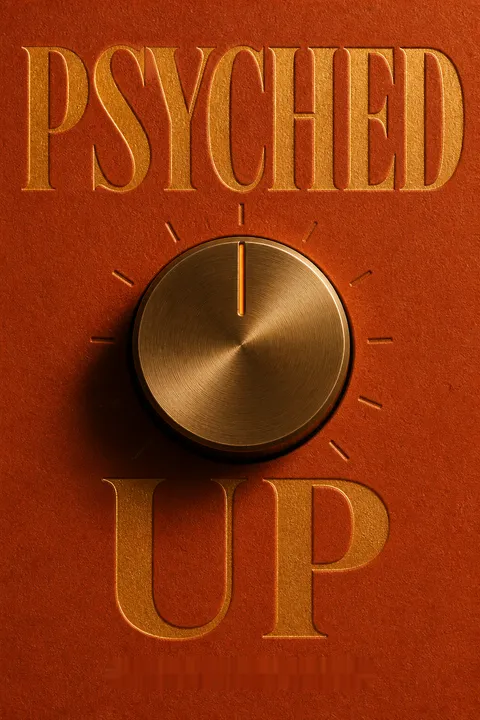
The mixing-board image captures an important point: emotional readiness is multidimensional. A person may want confidence without aggression, alertness without panic, or calm hands without low energy. This makes self-observation more useful than borrowing a famous athlete’s routine wholesale. Yet personal calibration can become an excuse for endless introspection. A simple record of feelings and performance across several events is more informative than trying to identify a perfect state from memory.
Give attention a repeatable, task-linked runway.
Routines cue performance. A pre-performance routine is a consistent sequence of thoughts and actions related to the task. Sports studies, including research across activities such as darts, archery, and water polo, generally find that well-designed routines are associated with stronger performance. They may focus attention, reduce distractions, and trigger practiced movements, although researchers have not settled on one explanation for why they work.
Keep it relevant. Jerry Seinfeld’s simple backstage pattern included reviewing notes, putting on his jacket, and walking before going onstage. Surgeon Mark McLaughlin’s Five Ps direct his attention to the patient, plan, and purpose of the operation. These differ from actions with no direct task connection, such as a lucky object. A useful routine should make the next action clearer, not create a fragile set of conditions that must be perfectly reproduced.
A routine functions like a bridge between preparation and execution. Its value may lie less in any single step than in reducing the number of fresh decisions made under pressure. That is consistent with checklists in complex work, where a stable sequence can protect attention from being consumed by routine omissions. Still, routines need room for adaptation. A performer who becomes distressed when one step is interrupted has built dependence, not resilience.
Use rituals to interrupt worry and connect a team.
Meaning can steady behavior. A ritual is a repeated action that need not have a direct connection to the task. It can offer comfort or a sense of control, but superstitious belief goes further by assigning an action magical influence over the result. In experiments led by Harvard psychologist Michael Norton, groups that clapped and stamped together before a scavenger hunt visited more locations and were less likely to miss the deadline than groups who read silently. They also reported liking one another more.
Expectancy matters. In a singing experiment, people who performed a short sequence presented as a ritual sang better and reported less anxiety than people who did not. Calling the same actions random gestures weakened the effect. Lucky objects may also boost confidence: golfers who believed a putter belonged to a professional estimated the hole as larger and made more putts. None of this shows that objects possess supernatural power.
Rituals are best understood here as structured attention and shared meaning, not as evidence that luck can be controlled. The group findings suggest that synchronized action can create a brief sense of belonging before people have to coordinate. The lucky-object studies point toward expectation as a possible mechanism: believing a tool carries success may change how capable its user feels. A ritual becomes less helpful when it shifts from a cue for readiness into a rule that failure is inevitable without it.
Make pep talks specific, credible, and emotionally calibrated.
Direction beats noise. A pep talk can raise energy, but a speech that only demands victory may leave people without a usable plan. General Stanley McChrystal’s approach gave teams a clear task, explained its importance, affirmed their ability, recalled shared experience, and urged action. The emphasis was on what people needed to do. In the film Hoosiers, coach Norman Dale’s speeches similarly moved among strategy, fundamentals, and trust in the team rather than relying only on emotional appeals.
Fit the audience. Research on soccer players found that preferences vary: athletes may want information when facing an unfamiliar or difficult opponent, and more emotion when underdogs or competing for a championship. Yelp sales leader Erica Alioto used direction, meaning, and empathy, then followed her large-group talk with individual coaching. A speech should reinforce what people have practiced, not overload them with new instructions.
The strongest pep talk respects the listener’s agency. It gives people a reason to care, a next step, and evidence that the speaker understands their situation. Emotion can mobilize attention, but credibility depends on matching the speech to the group’s needs and the leader’s real relationship with them. The studies described do not establish one ideal formula for every audience. That uncertainty supports a practical discipline: observe what listeners need, then keep the message concise.
Choose music for your task, your body, and your taste.
Music has several levers. Researcher Costas Karageorghis identifies rhythm and tempo, melody and harmony, cultural familiarity, and personal associations as influences on a song’s motivational effect. Music can help synchronize movement, shift mood, regulate arousal, and make exertion feel less demanding. The right choice depends on whether someone is warming up, competing, exercising, or recovering. TJ Connelly, the DJ at Fenway Park, uses short musical cues to amplify a crowd’s response to events on the field.
Work is different. Music can occupy attention, so it may help with familiar tasks or block disruptive background noise, but it can hinder complex work. Research summarized by Anneli Haake suggests introverts are more likely to find work music distracting than extroverts. Lyrics and familiar songs can also pull attention away. For concentration, personal choice matters: music imposed on an entire office may distract more than it helps.
Music is not a universal stimulant; it is a customizable way to shape attention and arousal. The same song can energize one listener, distract another, or evoke a memory that changes the emotional tone of a moment. The Fenway example shows how music can also function socially, coordinating a crowd’s response without dictating it. The main limitation is context: a playlist that helps during repetitive exercise may compete with language-heavy or unfamiliar work.
Decide whether pressure calls for deliberate thought or practiced autopilot.
Thinking can help or hurt. Daniel Kahneman’s System 1 and System 2 distinction separates fast, automatic responses from slower, effortful thought. A skilled performer may choke by monitoring a familiar movement too closely, while a novice may need conscious attention because the movement is not yet practiced. Psychologist Sian Beilock describes both distraction and overmonitoring as routes to failure, depending on the task.
Automate the opening. Startup founder Jonathan Jenkins begins speeches with a well-rehearsed personal story. Because he has delivered it many times, he can start without solving every speaking decision in real time, then shift to the customized material. His example is not a substitute for practice. It shows how rehearsal can make the opening less cognitively demanding, leaving attention available for the part that actually requires adaptation.
Pressure does not simply reduce mental capacity; it can redirect attention in the wrong way. The critical distinction is whether a task depends on flexible reasoning or on a movement already made reliable through practice. Treating all performance as a matter of either concentration or relaxation misses this difference. A useful preparation question is therefore specific: Which parts must be thought through, and which parts should be allowed to run without commentary?
Build confidence from remembered evidence, not empty reassurance.
Confidence can be practiced. Sports psychologists use self-talk, mental rehearsal, and visualization to help performers recall strengths and imagine successful actions. West Point psychologist Nate Zinsser created personalized audio tracks for athletes and soldiers, drawing on their past achievements and current goals. In one example, a lacrosse goalie heard reminders of strong performances and imagined making saves. The aim was not to promise perfect results, but to make useful memories and actions easier to access.
Cues shape readiness. Organizational psychologist Gary Latham found that workers who saw an image of a runner finishing a race raised more money in a call center than unprimed colleagues. A context-specific image of successful call-center workers did better still. Research on power posing was more disputed, while writing about a time one felt powerful also improved performance in mock interviews and applications. The evidence varies, so choose confidence cues that feel credible and relevant.
This approach makes confidence less mysterious: it can be built from concrete memories, rehearsed actions, and reminders tied to a real goal. That is different from insisting that a person is brilliant or certain to win. The strongest cues are likely to be believable enough to guide behavior rather than trigger skepticism. The priming literature also calls for caution, since a striking laboratory result does not automatically translate into a reliable technique for every workplace.
Aim rivalry at a challenge, because anger can energize or sabotage.
Competition can release effort. In 1897, psychologist Norman Triplett found that bicycle racers went faster when paced or racing alongside others than when riding alone. Later research suggests a specific rival can sharpen performance further, especially when opponents are similar and meet often. T-Mobile CEO John Legere used AT&T as a public foil to rally employees and position his company as an underdog. Rivalry can motivate a team, but it can also narrow attention toward beating competitors instead of serving customers.
Anger is less predictable. Anger may aid explosive activities such as powerlifting, but it can impair fine-motor tasks such as golf. In negotiation, it can harden positions and reduce cooperation. Trash talk may boost the speaker’s confidence or disrupt an opponent, but athletes also report that insults have sometimes made them perform better. The aim is not to become furious. It is to direct competitive energy without letting it take control.
Rivalry supplies a clear comparison and a story about who the team is, which can be motivational when goals feel abstract. But the emotional charge is a tool, not a strategy. A competitor-centered organization may lose its direction once it becomes the leader, and hostility can damage the relationships needed for cooperation. The safest target may be a shared problem, such as poor service or complacency, rather than a person or group to dehumanize.
Treat performance drugs as medical tradeoffs, not shortcuts.
Different drugs do different things. Propranolol, a beta-blocker, can reduce physical signs of anxiety such as a racing heart or shaking, but it is a prescription medicine with potential side effects. Modafinil is prescribed for sleep-related conditions and may improve some cognitive tasks, though evidence and individual effects vary. The author’s own trial produced a highly focused workday, followed by less dramatic results and disrupted sleep. His friend’s apparent success with a pill was not evidence of drug efficacy: the tablets were vitamin B12, presented deceptively as propranolol.
Ask what the problem is. Caffeine is a common performance aid, while stimulants such as Adderall carry risks of misuse and dependency. Ethical concerns include fairness, pressure to work longer, and whether enhancement treats a genuine need or masks excessive demands. Medication should be discussed with a qualified clinician, not borrowed or used to compensate indefinitely for an unsustainable workload.
The chapter’s strongest contribution is to resist a simple divide between natural effort and artificial enhancement. A drug can relieve disabling symptoms, yet the same tool can also help normalize excessive workloads or create pressure to keep pace with users. The relevant questions include medical risk, informed consent, context, and who benefits from the extra productivity. A prescription is not proof that a drug suits every purpose, and one person’s positive experience cannot establish safety or effectiveness for another.
Analysis
Psyched Up treats performance as a problem of timing. Practice builds capability, but the final stretch before an evaluative moment determines whether that capability is accessible under pressure. The book’s strongest organizing idea is therefore not a single trick, but a menu of interventions: reinterpret arousal, establish a repeatable transition, use music or social cues, focus attention, and choose between deliberate thought and automatic execution. The case studies make this practical by showing how different settings demand different forms of preparation, from surgery and auditions to sales calls and military missions.
The book is persuasive where it distinguishes among tools instead of promising one universal formula. Excitement can outperform forced calm, but a musician may also benefit from centering. A team may need clear instructions more than a rousing speech. Music can sharpen a workout yet disrupt difficult writing. Such distinctions prevent the familiar self-help error of turning a context-specific finding into a law for everyone.
Its evidence is mixed in strength. Controlled experiments provide useful tests of reappraisal, ritual, and priming, while stories from athletes and executives show how techniques are adopted in real life. But anecdotes cannot isolate cause, and many effects depend on expectation, task, and individual differences. The book generally acknowledges these limits, though its practical enthusiasm can make suggestive studies feel more settled than they are.
The most durable application is experimental and modest: choose a meaningful performance, alter one preparation variable, and observe both the process and the result. Keep what improves readiness without creating dependence. These techniques are supplements to rehearsal, skill, and adequate preparation, not replacements. Their promise lies in making a small but consequential amount of attention available when performance begins.
Review Summary
Psyched Up receives mixed reviews, with an average rating of 3.55 out of 5. Readers appreciate the well-researched content and practical tips for mental preparation before performances. Many find the book accessible and informative, highlighting strategies like reappraisal techniques, pre-performance rituals, and music playlists. Some praise its insights into sports psychology and cognitive enhancement. However, critics argue it lacks depth, relies too heavily on anecdotes, and doesn't offer groundbreaking approaches. The final chapter on medication use is controversial, with some readers finding it unnecessary or irresponsible.
People Also Read







Glossary
Reappraisal
Reinterpreting an emotional stateAn emotion-regulation strategy that changes how a person understands a situation or bodily response, thereby changing its emotional impact. In the book’s example, a performer interprets a racing heart as excitement rather than anxiety. The physical arousal may remain, but the new interpretation can make it easier to approach the task.
Individualized Zones of Optimal Functioning
Personal performance emotion rangeA model developed by sports psychologist Yuri Hanin. It proposes that the emotional states associated with strong performance vary among people and situations. Rather than seeking a universal level of calm or intensity, a performer identifies which emotions and levels of arousal have accompanied successful performances, then tries to reach a useful personal range.
centering
Brief focus and relaxation sequenceA learned sports-psychology technique for organizing attention and regulating energy before performance. The sequence can include setting an intention, choosing a focal point, breathing mindfully, releasing muscle tension, locating a physical center, repeating a task cue, and directing excess energy. It resembles meditation in some respects, but is designed to be used quickly once practiced.
pre-performance routine
Repeatable task-related preparationA consistent sequence of thoughts and actions performed before an activity to prepare attention or execution. The defining feature is that the sequence relates to the task, as when an athlete follows the same steps before a shot or a surgeon reviews a procedure. Research generally associates structured routines with improved performance, though the precise mechanism is unsettled.
positive contagion
Confidence linked to touched objectsThe belief that a person’s qualities or success can transfer psychologically through an object they have used. In experiments described in the book, participants who thought they were using a successful athlete’s equipment, or a study guide previously used by a high performer, sometimes showed greater confidence and performed better. The proposed effect concerns expectation, not a literal transfer of ability.
Motivating Language Theory
Three-part leader communication modelA framework for understanding how leaders use language to motivate people. It distinguishes direction-giving language, which clarifies what to do; meaning-making language, which explains why the work matters; and empathetic language, which conveys care and encouragement. The framework is used to interpret managerial communication and pep talks.
System 1 and System 2
Automatic and deliberate thinkingDaniel Kahneman’s terms for two broad modes of cognition. System 1 operates quickly and automatically, while System 2 handles effortful, attention-demanding thought. The book applies the distinction to performance: a practiced action may benefit from automatic execution, while an unfamiliar or complex task may require deliberate reasoning.
priming
Subtle cue activating a mental frameA process in which exposure to an idea, image, or other cue makes related mental representations more accessible and can influence later perceptions or behavior. The book describes workplace studies in which images associated with achievement or teamwork were followed by better performance. It also notes controversy over some priming claims and the difficulty of deliberately producing an effect meant to occur outside awareness.
defensive pessimism
Preparing by imagining failureA strategy of managing anxiety by considering a worst-case outcome and reassuring oneself that it would be manageable. The book presents it as a well-intentioned but potentially counterproductive way to motivate someone before a performance, because it directs attention toward failure rather than strengths, useful plans, or confidence.
Download PDF
Download EPUB
.epub digital book format is ideal for reading ebooks on phones, tablets, and e-readers.








