

Key Takeaways
America files 13 million misdemeanors yearly, four times its felony docket
The hidden majority. In 2015, Alexandra Natapoff estimated 13,240,034 misdemeanor filings across the United States, roughly four times the felony caseload and about 80 percent of criminal court cases. Most people encounter criminal justice through a low-level charge, not a dramatic felony trial. Yet the institutions handling these cases are often the least visible and least studied.
A cautious count. State courts use different labels and reporting practices, and many local courts do not report complete data. Natapoff excluded ordinary speeding cases, even where states classify speeding as a crime. Including those and other misdemeanor-like penalties would make the system larger. The number counts filings, not unique people, so one person may appear more than once.
The scale changes the policy question. A system cannot be judged only by how it handles its rarest, most serious cases when its routine work involves millions of low-level charges. The book also models an important discipline: quantify what can be counted, then disclose what the count misses. Filing totals are not a direct measure of harm or unfairness, and variation between states makes simple rankings hazardous. Still, sparse data are not evidence of a small problem. Their absence is itself a form of public invisibility.
Misdemeanor punishment starts before guilt and outlives the sentence
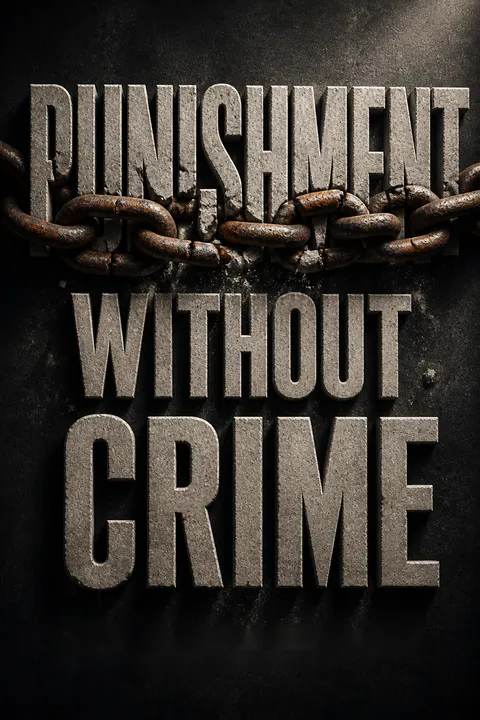
Punishment without crime. Natapoff uses this phrase for harms imposed before conviction, after a sentence, or despite a person having done nothing blameworthy. Gail Atwater was arrested and jailed for a seatbelt violation, although her maximum fine was $50. Tyrone Tomlin spent weeks in jail because he could not afford bail, then learned that the supposed drug evidence against him was only a drinking straw.
A sentence is incomplete. Arrest and detention can cost people jobs, housing, health, and time with family. Convictions can bring debt, benefit restrictions, immigration consequences, and records that employers or landlords see for years. These burdens can fall even when a case is dismissed. The formal penalty is only one part of what the encounter costs.
This account challenges a common habit in policy analysis: treating the sentence as the full measure of punishment. The relevant unit is the whole chain of consequences, including the costs imposed on families and the pressure created by unresolved charges. That wider view also raises a difficult boundary question. Not every hardship following an arrest is necessarily state punishment, but harms that are predictable and routinely triggered by state action deserve attention even when the law labels them collateral.
A guilty plea can be an exit from jail, not an admission
Speed changes choices. In many misdemeanor courts, cases move in minutes. Grandma G asked for a lawyer but was tried and sentenced to 30 days in jail in a proceeding lasting less than three minutes. Misdemeanor trials are rare, and roughly 97 percent of misdemeanor convictions result from guilty pleas. A plea may mean the defendant accepts the charge, but it may also be the quickest way out of jail or away from repeated court dates.
Defense is often thin. Defenders in some cities handle more than 2,000 misdemeanor cases per year, far above the recommended caseload. They may have little time to investigate or explain a plea's consequences. If an accused person is jailed while waiting for trial, accepting a deal can become the practical route home, even when the person says they are innocent.
A plea is both a legal decision and a decision made under constraints. That distinction matters because a system can produce efficient agreements without reliably establishing what happened. The dilemma resembles other high-pressure bureaucratic settings: when delay is costly and advice is scarce, people may choose the least damaging available option rather than the most accurate one. Yet not every plea is coerced or uninformed. The central concern is whether the process can tell the difference, especially when it rarely tests evidence in open court.
Demand evidence before a low-level arrest hardens into a lifelong label
Weak evidence can travel. Houston resident Amy Albritton pleaded guilty to cocaine possession after a roadside chemical test turned blue. A later laboratory test showed that the substance was not a drug. Houston eventually identified 134 people who had pleaded guilty to low-level drug charges despite being innocent; 86 cases relied on roadside field tests. Those tests were designed to help establish grounds for arrest, not to prove guilt, but their results still helped drive pleas.
Some cases are opaque. Charges such as trespassing or disorderly conduct may depend largely on an officer's account, with little independent evidence to check. Jack Ford, who had a plausible defense to a burglary charge, pleaded guilty after prolonged detention and a postponed trial. The true number of wrongful misdemeanor convictions is unknown, partly because so few cases go to trial and errors often remain undiscovered.
The examples distinguish evidence that is merely sufficient to trigger police action from evidence strong enough to justify conviction. That is a crucial distinction in any system that values error correction. The book is careful not to claim that every low-level charge is factually weak: records or breath tests can provide meaningful evidence in some cases, though they too can be mistaken. The broader issue is whether the system has a dependable way to verify contested facts before attaching a durable criminal label.
Stop financing courts by charging people who cannot afford justice
Debt becomes a sentence. Fines punish; fees, though often described as administrative costs, can add charges for courts, probation, drug testing, warrants, and jail. In Woodworth, Louisiana, traffic fines supplied 61 percent of the municipal budget. Nikki Petree wrote a check for $28.93 that bounced; Sherwood, Arkansas, later arrested her seven times, charged her more than $2,600, and jailed her for over 25 days.
The spiral is predictable. Unpaid court debt can trigger warrants, license suspensions, more fees, and incarceration. Private probation firms may add supervision and testing costs, then threaten arrest when people cannot pay. These arrangements can make poverty both the reason for entering the system and the reason for remaining trapped in it. The result is a public institution collecting money from a population with the least ability to pay.
When the institutions that decide punishment depend on the proceeds, a conflict is built into the budget, not merely into an individual official's intentions. The pattern resembles a regressive tax, but with a major difference: criminal enforcement adds stigma, surveillance, and possible confinement. That does not mean every fine is unjust. A fine can be a less harmful alternative to jail. The sharper test is whether the amount reflects the person's means and whether inability to pay creates a second, harsher punishment.
Track how discretionary minor-offense policing reproduces racial disadvantage
The first contact is unequal. In Baltimore, African Americans made up 63 percent of residents but accounted for more than 80 percent of several order-maintenance charges, including trespassing and disorderly conduct. Nationally, Black and white people reported using marijuana at similar rates, while Black people were arrested for possession about four times as often. Such gaps are especially revealing when the offense depends heavily on police discretion.
Records can compound disparity. An arrest or conviction can influence later stops, bail decisions, charges, and sentences. The book describes this as a feedback loop: people who are more heavily policed accumulate records, and those records can make future encounters harsher. The result is not just unequal punishment for one incident, but an accumulating disadvantage for individuals and communities.
The strongest analytical point is that arrest statistics do not always tell us who commits more crime. For discretionary public-order offenses, they may tell us more about where police look and what conduct they choose to pursue. That distinction prevents a circular argument in which enforcement patterns are treated as proof of the behavior that supposedly justified them. At the same time, a disparity alone does not explain every decision or establish motive. Reliable comparison requires examining the policies and choices at each stage, not only the final totals.
Read today's petty enforcement against its history of coerced control
Old tools, new forms. After the Civil War, southern states used minor offenses such as vagrancy to arrest Black people, impose fines, and lease those unable to pay to mines, farms, and factories. Green Cottenham was arrested in Alabama on a minor charge, then sent to a coal mine when he could not pay his fines. He died there in 1908. Misdemeanor enforcement helped turn the Thirteenth Amendment's punishment exception into a tool of forced labor.
Continuity is not sameness. Vagrancy laws were struck down in 1972 because their vague terms gave police sweeping power over people deemed undesirable. The book connects that history to modern order-maintenance enforcement, while recognizing that present-day laws and institutions differ. The recurring warning is that minor-offense authority can be used to manage people and places for reasons beyond public safety.
Historical comparison is most useful when it identifies a mechanism, not when it claims that different eras are identical. Here, the recurring mechanisms include vague offenses, discretionary enforcement, financial extraction, and the targeting of politically vulnerable groups. That perspective makes reform more than a technical exercise: it asks what the law is being used to accomplish. It also demands care. A historical analogy can illuminate structural continuities, but it should not erase the distinct scale, severity, and legal context of each period.
Judge misdemeanor justice by law, evidence, and actual blameworthiness
Three tests of legitimacy. Natapoff organizes criminal justice around the rule of law, factual evidence, and blameworthiness. Officials should follow public rules rather than act on whim; convictions should rest on evidence; and criminal punishment should address conduct that merits condemnation. The book calls these the ABCs of criminal legitimacy and argues that misdemeanor processing often fails each test.
The label can mislead. Drunk driving and domestic violence may involve serious harm and receive substantial attention. By contrast, offenses such as loitering, jaywalking, or unreasonable noise may target common conduct and provide police with broad discretion. A misdemeanor label alone therefore says little about how harmful an act was or how carefully guilt was established. The system still has a legitimate role in protecting people from minor crime, but its response should fit the conduct and the proof.
The three tests help separate two questions that are often blurred: whether a law is just, and whether a particular person violated it. A fair procedure cannot make an unjust law fair, while a defensible law can still be enforced inaccurately. This framework is valuable precisely because it resists a single cure. It also exposes a practical tension: communities need protection from real harms, yet broad, flexible offenses can convert that aim into control over harmless behavior. Clear limits and evidence review are essential to keeping those purposes distinct.
Shrink the pipeline before adding gentler ways to supervise it
Reduce entry first. Natapoff proposes narrowing the pool of criminal offenses, using arrest less often, and having prosecutors reject weak or inappropriate cases before defendants incur the costs of court. Other measures include limiting money bail and debt-based incarceration, reducing fines and fees, expanding meaningful legal representation, separating court budgets from fine collection, and publishing better data.
Beware softer traps. Diversion and decriminalization can reduce jail and stigma, but they can also widen the system if they draw in people who would otherwise have been left alone or impose new fees and supervision. Decriminalization is not the same as legalization: conduct may remain prohibited and still generate fines or records. A reform should be judged by whether it reduces state control and harm, not simply by whether it replaces jail with a less visible burden.
This is a useful test for reform: count who enters the system, what restrictions they face, and whether they leave with fewer burdens. A program can be humane for participants and still expand the overall reach of government if it replaces dismissal with monitoring. The same caution applies to technological substitutes for detention. Less incarceration is a meaningful gain, but surveillance and debt can carry their own costs. Durable improvement requires aligning institutional incentives with fewer arrests, fairer process, and lower cumulative punishment.
Analysis
Natapoff's central move is to change the unit of analysis. Instead of treating misdemeanors as a collection of trivial offenses, she presents them as a vast public institution that distributes liberty, money, stigma, and access to opportunity. Its scale matters, but the sharper claim is about the mismatch between that scale and the thinness of the safeguards around it. Speed, low-quality evidence, cash bail, overloaded defense, and revenue incentives reinforce one another. Each may look like a local expedient; together they can make a guilty plea more useful as an exit route than as a finding of fact.
The argument is strongest when it traces these mechanisms through individual lives, then checks the stories against docket estimates, court practices, and historical evidence. It is also careful about uncertainty. Misdemeanor data are uneven, the 13 million figure counts cases rather than unique people, and not every low-level charge is unsupported or trivial. Those qualifications matter. They prevent the book's critique from collapsing into the claim that all misdemeanor enforcement is illegitimate. DUI and domestic violence, for example, can address serious harms and require a credible public response.
The enduring tension is therefore not simply enforcement versus leniency. It is whether a democracy can reserve coercive criminal power for conduct that is harmful and blameworthy, while applying rules and evidence consistently. Natapoff's proposed answer begins with scale reduction, then pairs it with fairer procedures, less punitive debt collection, and public data. Her warning about reform is equally important: diversion can become supervision, and decriminalization can become a fine regime. A humane alternative must reduce the number of people controlled, not merely make control cheaper or less visible. The book's most consequential insight is that criminal justice is shaped as much by routine decisions at the bottom as by spectacular cases at the top.
Review Summary
Punishment Without Crime is praised for its comprehensive analysis of the US misdemeanor system, highlighting its disproportionate impact on marginalized communities. Readers appreciate Natapoff's thorough research and clear explanations, though some find it repetitive. The book exposes how minor offenses can ruin lives through excessive fines, fees, and incarceration. While some criticize the lack of concrete solutions, most agree it's an important read for understanding systemic issues in criminal justice. The book's focus on often-overlooked aspects of the legal system is seen as its greatest strength.
People Also Read





Glossary
Penal pyramid
unequal tiers of criminal processA model of criminal justice in which cases receive different levels of time, expertise, and resources. At the top are cases handled with careful investigation, skilled lawyers, and formal procedure. At the bottom are high-volume low-level cases often processed quickly with fewer safeguards. The framework highlights how procedural quality can erode as cases become less serious and defendants have fewer resources.
Punishment without crime
punitive harms without deserved guiltNatapoff's name for the many ways people can be punished through misdemeanor processing without having committed a blameworthy crime. They may suffer before conviction, plead guilty despite factual innocence, face penalties for conduct that should not have been criminalized, or continue to experience serious consequences after completing a sentence.
Order-maintenance offenses
laws regulating public behaviorLow-level offenses such as loitering, trespassing, jaywalking, and disorderly conduct, often used to manage behavior and public spaces. These laws can address genuine disruption, but their broad or flexible terms may give police wide discretion and can target people or groups rather than specific harmful acts.
Legal financial obligations (LFOs)
court-related fines and debtThe collective term for monetary sanctions and charges imposed through the criminal process. It includes fines, fees, surcharges, restitution, and interest. LFOs can accumulate through court costs, probation, testing, warrants, and incarceration. When amounts exceed a person's ability to pay, the debt can trigger additional penalties, including license suspension, warrants, or jail.
Net widening
reform expands state controlThe unintended expansion of government control caused by reforms designed to make punishment less severe. Diversion, probation, or decriminalized citations may replace jail for some people, yet also bring more people under supervision who otherwise might have been dismissed or left alone. The concept cautions that reduced severity per case does not necessarily mean reduced reach overall.
System avoidance
avoiding formal institutionsA response in which people who have experienced criminal justice contact avoid institutions that create records or involve government oversight, such as banks, hospitals, and schools. The term captures how distrust and fear can spread beyond the courtroom, reducing access to services and weakening people's participation in civic and economic life.
ABCs of criminal legitimacy
law, evidence, blameworthinessNatapoff's compact framework for assessing whether criminal punishment is legitimate. The state should follow legal rules, base convictions on factual evidence, and punish conduct that is genuinely blameworthy. The framework helps distinguish flawed procedure from unjust criminalization, and shows why misdemeanor convictions can lose moral force when one or more conditions are missing.
FAQ
What's Punishment Without Crime about?
- Focus on Misdemeanor System: The book examines the vast and often overlooked misdemeanor system in the U.S., which handles around 13 million cases annually. It highlights how this system disproportionately affects the poor and people of color.
- Consequences and Inequality: It discusses the severe collateral consequences of misdemeanor convictions, such as loss of jobs and housing, and how these perpetuate social and economic inequalities.
- Historical Context and Reform: Alexandra Natapoff traces the evolution of the misdemeanor system and calls for reforms that prioritize fairness and justice over revenue generation.
Why should I read Punishment Without Crime?
- Insight into Criminal Justice: The book provides a critical analysis of the American criminal justice system, particularly at the misdemeanor level, often ignored in broader justice reform discussions.
- Social Justice Focus: It highlights the intersection of race, class, and law, emphasizing the need for systemic change to address injustices faced by marginalized communities.
- Real-Life Stories and Advocacy: Natapoff includes personal stories and case studies, making the book both informative and relatable, and inspiring advocacy for necessary reforms.
What are the key takeaways of Punishment Without Crime?
- Misdemeanors Are Significant: The book emphasizes that misdemeanors, often labeled as minor offenses, can have devastating effects on individuals' lives and societal structures.
- Systemic Inequities: It highlights how the misdemeanor system perpetuates economic and racial inequalities, disproportionately affecting low-income individuals and people of color.
- Need for Systemic Change: Natapoff calls for a comprehensive reevaluation of how misdemeanors are prosecuted and punished, advocating for reforms that prioritize justice and equity.
What are the best quotes from Punishment Without Crime and what do they mean?
- "The petty-offense process punishes people while they wait for their cases to be handled and are still presumed innocent.": This quote underscores the paradox of the misdemeanor system, where individuals can face severe consequences before being proven guilty.
- "Misdemeanors have slipped beneath the public radar largely because their impact and importance are so thoroughly underestimated.": This highlights the need for greater public awareness and scrutiny of the misdemeanor system.
- "The enormous misdemeanor system remains an influential player in the historical drama over class and race in America.": This quote underscores the systemic nature of misdemeanors in perpetuating social inequalities.
How does the misdemeanor system trap the innocent according to Punishment Without Crime?
- Pressure to Plead Guilty: Many individuals, especially those who cannot afford bail, feel compelled to plead guilty to minor offenses to avoid prolonged incarceration, even if they are innocent.
- Lack of Legal Representation: Defendants often do not have access to adequate legal counsel, leading to uninformed decisions and wrongful convictions based on insufficient evidence.
- Speedy Processing: The high volume of cases in misdemeanor courts results in rushed proceedings, where defendants may not fully understand their rights or the implications of their pleas.
What are the economic implications of the misdemeanor system in Punishment Without Crime?
- Revenue Generation: The misdemeanor system often functions as a revenue-generating mechanism for municipalities, with fines and fees imposed on low-income individuals to fund court operations.
- Punishing Poverty: Many misdemeanors criminalize behaviors associated with poverty, such as driving without a license or failing to pay fines, exacerbating economic disadvantage.
- Debt and Incarceration: Failure to pay fines can lead to additional penalties, including incarceration, creating a cycle of debt and poverty that is difficult to escape.
How does race factor into the misdemeanor system in Punishment Without Crime?
- Disproportionate Impact: The book details how people of color, particularly African Americans, are disproportionately arrested and convicted for minor offenses, reflecting systemic racial biases.
- Order-Maintenance Policing: Many low-level offenses are enforced more heavily in communities of color, perpetuating stereotypes and criminalization.
- Racial Disparities in Outcomes: The outcomes of misdemeanor cases often reflect racial disparities, with people of color facing harsher penalties and less favorable plea deals compared to their white counterparts.
What are the systemic flaws in the misdemeanor process according to Punishment Without Crime?
- Lack of Oversight: The decentralized nature of the misdemeanor system means that many jurisdictions do not track or report data on misdemeanor cases, leading to a lack of accountability.
- Inexperienced Legal Representation: Many public defenders handling misdemeanor cases are overworked and lack the resources to provide adequate representation, resulting in rushed pleas and inadequate defenses.
- Judicial Indifference: Judges in misdemeanor courts often prioritize efficiency over justice, leading to a culture where legal rights are routinely overlooked.
What reforms does Alexandra Natapoff suggest for the misdemeanor system in Punishment Without Crime?
- Reducing Arrests and Prosecutions: Natapoff advocates for shrinking the pipeline of cases entering the misdemeanor system by decriminalizing certain low-level offenses.
- Enhancing Legal Representation: She calls for increased funding and resources for public defenders to ensure that all defendants receive adequate legal representation.
- Promoting Transparency and Accountability: The book emphasizes the need for better data collection and oversight of misdemeanor cases to ensure that the system operates fairly.
How does Punishment Without Crime address the concept of wrongful convictions?
- Focus on Innocence: Natapoff highlights the prevalence of wrongful convictions in the misdemeanor system, where individuals often plead guilty to avoid jail time despite being innocent.
- Systemic Pressures: The book discusses how systemic pressures, such as the need to clear dockets quickly, contribute to wrongful convictions.
- Need for Awareness: Natapoff argues that wrongful convictions in misdemeanors are often overlooked, calling for greater awareness and advocacy to address this issue.
How does Punishment Without Crime connect misdemeanors to social control?
- Historical Context: Natapoff traces the historical use of misdemeanors as tools for social control, particularly against marginalized communities.
- Regulation of Behavior: The book discusses how misdemeanors regulate behavior in public spaces, often targeting the poor and people of color.
- Impact on Communities: Natapoff argues that the misdemeanor system serves to maintain social order at the expense of individual rights and freedoms.
What is the significance of the title Punishment Without Crime?
- Critique of the System: The title reflects Natapoff's argument that the misdemeanor system often punishes individuals without a legitimate basis for criminality.
- Highlighting Injustice: The title serves to draw attention to the injustices faced by those caught in the misdemeanor system, particularly the poor and marginalized.
- Call for Awareness: By using this title, Natapoff aims to raise awareness about the need for reform in how society views and handles misdemeanors.
Download PDF
Download EPUB
.epub digital book format is ideal for reading ebooks on phones, tablets, and e-readers.








