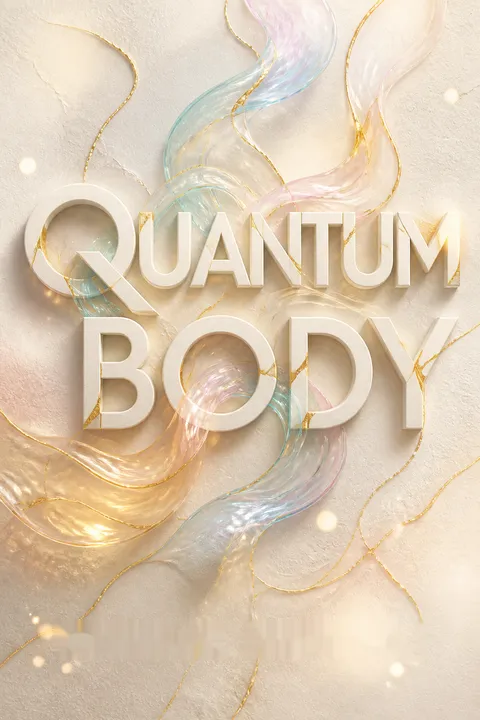


Key Takeaways
See the body as a changing process, not a fixed machine.
A living system, not a gadget. Chopra and his coauthors use “quantum body” for the unseen processes they believe continually generate the body we can measure. Cells exchange electrical and chemical signals, replace their components, and coordinate work across organs. The familiar body is therefore less like a static object than a plant whose visible leaves depend on roots beneath the soil. The authors argue that the quantum field is the ultimate source of this activity and of experience itself.
The first idea fits a dynamic view of biology; the second is a much larger metaphysical claim. The book’s practical invitation is to consider the body as interconnected and responsive, rather than a collection of parts to repair in isolation.
The shift from machine to process is valuable even without accepting the quantum explanation. Systems biology already studies how interactions among cells, organs, behavior, and surroundings shape health. A whole-system lens can correct the tendency to treat each symptom as unrelated. But quantum mechanics does not establish that a universal field directs healing or contains intelligence. The book often moves from real features of living systems, such as bioelectric activity, to claims about consciousness that remain philosophical. Readers can use the integrative lens while keeping those levels of evidence distinct.
Address chronic stress before it hardens into a health pattern.
Small pressures accumulate. The book distinguishes brief emergencies from the low-level stress that can persist through poor sleep, overwork, conflict, constant distraction, or lack of control. It highlights three features that intensify stress: repetition, unpredictability, and helplessness. A planned trip away from home may feel manageable, while being forced to leave under someone else’s orders feels threatening. The circumstances may look similar, but agency changes the experience.
The authors point to a mouse experiment in which mild, unpredictable shocks produced stress and signs of accelerated aging. It illustrates how a seemingly minor strain can matter when it is inescapable and repeated, though animal findings do not prove the same outcome in people. The practical goal is to notice persistent strain, improve sleep where possible, and address stressful conditions rather than treating them as inevitable.
This framing helps explain why a person can feel depleted without a dramatic crisis: duration and perceived control matter. It also resists the idea that stress management means simply becoming tougher. Yet advice to change one’s circumstances can overlook economic insecurity, caregiving demands, discrimination, or unsafe workplaces, where individual control is limited. A fair application pairs personal tools with social and practical support. Stress is not a character flaw, and a calming routine cannot make every harmful environment healthy.
Let a slower exhale tell your nervous system the emergency has passed.
A simple breathing reset. The authors recommend vagal breathing, a slow-breathing practice intended to ease the body’s stress response. Sit upright, breathe comfortably through the nose, pause briefly after inhaling, then make the exhale slower than the inhale. Continue for about five minutes without forcing the breath. The vagus nerve links the brain with organs including the heart, lungs, and digestive system, so breathing can influence processes that usually run automatically.
The book connects relaxed breathing with heart-rate variability, the changing intervals between heartbeats, and presents greater variability as a sign of a more adaptable system. The point is not to control every bodily function. It is to use one partly voluntary function as a low-effort way to invite relaxation and notice when stress is rising.
The appeal is its accessibility: breathing is always available, and a short pause can interrupt escalating arousal. Slow breathing is also studied in relation to autonomic regulation, though the book’s broad promises should not be read as guaranteed treatment. Comfort matters more than technique. Anyone who becomes dizzy, panicked, or short of breath should return to ordinary breathing and seek appropriate clinical guidance if symptoms persist. This is a self-regulation tool, not a replacement for care.
Notice internal signals early, without turning every sensation into a verdict.
The body sends clues. Interoception is awareness of internal sensations, such as breathing, heartbeat, muscle tension, or stomach discomfort. The authors describe a sequence: a bodily change is noticed, interpreted as an emotion, then acted upon. A racing heart might be understood as anxiety, excitement, or exertion depending on the situation. Learning to notice the signal before settling on an interpretation can make emotional responses less automatic.
Their body-scan exercise asks readers to lie comfortably, move attention among bodily sensations, and observe without judging or forcing change. If a feeling is uncomfortable, stay within a tolerable range rather than pushing through. The aim is to become more familiar with internal cues, not to diagnose illness by intuition or assume every sensation carries a hidden message.
Interoception offers a useful bridge between physical sensation and emotion. Naming a feeling can create a pause between a bodily signal and a reaction, a principle shared with mindfulness-based approaches. The caution is that internal cues are noisy: a sensation can have many causes, and close monitoring can amplify anxiety for some people. Body awareness works best as information to consider alongside context, not as an infallible inner alarm or a substitute for medical evaluation.
Interrupt familiar reactions before they choose your next move.
Create room for another response. The book calls the mind’s habitual patterns its default mode network, drawing on the brain network associated with internally focused thought. It argues that repeated reactions can become so familiar they crowd out fresh choices. Its “zero point” practice is a deliberate pause: notice that a response is automatic, let it settle, focus attention around the chest, and wait briefly for a response that fits the present situation. If none comes, step away when appropriate.
This is useful in a circular argument, a moment of rigid certainty, or a surge of anger. The practice does not require a dramatic insight. Its immediate purpose is to stop repetition from masquerading as a considered decision, then give attention and judgment a chance to re-enter.
The underlying skill is metacognition: noticing a thought or impulse as an event rather than treating it as an order. That distinction is central to many evidence-informed therapies and can help loosen entrenched reactions. The brain’s default mode network, however, is not simply a bad autopilot. It supports memory, planning, and self-reflection as well as rumination. The practical target is not to silence a brain network, but to recognize when a familiar pattern no longer serves the situation.
Treat experience as central, while keeping metaphysical claims separate from evidence.
A person is more than a scan. The authors argue that physical measurements describe processes but do not capture what it feels like to see color, hear music, or love someone. They call the experienced qualities of perception “qualia.” They also distinguish the brain, which participates in perception and thought, from the mind or experiencer that has those experiences. In their account, an enduring “witness” is the awareness behind changing thoughts and sensations.
This is a philosophical argument about consciousness, not a settled medical finding. Brain activity reliably relates to mental experience, but the book says that correlation does not explain subjective feeling. Its practical invitation is to notice thoughts as they arise and pass, rather than equating every passing thought with the whole self. Its stronger claim, that consciousness is fundamental to the universe, remains unproven.
The distinction between measurable brain activity and felt experience names a genuine philosophical problem: explaining neural mechanisms is not identical to explaining why experience feels like anything. Still, gaps in an explanation do not by themselves prove that mind exists independently of the brain. Nor does quantum measurement mean human attention creates everyday objects. Readers can take subjective experience seriously without treating speculative interpretations of physics as scientific conclusions.
Loosen the ego’s grip by choosing openness over control.
Identity can become a trap. The book uses the Vedic term “kleshas” for five mental sources of suffering: mistaking appearances for reality, identifying completely with an individual ego, clinging to desired things, rejecting unwanted experiences, and fearing death. These tendencies can make a person’s life feel organized around defending a fixed story of “me.” The authors propose shifting attention from that story toward a wider sense of awareness.
They distinguish detachment from indifference. Detachment means continuing to care and act while releasing the demand that events unfold in exactly one preferred way. The related idea of Dharma describes a personal orientation toward a life that feels aligned, expressed through qualities such as cooperation, self-acceptance, love, and presence. These are invitations to examine one’s choices, not external rules or guaranteed answers.
Psychological flexibility can reduce the strain of trying to control what cannot be controlled. This is the strongest practical reading of the book’s spiritual language: loosen rigid self-descriptions, remain engaged, and allow new information to matter. But the ego also supports boundaries, memory, and coherent action. Nonattachment should never be used to excuse abuse, suppress anger at injustice, or avoid necessary decisions. Openness is not passivity; it is the ability to respond without being ruled by fear or fixation.
Protect resilience with sleep, movement, diverse food, and social support.
Health depends on interacting systems. The authors connect chronic stress and inflammation with metabolic disruption, while emphasizing that the microbiome, the community of microorganisms living in and on the body, participates in digestion, immune activity, and communication with the brain. They report that microbial genes greatly outnumber human genes and argue that dietary variety helps support microbial diversity. Their practical direction is a varied, fiber-rich diet built around whole foods, alongside adequate sleep and reduced chronic stress.
They also describe “Goldilocks zones,” the workable ranges in which body temperature, sleep, emotional strain, and social connection support functioning. The idea is to avoid persistent extremes. These recommendations are broader than a single diet or supplement: daily movement, rest, relationships, and food all shape a body whose systems influence one another.
The book’s strongest health guidance here is ordinary but coherent: sleep, movement, a varied diet, and supportive relationships affect overlapping systems. Microbiome science makes the body’s ecological character especially vivid, but research is still developing, and specific microbial ratios or supplements should not be treated as universal prescriptions. The “Goldilocks zone” is a memorable metaphor, not a clinical threshold that fits everyone. Individual needs vary, and chronic symptoms deserve professional assessment rather than a one-size-fits-all lifestyle explanation.
Measure health by recovery, not by a single reassuring snapshot.
Resilience is a trajectory. The book’s “fitness landscape” imagines ordinary health as a valley and illness, stress, or major life events as a climb. Well-being depends partly on the ability to return toward one’s prior level of functioning after the challenge. A single blood-pressure or blood-sugar reading is only a snapshot; changes over time can show whether a person is moving toward stability or toward a new, less healthy baseline.
The idea broadens fitness beyond exercise. Recovery can involve physical capacity, mood, relationships, and satisfaction with daily life. Younger people may recover more quickly, but the authors treat resilience as relevant at every age. The practical lesson is to notice patterns and recovery, while using clinical measurements and medical care when needed rather than assuming that a positive mindset can reverse disease.
Thinking in trajectories is valuable because health measurements fluctuate, and patterns often matter more than an isolated reading. The metaphor also makes recovery visible as a skill supported by rest, treatment, relationships, and time. Its limitation is that “bouncing back” can sound like a personal duty. Some illnesses are progressive, and some people face constraints beyond their control. Resilience is not proof of virtue or failure; it is a description of adaptation, best interpreted alongside diagnosis, resources, and the realities of a person’s life.
Analysis
Quantum Body is a hybrid of popular science, self-help, and spiritual philosophy. Its narrative begins with a familiar frustration: the visible body changes constantly, while most of its operations occur beyond conscious control. The authors then offer a unifying explanation, the quantum body, before moving from stress-management practices toward claims about consciousness, identity, and the nature of reality. That progression gives the book energy, but it also makes the evidence difficult to assess because biological observations, quantum terminology, and metaphysical interpretations often appear in one continuous argument.
The most dependable value lies in the book’s practical and integrative layer. Slow breathing, attention to bodily sensations, movement, sleep, stress reduction, varied food, and social connection are understandable ways to support well-being. The “fitness landscape” adds a useful temporal lens: recovery and changing patterns can matter more than a single measurement. These insights do not require a quantum explanation to be meaningful.
The central epistemic distinction is between quantum biology and quantum spirituality. Researchers do investigate quantum effects in biological processes, but that research does not establish that consciousness directs cellular repair, that the mind creates matter, or that aging is a correctable mistake. The book’s account of an eternal witness and a field of creative intelligence is a philosophical worldview, not a demonstrated medical mechanism. Keeping those categories separate protects both the book’s evocative questions and the credibility of established science.
There is also a social dimension the individual practices cannot solve. Stress may arise from work, poverty, illness, caregiving, or unsafe relationships, not merely from a failure to pause or become aware. The strongest reading treats awareness as a resource for noticing needs and choosing responses, while recognizing that health depends on material conditions and medical care as well as inner life. Readers can take the book’s whole-person ethic seriously without accepting every claim made in physics’ name.
Review Summary
Quantum Body receives mixed reviews, with ratings ranging from 1 to 5 stars. Some readers appreciate Chopra's blend of quantum physics and spirituality, finding it thought-provoking and enlightening. Others criticize the book for its perceived pseudoscience, oversimplification of complex concepts, and lack of practical advice. Many readers struggle with understanding the quantum principles presented. Some find value in the book's exploration of consciousness and holistic health, while others dismiss it as new-age nonsense. The book's connection to Hindu philosophy is noted by several reviewers.
People Also Read





Glossary
Quantum Body
Proposed source of bodily lifeThe authors’ term for the underlying, continually changing reality they believe gives rise to the visible body and its experiences. They associate it with the quantum field and describe it as a source of biological organization and consciousness. This is the book’s central model, not an established medical entity or accepted explanation of how the body works.
Creative intelligence
Life’s organizing capacityThe book’s name for the ability of living systems to coordinate processes, respond to conditions, repair some damage, and develop new forms of action. The authors apply it both to cellular organization and to human creativity and insight. They treat it as a fundamental intelligence underlying life, a broader interpretation than standard biological descriptions require.
Interoception
Awareness of internal sensationsThe perception of signals arising inside the body, including sensations related to breathing, heartbeat, digestion, temperature, and muscle tension. In the book, interoception is an early link between bodily change and emotional response. Body scanning is offered as a way to notice these signals with less judgment and greater familiarity.
Vagal breathing
Slow, extended-exhale breathingA breathing practice recommended in the book to help ease stress-related arousal. The practitioner breathes comfortably, pauses briefly after inhaling, then exhales more slowly than they inhaled, continuing for about five minutes. The authors connect this practice to the vagus nerve and heart-rate variability. It is a self-regulation technique, not a treatment for every medical condition.
Zero point
Pause before habitual reactionThe authors’ name for a quiet, receptive state of awareness from which a less automatic response may emerge. Their practice is to notice a repetitive or emotionally charged reaction, pause, place attention near the chest, and wait for a response suited to the present situation. If no response comes, stepping away is an option.
Dharma
Personal orientation toward alignmentA Vedic term the book uses for an underlying direction or order that supports life. The authors describe an individual’s Dharma as a personal orientation rather than a fixed moral code. They associate being aligned with it with qualities such as cooperation, self-acceptance, presence, meaningful work, and openness to experience.
chit akash
Consciousness as creative spaceA Sanskrit phrase presented in the book as “mind space,” meaning the expansive domain of consciousness in which creative possibilities arise. The authors place the quantum and causal bodies within this domain and describe it as the source from which impulses become mental and physical activity. This is a Vedic metaphysical concept, not a measured location in space.
koshas
Layers of human experienceIn Vedic philosophy, koshas are sheaths or dimensions through which human experience is understood. The book describes five: physical, energetic, mental, wisdom, and bliss. It uses them to map a progression from bodily life toward increasingly subtle forms of awareness. They are a philosophical framework, not five anatomical structures.
kleshas
Five roots of sufferingA Vedic term for mental patterns that obstruct clear understanding and contribute to suffering. The book lists ignorance, egoism, attachment, aversion, and fear of death. The authors interpret these as errors of identification and reaction that can be loosened by shifting attention away from a fixed ego-based life story.
Fitness landscape
Map of challenge and recoveryA metaphor for a person’s changing health and capacity to adapt. In the book, a valley represents a usual state of functioning, while a mountain represents a challenge such as illness, surgery, stress, or a major life event. Resilience is the capacity to recover toward a healthy baseline after facing that challenge.
Goldilocks zone
Range that supports functioningA borrowed metaphor the book applies to human health. It describes ranges of conditions, such as temperature, sleep, stress, and social connection, within which the body and mind can function well. The idea encourages avoiding prolonged extremes, but it is not a single clinical scale or a universal threshold for every person.
witness
Awareness observing experienceThe book’s term for the awareness that notices thoughts, emotions, and sensations without being identical to any one of them. The authors describe it as stable beneath changing experience and connect it to the Vedic idea of an enduring experiencer. Its claimed eternal or nonphysical nature is philosophical, not scientifically established.
FAQ
What is "Quantum Body: The New Science of Living a Longer, Healthier, More Vital Life" by Deepak Chopra about?
- Explores the concept of the "quantum body": The book introduces the idea that our true body is not just physical, but a "quantum body" rooted in the quantum field, which is the source of all creation and intelligence.
- Integrates science and spirituality: Chopra, along with co-authors Jack Tuszynski and Brian Fertig, blends cutting-edge quantum biology with ancient wisdom traditions to offer a new model for health and well-being.
- Offers practical wellness strategies: The book provides actionable practices—such as mindful breathing, body scanning, and centering meditation—to help readers access the intelligence of their quantum body.
- Challenges conventional medical models: It critiques the view of the body as a machine and instead presents a holistic, consciousness-based approach to health, aging, and disease.
Why should I read "Quantum Body" by Deepak Chopra and co-authors?
- Gain a new perspective on health: The book offers a revolutionary way to understand your body, moving beyond the limitations of traditional medicine.
- Learn practical tools for well-being: Readers are given accessible, science-backed practices to reduce stress, improve resilience, and enhance vitality.
- Bridge science and meaning: "Quantum Body" connects the latest discoveries in quantum biology with questions of purpose, consciousness, and spiritual fulfillment.
- Empower your self-healing: The book emphasizes the innate intelligence and healing capacity within each person, encouraging readers to take an active role in their health journey.
What are the key takeaways from "Quantum Body" by Deepak Chopra?
- Your true body is quantum: The "real" you is a dynamic, ever-renewing quantum process, not just flesh and bone.
- Well-being is rooted in intelligence: Health and disease are determined by the flow or blockage of creative intelligence at the quantum level.
- Practices can restore balance: Simple techniques like mindful breathing, body scanning, and centering can reconnect you to your quantum body and promote healing.
- Aging and disease are not inevitable: The book suggests that many aspects of aging and illness are due to breakdowns in quantum intelligence, not just physical wear and tear.
- Consciousness is fundamental: The authors argue that consciousness, not matter, is the foundation of reality and the key to understanding health.
How does "Quantum Body" by Deepak Chopra define the "quantum body"?
- Beyond the physical: The quantum body is described as the true self, existing as a field of energy and information, not limited by time, space, or physical form.
- Rooted in the quantum field: It arises from the same quantum field that creates the universe, with creation happening anew every moment.
- Source of intelligence: The quantum body is the seat of creative intelligence, orchestrating all bodily functions and experiences.
- Accessible through awareness: By expanding consciousness and practicing awareness, individuals can access and influence their quantum body for greater well-being.
What practical methods and advice does "Quantum Body" offer for improving health and well-being?
- Vagal breathing: A simple breathing technique that involves slow, mindful exhalation to stimulate the vagus nerve, reduce stress, and restore balance.
- Body scanning: A practice of bringing non-judgmental awareness to bodily sensations, which enhances interoception and emotional regulation.
- Centering meditation: Focusing attention on the heart center to return to a state of mental and emotional balance, especially during stress or conflict.
- Emphasis on daily awareness: Encourages integrating these practices into daily life, using moments of stress or routine as opportunities for mindful reset.
How does "Quantum Body" by Deepak Chopra explain the relationship between consciousness and the body?
- Consciousness as primary: The book posits that consciousness is the fundamental reality, and the body is an expression of consciousness at the quantum level.
- Experience creates reality: Reality is defined as experience; nothing is real unless it is experienced, making consciousness central to existence.
- The body as a process: The physical body is seen as a temporary, ever-changing manifestation of deeper quantum processes governed by awareness.
- Healing through awareness: By expanding and refining consciousness, individuals can influence their health, aging, and even genetic expression.
What are the "seven quantum breakthroughs" described in "Quantum Body" by Deepak Chopra?
- Reality is experience: The world is not made of things, but of experiences shaped by consciousness.
- The world is magic; you are the magician: Perception transforms quantum vibrations into the rich world of qualia (qualities like color, sound, and emotion).
- The experiencer is eternal: There is a silent, unchanging witness within, beyond the flux of thoughts and sensations.
- Infinity is the new normal: The quantum body is not limited by time or space, offering access to infinite possibilities.
- The brain is not the mind: The mind is not produced by the brain; rather, the brain is a tool for the mind.
- "I" is a bad habit: The ego is a mental construct that limits our true, boundless nature.
- Existence is your greatest glory: The ultimate realization is that being itself is the highest achievement, encompassing all possibilities.
How does "Quantum Body" by Deepak Chopra address aging and disease?
- Aging as a quantum error: The book suggests that aging and disease result from breakdowns in the flow of quantum intelligence, not just physical deterioration.
- Potential for reversal: By restoring creative intelligence through awareness and lifestyle, it may be possible to slow, halt, or even reverse aspects of aging.
- Stress and inflammation: Chronic low-level stress and inflammation are identified as key disruptors of quantum coherence, leading to disease.
- Emphasis on prevention: The authors advocate for proactive, consciousness-based approaches to maintain health and resilience throughout life.
What is the role of the microbiome and the "gut-brain axis" in "Quantum Body" by Deepak Chopra?
- Microbiome as part of "you": The book highlights that the trillions of bacteria in the gut are integral to health, immunity, and even mood.
- Gut-brain communication: There is a constant, two-way exchange of information between the gut microbiota and the brain, influencing stress, inflammation, and well-being.
- Diet and diversity: A diverse, fiber-rich, plant-based diet is recommended to support a healthy microbiome and, by extension, a healthy quantum body.
- Stress and sleep: Managing stress and ensuring quality sleep are emphasized as crucial for maintaining microbiome balance and overall health.
How does "Quantum Body" by Deepak Chopra integrate ancient wisdom with modern science?
- Vedic and Upanishadic insights: The book draws on ancient Indian philosophies, such as the Upanishads and Vedanta, to frame the quantum body as a timeless, conscious reality.
- Scientific validation: It connects these spiritual concepts with findings from quantum physics, biology, and neuroscience, showing parallels and mutual reinforcement.
- Practical synthesis: The authors offer practices that are rooted in both yogic tradition and scientific research, making them accessible and effective for modern readers.
- Emphasis on unity: Both ancient wisdom and modern science are used to argue for the interconnectedness of mind, body, and universe.
What are the most important quotes from "Quantum Body" by Deepak Chopra, and what do they mean?
- "Your body is a pulsation in the quantum field.": This quote encapsulates the idea that our physical form is a dynamic, energetic process, not a static object.
- "Nothing can happen to you, for better or worse, until it happens at the quantum level.": It emphasizes that all experiences, including health and disease, originate in the quantum field of consciousness.
- "Remove all your illusions, and what remains must be real.": This points to the practice of self-inquiry and the stripping away of egoic habits to discover one's true nature.
- "Existence is your greatest glory.": The ultimate message is that simply being—conscious, aware, and present—is the highest achievement and source of fulfillment.
What is the overall message and vision of "Quantum Body" by Deepak Chopra for readers seeking a longer, healthier, more vital life?
- Embrace your quantum nature: Recognize that you are more than a physical body; you are a field of infinite possibilities and intelligence.
- Health is holistic and conscious: True well-being arises from aligning body, mind, and spirit at the deepest level of awareness.
- You are your own healer: By cultivating awareness, practicing mindful techniques, and making conscious choices, you can access your innate healing power.
- The future of medicine is integrative: The book envisions a new paradigm where science and spirituality work together to unlock human potential and longevity.
About the Author
Other books by Deepak Chopra




Download PDF
Download EPUB
.epub digital book format is ideal for reading ebooks on phones, tablets, and e-readers.








