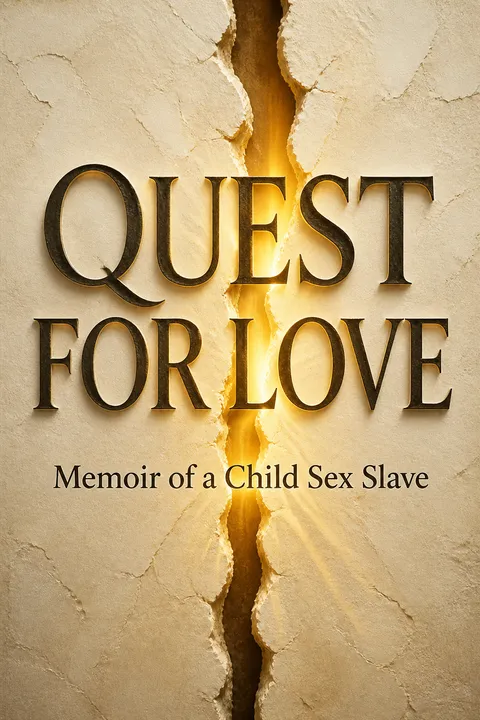


Key Takeaways
Treat a child's compliance as evidence of coercion, never consent.
A normal-looking life hid danger. Lucas begins her account in a middle-class Belgian family, then describes her mother taking her, at about ten, to adults who sexually abused her. She learned to watch faces, voices, and small changes in mood, anticipating what powerful adults wanted. Those responses helped her navigate danger, but they were survival adaptations, not freely chosen behavior.
The child's viewpoint matters. Lucas describes ordinary domestic details alongside terror, secrecy, and confusion. Her mother and the surrounding adults presented abuse as routine, leaving the child to believe that the wrongdoing was somehow hers. The memoir's central distinction is stark: a child's ability to comply, adapt, or appear composed cannot make exploitation consensual.
What's striking is how the account exposes the gap between outward behavior and inner freedom. Developmental research shows that children depend on caregivers for safety and are unusually vulnerable to adult authority, so compliance can be a strategy for preserving attachment or reducing immediate danger. That context is essential when interpreting a child's behavior. At the same time, a memoir can convey lived experience without independently establishing every event it recounts. Taking a survivor seriously and testing specific claims carefully are compatible obligations.
Recognize dissociation as survival, not proof that trauma left no wound.
Distance made endurance possible. Lucas describes mentally withdrawing from her body during abuse, concentrating on minute details, and shifting between different states of awareness. Dissociation is a disconnection from present experience, emotion, bodily sensation, or memory. In her account, these responses let her endure experiences that felt impossible to face directly.
Survival had a cost. The same distancing left her confused about what had happened and prone to blaming herself. She says painful experiences and feelings returned over time in therapy, where linking feelings and bodily reactions to their sources helped her understand her past. Her story presents coping as both resourceful and costly: what protects a child in immediate danger can complicate later self-understanding.
This account gives readers a useful alternative to the assumption that a person who seems calm must be unharmed. Under extreme stress, attention and awareness can narrow or detach, and such responses need not be deliberate. The important nuance is that dissociation does not function as a simple record of events. A person's subjective experience deserves care, while memory details still require cautious interpretation. The memoir illuminates the lived meaning of disconnection; it does not make that response a forensic test.
Do not confuse an abuser's tenderness with safety or love.
Protection became a bond. Lucas recounts meeting Patrick, an older man within the abusive network who initially kept other men away and sometimes treated her gently. She experienced his attention as a rare chance to be loved. But he also had sex with her, used threats and violence, and controlled when she could leave or see others. His moments of care existed alongside abuse, not in place of it.
Dependence shaped the relationship. Lucas was a child with few safe adults and believed that losing Patrick could leave her exposed to greater danger. She describes struggling to separate affection from survival. The memoir does not present their attachment as a freely chosen romance: the imbalance in age, power, and options made meaningful consent impossible, however intimate some moments felt.
The relationship illustrates how inconsistent care can intensify attachment. In coercive relationships, brief periods of kindness may feel especially powerful when safety is scarce, without canceling the harm surrounding them. This lens helps explain attachment without shaming the person who depends on the abuser. It also prevents a tempting but damaging conclusion: that tenderness proves the abuser was loving or that the victim welcomed the abuse. Emotional intensity is not a reliable measure of safety, consent, or responsibility.
Return the shame to the people who exploited a child's survival.
Blame was part of the trap. Lucas recalls being called degrading names and learning to believe that her appearance, needs, anger, or attempts to speak up caused the adults' behavior. When she tried to tell her mother about danger, her mother continued sending her into harmful situations. Her stepfather, in the scenes she recounts, did not recognize or respond to signs that she had been neglected.
A witness changed the frame. In adulthood, a therapist named her father's sexual behavior as abuse. Lucas says she cried for weeks, but that naming the harm helped her understand that the responsibility was not hers. The memoir portrays shame as a burden imposed on a child, then carried inward because the adults who should have protected her denied the truth.
The story resonates with betrayal trauma, a concept used to describe how dependence on a trusted caregiver can make recognition or disclosure of betrayal especially difficult. Naming the responsibility accurately can reduce self-blame and clarify why silence may have felt necessary. Still, not every survivor will identify with this pattern, and no single therapeutic interpretation should be imposed. The practical value lies in listening without blame and allowing the person affected, rather than an audience's expectations, to set the pace of understanding.
Refuse to treat inherited abuse as destiny or an excuse.
Violence moved through relationships. Lucas describes Patrick as both a perpetrator and someone who had been harmed as a child. In her account, he later tells her that his father stabbed him after discovering him with his mother. She interprets his subsequent violence and criminality as connected to childhood abuse and family betrayal.
Explanation is not absolution. Lucas's interpretation suggests that unresolved harm can be repeated against people with less power. Yet she also shows the distinction between understanding a perpetrator's history and excusing what he does. Patrick's suffering does not make his abuse of a child acceptable, nor does trauma make every survivor a future perpetrator. The account asks readers to notice cycles without erasing individual responsibility or the unequal power between adults and children.
The section invites a systems-level view: harm can travel through families and institutions, while still depending on choices made by particular people. Trauma-informed thinking is most useful when it explains behavior without converting explanation into pardon. The memoir sometimes makes sweeping claims about the emotional condition of powerful people; those claims are harder to establish than the personal experiences described. A careful reading can preserve its insight about repetition while resisting any suggestion that trauma inevitably produces cruelty.
Investigate allegations without equating disbelief with rigor.
Belgium's scandal shaped the story. Lucas discusses the Dutroux case, the 1996 rescue of two girls, and the discovery of four murdered girls. She describes anonymous survivor testimony, including that of X1, Regina Louf, and recounts that investigators' work was interrupted and later dismissed publicly. The White Marches brought more than 300,000 people into the streets to protest the handling of the scandal.
Her account is not a verdict. Lucas argues that survivor testimony was mishandled and that allegations of a wider network were sidelined. She also makes claims involving prominent people. Those claims should be understood as claims made in a memoir, not as established findings merely because the author presents them. The history she recounts raises a serious question about investigative failures, while requiring independent corroboration for particular allegations.
The useful lesson is not to choose between automatic belief and automatic dismissal. Investigations need preserved records, transparent methods, independent review, and serious attention to testimony, especially when powerful interests may be involved. Those standards protect both potential victims and the integrity of findings. Public suspicion alone does not establish a conspiracy, just as official confidence alone does not establish that an inquiry was adequate. The memoir's political claims deserve scrutiny proportionate to their gravity, not a shortcut around evidence.
Approach recovered memories with compassion and epistemic humility.
Healing unfolded over decades. Lucas says she began psychotherapy in the 1980s and later recovered memories of experiences she had not consciously held. She describes grieving, recognizing patterns in her behavior, and finding that some memories helped explain previously confusing events. She calls the process of connecting feelings and reactions to their origins neural integration.
Her account is personal, not a protocol. The memoir presents this process as meaningful in her life, but readers should not assume that every emerging memory is automatically complete or independently confirmed. Memory is reconstructive, and therapeutic settings can shape how people interpret what they recall. Supportive, non-leading care can take distress seriously while leaving room for uncertainty, corroboration, and the possibility that different parts of a memory have different levels of confidence.
This is a necessary place to hold two truths at once: trauma can be difficult to recall, and confidence or emotional force alone cannot verify a memory's historical accuracy. Contemporary approaches to memory emphasize both its reconstructive nature and the real possibility of delayed awareness. The safest stance is neither to coach a person toward a desired story nor to dismiss distress because details are uncertain. The memoir describes one survivor's understanding of recovery, not a universal method for recovering memories.
Let spiritual meaning support recovery without substituting for evidence.
A spiritual experience offered comfort. During the account of her near-death experience after being forced to kill another child, Lucas describes seeing a light and encountering a spiritual teacher she identifies with Yogananda. She says this experience brought a sense of unconditional love and helped her return to the injured child and comfort her. Later, meditation and spiritual practice became important parts of her healing.
Meaning and proof are different. Lucas presents the experience as spiritually real to her and as a source of purpose. A reader can understand its emotional importance without treating it as independent evidence about the events around it or accepting every metaphysical conclusion. The memoir's spiritual interpretation sits beside its account of trauma; it does not erase the harm, the child's death, or the need to face what happened.
Spiritual practice can provide language for meaning, connection, and hope when ordinary explanations feel insufficient. In this section, that framework helps Lucas orient herself toward compassion rather than further violence. Such meaning can be psychologically valuable without resolving historical questions. Respectful reading keeps those domains distinct: an experience may be transformative for the person who lives it, while its supernatural interpretation remains a matter of belief rather than something the narrative can verify for others.
A coerced act does not define the child forced to perform it.
The memoir confronts impossible choices. Lucas recounts being ordered to kill a child as part of an initiation and says she complied under coercion. Later, she describes being pressured to kill another young girl after a prolonged assault. She says she did so, then, believing the girl was dying, crawled to her and tried to comfort her. This is not presented as a clean rescue or an act she can simply forget.
Responsibility belongs in context. Lucas carries profound guilt and describes the act as a lasting wound. But a child facing threats, captivity, and adult control is not morally equivalent to the adults who arranged the violence. The story makes room for two truths: the act caused devastating harm, and the adults who engineered the situation held the power and responsibility.
This is the memoir's hardest moral problem, and it resists the easy comfort of treating the child as either wholly culpable or untouched by what happened. The concept of moral injury can help describe distress after participating in an act that violates one's values, particularly under coercion. That framework should clarify rather than flatten the story. Compassion for the child does not deny the victim's suffering; it locates responsibility within the system of threats and adult control that produced the choice.
Let survivors control when and how their stories become public.
Speaking out carried real risks. Lucas says she first disclosed her past publicly in 2013, after years of considering the disbelief, mockery, threats, and retraumatization survivors might face. She had written much of the memoir earlier, but delayed publication because the material felt difficult for readers to absorb. She also warns that turning extreme abuse into spectacle can repeat the exploitation.
Disclosure is not a duty. The book asks readers to listen seriously, but it does not make public testimony a measure of courage or recovery. A survivor may need privacy, professional support, or time, and may choose never to tell a full story. Readers, journalists, and institutions can reduce harm by respecting boundaries, avoiding sensationalism, and not demanding details as the price of being believed.
Trauma-informed practice emphasizes choice, predictability, and control, precisely the conditions denied in abuse. That principle applies not only in therapy but also in interviews, investigations, and public discussion. A compelling account can help bring hidden harm into view, yet public disclosure can expose survivors to new pressures and scrutiny. The ethical response is attentive listening without entitlement: a story belongs to the person telling it, and support should not depend on their willingness to narrate pain.
Analysis
Quest for Love is a memoir organized around a child’s changing understanding of survival. It begins with a deceptively ordinary family setting, follows the narrator through abuse, attachment, betrayal, and coerced violence, then moves into decades of recovery and public testimony. Its central tension is not simply whether love can be found after trauma. It is how a child can experience tenderness inside coercion, and how those sensations can make danger feel like the only available form of care.
The book also asks readers to connect private abuse to public power. Lucas places her personal account beside the Belgian Dutroux scandal and argues that survivor testimony and investigations were suppressed. That move broadens the memoir’s stakes, but it creates different evidentiary layers that should not be collapsed: her remembered experience, her interpretation of other people’s motives, her claims about institutional conduct, and her spiritual understanding of events. Each calls for a different kind of assessment. The memoir is evidence of what Lucas says she experienced and how she understands it; claims about other people or a larger network require corroboration beyond the force of her narrative.
Its strongest contribution is its portrayal of adaptive behavior as neither consent nor moral failure. Dissociation, vigilance, attachment to a perpetrator, and silence appear as ways a child tries to survive, even when they later deepen confusion and shame. The account also insists that compassion for an abuser’s history must not displace accountability for harm.
A careful reading can honor the gravity of testimony without treating either disbelief or belief as a substitute for investigation. It can recognize the book’s spiritual framework as meaningful to its author without taking metaphysical claims as historical proof. That balance does not diminish the memoir. It makes room to hear its human argument clearly while asking rigorous questions about its broader allegations.
Review Summary
Quest For Love receives mostly positive reviews, with readers praising its raw honesty and powerful storytelling. Many find it deeply disturbing but important, shedding light on child trafficking and abuse. Some reviewers question the authenticity of certain details or find the graphic content overwhelming. The book is described as emotionally intense, eye-opening, and transformative. Readers appreciate the author's courage in sharing her story and her journey towards healing, though some struggle with the traumatic subject matter.
People Also Read





Glossary
The Game
Coerced role-playing in abuseLucas uses this capitalized term for the sexualized roles and power reversals imposed on children and adults in the network she describes. A child may be made to appear powerful or willing while remaining under adult control. The staged role does not change the coercion or make the child's participation consensual.
X-Witnesses
Anonymous survivor witnessesIn Lucas's account of the Dutroux investigation, X-Witnesses are people who testified anonymously about alleged child abuse and network activity. The X labels protected their identities; X1 was Regina Louf. Their testimony became part of a contentious investigation, and its claims should be distinguished from findings independently established in court.
Dutroux-bis
Separate related case fileLucas describes Dutroux-bis as a separate file containing X-Witness testimony and evidence that had been separated from the main Dutroux case. She says it was closed after the 2004 trial without a further trial or public release of new information. The term refers to the case file as presented in the memoir, not proof of every allegation it contained.
neural integration
Linking feelings to their sourcesLucas uses neural integration to describe becoming consciously aware of feelings and bodily reactions, then connecting them with the experiences she believes produced them. She presents this as part of her personal healing and increased self-understanding. The memoir's use of the phrase should not be mistaken for a detailed clinical protocol or a guarantee that a recovered memory is historically verified.
the zone
A trained survival stateLucas uses the zone for a state she says developed through abuse and training, in which she rapidly read adults' reactions and responded to their desires while suppressing her own feelings. It helped her anticipate danger and perform assigned roles. The term describes her experience in the memoir, not a standardized clinical diagnosis.
FAQ
What is Quest For Love: Memoir of a Child Sex Slave by Anneke Lucas about?
- Personal account of abuse: The memoir recounts Anneke Lucas’s childhood as a victim of a Belgian elite child sex trafficking network, exposing the realities of abuse, mind control, and exploitation by powerful individuals.
- Survivor’s journey: It details Anneke’s survival, her psychological and spiritual healing, and her struggle to reclaim her identity and truth after enduring extreme trauma.
- Historical and societal context: The book situates Anneke’s story within the context of the Dutroux case and Belgian network scandals, highlighting systemic corruption, denial, and the failure of justice.
Why should I read Quest For Love by Anneke Lucas?
- Unveiling hidden truths: The memoir exposes the world’s “best protected secret” of elite pedophilia and power abuse, challenging readers to confront uncomfortable societal realities.
- Inspiration through resilience: Anneke’s transformation from victim to survivor and advocate offers hope, insight into healing, and empowerment for those affected by trauma.
- Educational and ethical importance: The book emphasizes ethical storytelling, warns against sensationalism, and encourages empathy and social justice awareness.
Who are the main perpetrators described in Quest For Love by Anneke Lucas?
- Patrick Haemers: A central abuser, Patrick is depicted as both violent and tender, creating a traumatic bond with Anneke through cycles of abuse and affection.
- Michel Nihoul: A powerful network orchestrator, Nihoul is involved in sadistic rituals, torture, and the training of children for ongoing exploitation.
- Anneke’s mother (Sabine Michielsen): Complicit in Anneke’s abuse, her mother facilitated exploitation for personal gain, exhibiting manipulative and abusive behavior rooted in her own unresolved trauma.
What are the key themes and concepts in Quest For Love by Anneke Lucas?
- Power abuse and secrecy: The memoir explores how elites use secrecy to protect their crimes, perpetuating cycles of violence and societal blindness.
- Mind control and trauma: Anneke details psychological conditioning, dissociation, and survival mechanisms enforced by the network to maintain control over victims.
- Love, survival, and transformation: Despite the horrors, the search for genuine love and connection is central to Anneke’s healing and spiritual journey.
How does Anneke Lucas describe her relationship with Patrick Haemers in Quest For Love?
- Complex love and abuse: The relationship is marked by a confusing blend of love, fear, and violence, with Anneke clinging to the idea of love as a survival mechanism.
- Power dynamics and control: Patrick exerts total control, dictating Anneke’s actions, punishing her, and isolating her from others, deepening her trauma bond.
- Emotional and psychological impact: Anneke experiences deep shame, guilt, and confusion, struggling to reconcile Patrick’s moments of tenderness with his cruelty.
How does the Belgian network and organized abuse operate in Quest For Love by Anneke Lucas?
- Systematic exploitation: The memoir exposes a secretive network of powerful individuals who trafficked and abused children for pleasure, control, and status.
- Mind control and training: Victims were subjected to torture, drugging, and psychological manipulation to enforce obedience and dissociation.
- Societal complicity and cover-ups: Authorities and society often ignored or concealed the network’s activities, with investigations obstructed and perpetrators receiving lenient sentences.
What role do the Dutroux case and X-Witness testimonies play in Quest For Love by Anneke Lucas?
- Contextualizing the network: The Dutroux case is used to ground Anneke’s story in real-world events, exposing parts of the Belgian child sex trafficking network.
- X-Witness testimonies: Survivors like Regina Louf provided detailed accounts linking to unsolved child murders, but official investigations were sabotaged and closed without justice.
- Impact on survivors: The memoir discusses the disbelief, disrespect, and threats faced by survivors, highlighting societal denial and cover-up.
How does Anneke Lucas portray the psychological effects of trauma and abuse in Quest For Love?
- Dissociation and numbness: Anneke describes feeling detached from her body and emotions as a survival mechanism, often experiencing numbness and a sense of being “already dead.”
- Shame and self-loathing: Internalized shame, reinforced by abusers and family, leads to struggles with self-worth and self-acceptance.
- Conflicted identity and relationships: Trauma causes confusion about love, trust, and intimacy, shaping Anneke’s interactions and self-perception.
How does Anneke Lucas describe her healing and spiritual journey in Quest For Love?
- Spiritual awakening: Anneke experiences moments of profound spiritual insight, finding strength and connection beyond her suffering.
- Meditation and inner work: She credits meditation and teachings from spiritual figures like Paramahansa Yogananda for helping her reclaim her power and heal.
- Reclaiming identity and love: The journey involves moving from dissociation and self-loathing to self-acceptance, understanding perpetrators’ trauma without excusing their actions, and rediscovering her true self.
How does Quest For Love by Anneke Lucas address the role of family, especially her mother and stepfather?
- Complicity and betrayal: Anneke’s mother actively participates in her exploitation, deepening the trauma through manipulation and abuse.
- Stepfather’s absence: The stepfather is largely indifferent or absent, failing to protect Anneke and contributing to her isolation.
- Family as a survival challenge: Family relationships are portrayed as part of the abuse system, complicating Anneke’s sense of safety and belonging.
What are the key lessons and takeaways from Quest For Love by Anneke Lucas?
- Complexity of trauma bonds: The memoir illustrates how victims can develop deep, confusing attachments to abusers, challenging simplistic views of abuse.
- Power of spiritual healing: Anneke’s story shows that spiritual awakening and inner work can restore dignity, hope, and a sense of self beyond victimhood.
- Need for societal awareness and justice: The book calls for recognition of organized abuse, vigilance against denial and cover-ups, and accountability to protect children.
What are the best quotes from Quest For Love by Anneke Lucas and what do they mean?
- “Elite pedophilia is the world’s best protected secret.” Highlights the systemic secrecy and protection surrounding abuse by powerful elites, calling for exposure and awareness.
- “You’re only alive because of my protection.” Reveals the coercive control abusers exert, framing abuse as care and deepening the victim’s dependence.
- “Only the experience of facing those fears yields the answer: that these messages are lies and that we are all, at our essence, pure souls.” Reflects the spiritual insight that healing comes from confronting trauma and reclaiming one’s true self.
- “True love is love with power, and true power is power with love.” Contrasts authentic relationships with the abusive power Anneke experienced, pointing to the possibility of healing and mutual respect.
Download PDF
Download EPUB
.epub digital book format is ideal for reading ebooks on phones, tablets, and e-readers.








