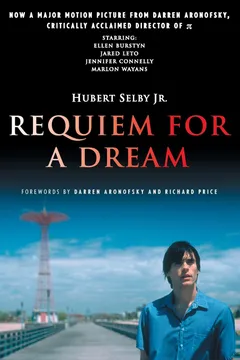


Plot Summary
The Pawnshop Ritual
Sara Goldfarb1 locks herself in a closet while her son2 Harry2 removes the chain securing her television and wheels it away. His friend Tyrone Love3 helps him take the set to Abe Rabinowitz's14 pawnshop, where the transaction adds another entry to a long record of Harry2 pawning and Sara1 redeeming it.
For Sara,1 the television fills the silence left by her dead husband16 and absent son.2 For Harry2 and Tyrone,3 the pawn money becomes heroin. They get high, then imagine turning their next score into a business that will make them rich without getting hooked. Their first plan already depends on the drug they insist they can control.
The opening makes dependence visible as a household routine before anyone names it as a crisis. Sara's chain is a frail attempt to protect an object that also holds her attention and company; Harry defeats it, then reframes the theft as an ordinary favor to himself. The pawn ledger gives the cycle a material history, while the men's business fantasy converts immediate craving into a story of future mastery. Their confidence is not separate from addiction. It is one of the tools addiction uses to keep them moving.
A Red Dress Future
A cheerful caller from the McDick Corporation tells Sara1 she may appear as a television contestant. The prospect transforms her days: she searches for the red dress she wore at Harry's2 bar mitzvah, asks her friend Ada6 to dye her hair, and sends back the agency's questionnaire.
Hoping to fit the dress, Sara1 borrows a crash diet book and tries to subsist on tiny portions of eggs, grapefruit, and lettuce. Hunger defeats her resolve, so a neighbor recommends a doctor who supplies diet pills. Sara1 sees the pills as a practical shortcut to health and television readiness. She does not know that the caller15 was a phone solicitor, not a promise of a real appearance.
Sara's hope is built from familiar props: the dress, her husband's memory, the television screen, and the imagined approval of an audience. These give her days a shape after years of bereavement and isolation. The agency's vague invitation works because it offers recognition without requiring Sara to question its terms. Her diet then turns a wish for participation into a project of bodily correction. The danger is not that she dreams of being seen, but that a commercial promise makes her believe she must remake herself to deserve that attention.
A Coffeehouse in Smoke
At a gathering in Tony's loft, Harry2 and Marion Kleinmeitz4 settle into an intimacy that soon becomes a romance. Marion,4 a talented artist who has lost the drive to paint, tells Harry2 that he makes her feel recognized beyond her looks. Harry2 admits he wants more than street hustling and describes a coffeehouse with performances, paintings, and good food.
Marion4 expands the idea into a gallery and a future in San Francisco, then begins sketching plans and buying art materials. Her former therapist,7 Arnold,7 remains part of her life, but Harry's2 attention feels more sustaining to her. For a while, affection and creative purpose seem to reinforce each other, giving both lovers a future they can imagine together.
Harry and Marion's dream is specific enough to feel like a possible life: a stage, paintings, food, and a place where Marion's artistic eye matters. That concreteness gives their love genuine emotional force. It also hides a weakness. They treat heroin-fueled certainty as evidence that their plans are already taking shape, while their practical route to the coffeehouse is drug dealing. Marion's need to be valued as a person and Harry's hunger to escape the streets meet in the fantasy, but the relationship begins to rely on the same altered state that will later erode their trust.
The Night Shift Bet
Harry2 and Tyrone3 decide to raise capital by loading newspaper trucks before dawn, though neither has a taste for steady work. Marion4 gives them dexedrine to keep them moving, and the stimulants turn the hot, physical shifts into a blur of energy. They work overtime and celebrate with beer, only to learn their wages will not arrive until week's end.
Meanwhile, they hear that a neighborhood user has died after a dose from Windy's supply, and they abandon their job plans to chase the remaining heroin. Once paid, they combine their money with help from Marion4 and buy from Brody,9 a connection who can get unusually potent product. They cut and bag it for resale, beginning the business they believe will finance a clean exit.
The job is a brief encounter with ordinary labor, but the men can tolerate it only by chemically intensifying themselves and measuring each shift against the next purchase. Their detour toward Windy's after hearing of an overdose shows how scarcity sharpens rather than restrains their appetite. Brody's potent supply then appears to validate the plan: they can sell enough to profit while keeping their own use contained. The imagined distinction between dealer and addict becomes their central defense. In practice, the same product fuels both the enterprise and the dependence it claims to manage.
A Television Set Gift
As sales bring in money, Harry2 buys Sara1 a new, top-of-the-line television from Macy's, intending to make amends for years of pawning her old one. He arrives in a cab and finds her thinner, newly red-haired, and surrounded by neighbors who treat her as a future television star. Sara1 tells him she is taking diet pills and explains that the show gives her a reason to rise each morning.
Harry2 recognizes the stimulant's effects and urges her to stop, but her excitement and loneliness disarm him. He apologizes for neglecting her, gives her the television, and promises to visit with Marion.4 The visit briefly makes him feel whole; once outside, he returns to heroin to quiet his confusion.
The gift is a rare attempt by Harry to repair a relationship through action rather than escape. Sara receives it as proof that her son is thriving and that her own future is brightening. Yet their moment of mutual tenderness cannot survive contact with the realities each has chosen: Harry cannot sustain closeness without getting high, and Sara's pills are already organizing her days. He sees the danger but cannot make his concern more persuasive than her hope. Their love is present, but neither knows how to protect it from the habits that have come to govern them.
The Supply Runs Dry
The potent heroin that made Harry2 and Tyrone's3 business flourish disappears. They learn that Brody9 has been killed, though no one can give Tyrone3 a reliable account of how it happened, and the replacement supply is weaker and harder to find. They keep using, tell themselves they can stop later, and begin spending money meant for the business on their own fixes.
When Tyrone3 is caught in a police sweep, officers take his cash while he hides his heroin in a car seat; Harry2 arranges his release. Tyrone's3 girlfriend,5 Alice,5 eventually leaves for Georgia rather than endure the cold and the constant drug sickness. What had been a profitable partnership becomes a daily scramble to secure enough for themselves.
The loss of Brody's supply is an economic shock, but the deeper break is the collapse of the story that dealing gives the men control. Their savings and status cannot stabilize a market they do not command, and their use intensifies precisely as the product worsens. Tyrone's arrest exposes how little protection their money buys when the police can seize it without touching the hidden drugs. Alice's departure further narrows his world. The couple's enterprise does not simply fail; it changes purpose, from building a future to postponing withdrawal one fix at a time.
Sara Steps Offscreen
Sara's1 stimulant pills and growing coffee intake leave her sleepless, agitated, and frightened by sensations she cannot explain. She takes extra pills when their effects fade, while the contest organizers continue to give her no definite show or date. Soon she imagines the television's announcer and a red-dressed version of herself entering her apartment to inspect and condemn it.
Convinced the company has lost or destroyed her application, she walks through winter weather to its offices and begs for an answer. Staff call an ambulance, and Bellevue admits her. One young resident10 realizes she is malnourished and reacting to diet pills and sedatives, but senior doctors treat her as a psychiatric case instead.
Sara's hallucinations draw their images from the machinery of her hope. The television audience she longs to join becomes an audience judging her shabby apartment, and the red dress becomes both proof of aspiration and a measure of failure. Her insistence that the company has wronged her is not baseless in spirit: its careless solicitation gave her an expectation it never fulfilled. Yet the institution reads her distress as evidence against her rather than as a reaction to deprivation and medication. Sara's need to be recognized is thus answered by systems that see only a problem to classify.
Shock Instead of Care
Dr. Spencer10 examines Sara1 and concludes that her confusion follows months of poor nutrition, diet pills, and Valium. He argues that medical care, food, and rest could restore her, but department administrator Dr. Harwood12 refuses to challenge Dr. Reynolds's11 psychiatric diagnosis. Reynolds11 orders electroshock treatment, and Sara1 receives repeated sessions while heavily sedated.
Staff restrain her, force food into her mouth, and later use a feeding tube when she cannot cooperate. She becomes too dulled to explain her fear or ask for help. Spencer10 appeals again, but Harwood12 protects departmental order rather than the patient. The treatment deepens Sara's1 helplessness, turning a remediable physical crisis into a prolonged institutional ordeal.
This turning point shifts the source of danger from Sara's misjudged self-treatment to an institution that has the expertise to correct the mistake and chooses not to. Spencer's diagnosis offers a plausible, humane alternative, but Harwood treats internal harmony as more important than an individual patient's welfare. Reynolds's authority then makes the initial misreading self-reinforcing: sedation and shock reduce Sara's ability to communicate, and her silence can be mistaken for further evidence of illness. The episode depicts institutional power not as a single villain's cruelty but as a chain of decisions that makes responsibility disappear.
The Guarded Holiday Market
With the street supply scarce and prices climbing, Harry2 and Tyrone3 hear of a heavily guarded sale in a cleared zone of ruined buildings. They need more money, so Marion4 asks Arnold,7 her former therapist,7 for a loan. He agrees to provide three hundred dollars, and Marion4 sleeps with him to obtain it, telling herself she is doing it for Harry.2
The men join a long line of buyers watched by armed guards and pay five hundred dollars for a half-piece of heroin. Back at home, they cut and bag the supply, then return to selling and using. Marion's4 reluctant sacrifice helps them buy time, but it also binds her more tightly to a business that is consuming the future she hoped to build.
Marion's meeting with Arnold makes the costs of the couple's dream concrete. She understands that the money is not the true obstacle; what she must do to secure it is. Harry presses her toward the transaction because the next supply seems to promise a return to safety, and her love makes refusal harder. The armed market then gives their illicit economy the orderliness of a public transaction, but its lines, weapons, and inflated price expose the desperation beneath that appearance. They purchase temporary relief, not control over the supply that will determine their next choice.
Marion's Private Stash
When shortages deepen again, Marion4 begins visiting Big Tim,8 a wealthy dealer who offers her heroin in exchange for sex. On one visit he gives her a share after she joins a sexual gathering with other women and men. She returns for more, sometimes claiming she received fewer bags than she did, while Harry2 secretly withholds some of his own supply and keeps it from Tyrone.3
Their shared plans for the coffeehouse and Marion's4 art fade into sketches and memories. Neither lover openly confronts the other's deception; each instead protects a private reserve and uses heroin to soften the guilt. The relationship remains physically close, but its old promise of mutual rescue has given way to separate calculations about who can stay supplied.
The secrecy here is not a sudden betrayal so much as a new grammar of intimacy. Marion and Harry still share a home and drugs, but each begins treating the other as a possible threat to personal survival. Big Tim's offer turns Marion's body into currency, while her private stash gives her a measure of security that the relationship no longer provides. Harry's concealed bags mirror her choices, not as moral equivalents in every respect, but as parallel acts of self-preservation. Their dream persists only as residue; the daily management of dependence has displaced the shared work that once made it credible.
The Road to Miami
With New York's supply failing, Harry2 persuades Tyrone3 to drive south and find a source in Miami. They scrape together money, borrow a car, and use Marion's4 dexedrine to stay awake through the winter journey. Harry's2 injection site has become a painful, infected hole in his arm, but he keeps using it rather than risk missing a dose.
In the South, a gas-station attendant and mechanic meet them with hostility; later a doctor13 sees Harry's2 arm and calls police instead of treating him. Officers arrest both men, and local authorities keep Harry2 from receiving prompt medical care. Their attempt to escape the street market carries them into a different system of danger, where their race and addiction shape how others treat them.
The drive is a point of no return because distance strips away the routines that had made the men's lives feel navigable. Their plan relies on the same confidence that powered the first deals, but now it must survive unfamiliar roads, a failing car, and Harry's worsening infection. The hostility they encounter is not imagined or self-generated: people deny them ordinary service, and the doctor converts a medical emergency into a police matter. The trip therefore exposes two forces acting at once. Addiction has made their bodies vulnerable, while racial prejudice and punitive authority make seeking help dangerous.
Four Lives Left Behind
After their arrest, Tyrone3 and Harry2 are convicted on minor charges and sent to a work camp, where guards abuse Tyrone3 as he endures withdrawal. Harry's2 infected arm worsens in custody; doctors amputate it at the shoulder, and he wakes in a hospital unable to understand what has happened.
Sara1 is transferred from Bellevue to a state mental hospital after shock treatment, where heavy medication leaves her barely responsive. Ada6 and another neighbor visit with food, but Sara1 can only stare and chew.
Marion4 remains in New York, dependent on Big Tim's8 supply and separated from the life she once planned with Harry.2 The four survivors reach different forms of confinement, with none of their promised security, recognition, or creative purpose intact.
The ending does not grant each character a separate moral lesson or a clean moment of recognition. Instead, it replaces the dreams that organized their lives with conditions that restrict movement: a work camp, a hospital bed, a locked ward, and a dealer's terms. Their losses differ, but each follows from a structure that once seemed to offer relief or advancement. Sara sought public recognition and receives institutional silence; Harry and Tyrone sought commercial freedom and lose bodily and civic control; Marion sought artistic purpose and spends her agency to obtain drugs. The novel's bleakness comes from showing these outcomes as consequences, not surprises.
Analysis
The novel places four different dreams beside one another and shows how each becomes vulnerable when hope is treated as a substitute for material security. Sara1 wants recognition and a reason to participate in life; Harry2 and Tyrone3 want money and release from the street; Marion4 wants artistic purpose and recognition as a person. Their aims are not equally grand, but each is sincere. The damage begins when an available shortcut seems to offer the missing conditions: a television solicitation, diet pills, heroin profits, or a dealer's8 supply.
Addiction operates less like a single appetite than like an organizing intelligence. It teaches Harry2 and Tyrone3 to call use a business expense, Marion4 to call sexual compromise an act of love, and Sara1 to call escalating pills a route to health. Each explanation contains a piece of truth, which is why it can survive contrary evidence. Their imagined futures are not merely foolish fantasies. They provide emotional structure and brief relief. The tragedy is that the characters invest in methods that steadily remove the time, trust, and physical capacity required to reach those futures.
The institutional scenes extend this logic beyond the characters' choices. Sara's1 condition is recognized by Dr. Spencer,10 but professional hierarchy prevents that knowledge from guiding her care. In Florida, Harry's2 infected arm draws suspicion before treatment. These episodes do not erase the characters' responsibility, but they show how poverty, racism, commercial manipulation, and bureaucratic self-protection narrow the routes back. The final losses are therefore neither a simple punishment nor an abstract warning. They are concrete consequences: Harry2 loses an arm, Tyrone3 loses freedom, Sara1 loses agency, and Marion's4 artistic ambitions are displaced by the search for heroin. The book's bleak compassion comes from keeping their longing visible even as their means of pursuing it destroy them.
Review Summary
Requiem for a Dream is a powerful, disturbing novel about addiction and shattered dreams. Readers praise Selby's raw, unconventional writing style and his ability to evoke empathy for deeply flawed characters. The book's unflinching portrayal of drug addiction and its consequences leaves a lasting impact. Many consider it a masterpiece of transgressive fiction, drawing comparisons to Dostoevsky. While some find the non-standard punctuation and grammar challenging, most agree it enhances the novel's visceral effect. The book's relevance and emotional resonance persist decades after its publication.
People Also Read









Characters
Sara Goldfarb
The television hopefulSara is a widowed mother whose daily life has narrowed around her television, memories of her husband16 Seymour16, and hopes for her son2 Harry2. Warm, talkative, and attentive to other people's troubles, she longs not for wealth so much as a reason to feel necessary and visible. The possibility of appearing on television gives that longing a vivid form: a red dress, a new figure, and an imagined audience. Sara's vulnerability lies in the gap between her emotional needs and her limited support. She is willing to believe in a promise that makes tomorrow feel possible, and she often interprets care through familiar rituals of food, family, and home.
Harry Goldfarb
The would-be entrepreneurHarry is Sara's1 only child and Tyrone's3 partner in heroin dealing. He is quick-witted, affectionate in flashes, and capable of imagining a life beyond the streets, especially a coffeehouse shared with Marion4. Yet he evades discomfort through humor, drugs, and schemes that promise future independence without requiring present change. His attachment to Sara1 is real but tangled with resentment and guilt; he wants her happiness while struggling to remain in her company. Harry's most persuasive quality is his ability to make a risky plan sound manageable. That talent gives him hope and helps him avoid seeing how much each plan depends on the habit he claims to control.
Tyrone C. Love
Harry's streetwise partnerTyrone is Harry's2 close friend and business partner, a survivor of the Bronx streets who wants a modest escape from constant conflict. His jokes and swagger conceal a practical wish for a small shop, a home, and a life with fewer hassles. Memories of his loving mother remain a rare source of comfort, while his relationship with Alice5 shows his desire for tenderness and stability. Tyrone is alert to danger and knows the street economy well, but he shares Harry's2 belief that they can profit from heroin without being consumed by it. His loyalty is genuine, though pressure increasingly narrows the choices he can make.
Marion Kleinmeitz
The aspiring artistMarion is an artist from a wealthy family who feels suffocated by her parents' status-conscious world. She values aesthetic sensitivity and wants to be seen as a thinking, feeling person rather than a beautiful body. Her past travels in Europe once gave her a sense of purpose, and Harry's2 attention seems to reopen that possibility. She is intelligent, self-aware, and often able to describe the pressures around her, but insight does not protect her from dependence. Her relationship with Harry2 joins love to an ambitious shared vision, making it difficult for her to distinguish devotion from the sacrifices demanded by their habits.
Alice
Tyrone's loving companionAlice is Tyrone's3 girlfriend and a source of tenderness in his life. She shares his home and his drug use, but the cold, unstable routine weighs heavily on her. Her presence reveals Tyrone's3 capacity for closeness and his wish for a life that does not revolve around street danger.
Ada
Sara's loyal neighborAda is Sara's1 longtime friend and neighbor. She dyes Sara's1 hair, shares tea and conversation, and helps her navigate the practical business of preparing for television. Her affection is genuine, though she cannot always recognize how much Sara's1 condition is worsening.
Arnold
Marion's former therapistArnold is Marion's4 former psychiatrist and occasional companion. Cultured and professionally assured, he offers her a relationship shaped by analysis and access to medication. He is accustomed to interpreting Marion's4 feelings through his own expertise, a habit that complicates his ability to understand her as an equal.
Big Tim
The dealer with termsBig Tim is a well-connected heroin dealer whose wealth and relaxed manner distinguish him from the street-level market. He offers Marion4 access to drugs on terms that exploit her need. His geniality does not make the arrangement safe or generous; it helps disguise the power imbalance.
Brody
The potent supplierBrody is Tyrone's3 contact for unusually strong heroin. His supply gives Harry2 and Tyrone3 the chance to imagine themselves as serious dealers, and his reputation makes him a crucial link in their business plans.
Dr. Spencer
The dissenting physicianDr. Spencer is a young hospital physician who examines Sara1 and considers her physical condition alongside her confusion. He is willing to challenge a senior colleague when he believes a patient needs medical care rather than psychiatric treatment.
Dr. Reynolds
The psychiatric authorityDr. Reynolds is the senior psychiatrist who diagnoses Sara1 and directs her treatment. He treats her behavior as evidence of psychiatric disorder and expects compliance, embodying a clinical authority that leaves little room for a patient's own account.
Dr. Harwood
The institutional gatekeeperDr. Harwood administers the hospital department and prioritizes its orderly operation. His decisions reveal how institutional hierarchy can outweigh an individual doctor's objections about patient care.
Dr. Waltham
The Florida physicianDr. Waltham is the doctor Harry2 approaches in Florida for help with his infected arm. He interprets Harry's2 condition through suspicion of drug use and brings the police into the examination.
Abe Rabinowitz
The neighborhood pawnbrokerAbe Rabinowitz runs the pawnshop where Harry2 repeatedly sells Sara's1 television. His ledger records the cycle of theft and redemption that binds the mother1 and son2 to the same object.
Lyle Russel
The television solicitorLyle Russel is the cheerful caller who tells Sara1 she may become a television contestant. His promotional pitch gives her hope without offering a dependable route to an actual appearance.
Seymour Goldfarb
Sara's absent husbandSeymour is Sara's1 deceased husband and Harry's2 father. Sara's1 memories of their marriage shape her ideas of family, beauty, and the future she wants for her son2.
Plot Devices
The television and red dress
A screen for longingSara's1 television is both her daily companion and the source of the imagined future that makes her diet feel worthwhile. The red dress links that future to her memories of Seymour16 and Harry's2 bar mitzvah, giving an old garment emotional weight. As Sara1 watches quiz shows and commercials, she pictures herself joining their polished world. The screen gradually shifts from a source of comfort to a stage for her fears, while the dress measures how far she believes she must change before she can be seen.
Diet pills and coffee
A shortcut with a costSara1 takes prescribed diet pills to lose weight quickly, then increases her coffee intake as the pills' effects change. The regimen initially seems to give her energy and suppress hunger, reinforcing her belief that she has found an easy route to the red dress. Its growing physical and psychological effects are mistaken for proof that she needs more control rather than medical attention. The pills connect Sara's1 private desperation to a health system that does not adequately investigate what she is taking.
Heroin and the market
Relief that creates needHeroin first appears as a product Harry2 and Tyrone3 expect to sell for profit while limiting their own use. Strong supply from Brody9 makes that plan seem workable, but the market's instability, rising prices, and dangerous shortages steadily turn business into a search for personal survival. Fixing also gives the characters brief warmth, intimacy, or quiet, strengthening the belief that they can stop later. The drug therefore drives both the material plot and the changing relationships among Harry2, Tyrone3, and Marion4.
The coffeehouse plan
A future used as capitalHarry2 and Marion's4 imagined coffeehouse gives their heroin business a respectable destination. Their plans include performances, paintings, food, and a role for Marion4 as an artist and curator. The dream makes drug dealing feel temporary and purposeful, helping them justify each new risk as a step toward independence. As the couple becomes more dependent, the plans become less practical and less frequently discussed, but the image continues to shelter them from admitting how little of their lives remains outside the drug economy.
The guarded drug sale
Scarcity made visibleThe armed perimeter around a winter heroin sale turns New York's drug shortage into a physical landscape. Buyers wait in the cold, surrender weapons, and pay an inflated price under the gaze of guards. Harry2 and Tyrone's3 entry into this controlled zone seems to promise a return to profitable dealing, but the sale cannot restore the dependable supply they need. Its orderliness is deceptive: the line and transaction are only a temporary pause in a market governed by violence and scarcity.

Download PDF
Download EPUB
.epub digital book format is ideal for reading ebooks on phones, tablets, and e-readers.








