

Key Takeaways
Build brands that matter, are easy to buy, and are hard to mistake.
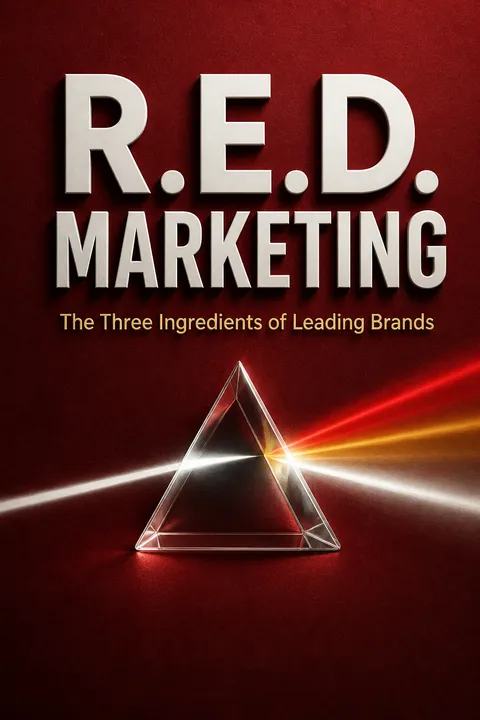
Three forces shape a sale. R.E.D. is the authors’ system for building brands through relevance, ease, and distinctiveness. Relevance means meeting a practical need and fitting the customer’s culture; ease means being easy to notice and purchase; distinctiveness means being memorable and clearly identifiable. A brand can fail if any one is missing. A useful product that shoppers cannot find loses to what is available. A memorable campaign that people attribute to a competitor wastes attention. And an accessible product that feels out of step with its customers may be ignored.
Use it as a diagnostic. Taco Bell’s earlier advertising made the brand recognizable, but the company realized it no longer felt relevant to changing food culture. R.E.D. was developed to reveal such gaps and give marketers a shared language for fixing them. The authors advise addressing the most serious weakness first, rather than trying to overhaul everything at once.
The framework’s strength is that it joins brand strategy to the practical mechanics of buying. It asks not only whether an idea is appealing, but whether people can encounter, remember, and obtain the offer. That makes it useful across marketing, product design, and operations. Its simplicity is also a risk: the three dimensions can interact, and a single scorecard may conceal differences between markets or customer groups. R.E.D. works best as a disciplined set of questions, not as a formula that promises the same answer everywhere.
Begin with a sharp hypothesis, then judge the campaign by the reaction it creates.
Research needs a question. The authors distrust open-ended studies that ask consumers to invent products or explain their deepest motives. People may describe what sounds reasonable without knowing what they would actually choose. Collider Lab instead starts with an observation or hypothesis, consults cultural experts and consumers, then tests and revises the idea. The goal is not to ignore evidence, but to give research a direction.
Judge the ripple. The authors contrast a campaign’s creative execution with the reaction it creates in the market. Taco Bell’s late-night Fourth Meal grew from the brand’s rebellious identity, rather than from a long search for a consumer-generated opportunity. It became a substantial business. They argue that a clear, distinctive idea, pursued decisively, can outperform a technically correct idea diluted by endless refinement.
This approach resembles hypothesis-driven science: a useful question narrows observation, while evidence can still overturn the initial belief. It also recognizes that customers are often better at responding to a concrete proposal than imagining a future product from scratch. The caution is that instinct can be confused with expertise, especially when a successful leader’s stories are told in hindsight. Teams need room to test bold ideas, but also explicit ways to learn from failed ones, rather than treating confidence itself as proof.
Track changing cultural codes before yesterday’s successful brand story becomes a liability.
Culture does not stand still. The book describes category cultural codes in three stages: residual codes once mattered, dominant codes matter now, and emerging codes hint at what may matter next. Taco Bell’s earlier image of cheap, filling food fit a period when fast food was mainly fuel. As social media made meals part of personal display, customers increasingly wanted food to feel like an experience. The brand responded with products and campaigns designed to be surprising and shareable.
Listen beyond stated reasons. KFC South Africa had relied on a story of national togetherness, but younger customers were more focused on individual ambition. The team learned this through conversations with residents, researchers, and cultural observers. Its old message was not simply old-fashioned; it offered an identity that some customers no longer wanted.
The cultural-code lens helps explain why a brand can retain awareness yet lose its place in people’s lives. It directs attention to changing social meanings, not just shifting product preferences. That is especially valuable in international markets, where the same product category can carry different meanings. But cultural interpretation is not a crystal ball. A striking interview or trend can be unrepresentative, so marketers should treat emerging codes as hypotheses and check whether they matter at a meaningful scale before making expensive changes.
Make your brand a badge of belonging, not a plea for affection.
Products can signal identity. The authors use cultural relevance to describe how a brand can help customers express who they are, or who they hope to become. This differs from asking people to feel intimate affection for a product. Michelob Ultra, for example, aligned beer with a rising association between fitness and status. Oatly made its environmental story part of a distinctive, irreverent identity. In 2018, when supply ran short, some customers paid up to $200 for a twelve-pack through resellers, while competing products remained available.
Purpose needs a reason to belong. The authors do not reject ethical action; they argue that a broad purpose statement rarely sells a product by itself. It is more likely to help when it is credible, distinct from competitors, and meaningful to customers’ identities. A brand’s story must still connect to what people need and be easy to access.
This distinction clarifies why social meaning can influence choice without requiring consumers to feel personal love for a company. Brands act as signals in social life, helping people communicate taste, values, and group membership. The idea also connects marketing to cultural sociology, where consumption is understood partly as a way people make identity visible. There is a boundary to respect: belonging can be powerful, but it can also encourage exclusion or exploit anxieties about status. Ethical positioning should be supported by actual practice, not merely an attractive symbol.
Expand the occasions your brand serves instead of dividing people into fixed segments.
Count the occasions. A category use occasion, or CUO, is a situation or need that prompts someone to use a product category. A detergent might be chosen for brightening colors, saving time, or cleaning a difficult stain. The authors recommend finding occasions a brand can credibly serve, then extending into promising ones without abandoning its identity. Taco Bell’s Crunchwrap answered a practical need for portable, less-messy food while remaining recognizably Taco Bell. It has sold more than 1.4 billion units, according to the book.
People are not permanent segments. The same customer may want meticulous cleaning one week and the cheapest, quickest option the next. The authors argue that campaigns tailored to narrow demographic or psychological segments can splinter one recognizable brand into several weaker versions. Instead, use audience research to understand needs, then build a consistent brand around relevant occasions.
CUOs shift the planning question from “Which kind of person is this?” to “What job is the customer trying to get done right now?” That is a useful correction when people’s circumstances and preferences change. It also makes innovation more concrete: a new use should be both valuable and plausible for the brand. The framework should not be read as a ban on segmentation in every context. Different products, regulations, or service needs may demand tailored treatment; the risk is allowing segmentation to fracture the brand’s core identity.
Create talk-worthy moments that people can clearly connect to your brand.
Attention travels socially. Social relevance describes a brand’s ability to become part of conversation through moments people want to share. The book links this to social proof, the tendency to treat others’ choices as evidence, and the availability heuristic, the tendency to judge what comes readily to mind as important. Taco Bell’s 1996 April Fool’s announcement that it had bought the Liberty Bell remained associated with Taco Bell because the prank fit its rebellious identity. By contrast, an Uber stunt using Lego-like cars risked making Lego, not Uber, the memorable brand.
Give people something to pass along. The authors suggest stunts, collaborations, entertainment, useful services, and timely responses to crises. KFC UK answered a chicken shortage with a self-mocking apology that acknowledged customers’ frustration. The idea is not simply to generate noise. The brand must be distinctive within the moment, or attention may benefit someone else.
Social sharing can turn a one-way message into a public signal: people circulate a brand moment partly because it entertains them or helps them appear informed. That can make brand communication more participatory and culturally visible. Yet virality is neither predictable nor automatically valuable. A moment can attract attention without improving trust, sales, or long-term memory. The useful test is not “Will this trend?” but whether the idea fits the brand, gives people a reason to share it, and remains intelligible after the initial novelty fades.
Remove buying friction, because convenient choices can reshape what customers prefer.
Make the next step simple. Ease of access means reducing physical and psychological obstacles between wanting a product and obtaining it. The authors illustrate this with a marketer who prefers specialty Vosges chocolate but repeatedly eats a Snickers from the office drawer because it is close at hand. Their argument is that convenient behavior can prompt people to justify their choice afterward, rather than waiting for advertising to persuade them first.
Look for small barriers. Netflix removed the drive, stock uncertainty, and late fees associated with video rental. KFC China created a rainy-day menu that shortened ordering to a few seconds and helped restaurants handle a surge in delivery demand. The authors recommend mapping the customer journey, identifying points of confusion or delay, and testing ways to remove them. Ease should not mean eliminating every human interaction; useful service can matter too.
The emphasis on friction connects marketing to behavioral design: the choice architecture around an offer can matter as much as the offer’s stated benefits. Convenience is especially potent when customers make frequent, low-involvement decisions. It can also make beneficial actions easier, such as donating or accessing services. Still, friction is not always bad. In safety, privacy, and high-stakes decisions, a pause can protect people from impulsive harm. The design question is whether a barrier obstructs a sound choice or prevents a consequential mistake.
Reach future buyers broadly instead of paying dearly for only today’s prospects.
Build memory before demand. The authors argue that advertising should keep a brand available in people’s minds even when they are not ready to buy. In their marketing analyses, broad media cost about $5 per thousand impressions on average, compared with about $25 for highly targeted media; one Canadian example reached $118. Targeted media cost roughly five times more while being only about twice as effective in the comparisons they describe. Their point is that people outside the market today may buy later.
Make attention memorable. Easy to notice requires both reaching people and creating an emotional response that helps a message stick. That response need not be affection; surprise, amusement, or even irritation may make an ad easier to recall. The authors distinguish this from a long-term emotional bond with a brand. Campaigns also need clear brand cues, or a memorable ad may be credited to the wrong company.
The argument challenges an appealing but narrow definition of media efficiency: sales attributable right now. For products purchased infrequently, broad reach can create familiarity before a need arises, while retargeting alone risks overlooking future demand. The authors’ cost comparisons are useful prompts to calculate full costs, including tools and labor. They should not become a universal rejection of targeting. Some complex or high-cost purchases benefit from precise information at particular stages; the practical task is to balance immediate conversion with durable, widely shared memory.
Keep distinctive brand assets consistent so attention becomes memory, not misattribution.
Recognition needs repeatable cues. Distinctive brand assets are features such as a character, sound, color scheme, package, tagline, or recurring story structure that help people identify a brand. The authors say strong assets should be unique, ownable, and used consistently. Old Spice revived its nautical imagery, colors, and masculine character in a comic campaign that stood apart from competitors. KFC India, after making its Colonel, bucket, and colors more central, reportedly raised correct ad attribution from 60 percent to 88 percent.
Do not change for novelty alone. The book cites backlash when brands such as Tropicana and Gap altered familiar packaging or logos. It recommends auditing assets for awareness, attribution, and attention, then investing in the strongest. A striking idea without brand-specific cues can be remembered but miscredited, which means the brand paid for someone else’s recognition.
Consistency is not the enemy of creativity; it can give creative work a recognizable structure that audiences learn to read. The strongest brands often innovate within a stable visual or narrative world, letting each new execution refresh familiar memory. This also makes attribution a more useful metric than general ad enjoyment. Still, an asset can become culturally dated or damaging, so preservation should not be automatic. The relevant question is whether a cue remains distinctive and useful to the brand, not whether it has simply existed for a long time.
Diagnose the brand’s keystone problem before scattering effort across ten fixes.
Map the situation first. The authors adapt a strategic analysis called the Four Cs to examine consumers, category, culture code, and brand. It helps teams consider how people’s lives are changing, what competitors are doing, which cultural meanings are shifting, and what the brand itself represents. R.E.D. then helps identify whether the urgent weakness concerns relevance, ease, or distinctiveness.
Choose one first move. KFC Spain had been in the market for decades, yet consumers barely recognized it as a chicken restaurant. The team concluded that distinctiveness, not product quality or price, was the key problem. A deliberately odd singing campaign helped sales move from decline to double-digit growth, according to the authors. Their process is to identify the most consequential obstacle, act on it with conviction, and use early progress to build organizational confidence.
The keystone approach offers a practical answer to a common management trap: treating every visible symptom as an equally urgent project. A focused intervention can align teams and make learning easier because its effects are more interpretable. But a turnaround story cannot establish that one campaign alone caused every subsequent sales gain; distribution, operations, pricing, and market conditions also matter. The method is strongest when leaders define a measurable problem, coordinate the relevant functions, and remain willing to revise the diagnosis if the first intervention fails.
Analysis
R.E.D. Marketing is a practical synthesis of consumer psychology, brand strategy, and organizational decision-making, built around a memorable claim: growth depends not only on having a relevant offer, but on making that offer easy to encounter and unmistakably identifiable. Its best contribution is integration. Functional usefulness, cultural meaning, distribution, media reach, and creative distinctiveness are often managed by separate teams. The framework forces them into one conversation and makes a missing link visible. Its stories give abstract choices consequences: Taco Bell’s shift from food as fuel to food as experience shows how a brand can be recognizable yet culturally out of date; the Crunchwrap illustrates how a product innovation can answer a real use occasion while preserving brand identity.
The book is also persuasive in its account of organizational barriers. Excessive approvals, diffuse briefs, and committees can turn a bold idea into generic compromise. A shared vocabulary and a clear decision-maker can improve creative execution, especially in large, decentralized businesses. The Four Cs offer a practical diagnostic, while the recommendation to choose one keystone challenge can focus scarce resources.
The main analytical caution is causal attribution. The authors report strong sales outcomes alongside marketing changes, but brand growth also depends on product quality, pricing, distribution, operations, competitive moves, and broader economic conditions. Their confidence in instinct and mass reach is valuable as a corrective to research theater and over-targeting, but it should not replace experimentation or category-specific evidence. Cultural interpretation can be insightful and still be wrong; a compelling interview is not automatically a representative trend. Likewise, social buzz can create salience without durable preference, and distinctive assets may need revision when their meaning changes.
The most defensible use of the framework is therefore as a disciplined sequence of questions, not a universal causal law. Find the customer need and the cultural context, remove barriers, make the brand recognizable, test the result, and update the diagnosis. R.E.D. is most useful when boldness and measurement are partners rather than rivals.
Review Summary
R.E.D. Marketing receives mixed reviews, with an overall rating of 3.91 out of 5. Positive reviews praise the book's actionable insights, engaging case studies, and simple yet effective marketing framework. Critics appreciate its fresh perspectives on branding and segmentation. However, many negative reviews focus on the authors' connection to Yum! Brands and its controversial animal welfare practices, questioning the ethics and relevance of their marketing advice. Some readers find the content repetitive or too focused on Yum! Brands examples.
People Also Read










Glossary
R.E.D.
Brand growth diagnosticA marketing framework built from relevance, ease, and distinctiveness. Relevance concerns whether an offer fits practical needs and cultural or social contexts. Ease concerns how readily people notice and obtain it. Distinctiveness concerns whether people can recognize and remember the brand. The authors use the framework to diagnose marketing problems and decide what to address first.
Cultural code
Category meaning in cultureA shared cultural meaning that shapes how people understand a product category or brand. The book distinguishes residual codes associated with the past, dominant codes that currently shape expectations, and emerging codes that may influence future behavior. Marketers are encouraged to identify changes in these meanings and consider whether their brand still fits.
Category use occasion (CUO)
A need-based usage situationA situation or need that leads someone to use a product category. A snack, for example, could serve as a quick meal, a treat, or food to eat while driving. The authors recommend identifying occasions a brand can credibly serve and expanding into them while preserving its recognizable identity.
Social relevance
Brand presence in conversationA brand’s ability to become part of social conversation through memorable, shareable actions, content, or experiences. The concept draws on people’s tendency to notice what others discuss and to use peers’ behavior as a cue. The authors stress that a talk-worthy moment should be clearly connected to the brand rather than accidentally promoting another company.
Distinctive brand assets
Recognizable brand cuesConsistent features that help people identify a brand, including characters, sounds, colors, packaging, taglines, and recurring creative formats. The authors evaluate these assets by whether they attract attention, are correctly attributed to the brand, and are known by consumers. Strong assets make advertising easier to recognize and recall.
Four Cs
Four-part brand diagnosisA diagnostic method that examines consumers, category, culture code, and brand. It asks what is changing in customers’ lives, how the category and its competitors are behaving, which cultural meanings are shifting, and what the brand represents. The authors use the analysis to locate a central challenge before applying R.E.D. to decide what to address.
Sales Overnight, Brand Overtime (SOBO)
Balance short and long termA planning principle used at Taco Bell to balance immediate sales activity with sustained brand building. It was developed in response to pressure to rely on price cuts, limited-time offers, and short-term performance marketing. The idea is to generate near-term business without abandoning the investment required to keep the brand valuable over time.
Mirror vs. Magnet
Reflect consumers or attract themA distinction between advertising that reflects consumers’ everyday lives and advertising that creates a distinctive world people want to enter. Mirror-style work shows familiar experiences, while magnet-style work emphasizes a brand’s own character and aesthetic. The authors favor distinctive, brand-centered work when ordinary category advertising risks blending together.
Download PDF
Download EPUB
.epub digital book format is ideal for reading ebooks on phones, tablets, and e-readers.








