

Key Takeaways
Diagnose the hidden cause before adjusting your parenting approach.
Look beyond the obvious. Davis opens with a lesson from sniper training: a missed shot may look like a faulty scope, but wind, body position, light, or breathing may be the real cause. Adjusting the wrong factor can make the next shot worse. He calls this reflexive pursuit of the most obvious explanation “chasing the bull.” Parents can make the same mistake by copying their own upbringing or swinging between harsh control and permissiveness without asking what is actually shaping a child’s behavior.
Parent on purpose. The practical alternative is to name what the family is trying to build, then examine whether daily actions help. The book’s proposed end states include trust, respect, confidence, and responsibility. The point is not to do more, but to identify which effort matters and which is merely motion.
The sniper analogy makes a useful systems-thinking point: outcomes often have several interacting causes, and changing the easiest variable is not the same as solving the problem. In parenting, a child’s behavior may reflect fatigue, a confusing expectation, or a strained relationship, not simple defiance. That invites investigation before punishment. The analogy has limits, though. Children are not targets, and parenting is not a mission to control an outcome. A clear direction helps, but a child’s own temperament and agency must remain part of the picture.
Build a family team that adapts as children gain responsibility.
The mission changes. Davis compares parenting to the stages of Navy SEAL training. Early care is mostly survival and meeting immediate needs. As children grow, they learn skills, relationships, and responsibility; adolescence brings greater freedom and consequences. The comparison emphasizes that parenting must change with the child, rather than relying on one fixed style. The book calls the ongoing work of supporting capable, considerate adults a “Fourth Phase,” with no set endpoint.
Coordinate across homes. Davis describes remaining aligned with his ex-wife and their new spouses after divorce. They aimed to keep expectations consistent in both households and cooperate around the children, even when doing so required swallowing pride. A family team can include separated parents, stepparents, and other caregivers. Its members need clear roles, communication, and the ability to cover for one another.
The strongest part of the team metaphor is its insistence that children experience a network, not just a single parent’s intentions. Family systems theory likewise treats relationships as interdependent: tension between caregivers can become part of a child’s environment. Cooperation does not require identical personalities or perfect agreement; it requires predictable, child-centered coordination. The book’s phase map is memorable but broad, and children do not mature according to a uniform timetable. It works better as a prompt to reassess responsibility than as a strict age-based prescription.
Become the example your child can actually observe and trust.
Live the lesson. Davis argues that presence alone does not make someone a meaningful guide. A father who is physically home but disengaged may have less influence than a parent who is away for work yet remains a credible example. His own father’s serious depression disrupted their daily relationship, but family stories and his father’s earlier conduct still helped shape Davis’s sense of direction.
Keep learning. Davis links leadership to continued practice. A parent who expects a child to respect advice about a skill should remain engaged enough to teach it credibly. He also describes making room for his own health, activity, and work, rather than treating family life as a reason to abandon every personal need. The standard is not flawless achievement. It is visible effort, honesty, and a life that makes the advice believable.
Children learn through observation as well as instruction, a principle studied in social learning research. The idea of being someone worth learning from therefore has force: credibility grows when actions and advice line up. Yet “lead from the front” can become a burden if it implies that a parent must always be impressive or successful. Children also benefit from seeing repair, uncertainty, and asking for help. A parent’s influence is not a performance review. Trust depends as much on responsiveness and warmth as on competence.
Choose effective correction over defending your ego.
Make room to be wrong. In one sniper-school episode, an instructor insisted targets were at the stated distance, costing the team hours before someone checked and found the error. Davis’s lesson is that protecting one’s certainty wastes time and damages trust. He urges parents to seek guidance, listen to feedback, and admit mistakes plainly. In his own example, he told his son that he had failed to check safety equipment before a dive and that the oversight could have put him at risk.
Correct without humiliation. Davis proposes that consequences should be safe, preserve confidence and the relationship, and change the behavior. He rejects the idea that a consequence must satisfy a parent’s desire for justice. The principle is useful, but some of his examples in the book are extreme and should not be copied. Calm accountability and proportionate limits do not require danger, intimidation, or destruction of a child’s belongings.
This is a powerful case for intellectual humility in family life. When adults acknowledge errors, they make accountability observable rather than demanding it only from children. Organizational learning research makes a similar distinction between a blame culture and an environment where people can report mistakes and improve the process. The book’s own consequence examples complicate its advice: a lesson meant to build responsibility can instead create fear or rupture trust. A useful test is whether the response teaches a skill and repairs harm, rather than simply proving who holds power.
Stay involved in small moments, so crises do not become catch-up.
Make small corrections early. In SEAL training, students who fall behind may be assigned extra work with the “Goon Squad.” Davis borrows the image to warn that delayed attention makes family problems harder to address. A missed call from a teacher, an unresolved school struggle, or years of weak connection can compound into a much larger challenge. Parenting, in his view, is not a reserve of energy to spend only when something goes badly.
Coach in real time. Davis recommends consistent attention to ordinary interactions, not merely reacting to serious misbehavior. He compares course adjustments to a ship’s rudder: small changes keep it on course, while waiting allows drift to accumulate. His dog-training story illustrates how inconsistent expectations can produce confusion. In family life, the same behavior should not be ignored one day and punished harshly the next.
The value here lies in prevention, not constant surveillance. Small, timely conversations give parents information before a problem hardens into a crisis, much as regular feedback helps people adjust a task before an error becomes expensive. However, the goal should not be to monitor every aspect of a child’s life. Children need privacy and room to make ordinary mistakes. Consistency means that expectations are understandable and responses are dependable, not that parents control every choice or apply rules without considering context.
Prepare calm responses before your child tests a boundary.
Rehearse the response. Davis calls prepared responses to foreseeable problems “Immediate Action Drills,” or IADs. In military settings, they are practiced reactions for moments when hesitation or confusion can be dangerous. Applied to family life, the idea is to discuss likely situations in advance and agree on how caregivers will respond. Davis’s co-parenting approach is to talk, seek help if needed, choose one shared strategy, and carry it out together.
Be firm without becoming harsh. A child facing teasing, a safety issue, or a household rule can benefit from knowing what to say and where to seek help. Davis gives an example of rehearsing a calm question a daughter could use when a classmate insulted her. Preparation can replace panic with options. It should not be used to justify reflexive punishment or aggressive control; the response needs to fit the child, the risk, and the situation.
Rehearsal reduces the cognitive load of stressful moments. Emergency planning, classroom practice, and sports drills all work partly because people do not have to invent every response under pressure. The same principle can help children prepare words for conflict or identify a trusted adult. But a family is not a command unit, and not every disagreement is an emergency. Plans should be collaborative and flexible. A child who can explain what happened and help revise the plan is learning judgment, not merely compliance.
Give discomfort a purpose, but never confuse endurance with wisdom.
Use purpose to persist. During a long ocean swim in SEAL training, Davis describes using memories, imagined future goals, and thoughts of his children to stay focused. He also found that helping others could draw attention away from his own discomfort. The book presents mental toughness as the ability to regulate physical, emotional, and mental reactions while continuing toward a meaningful objective.
Choose the right strain. Davis argues that ordinary, unpleasant tasks can become more manageable when understood as part of a larger commitment. But persistence is not automatically virtuous. A training failure, medical danger, or overwhelming distress may call for stopping and seeking help. The aim is not to suppress every signal of discomfort; it is to distinguish temporary resistance from genuine risk, then act with intention rather than reflex.
Purpose can change how effort is experienced. Research on motivation distinguishes personally meaningful goals from tasks performed only for external approval, and the former can sustain attention through difficulty. The distinction matters in parenting too: children can learn to tolerate frustration while still knowing their limits deserve respect. Military accounts naturally celebrate endurance, but endurance alone does not establish that a challenge is safe or worthwhile. Teaching children to persist should include teaching them how to pause, assess, and ask for support.
Measure winning by skills gained, not rivals beaten.
Reward participation wisely. Davis separates beating another person from becoming more capable. In his account, the meaningful win is learning a skill, recovering from failure, or keeping a commitment. He supports participation awards when they help a beginner stay engaged, but not when they erase effort or give the same recognition regardless of contribution.
Let failure teach. His daughters repeatedly lost student-council elections, yet improved their speeches and chose to run again. Davis treats their willingness to try again as progress, even without the desired result. He also describes a sniper-course redesign that emphasized better instruction and positive reinforcement; he reports that attrition dropped from about 30 percent to under 5 percent without lowering standards. The lesson is to make practice demanding, supportive, and oriented toward improvement.
This approach aligns with mastery-oriented learning: attention goes to what a learner can improve, rather than to a fixed identity such as being naturally talented. It also preserves competition as information, not as a verdict on worth. The reported sniper-course result is especially suggestive because standards stayed in place while teaching changed. Still, resilience should not mean repeating every pursuit indefinitely. A child should be able to decide that an activity no longer fits, while distinguishing a considered change from giving up at the first setback.
Move together outdoors to build health, confidence, and shared memories.
Make movement part of family life. Davis describes being a restless child whose parents helped by letting him play outdoors. He connects inactivity with low energy and mood, and urges parents to make physical activity a normal part of family time. The book cites figures that one in three children is active daily, children spend more than seven and a half hours a day in front of screens, and over 80 percent of adults do not meet activity guidelines.
Choose adventure to fit the family. Hiking, swimming, climbing, and other shared activities can create memories and teach practical skills. Davis’s family found connection during an off-trail hike, though the route became more dangerous than expected. That story shows both the bonding potential and the risk. Outdoor challenge should be adapted to the participants’ ages, skill, equipment, and consent, not treated as proof that greater danger creates stronger relationships.
The emphasis on movement is well grounded in public health: physical activity supports cardiovascular health and is associated with better mood and cognitive functioning. Shared activity can also make conversation easier because attention is not fixed on a face-to-face interview. The book’s adventurous spirit is appealing, but its claim that ordinary experiences are insufficient is less convincing. A safe walk, game, or garden project can be meaningful without turning into an ordeal. Connection comes from attention and cooperation, not from risk by itself.
Teach conflict skills that make escape and help-seeking respectable.
Safety outranks pride. In a SEAL training exercise called the Box Drill, Davis repeatedly charged a group of attackers and was overwhelmed. The instructors explained that the safe area was the point: when a person has a secure place, leaving it to fight may create needless danger. He translates that lesson into a sequence for conflict: notice a threat, create distance, use a barrier or safe setting, seek help, and defend only if necessary.
Practice judgment, not aggression. Davis argues that children should learn to recognize unsafe situations and get help rather than treat fighting as the default response. If physical defense becomes unavoidable, skills require training and restraint. The most important lesson is that avoiding a fight is not cowardice. It can be the most capable choice when the goal is protecting people, not winning an argument or defending an image.
This is among the book’s most valuable reversals of conventional toughness: skill is shown by preventing harm, not by proving readiness to fight. Violence-prevention approaches similarly prioritize distance, de-escalation, and access to trusted support. Children also need to know that seeking help is not a failure of independence. The threat-scanning language can become excessive if applied to ordinary public life, however. Safety training should make a child more confident and observant, not chronically suspicious or responsible for anticipating every possible danger.
Let adult children own consequences while keeping the relationship open.
Ease back without disappearing. Davis describes taking his eighteen-year-old son on a remote camping trip after realizing that their relationship had grown distant. Time together in nature helped them reconnect. The trip was not presented as an expensive cure; the point was to create space for attention and shared experience. As children become adults, advice must increasingly be offered on their terms rather than imposed as a command.
Do not remove every obstacle. Davis uses the O Course, a military obstacle course, to explain why parents should not keep lifting adult children over difficulties. Repeatedly rescuing them financially or from the consequences of choices can prevent them from developing judgment and independence. Yet letting go is not abandonment. The parent remains a reliable place to return, listen, and help the adult child assess what happened and decide what to do next.
This balance resembles autonomy-supportive parenting: adults offer warmth and guidance while allowing young people to make meaningful choices and learn from outcomes. The difficult part is deciding when help becomes rescue. Financial or emotional crises can involve risks that justify intervention, and a rigid refusal to help may damage trust rather than foster independence. The useful question is whether support restores the adult child’s capacity to act, or quietly takes over the problem. Connection remains important even when authority recedes.
Analysis
Raising Men turns the author’s military experience into a field guide for family life. Its central move is analogical: sniper work, team training, and operational planning become ways to discuss parenting with urgency and practical detail. The most useful threads are not the combat imagery itself, but the habits beneath it: investigate causes rather than guess, coordinate caregivers, remain teachable, make small corrections, practice responses, and treat development as a long process. Stories about the author’s father, his children, and his SEAL colleagues keep these claims personal rather than abstract.
The book is also unusually candid about failure. Davis describes missed shots, strained family connections, and times when he recognized that he had made a mistake. That candor strengthens the case for accountability. His account of improving sniper-course instruction without lowering standards also supports a broader lesson: strong expectations and humane teaching are not opposites.
The military frame has limits. Families are not units to be optimized, children are not trainees, and authority does not erase a child’s right to safety and agency. The text sometimes presents extreme methods, including dangerous water exercises and destructive punishment, as vivid demonstrations. Readers should retain the underlying ideas, such as gradual challenge, appropriate consequences, and close supervision, without imitating hazardous examples. The book’s forceful claims about discipline, fairness, and masculinity also risk treating a particular model of fatherhood as universal. Its practical principles can serve many caregivers, but they need to be translated for each child, family structure, and culture.
At its best, the book argues for engaged rather than merely present parenting. At its weakest, it can confuse intensity with effectiveness. Its deepest lesson is therefore also a useful test: an action is not good parenting because it looks tough or purposeful. It is good only when it builds the child’s safety, competence, trust, and ability to act independently.
Review Summary
Raising Men receives mixed reviews, with many praising its unique perspective on parenting through Navy SEAL principles. Readers appreciate the blend of military anecdotes and parenting advice, finding it applicable to both sons and daughters. Some criticize the book's focus on SEAL experiences over parenting content. Positive reviews highlight the author's confidence, practical advice, and emphasis on effort over natural talent. Negative reviews mention excessive military jargon and questionable parenting strategies. Overall, the book is seen as thought-provoking, though not universally appealing.
People Also Read










Glossary
Chasing the bull
Fixating on the obvious causeDavis’s term for repeatedly adjusting the most visible or familiar factor when something goes wrong, without checking whether it is actually responsible. He illustrates it through sniper training: a shooter may blame a scope when wind, posture, light, or another changing condition caused the miss. In parenting, it means repeating familiar approaches without diagnosing the underlying problem.
Clear end states
Defined conditions for successA leadership tool for describing what a completed objective should look and feel like. In the book’s parenting context, an end state gives caregivers a shared direction, such as developing trust, respect, confidence, and responsibility. Defining the desired result helps parents decide whether their time and choices are contributing to it.
Immediate Action Drills
Rehearsed responses to problemsPrepared, practiced responses for situations where confusion or hesitation could lead to harm or failure. Davis applies the military idea to family life by recommending that caregivers discuss likely problems, agree on a response, and practice age-appropriate actions with children. The aim is to make a considered response easier to access under stress, not to turn every disagreement into an emergency.
Goon Squad
Extra training after falling behindA group in SEAL training for students who fall behind during an evolution. In Davis’s description, they receive additional strenuous work, which can reveal that they have more capacity than they initially believed. He uses the term as a metaphor for the added effort families may face when they neglect a relationship or responsibility and must work harder to recover lost ground.
Fourth Phase
Lifelong family developmentDavis’s name for the continuing work of parenting after formal childhood milestones, including adulthood. The idea is that turning eighteen does not end a parent’s role, but changes it from direct supervision toward guidance, collaboration, and maintaining an open relationship. The phase has no fixed time limit because learning and family connection continue throughout life.
Proofing Phase
Testing independent judgmentDavis’s term for the period when young adults must make choices and experience their consequences with less parental intervention. The purpose is to let them test the skills, judgment, and independence developed during childhood. Parents can remain available as a source of support, but routinely removing obstacles or rescuing adult children may prevent them from learning to manage their own decisions.
Self-regulation
Managing body, mind, and emotionThe book describes self-regulation across three connected domains: physical, emotional, and mental. It includes continuing an effort despite discomfort, managing reactions to frustration, and thinking through difficult problems. Davis argues that strain in one domain can weaken the others, while a meaningful purpose and practice can support control across all three. The concept is not a reason to ignore danger or distress.
FAQ
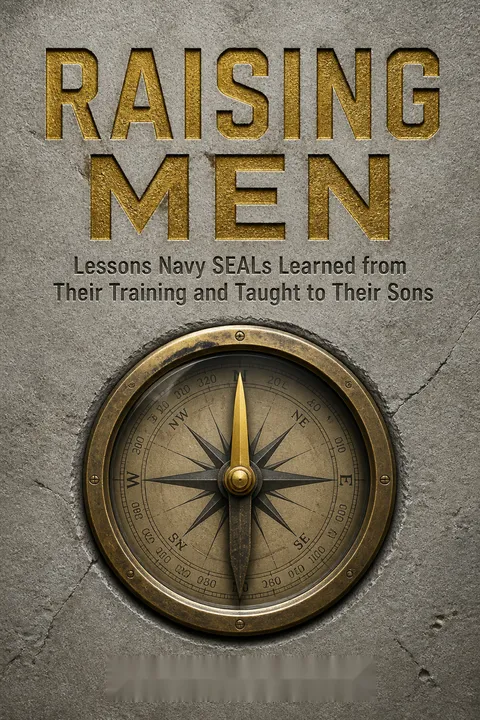
1. What is "Raising Men: Lessons Navy SEALs Learned from Their Training and Taught to Their Sons" by Eric Davis about?
- SEAL Principles for Parenting: The book adapts Navy SEAL training principles and mindsets to the challenges of fatherhood, especially in raising boys to become confident, capable men.
- Personal Stories and Anecdotes: Eric Davis shares his own experiences as a SEAL, sniper instructor, and father, illustrating how military lessons translate to parenting.
- Actionable Advice: The book provides practical strategies, exercises, and debrief questions for fathers to apply SEAL-inspired leadership, discipline, and resilience in their families.
- Focus on Boys, but Universal Lessons: While the book centers on raising sons, the principles are applicable to all children and to personal growth as a parent.
2. Why should I read "Raising Men" by Eric Davis?
- Unique Perspective: The book offers a rare look at parenting through the lens of elite military training, providing fresh, actionable insights not found in typical parenting books.
- Real-World Application: Davis’s advice is grounded in real-life challenges, both on the battlefield and at home, making it relatable and practical for fathers.
- Focus on Building Men: It addresses the modern crisis of masculinity and the need for strong, present fathers to guide boys into manhood.
- Motivational and Honest: The book is candid about failures and struggles, making it both inspiring and reassuring for dads who want to improve.
3. What are the key takeaways from "Raising Men" by Eric Davis?
- Parenting as Leadership: Fathers should lead by example, modeling the behaviors and values they want to see in their children.
- Teamwork and Accountability: Building a family team requires clear roles, communication, and mutual support, much like a SEAL unit.
- Action Over Movement: Focus on purposeful actions that move your family forward, rather than just being busy or reactive.
- Resilience and Adaptability: Teach children to embrace challenges, learn from failure, and develop mental toughness through consistent, incremental growth.
4. How does Eric Davis apply Navy SEAL training principles to parenting in "Raising Men"?
- Phased Approach: Davis parallels SEAL training phases (basic conditioning, combat diving, land warfare) with stages of parenting, emphasizing evolving teamwork and responsibility.
- Immediate Action Drills (IADs): He advocates for having practiced responses to family crises or discipline issues, just as SEALs rehearse for emergencies.
- Clear End States: Fathers are encouraged to define clear objectives for their parenting, similar to mission planning in the military.
- Never Quit Mentality: The book stresses perseverance, learning from mistakes, and always stepping back up after setbacks, both for fathers and their children.
5. What are some of the most important SEAL concepts explained in "Raising Men" and how do they relate to fatherhood?
- Chasing the Bull: Avoid focusing only on obvious problems; look for underlying issues affecting your child’s behavior or your parenting.
- Ready to Lead, Ready to Follow, Never Quit: Fathers must be willing to lead, support, and persist, adapting their role as needed.
- It’s Easier to Keep Up Than Catch Up: Consistency in parenting prevents bigger problems later; small, regular corrections are more effective than major interventions.
- Mind Over Matter: Teaching kids (and practicing yourself) to push through discomfort and adversity builds resilience and confidence.
6. How does "Raising Men" by Eric Davis address the importance of teamwork and communication in families?
- Family as a Team: Davis likens the family to a SEAL team, where each member has a role and the success of the mission depends on collaboration.
- Dive Buddy Analogy: Parents (even if divorced) must act as united “dive buddies,” presenting a consistent front and supporting each other for the children’s benefit.
- Pivoting Roles: Effective families can switch roles and responsibilities as needed, just as SEALs do in the field.
- Open Communication: Direct, honest communication is emphasized, with problems addressed head-on rather than avoided or escalated.
7. What does Eric Davis mean by "Don’t Be Right. Be Effective" in "Raising Men"?
- Effectiveness Over Ego: Davis urges fathers to prioritize what works over being “right” or winning arguments, both with their children and partners.
- Owning Mistakes: He models admitting errors and learning from them, teaching children to do the same and fostering trust.
- Consequences and Accountability: Discipline should be about producing effective change, not just enforcing rules or seeking fairness.
- Seeking Help: The book encourages humility and the willingness to get help or coaching, rather than pretending to have all the answers.
8. How does "Raising Men" by Eric Davis suggest fathers build confidence and resilience in their sons?
- Lead from the Front: Fathers should actively demonstrate the skills, behaviors, and attitudes they want their sons to develop.
- Expose to Challenge: Davis recommends safe but challenging experiences (e.g., outdoor adventures, physical tasks) to push kids out of their comfort zones.
- Celebrate Effort and Growth: Focus on progress, effort, and learning from failure, rather than just outcomes or natural talent.
- Gradual Independence: As children grow, gradually loosen support, allowing them to face real consequences and develop self-reliance.
9. What role does physical activity and adventure play in "Raising Men" by Eric Davis?
- Essential for Well-Being: Davis argues that movement and outdoor activity are critical for both physical and mental health, for fathers and children alike.
- Bonding Through Adventure: Shared challenges and adventures create strong family bonds and lasting memories.
- Counteracting Modern Inactivity: The book critiques sedentary lifestyles and overreliance on screens, urging dads to model and encourage active living.
- Building Confidence: Physical challenges teach kids to overcome fear, develop skills, and gain confidence in their abilities.
10. How does "Raising Men" by Eric Davis handle discipline, consequences, and dealing with misbehavior?
- Immediate, Proportionate Response: Davis advocates for swift, consistent, and fair consequences, tailored to the child and situation.
- Operant Conditioning: Drawing from both SEAL and dog training, he emphasizes positive reinforcement and clear boundaries.
- No Hesitation: Delayed or inconsistent discipline undermines authority and confuses children; decisive action is more effective.
- Focus on Relationship: Discipline should maintain the child’s confidence and the parent-child relationship, not just enforce compliance.
11. What are some of the best quotes from "Raising Men" by Eric Davis and what do they mean?
- “We don’t rise to the level of our expectations. We fall to the level of our training.” – Emphasizes the importance of preparation and practice over wishful thinking.
- “The only easy day was yesterday.” – Growth and improvement are ongoing; each day brings new challenges to master.
- “If you ain’t cheatin’, you ain’t tryin’.” – Encourages creative problem-solving and not being limited by conventional thinking (within ethical bounds).
- “It’s easier to keep up than catch up.” – Consistency in effort and attention prevents bigger problems down the road.
12. How can fathers implement the advice from "Raising Men" by Eric Davis in their own lives?
- Define Clear Objectives: Set specific goals for your parenting and communicate them to your family, just as SEALs define mission end states.
- Practice What You Preach: Model the behaviors, habits, and attitudes you want your children to adopt, from health to honesty to resilience.
- Build a Team Culture: Foster open communication, shared responsibility, and mutual support within your family.
- Embrace Growth and Failure: Encourage your children (and yourself) to try new things, learn from setbacks, and keep striving for improvement.
Download PDF
Download EPUB
.epub digital book format is ideal for reading ebooks on phones, tablets, and e-readers.








