

Key Takeaways
Learn a few ratios, and one recipe becomes a whole family of dishes.
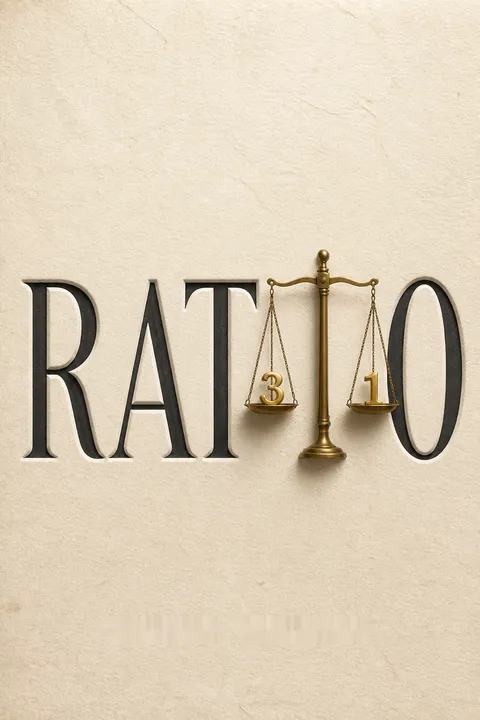
A recipe can teach more. At the Culinary Institute of America, chef Uwe Hestnar showed Michael Ruhlman a chart of basic ingredient proportions. Hestnar had made it because students kept consulting recipes instead of learning how ingredients work together. A culinary ratio is a fixed proportion of ingredients that can be scaled up or down by weight. For bread, five parts flour to three parts water gives a useful starting point, whether the batch uses a small bowlful or several kilograms.
Start with the structure. Yeast, salt, shaping, and baking still matter, but the ratio provides a reliable base for variation. Add herbs, olives, or roasted garlic to bread, or change a sauce's oil, acid, and seasonings. The aim is not a flawless dish on the first attempt. It is enough understanding to cook without searching for a new recipe every time.
What's striking is the shift from memorizing instructions to learning a model. A recipe tells a cook what to do in one situation; a ratio reveals which ingredients define the preparation and which can be adjusted. That resembles learning grammar rather than memorizing sentences. The analogy has limits: proportions alone cannot teach fermentation, heat control, or when dough is ready. Ratios are therefore best treated as maps of structure, not substitutes for practice or observation.
Weigh flour; one cup can vary by 50 percent.
Measure the ingredient, not the scoop. A cup of flour can weigh between four and six ounces, so four cups may contain a pound of flour or a pound and a half. That difference can change a dough substantially. A kitchen scale makes ratios dependable across batch sizes and between metric and imperial units. Put the bowl on the scale, zero it, and add each ingredient by weight.
Use volume when precision is unimportant. Fresh herbs and chopped vegetables are easier to measure in cups, while small amounts of yeast or baking powder are practical in spoons. Water, milk, and cream have a convenient relationship between volume and weight, but flour does not. Without a scale, the book suggests treating a level cup of flour as about five ounces, while allowing that the result will be less consistent.
This is a small example of measurement changing what a person can reliably learn. If flour quantities fluctuate while the recipe stays constant, a cook cannot tell whether a change in technique or ingredients caused the result. A scale reduces that uncertainty, much as controlled measurement does in an experiment. Precision is not always worth the effort, however. The useful distinction is not that weighing is always superior, but that it matters most when an ingredient determines structure.
Read doughs and batters as a texture spectrum, not separate recipes.
Ingredient proportions predict texture. Ruhlman describes a dough-batter continuum: preparations move from thin and pourable to thick and elastic as the balance of flour, liquid, eggs, and fat changes. A crepe uses relatively little flour, while bread relies on a more substantial flour-and-water structure. Pie dough adds fat, which limits chewiness and helps make the result tender. Pasta uses egg where bread uses water. These proportions explain why similar ingredients produce very different foods.
Some preparations cross categories. Pâte à choux begins as a cooked flour paste, then eggs loosen it into a pipeable mixture that puffs in the oven or cooks in water or oil. The same base can become cream puffs, savory cheese puffs, or gnocchi. Seeing the shared structure makes it easier to imagine useful variations without treating every dish as an unrelated formula.
The continuum is a practical form of systems thinking: changing one component changes the behavior of the whole mixture. It also gives cooks a way to diagnose texture. A batter that spreads too much may need more structure; a pastry that turns tough may have developed too much gluten. These are not exact equations, since flour type, humidity, and method also matter. The model is valuable precisely because it narrows the variables to consider, rather than pretending to eliminate them.
Change the mixing method, and equal ingredients become different cakes.
Order changes the outcome. Pound cake and sponge cake can use equal weights of butter, sugar, eggs, and flour, yet their textures differ because the ingredients are combined differently. In the creaming method, butter and sugar are beaten together to trap air before eggs and flour are added. For sponge cake, eggs and sugar are whipped to build volume, then flour and melted butter are folded in gently. The first method makes a dense, rich cake; the second creates a lighter crumb.
Air is an ingredient of technique. Careless mixing can deflate a sponge or leave a pound cake heavy. Angel food cake makes the point another way: its lift depends on stopping the egg-white foam at the right stage, not simply following a fixed proportion. Ratios identify a baseline, but a baker's hands, timing, and attention determine whether the texture matches the intention.
These cakes illustrate a general principle of process-dependent materials: the final product depends not only on what goes in, but on the sequence and force of operations. In cooking, air bubbles, gluten networks, and egg proteins retain a history of how they were handled. This is why instructions can be technically accurate yet still fail in inexperienced hands. The lesson is not that ratios are weak, but that a formula describes ingredients while technique describes their transformation.
Make gentle stock, and turn bones into a foundation for meals.
Treat the ratio as a guide. A useful stock starting point is three parts water to two parts bones by weight. It is not a rigid law: less water makes a stronger stock, while enough liquid must remain to cover the ingredients. Aromatic vegetables such as onion, carrot, and celery add depth. The book suggests roughly one part aromatics for every five parts bones and water. For clarity and flavor, start bones in cold water and keep the stock below a simmer, around 180°F.
Stock multiplies its value. Homemade stock can become soup, a braising liquid, or a sauce after reduction. It can also cook grains and beans. A more elaborate preparation, consommé, clarifies stock by forming a layer of cooked egg white, meat, and vegetables that catches particles before the liquid is strained. Even a small batch made from leftover chicken bones can improve several meals.
Stock shows why a cookbook's most useful knowledge may be a process rather than a finished dish. It converts low-cost bones and vegetables into a flexible ingredient whose value compounds across meals. Gentle heat also reflects a broader cooking principle: extraction and clarity can depend on restraint, not maximum temperature. The ratio cannot account for every pot shape or bone type, so experience remains important. Its role is to establish a sensible starting point and make adjustment deliberate.
Give emulsions enough water before blaming the yolks.
Water helps hold fat in suspension. An emulsion is a mixture in which tiny droplets of one liquid remain dispersed through another. In mayonnaise and hollandaise, egg yolk helps stabilize the mixture, but the book emphasizes that enough water is crucial too. Its mayonnaise guide uses about twenty parts oil to one part liquid, plus yolk. A vinaigrette begins at three parts oil to one part vinegar. Hollandaise combines butter, yolk, and liquid at about five to one to one.
A broken sauce can be rebuilt. If mayonnaise separates, whisk a teaspoon of water in a clean bowl, then slowly beat in the broken mixture. For hollandaise, start again with yolk and a little water before incorporating the sauce. These proportions are starting points rather than commandments: changing the acid, fat, or seasoning changes the character of the finished sauce.
The emphasis on water makes an invisible structural ingredient visible. A cook may focus on the yolk because it seems to bind the sauce, while overlooking the liquid that separates droplets and gives the emulsion a workable texture. This is a strong example of explanation improving troubleshooting: once the failure has a mechanism, recovery becomes less mysterious. Emulsions remain sensitive to temperature and mixing, so the water principle is not a guarantee. It is a better diagnosis than reflexively adding more yolk.
Choose the thickener by timing, texture, and how long sauce must hold.
Three methods solve different problems. A roux is flour cooked with fat and works well for soups and sauces that can cook long enough to lose their raw flour taste. The book gives a pale roux guide of three parts flour to two parts fat, with about one part roux for ten parts liquid. Beurre manié is flour kneaded into butter and stirred into a sauce near serving time, adding richness as it thickens. A slurry mixes cornstarch with water and offers a quick, neutral thickening option.
Match the method to the dish. A spoonful of starch can thicken roughly a cup of liquid, but the final consistency should guide the amount. Roux suits larger batches and extended cooking. Beurre manié can finish a small pan sauce. A cornstarch slurry is fast, though prolonged or repeated heating can weaken its thickening effect.
This comparison is useful because it turns a family of kitchen techniques into a choice based on constraints. The cook asks how much time is available, whether the sauce should taste richer, and how long it must remain stable. That resembles selecting a tool by its operating conditions rather than by habit. The distinctions are guides, not absolutes: ingredient acidity, heat, and cooking duration also affect starch. A good thickener is therefore selected by both formula and context.
Keep sausage cold and fatty enough to stay juicy.
Fat is part of the design. A basic sausage proportion is three parts meat to one part fat, with salt at about one part for every sixty parts meat and fat. The actual fat in a cut varies, so the cook must account for what is already in the meat. The mixture should stay very cold while it is ground and mixed. Mixing after grinding helps the meat proteins bind the ingredients, while added wine or oil can contribute moisture and distribute seasoning.
Taste before committing. Fry a small sample and adjust the salt or seasoning before stuffing the full batch. Sausage need not be packed into casings: it can be cooked loose, made into patties, or used as filling for pasta, dumplings, and vegetables. The same principles apply to other ground preparations, though some, such as meatballs, should be mixed more gently.
The book's treatment of sausage counters the common impulse to view fat only as something to remove. Here, fat has a clear functional role in moisture and texture, and proportion is more useful than a vague label such as lean. Cold handling also makes the process easier to control, particularly when fat is being worked through ground meat. The ratio cannot replace judgment about the cut: pork shoulder may supply much of its own fat, while lean game needs more added.
Use a measured brine to season meat evenly and carry aromatics inward.
A basic brine is five percent salt. By weight, combine twenty parts water with one part salt. Because the salt is dissolved, it contacts the food evenly, making brine useful for seasoning meat, cooking green vegetables, or preparing some pickles. Aromatics such as garlic, lemon, onion, and herbs can be added to the liquid. The book gives an example of a whole chicken brined with herbs for eight to twelve hours before roasting.
Concentration and time both matter. A brine that is too strong or used too long can make food unpleasantly salty. The appropriate duration depends on what is being brined: a pork chop needs less time than a large cured cut. Brining can also affect texture and moisture, so the same salt proportion does not mean every food should receive the same treatment.
Brining is an unusually clear demonstration of concentration as a cooking tool: dissolving salt changes how uniformly it reaches the food, and added aromatics can influence flavor as well. The practical strength of a standard proportion is that it makes a repeatable starting solution. Yet the book's broad usefulness claim should not be mistaken for a universal schedule. Food size, thickness, and intended result matter, and curing for preservation is a different task from briefly seasoning a dinner cut.
Cook custard gently; its final texture depends on a narrow window.
Start with the kind of set you need. A free-standing custard uses about two parts liquid to one part egg, which gives enough structure for dishes such as crème caramel or quiche. A pourable crème anglaise uses dairy, yolk, and sugar in a richer sauce proportion. Custards can be savory or sweet, filled with vegetables, herbs, fruit, or bread. These are branches from the same basic combination of eggs and liquid, adjusted for texture and use.
Stop before it looks fully done. Gentle heat, often in a water bath, helps prevent egg proteins from tightening into a grainy or curdled texture. A baked custard should have a slight movement in the center when removed from the oven because it continues cooking as it cools. A crème anglaise is cooked on the stove until it coats a spoon, then strained and cooled promptly.
Custard offers one of the clearest cases where timing matters as much as proportion. Egg proteins change from liquid to set over a limited range, so a small delay can turn silkiness into graininess. The slight-jiggle test translates an abstract temperature process into a cue a home cook can observe. Ratios clarify how to scale the dish, but they cannot see the pan or detect carryover cooking. The cook's attention completes the measurement.
Analysis
Ratio is the book's central teaching device, but its deeper subject is how cooks acquire usable knowledge. A recipe is a particular answer. A ratio is a compact model of the ingredients that make a preparation what it is. With that model, a cook can scale a batch, compare neighboring forms, and make a reasoned adjustment rather than guess blindly. The approach is especially powerful in baking, where flour, liquid, egg, and fat determine whether a mixture behaves like a batter, pastry, or bread dough.
The book also resists turning cooking into arithmetic. Its examples repeatedly show that the same proportions can produce different results when mixing order changes, or when temperature, time, and handling differ. That distinction matters: ratios describe composition, while technique describes transformation. The two kinds of knowledge work together. A numerical baseline narrows uncertainty, and practice teaches the cook how the mixture feels and when it has reached the desired state.
The narrative begins with Hestnar's teaching chart and ends with the promise of greater independence from recipes. That arc makes the book more than a reference list. It offers a way to see a kitchen as a connected system: bread and pasta share ingredients, sauces depend on the balance of fat and liquid, and a custard can become a dessert, a savory course, or a sauce. Once a cook recognizes those relationships, improvisation becomes less like invention from nothing and more like informed variation.
The method has limits. Weight-based proportions improve consistency, but ingredient properties and kitchen conditions still vary. A stock ratio is a benchmark, not an exact law, and a successful cake ratio cannot compensate for deflated foam. The book is most persuasive when it presents ratios as foundations rather than guarantees. Its practical promise is not perfect results without effort. It is a clearer way to understand what effort should be spent on.
Review Summary
Ratio receives mixed reviews. Many praise its concept of teaching fundamental cooking ratios instead of recipes, finding it liberating and educational. Readers appreciate learning the connections between different dishes and techniques. However, some criticize the writing style as disorganized and the lack of metric measurements. Critics also note that memorizing ratios isn't a substitute for practice and experience. Overall, most find the book's core idea valuable, even if the execution isn't perfect for everyone.
People Also Read





Glossary
culinary ratio
ingredient proportions by weightA culinary ratio is a fixed proportion between the main ingredients in a preparation. Because its parts are measured by weight, the cook can scale the batch up or down and use either metric or imperial units. A ratio describes the preparation's structural ingredients, but it does not specify every seasoning, technique, or cooking condition.
baker's percentage
flour-based baking proportionsBaker's percentage expresses each ingredient's weight as a percentage of the flour weight, which is treated as 100 percent. In the bread example, water at 60 percent means 600 grams of water for 1,000 grams of flour. It provides a standard way to compare and scale bread formulas.
dough-batter continuum
spectrum of mixture texturesThe dough-batter continuum describes how related mixtures change from thin and pourable to thick and elastic as the proportions of flour, liquid, eggs, and fat shift. Crepes, pancakes, cakes, pastries, pasta, and bread can be understood as neighboring forms rather than entirely unrelated recipes.
pâte à choux
cooked flour and egg pastePâte à choux begins as flour cooked with water and butter, then becomes a softer paste as eggs are beaten in. When baked, steam expands the mixture and creates a hollow, airy structure. It can also be poached or fried, and is used for preparations such as cream puffs, cheese puffs, and gnocchi.
mirepoix
aromatic vegetable mixtureMirepoix is a mixture of aromatic vegetables used to build flavor in stocks and other preparations. The book's common proportion is two parts onion to one part each carrot and celery. The vegetables are generally added to long-cooking stocks toward the end so they do not disintegrate or absorb too much liquid.
roux
cooked flour and fat thickenerRoux is flour cooked with fat and used to thicken liquids such as stock, milk, and soup. Cooking removes the raw flour flavor, while longer cooking darkens the roux and adds a nuttier flavor but reduces its thickening power. It is commonly incorporated into a liquid that is then cooked until smooth.
beurre manié
butter and flour thickenerBeurre manié, meaning kneaded butter, is a paste made by working flour into butter, traditionally in equal volumes. Small pieces can be stirred into a hot sauce near the end of cooking to thicken it while adding richness. Unlike roux, it is not cooked before being added to the liquid.
slurry
starch mixed with waterA slurry is a mixture of a pure starch, such as cornstarch, and water. Mixing the starch with water separates its particles before it is added to a hot liquid, helping prevent lumps. It thickens quickly and is useful near serving time, but its thickening can weaken with prolonged or repeated cooking.
remouillage
second stock from used bonesRemouillage is a weaker stock made by covering bones that have already been used for stock with fresh water and cooking them again. It increases the yield and can be reduced or added to the first stock to strengthen it. The name refers to wetting the bones again.
raft
filtering layer in consomméA raft forms when egg whites, ground meat, and vegetables coagulate at the surface of stock during the making of consommé. The layer traps particles that cloud the liquid while its ingredients contribute flavor. The clarified stock is then carefully ladled or strained through a filter without breaking apart the raft.
farce
seasoned ground fillingA farce is a seasoned mixture, often made from ground or pureed meat, fish, or vegetables. It may be placed inside another food, enclosed in a casing, shaped into a dumpling, or cooked in a mold. Sausage, stuffed pasta, and terrines are among the preparations built from farce.
mousseline
delicate meat and cream emulsionA mousseline is a finely pureed mixture of meat or fish, cream, and usually egg. It can be shaped into a sausage, poached as quenelles, used as a stuffing, or baked in a terrine. Keeping the ingredients very cold and adding the cream gradually helps the mixture remain smooth and stable.
FAQ
What's "Ratio: The Simple Codes Behind the Craft of Everyday Cooking" about?
- Core Concept: The book by Michael Ruhlman explores the fundamental ratios that form the backbone of cooking, allowing cooks to understand and create recipes without relying on specific instructions.
- Cooking Freedom: It emphasizes the freedom and creativity that comes with understanding these ratios, enabling cooks to improvise and adapt recipes to their tastes and available ingredients.
- Practical Guide: The book serves as a practical guide to mastering the basics of cooking through a deeper understanding of ingredient proportions.
- Variety of Applications: It covers a wide range of culinary applications, from doughs and batters to stocks and sauces, illustrating how ratios can be applied across different types of cooking.
Why should I read "Ratio: The Simple Codes Behind the Craft of Everyday Cooking"?
- Empowerment in Cooking: The book empowers readers to cook with confidence by understanding the fundamental building blocks of recipes.
- Versatility and Creativity: It encourages creativity in the kitchen, allowing readers to create their own recipes and adapt existing ones.
- Comprehensive Coverage: The book covers a wide array of cooking techniques and applications, making it a valuable resource for both novice and experienced cooks.
- Practical and Accessible: Ruhlman presents the information in an accessible manner, making complex culinary concepts easy to understand and apply.
What are the key takeaways of "Ratio: The Simple Codes Behind the Craft of Everyday Cooking"?
- Understanding Ratios: The book highlights the importance of ratios in cooking, showing how they can simplify and enhance the cooking process.
- Cooking Techniques: It emphasizes the significance of mastering basic cooking techniques alongside understanding ratios for successful culinary outcomes.
- Ingredient Interactions: Readers learn how different ingredients interact and how altering proportions can change the nature of a dish.
- Creative Freedom: The book encourages cooks to break free from strict recipes and explore their creativity in the kitchen.
What are the best quotes from "Ratio: The Simple Codes Behind the Craft of Everyday Cooking" and what do they mean?
- "When you know a culinary ratio, it’s not like knowing a single recipe, it’s instantly knowing a thousand." This quote emphasizes the power of understanding ratios, as it opens up endless possibilities in cooking.
- "Ratios free you." This succinct statement captures the essence of the book, highlighting how ratios liberate cooks from the constraints of recipes.
- "Technique must be practiced—you can never stop getting better." This quote underscores the importance of continuous practice and improvement in cooking skills.
- "The fact is, there are hundreds of thousands of recipes out there, but few of them help you to be a better cook in any substantial way." Ruhlman points out that while recipes are abundant, understanding the fundamentals is what truly enhances cooking skills.
How does Michael Ruhlman define a culinary ratio in "Ratio: The Simple Codes Behind the Craft of Everyday Cooking"?
- Fixed Proportion: A culinary ratio is defined as a fixed proportion of one ingredient relative to another, forming the backbone of cooking.
- Foundation of Recipes: Ratios are the foundation of recipes, allowing cooks to create a wide variety of dishes from a single ratio.
- Example of Bread Ratio: For instance, the bread ratio is 5 parts flour to 3 parts water, which can be scaled up or down to make different quantities of bread.
- Beyond Recipes: Understanding ratios means knowing the essence of a dish, enabling cooks to move beyond recipes and create their own.
What is the significance of the "All-Important Scale" in "Ratio: The Simple Codes Behind the Craft of Everyday Cooking"?
- Precision in Cooking: The scale is crucial for precision, ensuring that ingredients are measured accurately by weight rather than volume.
- Consistency in Results: Using a scale leads to consistent results, as it eliminates the variability that comes with volume measurements.
- Universal Application: Ratios based on weight can be applied universally, regardless of the measurement system (imperial or metric).
- Simplifies Process: Weighing ingredients directly into the mixing bowl simplifies the cooking process and reduces cleanup.
How does "Ratio: The Simple Codes Behind the Craft of Everyday Cooking" approach the concept of stocks?
- Foundation of Cooking: Stocks are presented as the foundation of cooking, essential for creating depth and complexity in dishes.
- Ratio for Stock: The book suggests a 3:2 ratio of water to bones for making stock, providing a guideline for achieving the right flavor and body.
- Versatility of Stock: Stocks are versatile and can be used in soups, sauces, and as a cooking medium for grains and legumes.
- Encouragement to Make Stock: Ruhlman encourages home cooks to make their own stock, highlighting its superiority over store-bought versions.
What is the role of fat-based sauces in "Ratio: The Simple Codes Behind the Craft of Everyday Cooking"?
- Enhancing Flavor: Fat-based sauces, such as mayonnaise, vinaigrette, and hollandaise, enhance the flavor and texture of dishes.
- Versatility: These sauces are versatile and can be adapted with various seasonings and aromatics to suit different dishes.
- Emulsification Techniques: The book covers techniques for creating stable emulsions, a key aspect of making fat-based sauces.
- Everyday Use: Fat-based sauces are practical for everyday cooking, elevating simple ingredients like vegetables and lean meats.
How does "Ratio: The Simple Codes Behind the Craft of Everyday Cooking" explain the dough-batter continuum?
- Interconnected Preparations: The dough-batter continuum illustrates the interconnectedness of various preparations, from crepes to bread.
- Proportions Matter: The book shows how varying proportions of flour, liquid, and fat create different textures and consistencies.
- Understanding Differences: Understanding the continuum helps cooks see the subtle differences between similar preparations, like pancakes and muffins.
- Creative Exploration: This concept encourages creative exploration, allowing cooks to experiment with different ratios to achieve desired results.
What is the importance of custards in "Ratio: The Simple Codes Behind the Craft of Everyday Cooking"?
- Versatile Preparation: Custards are versatile, used in both sweet and savory dishes, and can be served in various forms.
- Key Ratio: The book provides a key ratio of 2 parts liquid to 1 part egg for making custards, ensuring the right texture and consistency.
- Cooking Technique: Proper cooking technique is crucial for achieving the desired smooth and creamy texture in custards.
- Culinary Exploration: Custards offer a wide range of culinary exploration, from quiches to crème brûlée, showcasing the transformative power of eggs and dairy.
How does "Ratio: The Simple Codes Behind the Craft of Everyday Cooking" address the concept of farçir?
- Definition of Farçir: Farçir refers to stuffing, and in the book, it encompasses various meat-related preparations like sausages and mousselines.
- Sausage Ratio: The book provides a ratio of 3 parts meat to 1 part fat for making sausages, emphasizing the importance of fat for flavor and texture.
- Versatility of Farces: Farces are versatile and can be used in a variety of dishes, from stuffed vegetables to pâtés and terrines.
- Creative Use: Understanding the concept of farçir allows cooks to creatively use meat and other ingredients, transforming them into flavorful and satisfying dishes.
What are the practical applications of ratios in "Ratio: The Simple Codes Behind the Craft of Everyday Cooking"?
- Recipe Adaptation: Ratios allow cooks to adapt recipes to different quantities and ingredients, providing flexibility in the kitchen.
- Improvisation: Understanding ratios encourages improvisation, enabling cooks to create new dishes without relying on specific recipes.
- Consistency and Precision: Ratios ensure consistency and precision in cooking, leading to reliable and repeatable results.
- Culinary Confidence: Mastering ratios builds culinary confidence, empowering cooks to experiment and explore their creativity in the kitchen.
About the Author
Other books by Michael Ruhlman

Download PDF
Download EPUB
.epub digital book format is ideal for reading ebooks on phones, tablets, and e-readers.








