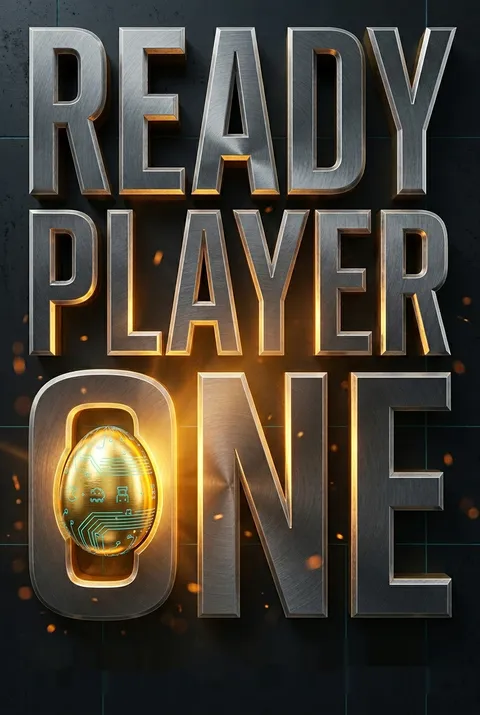


Plot Summary
Prologue
In 2040, OASIS creator James Halliday dies and leaves his fortune, his company, and the virtual world itself to whoever can find an Easter egg hidden inside the simulation. His prerecorded challenge sends millions of players hunting through his favorite games and stories, guided by three keys, three gates, and a book of personal notes.
Five years pass without anyone finding even the first key. Then an eighteen-year-old gunter named Wade Watts appears on Halliday’s public scoreboard. The contest has finally begun in earnest, and Wade is the first to make it out of obscurity.
The prologue makes the Hunt both a public spectacle and a private inheritance. Halliday’s clues turn his tastes into a kind of shared curriculum, while the long stretch of failure exposes the gulf between consuming references and understanding the person who chose them. Wade’s sudden appearance on the scoreboard marks a change in scale: a lonely teenager’s private obsession now has consequences for corporations, strangers, and the world’s most popular refuge. The frame also introduces the story’s central tension. Winning the game may offer Wade power, but it cannot by itself teach him how to live beyond it.
A School Hidden in Plain Sight
At eighteen, Wade lives in Oklahoma City's stacked trailer settlement, where poverty, danger, and the deaths of his parents have left him with little to expect from the future. The OASIS, a vast virtual world used for school, work, and escape, has given him a purpose: finding Halliday's Easter egg. While studying the first clue, Wade links its call to learn with the Latin name of Ludus, his school planet.
He realizes that Halliday hid the Tomb of Horrors there, in a forest no one bothers to explore. A map-searching program confirms his hunch and reveals the skull-shaped hill from the old Dungeons & Dragons module. For once, the place where Wade feels trapped may be the place that lets him move forward.
Wade's breakthrough depends on treating an overlooked daily constraint as evidence. Ludus seems dull because it offers no quests, treasure, or danger, yet its school population gives Halliday's wording a literal address. Wade's poverty also shapes how he thinks: he cannot afford to search the OASIS freely, so he has learned to make close observation do the work of expensive equipment. The discovery rewards patience, but it also exposes the bargain he has made with the Hunt. After losing family and safety, he has placed his hope in a puzzle that promises an exit from a damaged world.
The Lich's Jousting Cabinet
Wade uses a school sports voucher to teleport close to the hill, enters the tomb, and follows the published module through its traps and treasure. In the throne room, the undead Acererak departs from the manual and challenges him to a match of the arcade game Joust. Wade survives the first loss, recognizes patterns in the lich's play, and wins the deciding game, earning the Copper Key and enough experience to reach tenth level.
Outside, he meets Art3mis, a celebrated gunter who has been returning to the tomb for weeks after failing to beat Acererak. Wade conceals his victory, but Art3mis spots his name at the top of the scoreboard. She blocks his exit, then lets him go after he gives her a tip about changing sides.
The encounter turns Halliday's research challenge into a test of practical skill. Wade can recite the tomb's layout, but success finally depends on transferring years of arcade play into a live contest against an opponent designed to exploit his nerves. His first win creates a new form of exposure: the scoreboard makes achievement visible before he can decide what fame means. Art3mis complicates the victory. She is at once a rival, a fellow scholar, and the first person who recognizes what Wade has accomplished. His choice to help her hints that competition will never fully contain his need for connection.
A Gate Inside the Movie
The Copper Key points Wade toward Halliday's childhood home on Middletown and the old computer game Dungeons of Daggorath. Wade plays it on a replica of Halliday's TRS-80, reaches its deepest level, and opens the First Gate. The gate traps him inside WarGames, where he must perform the actions and deliver the lines of the teenage hero to finish the film's story.
He prevents the simulated computer from launching a nuclear war, then receives a riddle pointing toward the Jade Key. Wade's score jumps, and Art3mis soon clears the same gate after using his Joust advice. Aech, Wade's closest online friend, follows shortly afterward. Their sudden public success revives the Hunt and puts all three in the world's attention.
The First Gate tests more than familiarity with a favorite film. Wade must act at the right moment, not merely remember what happens, so knowledge becomes performance under pressure. WarGames also makes a fitting first trial for a contest built inside a simulation: its crisis is resolved when the protagonist recognizes that a system can be defeated by refusing its destructive premise. The scoreboard's new visibility changes private mastery into public property. Wade, Art3mis, and Aech become symbols before they have time to choose how they want to be known, and their achievement draws corporate power into a contest that had seemed playful.
Sorrento Finds Wade's Address
IOI executive Nolan Sorrento invites Wade to join the company's army of Sixer egg hunters, offering money and command over thousands of avatars. Wade refuses both employment and a payment for instructions to the First Gate.
Sorrento then reveals that IOI used Wade's OASIS school records to identify him and threatens to detonate explosives at his aunt's trailer. Wade logs out rather than help the company. The bomb explodes, collapsing the trailer stacks and killing his aunt, her boyfriend, and neighbors, including Mrs. Gilmore.
Wade survives because he was hiding in his buried van, but he cannot prove IOI was responsible without exposing himself. Once his endorsement money arrives, he leaves Oklahoma City under a false identity and moves to Columbus.
The bombing is the story's rupture between game rules and material consequence. IOI treats anonymity as a vulnerability to exploit, turning a school record into a weapon and an impoverished neighborhood into disposable collateral. Wade's refusal is courageous but not cleanly triumphant: he survives while people who had no part in the contest die. His retreat to Columbus is therefore both escape and self-imposed exile. The event deepens his distrust of institutions and helps explain why virtual achievement feels safer than ordinary life. It also makes defeating the Sixers an ethical responsibility, not simply a competition for wealth.
Love Under the Strobe Lights
After moving to Columbus, Wade and Art3mis begin private chats that grow into a close, flirtatious relationship. He neglects the Jade Key riddle, while she insists that their rivalry and the Hunt cannot be set aside. At Ogden Morrow's birthday dance, Wade finally confesses his feelings. Art3mis tells him that she has allowed their connection to distract them and ends their private contact until the Hunt is over.
Before they can part, Sixers burst into the club and target them. Og uses his avatar's extraordinary powers to eliminate the attackers, but Art3mis leaves. Wade is left with a broken romance and a fresh reminder that his public profile makes him a target. He turns back toward the puzzle, though his attention remains divided.
The party brings Wade's private longing into collision with the contest's public danger. Art3mis's refusal is not a simple rejection: she sees that intimacy has begun to displace the work and judgment on which both their survival depends. Wade, who has spent much of his life seeking an ideal refuge, mistakes emotional intensity for knowledge of another person. The attack makes that confusion costly. Fame puts the couple in physical danger, while Og's intervention reveals that old power structures still operate behind the apparently open OASIS. The separation forces Wade to confront the limits of a relationship lived almost entirely through chosen avatars.
Zork's House Holds the Key
Art3mis reaches the Jade Key first, and Aech follows. While trying to catch up, Wade finds a hidden Pac-Man challenge in an arcade on Archaide. He earns a perfect score, beating the machine's record, and receives a quarter he cannot yet identify or remove from his inventory. Aech then sends Wade an image of the Zork manual, whose boarded-up house connects the riddle's abandoned dwelling to the game's starting point.
Wade travels to Frobozz, enters the house, gathers its nineteen treasures, and places them in the trophy case. Only then can he blow the Cap'n Crunch whistle, which transforms into the Jade Key. The Sixers descend on the planet, but Wade escapes with the key and its new clue.
This sequence rewards distinct kinds of attention. The Pac-Man score does not immediately advance Wade's position, yet the resulting quarter becomes crucial much later. The Zork solution, by contrast, depends on joining several lines of the riddle to the game's actual mechanics. Wade's earlier habit of mastering complete works rather than skimming for clues gives him the necessary map. The contrast between a useful clue and an apparently useless prize warns against judging objects by their immediate value. It also shows how Halliday's puzzle design asks participants to preserve details whose purpose may emerge only under later pressure.
A Death Beyond the Avatar
During the Battle of Frobozz, Daito uses the Beta Capsule, a transformation device Wade helped his team win in an Ultraman quest, to hold off Sixer forces while Shoto secures the Jade Key. The brothers escape, but the Sixers later kill Daito in his Tokyo apartment and disguise the murder as suicide.
Shoto visits Wade in mourning and explains that he and Daito had been close partners online, not brothers in the physical world. He gives Wade the Beta Capsule and declares that revenge has replaced the Hunt as his goal. Wade offers him a powerful samurai sword. Their exchange turns a once-abstract fear into certainty: the Sixers can reach a gunter in real life, not merely destroy an avatar.
Daito's death exposes the asymmetry between virtual danger and actual violence. The OASIS makes a person appear replaceable, since an avatar can be recreated, but the murder of the person behind Daito cannot be undone by resetting a server. Shoto's grief is sharpened by the fact that their brotherhood was genuine even without a physical meeting. Wade's gift of the sword cannot repair that loss, but it acknowledges Shoto's chosen response rather than trying to manage it. The scene also changes the meaning of the Beta Capsule: a prize won through shared play becomes a tool tied to sacrifice and revenge.
A Crystal Key and a Dragon
The Jade Key's wrapper points Wade to Blade Runner's Voight-Kampff test. He finds the hidden entrance in a Tyrell Corporation building, survives its security guards, and uses the key to enter the Second Gate. There he completes Black Tiger, a three-dimensional version of Halliday's favorite arcade game, and receives a giant robot.
A Rush album clue leads him to the Temple of Syrinx, where he retrieves an electric guitar from a stone and plays the song that reveals the Crystal Key. Wade's score edges past Sorrento's, but the Sixers have already found Castle Anorak and sealed it behind a shield. The final gate is no longer merely a riddle. It is a fortress surrounded by an army.
The second gate asks Wade to move from interpreting references to inhabiting them. Blade Runner turns the question of identity into an entry mechanism, while Black Tiger demands endurance in an unfamiliar three-dimensional form. The key's final location requires sound and physical performance rather than a written answer, expanding what counts as knowledge in Halliday's game. Yet Wade's individual progress immediately meets a structural obstacle: IOI can use money and manpower to occupy the destination. The contrast reveals the contest's central unfairness. A clever solution can win a key, but only collective action can overcome the corporate force waiting at the next threshold.
Eight Days Inside IOI
After the Sixers put a shield around Castle Anorak, Wade deliberately lets IOI's credit system classify his false identity as indebted, knowing indenture will carry him inside headquarters.
He hides his knowledge of Halliday during testing, then uses black-market passwords and a programmer's back doors to penetrate the company intranet. In the Oology database, he finds proof of Daito's murder, dossiers identifying Art3mis and Shoto, and Sorrento's plan to abduct them.
Wade copies the records, disables his ankle monitor, and escapes in a maintenance uniform. He sends the files to his friends and the news networks, restores his true identity, and calls the gunters to resist IOI. The move gives the others a warning, but leaves Wade with no safe home.
Wade turns the machinery of exploitation against its owner. Indenture is designed to strip people of privacy and choice, yet he enters it knowingly and uses the access to expose IOI's surveillance and violence. His plan is risky because it depends on the company's own confidence that a poor debtor can be controlled. The stolen files also challenge Wade's earlier solitude: information matters most when he shares it, not when it enlarges his private advantage. Public disclosure cannot undo the murders, but it changes the contest's moral visibility and gives the other gunters time to escape.
The High Five Come Together
Wade's warning brings Art3mis, Aech, and Shoto to Aech's private chat room. Wade explains the stolen evidence and proposes a public assault on Castle Anorak. Before the meeting ends, Ogden Morrow appears, admits he has secretly monitored them at Halliday's request, and offers safe passage to his Oregon home.
He explains that he and Halliday reconciled shortly before Halliday died, after years of estrangement over Kira, the woman both men loved. Aech drives to Columbus to collect Wade, revealing in person that the male avatar is a young Black woman named Helen. Wade accepts the surprise without losing the friendship. At Og's estate, the four gunters prepare their attack together, while the world hears their appeal for help.
The gathering makes cooperation possible without erasing the characters' differences. Aech's real appearance tests whether Wade values the person or the projection; his acceptance confirms that their friendship has already been built through attention and trust. Og's admission complicates the earlier image of Halliday as an isolated genius, revealing that even his closest relationships were shaped by unspoken love and jealousy. By offering shelter without offering puzzle answers, Og supports the players without taking the game from them. The High Five become a coalition not because competition disappears, but because they recognize that IOI's power threatens the conditions under which any fair competition can exist.
The Shield Falls at Noon
Wade's group reaches Chthonia with thousands of gunters answering their call. At noon, a supply droid carrying an antimatter bomb, programmed by Wade through IOI's own requisition system, destroys the wizard maintaining the castle shield. The crowd surges into battle.
Sorrento enters a giant Mechagodzilla, while Wade, Art3mis, Aech, and Shoto pilot their own robots. Shoto is killed fighting Sorrento; Wade uses Daito's Beta Capsule to become Ultraman and destroys the mech, then joins Aech and Art3mis at the Third Gate.
Their three Crystal Keys open it. The Sixers detonate the Cataclyst, killing everyone in the sector. Wade survives because the Pac-Man quarter grants him an extra life. His gear is gone, but Art3mis's flying shoes let him reach the open gate.
The battle converts individual expertise into collective action, but victory comes at a price that no scoreboard can register. Wade's sabotage exploits the very corporate bureaucracy that had confined him, while the gunters' mass arrival makes the difference between a clever plan and a successful assault. The robot fight personalizes the conflict through Shoto's attempt to avenge Daito. Then the Cataclyst erases the apparent victory in one stroke. Wade's survival depends on the small quarter he once dismissed as unexplained loot, making accumulated knowledge and luck inseparable. By the time he reaches the gate, he has lost almost every tool except the help of others.
Three Trials, One Final Game
Inside the Third Gate, Wade faces Halliday's Tempest arcade game, with one initial credit and a record score to beat. Art3mis recognizes an old programming exploit that grants extra credits, giving Wade enough attempts to surpass Halliday's score.
The gate then places him inside Monty Python and the Holy Grail, where he must perform the film's scenes accurately. Aech, Art3mis, and Shoto coach him, while the scoreboard shows Sorrento and other Sixers racing through their own copies.
Wade reaches the final stage first and finds Halliday's private office, ringed by the computers and consoles that shaped his life. His friends' voices fall silent. As the Sixers close in, he must solve the final password alone, using the clues Halliday left in the room.
The final gate gathers the story's competing forms of competence: reflex, cultural memory, improvisation, and the ability to accept help. The first two trials reward knowledge Wade has spent years acquiring, but the last room removes his companions and forces him to interpret Halliday as a person rather than a catalogue of references. Public visibility turns the race into spectacle, yet the decisive moment is private. That tension makes the gate a measure of maturity as much as expertise. Wade must use what he knows without confusing mastery of Halliday's artifacts with understanding Halliday's fears.
Halliday's Last Easter Egg
Wade tries passwords drawn from Halliday's family and friends, then remembers that Halliday addressed Kira as Leucosia during their old Dungeons & Dragons games. The name unlocks the office's computers.
Wade starts the Atari game Adventure, reaches its secret room, and finds Halliday's egg where the original game once concealed its programmer's name. He takes it and exits into a restored Castle Anorak. Halliday appears, transfers the OASIS's control and immense wealth to Wade, and warns him not to retreat from reality.
He also reveals a hidden switch capable of shutting down the entire simulation. Wade returns to the castle and defeats the Sixer avatars still waiting outside, then uses his new powers to resurrect Aech, Art3mis, and Shoto with their possessions restored.
The final password is not a trivia answer so much as a key to Halliday's emotional history. Wade succeeds when he recognizes that Halliday's most private attachment survived inside the role-playing name he used with Kira. Adventure then joins the contest's origin story to its resolution: an Easter egg hidden to credit a creator becomes the hiding place of a creator's own legacy. Halliday gives Wade extraordinary authority, but pairs it with a warning and a destructive failsafe. The gift is therefore not permission to rule without limits. It is a test of whether Wade can hold power without mistaking the OASIS for all of life.
A First Step Outside
After Wade restores his friends, the news shows federal agents taking Sorrento from IOI headquarters for questioning over the killings and the attack on Wade's home. Og tells Wade that reporters and GSS executives are waiting, but Wade delays them and goes to the estate's hedge maze.
Its layout echoes Adventure, leading him to Art3mis, whose real name is Samantha Cook. She looks much like her avatar, with a prominent birthmark she once feared would repel him. Wade accepts her without asking her to change it or prove her feelings.
They hold hands and kiss in the real world. Wade has promised publicly to share the prize with Aech, Art3mis, and Shoto, and now the immense virtual world can wait. For the first time, he wants to remain outside it.
The ending resolves the book's emotional argument through a modest physical act rather than another display of virtual power. Wade has gained enough authority to resurrect friends and enough money to reshape his life, but the meaningful change is his willingness to meet Samantha without the protection of an avatar. Her birthmark, previously framed by her fear of rejection, becomes part of a real face rather than a defect to conceal. The maze's Adventure design links the final meeting to the game that began Halliday's puzzle, while reversing its function: the path leads Wade out of simulation and toward reciprocal contact.
Analysis
Ready Player One makes popular culture function as both a map and a measure of attention. Halliday's references are not decorative passwords. To progress, Wade must understand how a game works, remember the circumstances of a film, or connect a clue to a relationship in Halliday's life. His accumulated knowledge gives him real competence, but the novel distinguishes learning from collecting: the decisive password is not an obscure title but the name Halliday used for Kira in their shared game.
The OASIS is a response to a world damaged by energy scarcity, climate instability, and economic collapse. For Wade, its appeal is not simply escapism. It offers education, friendship, and a sense of agency he cannot find in the stacks. Yet the novel makes that refuge ethically unstable. IOI's ability to identify Wade and kill people around him shows that virtual anonymity cannot protect users from material power. Wade's isolation after the bombing reproduces Halliday's own retreat, while his immersion in Art3mis reveals how easily an avatar can become a screen for fantasy rather than a route to mutual knowledge.
The Hunt's structure gradually changes the meaning of winning. Early victories reward solitary expertise; the final gate requires three keys, and Wade can reach it only because friends teach, warn, rescue, and finally coach him. His public promise to share the prize answers the contest's competitive logic with a deliberate act of trust. Halliday's warning about reality then reframes the fortune and omnipotence as responsibilities, not merely rewards. The ending does not reject the OASIS, which remains a source of community and wonder. Instead, it asks Wade to stop treating it as the only place where life can happen. The final meeting with Samantha makes that shift tangible: after years of learning to see through simulated worlds, Wade chooses to meet another person without one.
Review Summary
Ready Player One receives mostly positive reviews for its nostalgic 80s references, engaging plot, and immersive virtual world. Critics praise the fast-paced storyline and geek culture appeal. Some readers find the extensive pop culture references overwhelming or distracting. The characters and writing style receive mixed opinions. Many enjoy the blend of dystopian and virtual reality elements. Overall, the book is considered an entertaining read, particularly for those with an affinity for 80s pop culture and gaming.
People Also Read





Characters
Wade Watts
The orphaned gunterWade is an impoverished teenager who has built his education and identity around the OASIS and Halliday's cultural obsessions. His encyclopedic memory is not merely a hobby; it gives structure to a life marked by parental loss, neglect, and a bleak physical environment. As Parzival, he is more confident and capable than he feels in person, though success can intensify his isolation and vanity. He initially treats the Hunt as his only route to safety, then learns that winning demands trust, public responsibility, and a willingness to inhabit the world beyond the simulation. His ingenuity is matched by a capacity for guilt and generosity, qualities that become more important than his trivia knowledge.
Art3mis
The rival with a conscienceArt3mis is a skilled, incisive gunter whose blog and puzzle-solving have made her famous among egg hunters. She combines wit with discipline and understands that a public persona can be both a useful tool and a dangerous disguise. Her commitment to the Hunt is practical as well as idealistic: she sees the prize as a way to address human suffering, not merely to escape it. Wade's attention draws her into intimacy, but she is wary of confusing online closeness with knowledge of another person. Her competitiveness sharpens the group's thinking, while her insistence on boundaries reveals a more careful emotional judgment than Wade's romantic certainty.
Aech
The armored best friendAech is Wade's closest friend and a formidable OASIS gamer, known for combat skill, quick humor, and a deep command of Halliday-era culture. The Basement, Aech's meticulously recreated 1980s chat room, is a refuge where Wade can argue, play, and feel understood. Aech's confidence in the simulation coexists with real-world vulnerability, and the avatar offers room to choose how others see them. Their friendship is tested by secrecy, rivalry, and Wade's absorption in Art3mis, but it rests on years of shared attention rather than appearances. Aech's gaming talent later becomes a practical resource for the Hunt and a steady counterweight to Wade's impulsiveness.
Nolan Sorrento
Corporate contest commanderSorrento leads IOI's Oology Division and presents corporate control as sensible management of a popular virtual world. He is intelligent enough to understand Halliday's game, but treats its open contest as a problem to be solved with staffing, money, surveillance, and force. His professional polish makes his threats more chilling, since he can move from salesmanship to coercion without changing his underlying purpose. Sorrento believes that ownership and efficiency justify nearly any tactic. His opposition to Wade therefore concerns more than the prize: it represents a struggle over whether a shared world belongs to its users or to the company best equipped to seize it.
James Halliday
The absent game masterHalliday is the brilliant, socially isolated creator of the OASIS and the architect of the contest that follows his death. His devotion to games, science fiction, film, and 1980s popular culture gives the Hunt its vocabulary and its traps. He treats remembered media as a shared language, but his clues also reveal the habits and emotional history of a particular person. Halliday's genius does not erase his fear of intimacy or his difficulty expressing affection directly. Through the contest, he turns his private fixations into a test for strangers, hoping to find someone who can understand both his creations and the limits of the escape he built.
Ogden Morrow
The reluctant guardianOgden, usually called Og, is Halliday's former business partner and closest friend, a charismatic entrepreneur with a humane streak. Unlike Halliday, he is comfortable with people and helps shape the OASIS into a public world, then later supports educational software through Halcydonia Interactive. He values the refuge the simulation offers but fears that it can become a place to hide from the world's needs. His wealth and avatar's exceptional access make him a powerful ally, yet he avoids solving the Hunt for its contestants. Og's loyalty is complicated by an old emotional wound, and his decision to help reflects a commitment to his friend that outlasts their estrangement.
Daito
The disciplined co-hunterDaito is one half of a Japanese gunter pair whose samurai avatars and shared research make them a recognizable presence on the scoreboard. He is reserved, proud, and protective of the partnership he has built with Shoto. His disciplined approach contrasts with Wade's impulsive solo style, and his skill in games and combat makes him a formidable competitor. Daito regards the Hunt as a personal undertaking, not an invitation to trust every other player. Beneath that guarded manner is a deep loyalty to the small circle he considers his own.
Shoto
The younger sword-bearerShoto is the younger member of the gunter duo Daisho, a skilled player fluent in Japanese and American popular culture. His samurai persona gives him a formal, composed bearing, but he is also quick to feel injustice and to challenge decisions he considers dishonorable. He trusts Daito as his closest partner and looks to him for guidance, while his own courage becomes clear when danger demands independent action. Shoto's willingness to recognize Wade's help makes him a bridge between competitive gunters, even when he remains wary of easy alliances.
Loretta Watts
Wade's troubled motherLoretta raises Wade alone in the stacks, working two OASIS jobs while struggling with depression and drug use. Their life is precarious, but she introduces Wade to the simulation that becomes his school, playground, and escape. Her death leaves him with grief complicated by his understanding of how little support she had.
Alice
Aunt and reluctant providerAlice takes Wade in after her sister dies, largely for the government food vouchers attached to his care. Her household is crowded, unstable, and often hostile to Wade's need for privacy. She embodies the survival bargains ordinary people make in the stacks, even when those bargains offer little tenderness.
Mrs. Gilmore
The stacks' gentle neighborMrs. Gilmore is an elderly neighbor who offers Wade breakfast, a place to sleep, and stories about growing up in the 1980s. She repairs no grand injustice, but her ordinary kindness gives Wade a rare experience of dependable care. Her religious faith and his skepticism coexist without damaging their affection.
Kira Underwood
The shared old loveKira is Ogden Morrow's wife, an artist, gamer, and early creative partner at Gregarious Games. She shares the interests that first bound Ogden and Halliday to their circle of friends, and her imaginative work contributes to the worlds Og later builds for children. Kira's warmth and intellectual independence make her important to both men, though their different ways of handling affection shape how they relate to her.
Plot Devices
The OASIS
A refuge with real stakesThe OASIS is a free-access, immersive virtual universe where users attend school, work, socialize, and explore thousands of simulated worlds. For Wade and much of his generation, it offers opportunities and pleasures largely absent from a crisis-stricken physical world. Its anonymity lets users shape their identities, but the same divide between avatar and body creates vulnerabilities when institutions connect online accounts to real records. The story uses the OASIS as both setting and psychological refuge, then repeatedly forces its inhabitants to face the consequences of treating a virtual life as separate from material reality.
The Three-Key Hunt
A puzzle built from pop cultureHalliday hides an Easter egg behind three keys and three gates, using riddles that direct players through games, films, music, and personal history. The challenges reward more than recognition: players must interpret clues in context, perform the relevant games or scenes, and sometimes cooperate. Each key opens the next stage, while the public scoreboard makes progress visible to competitors and corporations. The Hunt turns Halliday's private interests into a worldwide contest, forcing Wade to distinguish genuine understanding from a mere inventory of references.
Anorak's Almanac
Halliday's scattered field guideHalliday's collection of journal entries records his enthusiasms and opinions without providing a straightforward map to the egg. Wade studies it as a research text, tracing references through old games, films, books, music, and the history of Halliday's life. The Almanac establishes the contest's cultural vocabulary and encourages gunters to learn deeply rather than rely on guesses. Its scattered clues also encourage projection: characters can mistake their own assumptions about Halliday for evidence, so successful interpretation requires attention to context and biography.
The Scoreboard and Tablet
Progress made publicHalliday's scoreboard lists the leading avatars and assigns points for finding keys and clearing gates. It creates a visible measure of progress, but also turns successful gunters into celebrities and targets. IOI later exploits Fyndoro's Tablet of Finding, an artifact that reveals a named avatar's location within a limited range. Paired with the scoreboard, the tablet lets the Sixers track a sudden score increase and narrow down the location of a key or gate. Together, these devices convert private achievement into actionable intelligence.
The Extra-Life Quarter
A forgotten rescueWade earns an apparently unremarkable quarter by achieving a perfect Pac-Man score on Archaide. He cannot initially identify its power, and the item remains stuck in his inventory. When the Sixers detonate the Cataclyst at Castle Anorak, the quarter grants Wade an extra life, allowing him to survive the sector-wide destruction and continue toward the final gate. Its late payoff depends on the earlier challenge and on Wade's habit of keeping mysterious items rather than discarding them simply because their use is unclear.
FAQ
What's Ready Player One about?
- Dystopian Future Setting: The novel is set in a future where the world is suffering from energy crises, poverty, and social decay. People escape into the OASIS, a virtual reality universe created by James Halliday.
- The Hunt for the Egg: After Halliday's death, he leaves a contest to find an Easter egg hidden in the OASIS. The winner inherits his fortune and control of the OASIS.
- Wade Watts' Journey: The protagonist, Wade Watts (Parzival), embarks on a quest to find the egg, facing challenges from rival gunters and the corporation IOI.
Why should I read Ready Player One by Ernest Cline?
- Nostalgic Pop Culture: The book is rich with 1980s pop culture references, appealing to those who grew up in that era and introducing younger readers to classic media.
- Engaging Adventure: The fast-paced narrative is filled with action, puzzles, and high stakes, keeping readers engaged as Wade outsmarts adversaries.
- Themes of Friendship and Identity: It explores the impact of technology on society and the importance of genuine connections, with Wade's relationships adding depth to the story.
What are the key takeaways of Ready Player One?
- Importance of Knowledge: Wade's success relies on his deep knowledge of 1980s culture, highlighting the value of learning and passion.
- Consequences of Technology: The book warns of the dangers of technology and virtual reality, showing how the OASIS reflects society's neglect of real-world issues.
- Value of Authenticity: Wade's journey emphasizes being true to oneself and the need for genuine connections, contrasting with the superficiality of the real world.
What are the best quotes from Ready Player One and what do they mean?
- “Being human totally sucks most of the time.”: Reflects Wade's disillusionment with reality and reliance on the OASIS, underscoring the theme of virtual versus real existence.
- “The only winning move is not to play.”: From WarGames, this quote highlights the futility of conflict and the importance of choosing battles wisely, resonating with Wade's struggle against IOI.
- “I’d rather be a nerd than a jock.”: Celebrates geek culture and the value of knowledge over physical prowess, reinforcing the importance of intelligence and passion.
Who are the main characters in Ready Player One?
- Wade Watts (Parzival): The protagonist, a socially awkward teenager and dedicated gunter, determined to find Halliday's egg with his deep knowledge of 1980s culture.
- Art3mis (Samantha Cook): A skilled gunter and Wade's love interest, known for her intelligence and independence, with her own motivations for finding the egg.
- Aech (Helen Harris): Wade's best friend and fellow gunter, providing support and camaraderie, representing the importance of friendship in Wade's journey.
What challenges does Wade face in Ready Player One?
- Rival Gunters: Wade competes against other gunters with their own skills and motivations, adding tension and urgency to his quest.
- Innovative Online Industries (IOI): The evil corporation seeks to control the OASIS, using ruthless tactics to eliminate Wade and other gunters.
- Puzzles and Challenges: Halliday's contest is filled with intricate puzzles requiring extensive knowledge and skill, crucial for Wade's success.
How does Ready Player One explore the theme of nostalgia?
- 1980s Pop Culture: The book is steeped in references to 1980s media, creating a nostalgic backdrop for Wade's journey and reflecting Halliday's obsessions.
- Connection to Identity: Wade's knowledge of 1980s culture is integral to his identity as a gunter, driving his quest and shaping his relationships.
- Critique of Modern Society: Nostalgic elements contrast with the bleak reality of Wade's world, serving as a commentary on valuing the past.
What role does technology play in Ready Player One?
- Escape from Reality: The OASIS offers a refuge for characters seeking to escape grim realities, raising questions about the consequences of escapism.
- Impact on Society: Technology connects and isolates individuals, with the OASIS reflecting society's neglect of real-world issues, emphasizing the need for balance.
- Gaming as a Culture: The OASIS celebrates gaming culture, where knowledge and skill are paramount, while critiquing the dangers of excessive virtual immersion.
How does Wade's character develop throughout Ready Player One?
- From Isolation to Connection: Wade starts as a lonely teenager but learns the value of friendship and connection through his relationships with Aech and Art3mis.
- Growth in Confidence: Facing challenges and overcoming obstacles, Wade gains confidence in his abilities and becomes more assertive.
- Understanding of Reality: Wade grapples with the distinction between the real world and the OASIS, recognizing the importance of engaging with reality.
What is the significance of the OASIS in Ready Player One?
- Virtual Reality as a Refuge: The OASIS serves as a sanctuary for characters escaping harsh realities, allowing exploration of new identities and experiences.
- Cultural Phenomenon: It represents the peak of gaming culture, highlighting technology's impact on society and shaping human interactions.
- Reflection of Society: The OASIS mirrors the decline of the real world, critiquing modern life and the dangers of over-reliance on technology.
How does Wade's relationship with Art3mis evolve in Ready Player One?
- Initial Attraction: Wade admires Art3mis for her intelligence and skills, forming a virtual connection based on shared interests.
- Conflict and Distance: Art3mis takes a break from their relationship to focus on the hunt, causing Wade emotional turmoil and self-reflection.
- Reunion and Understanding: They come to understand each other better, maturing their relationship through shared challenges and experiences.
How does Ready Player One address the theme of corporate control?
- IOI as the Antagonist: The corporation represents unchecked corporate power and greed, serving as a cautionary tale about corporate dominance.
- Surveillance and Manipulation: IOI uses invasive tactics to control gunters, resonating with contemporary concerns about privacy and corporate surveillance.
- Resistance and Unity: The gunters' fight against IOI illustrates the power of community and collaboration, emphasizing the importance of resisting corporate control.
Ready Player One Series


Download PDF
Download EPUB
.epub digital book format is ideal for reading ebooks on phones, tablets, and e-readers.








