



Plot Summary
The Prize He Passed Up
On a family evening in their Logan Square home, physics professor Jason Dessen1 cooks with his wife,2 Daniela,2 while their teenage son,3 Charlie,3 draws nearby. Daniela2 has set aside her promising art career to raise Charlie;3 Jason1 left research behind when their premature baby needed him. Both still wonder about the lives they might have chosen.
Daniela2 urges Jason1 to celebrate his old college roommate5 Ryan Holder,5 who has just won a major science prize. At the bar, Ryan5 praises Jason's1 brilliance, then criticizes him for settling for teaching. Jason1 leaves angry, uncertain whether he resents Ryan5 or himself. A near collision with a taxi jolts him into gratitude for his family, and he buys the ice cream he promised to bring home.
The opening makes domestic happiness and unrealized ambition coexist without turning either into a simple mistake. Jason has not merely failed to become famous: he chose care when scientific work demanded near-total devotion. Ryan's success stings because it makes that choice visible, while Daniela's own sacrificed career gives the couple a shared language for regret. The taxi scare briefly returns Jason to the life he has, but the novel makes that recognition fragile. His walk home begins in gratitude, yet the force of the plot comes from how easily longing can reopen the question of whether another life would have been better.
The Geisha Mask
Beneath the elevated train, a masked gunman7 intercepts Jason1 and forces him into a stolen SUV. The man7 knows Jason's1 home and workplace, directs him to an abandoned South Chicago power plant, and prevents him from contacting Daniela.2
There he makes Jason1 strip, beats him, and leads him through the ruined building to its old generators. Instead of killing him, the stranger7 asks whether Jason1 is satisfied with his life and presses him to describe the research he abandoned: putting a visible object into quantum superposition.
Jason1 admits that he chose Daniela2 and Charlie3 over the work, without regretting them. The masked man7 injects himself with a clear drug, then Jason1 loses consciousness. He wakes in a sealed laboratory, where staff insist he has returned from a fourteen-month mission.
The abduction turns private regret into physical coercion. Jason is made to recount his decisions while stripped of the ordinary protections that give a person dignity, and the questions make his captor seem interested in more than information. The power plant's decayed machinery also anticipates the laboratory's impossible technology: Jason's unfinished idea has outgrown its original scale. His answer about his family remains emotionally firm even as the captor targets the one vulnerability he has just exposed, the possibility that he could have become exceptional. The unexplained injection makes the transition between worlds feel less like a clean scientific procedure than a violation of selfhood.
A Home That Isn't His
The lab's chief medical officer, Leighton Vance,6 calls Jason1 a returning colleague, while staff celebrate his survival and prepare to question him about his journey. Disoriented, Jason1 slips away through Leighton's6 bathroom window and escapes into the night.
He reaches his Logan Square address, but finds a remodeled, empty-feeling brownstone, a Pavia Prize bearing his name, and no sign of Daniela2 or Charlie.3 At a hospital, doctors find no brain injury that explains his memories.
Their records show that Jason1 became a celebrated physicist and later led research at Velocity Laboratories, while Daniela2 has no matching family record. He follows her name to a gallery opening and discovers that she is alive, acclaimed, and living apart from him. His memories remain the only evidence of the family he believes he lost.
Jason's escape does not restore freedom so much as move the crisis into the place that should have confirmed his identity. The altered house offers exact fragments of recognition, including his music collection and Daniela's art, but their arrangement tells a different life story. Medical records intensify the conflict by making the world institutionally coherent and Jason's memories socially implausible. The wedding-ring indentation and family recollections become forms of evidence he must defend, not private certainties he can simply inhabit. The section establishes the novel's central epistemic problem: when every external witness agrees on a reality, memory alone can feel like madness.
Daniela Without Charlie
At Daniela's2 installation, Jason1 learns she has built a celebrated art career and has not seen him for a year and a half. She remembers an earlier visit from a successful Jason7 who came to say goodbye, but she has never heard of Charlie.3
Ryan,5 now a respected neuroscientist and Daniela's2 tentative romantic partner, refers to a compound he developed for Jason's7 secret project. Jason1 cannot explain it. He spends the night at Daniela's2 loft, where she listens as he describes the family and world he remembers.
When a gunman breaks in, Jason1 tries to shield her, but the intruder shoots Daniela2 and disables him with a Taser. Jason1 wakes restrained in Velocity Laboratories. He learns that Leighton6 considers him a danger and that the people around him will protect their work at any cost.
The reunion offers Jason recognition without shared history. Daniela's familiar face and kindness steady him, but her life contains none of the marriage and parenthood that define his own. Ryan's mention of a compound links the personal rupture to the lab's concealed research, while his relationship with Daniela sharpens Jason's sense of displacement. The killing transforms that displacement into grief and removes the possibility of treating this world as a safe substitute. The scene also shows how easily institutional loyalty can become violence: Velocity's people do not need to understand Jason's memories to regard them as a threat to their project.
The Box Takes Shape
After Leighton6 confines him, Jason1 pretends his memories are blank so the lab will keep him useful. Leighton6 shows him a twelve-foot metal cube, the device Jason7 supposedly constructed to place a human being into quantum superposition.
Video records show Jason7 entering it fourteen months earlier, then disappearing until his recent return. Jason1 recognizes his own earlier research in the design but cannot remember building the machine. He learns that Ryan's compound temporarily alters the brain processes tied to conscious observation, making travel possible.
When Leighton6 begins interrogating him and has Ryan5 beaten, Amanda Lucas,4 the lab psychiatrist, helps Jason1 escape toward the hangar. The security system denies her access, but Jason's1 remembered birthday passcode opens the vault. They reach the cube as guards close in and enter together.
The machine gives concrete form to the gap between knowledge and lived experience. Jason can understand the theory behind the cube while remaining a stranger to the achievement that supposedly defines his career. His dependence on the very people who have imprisoned him makes strategic performance necessary: he hides what he knows because usefulness is his only leverage. Amanda's decision to help him introduces a counterweight to Leighton's institutional logic. She does not possess certainty about the box, but chooses responsibility for a vulnerable person over obedience to a project. Their escape depends on Jason's remembered identity opening a door that his present self cannot otherwise pass.
Doors Without End
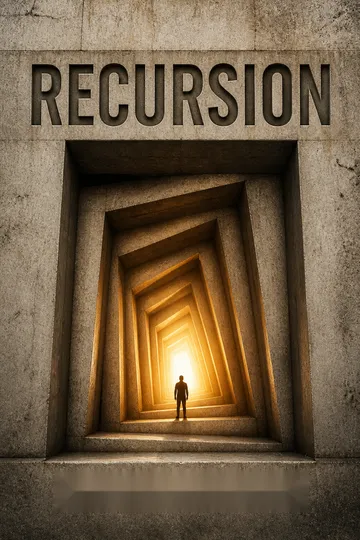
Inside the cube, Jason1 and Amanda4 inject the compound and find themselves in an endless corridor lined with identical doors. Opening one drops them into a ruined Chicago buried in volcanic ash, where collapsing buildings threaten to bury them.
Back inside the cube, they take the drug again and emerge in a world of scorched forest and catastrophic cold. A second door leads to a snowbound house where a family has starved beside an exhausted fireplace. Jason1 and Amanda4 nearly freeze before finding shelter there.
Comparing these disasters with what they felt before opening each door, Jason1 suspects their emotional state helps select the world. He uses the cube's magnetic field to find it beneath the snow, and their next journey begins with a new principle: intention may steer the passage.
The corridor first appears to promise freedom through limitless choice, then reveals how little choice means without orientation. Each door opens onto a complete world, but Jason and Amanda have no map, and the dangers are not abstract possibilities once ash fills their lungs or cold disables their hands. Jason's emerging theory makes emotion part of the instrument panel: fear may shape what they encounter. That insight is both empowering and unsettling, because it gives psychological states material consequences. The dead family makes survival less a matter of cleverness than of recognizing how quickly small resources, shelter, and hope can disappear.
The World He Imagines
Jason asks Amanda4 to write down what she wants from a world, and her clear intention opens onto a dazzling, technologically advanced Chicago. They explore its high-speed transit and immense Glass Tower before returning to the corridor.
When Jason1 writes that he wants to go home, they emerge near the abandoned power plant, but this Chicago is under a deadly epidemic. Daniela2 is infected, and Charlie3 has died. Jason1 gives Daniela2 morphine so she will not die in agony, then flees with Amanda4 as armed quarantine forces pursue them.
He evades their vehicles and reaches the power plant, where they retreat into the cube. The experience convinces him that desire alone is not enough: grief, terror, and childhood loss can shape the world he finds as strongly as the words he writes.
The contrast between Amanda's chosen future and Jason's apparent homecoming exposes the limits of conscious intention. Her written wish yields a livable possibility, while Jason's desperate longing carries buried fears into the next world. The epidemic recreates the childhood wound of losing his mother, turning his attempt to recover his family into a confrontation with the emotional pattern he most wants to escape. His decision to relieve Daniela's suffering shows how love can persist even when the person before him is not his own wife. Yet that mercy exacts a cost, and the armed pursuit forces him to keep moving before grief can settle.
The Last Safe Place
Jason1 and Amanda4 pass through more versions of Chicago, some nearly familiar and others marked by different careers, deaths, and relationships. They share food, shelter, and tenderness, but Jason1 cannot stop searching for Daniela2 and Charlie.3
After seeing another Daniela2 who does not know him, he sits outside a near-matching brownstone and watches a different Jason live the family life he wants back. He even calls Daniela,2 then follows her and her husband, frightening himself with how close he comes to entering their home.
Amanda4 confronts him over the obsession and leaves with half the supplies, asking him to focus on what he feels rather than inventorying his old life. Alone, Jason1 is beaten and robbed, then survives by begging near his own house.
Jason's repeated encounters with almost-home versions of Daniela turn love into a destabilizing force. Each resemblance promises recognition, then denies it, while his longing begins to resemble the possessiveness that first enabled his abduction. Amanda's departure is not a rejection of his goal; it is a boundary against becoming the instrument of his fixation. Her advice distinguishes factual description from emotional truth. Jason can list the furniture, streets, and habits of his lost life, but those details cannot by themselves recreate the attachment that made it home. His descent into homelessness makes that difference painfully physical.
One Grain of Chicago
After nearly taking over the life of a stranger who resembles him, Jason1 rejects the idea that another family's home could ever be his. With one dose left, he writes about how he first met Daniela2 and chooses a door through that memory.
He reaches the Chicago where his family lives, verifies it through the damaged Suburban and public records, and learns another Jason7 has been posing as him. A hotel chatroom reveals dozens of returning Jasons, several already considering murder.
Rather than risk approaching his house, Jason1 deliberately gets arrested for smoking indoors. Daniela2 bails him out. He proves the impostor7 is still at work by calling the house and speaking to him, then collects Charlie3 from school. At a crowded mall, Jason1 tells them what happened and why they must leave.
The return is not a triumph of scientific mastery alone. Jason reaches his world by recalling the particular emotional beginning of his relationship, choosing a memory that binds identity to another person rather than to professional achievement. The chatroom then dismantles any simple idea of being the original Jason: many versions have suffered, struggled, and returned with equally sincere claims. His deliberately foolish arrest is a rare unrepeatable move, a way to bring Daniela to him without exposing her to the competing men. The reunion restores contact, not safety. Love becomes something Jason must protect in a world where his own face is now a source of danger.
A Lottery for Home
Jason1 takes Daniela2 and Charlie3 north to an isolated Wisconsin cabin, keeping their phones off and their route unpredictable. He proposes a lottery in the online group so one Jason can stay with the family and the cube can be destroyed.
Daniela2 resists being treated as a prize, but understands that the alternatives may be worse. Before they can settle the question, several Jasons reach the cabin. One arrives dying from a fight; another, scarred and ruthless, kills the Jason who had been talking with Jason in a bar.
The scarred man then tries to take Jason's1 place. Jason1 fights him, but the original ambitious counterpart,7 wearing Jason's1 wedding ring, shoots the attacker. When that counterpart7 threatens Jason,1 Charlie's3 approach distracts him long enough for Jason1 to stab him.
The lottery is Jason's attempt to turn a zero-sum contest into a procedure that respects the family rather than force. Its weakness is that procedure cannot bind people who believe they have already suffered too much to lose. The cabin makes the ethical problem intimate: these rivals are not strangers but men who share Jason's memories and love Daniela and Charlie. Some still choose restraint; others turn desperation into murder. Jason's violence against his counterpart is not framed as a clean victory. It is the moment when protecting his family requires him to act within the same brutal logic he had hoped to replace.
The Ring Comes Back
The dying counterpart7 gives Jason1 his wedding ring and directs him to a leather bag in the Suburban's glove box. Jason1 takes the gun, leads Daniela2 and Charlie3 out through the back of the cabin, and reaches their vehicle as another Jason fires at them. The Suburban strikes the shooter while escaping.
Inside the glove box, Jason1 finds the compound and remaining equipment they need to enter the cube again. He tells Daniela2 and Charlie3 that staying in this world will never make them safe, and all three agree to leave. At the power plant, they find dozens of Jasons waiting. Daniela2 and Charlie3 refuse to separate from Jason.1 One by one, the gathered men make room, and the family enters the cube together.
The ring returns as a physical sign of continuity, but it cannot restore the life that was interrupted. Jason must still decide whether the family can survive in a world where every alternative self may come looking for them. The group's final act of restraint matters because it interrupts the expected contest: these men could keep fighting, but they recognize that Daniela and Charlie are not possessions to be awarded. Their decision to enter the cube together shifts the story's unit of choice from the individual Jason to the family. The doorway becomes a shared risk, not a private escape.
A Door They Choose
Inside the cube, Jason1 prepares the injections for all three and guides Charlie3 through the procedure. The drug restores the endless corridor, but this time Jason1 does not choose the door alone. He explains that fear can color what waits beyond it, then trusts Charlie3 to make the choice. Daniela2 sits beside Jason1 as their son3 considers the handle.
Charlie3 opens the door onto bright air carrying the scent of wet earth and unfamiliar flowers. The family moves toward the light together. The novel ends before revealing what world lies beyond, leaving their home uncertain but their decision shared. After Jason's1 long search for the single life he lost, the next step belongs to all three.
The ending refuses to make home a coordinate Jason can simply recover. Even after the immediate pursuers are left behind, the family must enter uncertainty without guarantees. Charlie's role is crucial: Jason's confidence in him answers the fear that parenthood has made his life smaller or less exceptional. He gives his son agency rather than treating him as cargo in a rescue. The door's sensory promise is not proof of safety, only an invitation. By ending at the threshold, the story shifts its answer from finding the perfect branch to choosing together how to face the next one.
Analysis
Dark Matter uses speculative physics to make regret concrete. The multiverse does not merely offer Jason1 a gallery of hypothetical lives; it makes him walk through consequences that resemble his fears, desires, and unresolved grief. Each alternate Chicago becomes a pressure test of what he thinks he wants. The world where Daniela2 is a successful artist and Charlie3 never existed seems at first to validate the career Jason1 gave up, but it cannot supply the shared history that makes a marriage his. A plague-struck Chicago confronts him with the childhood loss that underlies his terror of loving people he could lose.
The story's most unsettling question is not whether another Jason is real, but what shared identity entitles any version of a person to claim a particular life. The returning Jasons possess the same early memories and attachments, yet the paths they have taken produce distinct moral choices. Some cooperate, some attack, and none can prove that he is the uniquely deserving self. This turns the family into more than a prize at the end of a contest. Daniela2 and Charlie3 have their own judgments, fears, and agency, and their refusal to be treated as possessions becomes a challenge to the logic of competition.
Jason's1 journey also revises the meaning of achievement. Jason's alternate counterpart7 has secured the scientific accomplishment Jason1 once imagined, but his success has not eliminated longing. Jason,1 meanwhile, discovers that the life he regarded as a compromise contains forms of value that cannot be ranked by prizes. The novel does not claim that every choice is equally satisfying or that regret can simply be reasoned away. It suggests that identity is formed through choices, relationships, and the willingness to accept limits. The ending offers no perfect destination. It offers a family choosing its next step together, which is a more durable answer to uncertainty than the fantasy of finding a life without loss.
Review Summary
Dark Matter is a mind-bending science fiction thriller that captivates readers with its exploration of quantum physics and parallel universes. The story follows Jason Dessen as he navigates multiple realities in search of his family. Reviewers praise Crouch's ability to blend complex scientific concepts with a gripping plot and emotional depth. While some found the characters underdeveloped, most were enthralled by the book's fast pace, twists, and philosophical questions about choice and identity. The novel is widely recommended as an engaging, thought-provoking read that appeals even to those not typically drawn to science fiction.
People Also Read










Characters
Jason Dessen
The searching physicistJason is a physics professor, husband, and father whose intellectual discipline coexists with a deep attachment to ordinary family life. He has accepted a modest academic career after setting aside ambitious research to care for Daniela2 and Charlie3, though Ryan's5 success exposes the regret he keeps partly concealed. Under pressure, Jason treats fear as a problem to investigate, testing evidence and building theories from what he can observe. His identity is closely tied to his choices, but the possibility of other lives unsettles that confidence. He is loving without being immune to jealousy or desperation, and his struggle is to protect what matters without letting longing turn other people into objects he believes he deserves.
Daniela Vargas
The artist and partnerDaniela is an artist whose relationship with Jason1 is shaped by love, honesty, and the compromises of family life. She once pursued a promising career in Chicago's art world, and her feelings about that abandoned path remain complicated even within a life she values. She is emotionally direct and attentive to the people around her, but not simply defined by supporting Jason1: her own work, judgments, and ambitions matter. As a mother and partner, she notices changes others might excuse and asks what they mean. Her steadiness comes from engagement rather than passivity, and she resists being reduced to a symbol of someone else's lost opportunity.
Charlie Dessen
The observant sonCharlie is Jason1 and Daniela's2 teenage son, a thoughtful artist who draws strange landscapes and is approaching adulthood. His parents love him deeply, though Jason1 worries that he has little wisdom to offer as Charlie becomes more independent. Charlie's humor and eye for visual detail give him a quiet presence in the family, while adolescence brings private friendships and concerns his parents do not fully see. He is not merely the reason Jason1 made sacrifices; he has his own perspective on the people around him and the changes in his home. His growing independence makes the father-son bond both tender and difficult for Jason1 to navigate.
Amanda Lucas
The lab psychiatristAmanda works as a psychiatrist at Velocity Laboratories, where she has spent years among scientists pursuing an extraordinary project. Her professional habit is to listen closely and assess risk, but she is not insulated from the moral consequences of the institution around her. She is perceptive about how grief and fixation shape behavior, including Jason's1, and she can offer care without pretending to know answers she does not have. Her North Dakota upbringing and memories of blizzards give her a vivid way to understand disorientation. Amanda is compassionate, practical, and capable of drawing boundaries when care begins to become self-erasure.
Ryan Holder
The celebrated neuroscientistRyan is Jason's1 former college roommate and an accomplished neuroscientist whose research concerns the prefrontal cortex and consciousness. His professional confidence can shade into arrogance, particularly when he judges Jason1 for leaving research to teach. Beneath that competitiveness is a long history of friendship and a desire to be recognized for his contribution. Ryan's scientific work makes him important to the novel's central problem, though he does not initially understand the larger purpose for which his expertise is being used. His relationship with Daniela2 also complicates Jason's1 return to a life that no longer follows the history he remembers.
Leighton Vance
Velocity's chief officerLeighton is Velocity Laboratories' chief executive and medical officer, and he regards the organization as both a family and a scientific mission. He has worked alongside Jason7 for years and believes the laboratory's achievement depends on protecting its work. That conviction gives him warmth toward colleagues and a capacity for severe control when he thinks the project is threatened. Leighton can sound genuinely caring while still placing institutional necessity above individual freedom. His character embodies the danger of moral reasoning narrowed by a grand goal: people may sincerely regret harm while continuing to authorize it.
The masked man
The unknown captorThe masked man abducts Jason1 at gunpoint and takes him to an abandoned power plant. He knows intimate details of Jason's1 routines and family, yet gives no clear account of who he is or what he intends. His questions focus less on money or revenge than on Jason's1 satisfaction with his life and the research he left behind. That unusual attention makes him frightening in a particular way: he appears to understand Jason1 from the inside. His controlled violence and moments of apparent tenderness remain difficult to reconcile, leaving his motives uncertain until Jason1 can assemble the evidence.
Julianne Springer
The hospital physicianJulianne Springer is the physician who treats Jason1 after he escapes Velocity Laboratories. She approaches his impossible account with professional caution, checks his scans and toxicology, and tries to locate his family. Her medical skepticism is grounded in the evidence available to her, not cruelty, but the hospital's procedures leave Jason1 feeling increasingly trapped.
Michael Dessen
Jason's distant brotherMichael is Jason's brother1, living in Iowa City and estranged from him for two years. He appears in the hospital's attempts to identify Jason's1 family, providing a reminder that Jason's1 life includes relationships beyond Daniela2 and Charlie3, even when he has let those connections lapse.
Plot Devices
The quantum box
Gateway between realitiesA massive metal cube built at Velocity Laboratories, the box creates an environment in which a person can enter quantum superposition. Once a traveler takes Ryan's compound inside, the box opens access to alternate versions of the world at the same moment in time. The traveler experiences these possibilities through an endless corridor of doors. The box is both a technological breakthrough and a moral pressure point: its power gives Jason1 access to other lives, but it cannot identify which one is truly his or guarantee a safe return.
Ryan's compound
Disables conscious observationRyan5 develops a psychoactive compound that temporarily alters brain processes connected to consciousness and observation. In the box, the drug allows a traveler to remain in a superposed state instead of immediately collapsing into one reality. Its effects are short-lived, repeated use strains the brain, and the travelers must time their choices around its limited window. The compound turns the abstract science into a physical ordeal: every dose creates another chance to choose a world, but also brings exhaustion, risk, and dwindling supplies.
The endless corridor
Makes choices tangibleInside the box, Jason1 and Amanda4 perceive an infinite hallway of identical doors. Each door leads to a different possible world, but the corridor offers no map, labels, or reliable way to distinguish a safe choice from a deadly one. The environment reflects the story's central paradox: the travelers possess an almost limitless number of possibilities but little control over what each one contains. Jason1 gradually suspects that their emotional state influences which world appears, so intention and self-knowledge become part of navigating the device.
The ring of thread
Anchors Jason's identityAfter Jason1 wakes in a world where his wedding ring is missing, he ties a piece of thread around his finger. The small physical reminder helps him hold onto the life he remembers when homes, records, and other people contradict it. Its meaning changes as he travels: it begins as evidence that he once belonged to Daniela2, then becomes a modest act of self-trust. The thread cannot prove his story to anyone else, but it gives Jason1 something tangible to touch when memory starts to feel less solid than the world around him.
The returning Jasons
Turns identity into competitionEvery Jason1 who finds a route back to the familiar Chicago arrives believing that his own family and history are the ones he should reclaim. Their shared memories make them frighteningly good at predicting one another, while their divergent experiences make them morally and emotionally different. The chatroom, attempted killings, and proposed lottery turn the multiverse premise into a practical crisis: there may be many equally sincere claimants, but Daniela2 and Charlie3 cannot safely be divided among them. The device tests whether shared identity creates solidarity or simply multiplies rivalry.
FAQ
Synopsis & Basic Details
What is Dark Matter about?
- Multiverse kidnapping thriller: Dark Matter follows Jason Dessen, a physics professor, who is abducted and thrust into a parallel universe where his life is drastically different.
- Quest for lost identity: Jason must navigate this new reality, grappling with alternate versions of himself and his loved ones, as he desperately tries to return to his original life.
- Exploration of choices: The story delves into the consequences of choices, exploring the infinite possibilities of the multiverse and the impact of decisions on one's identity and relationships.
Why should I read Dark Matter?
- Mind-bending concept: The novel offers a thrilling exploration of the multiverse, challenging readers to question the nature of reality and the impact of choices.
- Emotional depth: Beyond the sci-fi elements, the story delves into the emotional core of a man fighting to reclaim his family and identity, creating a deeply resonant experience.
- Fast-paced suspense: Crouch masterfully blends science fiction with thriller elements, creating a page-turning narrative that keeps readers on the edge of their seats.
What is the background of Dark Matter?
- Quantum physics inspiration: The novel draws heavily from concepts in quantum physics, such as superposition and the Many-Worlds interpretation, to create its multiverse premise.
- Chicago setting: The story is set in Chicago, with familiar locations like Logan Square and the South Side playing a significant role in the narrative.
- Exploration of ambition vs. family: The book explores the tension between professional ambition and personal fulfillment, a theme that resonates with contemporary societal pressures.
What are the most memorable quotes in Dark Matter?
- "What might have been and what has been Point to one end, which is always present.": This T.S. Eliot epigraph sets the stage for the novel's exploration of choices and their consequences.
- "You killed your ambition, didn't you?": This line, spoken by a version of Jason, highlights the theme of lost potential and the sacrifices made for family.
- "We're all just wandering through the tundra of our existence, assigning value to worthlessness...": This quote from Jason's experience at Daniela's art installation captures the novel's existential themes.
What writing style, narrative choices, and literary techniques does Blake Crouch use?
- Fast-paced, cinematic style: Crouch employs a fast-paced, action-oriented style, creating a sense of urgency and suspense that keeps the reader engaged.
- First-person perspective: The narrative is primarily told from Jason's first-person perspective, allowing readers to experience his confusion, fear, and determination intimately.
- Use of foreshadowing and callbacks: Crouch skillfully uses foreshadowing and callbacks to create a sense of interconnectedness and to enhance the novel's thematic depth.
Hidden Details & Subtle Connections
What are some minor details that add significant meaning?
- The tesseract chandelier: Daniela's gift to Jason, a tesseract chandelier, foreshadows the novel's exploration of higher dimensions and the multiverse.
- The recurring mention of Thelonious Monk: The music of Thelonious Monk, a jazz musician known for his unconventional style, symbolizes the disruption of Jason's reality.
- The thread on Jason's finger: The thread tied around Jason's ring finger serves as a physical reminder of his marriage and his original reality, a tangible link to his identity.
What are some subtle foreshadowing and callbacks?
- Ryan Holder's comment on Jason's potential: Ryan's comment that Jason "would've changed the world if you'd decided to go that path" foreshadows the alternate Jason's scientific achievements.
- Daniela's comment about Jason's research: Daniela's remark that "pure research is life-consuming" foreshadows the sacrifices Jason made in his original reality.
- The mention of the Pavia Prize: The Pavia Prize, which Ryan wins, becomes a symbol of the alternate Jason's success and a source of conflict for the original Jason.
What are some unexpected character connections?
- Jason and Jason2: The connection between Jason and his alternate self, Jason2, is a complex one, as they are both the same person but also vastly different due to their choices.
- Jason and Amanda: The relationship between Jason and Amanda evolves from a captor-captive dynamic to one of trust and mutual reliance, highlighting the power of human connection.
- Jason and Ryan: The friendship between Jason and Ryan, once close, becomes strained by jealousy and resentment, revealing the fragility of relationships in the face of ambition.
Who are the most significant supporting characters?
- Amanda Lucas: As a psychiatrist and ally, Amanda provides a crucial perspective on Jason's mental state and the nature of the multiverse, helping him navigate the complexities of his situation.
- Ryan Holder: Ryan's success and his past relationship with Daniela serve as a catalyst for Jason's journey, highlighting the themes of ambition and regret.
- Matt (the bartender): Matt, the bartender at Village Tap, represents the familiar world that Jason is trying to reclaim, a symbol of his lost normalcy.
Psychological, Emotional, & Relational Analysis
What are some unspoken motivations of the characters?
- Jason's desire for recognition: Jason's unspoken desire for recognition and success in his scientific career drives his actions, even as he prioritizes his family.
- Daniela's longing for artistic fulfillment: Daniela's unspoken longing for artistic fulfillment fuels her passion for her work, even as she dedicates herself to her family.
- Jason2's regret and envy: Jason2's unspoken regret for his choices and his envy of Jason's family life motivate his actions, leading him to steal Jason's life.
What psychological complexities do the characters exhibit?
- Jason's identity crisis: Jason experiences a profound identity crisis as he grapples with the existence of alternate versions of himself and the loss of his original reality.
- Daniela's internal conflict: Daniela struggles with the knowledge that her husband is not who she thought he was, leading to a complex mix of love, fear, and confusion.
- Jason2's moral ambiguity: Jason2 exhibits a complex mix of ambition, regret, and a twisted sense of justification, making him a morally ambiguous character.
What are the major emotional turning points?
- Jason's abduction: Jason's abduction marks a major emotional turning point, as he is thrust into a world of fear and uncertainty, setting him on his quest to return home.
- The discovery of his alternate life: Jason's discovery of his alternate life as a celebrated scientist is a major emotional turning point, as he grapples with the consequences of his choices.
- Daniela's death in the alternate world: The death of Daniela in the alternate world is a major emotional turning point, highlighting the fragility of life and the stakes of Jason's journey.
How do relationship dynamics evolve?
- Jason and Daniela's relationship: The relationship between Jason and Daniela evolves from a loving partnership to a complex mix of love, fear, and uncertainty, as they navigate the multiverse.
- Jason and Ryan's friendship: The friendship between Jason and Ryan, once close, becomes strained by jealousy and resentment, highlighting the fragility of relationships in the face of ambition.
- Jason and Charlie's bond: The bond between Jason and Charlie is tested by the chaos of the multiverse, but their love for each other remains a constant source of strength.
Interpretation & Debate
Which parts of the story remain ambiguous or open-ended?
- The nature of the multiverse: The exact nature of the multiverse and the rules governing travel between universes remain ambiguous, leaving room for interpretation.
- The fate of other Jasons: The fate of the other Jasons who entered the box is left open-ended, raising questions about the consequences of their choices.
- The long-term effects of the drug: The long-term effects of the drug that allows travel between universes are not fully explored, leaving room for speculation about its impact on the characters.
What are some debatable, controversial scenes or moments in Dark Matter?
- Jason's decision to leave Daniela and Charlie: Jason's decision to leave Daniela and Charlie in the alternate world is a controversial moment, raising questions about his priorities and his love for his family.
- The violence in the novel: The violence in the novel, particularly the deaths of Daniela and other characters, is a controversial aspect, raising questions about the author's use of violence.
- The ending: The ending, where Jason, Daniela, and Charlie step into a new world, is open to interpretation, leaving readers to wonder about their future and the nature of their new reality.
Dark Matter Ending Explained: How It Ends & What It Means
- The family's escape: The ending sees Jason, Daniela, and Charlie escaping into a new world, leaving behind the chaos and danger of the multiverse.
- A new beginning: The ending suggests a new beginning for the family, a chance to build a life free from the interference of other Jasons and the pain of their past experiences.
- The power of choice and love: The ending emphasizes the power of choice and the enduring strength of love, suggesting that even in the face of infinite possibilities, human connection remains the most important thing.
About the Author






Download PDF
Download EPUB
.epub digital book format is ideal for reading ebooks on phones, tablets, and e-readers.








