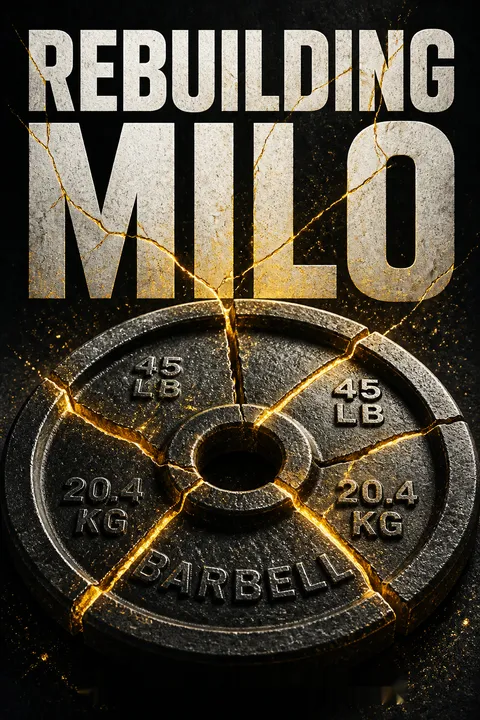


Key Takeaways
Build strength by matching progressive overload with recovery
Milo’s lesson has limits. The legend of Milo of Croton says he grew stronger by carrying a calf as it grew into a bull. The useful principle is progressive overload: gradually increasing the demands on the body so it can adapt. But training stress must stay within the body’s ability to recover. More is not always better, especially when fatigue degrades technique.
Two lifters, two warnings. Powerlifter Josiah O’Brien suffered catastrophic injuries to both knees during a competition squat and spent months rebuilding basic movement before returning to the platform. Horschig’s own knee pain developed while he trained twice daily for a major meet, and painkillers and ice helped him push through without solving the problem. Both stories argue for ambition supported by recovery, not toughness measured by ignoring pain.
What's compelling is the book’s refusal to treat injury as the price of proving commitment. Training is a feedback process: stress creates the stimulus, recovery permits adaptation, and worsening pain signals that the current dose may be poorly matched to capacity. That logic resembles managing any system with delayed feedback. The challenge is that a lifter cannot always identify the precise cause of an injury from symptoms alone. The practical response is not to abandon hard training, but to treat recovery and technique as part of the program rather than optional maintenance.
Treat an MRI as a clue, not a verdict on pain
Images need context. An MRI shows anatomy, not how a body moves or whether a visible change is causing today’s symptoms. The book notes that disc bulges appear in many people without back pain: about a third of healthy 20-year-olds, with prevalence rising with age. In one study it cites, 84 percent of people who developed severe back pain showed no change in their spinal MRI compared with earlier scans.
Ask what the body does. A scan cannot tell whether a disc bulge is a new injury or an old finding, nor can it identify which movement or load triggers pain. A clinician can use imaging alongside a physical assessment, including the positions, activities, and loads that reproduce or ease symptoms. Serious or worsening symptoms still warrant professional evaluation.
The central insight is a lesson in base rates: a finding is less informative when it is common in people who feel well. The same reasoning appears in diagnostic testing across medicine, where a test result gains meaning from the person’s symptoms and examination. This can prevent alarming scan language from becoming a diagnosis by itself. Yet the opposite mistake is possible too. Imaging can matter when symptoms suggest serious disease or when it changes treatment decisions. The useful stance is neither scan worship nor scan dismissal, but interpretation in context.
Map the motion or load that reproduces your pain
Classify the trigger. The book uses the kinesiopathologic model, a way of understanding pain by identifying the movement or loading problem associated with it, rather than treating a tissue label as the whole explanation. For low back pain, useful patterns include intolerance to bending forward, arching backward, twisting while arched, or loading the spine. Hip and knee assessments also look for mobility limits, strength or control problems, and load intolerance.
Compare, then adjust. Record which tasks cause symptoms and which do not. A deadlift that hurts only when the back rounds under load offers different clues from pain that appears during any heavy lift. Try a small technique or position change and see whether symptoms shift. These screens help organize questions and guide training changes, but they are not a substitute for a medical diagnosis.
What's useful here is the shift from naming a painful location to describing a repeatable pattern. A good description such as “pain appears when this movement is loaded” creates a testable starting point for changing technique and tracking response. The important caution is that symptom change does not prove a particular tissue caused the pain. Pain can reflect multiple interacting factors, and a home screen has limits. Used carefully, however, movement classification can make a clinical conversation more precise and help an athlete avoid random exercises chosen from a search result.
Under heavy load, stabilize the spine and move through the hips
Load and motion interact. The book explains spinal injury risk with a simple relationship: power rises when force and movement speed rise together. A spine moving quickly under a heavy load faces different demands from a spine moving gently without load. For heavy lifts, the author therefore emphasizes bracing the torso and moving mainly through the hips, as in a controlled hip hinge. For unloaded mobility work, the spine can move through a comfortable range.
Technique can erode. Fatigue, excessive spinal movement during a loaded squat or deadlift, and sudden increases in training demand can combine to stress the back. Horschig discusses modifying depth or stance, reducing load, and rebuilding with lighter variations before returning to demanding lifts. The aim is not to fear all spinal flexion, but to manage how much movement occurs under load and how well the lifter can control it.
The strength of this model is its attention to the combination of load, speed, and control, rather than treating one posture as universally dangerous. It gives athletes a practical way to think about why a fatigued repetition may differ from a crisp one. Still, “keep the spine neutral” is best understood as a useful coaching strategy, not a rule that every spine must remain motionless in every loaded task. The book itself describes variation among elite lifters. Individual technique, training history, and tolerance matter, so rigid imitation of another athlete is a poor substitute for skilled coaching.
Train stability as coordination and endurance, not just abdominal strength
A strong core must coordinate. In this book, core stability means the coordinated stiffness that helps the trunk resist unwanted movement while the arms or legs produce force. Visible abdominal strength alone does not guarantee that control. For back rehabilitation, Horschig presents the McGill Big Three: a modified curl-up, side plank, and bird-dog. These isometric exercises train the trunk to hold position while breathing and moving the limbs.
Rebuild in stages. The early plan pairs tolerable walking with stability work and avoids movements that reliably trigger symptoms. The next stage restores the hip hinge and addresses mobility limits at the hips or mid-back. Later, the lifter rebuilds capacity with appropriate pushing, pulling, carrying, and anti-rotation exercises before returning to heavier training. Progress should be gradual, guided by movement quality and symptom response, rather than by a deadline or a desire to test a personal record.
The distinction between producing force and controlling force is valuable well beyond lifting. Stability is task-specific: a trunk may be strong in a crunch yet poorly coordinated when resisting rotation during a one-sided carry. The book’s isometric emphasis makes that gap visible and gives rehabilitation a manageable entry point. One limitation is that named exercise sets can invite a recipe mentality. No short list can meet every person’s needs, and exercises that are appropriate for one pain pattern may aggravate another. The book’s strongest principle is to screen, adapt, and retest, not to perform a routine blindly.
Fix the movement chain while respecting the body you were born with
Painful joints do not work alone. The book follows forces across the body: restricted ankle or hip motion can alter a squat and stress the knee or back; poor shoulder control can increase demands on the elbow; and limited mid-back motion can interfere with overhead shoulder movement. It recommends checking mobility, strength, coordination, and technique around the painful area, then using a test-and-retest approach to see whether a change helps.
Anatomy sets boundaries. Hip sockets and thigh bones vary in shape and orientation, which can make one person’s natural squat stance uncomfortable for another. The author notes that roughly 40 percent of participants in one cited Japanese study had hip socket shapes outside the study’s “normal” category. Mobility work can address restrictions, but it cannot make every skeleton match a textbook ideal. Adjust stance and range to the lifter, rather than forcing a universal technique.
The kinetic-chain perspective helps explain why a symptom site is not necessarily the only place worth examining. It also gives a strong corrective to the habit of copying elite technique without accounting for anatomy. The useful nuance is that a movement difference can be associated with pain without being its sole cause. Screens identify promising places to investigate, not proof of a mechanical fault. This distinction protects the approach from becoming another form of tunnel vision, where “bad movement” replaces “bad MRI” as an overly simple explanation.
Rebuild tendons by dosing load instead of choosing rest or grit
Tendons adapt, but slowly. The book describes the Continuum of Tendon Pathology, which traces overload from a reactive, painful response through tendon disrepair and degeneration. A sudden training increase, a return after time off, or even a footwear change may exceed a tendon’s current load tolerance. Complete rest can further reduce capacity, while repeatedly pushing through pain can prolong the problem.
Progress the stimulus. For patellar or Achilles tendon pain, the proposed sequence begins with tolerable isometric holds, moves to heavy slow resistance exercises, then adds jumping or other spring-like work as strength and symptoms allow. Tendon location matters: insertional Achilles pain may worsen with deep ankle bending and compression, making calf stretching a poor choice. Track symptoms during training and the following day, and change one loading variable at a time. Persistent or severe symptoms merit a clinician’s assessment.
The most practical contribution is its rejection of the false choice between total rest and heroic persistence. Tendon rehabilitation becomes a problem of matching the dose to present capacity, then increasing it as the tissue tolerates more. This resembles graded exposure: carefully reintroducing a demanding activity can rebuild both physical capacity and confidence. The process requires patience because symptoms may respond after a delay, making impulsive increases hard to judge. Load logs and professional guidance can turn that uncertainty into useful feedback rather than guesswork.
Replace routine icing with safe movement that helps clear swelling
Pain relief is not the same as healing. Horschig argues against routine icing after injury or training. Ice can numb pain, but he describes inflammation as part of the body’s repair process and swelling as fluid and cellular waste that must be cleared. Because the lymphatic system lacks a central pump, muscle contractions help move that fluid. The book therefore favors gentle, tolerable movement over immobilization when appropriate.
Adapt when movement is limited. Isometric contractions and simple movements can help maintain activity early in recovery; neuromuscular electrical stimulation (NMES) can create muscle contractions when voluntary movement is difficult. The author also notes that evidence for icing after surgery or athletic injury is limited, and that ice may interfere with recovery processes. This is a strong argument against automatic icing, not a reason to ignore severe injury or avoid medical care.
The chapter’s memorable reversal is that reducing pain does not necessarily accelerate tissue repair. It usefully directs attention toward active recovery and the role of muscle contraction in moving fluid. The caution is its categorical tone: evidence about ice varies by context, and temporary pain relief can have practical value even when it does not speed healing. A sound takeaway is to stop treating ice as a universal cure, not to treat every use as harmful. Injury severity, comfort, and clinical advice should shape the decision.
Analysis
Rebuilding Milo is best understood as a practical argument about how athletes can reason through pain, not as a catalogue of exercises. Its central sequence is coherent: identify the activity or position linked to symptoms, adjust the provoking demand, address relevant mobility and control limits, then rebuild capacity toward sport. The recurring test-and-retest method is the book’s most valuable habit of thought. It asks the reader to observe a result, make a modest change, and check whether the result changes, rather than relying on generic corrective routines.
The stories make the stakes concrete. Josiah’s devastating injury and Horschig’s less dramatic knee pain show two ends of the same training problem: the desire to progress can outrun recovery and technique. The Milo legend gives that problem a memorable frame. Strength is not simply accumulated effort; it is effort the body has time and capacity to absorb.
The model also needs careful boundaries. A movement that reproduces pain is useful information, but it does not establish a single anatomical cause. Pain can be shaped by tissue, nervous system sensitivity, sleep, stress, prior injury, and context. Likewise, a neutral spine, hip hinge, or prescribed exercise is a strategy, not a universal law. The book’s own reminders about individual anatomy and professional assessment are important safeguards against turning its practical framework into rigid self-diagnosis.
The anti-ice chapter is deliberately provocative and effectively distinguishes pain relief from healing. Its broadest claims deserve more restraint than its central lesson: icing should not be assumed to speed recovery, and movement can be a useful part of rehabilitation when medically appropriate. The book is strongest when it invites disciplined experimentation and weakest when a useful coaching heuristic sounds like a definitive rule. Its durable contribution is an athlete’s mindset of informed loading, not a promise that every injury can be self-treated.
Review Summary
Rebuilding Milo receives overwhelmingly positive reviews, with readers praising its clear, practical approach to injury prevention and recovery for weightlifters. Many appreciate the detailed explanations of joint mechanics, self-diagnostic tools, and rehabilitation exercises. Readers find the book invaluable for addressing common lifting-related issues and improving overall performance. Some highlight its usefulness for both professional athletes and recreational lifters. While a few suggest additional content could be beneficial, most consider it an essential resource for anyone involved in weightlifting or strength training.
People Also Read






Glossary
Progressive overload
Gradual training increaseA training principle in which physical demands increase progressively so the body adapts by becoming stronger or more capable. Horschig connects the idea to the Milo of Croton legend, in which the athlete supposedly lifted a growing calf. The principle depends on balancing training stress with adequate recovery, rather than increasing load without limit.
Kinesiopathologic model (KPM)
Movement-based pain classificationAn approach to understanding musculoskeletal pain by examining the movements, postures, and loads associated with symptoms. Instead of relying only on a presumed injured tissue, the clinician or athlete looks for movement patterns that reproduce or ease pain and uses those observations to guide assessment and rehabilitation. It does not make a movement screen a definitive diagnosis.
Neutral zone
Spine’s controlled rangeA small range around the spine’s neutral alignment, rather than one exact posture. The book describes this zone as a position in which forces are distributed more evenly across spinal structures during lifting. Its practical advice is to control spinal motion when handling heavy loads, while allowing comfortable movement when the spine is unloaded.
The Big Three
Three trunk stability exercisesA group of low-back rehabilitation exercises associated with Stuart McGill: a modified curl-up, side plank, and bird-dog. They use sustained muscle contraction and limited spinal movement to train trunk stability and endurance. The book presents them as a starting point for many back-pain programs, alongside walking and adjustments for individual movement triggers.
Continuum of Tendon Pathology
Stages of tendon overloadA model describing tendon problems as overlapping stages: reactive tendinopathy, tendon disrepair, and degenerative tendinopathy. It links changes in tendon tissue to overload and explains why recovery capacity may decline as the problem progresses. The book uses the model to argue for managing load and progressing rehabilitation rather than relying on rest alone.
Heavy slow resistance (HSR)
Slow, demanding strength workA rehabilitation approach using relatively heavy strengthening exercises performed slowly through both the lowering and lifting phases. Horschig presents it as a way to increase tendon capacity after symptoms are sufficiently controlled with simpler work. Load is progressed over time, with exercise quality and symptom response helping determine whether the dose is appropriate.
Stretch-shortening cycle (SSC)
Tendon spring actionThe sequence in which a muscle-tendon unit lengthens under load and then rapidly shortens to produce force. Running, jumping, and other explosive actions use this spring-like behavior. The book treats plyometric exercises as a later stage of tendon rehabilitation because these movements place greater demands on the tendon than slow strength exercises.
Reactive neuromuscular training (RNT)
Feedback-guided movement practiceA method of improving movement control by applying resistance that exaggerates a movement fault, such as a band pulling the knees inward during a squat. The athlete responds against that force, receiving a strong cue about body position and practicing a more controlled pattern. The book uses RNT for lower-body stability and technique retraining.
Neuromuscular electrical stimulation (NMES)
Electrical muscle contractionA device-based method that uses electrical stimulation to produce muscle contractions. Horschig discusses NMES as a possible way to encourage muscle activity and fluid movement when voluntary exercise is difficult, such as in some early recovery situations. It is presented as a supplement to movement-based rehabilitation, not a replacement for clinical care.
FAQ
What is "Rebuilding Milo" by Aaron Horschig about?
- Comprehensive injury guide: "Rebuilding Milo" is a lifter’s manual focused on fixing common injuries and building a strong foundation for enhanced performance, especially for strength athletes like weightlifters and powerlifters.
- Movement and pain understanding: The book emphasizes understanding the root causes of pain, focusing on movement dysfunctions and load intolerance rather than just anatomical diagnoses.
- Science-based, practical approach: It integrates the latest research and clinical experience, empowering athletes to self-assess, screen, and rehabilitate their injuries effectively.
Why should I read "Rebuilding Milo" by Aaron Horschig?
- Expertise and experience: Aaron Horschig combines his background as a physical therapist and competitive Olympic weightlifter to offer evidence-based, actionable advice for lifters.
- Empowering and practical: The book teaches readers how to perform self-assessments and understand their pain triggers, putting them in control of their recovery.
- Tailored for strength athletes: It provides individualized approaches and test-retest methods to injury rehab, helping readers shorten recovery time and prevent re-injury.
What are the key takeaways from "Rebuilding Milo" by Aaron Horschig?
- Movement-based diagnosis: The book moves beyond traditional anatomical labels, focusing on movement quality and biomechanical dysfunctions for more effective rehab.
- Progressive overload and adaptation: Drawing inspiration from Milo of Croton, it highlights the importance of gradually increasing training demands while balancing stress and recovery.
- Active rehabilitation focus: Emphasizes core stability, movement re-education, and load management over passive treatments like rest or painkillers.
What is the story behind the title "Rebuilding Milo" and its significance?
- Inspired by Milo of Croton: The title references the ancient Greek athlete who built strength by carrying a growing calf daily, illustrating the principle of progressive overload.
- Symbol of grit and science: The story embodies the blend of hard work, consistency, and scientific understanding necessary for building strength and recovering from injuries.
- Progressive overload principle: The book uses this story to stress the importance of gradual, adaptive training in both performance and rehabilitation.
How does "Rebuilding Milo" by Aaron Horschig recommend diagnosing and addressing low back pain in lifters?
- Movement dysfunction over imaging: The book stresses that MRI findings often do not correlate with pain; movement patterns and load intolerance are more critical.
- Screening and self-assessment: Athletes are encouraged to identify pain triggers, perform self-tests, and classify pain by movement dysfunction.
- Core stability and technique: Emphasizes strengthening and coordinating core muscles to create spinal stiffness, protecting the back during heavy lifts.
What are the "Big Three" core stability exercises in "Rebuilding Milo" and why are they important?
- Curl-up, side plank, bird-dog: These exercises enhance core muscular endurance and coordination without excessive spinal load.
- Isometric focus: Isometric exercises improve spinal stiffness, crucial for injury prevention and performance.
- Foundation for rehab: Daily practice of these exercises builds a resilient core, reduces pain, and supports safe return to heavy lifting.
How does "Rebuilding Milo" by Aaron Horschig approach knee pain screening and rehabilitation?
- Movement screening: Uses bodyweight and single-leg squats to identify biomechanical dysfunctions like knee valgus or instability.
- Mobility and load tests: Assesses hip and ankle mobility, muscle strength, and load tolerance to pinpoint weaknesses or restrictions.
- Five-step knee stability process: Focuses on correct squat technique, glute activation, single-leg strength, balance, and neuromuscular training to restore knee health.
What are the key concepts in shoulder injury and rehabilitation from "Rebuilding Milo"?
- Dynamic and static stability: The shoulder relies on both passive structures and active stabilizers (rotator cuff muscles) for proper function.
- Impingement and instability: Pain often arises from imbalances, mobility restrictions, or instability, not just structural damage.
- Movement-based screening and rehab: Emphasizes assessing movement quality, mobility, and strength imbalances, and prescribes targeted exercises for rotator cuff and scapular stabilizers.
How does "Rebuilding Milo" by Aaron Horschig address hip pain in strength athletes?
- Complex anatomy and causes: Hip pain can stem from muscles, tendons, joint issues, or even referred pain from the back.
- Movement-based diagnosis: Advocates classifying hip pain by mobility restrictions, strength imbalances, or poor technique rather than just anatomical labels.
- Targeted rehabilitation: Recommends soft tissue mobilization, joint mobilizations, isometric strengthening, and movement re-education tailored to the athlete’s deficits.
What is the continuum model of Achilles tendon pathology in "Rebuilding Milo" and how is it managed?
- Three overlapping stages: Describes reactive tendinopathy, tendon disrepair, and degenerative tendinopathy, each with distinct characteristics.
- Pain and load tolerance: Pain mainly arises in the reactive stage; injury occurs when training load exceeds tendon tolerance.
- Rehab progression: Outlines a phased approach—starting with isometrics, progressing to heavy slow resistance, and then plyometrics—while managing load to promote adaptation.
Why does "Rebuilding Milo" by Aaron Horschig advise against icing injuries and soreness?
- Inflammation is essential: Inflammation initiates healing by recruiting immune cells and growth factors; icing delays this process.
- Swelling removal needs movement: Swelling is cleared by the lymphatic system, which depends on muscle contractions; ice can trap swelling and delay recovery.
- Research-backed advice: Studies show icing delays muscle regeneration and can reduce strength and hypertrophy gains; active recovery is preferred.
What are some common misconceptions about injury rehab that "Rebuilding Milo" by Aaron Horschig challenges?
- Over-reliance on imaging: The book argues that MRI findings often do not correlate with pain or dysfunction.
- Passive treatments are insufficient: It challenges the use of rest, painkillers, or stretching as primary solutions, advocating for active rehabilitation.
- Belts and stretching myths: Explains that weightlifting belts and hamstring stretching are not cures for pain, but tools to be used appropriately within a broader rehab strategy.
Download PDF
Download EPUB
.epub digital book format is ideal for reading ebooks on phones, tablets, and e-readers.








