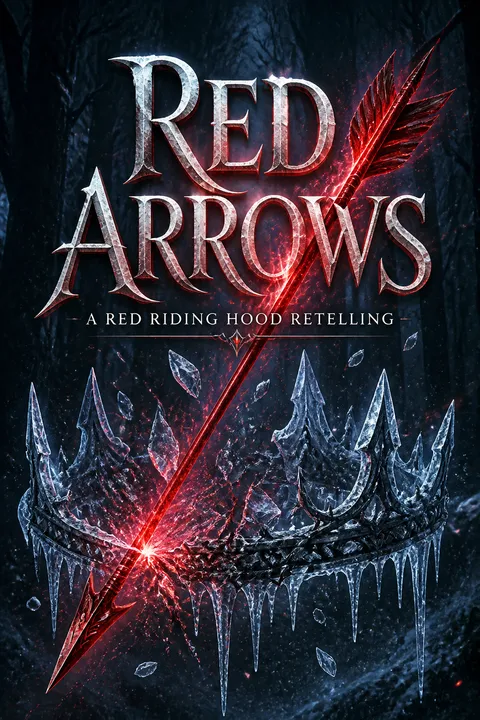


Plot Summary
A Crown Turns Cold
Red Ryding Hood attends her friend Aria’s coronation, where the newly crowned queen stands beside Jack, whose hair has turned white and whose presence carries a strange chill. After the ceremony, Aria throws Prince George from a balcony into the lake, then freezes the water and raises ice monsters from the snow.
Her sister Snow watches in horror as the kingdom’s celebration becomes a massacre. Aria briefly tells Red to run, and Red escapes down the castle wall, but an ice ogre catches her in the woods.
Red’s invisibility cloak cannot hide her once the creature detects her under the snow. Will Scarlet arrives with flaming arrows and destroys it. Red tells him that the friend she knew has become the Snow Queen, and they ride to find her cousin Robin.
Aria’s coronation turns public legitimacy into a weapon: the crowd has barely celebrated her authority before she uses it to kill George and terrorize the kingdom. The snow imagery is not merely spectacle; it makes political violence feel environmental, as if ordinary life itself has become hostile. Red’s escape relies on skills she already possesses, but her appeal to Aria reveals a different motive: she is trying to save a friend, not simply survive a ruler. Will’s fire against the ice ogre establishes him as her practical ally, while the abrupt change in Aria creates the story’s first unresolved question: whether the person Red loves is still reachable.
The Wolf Hunt Begins
Robin Hood, Red’s cousin and leader of their Sherwood band, refuses to help Aria after believing she abandoned them. His attention is fixed on Marian, whom he once handed over to wolves after the Intruder hired him to kidnap her.
Pages from the Intruder’s story have convinced Robin that he was meant to save and love Marian instead. Red joins Robin, Will, and Little John on a jewel robbery against Prince John, while privately pursuing the alpha wolf who killed her grandmother.
Will’s unusual senses help him track the road, but his secret is already shaping the hunt: alone in the forest, he changes into a wolf and contacts Levi, a young pack member, for news of Marian. Will follows a lead east, then saves a hungry child from an ice bear before returning with a trail for the others.
The story braids two pursuits together: Robin tries to repair a choice made under the Intruder’s influence, while Red seeks a culprit whose identity has become the organizing fact of her grief. Their aims overlap, but not cleanly. Robin treats the story pages as a promise about who Marian is and what their future should be; Red treats the wolf as a target whose death might settle her past. Will’s secret places him between these positions. His rescue of the child complicates the assumption that wolves are simply predators, even as Red and Robin remain committed to finding one. The competing motives make the hunt emotionally unstable from its beginning.
The Bridge of Ice
Following Will’s lead, the band crosses a ravine and finds Aria waiting on the far side. She freezes the bridge and demands Robin’s story pages, threatening to leave the group stranded until he hands them over.
After taking the pages, she warns Red that the wolves are not in the Ice Mountains and advises her to use a black arrow against the alpha. Robin ignores the warning and pushes onward. Mountain men then surround the travelers; their bodies repel ordinary arrows, and they seize Red while she is invisible.
Robin sets the trees ablaze to create an escape, but the bridge breaks beneath him. Jack appears in the storm and carries Robin to safety. He explains that the worsening winter comes from his uncontrolled powers, not Aria, and that he is seeking his ancestors in the mountains.
This encounter puts the characters’ incomplete knowledge onstage as a physical hazard. Aria knows more about both the wolves and Red’s weapon, yet her demand for the pages keeps her motives opaque. Robin’s refusal to trust her repeats his defining defense: if someone has left him once, he assumes their advice is another abandonment. The mountain men expose the cost of that posture, because neither Robin’s confidence nor ordinary weapons can protect the group. Jack’s rescue shifts the explanation for the winter from political malice to uncontrolled power. The correction matters, but it does not erase Aria’s responsibility for the violence at the coronation.
A Kiss in Sherwood
Back in Sherwood, Red sees villagers struggling to find food and grows tired of Robin’s answer to every shortage: steal from the rich. She objects when the band takes a carriage of provisions, even though the food is meant for Prince John’s palace and will feed their people.
At home, Will cooks for her, and Red admits she no longer wants to spend her life as a thief. Their talk turns into a kiss, interrupted when Robin returns with a plan to find the traitor who keeps exposing their movements.
Robin proposes taking a wolf captive as leverage for Marian. Will resists the idea of killing pack members, and Red follows him after he leaves in anger. She and Will travel to his sister Belle’s home, hoping Belle can suggest something the alpha would value more than Marian.
Red’s dissatisfaction is not a vague wish for freedom: it begins with the sight of hungry neighbors and her growing discomfort at repeating theft as a permanent solution. Robin’s methods still feed people, which makes her objection morally difficult rather than easy. The kiss with Will briefly offers a different future, but the conversation about a traitor immediately returns them to danger and mistrust. Robin’s willingness to trade a wolf shows how grief and romantic idealism have narrowed his moral attention. Red’s choice to follow Will is therefore both intimate and practical. She is seeking another strategy, while also moving toward the person who lets her imagine one.
The Trolls Name a Key
Belle explains that trolls may know what would persuade the alpha to trade, but they demand honesty before sharing their knowledge. At Troll’s Peak, Red admits she once agreed to surrender Aria to the Evil Queen in exchange for the alpha, then changed her mind; the Queen burned Red’s village in retaliation.
Will confesses that he knew Red had seen him bathing and that their kisses matter to him. Their admissions form a bridge to the trolls, who reveal that the alpha wants a key worn by Prince John. Red realizes the band must steal it. On the descent, she tells Will she loves him, but he says he plans to leave the kingdom after Marian is found. Red accepts his rejection and refocuses on revenge.
The trolls make trust an entry requirement rather than a reward. Red’s confession exposes how revenge once led her to bargain with another person’s safety, and the burning of her village becomes the consequence of her attempt to undo that bargain. Will’s confession, by contrast, risks emotional vulnerability without changing the external danger. The key gives the group a concrete objective, but the revelation arrives alongside Red’s first direct declaration of love. Will’s decision to leave exposes the gap between emotional truth and practical commitment: he can love Red while still believing that remaining near her will only cause harm. Her refusal to let rejection displace her mission shows how deeply she has learned to contain desire.
The Ball’s Stolen Key
Robin discovers an invitation to Prince John’s ball among the stolen jewels and turns the event into a plan to take the key. Red attends as a noblewoman and keeps the prince occupied, while Will stays close and Robin sneaks through the palace.
Robin drugs the prince’s drink; when the prince later pulls Red into a private room, Will breaks down the door and frees her from beneath his unconscious body. Robin takes the key from the prince’s necklace, and the group escapes.
Their victory ends when Little John disappears with Red’s invisibility cloak and the key. Will tracks his scent toward Aria’s castle, where wolves are gathering. Red and Robin realize their trusted companion has acted without them, and the one object they need is now headed into the Snow Queen’s domain.
The ball turns Red’s performance into a tool of survival. She uses the court’s expectations of feminine charm to hold Prince John’s attention, while Robin’s theft depends on invisibility and timing. Will’s intervention is protective, but his jealousy and fear complicate his ability to distinguish Red’s safety from his wish to control the situation. The successful theft proves the band’s ingenuity, yet Little John’s disappearance immediately converts triumph into suspicion. The key has changed hands without explanation, and its importance has outgrown the original plan to bargain for Marian. This reversal makes trust, rather than security, the group’s most fragile resource.
The Wolf Beneath Will
At Aria’s castle, Red and Will encounter Snow, Aria’s sister, who explains that wolves can also take human form. The pack wants the key, and Snow helps Red enter through a hidden passage. A gray wolf pins Red before Snow fires the black-tipped arrow, paralyzing it; the target is not the alpha, so Red’s rare weapon has been spent without ending her hunt.
Aria faces the pack in the coronation hall, and Robin’s arrow knocks the key from her hand. Snow gives it to the golden alpha, who leaves with most of the wolves. In the confusion, Aria calls the brown wolf Will. Red sees him transform and understands that the man she loves is a wolf. Robin captures the paralyzed Levi as a bargaining piece and carries him away.
The revelation that wolves have human forms collapses Red’s categories of hunter, friend, and monster into one body. Will’s transformation is not simply a magical surprise; it makes Red reinterpret every instance of his kindness and secrecy at once. The black arrow’s misfire also costs her the clean revenge she has prepared for years, leaving her with less control just as her understanding of the conflict expands. Snow’s choice to hand over the key suggests that the wolves’ aims are not identical to Robin’s assumptions about them. Yet Robin’s capture of Levi returns the group to coercion, showing how quickly fear can turn new knowledge into another weapon.
Sherwood Burns Again
The sheriff confronts Robin’s group in Sherwood and demands the stolen key. Fighting breaks out, and the guards set the village alight. The sheriff seizes Red and carries her away, but Will shifts into a wolf, overturns the carriage, and frees her. Red tells him to return to his pack and rides off alone.
Will then rescues Levi from the smoke-filled cellar and pulls a trapped boy and other villagers from burning houses. Although Red thanks him, Robin sees only a wolf among the survivors and shoots him with an arrow. Wounded, Will flees into the forest as the pack gathers around him. Red leaves with the villagers, furious at him for lying and heartsick at the danger he has taken on for people who fear him.
The village fire forces the story’s ethical conflict into public view. Will repeatedly chooses rescue over self-preservation, saving both Levi and villagers who might never accept him if they knew what he was. Robin’s arrow is especially painful because it comes after Will has acted as a protector, yet Robin cannot see the person inside the wolf. Red’s response remains divided: she has just rejected Will, but his sacrifice unsettles the certainty of that rejection. The burning of Sherwood also echoes the earlier destruction caused by the Evil Queen, making the people’s safety feel precarious and cyclical. Will’s injury turns his social exile into a literal wound.
Red Finds Will Bleeding
Red returns to the forest and finds Will unconscious in the snow, badly wounded by Robin’s arrow. Levi, who has followed her, helps carry Will to Aria’s hidden tree dwelling. Red treats the wound and learns that Will was banished after disobeying his brother, the former alpha, during a confrontation with the wolf hunter Emmett.
Will wakes and explains that he hid his nature because Red hated the wolf who killed her grandmother. Red admits that the lie hurt more than his species, and they reconcile. Before they can leave, Levi reports that the alpha has taken Belle and demands a challenge from Will. Will sets out to fight for his sister, leaving Red behind despite her insistence on going with him.
Care becomes the first repair available to Red and Will. She does not excuse his secrecy, but tending his wound lets her distinguish betrayal from the deeper fear that produced it. Will’s history also complicates his apparent competence: he carries guilt over disobeying his brother, over failing to save him, and over the possibility that Red would reject him. The challenge forces the pair to separate again just as they choose one another, turning intimacy into a stake rather than a refuge. Red’s wish to accompany Will reflects a new insistence on shared agency; his refusal repeats the protective secrecy that damaged their relationship in the first place.
Belle’s Arena Challenge
At the seaside arena, Will meets the golden alpha and learns that a challenge will decide Belle’s freedom. They fight before the pack, and the alpha’s memories reveal that the wolf is Belle. She killed Will’s brother after he was fatally wounded by Emmett’s silver sword, then accepted the role of alpha and banished Will to protect him from discovering the truth.
Belle asks Will to kill her, believing death is the only way to free her from guilt. Instead, Will defeats her and changes the rule: an alpha challenge no longer has to end in death. The pack accepts him as its new leader. Red arrives after the fight, intending to kill the injured alpha, but sees Marian tending the wolf and learns that the alpha is a woman.
The arena transforms leadership from inherited violence into a rule that can be changed. Will’s victory matters, but his decisive act is refusing the premise that authority requires a death. Belle’s request to be killed reveals how guilt can masquerade as a demand for justice, especially when she has carried responsibility in isolation. The pack’s acceptance of Will gives his earlier self-doubt a public consequence: he can lead not because he is the strongest fighter, but because he alters what strength is permitted to do. Red’s arrival preserves tension beyond the contest. The truth about her grandmother is still unresolved, and her impulse toward revenge now confronts a person she already knows.
The Grandmother’s Last Secret
In Egret village, Belle tells Red that she killed Red’s grandmother during her first week as a wolf, when blackouts left her driven by instinct. Belle had sought the healer’s help to remove the wolf venom, but lost control. Red believes her account, though she needs time to absorb it. Belle asks Will, now alpha, to banish her so she can seek a cure and follow her own path.
Before the family can settle the decision, the sheriff arrives and announces that Robin’s group will hang for the village fire. He has Will and Red drugged, then takes them into custody, leaving Belle behind. The confession gives Red an answer she has pursued since childhood, but it offers no simple comfort: the killer was someone she cares about.
The revelation does not erase Red’s grief; it changes the moral shape of the person she has blamed. Belle’s account makes the death accidental without making it inconsequential, and Red’s need for time respects the difference between understanding and instant forgiveness. Belle’s request to leave the pack also shows that care can become a burden when it demands the surrender of one’s own future. The sheriff’s arrest interrupts any private resolution with public coercion. Just as the characters begin to confront their responsibilities honestly, the state recasts them as criminals and threatens to end their lives without a fair hearing.
A Cell Before the Wedding
Will wakes in a dungeon with Red and Robin, and they learn the sheriff has arranged their execution at dawn. Will cannot break the bars because they are made of elven metal, dangerous to a wolf. He tells Robin that he and Red are in love; Robin reveals he had already noticed. Little John arrives wearing Red’s cloak and picks the lock, explaining that Belle helped the pack track the prisoners.
Rather than flee, Red insists they must stop Marian’s forced marriage to Prince John. At the castle, she finds Marian under pressure: the prince threatens her brother if she refuses the wedding. Red gives Marian a plan requiring a guard’s uniform, while Robin prepares to challenge the king and Will works to clear the palace guards.
The dungeon strips the group of its usual advantages: Will cannot use his strength, Robin cannot outshoot the bars, and Red cannot solve the crisis alone. Little John’s return repairs a betrayal through action rather than explanation, while Robin’s acceptance of Red and Will’s love briefly loosens the tension between loyalty and romance. Red’s refusal to escape without Marian marks a shift from rescue by force to intervention against coercion. Marian’s predicament also gives the wedding plot moral weight beyond Robin’s longing: Prince John is using her brother to compel her consent. The rescue must therefore address both political power and personal agency.
The Wedding Becomes a Trial
Disguised as a guard, Red interrupts the wedding by accusing Prince John’s men of burning Sherwood. King Richard questions the sheriff, who admits setting the fire, and promises to rebuild the village and feed its people.
Robin then stakes his and his friends’ lives on an archery challenge for Marian’s freedom. The prince chooses a coin in his pocket as the target. Robin’s arrow only grazes him, but the adronna extract paralyzes him; Robin retrieves the coin and claims victory because the challenge required recovering it, not striking it.
The sheriff threatens Marian, but Will appears as a wolf and forces him to retreat. The wedding is canceled, and Marian is free. Robin hopes she will love him, but she rejects his entitlement even as she stays to help the injured villagers.
The climax replaces covert theft with public accountability. Red asks the king to hear evidence and secure material restitution, forcing the court to confront the consequences of its own officials’ violence. Robin’s archery trick still uses deception, but it is constrained by an explicit challenge and ends in the prince’s temporary defeat rather than an execution. Marian’s freedom is not treated as a romantic prize: her rejection of Robin’s assumptions preserves her right to choose what happens next. Will’s appearance protects her without requiring him to be accepted by everyone present. The outcome resolves the immediate threats while leaving the characters’ relationships more complicated than the story pages predicted.
The Red Arrows Rise
In Egret village, Marian agrees to stay long enough to treat the people burned in Sherwood, though she intends to leave afterward. Belle asks Will to banish her from the pack so she can pursue a private goal, and he honors her request. Will prepares a room for himself and Red, and they choose to begin building a life together.
Their plans stop when Little John arrives with Robin’s quiver and a cryptic message: Robin has been taken. With Robin gone, Red takes his bow and assigns Little John to recruit allies. Will sends his pack to track the captor. Red names their new group the Red Arrows, making clear that their next mission is rescue, not robbery. She and Will set out together, uncertain what story awaits them.
The ending distributes agency rather than closing every thread. Marian chooses a temporary purpose without promising Robin a romance, and Belle chooses separation even after Will becomes the leader she once hoped he might be. Red and Will’s shared room signals a future built by mutual consent, but Robin’s disappearance immediately tests whether that future can coexist with responsibility to their chosen family. Naming the Red Arrows converts Red’s identity from a solitary hunter into a leader who gathers people around a different method. The final mission echoes the book’s opening crisis, but this time Red responds with a plan and a team rather than simply fleeing.
Epilogue
At Prince John’s wedding ball, Belle uses a borrowed identity to avoid the sheriff and draws King Emmett into a dance. His hatred of wolves seems to conceal an older injury, but he refuses to explain it.
Belle slips into the woods, finds an iron door beneath a willow, and descends to a locked chamber. She uses the key taken from Snow to open its silver lock. The door clicks, but the story withholds what lies beyond it.
The epilogue reframes Belle’s departure as an active investigation rather than a retreat from the pack. Her encounter with Emmett suggests that his hatred may have a personal history, while her decision to hide her identity shows that she cannot yet approach him openly. The stolen key, previously treated as bargaining leverage, becomes an instrument for unlocking a separate mystery. Ending at the click instead of revealing the chamber preserves uncertainty and shifts attention from the resolved conflict over Sherwood toward Belle’s private purpose. The scene also links the next danger to the same systems of secrecy that have shaped this story.
Analysis
Red Arrows tests what happens when inherited stories become substitutes for difficult choices. Robin reads the Intruder’s pages as proof that Marian belongs in his future, while Red initially treats the wolf who killed her grandmother as a fixed target. Both positions offer emotional certainty: one promises romance, the other promises revenge. The events repeatedly complicate that certainty. Marian refuses to be governed by Robin’s story, Red discovers that the person responsible for her grandmother’s death is someone she trusts, and Will’s wolf nature makes her separate identity from conduct.
The novel’s strongest ethical contrast is between protection and control. Robin’s band steals food to sustain Sherwood, but Robin’s pursuit of Marian and his willingness to use a wolf as leverage show how care can become possessive when fear goes unexamined. Will repeatedly protects others, yet his secrecy also denies Red the chance to choose with full knowledge. Belle’s concealed history similarly grows out of fear and guilt, not simple malice. These characters are not absolved by good intentions; they must face the consequences of what they withheld or assumed.
The winter and fire give these conflicts material form. Ice makes the kingdom’s crisis feel imposed on every body, while repeated fires destroy the fragile shelter people rebuild. Against that landscape, the final change to the alpha challenge matters because it alters a rule instead of merely defeating an opponent. Will’s leadership begins with refusing a ritual that demands death. Red’s new group follows the same movement from inherited roles toward chosen action: she takes Robin’s bow, but names a band that will rescue rather than rob. The unresolved abduction and Belle’s hidden door keep the future open, while the central emotional movement remains clear: loyalty becomes more trustworthy when it leaves room for truth, consent, and change.
Review Summary
Red Arrows receives an overall positive reception, with most readers agreeing it surpasses its predecessor. Fans praise the engaging romance between Red and Will Scarlet, the creative blending of fairy tale characters, and the well-constructed plot twists. The interconnected world-building, reminiscent of Once Upon a Time, is frequently highlighted as a strength. Some criticisms include rushed pacing in climactic scenes, Robin Hood's irritating characterization, and occasionally immature writing. The dual POV narrative drew mixed responses, though Will Scarlet's werewolf storyline consistently charmed readers.
Characters
Red Ryding Hood
Cloaked archerKnown as Red, she is Robin Hood’s cousin and a skilled archer who uses an invisibility cloak to scout, steal, and survive. Her grandmother’s violent death has shaped her into a determined hunter, but she is not naturally comfortable with Robin’s life of theft. Red’s loyalty to her found family often makes her suppress her own wishes, while her growing attraction to Will forces her to imagine a future beyond the duties she inherited. She is observant, stubborn, and capable of revising her judgment when new evidence challenges it. Her courage comes less from fearlessness than from acting while afraid, especially when protecting people whose choices differ from her own.
Will Scarlet
Gentle trackerWill is the band’s gifted tracker, a capable fighter, and Red’s closest friend. He tends to notice what others miss and responds to danger by protecting the people around him, though his instinct to conceal painful truths often creates the very distance he hopes to prevent. His loyalty to Robin’s group sits beside a complicated history with his own family and a deep fear of being rejected. Will is warm, attentive, and less cynical than his companions, but his gentleness should not be mistaken for passivity. His relationship with Red brings his private conflicts into the open and asks him to choose honesty even when he cannot control how it will be received.
Robin Hood
Reckless outlaw leaderRobin is Red’s cousin and the charismatic leader of the Sherwood band. He protects his people through bold thefts and forceful decisions, often trusting confidence more than caution. The Intruder’s story pages have intensified his hope that Marian is meant for him, blurring the difference between a written destiny and another person’s consent. Robin’s humor and bravery help rally the group, while his fear of abandonment makes departures feel like betrayals. He loves Red and considers her family, yet his fixation on Marian can narrow his attention to the point that he overlooks the needs of those beside him. His challenge is to lead people without deciding their lives for them.
Belle
Will’s steadfast sisterBelle is Will’s older sister and a caretaker with broad knowledge of the beings and remedies found across the kingdoms. She is practical, warm, and protective, having helped Will through grief and hardship when they were young. Her work as a healer gives her a quiet authority among people who would otherwise be wary of the supernatural. Belle is also private about her own burdens, believing that withholding the truth can spare loved ones pain. That impulse places strain on the trust she values. Her independence and compassion coexist with a strong need to choose her own path rather than remain defined by what others need from her.
Aria
Snow-crowned former allyAria is a young woman whom Robin once welcomed into the Sherwood group and whom Red came to regard as a sister. Having fled the Evil Queen, she learned to fight and to survive under pressure. Her coronation places her in a position of authority, but her friendship with Red and Robin remains complicated by old wounds and competing loyalties. Aria is intelligent, proud, and capable of tenderness even when she hides it behind a ruler’s composure. Her relationship with Jack and her bond with Snow connect her personal history to the larger struggle over the winter and the kingdom’s future.
Marian
Healer seeking choiceMarian is a healer whose life has been shaped by powerful families and political arrangements. Robin’s belief that a story has already written their romance contrasts with her desire to make decisions for herself. She is compassionate without being submissive, and she can recognize courage in Robin while still objecting to his methods. Her connection to King Emmett and Prince John makes her a target of dynastic bargaining, but her identity is larger than the role others assign her. Marian’s work among the injured gives her a practical reason to help, even when she refuses to promise anyone the future they want.
Little John
Lock-picking loyalistLittle John is Robin’s large-hearted companion, a capable lock picker, and a reliable cook when food is available. He tends to be cautious where Robin is impulsive, but his fear rarely prevents him from acting when the group is in danger. His loyalty is tied to both the Sherwood band and his own family, creating moments when those obligations pull in different directions. Little John is often underestimated because he is quiet or anxious; in practice, his timing and practical skills repeatedly alter the group’s chances of escape.
Jack
Unsteady winter wielderJack is Aria’s companion, a young man transformed by powers he does not yet fully control. His connection to the winter makes him seem dangerous even when he is trying to help. He approaches the Ice Mountains in search of his ancestors and a way to master what is happening to him. Jack’s restraint and willingness to correct the group’s assumptions distinguish him from those who act on rumor, though his limited control means good intentions can still carry real costs.
Snow
Aria’s brave sisterSnow is Aria’s sister and a compassionate young woman with the ability to understand wolves in their animal form. At first she is hidden from the danger surrounding the castle, but concern for the people inside draws her into events. Snow’s empathy gives the group information they could not obtain through force, while her courage sometimes outruns her caution. She cares deeply for her sister yet can see that Aria’s choices have consequences for others.
Levi
Young wolf messengerLevi is a young member of the wolf pack who communicates with Will despite pressure from the alpha. He is kind-hearted and willing to help, though his loyalty places him in a difficult position between his pack and his friend. Levi’s willingness to carry messages and act quickly makes him an important link between the human group and the wolves.
Prince John
Power-hungry princePrince John is a wealthy and self-interested ruler whose appetite for status and control extends into his relationships. He treats a royal marriage as a political asset and expects obedience from those around him. His court’s abundance stands in sharp contrast with the hunger in Sherwood, making his power visible in the food and resources he hoards. John relies on guards and intimidation, but his vanity leaves him vulnerable to people who understand how to use his expectations against him.
King Richard
Judicious royal brotherKing Richard is Prince John’s brother and the ruler whose judgment can determine whether public accusations receive a hearing. He prefers order, but he is capable of pausing a ceremony to examine evidence rather than accepting his brother’s account automatically.
The Sheriff of Nottingham
Corrupt royal enforcerThe sheriff serves the local royal power through threats, arrests, and violence. He is opportunistic and accustomed to using official authority to silence people with fewer resources. His antagonism makes the law itself feel dangerous to the villagers.
King Emmett
Wolf-hunting monarchKing Emmett is Marian’s brother and a powerful ruler associated with the hunting of wolves. He presents himself as charming, but his hostility toward wolves suggests a history he is unwilling to share. His choices affect both Marian’s safety and the pack’s past.
The Intruder
Bearer of story pagesThe Intruder comes from another realm and leaves Robin pages describing a version of Robin and Marian’s story. His intervention shapes Robin’s expectations and helps set the kidnapping plot in motion.
The Evil Queen
Queen of old terrorThe Evil Queen is the former ruler whose violence drove Aria into hiding and devastated villages. Her past rule continues to shape the kingdom’s fears and loyalties.
Prince George
Snow’s beloved princeGeorge is Snow’s partner and a prince present at Aria’s coronation. His connection to Snow places him among the people most directly affected by the new queen’s rule.
Plot Devices
Red’s invisibility cloak
Concealment and escapeRed’s red cloak makes her and whatever she carries invisible, allowing her to scout enemy territory, steal from guarded places, and escape stronger opponents. It requires attention and physical proximity, so it does not make her invulnerable: snow can reveal her outline, and a creature can still detect her by sound or scent. The cloak becomes central to both the theft of Prince John’s key and the later prison escape. Its transfer between characters also creates confusion and suspicion, showing that a tool of secrecy can protect a group while making trust harder to maintain.
Adronna extract
Paralysis by a grazeRed learns to boil the rare adronna plant and coat an arrowhead with its dark extract. Even a slight wound can paralyze a target, making it useful against enemies too strong to defeat with ordinary weapons. The substance is scarce, however, and Red has only enough for a few shots. One arrow is used against a wolf at Aria’s castle, costing Red a chance to use it on the alpha. Later, Robin uses the same principle to disable Prince John during the public challenge. The plant turns precision into leverage, but its limited supply makes every shot a consequential choice.
The Intruder’s story pages
A borrowed map of fateThe Intruder leaves Robin pages that describe a story in which Robin and Marian are meant to fall in love. Robin treats the account as reliable guidance about Marian and his own identity, which intensifies his determination to find her and shapes decisions he might otherwise question. Aria later demands the pages, suggesting that their contents matter beyond Robin’s romantic hopes. The pages function as a story within the story: they offer certainty in a world of unstable loyalties, but they also tempt characters to confuse a narrative prediction with another person’s consent or an obligation to follow a prescribed role.
Wolf-shifter bond
Pack messages and memoryWolves can shift between human and animal forms, communicate telepathically with their pack, and recognize others through scent. These abilities allow Will to contact Levi, track people across long distances, and find Red even when her cloak hides her from sight. The pack bond also carries authority and history, since challenges determine leadership and banishment restricts who may challenge an alpha. Human characters initially interpret wolves through fear and violence, while the shifters’ communication reveals loyalties and motives unavailable to ordinary observers. The same abilities that make the pack resilient also expose its members to secrecy and political control.
Prince John’s silver key
A hidden bargain’s hingeThe trolls identify a key worn by Prince John as the object the alpha values enough to trade for Marian. Robin’s band risks a palace ball to steal it, but the key changes hands again during the confrontation at Aria’s castle. Its purpose is not fully explained during the main conflict, and Belle later uses it to open a concealed underground door. The object links the wolf bargain to a separate mystery involving Belle and Emmett. Its changing ownership drives the heist and the castle confrontation, while its unexplained lock gives the epilogue a forward-moving question.
Fairy Tales Reimagined Series
About the Author

Download PDF
Download EPUB
.epub digital book format is ideal for reading ebooks on phones, tablets, and e-readers.








