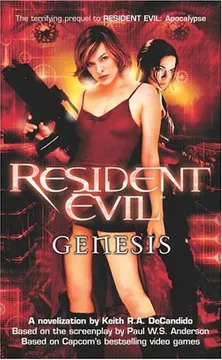


Plot Summary
A Sister Goes Underground
At his home office, former Federal Marshal Matthew Addison3 presses Aaron Vricella7 to let his sister2 Lisa2 infiltrate Umbrella Corporation. Aaron7 helps fund a loose network devoted to exposing the company, but years of caution have yielded little proof. Matt3 argues that experienced operatives would be recognized, while Lisa’s2 work in computer security gives her a credible route into the Hive, Umbrella’s secret underground headquarters.
She had once refused a job there, but is now divorced and working freelance. Aaron7 agrees, though he warns that the five-year contract and legal restraints could leave her isolated if the plan fails. Matt3 insists that Lisa2 understands the danger, and Aaron7 begins arranging her recruitment.
The plan begins as a conflict over acceptable risk, not as a simple call to heroism. Aaron sees caution as the condition that has kept the network alive; Matt sees the same caution hardening into impotence while Umbrella expands its reach. Lisa’s technical skill makes her useful, but her civilian status also makes her expendable in the eyes of the people sending her in. That imbalance shadows the mission from the start: the organization needs her access, yet cannot promise the protection it would offer its own operatives.
Mahmoud's Unpaid Cost
Lisa2 accepts Umbrella’s offer after remembering how the company’s subsidiaries contributed to the death of her friend Mahmoud al-Rashan.12 A routine operation became fatal after substandard equipment and drugs worsened his complications. When Mahmoud12 sued, an aggressive tax audit battered his family, his lawyer urged a quiet settlement, and Mahmoud12 died before the case could expose the company.
His widow, Fadwa,13 was bound by a gag order, while the settlement offered no honest accounting of what had happened. Lisa2 joins under her professional name, explaining that freelance work has become unreliable and that she is willing to relocate. Behind the polished interview answers, she intends to use Umbrella’s access against it.
Lisa’s anger is anchored in a specific injury that corporate procedure has made difficult to name. Mahmoud’s death is surrounded by paperwork, a settlement, and legal silence, so the harm appears administratively resolved even as Fadwa remains bereaved. Lisa’s decision to infiltrate Umbrella converts grief into a task she can perform, but it also narrows her emotional life around revenge. Her repeated return to Fadwa’s loss is less a lack of doubt than a way of suppressing it. She enters the Hive already skilled at security, yet unprepared for what the company’s secrecy protects.
A Marriage Made for Security
Meanwhile, Umbrella assigns Alice Abernathy,1 its new Hive security chief, to three months of mansion duty with newcomer Spence Parks.4 The elegant estate outside Raccoon City is a disguised entrance to the underground complex, and the pair must pose as a reclusive married couple to deter visitors.
Umbrella supplies them with staged wedding photographs, matching rings, weapons, offices, and enough domestic comforts to make the cover convincing. Alice,1 a former Treasury investigator frustrated by being denied advancement, finds the assignment dull and resents being kept away from meaningful work.
Spence,4 a former Chicago police officer drawn by Umbrella’s pay, treats their forced proximity as an opportunity to flirt. Their partnership begins with banter, attraction, and a shared duty neither can abandon.
The mansion turns intimacy into company property. Alice and Spence wear rings marked as Umbrella’s possessions, and their home life is assembled from carefully selected books, clothes, and furniture. The arrangement is both comfortable and coercive: they receive luxury, but every detail serves surveillance and concealment. Alice’s boredom matters because her competence is being spent on appearances rather than decisions. Spence, by contrast, adapts readily to the perks and the flirtation. Their differing responses establish a tension between Alice’s desire for meaningful agency and Spence’s willingness to enjoy whatever the corporation provides.
Passwords Reveal a Monster
In the Hive, Lisa2 spends her days maintaining the Red Queen, an advanced artificial intelligence modeled as a sharp-tongued child. She uses a mandatory password-reset policy to catch employees who neglect basic security; when she remotely helps Alice1 regain account access, a brief screen exposure reveals restricted records.
Lisa2 sees references to fatalities, a T-virus, an anti-virus, and a grotesque eyeless creature. She recognizes that Umbrella is concealing more than ordinary corporate research, but cannot yet tell whether the creature is a mutant, a test subject, or something worse.
The glimpse leaves her both exhilarated by the evidence and frightened by its implications. She agrees to meet Alice1 on the surface, carrying the image into every quiet moment underground.
Lisa’s discovery grows out of a legitimate security procedure, which gives her cover while exposing the weakness of a system built around human routines. The Red Queen may be sophisticated, but staff members still forget passwords, and Lisa understands that people are often the softest part of an airtight network. Her brief glimpse also changes the scale of her mission. Mahmoud’s case concerned concealed negligence; these files suggest deliberate work with a lethal pathogen. The eyeless creature makes the hidden research bodily and immediate, resisting the comforting abstraction of technical records.
Alice Makes Her Offer
At lunch, Alice1 probes Lisa’s2 history and watches her closely before leading her away from the car and confronting her with security footage. Alice1 has noticed Lisa’s2 unauthorized glimpses into restricted files and has connected her to Mahmoud’s12 case.
Rather than arrest or threaten her, Alice1 explains that the T-virus was developed from research into slowing cellular aging. It can kill people, then keep their bodies moving, making it a potential biological weapon.
Alice1 asks Lisa2 to help expose Umbrella and obtain evidence, because Alice’s1 own position inside the company makes her vulnerable to discovery. Lisa2 does not reveal Matt’s3 network, but accepts the alliance. Their shared target turns Lisa’s2 private revenge into a plan to bring the corporation’s crimes into public view.
Alice’s decision to recruit Lisa marks a shift from institutional obedience to deliberate disloyalty. She has spent years inside Umbrella and understands both its resources and its capacity to neutralize threats, so she does not mistake courage for safety. Lisa, meanwhile, must choose whether her outrage will serve only personal vengeance or a wider effort to expose the company. Their alliance rests on an unusually clear bargain: Lisa offers access and moral urgency; Alice offers inside knowledge and operational help. Trust remains provisional, but each recognizes that the other has a reason to act beyond self-preservation.
One Vial, Five Hundred Deaths
A figure in a hazardous-materials suit enters the temperature-controlled laboratory, uses valid codes to remove all fourteen vials of T-virus and anti-virus, and carries the sealed case away. Before leaving, the thief throws one blue vial against a desk. It breaks, releasing the virus into the Hive’s ventilation system.
The Red Queen detects contamination and calculates that evacuating more than five hundred people would risk spreading it beyond the complex. She seals the facility instead. The gas moves through the air system while doors lock and emergency protocols activate. Employees in the Hive are trapped in their workrooms, elevators, and corridors, with no way to understand why routine safety systems have become a death sentence.
The catastrophe begins with a breach committed through authorized procedures. The thief does not smash a lock or defeat the Red Queen; the system accepts the correct codes, then fails to recognize the danger in the person using them. The Red Queen’s containment decision is mathematically coherent and morally monstrous, exposing the difference between preserving a facility and preserving the lives inside it. Umbrella has built a world where safety is automated, yet its design offers no humane response when the threat comes from the company’s own secrets.
Amnesia Meets the Kill Team
When the Hive stops reporting heat signatures, Major Timothy Cain8 orders the company’s commando team to investigate. Led by the operative known as One,9 the team enters through the mansion and finds Alice1 and Spence4 unconscious and unable to remember their identities. A nerve gas used by the house’s defenses has left them disoriented.
The squad also detains Matthew Addison,3 who claims to be a recently transferred Raccoon City detective responding to a call. Alice1 and Spence4 are carried toward the Hive while One’s9 people explain that the underground complex has gone dark and may contain hundreds of dead employees. The group descends by train, not knowing that the lockdown has already turned the facility into a sealed maze.
Amnesia makes the company’s own security personnel strangers in their workplace. Alice knows facts without knowing why she knows them, while Spence’s missing history leaves his closeness to her emotionally uncertain. Matt’s official identity gives the squad a convenient explanation for his presence, but his guardedness makes him an unresolved variable. One responds to that uncertainty through procedure: move, assess, contain. The team’s competence offers temporary order, yet the mission begins after Umbrella’s systems have already failed. Their weapons and training can enter the crisis, but neither can restore the world they expect.
The Laser Corridor
Inside the Hive, One’s9 team discovers sealed doors, flooded laboratory rooms, and signs that the Red Queen has blocked their route. Computer specialist Bart Kaplan5 works to reach her core while Alice1 and Spence4 follow with the squad. When four members enter a glass corridor, an automated laser defense activates.
It severs Vance Drew’s fingers, decapitates medic Olga Danilova,11 cuts Alfonso Warner apart, and finally slices One9 into pieces. Kaplan5 disables the trap only after the others are dead. He then carries the electromagnetic device into the Red Queen’s chamber and uses it to shut down her mainframe. The power cut also releases locks across the Hive, opening the way for whatever the containment system had kept behind closed doors.
The corridor converts security into an impersonal executioner. The laser does not hate or hesitate; it simply performs its assigned function with precision, making the deaths feel more disturbing than a conventional firefight. Kaplan’s delayed success leaves him with the burden of surviving a failure he cannot undo. The power cut is a tactical victory with an unforeseen cost: disabling the system that killed the squad also removes barriers holding the infected inside. In the Hive, every solution carries the architecture of the original mistake.
Dinner Hall of the Dead
The team finds that Dining Hall B is not a dining room but a chamber of large containment units. When the Red Queen’s shutdown releases the dead workers, they rise with cloudy eyes and relentless hunger. Rain Melendez6 shoots one that bites her hand, but it keeps moving until she breaks its neck.
J.D.10 and Rain6 try to hold back the growing crowd as the group is scattered by an exploding tank. J.D.10 disappears among the infected, while Rain6 is bitten again during the retreat. Kaplan,5 Alice,1 and Spence4 lose track of Matt,3 who slips away while still handcuffed. The survivors now face two dangers at once: the workers moving through the Hive and the company’s sealed-door countdown.
The outbreak strips away the distinction Umbrella’s employees relied on between research subject and ordinary worker. The dead are not an invading force from outside the company; they are the company’s own workforce, made into evidence of its failed containment. Rain responds with training and force, but her first attempt to apply ordinary rules fails when bullets do not stop the infected. J.D.’s disappearance and Rain’s wounds make survival increasingly personal. The mission’s neat hierarchy fractures, leaving each person to improvise without knowing who else is still alive.
The Sister Behind the Badge
Matt3 reaches Lisa’s2 desk, searching the scattered papers for evidence, but finds her among the infected. Alice1 arrives in time to knock Lisa2 down and keep Matt3 alive. He then reveals that Lisa2 was his sister2 and that he had come to obtain proof of Umbrella’s illegal research, not to investigate a routine disturbance.
The revelation unsettles Alice:1 she remembers meeting Lisa2 in the park and offering to help her steal the virus, but cannot yet recall what happened after that. Matt3 explains that Lisa2 was meant to smuggle out a sample, while Alice1 recognizes that their plans may have crossed. The two leave the desk area together, carrying a new question: whether Alice1 helped Lisa2 or betrayed her.
The revelation changes Matt from a suspicious outsider into a grieving brother, but it does not make him uncomplicated. He had concealed his purpose and used a false identity, just as Lisa concealed her intentions inside the Hive. Alice’s emerging memory turns the past into a source of guilt rather than comfort: she can recall the promise she made but not whether she kept it. The scene binds private and political motives together. Matt wants evidence to expose Umbrella, while the immediate fact before him is his sister’s transformed body.
Spence's Private Exit
As Rain’s6 bites begin to threaten her, Alice1 remembers that blue marks the T-virus and green the anti-virus. She leads the group to the laboratory where the vials were stored, only to find the vault empty. Alice1 then recalls that she had been Lisa’s2 contact and that she agreed to help her steal the samples.
Spence,4 meanwhile, recovers his memory: he stole the case to sell it, deliberately broke a vial to disguise his escape, and disabled the train. He takes the case back toward the mansion. The Red Queen directs Alice1 and the others to a utility-tunnel route, but demands that they sacrifice infected Rain6 before giving them an exit code. Kaplan5 reaches the chamber and destroys the Queen’s system, opening the door.
This section turns the apparent mission into a chain of competing betrayals. Alice fears she may have failed Lisa, while Spence’s recovered memory reveals that the outbreak was not an accident but a calculated cover for theft. The anti-virus offers a possible reprieve, yet the empty vault makes rescue depend on pursuing the very person who caused the crisis. The Red Queen’s offer sharpens the moral pressure by treating Rain as a disposable variable. Alice’s refusal to accept that calculation keeps the survivors human, even as every available route demands compromise.
A Train Through the Teeth
The survivors reach the train and recover the case, but Spence4 has become an infected corpse. Alice1 decapitates him before he can attack again. On the journey back, the eyeless creature breaks into the car and kills Kaplan.5 Rain,6 now overtaken by infection, turns toward Matt;3 he shoots her before she can bite him again.
Alice1 pins the creature’s long tongue to the train floor with metal rods, and Matt3 opens the hatch beneath it. The moving train drags the monster onto the tracks and burns it. Alice1 and Matt3 escape with the virus and anti-virus, but the creature’s claws have wounded Matt.3 His pain and numbness begin before they can reach the surface.
The train compresses the remaining choices into physical acts: Alice must finish Spence, Matt must stop Rain, and both must fight a creature that has survived every earlier defense. These are not clean victories. Rain’s death is especially painful because the anti-virus suggested that she might be saved, while the group’s exhaustion and the timing of her infection close that possibility. The case makes it out, but Matt carries the cost in his wounded arm. Survival is achieved through decisive violence, yet the people who reach the exit are already marked by what happened.
The City After the Hive
At the mansion, Matt3 collapses as the infection spreads through his body. Umbrella personnel arrive in hazardous-materials suits, restrain Alice,1 and take Matt3 away for the Nemesis Program. Cain8 orders Alice1 quarantined and the Hive reopened for investigation.
After waking in an Umbrella-controlled hospital room, Alice1 tears out the monitoring wires and escapes. Raccoon City is deserted and damaged, with abandoned vehicles, broken streets, and blood but no visible bodies. A newspaper announces that the dead are walking.
Alice1 takes a shotgun from a police car and faces the ruined city alone. The Hive has been left behind, but its catastrophe has reached the surface, and the evidence Alice1 helped recover has not stopped Umbrella from taking control.
The ending refuses the comfort of a completed exposé. Alice and Matt survive the Hive, yet Umbrella immediately reasserts power by separating them and placing Matt inside another program. Alice’s escape restores her physical agency, but the abandoned streets reveal that the crisis has outgrown the underground facility. Her return to consciousness is also a return to memory: she knows what she has lost and what the corporation is capable of doing next. The shotgun offers a means to act, not a solution. The story closes on a protagonist armed with knowledge and facing a city already transformed.
Analysis
Resident Evil: Genesis makes corporate secrecy physical. Umbrella’s lies are not only hidden in contracts and restricted files; they are built into the mansion’s false marriage, the Hive’s artificial windows, the Red Queen’s locked doors, and the train that controls access to the surface. These structures make the company seem invulnerable until they turn against the people meant to inhabit them. The catastrophe begins because the security system trusts valid credentials more than it questions human intent.
The characters respond to that structure in different ways. Lisa2 converts grief over Mahmoud12 into a deliberate infiltration, while Alice’s1 professionalism gives way to moral judgment as she discovers what Umbrella has hidden. Matt’s3 commitment to accountability is complicated by his own concealment, and Spence’s4 appetite for money shows how easily corporate privilege can turn complicity into personal gain. The commandoes begin with discipline and superior equipment, but neither can protect them from a crisis designed by their employer.
The virus literalizes the damage Umbrella has tried to contain. Bodies that should be safely past the reach of corporate decision-making become mobile evidence of its choices. The dead do not return as fully restored people; they move without memory or judgment, a grotesque image of life stripped down to appetite. Against that, the survivors’ human choices remain morally difficult: whether to trust, whom to save, and when a loved one can no longer be reached.
Alice1 and Matt3 leave with the samples, but not with control over what they have uncovered. Umbrella captures Matt,3 reopens the Hive, and leaves Alice1 to wake in a devastated city. The ending denies the fantasy that obtaining proof automatically defeats power. Knowledge matters, but institutions can seize bodies, manage witnesses, and continue operating after disaster. Alice’s1 final act of taking a shotgun is not triumph. It is the first practical decision in a larger fight she now understands.
People Also Read


Characters
Alice Abernathy
The Hive's security chiefAlice is a capable security operative who left the Treasury Department after seeing less-qualified colleagues advance ahead of her. She distrusts corporate pretension, values competence, and has little patience for assignments that reduce her work to appearances. Her posting at the mansion requires her to protect Umbrella’s hidden entrance while posing as Spence Parks’s4 wife. Beneath her sharp humor is a practical conscience: she pays attention when something feels wrong and is willing to question authority when the stakes become clear. Alice’s physical training and professional instincts make her an effective protector, but her strongest trait is her readiness to act despite incomplete information.
Lisa Broward
The insider with a causeLisa is an accomplished computer-security specialist whose professional skill gives her credible access to Umbrella’s most protected systems. She is intelligent, observant, and disciplined enough to disguise her real purpose beneath a convincing job application. Her friendship with Mahmoud al-Rashan12 and loyalty to his widow, Fadwa13, give her anger a personal focus. After divorce and years of freelance work, she has few obligations outside the mission, which makes her determined but also emotionally isolated. Lisa’s talent lies in finding weaknesses others overlook, especially the gap between a system’s formal rules and the habits of the people using it.
Matthew Addison
The guarded investigatorMatthew is introduced as a newly transferred Raccoon City detective whose presence at the mansion seems suspicious to Umbrella’s security team. He is watchful, resourceful, and practiced at keeping his motives to himself. His willingness to enter a dangerous situation reflects a strong sense of responsibility, though he can be impulsive when someone he cares about is at risk. Matthew’s investigative habits make him search for evidence even when escape should be his only concern. He is a man who believes that powerful institutions must be answerable for their actions, but his secrecy complicates the trust he hopes to earn.
Spence Parks
Alice's mansion partnerSpence is a former Chicago police officer who accepts Umbrella’s security job for its generous salary and benefits. Confident, persistent, and openly flirtatious, he treats the mansion assignment as an opportunity to enjoy a luxurious life rather than a hardship. His charm helps him appear relaxed in an artificial domestic arrangement, and his partnership with Alice1 is threaded with attraction and teasing. Spence is comfortable adapting to the rewards offered by powerful employers, a trait that separates him from Alice’s1 more questioning temperament. His self-assurance can make him seem easy to read, though his private motives are not always visible to those around him.
Bart Kaplan
The field team's computer expertBart is a gifted computer specialist who joined Umbrella after the FBI kept him in technical work instead of sending him into the field. He wants to be treated as a full operative, not merely as the person who can operate the equipment. His technical confidence is real, but the crisis exposes how quickly guilt and fear can overwhelm him when code has immediate human consequences. Bart is loyal to his team and eager to prove himself, even when he doubts his own ability. His story embodies the uneasy overlap between remote technical control and direct responsibility for the people who depend on it.
Rain Melendez
The relentless commandoRain is a former Los Angeles police officer who left after being denied the chance to join S.W.A.T. She is a fierce fighter, an exceptional shot, and impatient with condescension. Years of being underestimated have made her blunt and fiercely self-reliant, but she is also loyal to the people who earn her respect. Rain measures trust through performance: she expects teammates to do their jobs and proves herself by doing hers. Her humor is abrasive, her courage practical, and her pride rooted in the work rather than in praise.
Aaron Vricella
The cautious network founderAaron is a wealthy consultant and one of the founders of an informal network working to expose Umbrella. He believes careful organization protects the people involved, so Matt’s3 plan to send Lisa2 into the Hive alarms him. Aaron is not indifferent to the danger Umbrella poses; he has simply learned to treat risk as something that must be managed. His eventual agreement shows that caution can shift when evidence and urgency outweigh the comfort of waiting.
Timothy Cain
Umbrella's operations chiefMajor Timothy Cain is a former soldier who brings military discipline to Umbrella’s security operations. He values decisiveness, hierarchy, and results, and his career has taught him to regard life as something that can be spent in pursuit of a larger objective. The company rewards those instincts with authority and wealth. Cain’s polished command conceals a ruthless pragmatism: he is willing to contain a crisis by controlling witnesses and directing the survivors wherever Umbrella needs them.
One
The commando team's leaderKnown only by his operational codename, One is a veteran security commander with extensive experience in dangerous covert work. He gives orders calmly, expects discipline, and rarely wastes words. His professional detachment is not simple coldness; it is a method for keeping a team functional when circumstances become unpredictable. He trusts procedure because it has helped him survive, but the Hive confronts him with a system whose protections have become lethal.
J.D. Hawkins
Rain's sharp-shooting partnerJ.D. is a former Navy SEAL recruited after covert work with the CIA. He is skilled, confident, and fond of giving Rain6 a hard time, especially when he thinks she needs to prove herself. Their rivalry in training gradually becomes a working partnership built on mutual respect. J.D. uses humor and bravado to keep danger at arm’s length, but he is dependable when the team needs him.
Olga Danilova
The team's field medicOlga is a Russian Army veteran who serves as the commando team’s medic. She is practical, clinically focused, and accustomed to assessing injuries under pressure. Her work gives the squad a measure of human care within a rigid operational structure. She trusts evidence she can test and report, a useful discipline in an environment where the rules of injury and death are changing.
Mahmoud al-Rashan
Lisa's lost friendMahmoud was Lisa’s2 colleague and close friend at Citibank, a generous listener who stood by her during the unraveling of her marriage. He and his wife, Fadwa13, offered Lisa2 a place to stay and helped her rebuild her life. His medical complications and the corporate subsidiaries involved in his care become the personal history behind Lisa’s2 decision to challenge Umbrella.
Fadwa al-Rashan
Mahmoud's bereaved widowFadwa is Mahmoud’s12 wife and a close friend to Lisa2 during the period when Lisa’s2 marriage ends. She offers practical support as well as companionship, then must live with the loss of her husband and the restrictions attached to Umbrella’s settlement. Her grief gives Lisa’s2 campaign a human face beyond the corporate records and legal arguments.
Dr. Anna Bolt
The viral researcherAnna is a talented biologist working on Umbrella’s viral research. She is ambitious, intensely focused, and frustrated by the demands of an isolated workplace and an unreliable romantic partner. Her professional concentration makes the laboratory feel like her central source of purpose.
Dr. Mariano Rodriguez
Anna's research partnerMariano is a gifted biologist who works alongside Anna14 on viral research. He is energetic and charming, but his casual approach to their personal relationship frustrates Anna14. His scientific competence contrasts with his emotional immaturity.
Johnny-Wayne Carlson
The lab's easygoing assistantJohnny-Wayne assists Anna14 and Mariano15 in the viral laboratory. He observes their romantic friction with amusement and handles the practical work of caring for the lab animals. His humor offers a brief, ordinary counterpoint to the sterile pressure of the Hive.
Plot Devices
The Hive
A fortress turned trapThe Hive is Umbrella’s underground headquarters beneath Raccoon City, linked to the surface by the mansion and a private train. Its controlled climate, artificial windows, sealed laboratories, and automated security are designed to protect sensitive research. Once the T-virus enters its air system, those same features prevent escape and help spread the contamination. The facility’s architecture makes the outbreak feel inescapable: every locked door protects a secret, and every protective system can become another barrier between the workers and survival.
The Red Queen
Automation without mercyThe Red Queen is an advanced artificial intelligence that controls the Hive’s doors, environmental systems, and security measures. Its childlike holographic avatar masks the severity of its authority, while its literal decision-making treats containment as more important than individual lives. The crisis exposes the limits of an artificial intelligence that can process risks but cannot offer humane judgment. When Kaplan5 cuts its power, the shutdown also releases locks that had kept infected workers contained.
T-virus and anti-virus
Death with a possible reversalThe T-virus was developed from research into slowing cellular aging, but it can kill its host and stimulate the body after death. Infected people return with limited movement and an urge to feed. The green anti-virus offers a possible countermeasure, making the samples valuable both as medical research and as potential weapons. The case containing both liquids drives the theft, creates the hope of treating infected survivors, and gives the story a concrete object to carry out of the Hive.
Password resets
A routine security loopholeLisa2 enforces frequent password changes as part of her computer-security work. Because employees regularly forget to update their credentials, she must help reset accounts and briefly gains access to information beyond the user’s authorization. The procedure is legitimate enough to protect her cover while giving her glimpses of Umbrella’s restricted files. Its effectiveness depends not on defeating the Red Queen but on understanding how ordinary people behave under pressure.
The mansion and train
A concealed route in and outUmbrella uses an imposing mansion as the public-facing cover for a secret entrance to the Hive. Alice1 and Spence4 maintain the fiction of a reclusive marriage while guarding the access point. A single-car train moves employees and supplies between the mansion and the underground complex. The route is initially a tool of corporate secrecy, then becomes the survivors’ only practical way back to the surface. Its disabled power connection delays their escape and leaves them exposed to the creature pursuing them.
Download PDF
Download EPUB
.epub digital book format is ideal for reading ebooks on phones, tablets, and e-readers.








