

Key Takeaways
Protect the purpose, not the old arrangement
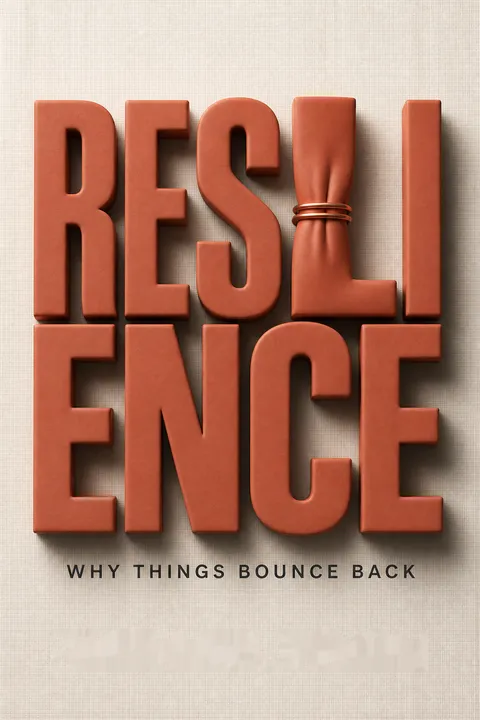
Resilience means continuity. Zolli and Healy define resilience as the capacity of a person or system to keep its core purpose and integrity under radically changed conditions. That does not always mean returning to the old normal. A resilient system may need to reorganize while continuing to do what matters. The aim is to resist harmful thresholds and preserve options if circumstances change anyway.
Follow the hidden chain. In 2007, corn prices in Mexico soared after Hurricane Katrina disrupted Gulf oil production. Higher fuel prices helped make corn-based ethanol more attractive, diverting crops from food and linking corn prices to oil. Trade concentration and poverty magnified the effects. The episode shows why resilience requires seeing connected systems together, not treating each crisis as an isolated surprise.
The distinction between purpose and arrangement is useful wherever people confuse stability with sameness. A hospital can preserve care while changing how it delivers it; a community can retain its identity while adapting its economy. The difficult question is who gets to define the core purpose. A system may preserve its own continuity while imposing costs on people with less power, so resilience assessments need to ask not only what survives, but for whom.
A system can survive yesterday's shocks and still be built to fail
Robust-yet-fragile systems. The book uses this term for systems designed to handle expected disruptions but vulnerable to threats their design did not anticipate. A carefully spaced tree farm may resist fires, yet its roads could help an invasive beetle spread. Each protective design solves some problems while creating possible weaknesses elsewhere.
Success can conceal fragility. Jamaica's reefs endured hurricanes and decades of fishing, but overfishing had removed many algae-eating fish. When disease then wiped out most sea urchins, algae spread across the reef and killed the coral. The financial system showed a similar pattern: it absorbed earlier shocks, then a central institution's failure helped freeze credit. Normal performance is not proof that a system can withstand an unfamiliar shock.
This is a warning against judging safety by recent performance. A bridge that has handled ordinary loads may still have an untested failure mode; a company that repeatedly meets quarterly targets may be consuming its buffers. The challenge is that exhaustive testing is impossible, and adding safeguards can introduce new complexity. A useful review therefore asks which assumptions the system depends on, who notices when those assumptions stop holding, and how damage can be contained.
Design for rerouting, not just stronger parts
Build for interruption. Resilient systems use feedback to detect trouble, modular parts that can be rearranged, and connections that let components separate when a failure threatens to spread. Herb Simon's watchmaker parable makes the value of modularity vivid: one watchmaker assembled watches in pieces that could be preserved between interruptions, while another had to restart each watch after every interruption. Even brief interruptions sharply favored the modular approach.
Make the grid more adaptable. The 2003 North American blackout began with a power line brushing against trees, but alarm software failed and operators lacked compatible, timely information. The proposed smart-grid approach adds sensors, anticipates problems, and allows sections to isolate themselves. Small local microgrids could also keep power flowing when the larger network is disrupted.
Modularity is more than a technical property. It is a way to limit how far one mistake, outage, or bad decision can travel. The same logic applies to organizations that distribute authority and maintain workable local backups. Yet decentralization is not automatically safer: local units still need shared standards and reliable communication. The design problem is to make parts independent enough to contain damage, but compatible enough to cooperate when the whole system needs them.
Keep diversity and spare capacity, even when they look wasteful
Preserve unused options. Diversity gives a system more than one way to perform an essential task. On a healthy reef, parrotfish and other grazers keep algae in check. Researchers also found that batfish, normally not algae eaters, fed on algae after reefs shifted toward an algae-dominated state. Such rarely used capacities are a reserve, not pointless excess.
Expect a carrying cost. The Swiss WIR business network, a complementary currency, expanded during recessions and contracted during booms, cushioning swings in business activity. Cities also benefit from dense mixtures of people, skills, and ideas, which create opportunities for new industries. The book describes systems as moving through growth, conservation, release, and reorganization. Efficiency can accumulate during growth, but over-optimization may make the system less able to adapt when conditions change.
A reserve is easy to dismiss when it is idle, which makes it politically and financially vulnerable in calm periods. The value of diversity is often not higher output today, but having a different response available when today's method fails. Still, diversity alone does not guarantee resilience: disconnected parts may not coordinate, and maintaining options consumes resources. The practical task is to identify which kinds of backup capacity are valuable enough to protect, and to make their public benefit visible.
Treat resilience as ordinary capacity, then practice attention
Most people adapt. In a study following older adults after a spouse's death, psychologist George Bonanno found several patterns of response. About 46 percent showed resilient functioning, while a small group experienced delayed grief. Resilience did not mean feeling no sadness; it meant maintaining a sense of purpose and the ability to function. The Lingfield children, Holocaust survivors raised in an orphanage, also showed sharply different outcomes despite shared early adversity.
Train the mind's attention. The book presents mindfulness as a learnable practice, including focused attention and open, nonjudgmental awareness. A study of beginners reported measurable brain changes after an eight-week program. These findings are promising, not proof that meditation prevents trauma or replaces therapy. Social ties, personal beliefs, genes, and circumstances also shape how people respond.
The population view corrects the assumption that trauma inevitably produces lasting disorder, without minimizing those who need substantial support. It also shifts the question from whether a person is resilient to which supports help that person function. Mindfulness is attractive partly because it is portable, but access to time, safety, and instruction is not equally distributed. A practice should be offered as one possible tool, not as a test of character or a substitute for professional care.
Make cooperation reciprocal, visible, and ready before the emergency
Trust takes structure. In Robert Axelrod's computer tournament of repeated Prisoner's Dilemma games, Tit for Tat began cooperatively, matched the other player's previous move, and resumed cooperation when the other side did. A later experiment found that a more forgiving strategy could work better when players sometimes made mistakes. The lesson is not that trust solves every conflict, but that predictable reciprocity can make cooperation viable.
Connect before crisis. After Haiti's 2010 earthquake, Mission 4636 linked text messages from Haitians to translators, volunteer mappers, and emergency responders. The network processed more than 100,000 messages, with response times eventually under two minutes. Its reach depended on existing relationships, open software, and people who could recruit others into useful tasks. The effort also exposed coordination gaps, information overload, and questions about verifying reports.
Mission 4636 shows how a shared purpose can coordinate people who have never met, provided tasks are clear and contributions matter. It also shows why informal networks need interfaces with established responders: speed is of little use if information cannot be acted on. Trust is therefore not merely a warm feeling. It depends on credible conduct, understandable roles, and feedback that participants can see. A network that cannot acknowledge errors or distribute credit may lose cooperation even after an impressive response.
Protect dissent because similar minds miss the same danger
Different thinkers find different routes. The book calls the useful variation in how people interpret problems cognitive diversity. In studies of scientific laboratories, teams with varied expertise used broader analogies to solve unexpected problems. A team of specialists working in one narrow field could remain stuck while a more mixed team found a solution quickly. Diversity helped most when members still shared a goal and could explain their methods to one another.
Give challenge a role. At Red Team University, military officers trained to question assumptions and offer alternative cultural perspectives to commanders. Their task was not to obstruct decisions, but to surface possibilities that a cohesive group might overlook. This kind of challenge can be uncomfortable, especially in hierarchical organizations, so it requires credibility and tact as well as permission to disagree.
A team can be highly talented and still be collectively blind when its members share the same assumptions. Cognitive variety enlarges the range of explanations under consideration, but it imposes a coordination cost: people must translate between specialties and resolve differences. The strongest argument for dissent is not that the dissenter is always right, but that a decision tested against serious alternatives is less dependent on confidence alone. Leaders must reward useful challenge before a crisis makes it urgent.
Safety rules can move danger rather than remove it
People adjust to protection. Risk compensation describes how people may take greater risks when safeguards make an activity feel safer. The book recounts how the Davy lamp allowed miners to work in more methane-rich conditions, potentially offsetting some of the protection it offered. Research on road safety and other settings is presented as evidence that behavior can change in response to perceived risk, though the size and direction of that effect vary.
Culture can normalize shortcuts. BP experienced repeated safety failures before the Deepwater Horizon disaster. Cost pressure and management practices made risky decisions seem routine, while workers' warnings did not carry enough weight. The episode shows why a safety device or rule cannot substitute for a culture that reports hazards, investigates near misses, and resists the gradual normalization of dangerous exceptions.
The insight is not an argument against safety measures. It is a reason to evaluate the behavior and incentives that follow their introduction. A guardrail can prevent injury while also changing how people drive, work, or assess danger. Organizations should therefore measure outcomes, not just compliance, and examine whether production pressure makes warnings costly to raise. Risk compensation is a useful hypothesis, but it should not be treated as a universal law that excuses preventable harm.
Design interventions with communities, not for them
A label is not access. Bangladesh's tube wells reduced childhood deaths, but many contained arsenic. Officials painted contaminated wells red and safe ones green. The warning often failed to account for who collected water, whether women could reach another well, or how stigma would affect families. Some people removed red paint or returned to unsafe sources. In some areas, switching to contaminated surface water increased other health risks.
Embed the response locally. Chicago's CeaseFire program used neighborhood outreach workers and violence interrupters, many with deep local credibility, to identify conflicts and mediate before shootings escalated. It treated violence as a pattern that could spread through social relationships and norms. The contrast is instructive: a technically clear message may fail when daily constraints are ignored, while a locally embedded intervention can adapt to relationships as they change.
The Bangladesh case exposes the gap between an intervention's measurable output and its real-world outcome. Wells tested and labels applied are easy to count; safe water actually reached without social harm is harder. Community participation is not ceremonial consultation. It is a way to discover constraints, incentives, and unintended consequences that outside planners may miss. Local knowledge cannot fix every shortage of resources or political failure, but excluding it makes even well-intentioned engineering less reliable.
Build trusted bridges, useful data, and room to improvise
Connect what is separated. Palauan leader Noah Idechong helped bring fishermen, divers, scientists, village chiefs, and government into shared conservation efforts. He joined traditional fishing moratoria with formal laws and helped make tourism's benefits tangible to local communities. His role illustrates translational leadership: building relationships across groups with different authority, knowledge, and interests, rather than relying only on orders from the top.
Prepare without scripting everything. The book calls improvised, temporary collaboration among formal organizations, informal networks, and individuals an adhocracy. Shared data can help such groups detect needs and coordinate, but it must be usable and protected against misuse. After Katrina, Hancock Bank handed small cash loans to residents, including noncustomers, on simple written promises. Local trust and a clear service purpose let staff act when normal procedures no longer fit.
The examples point toward a form of leadership that builds the conditions for collective action rather than trying to control every move. Bridges make knowledge travel; data helps people coordinate; discretion lets them respond to circumstances that no plan anticipated. This approach still needs accountability. Informal action can exclude quieter groups, mishandle sensitive information, or depend too heavily on a charismatic connector. Resilient networks need many people capable of connecting others, not a single indispensable hero.
Analysis
The book's central contribution is to treat resilience as a design problem across scales. A person, reef, power grid, financial market, or neighborhood is not resilient because it is invulnerable. It is resilient when it can preserve a valued function while absorbing disturbance, limiting cascades, and reorganizing when circumstances no longer support its previous form. This framing makes apparently unrelated stories comparable: the algae-choked Jamaican reef, the interconnected banks of 2008, and the improvisational response to Haiti's earthquake all involve dependencies, feedback, and the loss or preservation of alternatives.
The most useful tension is between efficiency and adaptability. Buffers, diversity, modularity, redundancy, and local autonomy consume resources in ordinary times. Their benefits are contingent and often invisible until a shock arrives. That creates a political problem, not merely an engineering one: institutions reward near-term measurable gains, while resilience protects against uncertain future costs. The book makes a strong case for considering those costs, but its tools are principles rather than a universal formula. A modular system can isolate necessary cooperation; dense networks can spread contagion as well as information; diversity can slow decisions; and decentralization can diffuse accountability.
The human stories sharpen the argument by showing that resilience is not imposed by technology alone. Mission 4636 depended on communication infrastructure and trust; CeaseFire depended on local credibility; Palau's conservation work joined science with traditional authority. In each, relationships determined whether technical capacity could be used. The implication is that system maps should include power, incentives, and social legitimacy, not just material flows.
Resilience is also morally neutral. A harmful organization can adapt effectively, and a community can survive by placing the burden on its least powerful members. A serious resilience assessment therefore asks what purpose is being preserved, whose losses count, and whether adaptation expands meaningful choices. The book's strongest practical message is not to predict every shock, but to build systems able to notice, contain, learn, and change without abandoning the people they are meant to serve.
Review Summary
Resilience received mixed reviews, with an average rating of 3.63 out of 5. Some readers praised its broad scope and thought-provoking ideas on system adaptability, while others found it disjointed and overly academic. Positive reviews highlighted the book's insights on building resilient systems and individuals, diverse examples, and relevance to current issues. Critics felt it lacked focus, contained too many anecdotes, and failed to provide clear guidance. Despite mixed opinions, many readers found value in the book's exploration of resilience across various domains.
People Also Read










Glossary
Resilience
Continuity through changeThe capacity of a person, organization, or system to maintain its core purpose and integrity under dramatically changed circumstances. Resilience may involve recovery, but it does not require a return to the original state. A resilient system can reorganize, adapt to a new environment, and continue fulfilling its essential function.
robust-yet-fragile (RYF)
Strong against expected threatsA system property in which a design handles familiar or anticipated disruptions well but remains vulnerable to unexpected threats. Protective features can create new weaknesses, and accumulated complexity may conceal them. The concept explains why a system can appear dependable through repeated ordinary shocks and still fail abruptly under a different kind of pressure.
adaptive capacity
Ability to adapt and functionThe ability of a person or system to adjust to changed circumstances while continuing to fulfill its core purpose. It includes resisting harmful thresholds and preserving a range of viable alternatives if those thresholds are crossed. Adaptive capacity depends on what resources, skills, relationships, and ways of operating remain available.
adaptive cycle
Growth, release, renewalA model describing four recurring phases in many living and social systems: rapid growth, conservation of accumulated resources, release through disturbance or collapse, and reorganization. As resources become tightly conserved and efficiently used, a system may become less flexible. Release can clear space and resources for a new arrangement.
ecosystem-based fishery management (EBFM)
Manage fisheries as ecosystemsA fisheries approach that considers interacting species and social conditions rather than managing one target species in isolation. It monitors broader ecosystem indicators and treats biodiversity as important to system health. Unlike maximum sustainable yield models, it recognizes that changing relationships and thresholds can make apparently stable harvest levels unsafe.
sleeping functional group
Latent crisis-response capacityA species or group of species capable of performing a particular ecological function but doing so only under unusual conditions. On the Great Barrier Reef, batfish were observed eating algae after a shift toward an algae-dominated state. Their function may remain unnoticed during ordinary conditions, making their presence a form of latent capacity.
risk homeostasis
Behavior adjusts perceived riskA theory that people tend to maintain a personally or socially acceptable level of risk. When safeguards lower perceived danger in one activity, people may take more risks in that activity or elsewhere. The theory highlights feedback between protection and behavior, though the extent of compensation can vary across people and settings.
Tit for Tat
Cooperate, then reciprocateA strategy for repeated cooperation games that begins by cooperating, then responds to an opponent with the move the opponent made in the previous round. It rewards cooperation, retaliates against defection, and permits renewed cooperation when the other player changes behavior. Its performance depends on repeated interaction and sufficiently accurate interpretation of moves.
cognitive diversity
Variety in problem-solving approachesThe presence of different kinds of thinkers and reasoning styles within a group. People with varied expertise may use different analogies, identify different assumptions, and explore a wider range of possible solutions. Diversity is most useful when members share a goal and can communicate across differences in knowledge and method.
network weaving
Build bridges across groupsA process of strengthening a community by connecting separate groups and helping their members become connectors themselves. It can begin with a leader linking clusters, then develop direct ties among groups and grow into a network with multiple hubs. The aim is to improve the community's ability to share information and coordinate without relying on one central person.
adhocracy
Flexible, improvised collaborationA temporary, adaptable form of organization assembled for a particular challenge. It relies on shared purpose, specialist contributions, rapid coordination, and limited dependence on fixed procedures or rigid hierarchy. An adhocracy can bring formal institutions and informal networks together, but it still needs workable accountability, communication, and links to established systems.
translational leader
Bridge across constituenciesA leader who connects groups with different forms of authority, expertise, interests, or cultural frameworks. Rather than relying only on command, this leader translates between perspectives, builds relationships, and helps organizations and informal networks cooperate. The role can begin with personal connections but is strongest when others learn to connect independently.
FAQ
1. What’s Resilience: Why Things Bounce Back by Andrew Zolli about?
- Exploration of resilience: The book examines resilience as the ability of systems—ranging from ecosystems and economies to individuals and communities—to absorb shocks, adapt, and continue functioning amid disruption.
- Interconnected systems: Zolli uses real-world examples, such as the 2007 tortilla riots and coral reef collapses, to illustrate how complex interdependencies can lead to unexpected crises.
- Interdisciplinary approach: Insights from ecology, neuroscience, economics, and social science are woven together to reveal universal patterns and principles of resilience.
- Focus on social resilience: A significant portion of the book is dedicated to how communities and networks can build adaptive capacity to respond to crises.
2. Why should I read Resilience: Why Things Bounce Back by Andrew Zolli?
- Understanding complexity: The book provides a framework for making sense of the volatility and interconnectedness of modern life, from financial crises to natural disasters.
- Practical strategies: Zolli offers actionable advice for building resilience at personal, organizational, and community levels, making it relevant for leaders, policymakers, and individuals.
- Real-world case studies: Examples like Mission 4636 in Haiti and Chicago’s CeaseFire program show how resilience strategies work in practice.
- Holistic perspective: The book bridges disciplines, offering insights that apply to business, environment, and society.
3. What are the key takeaways from Resilience: Why Things Bounce Back by Andrew Zolli?
- Resilience is dynamic: Systems must continuously adapt, reorganize, and evolve rather than simply return to a previous state after disruption.
- Patterns of resilience: Key principles include feedback loops, modularity, diversity, and dynamic reorganization, which help systems absorb shocks.
- Social factors matter: Trust, cooperation, cognitive diversity, and strong communities are essential for social resilience.
- Leadership and networks: Translational leaders and network weaving are crucial for fostering adaptive capacity and coordinated responses.
4. How does Andrew Zolli define resilience in Resilience: Why Things Bounce Back, and how is it different from robustness or redundancy?
- Resilience vs. robustness: Robustness is about withstanding shocks without change, while resilience includes the ability to recover, adapt, and reorganize after disruption.
- Resilience vs. redundancy: Redundancy involves having backups, but resilience is broader, encompassing flexibility and transformation in response to change.
- Dynamic adaptation: Resilient systems may not return to their original state but instead evolve to meet new circumstances.
- Ongoing process: Resilience is seen as a continuous journey, not a fixed state.
5. What are the main concepts and patterns of resilience discussed in Resilience: Why Things Bounce Back by Andrew Zolli?
- Robust-yet-fragile systems: Systems optimized for efficiency can be robust to expected disturbances but fragile to unexpected shocks, as seen in financial markets and the Internet.
- Adaptive cycle: Zolli introduces the cycle of growth, conservation, release, and reorganization, explaining how systems naturally fluctuate.
- Feedback loops and modularity: Tight feedback mechanisms and modular structures help systems detect problems early and isolate failures.
- Diversity and clustering: Cognitive and resource diversity, along with dense clusters, enhance resilience by providing more options for adaptation.
6. What real-world examples does Andrew Zolli use in Resilience: Why Things Bounce Back to illustrate resilience and fragility?
- Tortilla riots and Hurricane Katrina: These events show how interconnected systems—energy, agriculture, and trade—can trigger social unrest.
- Jamaica’s coral reef collapse: Demonstrates how loss of biodiversity and overfishing led to a fragile ecosystem flipping to algae dominance.
- Mission 4636 in Haiti: Highlights how crowdsourced crisis mapping and global volunteer networks provided rapid disaster response.
- CeaseFire in Chicago: Illustrates treating violence as a contagious disease and using community members to interrupt cycles of retaliation.
7. How does Resilience: Why Things Bounce Back by Andrew Zolli explain the role of trust, cooperation, and social networks in resilience?
- Neurobiology of trust: Oxytocin increases willingness to accept social risks and cooperate, but can also reinforce in-group biases.
- Game theory insights: Strategies like Tit for Tat and Tit for Two Tats show how cooperation can emerge and be sustained, even in competitive environments.
- Enlarging the tribe: Structured social interactions can reduce prejudice and build trust across group boundaries, facilitating broader cooperation.
- Case studies: The 2008 Lehman Brothers crisis and Mission 4636 demonstrate the importance of trust and cooperation in both failure and success.
8. What is the significance of cognitive diversity and leadership in building resilience, according to Andrew Zolli?
- Cognitive diversity benefits: Teams with diverse perspectives solve problems more effectively and avoid groupthink.
- Red Team University: Training programs that encourage challenging assumptions and thinking like adversaries enhance decision-making and resilience.
- Translational leaders: Leaders who bridge cultural, organizational, and disciplinary divides are essential for weaving adaptive networks.
- Network weaving: Building connections across different groups increases a system’s adaptive capacity.
9. How does Resilience: Why Things Bounce Back by Andrew Zolli address risk, safety, and organizational culture?
- Risk homeostasis theory: People adjust their behavior to maintain a comfortable level of risk, sometimes negating the benefits of safety measures.
- Cultural risk tolerance: Organizations can develop cultures that normalize high-risk decisions, leading to disasters like the Deepwater Horizon spill.
- Building skepticism: Programs that foster critical thinking and challenge complacency are vital for managing risk in complex systems.
- Continuous assessment: Mapping fragilities and feedback loops helps anticipate and prepare for disruptions.
10. What lessons does Andrew Zolli draw from community interventions like CeaseFire and Bangladesh’s arsenic crisis in Resilience: Why Things Bounce Back?
- CeaseFire’s approach: Treating violence as a contagious disease and using trusted community members to interrupt cycles of retaliation can significantly reduce shootings.
- Bangladesh arsenic mitigation: Top-down interventions that ignore cultural norms can fail or have unintended consequences, such as stigma and continued exposure.
- Community engagement: Successful resilience interventions require deep involvement of affected communities and culturally appropriate solutions.
- Adaptive management: Ongoing, flexible approaches are more effective than one-off engineering fixes.
11. How does Andrew Zolli suggest individuals and organizations can apply resilience principles from Resilience: Why Things Bounce Back in daily life?
- Mapping vulnerabilities: Regularly assess and monitor system fragilities and feedback loops to anticipate disruptions.
- Embracing adhocracy: Flexible, decentralized structures empower specialist teams and encourage improvisation, as seen in Mission 4636.
- Leveraging data and rehearsal: Use real-time monitoring, predictive modeling, and scenario rehearsal tools to prepare for future challenges.
- Cultivating habits of mind: Optimism, hardiness, mindfulness, and social support are key traits for personal resilience.
12. What are the best quotes from Resilience: Why Things Bounce Back by Andrew Zolli and what do they mean?
- On altruism and group identity: “Altruism is characterized by strong emotion and protean allegiance. Human beings are consistent in their codes of honor but endlessly fickle with reference to whom the codes apply.” (E.O. Wilson) — Highlights the fluidity of in-group definitions and the potential to expand cooperation.
- On respect in negotiation: “Respect is an interesting element because it’s a positive-sum element. If I give you respect, I don’t have less respect for myself. In fact, you’re likely to give me more.” (William Ury) — Emphasizes respect as a low-cost, high-return strategy for building cooperation.
- On resilience as a journey: “Resilience is always, perhaps maddeningly, provisional... Every effort at resilience buys us not certainty, but another day, another chance. Every day is Day One.” — Captures resilience as an ongoing, dynamic process rather than a fixed state.
- On the challenge of resilience: The book notes that resilience requires ongoing commitment, longer-term thinking, and a willingness to embrace less-than-peak efficiency for greater adaptability.
Download PDF
Download EPUB
.epub digital book format is ideal for reading ebooks on phones, tablets, and e-readers.








