

Key Takeaways
Treat rest as part of the work, not its unpaid remainder
Work and rest cooperate. The book’s central claim is that rest is not merely time left over after work. It is a necessary partner to meaningful work, supporting recovery while giving the mind space to form ideas. Darwin’s schedule makes the point vividly: he devoted only a few hours each day to demanding scientific work, yet produced nineteen books, including On the Origin of Species. He also walked, napped, and spent time with family.
Busyness has a history. Industrial workplaces helped separate work from leisure, while modern offices reward visible activity even when it does not measure the quality of thinking. In 1897, neuroscientist Santiago Ramón y Cajal warned that the race to publish more could crowd out deep investigation. The pressure to appear busy is old; treating it as proof of value is a mistake.
The argument usefully shifts the question from whether rest is deserved to what kind of work rest makes possible. That is a powerful correction to workplaces that use hours online as a proxy for contribution. Yet the freedom to structure a day like Darwin’s has never been evenly distributed. Care work, shift schedules, and economic insecurity can make rest difficult to claim. The idea is strongest when it informs both personal routines and institutional choices, such as staffing, predictable time off, and boundaries around availability.
Protect a few hours of deep work instead of worshipping long days
Focused effort has limits. Across the book’s examples, accomplished writers, scientists, and mathematicians often did their hardest work for roughly three to five hours a day. Darwin’s concentrated work periods, Thomas Mann’s writing mornings, and mathematician G. H. Hardy’s schedule all fit this pattern. A 1951 study of scientists found that productivity did not rise steadily with hours spent at work. It peaked at roughly ten to twenty hours weekly, dipped, then rose among researchers whose work required tending equipment.
Practice needs recovery. A study of top violin students found that they practiced in focused sessions of about eighty to ninety minutes, with breaks, rather than stretching each session indefinitely. Their demanding practice was supported by naps and carefully managed leisure. The lesson is not that every job fits a four-hour day. It is that sustained concentration is a limited resource, not a virtue that grows with every extra hour.
The four-hour pattern challenges a common but shaky equation: more time visibly spent must mean more value created. It also points toward a better unit of planning, the demanding task, rather than the workday as a block to fill. The evidence has limits: many examples involve people with autonomy, and research output is easier to count than the quality of care, coordination, or service. The useful principle is to protect high-focus periods where possible, while judging results by the real demands of the work.
Give your mind unstructured intervals to finish what focus began
Resting brains stay busy. The default mode network, a set of connected brain regions active when attention turns inward, helps the brain process memories, imagine possibilities, and make connections. Mind-wandering is related but not identical: it is thought that drifts away from the immediate task, often toward memories, future plans, or an unresolved problem. These processes help explain why an idea can arrive during a break rather than during forced concentration.
Incubation has a sequence. Psychologist Graham Wallas described creative work in four stages: preparation, incubation, illumination, and verification. First comes serious engagement with a problem. Then attention shifts, allowing less conscious thought to continue. An insight may surface, but it still needs to be checked. In one experiment, students doing an undemanding task between creativity tests scored 40 percent higher on the second test, a result consistent with a benefit from mind-wandering.
This account gives a plausible cognitive role to pauses that can otherwise look like wasted time. It also suggests a practical distinction: breaks are most useful when they loosen attention without flooding it with new demands. The science is suggestive, not a complete explanation of major artistic or scientific breakthroughs. Laboratory creativity tests measure narrow abilities, and the book itself notes that their results may not capture consequential work. The model is still valuable as a way to make room for ideas while remembering that insights require preparation and verification.
Walk to loosen creative thinking, not to solve every problem
Movement can free associations. Walking gives the mind a change of pace without requiring the focused control of desk work. Many creative people used regular walks to think through problems, from Charles Darwin on his country path to James Watson and Francis Crick discussing their research around Cambridge. Their memorable breakthroughs followed long periods of preparation, not a magical stroll that replaced hard work.
The effect is selective. In experiments by Marily Oppezzo and Daniel Schwartz, 81 percent of participants generated more creative uses for ordinary objects while walking on a treadmill than while sitting. Walking did not improve every kind of thinking: performance on a test requiring a specific answer did not rise, and sometimes declined. Participants pushed outdoors in wheelchairs did not gain the same benefit as walkers, suggesting movement itself mattered more than scenery. A walk can help loosen ideas, but it is not a universal substitute for focused analysis.
Walking is compelling because it is both accessible and cognitively different from sitting at a screen. The findings also resist a fashionable oversimplification: nature may refresh attention, but movement was the stronger explanation in these experiments. The distinction between open-ended and analytical work matters. A walk may help generate options, while choosing among them still calls for deliberate scrutiny. Used this way, walking is not an all-purpose productivity hack. It is a change of mental gear with a particular strength.
Use naps and full nights as maintenance for memory and judgment
Sleep performs essential work. During sleep, the brain processes experience, consolidates memory, and supports physical maintenance. It moves through several stages, including slow-wave sleep and REM sleep, which contribute to different aspects of memory and brain activity. The book’s point is not that sleep guarantees brilliance. It is that losing sleep undermines attention, judgment, learning, and health, even when people try to compensate with willpower.
Naps can be strategic. A short nap of about twenty minutes can improve alertness; longer naps may support memory and perception. Sleep researcher Sara Mednick found that participants who napped after learning a visual task often performed better later, especially when their nap included both slow-wave and REM sleep. During the Iraq War, fatigue was linked to serious operational problems, while NASA research found that pilots permitted a nap performed more consistently on long flights. A nap helps, but it does not replace a full night’s sleep.
Sleep’s value is unusually easy to overlook because its benefits are mostly invisible while they happen. The military and aviation examples make the cost of fatigue concrete: tiredness is not simply discomfort when people must make consequential decisions. The nap findings are best understood as targeted support, not permission to chronically shorten nighttime sleep. A brief rest may improve performance for a time, but it cannot solve schedules that repeatedly deny people adequate sleep.
Stop while the next step is visible, then let it incubate
Leave a clear starting point. Writers including Ernest Hemingway, Roald Dahl, and John McPhee described stopping before a piece of work was completely finished. If the next sentence, scene, or argument is already visible, returning to the task can feel easier than facing a blank page. The unfinished piece also gives the mind something specific to keep considering during the break.
Breaks can feed ideas. In experiments at the University of Sydney, people who switched to a different task before returning to a creative test produced more ideas than those who continued without a break or switched to a similar task. Participants who knew they would return to the test benefited especially. A deliberate stop can therefore do two jobs: preserve energy for tomorrow and keep attention loosely oriented toward the problem. It works best when the next move is noted, rather than left as a vague worry.
This technique converts stopping from a sign of weak commitment into a way of managing the next session. Its subtle advantage is psychological as well as cognitive: a defined restart point reduces the cost of beginning again. But unfinished work can also nag at people, especially when obligations are ambiguous or anxiety is high. A short note naming the next action may distinguish productive incubation from rumination. The method is most plausible for creative tasks with a continuing thread, not every task that needs a clean finish.
Recover by choosing activities that absorb you and disconnect you
Recovery has four ingredients. In research discussed by the book, recovery experiences include relaxation, control over how time is spent, mastery experiences that are engaging and rewarding, and psychological detachment from work. These are not simply hours away from a desk. Dwight Eisenhower’s private Telegraph Cottage offered a vivid example: he could play bridge, read, ride, and avoid shop talk while carrying heavy wartime responsibilities.
Frequent breaks can matter. Vacation benefits often fade within three or four weeks, and happiness tends to peak around the eighth day of a holiday. That does not make longer travel worthless, but it suggests that recovery is not a tank that fills once a year. Regularly stepping away, especially with real distance from work, can be more useful than remaining mentally on call throughout a long vacation. The quality of the break matters as much as its length.
The four ingredients offer a practical way to assess whether time off is actually restorative. A person can be away from the office yet still be mentally tethered to it, or spend leisure hours in activities that feel like another obligation. Control is especially important: recovery is harder when every free hour is assigned by someone else. Still, breaks cannot compensate for persistently excessive workloads. Individual detachment helps, but organizations also shape whether workers can genuinely switch off.
Train the body to extend the mind's creative life
Exercise supports thinking. The book presents exercise as active rest: it builds stamina, eases stress, and supports brain health. Research discussed by Pang links aerobic activity to brain-derived neurotrophic factor, a protein involved in the development and support of neurons. Exercise may also benefit memory and cognitive function over time. It is not necessarily an instant creativity button: studies cited in the book found that a workout could help fit participants while tiring people who were not accustomed to exercise.
Creative people trained, too. In Bernice Eiduson’s long-running study of scientists, the more distinguished researchers were more likely to keep up athletic activities, such as swimming, hiking, tennis, or surfing. The study found a relationship, not proof that exercise alone caused their success. The broader lesson is that intellectual work has physical demands, including stamina and stress tolerance. Regular movement can support a longer, healthier working life, even when it does not directly solve the problem on the desk.
Treating exercise as part of intellectual life pushes back against the idea that the mind can be cultivated while the body is neglected. The evidence connects movement with brain health and resilience, while the scientist study shows a striking association across careers. Neither establishes that athletic people become better scientists, since health, resources, and personal discipline may influence both. The most defensible takeaway is practical rather than heroic: choose sustainable movement that fits a person’s ability and circumstances.
Make serious hobbies a second arena for skill and renewal
Deep play is personally meaningful leisure. The book uses this term for activities that are absorbing and rewarding, often involving challenge, skill, or a connection to the participant’s past. A hobby can reuse abilities from work in a different setting, offer clearer rewards, and demand enough attention to push work concerns aside. It should feel engaging, not like another assignment imposed from outside.
The examples vary widely. Physicist Albert Michelson played billiards, painted, sailed, and played violin. Winston Churchill found painting a way to focus on a new challenge when politics became frustrating. J. R. R. Tolkien’s long-standing play with languages and myths fed the imaginative world of his fiction. These pursuits were not merely distractions from productive lives. They connected skills and interests across different parts of those lives, while still providing a firm boundary from the day’s professional demands.
Deep play adds a useful alternative to the idea that leisure must be either passive entertainment or self-improvement. A serious hobby can offer challenge without the stakes, politics, and delayed feedback of work. Its personal history may make it restorative in a way that generic relaxation is not. One caution is important: leisure does not need to justify itself by improving professional output. The book’s strongest examples imply a richer standard, where a hobby matters because it makes life more coherent and enjoyable.
Schedule sabbaticals before routine narrows what you can imagine
Distance can change perspective. A sabbatical is an extended, planned break from normal duties that creates room for recovery, exploration, or concentrated thought. Graphic designer Stefan Sagmeister closed his studio for a year every seven years because he feared his work was becoming repetitive. The time away brought new ideas and shifts in his practice. Bill Gates used a shorter version, a secluded week of reading and thinking that he called a think week, to study technologies and consider Microsoft’s direction.
A break can be active. Douglas Engelbart encountered an essay about future information tools while waiting on the island of Leyte after World War II. The reading helped shape a vision he pursued for decades. A sabbatical need not last a year to matter: it can combine quiet thought with new environments, learning, and conversations. Its defining feature is a genuine departure from ordinary demands, not simply a change of scenery while remaining constantly available.
Sabbaticals create a rare kind of distance: enough time to notice that a familiar way of working has become limiting. Their value is not guaranteed by duration or travel, but by the permission to think beyond urgent tasks. This makes them relevant to organizations as well as individuals, since a temporary absence can test whether responsibilities are distributed sustainably. Access remains a major constraint. The principle can be adapted to shorter retreats, but institutions with resources should not leave renewal solely to those able to self-fund it.
Analysis
Rest’s most useful contribution is not a claim that every worker should imitate the leisurely schedules of famous writers. It is a reframing of productivity: concentrated effort, mind-wandering, physical recovery, and psychological distance are interdependent parts of creative work. The book builds that case through a distinctive pairing of biography and research. Darwin’s short work periods and Eisenhower’s secluded cottage make rest imaginable; studies of violin students, walking, sleep, and burnout supply mechanisms and evidence. Together, they make the argument more persuasive than either inspirational anecdotes or abstract neuroscience alone.
The framework is practical because it operates at several timescales. A person can protect a morning work block, take a walk, stop before exhaustion, sleep, pursue a meaningful hobby, or plan a sabbatical. These are not interchangeable interventions. A walk may encourage divergent thinking, while sleep supports memory and bodily repair. A vacation may help detachment, while an absorbing hobby offers mastery. This specificity helps prevent rest from becoming another vague lifestyle ideal.
The main limitation is distribution. Many historical examples had wealth, control over schedules, or professional status that most workers lack. The book recognizes structural pressures, but its advice can sound individualistic if employers continue to reward constant availability and transfer increasing workloads to fewer people. There is also a gap between laboratory measures of creativity and achievements such as a novel or scientific theory. The author acknowledges that gap, and the research should be read as support for plausible mechanisms, not proof that a particular break causes greatness.
The most durable implication is therefore both personal and institutional. Individuals can learn to notice what restores attention and protect it deliberately. Workplaces can make that practice possible through realistic workloads, dependable time off, and norms that do not confuse visibility with value. Rest is not a trick for extracting more labor from people. It is part of a sustainable life in which demanding work remains possible without consuming every other source of meaning.
Review Summary
Rest explores the importance of deliberate rest for creativity and productivity. While many readers found value in its insights about work-life balance, some criticized the book for being repetitive, lacking practical advice for those with traditional jobs, and relying heavily on examples of privileged historical figures. The book's emphasis on structured routines, including limited work hours, naps, walks, and hobbies, resonated with some readers but felt unrealistic to others. Overall, opinions were mixed, with some finding it life-changing and others considering it oversimplified.
People Also Read




Glossary
Deliberate rest
Intentional restorative practiceA purposeful approach to rest that treats it as a skill and a meaningful activity, rather than leftover time after work. It includes practices such as walking, napping, exercise, hobbies, and time away from work. These activities can restore energy, support memory, and create room for less conscious thought.
Default mode network
Inward-focused brain networkA set of interconnected brain regions that becomes active when attention turns away from external tasks. Research described in the book links this resting-state activity with processes such as memory, imagining the future, self-reflection, and creative thought. It is not simply the brain switching off, nor is it identical to mind-wandering.
Mind-wandering
Thought detached from the taskInward-focused thought that is not directly tied to the activity currently happening. It can drift toward memories, imagined futures, personal concerns, or problems under consideration. Though it can become distracting or ruminative, it may also support preparation, perspective-taking, and creative incubation.
Wallas's four-stage model
Stages of creative problem-solvingA model describing creative thought as preparation, incubation, illumination, and verification. Preparation involves engaging with the problem; incubation allows thought to continue during a shift of attention; illumination is the arrival of a possible insight; verification tests and develops it. The sequence explains why focused work and breaks can complement each other.
Deliberate practice
Focused performance improvementA structured form of practice aimed at improving a skill through concentration, clear goals, and feedback. It is effortful and cannot be sustained indefinitely. The book emphasizes that top performers pair deliberate practice with enough recovery to avoid exhaustion and maintain progress.
Recovery experiences
Activities that replenish resourcesA framework for understanding how time away from work restores energy and supports well-being. It identifies four elements: relaxation, control over how time is spent, mastery experiences that are challenging and rewarding, and psychological detachment from work. A break can be more restorative when several of these elements are present.
Deep play
Absorbing, meaningful leisureA personally significant form of play that involves absorption, challenge, skill, or a connection to one’s past. It may draw on abilities also used at work while offering different rewards and a clear boundary from professional demands. Examples in the book include painting, sailing, billiards, climbing, and creative hobbies.
Hypnagogic state
Transition between wakefulness and sleepThe brief, drowsy state as a person is falling asleep. The book describes it as a time when associations and images may arise with fewer ordinary conscious constraints. Salvador Dalí used a very short nap technique to notice and record such material, but the book presents this as a skill requiring practice, not a guaranteed source of insight.
FAQ
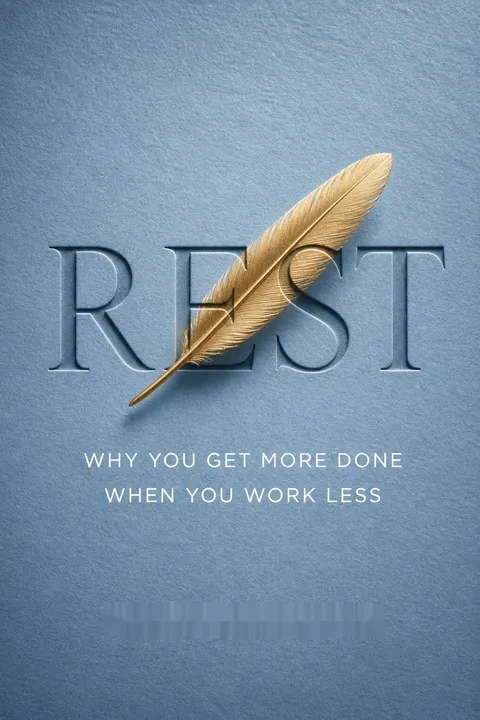
What's Rest: Why You Get More Done When You Work Less about?
- Work and Rest Relationship: The book explores how work and rest are complementary, not opposing forces. It argues that rest is essential for enhancing creativity and productivity.
- Historical and Scientific Insights: Alex Soojung-Kim Pang uses historical examples and scientific research to show how rest can improve performance and stimulate creativity.
- Practical Advice: The book offers practical methods to incorporate rest into daily routines, such as napping, walking, and establishing morning routines.
Why should I read Rest: Why You Get More Done When You Work Less?
- Rethink Productivity: It encourages a new perspective on productivity, emphasizing the importance of rest as a key component of success.
- Evidence-Based Strategies: The book provides scientifically backed strategies to enhance creativity and productivity through deliberate rest.
- Combat Burnout: It addresses the issue of burnout in modern work culture and offers strategies to mitigate it by prioritizing rest.
What are the key takeaways of Rest: Why You Get More Done When You Work Less?
- Work and Rest as Partners: Rest is essential for effective work, and both should be integral parts of a productive life.
- Deliberate Rest as a Skill: Rest can be practiced and improved, enhancing mental clarity and creativity through techniques like napping and walking.
- Importance of Routine: A consistent routine with focused work periods and intentional rest leads to greater productivity.
What specific methods does Rest recommend for improving creativity?
- Napping: Short naps recharge mental energy and enhance creativity, improving memory and problem-solving abilities.
- Walking: Walking stimulates creative thinking by allowing the mind to wander, often leading to insights and new ideas.
- Morning Routines: Starting the day with focused work before distractions arise sets a productive tone and enhances creativity.
What does Alex Soojung-Kim Pang mean by "deliberate rest" in Rest?
- Active Engagement: Deliberate rest involves intentional activities that promote recovery and creativity, like walking or engaging in hobbies.
- Mindfulness and Reflection: It requires being mindful of rest time, ensuring it positively contributes to mental well-being.
- Balancing Work and Leisure: Finding a balance between work and leisure is crucial for maintaining long-term productivity and creativity.
How does Rest address the issue of overwork in modern society?
- Cultural Critique: Pang critiques the glorification of overwork, arguing it leads to burnout and decreased productivity.
- Historical Context: The book provides examples of successful individuals who prioritized rest, showing overwork is a recent phenomenon.
- Call for Change: Pang advocates for a cultural shift to recognize the value of rest, essential for creativity and well-being.
What role does sleep play in Rest: Why You Get More Done When You Work Less?
- Essential for Recovery: Sleep is vital for mental and physical recovery, helping consolidate memories and enhance cognitive function.
- Active Sleep Processes: The brain actively processes information and repairs itself during sleep, highlighting the importance of good sleep hygiene.
- Connection to Creativity: Sleep is linked to creativity, with many insights occurring during or after sleep, making it integral to the creative process.
How can I implement the ideas from Rest into my daily life?
- Create a Routine: Establish a daily routine with dedicated work periods followed by intentional rest to enhance productivity and creativity.
- Incorporate Naps and Walks: Schedule short naps and regular walks to recharge mental energy and boost creativity.
- Mindful Breaks: Practice mindfulness during breaks to ensure they are restorative, prioritizing activities that promote relaxation and creativity.
What is the concept of "deep play" in Rest?
- Definition of Deep Play: Deep play involves activities that are intrinsically rewarding and mentally engaging, providing a break from work.
- Characteristics of Deep Play: It is mentally absorbing, allows skill application in new contexts, offers clear rewards, and connects to personal history.
- Examples of Deep Play: Activities like music, sports, and creative hobbies help detach from work stress and rejuvenate mental resources.
How does Rest challenge traditional views on productivity?
- Redefining Productivity: The book argues that true productivity includes the quality of work, enhanced by adequate rest.
- Long-Term vs. Short-Term Gains: Overworking may yield short-term results but leads to burnout and decreased creativity in the long run.
- Cultural Shift Needed: Pang calls for a cultural shift to value rest as a critical component of productivity, fostering a healthier workforce.
What are the best quotes from Rest and what do they mean?
- “Rest is work’s partner.”: This quote encapsulates the idea that rest is essential for productivity, challenging the view of work and rest as opposites.
- “You cannot talk about rest without also talking about work.”: It highlights the interconnectedness of work and rest, emphasizing a holistic approach to productivity.
- “The best way is always to stop when you are going good.”: This advice suggests strategic stopping to maintain momentum and creativity, leading to better outcomes.
How does Rest relate to modern work culture?
- Critique of Overwork: The book critiques the glorification of busyness, arguing it harms mental health and effectiveness.
- Importance of Boundaries: Establishing clear boundaries between work and personal life creates space for rest and recovery.
- Cultural Shift Needed: Pang advocates for a balanced approach to work and rest, suggesting organizations support practices that promote well-being.
About the Author
Download PDF
Download EPUB
.epub digital book format is ideal for reading ebooks on phones, tablets, and e-readers.








