

Key Takeaways
Turn technology from an attention trap into an extension of your mind
Two monkeys, two outcomes. The book opens with a contrast: macaques at Kyoto’s Iwatayama park leap between distractions, while Idoya, a monkey in North Carolina, learns to control a robot in Japan through brain signals. Her brain comes to treat the robot’s movement as part of her own body. The lesson is not that people should become more machine-like. Humans have long used tools to extend their abilities, from stone tools to writing. The extended mind is cognition distributed across brain, body, tools, and surroundings. The author calls our intimate, mixed relationship with technology entanglement: it can strengthen us, or leave us tangled in systems we cannot control.
Design the relationship. Contemplative computing is the practice of shaping technology use so it supports attention, creativity, and purposeful action rather than scattering them.
What's striking is the shift from asking whether technology is good or bad to asking what kind of relationship it creates. This resembles systems thinking: a capability emerges from the interaction of people, tools, and environments, not from any one part alone. The framing also avoids nostalgia for a supposedly tool-free human nature. Its caution is that individual mindfulness cannot fully correct design that captures attention by default. Agency belongs both to users and to the people and institutions shaping the tools.
Reserve multitasking for work whose parts serve one shared goal
Two kinds of multitasking. Making a complex task work may require managing several related steps at once. Archaeologist Lyn Wadley’s experiments recreating Stone Age adhesives suggest that toolmakers had to monitor heat, ingredients, and timing together to produce a reliable bond. Those activities converge on one outcome. By contrast, switching between unrelated tasks forces the brain to repeatedly redirect attention. The book calls this switch-tasking.
Switching has a price. In a simple café exercise, the author counts from one to ten and recites the alphabet from A to J, then alternates numbers and letters. The combined version takes about three times as long as doing each sequence separately. Research discussed in the book also suggests that frequent media switchers can overestimate their ability to manage interruptions. When several tasks compete for attention, errors rise and creative connections become harder to make.
The useful distinction is not between one task and many, but between competing goals and coordinated ones. Cooking a meal, analyzing sources, or following a complicated performance can involve multiple streams that reinforce one another. Incoming messages usually do not. This offers a practical diagnostic: ask whether each activity contributes to the same result. The book’s examples are persuasive, although a short classroom-style task cannot quantify every real workplace. The broader point is about cognitive costs, not a claim that all task-switching is equally harmful.
Notice your breath before the inbox trains your body to brace
Distraction is embodied. Technology use can change more than what receives attention. Consultant Linda Stone noticed that she held her breath while checking email, a pattern she called email apnea. The book presents it as a clue that digital interactions can trigger bodily tension, particularly when a new message might bring an urgent problem. Paying attention to breathing offers a small, immediate way to notice that response.
Attention improves through practice. A simple breathing meditation asks practitioners to follow the breath, notice when attention wanders, and gently return to the exercise. The aim is not to stop thoughts from appearing, but to practice returning. Research described in the book found differences in attention and brain activity among experienced meditators, while shorter mindfulness programs also showed measurable benefits. Meditation makes concentration a skill to train, not a mood to wait for.
This approach links self-regulation to a signal the body can detect in real time. In that sense, breathing functions like a dashboard: it may reveal stress before a person has consciously named it. The practice of returning attention also resembles physical training, where repetitions matter more than flawless performance. Still, breathing changes should not be treated as a diagnostic test or a cure for serious anxiety. The book’s more durable insight is modest: bodily awareness can help people notice how particular digital situations affect them.
Make the tool quieter than the work
Use limits as supports. Zenware is software designed to reduce interface clutter and help users focus on a task. WriteRoom, for example, fills the screen with a plain writing space instead of menus and alerts. Freedom blocks internet access for a chosen period, making an impulsive check harder. These tools do not make writing or concentration effortless. They reduce the extra demands created by software itself and can help users honor a commitment to work.
Simplicity is a choice. The book contrasts minimal writing tools with feature-heavy programs that invite formatting and organization before the words exist. The same tension appears in aviation: extensive automation can make routine operation easier while leaving pilots less practiced at handling manual control. A useful tool should help people do the work, not conceal its complexity or quietly replace skills they may need.
Minimal interfaces work partly through choice architecture: they make some actions easier and others less tempting. Their value is not simply aesthetic. A visible boundary can help a person translate an intention into behavior, much as a quiet room can support study without doing the studying. But no blocker can supply a meaningful goal, and strict barriers can frustrate people whose jobs require rapid access. The strongest version of this idea combines supportive friction with a clear understanding of when flexibility is necessary.
Do not judge human intelligence by a computer's speed or storage
Different minds, different strengths. Computers can retrieve records rapidly and preserve details that people forget. Human memory, however, is not just a storehouse of facts. It also includes personal experience, interpretation, association, and the ability to forget. A photograph can prompt a cascade of personal memories, but the image itself does not contain their meaning. The book argues that human and digital abilities are complementary, not interchangeable.
Technology shapes self-image. Virtual-reality experiments described in the book show that people may behave differently after seeing an avatar of themselves as taller, more attractive, or older. In one study, participants who saw an aged version of themselves allocated about twice as much money to retirement as those who saw their current selves. The implication is not that simulation guarantees better choices. It is that representations of the self can influence decisions, often without people noticing.
The comparison between human and machine intelligence is often misleading because the same words cover very different capacities. Accurate storage is not the same as understanding, just as fast calculation is not the same as judgment. The avatar research adds a useful twist: technology can reshape a person’s self-concept, not merely extend memory or reach. That influence deserves scrutiny. A vivid image can make future consequences feel immediate, but it can also manipulate emotion. Design should make the purpose of such interventions clear.
Match the medium to the thinking, not the fashion
Choose by affordance. An affordance is a feature of a tool or medium that makes certain actions easier. Readers interviewed for the book often used e-readers for light reading, travel, or quick searches, but preferred print when they needed to annotate, compare pages, or master difficult material. Paper’s physical stability can help readers locate ideas and work across several texts; digital documents make searching and copying easier.
Creative tools shape thought. Computer-aided design lets architects model complex structures, test performance, and share plans quickly. Yet architects interviewed by the author worried that drawing had helped students develop visual judgment and explore tentative ideas. The choice is not simply old versus new. Each medium makes some kinds of thinking more convenient and may make others less practiced. Pick the tool that serves the work in front of you.
This is a practical application of cognitive ergonomics: a tool should fit the mental and social demands of the task. A screen can be excellent for searching and poor for sustained comparison; a paper sketch can invite exploration before a design looks finished. Neither medium has a universal advantage. The risk is treating convenience as proof of superiority, or treating familiar methods as sacred. A useful evaluation asks what the tool enables, what it discourages, and whether those tradeoffs matter for this particular task.
Measure your habits, then change one condition at a time
Observe before optimizing. Self-experimentation means systematically tracking personal responses to a practice or stimulus, then using the results to guide changes. A technology diary can record when someone checks email, how long each session lasts, why they opened it, and how they feel afterward. The author found that email occupied substantial time, although only a few messages on most days needed immediate action. He responded by removing most subscriptions, turning off alerts, and setting times to check.
Efficiency can create new work. Historian Ruth Schwartz Cowan found that appliances made household tasks easier but did not necessarily reduce the time spent on housework. Washing machines helped normalize more frequent laundry. This resembles the Jevons paradox: efficiency can encourage people to do more of the newly easier activity. A tool’s effects depend on the surrounding expectations, not just its technical performance.
Personal tracking can reveal a gap between remembered behavior and actual routines, making it a useful form of applied research. Changing one condition at a time also makes it easier to see which adjustment helped. Yet measurement is not neutral: logging every interaction can become another obligation, and time saved can be absorbed by rising expectations. The household example sharpens the point. Improving a device is not enough if workplace or family norms convert its efficiency into more demand.
Make online contact deliberate, humane, and selective
Treat posts as encounters. Buddhist monks and nuns in the book use blogs, video, and social media to teach and connect, while treating online activity as secondary to lived practice. Their example suggests that the internet can be a place to practice attention and ethical conduct, not only a source of distraction. Mindful social media starts with a simple question: why is this being opened or posted now?
Choose quality over constant reaction. The book recommends remembering the person on the other side of the screen, sharing with care, and resisting the pressure to narrate every moment as it happens. One monk uses online exchanges to help others without treating each interaction as a relationship that must be maintained indefinitely. The author’s own trial of more deliberate posting led him to check less often and care less about follower counts.
Online behavior is shaped by interface design, but it is also shaped by norms people build together. A feed can encourage speed and visibility; a deliberate pause can make room for context and kindness. The monastic examples are valuable because they demonstrate active use without treating constant participation as the goal. Their circumstances are unusually disciplined, however, and not every user can ignore messages without consequence. Thoughtful practice includes setting boundaries that fit real responsibilities, not merely adopting an ideal of detachment.
Build restoration into the geography of your day
Rest can keep thought moving. Charles Darwin worked regularly at Down House and walked a quarter-mile path he called his thinking path. Over decades, he used it to observe nature, turn over scientific questions, and step away from his desk without losing contact with his work. The book estimates that his walks covered more than 20,000 miles. Walking offers light movement and familiar surroundings, leaving some attention free for reflection.
Restorative settings have structure. Psychologist Stephen Kaplan’s account identifies four features: fascination, which holds attention without demanding intense effort; being away from routine; extent, or the feeling of entering a coherent world; and compatibility, meaning the setting is easy to navigate. A walk, garden, or carefully arranged workspace can offer a restorative pause without requiring the mind to shut down.
The value of Darwin’s path lies partly in its repetition: a familiar route can reduce navigational demands while still offering changing details to notice. This complements research on environmental restoration, which treats attention as a resource that needs recovery. The idea also broadens productivity beyond uninterrupted desk time. Access matters, though. A safe green space, flexible schedule, or quiet room is not equally available to everyone. Restorative design should include ordinary, accessible settings, not only picturesque landscapes.
Treat offline time as active renewal, not a digital detox
A digital Sabbath is a planned break. It is a regular period, often twelve or twenty-four hours, when people step away from selected devices and online services. Participants in the book fill the time with activities that engage them: cooking, reading, walking, making things, or spending time with family. The purpose is not simply to abstain, but to restore attention and reconnect with people and interests that constant online activity can crowd out.
Make the pause workable. Choose in advance what to switch off, when the break begins, and what will replace screen time. People interviewed by the author worried about missing urgent messages, yet reported that important communications could wait or reach them another way. The Sabbath also offers a different relationship to time: less governed by instant response, more available for reflection and presence.
Ritual can make a boundary easier to keep because it gives the pause a predictable beginning and end. The practice also shifts attention from deprivation to meaningful activity, an important difference from treating disconnection as a quick cleanse. Still, universal advice to go offline can overlook caregiving, on-call work, accessibility needs, and financial dependence on digital systems. A humane version defines a narrow route for genuine emergencies and negotiates expectations with others.
Test each device against eight principles for a healthier extended mind
Use the framework as a check. The book closes with eight principles for judging whether technology supports a purposeful relationship with the world:
1. Be human, and value the ways people and tools work together.
2. Be calm, with alertness rather than frantic responsiveness.
3. Be mindful of attention and intention.
4. Make conscious choices about tools and habits.
5. Use devices to extend abilities.
6. Seek flow, the absorption that comes when challenge and skill meet.
7. Use technology to engage with the world.
8. Use or avoid it in ways that restore attention.
Look for the effect. A device is not successful merely because it is powerful or popular. Ask whether it strengthens attention, supports meaningful work, and helps the user participate more fully in life beyond the screen.
The framework works best as a set of questions, not a universal scorecard. A tool may extend one ability while weakening another, or help concentration at work while interrupting family life. That tension makes periodic review more useful than a one-time verdict. The principles also resist a narrow productivity test: they include calm, ethical engagement, and restoration alongside performance. Their strength is integration. Their limitation is that they rely on users having enough choice and control to act on what they notice.
Analysis
The book’s central move is to replace a battle between people and machines with a question about the quality of their entanglement. That reframing matters because tools do not merely carry out intentions. They shape what becomes easy to notice, remember, and do. The robot-controlled monkey, the anxious email checker, the architect at a screen, and Darwin on his path are variations on one argument: cognition is made in relationships among bodies, tools, settings, and habits.
Its strongest practical contribution is the combination of environmental design and self-observation. Blocking a website, silencing alerts, or choosing paper is not presented as a cure for a defective user. These are experiments that reveal which arrangements support a particular person’s attention. Meditation adds an inward practice, while digital Sabbaths and restorative spaces add temporal and spatial boundaries. Together, the methods avoid the fantasy of a single productivity hack.
The book is also unusually attentive to unintended consequences. More efficient appliances can increase expectations; automation can weaken manual competence; online memory can preserve information without preserving its personal meaning. This makes its optimism about technology conditional rather than naïve. The same device may extend capacity and impose new demands.
A limitation is the weight placed on individual practice. Workers may be expected to answer quickly, caregivers may need reliable access, and some people cannot control the design of the systems they use. Personal discipline cannot substitute for institutional changes to availability norms or interface incentives. The book’s tools are most useful when paired with that broader analysis. Its empirical examples also vary in strength, from controlled experiments to interviews and personal observation, so they support a guiding philosophy more securely than a universal prescription. The lasting insight is not to disconnect from modern life, but to make attention, agency, and recovery explicit design goals.
Review Summary
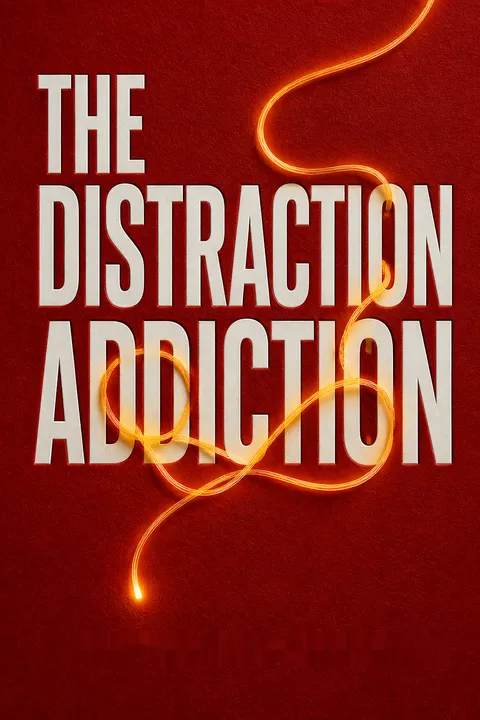
The Distraction Addiction receives mixed reviews. Some readers find it insightful, offering practical advice on managing technology use and improving focus. They appreciate the author's exploration of "contemplative computing" and concepts like digital Sabbaths. However, others criticize the book for being repetitive, poorly structured, and lacking novel ideas. Many note that the content could have been condensed. While some find the historical and philosophical discussions interesting, others consider them unnecessary digressions. Overall, readers agree the book raises important questions about our relationship with technology, even if the execution is imperfect.
People Also Read









Glossary
Contemplative computing
Mindful technology useAn approach to using and designing information technology that supports attention, creativity, and purposeful engagement. It combines observation of one’s habits, deliberate choices about devices, contemplative practices such as meditation, and changes to work environments. The aim is not to reject technology, but to make the relationship between people and tools more capable and less distracting.
Extended mind
Cognition beyond the brainThe idea that thinking can be distributed across the brain, body, tools, and surroundings. A notebook, a familiar interface, or another person can reliably support memory or problem-solving. Under this view, cognition is not limited to processes inside the skull; external resources can become integrated into how a person thinks and acts.
Entanglement
Interdependence with toolsThe book’s term for the complex relationship among people, bodies, minds, and technologies. Entanglement can extend physical, cognitive, or creative abilities, but it can also feel constraining when a device is unreliable or difficult to control. The goal is not to avoid such relationships, but to shape them so tools function as supportive parts of a larger system.
Switch-tasking
Rapid task switchingThe process of repeatedly moving attention between separate tasks, often mistaken for multitasking. Each switch requires the mind to reorient, which can slow work and increase the chance of mistakes. It differs from coordinating several connected activities toward one goal, such as managing the steps of a meal or a complex research project.
Zenware
Minimal focus softwareSoftware designed to reduce distractions and keep attention on a primary task. Examples in the book include uncluttered writing programs and applications that block internet access or selected websites. Zenware works through its limits as well as its functions: it can create a protected work setting and serve as a visible commitment to focus, but it cannot replace the user’s own judgment.
Flow
Absorbed, challenging activityA state of deep involvement in an activity, usually supported by a clear goal, immediate feedback, and a challenge that matches the person’s skill. Attention narrows to the task, self-consciousness recedes, and time may seem altered. Flow can occur in work, games, crafts, or physical activity, and can be satisfying in its own right.
Affordance
An action a tool enablesA feature of a tool or medium that makes particular actions easier or more natural. Paper can be spread out, marked, and compared physically; digital texts can be searched and copied quickly. Affordances help explain why different tools support different kinds of reading, design, and collaboration, even when they present the same information.
Digital Sabbath
Scheduled offline timeA planned period, commonly part of a day or a full day, when a person limits or stops using selected digital technologies. The practice is intended to restore attention and make room for meaningful activities, relationships, and reflection. Its value depends not only on what is switched off, but also on how the freed time is used.
Restorative experience
Attention-renewing pauseAn activity or setting that helps replenish the capacity for directed attention. The book draws on four qualities associated with restoration: fascination without effortful focus, a sense of being away from routine, extent or coherence, and compatibility with the person’s needs. Walking in nature is one example, but reading or other absorbing activities can also restore attention.
Transactive memory
Shared, accessible memoryA memory system distributed among a person’s own knowledge and information available through other people, tools, or records. Someone may remember where to find a fact rather than the fact itself, or rely on a partner to retain travel details. Digital search can participate in this system, but finding information is not the same as understanding or personally remembering it.
About the Author
Other books by Alex Soojung-Kim Pang

Download PDF
Download EPUB
.epub digital book format is ideal for reading ebooks on phones, tablets, and e-readers.








