

Key Takeaways
A prestigious career can still be a costly disguise
Success did not feel like arrival. Rebecca Campbell spent years building a high-flying career in advertising, changing her dress, speech, and work habits to fit a competitive culture. She became a creative director before 30, yet felt depleted rather than fulfilled. Long hours, caffeine, weekend recovery, and painkillers helped her override her body, including severe menstrual pain she had learned to treat as a normal cost of being a woman.
The mismatch became impossible to ignore. A pilgrimage through the Middle East sharpened her sense that her carefully constructed life no longer fit. Soon, a long relationship ended, friends died, and her home fell into disrepair. Campbell describes this unravelling as the point when she stopped protecting an approved identity and began listening to the work she felt called to do.
The distinction between achievement and fit is useful well beyond spiritual work. Organizational psychology describes person-environment fit: people tend to fare better when a role's demands and values align with their own. Campbell's advertising years make the mismatch concrete, rather than treating burnout as a personal failure of resilience. Still, exhaustion alone cannot prove that a career is inauthentic; material pressures, discrimination, illness, and poor working conditions can also drain people. The practical question is not simply whether work feels difficult, but whether its costs are chosen, sustainable, and connected to values the person actually endorses.
Restore balance without replacing male rule with female rule
The goal is balance, not reversal. Campbell calls for the sacred feminine to regain space after what she describes as centuries of suppression, while insisting that feminine leadership should not simply replace patriarchy with matriarchy. In her vocabulary, Shakti is the divine creative life force, and the sacred feminine represents qualities such as intuition, care, creativity, receptivity, and connection to nature. The sacred masculine contributes qualities such as protection, action, and structure. She sees both as present in every person, regardless of sex.
The history shapes the personal. Campbell connects women's silenced voices and narrowed social roles to present-day self-censorship, people-pleasing, and competition among women. Her appeal is to reclaim authority over one's own life while making room for others to do the same.
The strongest version of this argument treats feminine and masculine as a flexible vocabulary for human capacities, not fixed traits assigned by sex. That framing can help people notice when a culture rewards relentless control while undervaluing care, receptivity, or collaboration. It also avoids a simple reversal of hierarchy. The caution is that gendered archetypes can accidentally reinscribe stereotypes, especially when qualities such as nurturing are attached to women. Their value depends on using them as optional metaphors, open to everyone, rather than rules about how women or men ought to behave.
Schedule your life for cycles, not endless summer
Energy changes, so plans should too. Campbell compares creative and personal life to the seasons: spring supports beginnings, summer brings outward effort, autumn favors discernment and release, and winter invites rest and reflection. She applies the same seasonal lens to the menstrual cycle through four stages of womanhood: Maiden, Mother, Wise, Wild Woman, and Crone. In her model, the stages correspond broadly to pre-ovulation, ovulation, the premenstrual phase, and menstruation.
Use the map as a prompt. Campbell describes tracking her cycle and avoiding meetings while menstruating, when she prefers rest and reflection. She argues against expecting constant output. Her framework offers a way to notice personal patterns and adjust commitments, rather than judging every low-energy period as laziness or failure.
This seasonal model makes a valuable case for variability: productivity need not mean producing at the same pace every day. It also offers language for planning different kinds of work, such as brainstorming, execution, editing, and recovery. But menstrual experiences vary widely, and the archetypes are a reflective framework, not a medical account or universal schedule. Severe pain, heavy bleeding, or disabling symptoms deserve clinical attention, not an assumption that they are inherited emotional messages. Cycle awareness can support self-knowledge while medical care addresses symptoms that need treatment.
Use nature to quiet noise and recover your inner compass
Attention is part of the practice. After moving to London, Campbell missed the ocean and felt increasingly disconnected from the natural world. Returning to parks and trees helped her feel more present and notice her own needs. She recommends Intuitive Nature Walking, a practice of spending time outdoors without a fixed destination, paying attention to what draws the senses, and allowing the walk to unfold without demanding a result.
Let the encounter slow you down. A walk might mean pausing beside a tree, sitting near water, or simply noticing light, scent, and ground beneath the feet. For Campbell, this attention reconnects people with their bodies and makes subtle thoughts easier to hear. Nature is not merely scenery in her account; it is a place to practice presence and belonging.
The practice has a grounded psychological logic even without accepting the book's spiritual account of nature. Directed attention to sensory detail can interrupt rumination, while time outdoors often provides a change of pace and a less demanding environment. Campbell's emphasis on noticing rather than optimizing is especially useful in a culture that turns even leisure into a performance metric. The limit is access: not everyone can safely or easily reach a park, beach, or forest. A small patch of sky, a street tree, or a houseplant can serve as a modest version of the same attentional exercise.
Give your feelings a voice before they harden into paralysis
Expression can unlock movement. Campbell describes anxiety she had repeatedly tried to suppress. When she stopped treating it as a defect and allowed herself to notice it, she saw that it had been pushing her to stay productive. She suggests making room for difficult feelings through writing, conversation, chanting, or dance, rather than performing the role of the endlessly composed good girl.
Her voice became a turning point. As a teenager, Campbell kept her spiritual interests private for fear of being judged. Years later, during a speaking exercise, she broke down and voiced her anger and fear. She found that chanting helped her express grief and rage, and she came to understand speaking publicly as part of her work. These are her spiritual interpretations; the practical lesson is to find safe ways to name and express what is being avoided.
Naming emotion can create a pause between feeling and reaction, and expressive practices give people a way to process experience without relying solely on explanation. Campbell's story also shows how a feared act, speaking, can become a route toward greater agency. Yet emotional expression is not automatically healing, and intense distress may call for skilled support rather than a ritual or a friend alone. The useful principle is not to unleash every feeling on others, but to give feelings a safe form and use what they reveal to make considered choices.
Treat your so-called excess as a clue to your proper setting
A trait changes meaning with context. Campbell recalls being called too sensitive and needing solitude. In a busy office, those qualities felt like weaknesses; in her later work as a writer and intuitive guide, sensitivity helped her notice nuance, while solitude supported concentration. She asks readers to examine what others have labeled excessive and consider whether the trait is being judged in the wrong environment.
Do not confuse acceptance with denial. The point is not that every difficulty is secretly a gift. It is to ask what conditions help a quality become useful, and what boundaries or support it requires. Campbell also urges readers to own both strengths and flaws, rather than letting other people's opinions define their identity or trying to fit narrow roles such as the agreeable, self-sacrificing woman.
This is a strong application of person-environment fit: a characteristic can create friction in one setting and become valuable in another. It can also help people replace shame with a more precise question about conditions, boundaries, and suitable work. The argument should not romanticize every limitation. Sensitivity, for example, may be both a resource and a source of overload, and a better setting may reduce strain without removing it. Self-acceptance is most useful when it leads to practical design, not when it becomes pressure to turn every hardship into a talent.
Make sisterhood a practice, not a competition
Support was built through attention. As a young person, Campbell sought out older women who shared stories of love, loss, work, and family. She credits those conversations with giving her a place to speak freely. Years later, before her wedding, three friends held a ritual in which they represented stages of womanhood and supported her through a symbolic transition. The ceremony gave her a felt experience of being heard and accompanied.
Connection requires more than agreement. Campbell defines genuine sisterhood as being present without immediately fixing, competing, or redirecting attention. She encourages women to acknowledge one another, treat jealousy as information about one's own desires, and avoid placing admired peers on pedestals. A circle can be formal or informal; its value lies in trust, honest stories, and mutual support.
The book's account of sisterhood treats community as infrastructure for change, not just a warm feeling. Intergenerational storytelling can pass along practical knowledge that formal instruction often misses, while attentive listening strengthens social bonds. The guidance to avoid reflexive fixing is especially relevant: support often begins with understanding what the other person wants, not supplying a solution. Still, solidarity should not require closeness with every woman or erase conflict. Healthy communities need boundaries, accountability, and room for disagreement as well as affirmation.
Protect your capacity if you want your work to last
Service without limits becomes depletion. After launching her work, Campbell booked clients months ahead and postponed rest until her schedule cleared. Her mother's breast cancer and a dream she interpreted as a warning about nourishment sharpened her recognition of a family pattern: giving to others while neglecting oneself. She responded by reducing her workload, renewing her spiritual practice, and making room for personal life.
Care is part of the work. Campbell argues that artists and healers need rest, fair payment, boundaries, and time away from their creations if they hope to serve sustainably. She contrasts a brief burst of overwork with a vocation that can continue for years. Her language is spiritual, but her operational point is concrete: define capacity, protect it, and stop treating exhaustion as proof of commitment.
This section makes sustainability an ethical concern, not merely a wellness preference. In caregiving professions and creative work alike, chronic overextension can reduce judgment, patience, and quality. Boundaries also clarify what a service includes and what it cannot promise. Campbell's family story illustrates how patterns of self-neglect may be modeled across generations, although a dream or symbolic interpretation cannot diagnose illness or explain its cause. The strongest application pairs reflection with ordinary safeguards: medical care, workload limits, compensation, and dependable time for recovery.
Turn the calling into daily action, not a rescue fantasy
Inspiration needs a practical bridge. Campbell frames creative work as a relationship with ideas that must be carried into the world through repeated effort. She warns readers not to wait for a publisher, mentor, or lucky break before beginning. A vision may point toward a possibility, but daily action is what gives it form. Her own experience moved from private writing and workshops toward books and public speaking.
Protect the work from comparison. Campbell recommends choosing a primary creation to focus on for a defined stretch of time, rather than spreading attention across every opportunity. She also urges creators not to make reviews, sales, or approval the measure of their worth. The work should be made because it matters to the creator, then released without trying to control how every person receives it.
The distinction between inspiration and execution is central to creative practice. A meaningful idea still needs time, skills, feedback, and repeated effort before it becomes a finished work. Limiting active projects can protect attention, though the right scope depends on a person's resources and obligations. Campbell's resistance to external validation is also valuable, but not every response from an audience is noise: criticism can reveal genuine problems. A useful balance is to separate identity from reception while remaining open to specific, actionable feedback.
Analysis
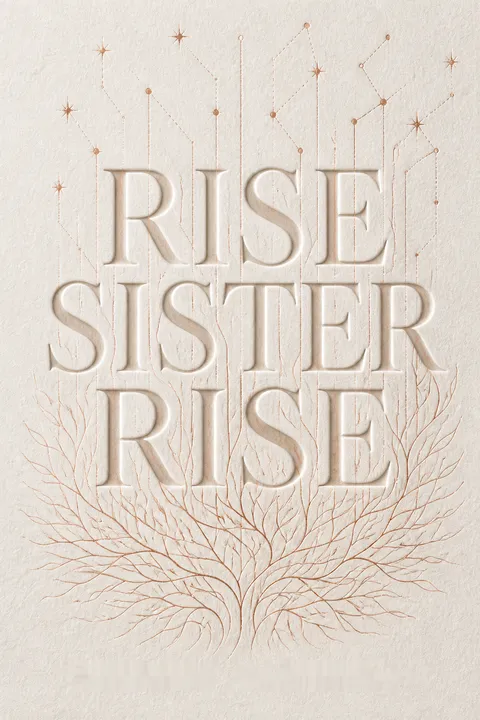
Rise Sister Rise blends memoir, spiritual counsel, feminist critique, and self-guided exercises. Its narrative begins with a woman who succeeds by adapting to a demanding professional culture, then finds that outward achievement has not resolved her sense of inner misalignment. Pilgrimage, illness in the family, spiritual practice, and women's circles become turning points in her effort to build a life that does not require constant self-suppression. The book's central proposal is that personal restoration and collective change are linked: recovering voice, bodily awareness, and mutual support can challenge habits inherited from patriarchal institutions.
Its most transferable insights do not depend on accepting reincarnation, divine messages, or the author's account of Kundalini. Readers can still use the practical invitations to notice seasonal energy, spend attentive time outdoors, express difficult feelings safely, seek trustworthy community, protect recovery time, and convert creative ideas into concrete work. These practices give the book a usable structure beneath its mystical language. Its recurring image of cycles also challenges the assumption that a person should perform at a uniform level throughout life.
The spiritual framing is both the book's distinctive strength and its main limitation. It offers symbolic meaning to experiences that can feel isolating, and it treats women's bodies and voices as worthy of reverence. At times, however, metaphysical explanations are presented with more certainty than evidence can support. Menstrual pain, anxiety, and illness should not be reduced to spiritual messages or ancestral burdens. The book itself includes a medical disclaimer, and its reflective practices are best understood as complements to appropriate care, not substitutes. Its historical account of goddess traditions and female persecution is likewise a motivating interpretation, not a comprehensive history.
Read with that distinction in mind, the book is most persuasive as an invitation to stop confusing endurance with purpose. It asks readers to reclaim agency without treating independence as isolation, and to create a life of service without sacrificing the person doing the serving.
Review Summary
Rise Sister Rise receives mixed reviews, with an overall positive reception. Many readers find it inspiring, empowering, and life-changing, praising its spiritual guidance and emphasis on feminine power. Some appreciate its encouragement for women to embrace their intuition and support one another. However, critics find it repetitive, overly new-age, or lacking depth. The book resonates strongly with those open to spirituality and personal growth, while others struggle with its more esoteric concepts. Despite polarizing opinions, many readers report feeling enlightened and motivated after reading.
People Also Read








Glossary
Shakti
Divine creative life forceIn Campbell's vocabulary, Shakti is the sacred creative energy that moves through life and the universe. She presents it as a feminine spiritual force, available to flow through people and nature. The term comes from Hindu traditions, where its meanings are varied and context-dependent; this book uses it as a guiding concept for intuition, creativity, embodiment, and connection.
Kundalini Shakti
Awakening spiritual energyCampbell describes Kundalini Shakti as spiritual energy symbolized by a coiled serpent at the base of the spine. In her account, an awakening can involve energy moving upward through the body's chakras, with experiences such as heat, shaking, visions, or euphoria. These are her spiritual interpretations, not a medical diagnosis or a validated explanation for physical symptoms.
Four Stages of Womanhood
Monthly and life-stage archetypesCampbell maps four archetypes onto both a woman's life stages and her monthly cycle: Maiden, Mother, Wise, Wild Woman, and Crone. She associates them respectively with pre-ovulation, ovulation, the premenstrual phase, and menstruation, and with qualities such as beginnings, fertility, discernment, and reflection. The model is offered as a self-reflection tool, not a universal description of women's bodies.
Intuitive Nature Walking
Unstructured sensory nature walkA practice Campbell recommends for reconnecting with nature and intuition. The walker spends time outdoors without a fixed destination or performance goal, noticing what attracts attention and responding to the surroundings. The practice may include pausing, sitting, or walking in a chosen direction. Its central method is sensory presence rather than trying to reach a predetermined insight.
Light Sourcing
Meditation on universal lightLight Sourcing is Campbell's meditation practice for feeling connected to a universal source of light and becoming more receptive to guidance. She describes it as aligning oneself with the larger forces of life. The term belongs to the book's spiritual framework; it can be approached as contemplative meditation without assuming that it establishes a literal connection to a cosmic energy.
Rising Feminine Archetypes
Seven vocational archetypesCampbell's framework names seven archetypes for recognizing personal strengths and forms of service: High Priestess, Seer, Storyteller or Artist, Healer, Warrior or Wild Woman, Natural Witch or Medicine Woman, and Earth Mother or Midwife. Each is associated with a chakra and a characteristic role. The framework is intended for reflection, and Campbell notes that people may draw on several archetypes.
Spiritual closet
Hiding spiritual identityCampbell uses this term for concealing beliefs, practices, or intuitions out of fear of being rejected or judged. Her own spiritual closet began when she felt misunderstood as a teenager and lasted into adulthood. The metaphor applies to any meaningful part of the self that someone hides for protection, while also raising the question of when disclosure is safe.
Natural Witchcraft
Nature-centered spiritual practiceCampbell reclaims Natural Witchcraft as reverence for the Earth, its rhythms, and the wisdom of nature. In her usage, it includes intuition, ritual, and working with natural elements, rather than the threatening image attached to the word witch in popular culture. This is her spiritual definition, not a comprehensive account of the diverse historical and contemporary practices called witchcraft.
subtle bodies
Layers of embodied experienceCampbell uses subtle bodies to refer to dimensions of experience beyond the physical body, including emotional, mental, and spiritual aspects. She suggests that movement can help these dimensions express or release what feels stuck. The term comes from spiritual frameworks and is not equivalent to anatomical structures; in practical use, it can prompt reflection on how thoughts, emotions, and physical sensations interact.
FAQ
What's "Rise Sister Rise" about?
- Empowerment and Awakening: "Rise Sister Rise" by Rebecca Campbell is about empowering women to awaken to their true selves and embrace their divine feminine power.
- Historical Context: The book explores the history of the divine feminine, highlighting how women's voices and powers have been suppressed over the centuries.
- Spiritual Journey: It combines spiritual memoir, poetry, and mantras to guide readers on a journey of self-discovery and spiritual awakening.
- Call to Action: The book serves as a call to action for women to rise, reclaim their power, and lead from a place of intuition and compassion.
Why should I read "Rise Sister Rise"?
- Inspiration and Empowerment: The book offers inspiration and empowerment for women seeking to connect with their inner strength and intuition.
- Healing and Transformation: It provides tools and insights for healing past wounds and transforming one's life in alignment with the sacred feminine.
- Community and Sisterhood: Readers are encouraged to connect with a global sisterhood, fostering a sense of community and shared purpose.
- Practical Guidance: The book includes practical exercises, rituals, and mantras to help readers integrate its teachings into their daily lives.
What are the key takeaways of "Rise Sister Rise"?
- Divine Feminine Rising: The book emphasizes the importance of the divine feminine rising within each person, regardless of gender, to bring balance to the world.
- Healing the Past: It encourages healing from past traumas and breaking free from societal constraints that have historically silenced women.
- Cyclic Nature: Understanding and honoring one's cyclic nature is crucial for personal growth and alignment with the natural rhythms of life.
- Sisterhood and Support: Building a supportive community of like-minded individuals is essential for personal and collective empowerment.
What are the best quotes from "Rise Sister Rise" and what do they mean?
- "Rise Sister Rise": This mantra is a call to action for women to awaken and step into their power, encouraging collective empowerment and support.
- "The Holy Grail Is Within You": This quote emphasizes that true power and divinity reside within each individual, urging readers to look inward for strength and guidance.
- "You Are Spirit Earthed": It highlights the connection between the spiritual and physical realms, reminding readers of their purpose to embody spirit in human form.
- "We Were Made for These Times": This quote reassures readers that they are equipped to handle the challenges of the current era, emphasizing their role in the collective awakening.
How does Rebecca Campbell define the "Divine Feminine" in "Rise Sister Rise"?
- Sacred Power: The divine feminine is described as a sacred, creative force that exists within all things and people, characterized by intuition, compassion, and wisdom.
- Balance and Harmony: It represents the balance between masculine and feminine energies, necessary for personal and global harmony.
- Historical Suppression: The book discusses how the divine feminine has been suppressed throughout history and the importance of its resurgence.
- Personal and Collective Awakening: Embracing the divine feminine is seen as a path to personal empowerment and collective transformation.
What is the significance of "Sisterhood" in "Rise Sister Rise"?
- Supportive Community: Sisterhood is portrayed as a vital support system where women can share their experiences, wisdom, and strength.
- Healing and Empowerment: It provides a space for healing past wounds and empowering each other to rise and lead.
- Collective Rising: The book emphasizes that as one woman rises, she paves the way for others, creating a ripple effect of empowerment.
- Breaking Barriers: Sisterhood helps break down barriers of competition and mistrust, fostering genuine connections and collaboration.
What practical exercises does "Rise Sister Rise" offer?
- Rituals and Ceremonies: The book includes rituals for releasing old patterns, calling back one's power, and connecting with the divine feminine.
- Chanting and Meditation: It offers chanting practices and meditations to help readers connect with their inner wisdom and intuition.
- Journaling Prompts: Readers are encouraged to use journaling prompts to explore their feelings, desires, and personal growth.
- Nature Connection: Exercises like intuitive nature walking are suggested to help readers reconnect with the natural world and their true selves.
How does "Rise Sister Rise" address past traumas and healing?
- Acknowledging the Past: The book encourages readers to acknowledge and heal from past traumas, both personal and collective.
- Releasing Vows of Silence: It discusses the importance of releasing vows of silence and reclaiming one's voice and power.
- Ancestral Healing: Readers are guided to heal ancestral wounds and break free from patterns that no longer serve them.
- Transformative Practices: The book provides transformative practices to help readers process emotions and integrate healing into their lives.
What role does "Cyclic Nature" play in "Rise Sister Rise"?
- Alignment with Nature: The book emphasizes aligning with the natural cycles of the Earth and one's own body for personal growth and balance.
- Understanding Seasons: It encourages understanding and honoring the different seasons of life, recognizing their unique gifts and challenges.
- Monthly Cycle as a Teacher: The book highlights the importance of the monthly cycle as a teacher, offering insights into one's emotional and spiritual state.
- Embracing Change: Embracing cyclic nature helps readers navigate change with grace and resilience, fostering a deeper connection to life.
How does "Rise Sister Rise" encourage readers to embrace their "True Nature"?
- Self-Discovery: The book guides readers on a journey of self-discovery, encouraging them to embrace their true nature and unique gifts.
- Authenticity and Expression: It emphasizes the importance of living authentically and expressing one's true self without fear or judgment.
- Inner Wisdom: Readers are encouraged to trust their inner wisdom and intuition, using it as a compass for decision-making and personal growth.
- Letting Go of Constraints: The book advocates for letting go of societal constraints and expectations, allowing one's true nature to shine.
What is the "Rise Sister Rise" mantra and its significance?
- Call to Action: The mantra "Rise Sister Rise" is a powerful call to action for women to awaken and step into their power.
- Collective Empowerment: It signifies the collective empowerment of women, encouraging them to support and uplift each other.
- Personal Transformation: The mantra serves as a reminder of the personal transformation that occurs when one embraces their true self and divine feminine power.
- Global Impact: By rising together, women can create a positive impact on the world, bringing balance and harmony to society.
How does "Rise Sister Rise" address the balance between masculine and feminine energies?
- Sacred Balance: The book emphasizes the importance of balancing masculine and feminine energies within oneself and in the world.
- Healing Patriarchy's Shadow: It discusses healing the shadow of patriarchy and reclaiming the sacred feminine to restore balance.
- Integration and Harmony: Readers are encouraged to integrate both energies, recognizing their unique strengths and contributions.
- Supportive Masculine: The book highlights the role of the sacred masculine in supporting and protecting the rise of the feminine.
About the Author
Other books by Rebecca Campbell

Download PDF
Download EPUB
.epub digital book format is ideal for reading ebooks on phones, tablets, and e-readers.








