

Key Takeaways
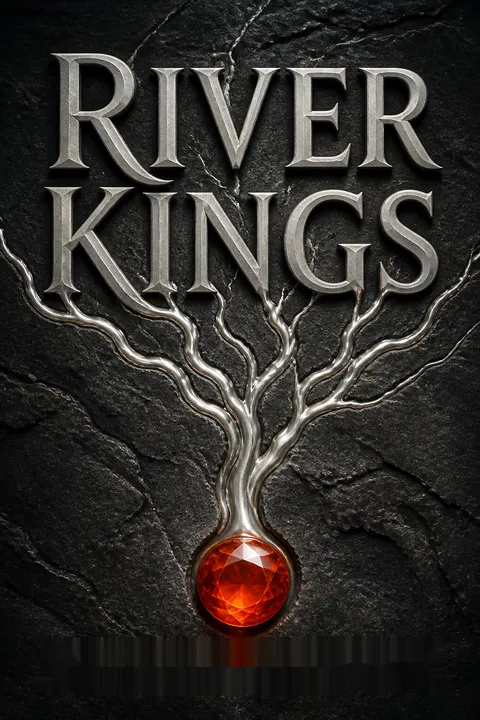
Follow the carnelian bead, and the Viking map runs from Gujarat to England.
A small object, a vast route. In 1982, excavators found an orange carnelian bead in a mass grave at Repton. The bead sat in an archive for decades before Cat Jarman recognized that carnelian was prized in Viking Scandinavia and originated much farther east, including in India. Its trail leads through trading towns, the Baltic, and the river routes that connected northern Europe to the Islamic world. At the other end, in Gujarat, Jarman watches a bead-maker shape and drill carnelian using techniques that match the bead’s manufacture.
Not a single traveler’s diary. The bead cannot prove that one person carried it all the way from India to Derbyshire. Its history is more plausibly a chain of exchanges, with people, goods, and ideas moving through different hands and communities. The book uses this object as a guide to a wider system that linked distant regions.
The bead makes a powerful case for writing history from material evidence: an overlooked object can expose connections missing from political chronicles. It also illustrates a central challenge in provenance research. An object’s geological source, manufacturing method, and findspot are separate clues, and none alone identifies the people who moved it. The strongest reconstruction comes from aligning independent evidence, such as archaeological context, chronology, and comparable finds. That discipline keeps the bead’s journey vivid without turning a plausible route into a certainty.
Use bones and chemistry to test stories, not merely decorate them.
Bodies preserve biographies. Isotope analysis measures chemical variations in human remains to investigate diet and where someone grew up. Strontium in tooth enamel, which forms during childhood and then remains stable, can connect a person to the geology of their early environment. At Repton, the warrior in Grave 511 had enamel values consistent with southern Scandinavia, probably Denmark. DNA showed that he and the younger man buried beside him were likely father and son, complicating the image of an anonymous, all-male raiding force.
Dates need context. Radiocarbon tests initially made some Repton bones appear about two centuries too old. Researchers found that people who ate substantial amounts of fish carried older marine carbon, which could shift apparent dates by hundreds of years. Correcting for diet brought the tested remains into the late ninth century. Scientific results sharpen a story, but they do not define a person’s identity or prove every interpretation.
The method is strongest when different kinds of evidence check one another. Enamel can indicate a childhood environment, while DNA can reveal biological relationships, but neither identifies a person’s language, loyalties, or self-understanding. The radiocarbon puzzle also shows why measurement is not interpretation: a technically accurate result can mislead if the assumptions behind it are wrong. This is a useful lesson well beyond archaeology. Scientific tools do not remove historical judgment; they make the assumptions behind that judgment more visible.
Control the rivers, and a raiding fleet becomes a moving economy.
Ships made mobility practical. Viking vessels combined overlapping planks, shallow hulls, and sails, allowing travel across open water, into rivers, and onto beaches. When waterways did not join neatly, crews could move boats overland, a practice called portage. Ships also needed frequent repairs, including replacement of iron nails and rivets, making safe stopping places essential.
Camps did more than shelter armies. Finds at Torksey and nearby Foremark include Islamic coins, silver fragments, weights, gaming pieces, and evidence of craftwork. The sites appear to have supported repair, trade, and daily life, not simply military defense. Torksey sat beside the Trent and a major land route. Whoever controlled that junction could manage movement through the landscape. Winter camps became temporary economic hubs, and perhaps stepping stones toward later settlement.
This logistical view helps explain military power without reducing it to battlefield skill. Transport, repair, food, information, and exchange all shape what an army can attempt. The idea also changes how a camp is read: scattered weights or workshop debris can reveal an organized social world even when walls and barracks are absent. Still, finds at a site cannot tell us exactly how every activity was coordinated. The camp’s function is best understood as a spectrum, from temporary military base to marketplace and proto-settlement.
Read Viking silver by weight, not by the ruler stamped on it.
Coins changed purpose on the move. Islamic dirhams reached Scandinavia and England from the caliphate, but Vikings often valued them for their silver rather than their face value. Coins could be cut into pieces called hacksilver, tested for purity, and weighed out in payment. This bullion economy, a system that treats precious metal by weight, worked across regions whose rulers issued different coinage or none at all.
Weights connect the markets. Metal detectorists found dirhams and weighing equipment at Torksey and Foremark, linking the Great Army to long-distance exchange. Silver could also be melted into ingots, hiding its original form. Lead-isotope research on Viking silver objects suggests that much of the metal in England came from dirhams brought from the east. In the Vale of York hoard, coins from several regions sat alongside silver fragments, showing different payment systems operating together.
Weight-based exchange is a practical solution to a problem familiar in any cross-border market: how to compare value when currencies and political authorities differ. The portable metal matters more than the stamp on it. This makes silver a record not only of wealth, but of economic trust, since traders needed ways to test purity and measure quantity. The evidence also warns against treating a coin’s mint as its final destination. A dirham could travel, be cut, be melted, and circulate long after its original monetary role had ended.
Follow the eastern rivers to see how merchants became rulers.
The Rus’ were river specialists. Scandinavian groups travelled through eastern Europe by waterways and portages, using settlements such as Staraya Ladoga as gateways toward the Volga, the Dnieper, the Caspian Sea, and Constantinople. In this eastern world, wealth came less from raiding monasteries than from furs, silver, trade, tribute, and the capture and sale of people. The name Rus’ became associated with this developing political and cultural world, which also included Slavic, Khazar, and other communities.
Trade depended on power. River settlements could serve as fortified staging posts, places to collect tribute, and points from which to regulate traffic. The Rus’ sometimes negotiated trading agreements with Byzantium and sometimes attacked its territories. Their commercial success and their coercive power were not separate stories. Control of a route meant access to goods and the ability to demand payment from those who used it.
The river-corridor perspective shows how commerce and state formation can reinforce one another. A trading post needs security, while the authority that provides security can tax exchange and command strategic routes. The account also avoids a simple contrast between peaceful merchants and violent raiders: the same groups could bargain, trade, threaten, and fight. One caution is that written descriptions often come from outsiders with their own political and cultural biases. Archaeological evidence can broaden the picture, but it rarely supplies a complete account of how local communities experienced this expanding power.
Make women visible without turning one exceptional grave into a rule.
Mobility was not exclusively male. Around 20 percent of the people identified as women in Repton’s mass grave, although poor preservation means the proportion may be incomplete. Isotope research also found women who had grown up far from where they were buried. At Birka, DNA showed that a richly equipped grave containing weapons and horses belonged to a woman. These findings challenge the old assumption that women stayed home while men travelled.
Evidence has limits. The Birka woman’s grave establishes that a woman was buried with a warrior’s equipment. It does not, by itself, prove how she lived or whether she fought. Women also appear in graves with trade weights and imported goods, suggesting roles in commerce and migration. The evidence supports a broader range of female lives, while leaving individual occupations and the frequency of women’s military service open to debate.
The important shift is not simply adding a female warrior to a familiar cast. It is asking why certain graves have been interpreted confidently for men but treated skeptically for women. At the same time, correcting an old bias does not justify replacing it with a new certainty. A grave is a deliberate presentation by survivors, not a transparent job description. The most durable interpretation keeps several possibilities in view: a person’s status, activity, ancestry, and identity may overlap without being reducible to one object or one modern category.
An imported object’s route does not automatically reveal its owner’s route.
Objects travel in many ways. The bronze Buddha found at Helgö in Sweden, an Arabic-inscribed ring from Birka, and carnelian beads all show contact with distant places. But a foreign object could arrive through trade, a gift, tribute, or migration. Even an inscription might have mattered as a sign of exotic status rather than as readable religious text.
People require separate evidence. A bead in a woman’s grave does not prove that she travelled, just as a foreign object in a local burial does not prove its owner was an immigrant. Jarman compares this problem to mistaking the spread of Swedish furniture for evidence that Swedes settled everywhere it was sold. Isotope and DNA studies can add evidence about movement, but even they cannot identify the meaning a person gave an object. Material culture is evidence of connection, not a simple map of migration.
This distinction is fundamental to interpreting globalization in the past. Goods can diffuse farther and faster than the people who produce them, while migrants can adopt local objects and leave little trace of their origins. Archaeologists therefore need to distinguish cultural contact from population movement rather than treating one as proof of the other. The analogy to modern consumer goods makes the logic easy to grasp, though modern markets are not exact equivalents for ancient exchange. The broader lesson holds: distribution patterns describe relationships, but they rarely explain them on their own.
Treat Viking identity as a relationship, not a genetic label.
Names conceal mixtures. The book challenges the tidy division in which Danes and Norwegians went west while Swedes went east. Archaeology and ancient DNA show people moving in multiple directions, and Viking-era Scandinavia included people with ancestry from outside the region. At Repton, scientific evidence suggests a mixed group rather than a force drawn from one homeland. A person’s ancestry can inform a history of movement, but it cannot establish whether that person thought of themselves as a Viking.
The past is politically contested. The Russian Primary Chronicle, written centuries after the events it describes, tells how Scandinavian rulers were invited to govern Slavic communities. Disputes over this account became entangled with modern national and ideological claims. Archaeological finds have likewise been used to support competing stories about who belonged where. The evidence is real, but the labels placed on it can reflect the concerns of later readers as much as the lives of the people buried.
Identity is best understood here as social and historical, not as a biological essence. Genetic ancestry describes patterns of inheritance; it does not assign a person a culture, political allegiance, or personal name. This distinction is especially important when modern national categories are projected onto a period before those nations existed in their current form. Archaeology can challenge exclusionary origin stories, but it cannot settle identity by itself. The careful approach is to treat labels as working tools, then ask who used them, when, and for what purpose.
The same routes carried silver, enslaved people, and a possible smallpox virus.
Exchange had human costs. Viking sources describe raids that captured women and children, while the four young people buried near Repton show signs of violence and came from different places. They may have been captives, but archaeology cannot prove that. Enslaved people were traded across these networks and often left little evidence in the burial record.
Movement could carry disease too. Researchers identified ancient smallpox virus DNA in remains from Viking-era Scandinavia, England, and Russia. One infected man was found in an Oxford mass grave, where many bodies showed violent injuries. This suggests that mobility may have helped diseases move through connected communities, but it does not establish a precise route of transmission. The carnelian bead’s journey reveals a network of exchange; the same network could carry exploitation and infection as well as luxury.
Global connection is often narrated through the impressive things it moves: coins, silk, gemstones, and ideas. This account restores the less celebratory cargo. Captive people and pathogens move through the same corridors, though their traces are much harder to recover than metal objects. The smallpox evidence is suggestive rather than definitive, and the book appropriately leaves the transmission route unresolved. That uncertainty matters: a network can create the conditions for spread without proving a single chain of transmission. Historical reconstruction should acknowledge both the scale of connection and the limits of what evidence can show.
Analysis
River Kings reframes Viking history as a story of connected systems rather than separate westward raids and eastward trade. Its central device, the carnelian bead from Repton, gives an intimate starting point for a history that expands across England, Scandinavia, the Baltic, the river corridors of eastern Europe, the Islamic world, and Gujarat. The bead is not treated as proof of a single uninterrupted voyage. Instead, it directs attention to the repeated exchanges and human movements that made such a journey possible.
The book’s strongest contribution is methodological. Archaeological objects, human remains, written records, isotope measurements, DNA, radiocarbon dates, and landscape analysis each answer different questions. The Repton chronology demonstrates why scientific results require interpretation: fish consumption can make radiocarbon ages appear older, while genetic ancestry cannot identify cultural identity. The book repeatedly distinguishes evidence of contact from evidence of migration, and a weapon burial from proof of a person’s occupation. This restraint strengthens, rather than diminishes, its narrative.
Its account also broadens who counts as part of Viking history. Women appear as migrants, traders, people buried with military equipment, and possible members of armies, though the evidence does not justify one universal account of their roles. The Rus’ emerge as a changing, mixed political world, not a simple synonym for Scandinavians. These arguments challenge familiar categories without pretending that new science eliminates uncertainty.
The result is a persuasive history of networks with unequal consequences. Silver and luxury goods moved alongside tribute, slavery, and possibly disease. Rivers connected distant markets, but control over those routes also enabled coercion. The book’s narrative energy makes this complexity accessible, while its caveats remind readers that every reconstruction depends on incomplete evidence. Its most lasting lesson is not that one bead proves a grand theory. It is that a small, carefully interpreted object can reveal the wider world required to explain it.
Review Summary
River Kings receives mostly positive reviews, praised for its engaging exploration of Viking history through archaeology. Readers appreciate Jarman's balanced approach, combining scientific evidence with historical context. The book's focus on eastern Viking expansion and women's roles is highlighted as innovative. Some criticize the writing style and speculative nature of arguments. Overall, it's considered an accessible introduction to Viking archaeology, though a few readers found it dry or lacking in concrete conclusions.
People Also Read
Glossary
Isotope analysis
Chemical clues to past livesA method that measures the relative amounts of different isotopes in materials such as teeth, bones, or metals. In human remains, isotope values can provide evidence about diet or the environments where a person lived while particular tissues formed. The results identify compatible origins or habits, not a person’s ethnicity or complete life story.
Marine reservoir effect
Older carbon in aquatic foodA dating complication caused by marine and some freshwater carbon being older than carbon from the atmosphere and land-based food chains. People who ate substantial amounts of fish could therefore appear older in radiocarbon tests than they really were. At Repton, accounting for this dietary effect helped reconcile bone dates with the archaeological evidence.
Bullion economy
Silver valued by weightA system of exchange in which precious metal is valued and paid out according to its weight and quality, rather than solely by the face value of a coin. Viking traders could test coins or objects, cut silver into pieces, and weigh it for payment. This made silver useful across regions with different currencies and authorities.
Portable Antiquities Scheme
Voluntary finds recording systemA voluntary English system established in 1997 for recording archaeological objects discovered by members of the public, especially metal detectorists. Finds liaison officers enter reported objects into a central database. The records have revealed sites and patterns of activity that written accounts and excavated settlements alone would not have shown.
Portage
Moving boats over landThe practice of carrying or dragging a boat overland between stretches of navigable water. Eastern European river routes often required portage where waterways did not connect, or where rapids made passage dangerous. Shallow Viking vessels could be moved between routes, enabling travel through a landscape without one continuous navigable river.
Rus’
Eastern riverine political worldA term used in historical sources for groups and political communities active along the rivers of eastern Europe. The book connects the early Rus’ with Scandinavian travelers, while emphasizing that the wider society included Slavic, Khazar, and other influences. The term does not describe one unchanging ethnic group or make every Rus’ person a Viking.
Wintersetl
A winter military campAn Old English term for a winter camp. The Great Army’s camps, including Torksey and Repton, offered more than seasonal shelter. Archaeological finds suggest that camps could support trade, repairs, craft production, and other services alongside military activity, making them temporary hubs in the landscape.
FAQ
What's River Kings about?
- Exploration of Viking History: River Kings by Cat Jarman explores the Viking Age, focusing on their connections from Scandinavia to the Silk Roads. It challenges traditional narratives by highlighting the Vikings' roles in trade and cultural exchanges with the East.
- The Journey of a Bead: The narrative is centered around a carnelian bead found in a Viking grave in Repton, symbolizing the Vikings' extensive trade networks. Jarman traces the bead's journey from India to England.
- Interconnectedness of Cultures: The book emphasizes the Vikings' role in a globalized world, showcasing their interactions with Islamic and Eastern societies and presenting a nuanced view of Viking identity.
Why should I read River Kings?
- Fresh Perspective on Vikings: Jarman offers a new lens on the Vikings, moving beyond the raider narrative to explore their roles as traders and cultural intermediaries, enriching our understanding of their historical significance.
- Engaging Storytelling: The book combines archaeological findings with personal narratives, making it both informative and engaging. Jarman's passion for her subject draws readers into the Viking world.
- Scientific Insights: Modern scientific methods, such as isotope analysis, are incorporated to uncover the origins and movements of Viking individuals, adding depth and credibility to her arguments.
What are the key takeaways of River Kings?
- Vikings as Traders: The book illustrates that Vikings were skilled traders who established extensive networks across Europe and Asia, with significant interactions with the Islamic world.
- Cultural Exchange: Jarman emphasizes the importance of cultural exchange during the Viking Age, with objects like the carnelian bead symbolizing broader connections between societies.
- Reevaluation of Gender Roles: The book challenges traditional views of Viking women, suggesting they played active roles in society, including as warriors and traders.
How does River Kings redefine the Viking identity?
- Complex Identities: Jarman argues that Vikings were not a monolithic group but a diverse collection of peoples with varying identities, influenced by interactions with Slavs, Khazars, and others.
- Cultural Blending: The Vikings adopted and adapted elements from the cultures they encountered, leading to a blending of traditions and practices evident in artifacts and burial customs.
- Gender Roles: The book highlights the roles of women in Viking society, challenging the traditional view of a male-dominated culture and suggesting a more complex social structure.
What methods does Cat Jarman use in River Kings?
- Isotope Analysis: Jarman uses isotope analysis to trace the origins of individuals and objects, providing insights into migration patterns and dietary habits.
- Archaeological Evidence: The book draws heavily on archaeological findings from sites like Repton and Torksey, using these discoveries to support arguments about Viking trade and cultural interactions.
- Bioarchaeology: Techniques such as DNA analysis and isotope studies are employed to uncover information about the demographics and movements of Viking populations.
What evidence does Jarman provide for Viking trade with the East?
- Carnelian Bead: The carnelian bead found in Repton is a key piece of evidence for Viking trade with the East, suggesting connections to the Islamic world and the Silk Roads.
- Dirham Coins: The presence of Islamic dirham coins in Viking sites indicates direct trade connections with the Islamic caliphate, serving as tangible evidence of extensive trading networks.
- Archaeological Finds: Various artifacts, such as weights and gaming pieces, reflect the Vikings' interactions with other cultures, demonstrating the exchange of goods and ideas.
How does River Kings address the topic of Viking women?
- Women in Viking Society: Jarman explores the roles of women, suggesting they were active participants in society, possibly serving as warriors and traders.
- Repton Findings: The analysis of the Repton charnel reveals a significant percentage of women, prompting a reevaluation of their roles within the Viking Great Army.
- Birka Warrior Woman: The discovery of a female warrior's grave in Birka challenges traditional narratives about gender roles, highlighting the potential for women to hold positions of power.
How does River Kings connect the Vikings to the Silk Roads?
- Trade Networks: Jarman outlines how Viking trade routes intersected with the Silk Roads, facilitating the exchange of goods between the east and west.
- Cultural Exchange: The book highlights cultural interactions along these trade routes, leading to a blending of traditions and practices that enriched both Viking and eastern societies.
- Economic Impact: The influx of silver and exotic goods from the east drove economic growth and influenced social structures in Viking society.
What role did trade play in the Viking Age according to River Kings?
- Economic Driver: Trade was a crucial economic driver for the Vikings, influencing their expansion and interactions with other cultures.
- Establishment of Networks: The Vikings established trade networks that connected them with distant regions, facilitating the exchange of goods and ideas.
- Cultural Exchange: Trade fostered cultural exchange, leading to the adoption of new practices and ideas that shaped Viking identity and society.
How did political dynamics influence Viking trade routes?
- Stability in the East: Political stability in regions like the Khazar Empire allowed for flourishing trade routes between the Islamic caliphate and eastern Europe.
- Conflict and Opportunity: Internal conflicts within the Islamic world affected the availability of coins and resources, creating opportunities for Viking traders.
- Diplomatic Relations: Diplomatic ties between the Vikings and eastern powers facilitated trade and cultural exchange, with Viking leaders engaging in negotiations to secure trading interests.
What archaeological evidence does River Kings present?
- Salme Ship Burials: The discovery of ship burials in Estonia provides insights into Viking funerary practices and the identities of those buried.
- Repton Charnel Deposit: The mass grave in Repton reveals the presence of both men and women, suggesting that Viking raids involved family groups.
- Dirham Hoards: Islamic dirham coins found in Scandinavia serve as evidence of trade connections between the Vikings and the Islamic world.
What are the best quotes from River Kings and what do they mean?
- “This was a world I knew little of but one that felt deeply alluring.”: Reflects Jarman's fascination with the interconnectedness of cultures during the Viking Age, setting the tone for her journey of discovery.
- “The dead do not bury themselves.”: Underscores the importance of human agency in burial practices and the interpretation of archaeological finds.
- “For every object, I start with a scenario of someone whose life might have interacted with it.”: Highlights Jarman's narrative approach, personalizing the historical context of objects and inviting readers to connect emotionally with the past.
Download PDF
Download EPUB
.epub digital book format is ideal for reading ebooks on phones, tablets, and e-readers.








