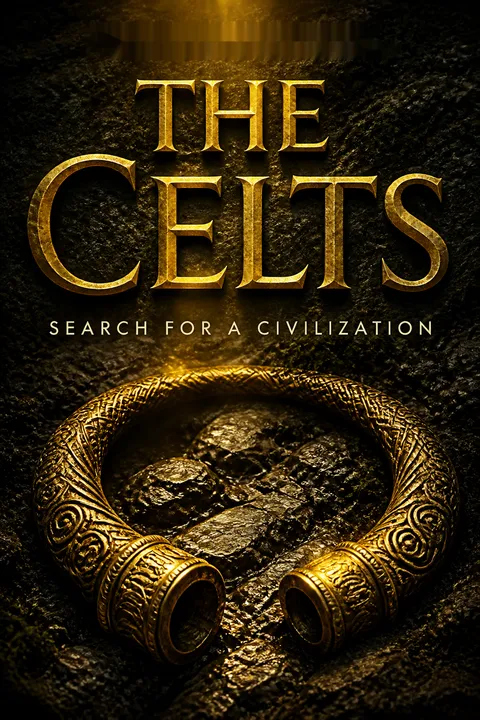


Key Takeaways
Do not mistake the Celts for one people with one origin.
A slippery label. Greek and Roman writers used versions of the name Celt for peoples beyond their own territories. Today, the term can refer to ancient language communities, archaeological styles, or modern identities in places such as Ireland, Wales, and Brittany. These meanings overlap, but they are not interchangeable. The Celts had no single empire, capital, or uniform material culture, so the name does not describe one clearly bounded nation.
A useful working definition. Roberts uses Celtic language as the strongest thread connecting otherwise varied peoples. Even that does not settle who counted as a Celt in every place and period. The book’s central lesson is methodological: state what the label means before using it, and do not let a convenient category pretend to be a fact about ancient people’s own identities.
The label problem resembles a broader issue in social history: categories used by scholars can be mistaken for categories people used about themselves. A shared language may create real connection without producing a single political identity, just as modern language communities are not automatically unified nations. Roberts’s approach is valuable because it keeps the term usable while exposing its limits. The caution matters especially when ancient labels are recruited to validate modern national or ethnic claims.
Separate language, ancestry, and artifacts before naming an identity.
Three different histories. A language can spread through trade, marriage, or specialist workers without a mass migration. Objects and artistic styles can travel through exchange, while genes move through family lines and population movement. The book argues that these processes rarely travel as one package. Hallstatt-style finds, for example, cannot by themselves prove that Celtic speakers arrived wherever those objects appear.
Genetic evidence is limited. Studies of modern populations offer clues, but they are difficult to use as direct maps of ancient migrations. The book cites research suggesting that much British and Irish paternal ancestry predates farming, while the genetic contribution of later arrivals may have been smaller than their linguistic influence. Such estimates remain complicated by the different results produced by different methods and samples.
This distinction is central to avoiding a common error: treating material culture as a proxy for ethnicity. Archaeology records what survived and where it was deposited, not necessarily who made an object or what language they spoke. Genetic data adds another layer, but ancestry is not a direct measure of cultural belonging. The strongest account therefore triangulates independent evidence and allows each type to answer only the questions it can support.
A shared style does not prove that a population migrated.
Britain without an invasion. For generations, archaeologists explained new Iron Age objects in Britain as signs of continental Celtic invasions. A distinctive sword, the Gundlingen type, was treated as evidence of Hallstatt warriors arriving in Britain. More recent analysis instead suggests the design developed from British Thames Valley swords, then travelled east and changed form. The direction of influence may have been the reverse of the familiar story.
Ideas move through people. The book describes exchange networks linking Britain, Ireland, France, and the Low Countries. Objects could pass through many hands, while craftspeople, traders, spouses, or warriors moved between communities. This does not mean migrations never happened. It means that a new style in the archaeological record is not, on its own, proof of an invading people.
The argument is a useful corrective to invasion-first explanations, which can make cultural change look simpler than it was. Diffusion requires contact, but not necessarily conquest or mass settlement. At the same time, the reverse-direction sword example warns against replacing one tidy story with another: the origin of a design is not always easy to establish, and particular objects may have travelled through several regions before burial.
Heuneburg was a city, not a barbarian village.
A northern city. Heuneburg, beside the Danube in southern Germany, was long understood mainly as a hill fort. Landscape surveys revealed a much larger settlement, including an outer area with roughly fifty farmsteads. At its height, the population may have reached at least 5,000. Its mud-brick defenses, workshops, trade links, and Mediterranean-style goods point to organized political and commercial life north of the Alps.
Luxury and power. The sixth-century Hochdorf Prince was buried with a bronze couch, a Greek-style cauldron holding about 500 litres, drinking vessels, and elaborate gold ornaments. Nearby, the Bettelbühl burial included a high-status woman and a child with matching jewellery. These finds reveal skilled craftspeople, far-reaching connections, and women of elite standing, challenging the picture of Iron Age societies as culturally simple or uniformly male-led.
Heuneburg matters because it exposes how much classical descriptions shaped later expectations. A society without Mediterranean-style written records could still build political centers, organize labor, and participate in long-distance commerce. The elite graves also show that wealth was not merely personal decoration: lavish burial could advertise a family’s standing to the living. Yet spectacular tombs disproportionately preserve elite lives, so they cannot stand in for the experience of most people.
Trace the Atlantic exchange routes in both directions.
A connected coastline. The book describes an Atlantic Bronze Age: a broad network of communities linked by sea from Iberia to Britain, Ireland, and beyond. Shared objects included bronze swords, spearheads, shields, and equipment for feasting. These connections began long before the Iron Age and were not simply a one-way flow from a supposedly advanced continent to a peripheral Britain.
Western innovations traveled too. Irish lunate spearheads have been found near Huelva in southern Spain. Gold bar torcs, probably first made in Ireland or southern England, later appeared in Wales and France. The flow included goods, techniques, and people. A craftsperson could carry knowledge as well as an object, while gift exchange and marriage could help maintain relationships between communities.
The coastline is not the edge of this story; it is one of its main routes. Seeing the sea as a connector changes the map from a central European core with distant margins into a web of neighboring communities. That model also helps explain why influence can be reciprocal. Still, shared objects do not prove that Atlantic communities saw themselves as one people. Connectivity is evidence of contact, not automatically of common identity.
Treat the Bronze-to-Iron transition as uneven, not sudden.
No universal switch. The familiar date of 800 BC is a rough marker, not a moment when Europe changed metals overnight. Ironworking spread gradually, and in Britain it took centuries before iron became common. Local societies kept practices from the Bronze Age while adopting new technologies and forms of organization.
The hoards remain a puzzle. Across Britain, Ireland, and France, people buried bronze objects or placed them in rivers and lakes. Some deposits may have been offerings; buried hoards could also have been hidden valuables. Climate stress, disrupted trade, and changing power structures have all been proposed as explanations, but the evidence does not establish one cause. The deposits are evidence of deliberate or repeated behavior, not a complete explanation of what people believed.
The long transition resists the dramatic before-and-after narrative that period labels invite. Archaeological categories are tools for comparison, not natural boundaries experienced uniformly by everyone. The hoards are a good example of disciplined uncertainty: several explanations may fit parts of the evidence, while none accounts for every deposit. Preserving that ambiguity is more informative than turning a plausible interpretation into a settled fact.
Take the Atlantic-origin theory seriously, but keep it provisional.
An older western language. The book presents the theory called Celtic from the West, developed by archaeologist Barry Cunliffe and linguist John Koch. Koch argues that inscriptions found on stone markers in southwest Portugal preserve Tartessian, an early Celtic language. Some inscriptions date to around 650 to 625 BC, earlier than the earliest known Lepontic inscriptions from northern Italy. If this reading is right, Celtic speech was present in Iberia before the central European Iron Age cultures traditionally linked to Celtic origins.
A live debate. The inscriptions do not prove that all Celtic languages began in Iberia, or that one migration carried them across Europe. Their interpretation is contested, and the book notes scholars who reject both western and central European origin stories as unprovable. The theory challenges the standard model, but it remains a hypothesis built from linguistic and archaeological interpretation.
The theory’s importance lies less in replacing one homeland with another than in breaking the assumed link between language and Hallstatt or La Tène artifacts. It encourages scholars to reexamine neglected evidence and ask how languages travel through networks. Its vulnerability is the same as its appeal: a small, difficult-to-interpret inscription corpus can carry large historical implications. A strong hypothesis deserves serious testing, not premature consensus.
Read Roman accounts as observations filtered through rivalry.
Useful, not neutral. The Greeks and Romans supply many of the written descriptions of the Celts, including accounts of Druids, warfare, and sacrifice. Their reports preserve information unavailable elsewhere, but their authors viewed northern peoples as outsiders and often had political reasons to emphasize their strangeness. Caesar, for example, described Druids as religious leaders and judges, but also repeated claims of human sacrifice.
Check texts against remains. At Ribemont in France, archaeologists found evidence that human bodies had been decapitated and their bones deliberately arranged. That supports the reality of violent treatment of the dead, but it cannot establish the precise ritual or motive described by Roman writers. Medieval Irish and Welsh stories preserve older oral material, yet they too were written down long after the Iron Age.
The best reading is neither to accept classical texts literally nor to dismiss them as propaganda. Their distortions can themselves reveal the boundary Romans wanted to draw between civilized and barbarian. Archaeology can test certain claims, such as decapitation, but rarely recovers intention with equal confidence. Myths offer another kind of evidence: they preserve cultural themes, though their age and continuity must be argued rather than assumed.
Rome changed Celtic rule unevenly, while local languages endured.
Conquest was not uniform. Roman expansion brought Gaul under control after the defeat of Vercingetorix at Alesia in 52 BC, and the invasion of Britain began in 43 AD. The process included alliances, trade, taxation, and revolt, not just battlefield victories. Boudica’s uprising in 60 to 61 AD showed how Roman rule could provoke resistance even in a region with close ties to the empire.
Different places changed differently. Southern Britain became more Romanized than Wales, the north, or the southwest. Latin served as the language of imperial power, but Brittonic continued and later developed into Welsh, Cornish, and Breton. Irish remained outside Roman rule while trading with Roman Britain. The Celtic story therefore includes both the disruption of political independence and the persistence of cultural and linguistic traditions.
Empire often governs through existing elites and institutions rather than erasing every local practice. That helps explain why Romanization could be deep in one region and shallow in another. Language survival is especially revealing because it can outlast the political structures that once supported it. But continuity should not be mistaken for cultural stasis: a language can persist while its speakers’ institutions, identities, and daily lives change substantially.
Tell human stories, but mark where evidence ends and imagination begins.
A body is not a biography. Old Croghan Man, found in an Irish bog, had suffered several severe injuries before his body was deposited. Another bog body, Moydrum Man, had hundreds of sloe stones in the digestive tract, suggesting an unusual final meal. Some researchers interpret such evidence through myths about failed kings and ritual killing. The injuries and food remains are observable; the person’s status, motive for death, and the meaning of the meal are much less certain.
Storytelling has limits. Roberts reconstructs a possible scene around Old Croghan Man, then makes clear that it is imaginative, not established history. Such scenes can help readers feel the human stakes, but they should not be confused with what bones, objects, and texts demonstrate. The most responsible account keeps facts, interpretations, and invented connective tissue distinct.
This distinction resembles the difference between data and a model: evidence constrains the story, but it rarely supplies every missing detail. Narrative can make prehistory emotionally legible, especially when the record is fragmentary, yet vividness can create an illusion of certainty. The book’s explicit boundary between finding and reconstruction is therefore not a weakness. It is a safeguard that lets empathy coexist with intellectual honesty.
Analysis
The book’s strongest contribution is not a definitive answer to where the Celts began. It is a better way to pose the question. The label Celtic gathers together evidence that does not always align: language, art, political history, burial customs, and ancestry. Roberts repeatedly separates those strands, showing that an artifact style can spread without a mass migration, a language can persist without political independence, and a Roman account can preserve information while also serving Roman interests.
The journey from Hochdorf and Heuneburg to Britain, Anatolia, and Portugal gives this argument narrative force. A golden grave, a reconstructed city, a sword type, or a carved inscription becomes a test of inherited assumptions. The evidence complicates the image of a barbarian fringe: Heuneburg had city-scale organization, Atlantic communities exchanged goods in both directions, and Celtic-speaking groups could adopt local customs after migration. The book also treats uncertainty as part of the subject rather than a gap to hide. Ribemont can attest to decapitation without explaining its meaning; a bog body can reveal trauma without revealing why the victim died.
The Atlantic-origin theory is the most consequential and least settled part of the account. Tartessian inscriptions, if correctly identified as Celtic, undermine the familiar central European origin story. But a linguistic interpretation of a limited inscription record cannot by itself reconstruct the complete movement of languages and peoples. The book is most persuasive when it presents the theory as a challenge that changes what evidence deserves attention, rather than as a new orthodoxy.
The result is a history of connection without a single Celtic blueprint. It replaces a simple people moving across a map with overlapping networks, local adaptations, political upheavals, and changing identities. The central intellectual payoff is not that the Celts become easier to define, but that their complexity becomes harder to ignore.
Review Summary
The Celts receives mostly positive reviews for its engaging exploration of Celtic history and identity. Readers appreciate Roberts' cautious approach to evidence and willingness to challenge assumptions. Many find the book informative and accessible, praising its coverage of archaeological findings and linguistic theories. Some criticize the writing style as overly dramatic or simplified. A few readers express disappointment with the lack of definitive conclusions about Celtic origins. Overall, the book is seen as a valuable introduction to current debates surrounding Celtic civilization and heritage.
People Also Read
Glossary
Hallstatt culture
Early Iron Age central EuropeAn archaeological culture identified through distinctive objects, burial practices, and settlements in central Europe, especially around the Alps, from roughly the eighth to sixth centuries BC. The name comes from Hallstatt in Austria, where a large cemetery and salt-mining remains were excavated. It is often associated with early Celtic history, but its material culture does not by itself prove a shared language or ethnic identity.
La Tène culture
Later Iron Age material cultureAn archaeological culture associated with distinctive metalwork and artistic designs that emerged in central Europe around the middle of the first millennium BC. Its name comes from a site beside Lake Neuchâtel in Switzerland. La Tène styles spread widely, including into Britain and Ireland, where local craftspeople adapted them. Their spread records connections and influence, but does not automatically demonstrate mass migration.
Atlantic Bronze Age
Connected Atlantic coastal societiesA term for the linked communities along the Atlantic edge of Europe during the Bronze Age, from Iberia through France and the British Isles. Similar objects, including weapons and feasting equipment, indicate sustained contact and exchange. The term describes a broad pattern of material connections, not a unified state or a single people with a proven common identity.
Tartessian
Ancient Iberian language and scriptThe language represented by inscriptions on stone markers found mainly in southwest Iberia, associated with the ancient region of Tartessos. John Koch argues that the inscriptions preserve an early Celtic language, a reading that would place Celtic speech in Iberia by the early Iron Age. This identification is disputed, and the inscriptions remain difficult to interpret.
Celtic from the West
Western-origin hypothesis for CelticA hypothesis associated with archaeologist Barry Cunliffe and linguist John Koch that places the development of Celtic language in western Europe, particularly in Atlantic-connected regions, rather than in an Iron Age central European homeland. The interpretation of Tartessian inscriptions as Celtic supports the proposal. It challenges the traditional model but remains contested and does not establish one simple migration route.
oppida
Late Iron Age political centersA Roman term used by Julius Caesar for fortified settlements in Celtic territories. These centers could serve as hubs for trade, production, and regional power. Their forms varied, from elevated settlements to defended sites on level ground or promontories. The term refers to a recognizable kind of settlement, not a single standardized urban plan.
Download PDF
Download EPUB
.epub digital book format is ideal for reading ebooks on phones, tablets, and e-readers.








