

Key Takeaways
Read the North Sea as one political arena, not separate national histories.
Borders were permeable. The book follows power across England, Scandinavia, Normandy, and even Muslim Iberia. Olaf Haraldsson, for example, fought in England, hired himself to the Duke of Normandy, raided along the French and Spanish coasts, then returned to build a Norwegian kingdom. Cnut's conquest of England depended on Scandinavian armies and alliances, while English silver helped finance wars across the sea. The region was not a set of sealed countries competing from a distance. It was a connected world of rulers, warriors, merchants, and political marriages.
Follow the relationships. A leader's allegiance could change when the balance of money and military power changed. The same warlord might serve a Danish king, fight for an English king, and later help a rival conquer Norway. Seeing these connections makes the story less like a national origin myth and more like a contest for control of a shared political landscape.
What's striking is how much explanatory power comes from changing the map. A battle in England can alter a Norwegian succession, while a marriage in Normandy can shape who rules in London. This approach resists the habit of treating modern borders as ancient facts. It also shows why political history is best understood through networks: people, ships, money, and claims moved along the same routes. The risk is that a connected perspective can make ordinary people seem like scenery, so the account's attention to peasants, captives, and local communities matters.
Silver paid warriors, and each victory made the next campaign necessary.
Money kept armies moving. England's unusually rich wool trade brought silver into a kingdom with more than seventy royal mints. Its rulers periodically recalled and reminted coins, taking a share in the process. Danish leaders could seize that wealth through raids, tribute, control of shipping, and eventually conquest. In 991, Æthelred paid 10,000 pounds of silver; in 1012, the payment to Thorkell's army reached 48,000 pounds. Cnut's government later collected 82,500 pounds in taxes, more than all the earlier tributes combined.
Success created obligations. A king had to reward the warriors whose loyalty had won him wealth and territory. Those rewards attracted more fighters, who required more victories and more silver. The cycle could enrich a ruler, but it also made peace dangerous: a leader whose army went unpaid risked losing the very force that kept him in power.
The book makes wealth an active political force, not a background measure of prosperity. Silver could be taxed, transported, distributed, and converted into loyalty, so it connected economic systems directly to military capacity. The comparison between tribute and Cnut's later tax collection also reveals two kinds of power: extracting money because an enemy threatens destruction, and collecting it through a functioning regime. Yet the same currency could finance either. Money alone did not create authority; it bought time and followers, while political skill determined what those resources could sustain.
A kingdom can survive invasion yet lose itself through elite fracture.
Æthelred's defenses had a human weakness. The Anglo-Saxon kingdom inherited a sophisticated administration, but its leading families competed for influence and often distrusted the king. Æthelred's 1002 order to kill people of Danish descent deepened the conflict, including in communities where Norse settlers had lived for generations. In 1009, he assembled a fleet of about 200 ships and 9,000 men. Before it could confront the Danes, a feud between two commanders split the force. One rebelled, another pursued him, and a storm destroyed ships and men. The fleet dissolved without meeting the invaders.
Institutions need cooperation. Æthelred could issue orders and mobilize labor, but he could not make his powerful subordinates act together. When Sweyn invaded in 1013, many communities submitted rather than fight for a king they no longer trusted to protect them.
The failed fleet is a compact lesson in the difference between capacity and cohesion. A government may possess ships, money, and a chain of command, yet still fail when leaders treat coordination as less important than settling private scores. The massacre of 1002 also shows how an attempt to manufacture unity through ethnic suspicion can instead widen the pool of potential enemies. The account does not reduce Æthelred's defeat to personal incompetence: it shows a ruler operating inside a fractured political system that his own decisions further destabilized.
Armies conquered by controlling food, routes, and the terror of uncertainty.
War required daily provisions. Medieval armies could not carry enough food for long campaigns, so they lived off the territory they entered. Thorkell's force arrived in England shortly after the harvest in 1009, when grain and livestock were available. Its soldiers raided farms, seized provisions, burned settlements, and moved by ship to attack where defenders were absent. This was not random violence alone: taking food sustained the army while denying resources to the people and forces opposing it.
Mobility magnified fear. The Danes avoided risky battles when they could, using ships and local knowledge to appear, plunder, and withdraw. At Ringmere in 1010, however, a direct battle shattered the English militia, known as the fyrd, a force of free men called up for service. After its ranks broke, resistance largely collapsed and the raiders moved through wide areas of England.
What's memorable here is the logistical view of violence. A battlefield is only one episode in a campaign; food, distance, transport, and morale shape what armies can accomplish. The raiders' mobility made uncertainty itself a weapon, since defenders had to guess where to concentrate. The distinction between the experienced Danish force and the less practiced fyrd also suggests why numbers alone do not predict results. Still, the devastation was not merely a clever strategy viewed from above. For the people whose harvests and homes were taken, military efficiency meant hunger, displacement, and death.
Treat conversion as both conviction and a tool of political order.
Baptism joined rulers together. Olaf was baptized in Rouen while entering the service of Æthelred, in a ceremony led by the Archbishop of Rouen. Such rituals marked a political alliance as well as a religious commitment: a Christian ruler could stand as godfather to a newly baptized leader, linking them through public vows and shared faith. Earlier, Olaf may have received primsigning, a preliminary rite that marked someone as Christian enough to take part in Christian dealings without completing baptism.
A new faith strengthened kingship. Christianity brought priests, churches, common rituals, and a religious language that placed legitimate authority under one God. Olaf's government used priests and church-building to extend its reach. But conversion was gradual, and people could combine Christian symbols with older practices. The sources do not support a simple story of instant, uniform religious change.
The account avoids treating faith as either pure belief or cynical disguise. For people of this period, spiritual and political life were intertwined, so an alliance marked by baptism could be sincere and strategically useful at once. Christianity also offered kings a shared institutional language and a model of concentrated authority. That advantage should not obscure the costs of religious consolidation: older customs were suppressed, and royal power could enforce the new order violently. The strongest reading holds both realities together without assuming that strategic purpose cancels religious conviction.
A medieval king ruled through people, gifts, ritual, and constant travel.
Power was personal. A hird was a king's household of sworn warriors and close followers, bound to him by loyalty and rewarded with wealth. A thing was an assembly where free men met, settled disputes, and could formally hail a king. These institutions did not make the ruler all-powerful. A king still needed local leaders to cooperate, and his authority depended on oaths, alliances, and the ability to reward supporters.
Rule happened on the road. Olaf moved among farms and regions with his retinue, meeting local elites, holding feasts, and giving valuable gifts. His skalds, court poets who praised rulers in verse, helped turn military success into public prestige. Such rituals made rank and allegiance visible in a society where few could read. A king's followers were not a modern civil service: many served because the ruler's generosity and success made loyalty worthwhile.
This model of kingship makes administration look less like a distant office and more like a recurring performance of relationships. Gifts, feasts, public acclamations, and travel were not decorative extras; they helped make authority legible and maintain personal ties across a large territory. That system could be remarkably effective when a ruler had resources and charisma. Its weakness was equally clear: loyalty could fade when rewards dried up, and local magnates kept power of their own. The king's presence held the network together, but could not make it impersonal.
Cnut secured conquest by turning enemies into stakeholders, then removing threats.
Conquest began with alliances. In 1013, Sweyn Forkbeard gained support in northern England before marching south. His son Cnut married Ælfgifu, daughter of a family harmed by Æthelred's regime, helping bind local interests to the invasion. After Sweyn's death, Cnut initially lost England, but returned and fought a long campaign against Edmund Ironside. When Edmund died in 1016, Cnut became king.
He made victory governable. Cnut married Emma, Æthelred's widow, giving his rule a connection to the old dynasty. He retained useful English leaders, appointed loyal Norse followers, supported churches, and issued laws intended to protect people and property. He also executed rivals, including Eadric Streona, and kept a smaller fleet after his position stabilized. His rule combined accommodation with force: former enemies could gain from the new order, but threats to it could be eliminated.
Cnut's achievement was not simply winning battles. He recognized that a conqueror needs collaborators, legitimacy, and a way to reassure a population exhausted by war. Marriage, law, church patronage, and appointments helped turn occupation into government. The purges show the other edge of that strategy: inclusion was conditional, not a general ethic of tolerance. This is a useful distinction between coalition-building and reconciliation. A ruler can make former opponents invested in a regime without healing the grievances that made them opponents.
Olaf's generosity built his kingdom, but coercion and empty coffers unmade it.
Olaf bought a path to power. Rich from campaigns and tribute in England, he returned to Norway and gathered followers through gifts, alliances, and force. His victory at Nesjar in 1016 weakened the Jarls of Lade, and he was hailed king across much of Norway. But his authority rested heavily on personal loyalty and wealth, while Cnut controlled the richer English kingdom and could send silver to Norwegian rivals.
Pressure turned supporters into enemies. Olaf's reserves shrank, and his harsh punishments alienated powerful men. He executed a young supporter despite pleas for mercy, and his feud with Thorir Hund deepened. In 1026, Olaf and his Swedish ally attacked Denmark, but Cnut's fleet blocked their return route. Olaf's weakened army marched home through the forests. As Norwegian leaders defected, Cnut entered the country in 1028 and Olaf fled.
Olaf's rise and collapse expose a central tension in personal rule: generosity can create loyalty, but it also creates a recurring bill. Once Cnut could offer more, Olaf's followers had incentives to reconsider their allegiance. His punitive style further narrowed the room for compromise. The account does not imply that a kinder king could simply have overcome Cnut's superior resources; it shows how external pressure and internal choices reinforced one another. His defeat was not a single bad decision, but a network losing both money and trust.
Separate historical evidence from the legends that make kings memorable.
The sources have different limits. The Anglo-Saxon Chronicle records events from an English perspective; Norse skalds praised the rulers who paid them; later sagas shaped older memories into coherent stories. The poems can preserve early details, but their praise is not neutral testimony. Snorri Sturluson, writing two centuries after Olaf, combined inherited poems, earlier histories, oral stories, and invention. The book opens with Snorri's murder in 1241, a reminder that the gifted historian was also a politician caught in the power struggles he described.
Uncertainty is part of the story. Some events, such as Olaf's far-flung raids, can be reconstructed by comparing sources from different regions. His agreement with Cnut is far less clear. The account marks this distinction rather than forcing every fragment into a tidy explanation.
What's valuable is the refusal to confuse a compelling narrative with certainty. Historical reconstruction works by comparing sources whose interests and distances differ, then stating where the evidence grows thin. This method also complicates the idea that a single chronicle preserves a transparent past. The surviving record favors rulers, clerics, and battles, while ordinary lives appear in brief glimpses. The result is not a reason to abandon historical storytelling. It is a reason to keep confidence proportional to evidence and to treat gaps as meaningful limits.
Empires built on one ruler's networks rarely outlive that ruler.
Cnut's empire was immense but personal. By the late 1020s, he ruled England, Denmark, and Norway, with influence extending into parts of Sweden and other neighboring lands. His strength came from a combination of wealth, military force, alliances, and loyal deputies. When Cnut died in 1035, conflict among his sons and followers broke the political structure apart. The empire did not have institutions strong enough to preserve its unity without him.
Memory reshaped the defeated king. Olaf died at Stiklestad in 1030, but his political defeat did not end his influence. His bishop declared him a saint, and his memory became a source of religious and royal legitimacy in Norway. The contrast is sharp: Cnut's vast realm dissolved, while stories about Olaf helped successive rulers claim continuity. Neither outcome erased the violence that had built their power.
The ending distinguishes political durability from symbolic durability. Cnut could command a vast realm, but its unity depended on a ruler and relationships that did not automatically transfer to his heirs. Olaf's posthumous sanctity worked differently: it converted a failed king into a lasting source of legitimacy. Memory can therefore preserve authority after institutions collapse, although it does so by selecting and reshaping the past. The contrast warns against measuring historical importance only by territory held or years ruled.
Analysis
The book's central argument is that early eleventh-century power was built through mobile wealth and personal relationships, not through stable national institutions. Kings could command impressive fleets, mint coins, and issue laws, yet their authority remained contingent on the loyalty of warlords and regional elites. England's administrative sophistication did not protect Æthelred when his commanders divided; Olaf's Norwegian kingdom did not survive when his resources and alliances weakened. Cnut's success came from combining military pressure with strategic marriages, political appointments, religious patronage, and an ability to incorporate useful opponents.
The contrast between England and Norway is especially revealing. England had a dense system of mints and officials, while Norway depended more on traveling kings, local magnates, and the wealth brought home from overseas. Yet neither system made rule automatic. The English state could mobilize labor on a grand scale, as Æthelred's fleet shows, but elite rivalry could undo that effort. Olaf could build a kingdom quickly with battle victories and generosity, but that same model made his authority vulnerable to a richer rival. The book therefore treats political organization as a spectrum, not a clean division between state and non-state societies.
Its account of Christianity is similarly structural. Conversion brought new beliefs, but also priests, ritual, literacy, and a universal framework that suited expanding royal authority. The process was neither instantaneous nor merely cynical. The same act could express faith, secure an alliance, and strengthen a ruler's reach.
The narrative's strongest methodological move is to keep the distance between events and their later memory visible. Contemporary poetry, chronicles, archaeology, and later saga-writing offer different kinds of evidence, none complete. Snorri's role as both historian and political actor makes that problem vivid. The result is a history that resists national myth without pretending to recover every motive. Its governing insight is not that power was chaotic, but that its order depended on constant bargaining, and could unravel when money, trust, or military advantage shifted.
Review Summary
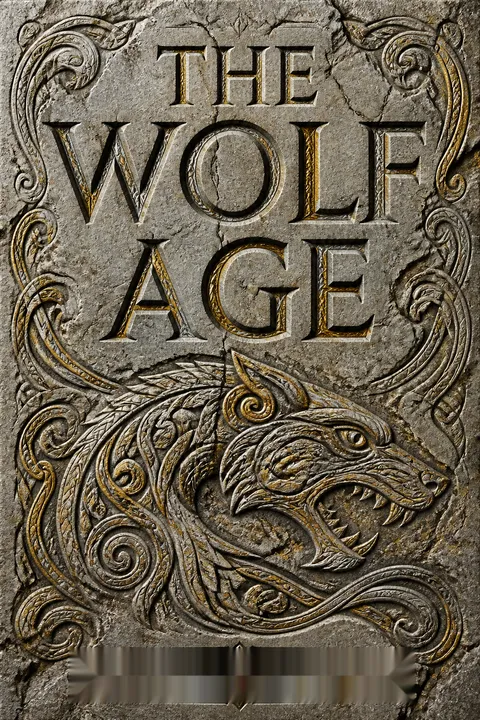
The Wolf Age receives widespread praise for its engaging narrative of late Viking-era Scandinavia and England. Readers appreciate Skeie's balanced perspective, skillful storytelling, and use of skaldic poetry. The book offers insights into key figures like Cnut the Great and Olaf Haraldsson, while providing a comprehensive view of the North Sea Empire. Some readers found the numerous characters challenging to follow, and a few desired more maps or social history. Overall, it's highly recommended for those interested in Viking and Anglo-Saxon history.
People Also Read




Glossary
hird
A ruler's sworn householdA king or chieftain's close retinue of warriors and followers, bound by personal oaths and often living or traveling with their lord. The ruler owed them protection, food, and rewards, while they supplied military service and loyalty. In the book, a hird is a central part of a ruler's power, not a modern professional bureaucracy.
thing
An assembly of free menA public gathering where free men met to discuss shared matters, settle legal disputes, and take part in political decisions. In Norway, local and regional things could formally acclaim a king, helping legitimize his rule. The institution linked royal authority to the consent and participation of influential local communities.
fyrd
The English local militiaThe Anglo-Saxon militia made up of free men liable for compulsory military service. It formed a substantial part of England's forces, but its members were often less experienced than professional warriors. The book emphasizes that the fyrd could be difficult to keep in the field for long periods, especially when defeat or farming demands pulled men home.
primsigning
A preliminary Christian riteA simplified baptismal ritual used in the Nordic world during the conversion period. It marked a person as sufficiently Christian to participate in dealings with Christian communities, but did not bind the person in the same way as full baptism. It could involve a priest making the sign of the cross and placing consecrated salt or grain in the person's mouth.
skald
A Norse court poetA poet who served rulers and prominent men by composing and performing praise poetry, often about battles, leadership, and generosity. Skalds received valuable gifts and sometimes fought alongside their patrons. Their poems preserve important early evidence, but their role as paid celebrants means their accounts must be read with attention to praise and exaggeration.
Danelaw
The Norse-influenced English regionThe part of England where Danish law and custom had held sway after Scandinavian settlement and conquest. Its population included descendants of Norse settlers as well as Anglo-Saxons. By the time of Æthelred and Cnut, the Danelaw was not simply a separate ethnic territory; its local leaders had political interests and could choose whether to support a particular king.
heregeld
An annual land taxA tax imposed by Æthelred to finance Thorkell the Tall and his Danish troops after Thorkell entered English service in 1012. The payment allowed the king to retain a powerful army, but placed a new financial burden on his subjects. It illustrates how rulers used taxation to convert the wealth of a kingdom into military loyalty.
North Sea Empire
Cnut's cross-sea dominionThe political realm assembled by Cnut, who ruled England and Denmark and later brought Norway under his authority. It also included influence over neighboring territories. The empire depended on military force, wealth, dynastic alliances, and trusted deputies rather than a unified central administration, and it fragmented after Cnut's death.
Download PDF
Download EPUB
.epub digital book format is ideal for reading ebooks on phones, tablets, and e-readers.








