

Key Takeaways
Treat nature, science, and spirit as complementary ways of knowing
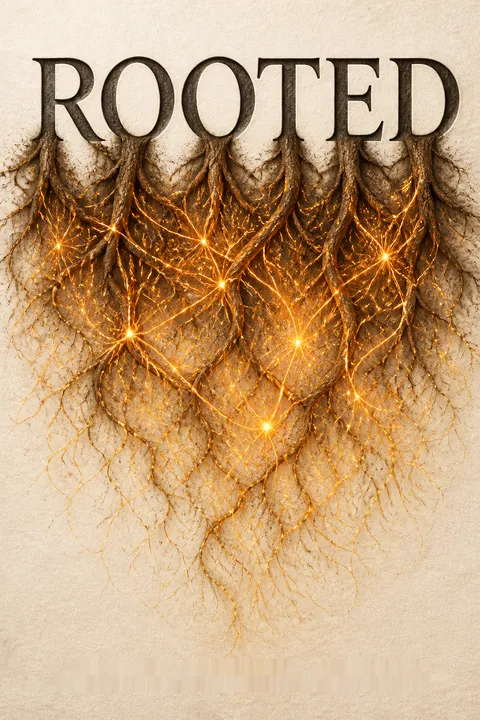
Start with connection. Haupt’s childhood sanctuary, Frog Church, was a quiet creekside place where she watched frogs and learned that attention could make the living world feel sacred. As an adult, she joins that experience with ecology and research: studies of forests, animals, and human health offer evidence that people and other forms of life affect one another. Rootedness, the book’s central idea, means living with this mutual dependence in view, not treating nature as scenery or a resource.
Make knowing practical. Haupt notes that North Americans spend more than 93 percent of waking hours indoors or in cars. Her answer is not to choose science over intuition, or spirituality over facts, but to let each deepen attention and motivate care.
The strength of this approach is its refusal to make empirical evidence the only doorway into environmental concern. Lived attention can create attachment, while science can reveal processes that casual observation misses. Those forms of knowledge can reinforce each other without becoming interchangeable: a spiritual sense that a tree is a relation is meaningful, but it does not establish a biological claim about how trees communicate. Keeping that distinction clear protects both wonder and scientific credibility. It also makes the book’s central argument more durable across readers with different religious beliefs.
Answer ecological despair with presence and responsibility, not guaranteed success
Hope means showing up. Haupt uses the monastic word adsum, meaning “I am here,” for a response to crisis that does not depend on certainty that everything will turn out well. Rachel Carson embodied this stance when evidence of birds harmed by pesticides made silence impossible for her. Her writing could not guarantee a particular outcome, but it made a consequential response possible.
Act without a forecast. The book rejects both blind optimism and paralysis. Its retelling of the medieval story of Francis and the wolf makes a related point: Francis resolves the villagers’ conflict by listening to the hungry, injured animal and helping the community respond to its needs, rather than simply trying to overpower it.
This account of hope resembles a useful distinction in social movements: commitment can be grounded in responsibility, not confidence in victory. That keeps action from depending on emotional weather or a tidy prediction. It also makes room for grief, which is not proof that effort has failed. The caution is that presence alone is not a strategy. Attention and moral resolve matter most when they connect to organized work, political choices, and material changes that address the causes of harm.
Let your feet relearn the terrain before trusting them to run
Recover sensory intelligence. Haupt finds that barefoot walking can make the ground a source of information: soft soil, roots, temperature, and unevenness demand attention in ways a flat sidewalk does not. She is skeptical of claims that direct contact with the earth balances electrical charges and cures illness. The stronger support she finds is biomechanical: varied surfaces engage foot muscles and movement.
Progress slowly. After fracturing a toe, she tried stiff-soled shoes, then gradually returned to natural ground with short, careful walks, building toward longer ones over months. The caution is important: the barefoot running trend inspired by Born to Run led many runners to take on too much too soon and suffer injuries. The useful lesson is gradual adaptation, not rejecting protective footwear.
This argument connects with embodied cognition: perception is not confined to the brain but shaped by movement and bodily feedback. A complicated surface can train attention as well as strength. Yet barefoot walking is not equally safe or practical for everyone. Injury, diabetes, sensory differences, local hazards, and access to green space all matter. The most transferable principle is to restore varied, attentive movement where possible, rather than treating shoelessness as a universal prescription or a test of virtue.
Wander without a destination to rebuild attention and local knowledge
Let curiosity steer. Wandering differs from walking to a goal: the route changes according to what catches attention. Haupt describes following a neighborhood coyote and losing her familiar sense of direction, only to find an unfamiliar hilltop garden with a stone labyrinth. The detour gave her a new understanding of a place she had lived in for years.
Map through experience. Research on place and location neurons, recognized by the 2014 Nobel Prize in Medicine, links spatial awareness with memory. Wandering offers practice for these capacities and builds familiarity with local landmarks, plants, and animal routes. The seventeenth-century poet Bashō also used long, uncertain journeys to escape ordinary routines and make room for new perception and poetry.
Unstructured movement can interrupt the efficiency mindset that narrows attention to destinations and arrival times. It resembles exploratory learning: people form richer mental maps when they navigate rather than merely follow instructions. Still, wandering is easier for some than others. Time, disability, personal safety, and the design of a neighborhood shape who can roam freely. The idea need not mean aimless travel; a small, familiar area can become newly legible when the walker chooses observation over the shortest route.
Take the forest as a living community, not a wellness product
Nature can calm the body. Shinrin-yoku, or forest bathing, refers to taking in a forest through the senses. In one study of nearly 300 participants, people spent about fifteen minutes in forest and urban settings. After forest exposure, researchers recorded improved measures including blood pressure, cortisol, and calming parasympathetic activity. Haupt reports a 102 percent increase in that activity after forest walking.
Health is not the whole relationship. Haupt values this research but worries when forests become products marketed as therapy, or when recordings and virtual landscapes are treated as adequate replacements for living places. A forest may benefit human health, but its value does not depend on that benefit. Its plants, animals, and ecological relationships matter in their own right.
The health case can open doors for people who might otherwise overlook nearby green space, and measurable benefits can influence public planning. The deeper challenge is to avoid making nature’s protection contingent on its usefulness to humans. That is a familiar problem in environmental policy: instrumental arguments can win support, yet they can also imply that a place with fewer measurable benefits is disposable. Health evidence is a persuasive starting point, not a complete account of why forests deserve care.
Choose solitude deliberately, then return with what it teaches
Being alone can be demanding. Haupt describes solo camping in which imagined threats kept her awake, even though morning brought mist, elk, and a family of mergansers. A 2014 study she cites found that some participants chose painful electric shocks rather than sit alone with their thoughts for fifteen minutes. Her point is not that solitude feels easy, but that discomfort can reveal thoughts and feelings usually drowned out by distraction.
Separate solitude from isolation. The book draws a clear line between chosen time alone and unwanted social disconnection. Solitude can be restorative when it is voluntary and the person can return to company. Raichle’s research on the brain’s default activity helps explain why quiet can bring memories and emotions into sharper focus.
Chosen solitude can support reflection because it reduces social performance and constant input. But it is not a cure-all, and the distinction between solitude and isolation is essential: the same lack of company can be nourishing when chosen and damaging when imposed. Access is unequal, especially for caregivers and people without safe places to go. The practical aim is not to romanticize the wilderness or endure fear at any cost, but to create manageable, voluntary intervals without digital interruption.
Let darkness restore what artificial light disrupts
Night is habitat. Haupt challenges the habit of treating darkness as a symbol of danger or evil. For many organisms, darkness is not an absence but a necessary condition for life. Seeds germinate, soil communities work, and nocturnal animals navigate within rhythms shaped by night.
Artificial light has consequences. Migrating birds can mistake city lights for celestial or coastal cues and collide with buildings; the book cites estimates of up to a billion bird deaths from building collisions annually, with artificial light contributing substantially. Sea turtle hatchlings can also be drawn away from the ocean by nearby lights. Haupt’s practical suggestions include reducing outdoor lighting, especially during bird migration, and making room for night walks, sleep, and natural dark.
Darkness is an ecological resource, not merely a human mood or aesthetic. This framing helps connect individual habits, such as leaving lights on, to the conditions other species need. It also suggests a policy question: how can towns preserve visibility where people need it while reducing unnecessary illumination elsewhere? Night does not feel safe or welcoming to everyone, so an invitation to experience darkness should not become a demand. Protecting dark habitat can be a collective design choice, not just a personal adventure.
Meet animals on their terms, and let stillness do the introducing
Treat other animals as relations. Haupt tells of finding a young doe killed by an illegal arrow. Grief first drove her away, then she returned, removed the arrow, and sat with the animal before vultures arrived. The encounter changed from horror at a death into an act of attention and respect.
Observe without pretending to know everything. The 2012 Cambridge Declaration on Consciousness affirmed that many animals possess forms of consciousness deserving ethical consideration. Haupt also describes a sit spot, a chosen outdoor place visited repeatedly and quietly. As an observer becomes still, nearby animals may resume ordinary behavior. Their intelligence can be recognized without assuming it is identical to human thought.
This section balances kinship with epistemic humility. Recognizing fear, pain, or social bonds in animals can correct a long history of dismissing their experience, while careful observation can keep empathy from becoming projection. A sit spot also reveals that human presence changes what can be seen: the observer is part of the encounter, not a neutral camera. Respectful attention therefore includes distance, patience, and restraint, especially when an animal’s welfare or safety is at stake.
Learn local names, and question the power hidden in official ones
Names shape attention. Knowing a plant or bird by a specific name can make it easier to notice and remember. But Haupt points out that many North American bird names honor white male explorers and scientists, including some whose histories involve violence or exploitation. In her account, nearly a hundred official bird names commemorate such men.
Make naming more accountable. Scientific names help researchers avoid confusion across languages, while local and Indigenous names can preserve relationships to place, food, medicine, and story. Haupt highlights Robin Wall Kimmerer’s proposed pronoun ki for a being of the living earth, offering an alternative to treating other life as an object. The goal is not to discard useful classification, but to ask whose knowledge it privileges.
Naming is a form of infrastructure for attention: what has a stable name is easier to teach, record, and defend. Yet a single standardized vocabulary can conceal the history of who had authority to classify the world. Combining scientific terminology with local and Indigenous knowledge can make natural history more precise and less extractive. New words also have to become usable in everyday speech. Their value depends not only on their ethical intention but on whether communities can adopt them meaningfully.
Treat forests as communities whose hidden ties change conservation
Look below the canopy. Suzanne Simard’s research began with an unexpected observation: Douglas firs did worse when nearby birches were removed. Experiments then showed that carbon could pass between connected seedlings. Research on mycorrhizal networks describes partnerships between fungi and plant roots: fungi provide nutrients, while plants supply sugars made through photosynthesis.
Protect relationships, not just specimens. Older “mother” or hub trees can be important connection points in a forest, offering shade and shelter as well as links to other plants. These findings challenge the idea that trees only compete as isolated individuals. They also complicate conservation: removing one tree can affect relationships that are difficult to see from aboveground.
The research makes a powerful case for managing forests as interacting systems rather than inventories of valuable timber. At the same time, a network metaphor can invite overly human interpretations, as if trees cooperate with conscious intentions or fungi form a literal internet. The scientific value lies in specific exchanges and ecological effects, not in turning forests into people. Conservation benefits from both parts of the insight: take hidden connections seriously, and remain precise about what evidence shows.
Make your own creative gift answer a specific ecological need
Do not try to do everything. Haupt holds together the many urgent needs of the planet with the fact that no one person can answer them all. She borrows the monastic term charism for a distinctive gift offered in service. Rachel Carson’s writing, for example, became her way of answering the harms she witnessed in nature.
Let the everyday count. Creativity and activism are not opposites: writing, organizing, art, caregiving, and changing household choices can all express a response to ecological crisis. Haupt stresses that domestic life is connected to distant places through food, energy, transport, and waste. Personal choices are not a substitute for structural change, but they can make daily life more consistent with the relationships a person wants to defend.
The idea of a particular gift offers a useful answer to overwhelm: people can contribute through different capacities without pretending that everyone must become a full-time activist. Its strongest form links personal skill to a real need and to other people’s work. Its limit is equally important. Household decisions are meaningful, but they cannot by themselves repair systems built around high consumption or unequal power. Personal congruence matters most when it supports collective action rather than replacing it.
See death as an ecological passage, not a clean ending
The body returns to life. Haupt describes the thanatomicrobiome, the changing community of microbes that becomes active as a body decomposes. Insects and other animals then use the body as nourishment, while its elements return to the surrounding ecosystem. Death is not a single instant of separation from nature but a physical process of transformation.
Make room for that truth. Haupt sews a simple burial dress and considers natural burial, in which a body is placed in the ground without embalming or a concrete vault. She also recalls Rachel Carson’s idea of material continuity: the elements of a body reappear in other forms. This does not settle questions about consciousness after death; it offers a grounded way to think about belonging and return.
Thinking about decomposition can unsettle the modern preference for bodies kept cleanly apart from soil, but it can also restore a concrete sense of ecological participation. The science does not answer spiritual questions about an afterlife, and it should not be asked to. Nor is natural burial available or suitable in every place or circumstance. The insight is broader than a particular funeral choice: human bodies are material members of ecosystems, and death care can reflect that connection in many different ways.
Analysis
Rooted is part memoir, part ecological philosophy, and part field guide to attention. Its architecture follows practices rather than a single argument: listening, walking, wandering, entering forests, being alone, encountering darkness, relating to animals, naming, learning from trees, creating, and returning to the soil. Frog Church gives the book its emotional origin. A child’s quiet communion with frogs becomes the adult claim that intimacy with the living world is not a quaint hobby but a way to become responsible to it.
The book’s most distinctive move is to bring scientific findings into conversation with spiritual and sensory knowledge without reducing one to the other. Forest bathing research, animal cognition, mycorrhizal connections, and the biology of decomposition are placed alongside mystics, poets, personal encounters, and Indigenous perspectives. The result is not a conventional evidence-based environmental manual. It is an argument about how evidence, story, and bodily experience can change what a person considers worthy of care.
That form is also the book’s main challenge. Some claims have clearer empirical foundations than others. Evidence that trees exchange resources through fungal partnerships does not establish that they feel grief as humans do. The book often marks this uncertainty, but its poetic language can sometimes blur the boundary for readers. Its strongest standard is to pair imaginative openness with careful distinctions about what research actually demonstrates.
The political argument is quieter than the sensory one. Haupt connects household habits and personal gifts to ecological consequences, while acknowledging that individual action cannot repair systemic damage alone. This leaves readers with a productive tension: attention is necessary, but insufficient without collective and institutional change. The book’s lasting contribution is to make attention feel like the beginning of relationship, not its completion. A rooted life means noticing the more-than-human world, allowing that knowledge to alter daily choices, and finding a distinct way to participate in a shared future.
Review Summary
Rooted by Lyanda Lynn Haupt receives mixed reviews averaging 4.01 stars. Readers appreciate the blend of memoir, spirituality, science, and nature philosophy, with many praising the peaceful, meditative quality and beautiful writing. The book encourages practices like barefoot walking, forest bathing, and reconnecting with nature. However, critics feel it leans too heavily on personal memoir rather than science, with some finding it preachy, rambling, or lacking focus. Fans compare it favorably to Braiding Sweetgrass and value its validation of nature spirituality, while detractors expected more scientific rigor and less mysticism.
People Also Read




Glossary
Rootedness
Living within ecological connectionHaupt’s term for a way of life grounded in the mutual dependence of humans and the rest of the living world. It joins attention to nature with scientific understanding, spiritual openness, reciprocity, and action. Rootedness is not simply spending time outdoors; it means recognizing that human choices affect ecological communities and are affected by them.
Interbeing
Existence through mutual dependenceA term associated with Buddhist teacher Thich Nhat Hanh and used by Haupt to describe the interdependence of life and phenomena. It emphasizes that beings do not exist in absolute separation: a bird, for example, depends on a habitat, weather, food, and other relationships, while human life is entangled with those same systems.
Kithship
Intimacy with a particular placeHaupt uses kithship for a close relationship with the landscape where one lives. It grows through knowing the particular trees, animals, paths, stones, seasons, and human neighbors of a place. Unlike kinship, which refers to relations of kind or family, kithship describes familiarity and attachment grounded in a specific home landscape.
Adsum
A commitment to be presentA Latin word meaning “I am here,” used in a Benedictine monastic profession and adopted by Haupt as a response to uncertainty and ecological crisis. It describes accepting responsibility and participating in the future without requiring certainty about outcomes. In this sense, hope is expressed through continued engagement rather than confidence that everything will work out.
Shinrin-yoku
Sensory immersion in a forestA Japanese term commonly translated as forest bathing. It refers to taking in the forest atmosphere through the senses, often during a slow, attentive walk. Haupt discusses research reporting physiological benefits from forest exposure while distinguishing this therapeutic framing from a fuller relationship with forests as living communities with value beyond human health.
Species loneliness
Hunger for other lifeA term used in environmental writing to describe the human sense of loss that arises when people are separated from contact with other species. It suggests that humans are oriented toward a larger community of life, not only toward other humans. Haupt presents renewed attention to wild animals as one way to address this disconnection.
Sit spot
A regularly visited nature placeA practice of choosing an outdoor place and returning to it repeatedly, quietly, and across different conditions. The observer sits still long enough for nearby wildlife to resume more ordinary patterns of behavior. Over time, repeated visits reveal seasonal changes and individual animal presences, building familiarity with a local ecosystem.
Mycorrhizal network
Fungal and plant-root connectionsA network formed through relationships between fungal filaments and plant roots in soil. Fungi can supply plants with nutrients such as nitrogen and phosphorus, while receiving sugars produced by plants. Research discussed by Haupt examines how these associations connect plants and affect resource movement, while the exact importance and meaning of particular exchanges remain subjects for scientific study.
Thanatomicrobiome
Microbial community after deathA term introduced by researcher Gulnaz Javan for the changing community of microorganisms associated with a decomposing body. After death, immune processes cease, cells break down, and microbes spread through tissues. This microbial activity is one part of a larger ecological process involving insects and other organisms that use the body as habitat or nourishment.
Charism
A distinctive gift offered in serviceIn the monastic tradition, a charism is a particular gift or capacity associated with a person or community and offered freely to others. Haupt extends the idea to an individual’s distinctive way of answering the needs of the world. It may involve writing, organizing, caregiving, art, conservation, or a combination of practices.
Beneathness
The living world underfootHaupt’s word for the dense activity beneath the visible ground: roots, fungal threads, decomposers, bacteria, insects, and other organisms, alongside decaying matter. It reminds the walker that soil is not inert scenery but a living system. Attention to beneathness connects ordinary footsteps with the ecological processes that sustain and transform life.
Download PDF
Download EPUB
.epub digital book format is ideal for reading ebooks on phones, tablets, and e-readers.








