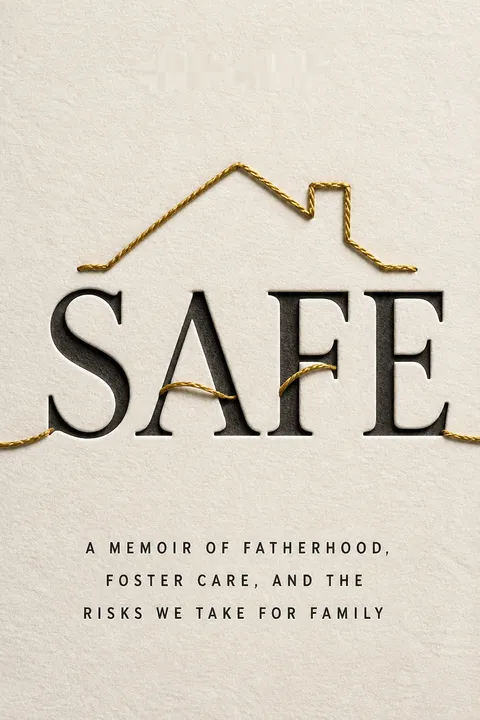


Key Takeaways
Enter foster care to offer a home, not to secure an adoption.
A family is not guaranteed. Mark and his husband, Jason, began foster-parent training hoping to adopt a baby. They were newly married, excited to become fathers, and assumed careful research could help them find a child unlikely to return to their birth parents. Training quickly unsettled that plan: foster care exists first to protect and care for children while their families work toward reunification. In California, the book reports, about 55 percent of children in care reunify with their birth parents.
The role is temporary by design. Adoption may follow when reunification is not possible, but it is not the promise that brings a foster family into the system. Mark’s longing for a permanent family collided with the fact that permanence for him could mean loss for another parent and child. The story begins with that conflict, not with a simple rescue fantasy.
The memoir’s most important correction is to the consumer mindset that can creep into family-building: a child is not a route to the desired outcome of parenthood. Foster care asks adults to provide a stable relationship without ownership of its duration. That distinction does not make the role less meaningful, but it changes what readiness means. Prospective caregivers need to consider not only whether they can love a child, but whether they can support the child’s family and withstand an ending they did not choose.
Read a child's behavior as a clue to loss, not a verdict.
Trauma has a history. In training, Mark learns the term “situational losses,” meaning painful, disruptive events beyond ordinary developmental transitions. Examples include losing a home, parental addiction, violence, abuse, or a caregiver’s death. The instructor also explains adverse childhood experiences, often shortened to ACEs, which are difficult experiences in childhood that can affect later emotional and physical well-being. A video describes a seven-year-old who had endured thirteen such losses.
Behavior needs context. When toddler Ethan melts down after Mark takes away a remote, Jason calms him by redirecting his attention to a toy. Later, Ethan’s distress at seeing the crate that held his few belongings makes Mark wonder what the object represents. He cannot know the answer from the behavior alone. The useful response is not to diagnose a child from a tantrum, but to provide calm, consistent care while remaining curious about what the child may have experienced.
This section resists a common shortcut: treating difficult behavior as evidence of a child’s character rather than a response to their circumstances. A behavior can communicate distress without revealing its precise cause. That uncertainty argues for patient observation and dependable care, not confident speculation. The approach also has limits: caregivers cannot interpret every action correctly, and affection is not a substitute for clinical assessment when a child needs specialized help. The memoir’s strength is showing how humility and ordinary responsiveness can coexist.
Keep birth families visible; a child's attachments do not disappear.
Care changes relationships. Foster parents are expected to support reunification unless a court changes the plan. Mark and Jason initially focus on the boys who need a home, but their first call from the boys’ grandmother, Kris, makes the absent family real. She is relieved that Ethan and Logan are safe, yet grieving that she cannot care for them herself. She later explains that work, health problems, and limited support made two very young children more than she could manage.
Kinship care matters. The term describes care provided by relatives or close family connections. The system generally favors it because familiarity can preserve relationships and reduce disruptions, but relatives may lack the resources to take a child in. Kris remains part of the boys’ lives, while Mark and Jason learn that their own bond with the children does not erase the children’s bond with their parents or extended family.
The memoir’s account of Kris complicates the neat division between capable caregivers and failed families. She cannot provide daily care, yet she is not indifferent or disposable; her love is expressed through contact, concern, and a painful decision to seek help. This is a useful distinction for any care system: inability to meet a need is not the same as lack of attachment. A child’s network can include people with very different capacities, and preserving those connections may protect identity even when a placement must change.
Love matters, but parenting also requires reliable capacity and practical support.
Affection cannot do every job. Mark and Jason see that Amber and Zach love their sons, but love alone cannot provide safe supervision, stable housing, treatment, food, or dependable routines. The parents struggle with addiction and mental-health needs, miss visits, and have difficulty caring for three very young children. Their limitations do not make them monsters, but the children’s safety cannot rest on good intentions.
Support changes the choices available. Mark’s experience leads him to imagine a system that helps parents before crisis becomes removal: treatment, housing, child care, and regular visits from health workers. He recalls a midwife visiting a friend’s newborn in England, a service that could notice problems early. The central tension is not simply whether parents love their children. It is whether they have the support and practical ability to keep them safe, and whether institutions help build that capacity.
This distinction avoids two unhelpful extremes: romanticizing parental love as sufficient, or treating struggle as proof that a parent is beyond help. Care is both emotional and material. Housing, recovery services, and reliable child care can be part of a child’s safety, not side issues. At the same time, support cannot be assumed to eliminate risk, and children cannot be asked to bear that risk indefinitely. The hard question is how to offer parents a genuine chance while making the child’s immediate needs decisive.
Offer families help before poverty is mistaken for neglect.
Risk accumulates unevenly. The book distinguishes a child-protection approach, which intervenes when safety is already threatened, from a child-welfare approach, which offers support earlier. Poverty can bring families under scrutiny even when financial hardship is not itself maltreatment. One study cited in the memoir found that infants in California’s poorest neighborhoods were reported to child-protection agencies seven times as often as infants in the wealthiest neighborhoods.
Unequal systems deepen the stakes. Mark notes that Black and Indigenous children are overrepresented in foster care, in a pattern connected to histories of racism, family separation, and unequal access to resources. He argues for earlier help such as food assistance, housing, addiction treatment, and child care. These services would not guarantee that every family could safely raise a child. They could, however, reduce preventable pressure and give families a fairer chance before removal becomes the only available response.
The strongest policy insight here is that surveillance and support are not interchangeable. A system can monitor families intensively while offering too little practical help to change their circumstances. The reported disparity in referrals is a warning to examine how poverty becomes legible to authorities, and whose hardship is interpreted as danger. Still, prevention should not be treated as a universal cure or used to postpone necessary protection. A fair system needs both early assistance and the capacity to act decisively when a child faces serious harm.
Demand accountability without mistaking exhausted workers for the whole system.
Small failures compound. Mark and Jason encounter missed updates, a social worker who changes their case, delayed information about a possible injury, court paperwork, and long waits for decisions. One county worker says she has about forty-five open cases. The memoir shows how overloaded staff and fragmented agencies can leave parents, foster families, and children without clear answers, even when many individuals entered the work hoping to help.
A court ruling changes a family. An appellate court reverses the boys’ initial detention, finding the evidence legally insufficient. Mark believes the decision considered each concern about the parents separately rather than the combined risks. The county does not appeal. The story does not establish that every worker or judge acted in bad faith; it shows how a case can turn on incomplete records, competing standards, and limited time, while the children live with the consequences.
The narrative’s anger is most persuasive when directed at structures that diffuse responsibility. A worker may be conscientious and still lack time, information, or authority; a court may follow legal standards and still make a decision that feels unsafe to those closest to the child. Explaining those constraints does not excuse preventable errors. It clarifies why accountability must include staffing, information-sharing, and review procedures, rather than relying on individual heroism or blaming whichever professional is nearest.
Safety means care through uncertainty, not a promise nothing bad will happen.
Control has limits. Mark and Jason build routines for Ethan and Logan, respond to their needs, and try to make their home emotionally safe. Yet the boys’ future depends on court decisions they cannot control. As a foster parent, Mark struggles to enjoy milestones because each joyful moment carries the possibility of separation. Jason helps him return to the present by asking him to notice where his feet are and focus on what can be done now.
Love carries risk. The boys eventually leave for reunification, and Mark grieves them as children who are alive but no longer in his care. The book’s title points beyond physical protection: a home can offer safety, but no caregiver can guarantee the world will not bring suffering or loss. Mark’s eventual understanding is not that risk disappears, but that love remains worth choosing without certainty.
The memoir makes safety relational rather than absolute. A safe home is not a force field; it is a place where a child can depend on care in the present. That distinction helps explain why uncertainty is not merely an inconvenience for foster parents. It is built into the arrangement. The book also shows how vigilance can consume the very moments it aims to protect. Present-focused attention is valuable, but it cannot replace advocacy, planning, or honest recognition of danger.
Turn grief into service, not a promise to rescue everyone.
Purpose follows loss. After Ethan and Logan leave, Mark is unsure whether he can encourage anyone else to foster. A conversation with Lisa, a county probation official working with teens, changes the question. Many young people in her care have moved through foster homes, group homes, and the justice system after adults and institutions failed them. Mark helps develop a campaign to recruit foster parents for teenagers, including young people whom prospective caregivers might fear or misunderstand.
A family grows again. Mark and Jason later meet Aimie, Eddie, and Joshua, three siblings who need a permanent home together. They adopt the children in 2020. The new family does not erase the earlier loss. Instead, the work of recruiting caregivers and parenting three children gives Mark a way to act on what he has learned without pretending that service can repair every injustice.
The move from grief to public work is not presented as a cure. It is a change in what grief can accompany. Mark’s advocacy draws on his professional skills, while his new family gives him a different experience of permanence. The distinction matters: turning pain into service can create agency, but it should not impose an obligation to transform every private wound into productivity. Some losses remain losses. Meaning is possible without making suffering seem necessary or beneficial.
Say no when another placement would shortchange the children already home.
Love does not settle capacity. Years after reunification, Ethan, Logan, and their sister Savannah return to foster care after signs of abuse. The county asks Mark and Jason to take all three. By then, the couple has adopted Aimie, Eddie, and Joshua. Their instinct is to bring the first children back, but a supervisor urges them to consider what six children would need, including the children already depending on them.
A painful boundary protects too. Mark and Jason decide they cannot offer the three returning children the care they deserve without compromising the family they have built. They say no, despite loving them and hating the decision. The boys and Savannah later reunify with their father. The ending is neither a simple triumph nor a tidy failure: it shows that being willing to love does not mean being able to meet every need, and that restraint can be an act of care.
This ending rejects the idea that the most loving choice is always to say yes. Capacity is finite, especially when children have complex needs and existing children also require attention. The decision is ethically painful because refusing a placement can feel like abandoning a child, while accepting one without sufficient capacity can create new harm. The memoir does not turn the choice into a formula. It asks caregivers to assess the needs of every child involved, rather than treating sacrifice as proof of virtue.
Analysis
Safe works as both a family memoir and an examination of how child welfare decisions are made under uncertainty. Its narrative engine is a reversal: Mark and Jason begin believing foster care can be a route to parenthood, then discover that parenting through the system means caring deeply without controlling the outcome. The boys’ arrival makes that conflict intimate. Court orders, visit logs, risk assessments, and staffing levels are no longer abstractions; they determine who comforts a child at night and who gets to call themselves a parent.
The book’s most valuable distinction is between love and capacity. It refuses to make Amber a one-dimensional villain, tracing how grief, abuse, addiction, mental illness, and material hardship can narrow a person’s choices. But sympathy does not resolve the practical question of whether children are safe. This is where the memoir holds two moral commitments together: preserve family bonds where possible, and do not let a child’s needs disappear behind adult intentions or institutional rules.
The narrative also exposes a measurement problem. Reunification can be recorded as a successful case outcome even when the quality and durability of the family’s later life remain uncertain. Conversely, foster parents can offer stability and still experience their role as a profound loss. Administrative categories capture placement status, but not attachment, grief, or the child’s experience of repeated transitions. The personal story makes that gap visible without claiming that one family’s case settles the policy debate.
The memoir’s account is necessarily shaped by Mark’s perspective as a foster father who hopes to adopt. His observations about the birth parents and system are emotionally vivid, but not a neutral, complete record of every party’s experience. That limitation is not a flaw to conceal; it is part of the subject. Decisions are made from partial knowledge, while the consequences are lived in full. The final refusal to take the three children back is therefore essential: care requires not only an open heart, but an honest account of what one household can actually provide.
Review Summary
Safe is a raw and emotional memoir about foster care, praised for its honesty and insight into a broken system. Readers appreciate Daley's vulnerability in sharing his family's journey, balancing personal experiences with statistics and research. The book highlights challenges faced by foster parents, children, and biological families. While some found certain perspectives problematic, most reviewers were deeply moved by the story. Many recommend it as an eye-opening read for anyone interested in foster care, adoption, or child welfare reform.
People Also Read





Glossary
Situational losses
Traumatic life disruptionsThe term used in foster-parent training for disruptive, often traumatic events that can affect a child, such as abuse, a parent’s death, addiction, homelessness, or food insecurity. It contrasts with ordinary developmental separations, such as starting school. The concept encourages caregivers to consider a child’s history and losses when responding to behavior.
Adverse childhood experiences (ACEs)
Harmful childhood experiencesA category of difficult or traumatic experiences during childhood, including abuse, neglect, and serious household or community adversity. The book explains that such experiences can affect emotional well-being and physical health over time. ACEs describe exposure to risk, not a fixed prediction of how a particular child will behave or develop.
Kinship care
Care by family connectionsA foster-care placement with a child’s relatives or close family connections. The book describes kinship care as a way to preserve familiarity and relationships and potentially reduce placement changes. Relatives may still be unable to provide care because of health, finances, work, or lack of support, as Kris is when she cannot manage two very young grandchildren.
Reunification
Return to birth parentsThe process of returning a child in foster care to their birth parents when the court and child-welfare agency determine that return is appropriate. It is generally the first goal, while foster-family adoption is considered when reunification is no longer the plan. The process may involve services, court reviews, and visitation, but it cannot guarantee a lasting or safe outcome.
Child protection system
Intervention after safety concernsThe book’s term for an approach in which government intervention is primarily triggered when a child’s physical safety is at risk. Mark contrasts it with a child-welfare approach that offers families support earlier, before a crisis reaches the threshold for removal. The distinction matters because waiting for clear evidence of harm can leave both children and parents without timely help.
Child welfare system
Support before family crisisThe book’s term for an approach that addresses the conditions that can put families under strain, including poverty, addiction, housing instability, and lack of child care. It emphasizes services and early intervention alongside protection. The book argues that support may prevent some crises, while recognizing that it cannot remove every risk or replace action when a child is unsafe.
Vulnerability intolerance
Difficulty staying open to riskMark’s description of his impulse to limit emotional exposure so that possible future heartbreak will hurt less. While caring for Ethan and Logan, he finds himself suppressing joy because he fears losing them. The term names a protective response to uncertainty, but also shows its cost: trying to avoid future pain can make it harder to be fully present in a meaningful moment.
Plan A and Plan B
Reunification, then adoptionThe sequence Mark learns governs a foster-care case. Plan A is reunification with the birth parents when the court determines it is appropriate. If reunification is not possible, a child may be placed with relatives or, as Plan B, adopted by foster parents. The terms describe case goals, not guarantees, and the path between them can involve delays and changing decisions.
Download PDF
Download EPUB
.epub digital book format is ideal for reading ebooks on phones, tablets, and e-readers.








