


Plot Summary
Deadline at Home
Ayane Mashiba, a celebrated patchwork artist, has wanted a child as deeply as her husband, Yoshitaka, but she knows she cannot bear one. On the Friday before a dinner party, Yoshitaka tells her their marriage has no future if it remains childless. He treats the decision as part of a life plan, not a wound he is inflicting, and insists his love has not changed.
Ayane turns away to hide her distress. In a dresser drawer sits a sealed packet of white powder; as Yoshitaka leaves, she thinks she will soon use it. Her longing for the family they cannot have hardens into a decision that will govern the rest of the story.
Yoshitaka’s cruelty is not theatrical; it comes from the confidence of a man who believes his private rules are neutral facts. Ayane’s silence matters because it conceals both grief and agency. Her desire for motherhood is not simply opposed to his, but is made more painful by the knowledge that she cannot fulfill the condition on which he has placed their marriage. The powder supplies a concrete threat, while the plants outside the window quietly associate care with a future she may no longer expect to share.
The Spare Key
At the Mashibas’ dinner party, Ayane gives her apprentice, Hiromi Wakayama, a patchwork quilt for the newborn son of their friends, Tatsuhiko and Yukiko Ikai. The gift carries the care Ayane once imagined giving her own child. Hiromi notices that Yoshitaka and Ayane seem strained, but neither explains why.
The next morning, Ayane hands Hiromi a key to the house before leaving for Sapporo, saying she may be away longer than expected. Yoshitaka soon calls Hiromi and reveals that Ayane has accepted their separation. He invites Hiromi over. She stays the night, and the two drink coffee together, leaving a cup and saucers in the kitchen. To Hiromi, the key means trust; to Ayane, it makes her absence deliberate.
The quilt makes the party’s talk of children personal without anyone needing to say so directly: Ayane gives away a carefully made image of the family she cannot have. The key carries two meanings at once. Hiromi receives it as permission to help, while Ayane has already decided to leave her husband to his new attachment. Their different readings of the same gesture reveal how often intimacy depends on information withheld, not merely affection offered.
Coffee Beside the Body
After teaching at a second arts school on Sunday, Hiromi calls Yoshitaka as they had planned, but he does not answer. She uses Ayane’s key to enter the house and finds him dead beside a spilled cup of coffee. Detective Kusanagi and junior detective Kaoru Utsumi arrive to investigate. The front door and most windows were locked, and the death appears suspicious, yet the room offers no obvious intruder.
A restaurant’s unanswered call adds a contradiction: Yoshitaka had reserved a table for two that evening. Utsumi finds one used cup and two saucers in the sink, suggesting a visitor. Hiromi denies knowing anything, but the detectives suspect the visitor was she, and that her grief may conceal more than shock.
The case begins with a domestic object that seems almost too ordinary to matter. Coffee links a private meeting to a public investigation, while the untouched dinner reservation suggests Yoshitaka’s plans survived only as a trace on his phone. Utsumi’s attention to the saucers exemplifies the novel’s method: small mismatches in routine become more reliable than dramatic clues. Hiromi’s distress is real, but sincerity cannot establish innocence, so the detectives must treat emotion as evidence to interpret rather than proof to trust.
Widow Under Suspicion
Ayane flies back from Hokkaido and asks first to see where Yoshitaka died. At the house, she collapses beside the outline marking his body, then learns that arsenous acid was found in the coffee and that police believe he was poisoned. She says Yoshitaka never made coffee by hand, a detail that makes the cup beside him more puzzling.
When Hiromi arrives, Ayane embraces her and weeps, apparently unaware that the two women may have been lovers of the same man. Kusanagi and Utsumi privately compare notes: Hiromi knows Yoshitaka’s habits, and her fingerprints are on the cup in the sink. The investigators keep their suspicions from Ayane while arranging to question Hiromi again.
Ayane’s grief unsettles Kusanagi because it refuses to behave like a clue. Her collapse and embrace look unguarded, yet Utsumi considers whether they might also shape what the detectives see. The scene establishes a central tension between performance and feeling: visible emotion can be genuine and strategic at once. The coffee-making detail is equally double-edged. Ayane’s certainty about her husband’s habits points toward a visitor, but it also shows how little she may know about the private life unfolding inside her own house.
An Affair Named
Confronted with her fingerprints and the two saucers, Hiromi admits she visited Yoshitaka on Saturday night, stayed until Sunday morning, and made coffee for both of them. She had planned to meet him for dinner after her class, which explains the reservation and her alarm when he stopped answering. Later, Ayane asks Hiromi to meet her at a hotel.
She reveals that Yoshitaka had told her he wanted a divorce because she could not have children, and that she had already guessed Hiromi was the other woman. Ayane says she had given Hiromi the key knowing the pair would meet. Hiromi apologizes, but Ayane stops her from explaining how the affair began. Their grief leaves them allied in uncertainty, not reconciled.
The affair changes the meaning of earlier evidence without settling the murder. Hiromi’s lie about checking on Yoshitaka protected her privacy, but it also made a plausible suspect look more suspicious. Ayane, meanwhile, refuses the expected roles of betrayed wife and guilty rival. Her choice to name the affair plainly denies Hiromi the chance to control the revelation, yet her refusal to hear excuses preserves a boundary. The women’s temporary closeness is not forgiveness; it is a shared dependence on understanding what happened.
The Hokkaido Alibi
Kusanagi and Utsumi travel to Sapporo to check Ayane’s account. Her parents confirm she visited them, and her longtime friend Sakiko Motooka confirms their trip to Jozankei hot springs. The alibi places Ayane far from Tokyo when Yoshitaka died.
Utsumi is not satisfied. She recalls five champagne glasses left drying after the party, still not returned to their carefully arranged cupboard when police arrived. The lapse seems unlike Ayane, who had been preparing to leave town.
Kusanagi sees no proof in it, but Utsumi argues that Ayane may have known she would return soon. At the same time, Yoshitaka’s business partner Tatsuhiko describes him as a man who wanted children above all else, making the marriage’s collapse more than a private quarrel.
The verified alibi narrows the physical timeline but cannot answer whether the crime was arranged in advance. Utsumi’s reading of the glasses shows how domestic order can become a record of intention: what was left undone may matter as much as what was done. Kusanagi resists because the clue is suggestive rather than conclusive. Their disagreement is methodological as well as personal. The investigation needs her attention to anomalies, but it also needs his insistence that an unusual detail must be tested before it becomes a theory.
The Kettle’s False Trail
Forensics finds arsenous acid in the kettle, and Hiromi’s fingerprints make her an immediate suspect because she brewed coffee on Sunday morning. Utsumi sees the flaw: a killer who discovered the body would likely have removed the kettle and used filter, not left them behind. Ayane adds that Yoshitaka normally insisted on bottled water for coffee.
When Utsumi asks Hiromi to recall the morning, Hiromi remembers using tap water and says Ayane had once told her to pretend otherwise if Yoshitaka asked. Then Ayane reveals that Hiromi is two months pregnant with Yoshitaka’s child. At his funeral, Hiromi’s nausea makes the pregnancy visible to Ayane, while the young woman privately wonders whether she can keep the baby.
The kettle evidence creates a convincing but unstable accusation. Its force comes from a fingerprint, yet Utsumi recognizes that the rest of the scene contradicts the conclusion. Hiromi’s pregnancy further complicates the usual motive calculus: it gives her a powerful attachment to Yoshitaka, but also a future made precarious by his death. Ayane’s defense of her does not erase suspicion. Instead, it exposes how quickly investigators and readers can mistake a person’s apparent motive for a complete account of what she would do.
Junko’s Poisoned Legacy
Searching Yoshitaka’s past, Kusanagi traces a former girlfriend to Junko Tsukui, an illustrator of children’s books who died two years earlier. Her publisher remembers her as private and gifted; her death was recorded as a suicide by arsenous acid. Utsumi visits Junko’s mother in Hiroshima and learns the poison came from a bag kept in the family’s storage shed.
The mother had concealed that fact from police. Among Junko’s letters, Utsumi finds a postcard describing a Japanese exchange student from Hokkaido who befriended her in London. Kusanagi then notices a tapestry matching Ayane’s design in one of Junko’s books. Ayane has denied knowing Junko, but the postcard and image make that denial increasingly difficult to believe.
Junko enters the investigation not as a conventional suspect but as a missing relation between two timelines. The arsenic gives the present murder a possible source; the postcard and tapestry supply a human connection that official records failed to preserve. Each clue is materially modest, yet together they challenge the assumption that Ayane’s story begins with Yoshitaka’s recent betrayal. The mother’s silence also shows how grief can alter evidence: she withheld the poison’s origin not to protect a killer, but because she could not bear to expose her daughter’s final act.
The Filter’s Long Silence
Physicist Manabu Yukawa helps Utsumi test the apparent routes into Yoshitaka’s coffee. A timed-release coating in the kettle proves impractical, and laboratory tests find no poison in the discarded water bottles. Spring-8, a highly sensitive facility, later detects arsenous acid near the outlet of the kitchen filtration system.
The filter appears untouched, yet its model number indicates that it had been installed two years earlier, not one. Yukawa concludes that the killer may have placed poison inside it a year before Yoshitaka died, then kept anyone from using it. This would explain why the poison left no obvious trace in the coffee-making routine and why Ayane’s trip away from home mattered despite her alibi.
Yukawa’s method is not a flash of intuition so much as a refusal to treat negative results as final. Failed tests eliminate convenient explanations, while the filter’s dust and age become evidence of a deliberately maintained absence. The proposed crime reverses ordinary notions of action: the crucial work may have happened long before the death, followed by a year of preventing the device from being used. Yet the elegant explanation remains scientifically and legally incomplete until the investigators can connect the poison to something the killer handled.
Flowers Carry Proof
Yukawa realizes that Ayane’s first act on returning to the house was to fetch water for her balcony flowers. Kusanagi had watched her use an empty can with holes punched in its base, then kept it in his desk. Testing finds arsenous acid inside, showing that water from the filter had carried the poison. The detectives confront Ayane at her quilting school.
She agrees to accompany them, and the full history emerges: Junko had been her close friend and Yoshitaka’s former lover. After Junko died, she sent Ayane arsenous acid. Ayane married Yoshitaka despite knowing she was infertile, installed the poison in the filter, and waited a year. When he chose Hiromi, Ayane left him alone with the trap.
The watering can converts Ayane’s most visible act of mourning into the missing physical link. Her care for the flowers was sincere, but it also diluted evidence; the same gesture could express attachment and concealment. The revelation recasts marriage as a prolonged moral experiment. Ayane did not simply react to infidelity: she accepted a future in which she alone controlled whether Yoshitaka would live, then delayed judgment until he repeated the rejection that had destroyed Junko. Her patience is not passive; it is a form of power maintained through routine.
After the Perfect Crime
Ayane’s confession identifies Junko’s mailed poison as the source of the arsenic. Spring-8 testing of the empty can from Junko’s mother’s shed finds traces with the same composition as the poison used against Yoshitaka, strengthening the link.
The case closes, though Yukawa’s reconstruction had initially seemed impossible to prove. Hiromi decides to keep the child and leaves her position at Ayane’s school, unable to continue as if nothing had happened.
Ayane encourages her to build a life rather than remain trapped in guilt, then prepares to leave the house she shared with Yoshitaka. At a celebratory drink, Kusanagi falls asleep from exhaustion. The investigation has resolved the murder, but not the cost of the loyalties and betrayals that preceded it.
The laboratory match gives the ending a form of certainty the human relationships never receive. Ayane’s advice to Hiromi is especially difficult to reduce to either generosity or absolution: she can wish the child a future without undoing what she has done. Hiromi’s decision to keep the baby turns survival into an active choice, not a sentimental cure for grief. Kusanagi’s exhausted sleep closes the procedural arc quietly. He has helped expose Ayane, but the emotional attachment that complicated his judgment cannot be tidily converted into a professional victory.
Analysis
The novel’s central puzzle is also a study of how people turn intimate life into a system. Yoshitaka makes marriage conditional on producing a child; Ayane accepts that condition while privately preparing for the moment it will destroy her place in his future. Her murder method extends this logic into the house itself. A filter, a bottle of water, and a watering can become instruments because daily habits can be controlled more quietly than a single dramatic act.
The detectives’ disagreements distinguish suspicion from knowledge. Utsumi notices irregularities that Kusanagi overlooks, while Kusanagi demands evidence sturdy enough to survive scrutiny. Yukawa can reconstruct a mechanism, but even his explanation cannot initially make the crime prosecutable. The story insists that solving a mystery requires more than being right. Investigators must show how the act occurred and connect that account to the person who committed it.
Ayane’s craft offers a precise counterimage to Yoshitaka’s life plan. Patchwork preserves individual scraps by fitting them into a useful whole; Yoshitaka treats relationships as replaceable when they no longer serve his intended future. Yet the novel does not make Ayane’s patience morally pure. Her care for flowers and students coexists with a year of dangerous control. Hiromi’s choice to keep her child does not repair the damage, but it gives the ending a future not defined solely by Yoshitaka’s demand or Ayane’s revenge. The final moral complication is that compassion survives between women whose actions have hurt one another, without erasing responsibility.
Review Summary
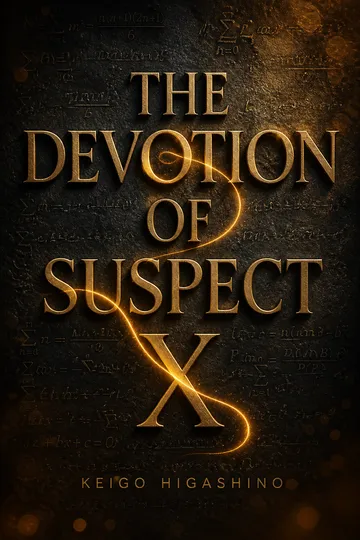
Readers widely praise Salvation of a Saint as a masterful "howdunit" mystery that reveals the killer early, shifting focus to the ingenious murder method. Many compare it favorably to The Devotion of Suspect X, appreciating Higashino's logical plotting, well-developed characters, and satisfying pacing. Reviewers particularly enjoy the dynamic between Detective Kusanagi, junior detective Utsumi, and the brilliant "Detective Galileo," Professor Yukawa. Some find the middle sections slow, and a few partially guessed the method, but most consider the denouement rewarding and the emotional depth a distinguishing strength.
People Also Read



Characters
Ayane Mashiba
Quilt artist and wifeAyane is a renowned patchwork artist whose precision and patience shape both her work and the way she manages her home. She values beauty that can be used, and she builds a life around craft, teaching, and the hope of a family. Her quiet manner can be mistaken for passivity, but she observes closely and rarely acts without considering the consequences. She is devoted to the people she loves, yet her reserve makes it difficult for others to know what she is carrying. The novel places her artistic discipline beside the emotional discipline required to live within an intimate relationship marked by unequal expectations.
Reiji Kusanagi
Patient homicide detectiveKusanagi is a seasoned investigator who prefers evidence that can be tested and explained. His patience with witnesses and families makes him effective at the human side of police work, though his feelings can complicate his reading of Ayane. He relies on routine, experience, and a willingness to follow leads that seem unpromising. His friendship with physicist Manabu Yukawa gives him access to a different kind of reasoning, one that challenges his assumptions without replacing police procedure. Kusanagi’s central tension is not whether he can recognize emotion, but whether he can keep affection from deciding what evidence means.
Kaoru Utsumi
Relentless junior detectiveUtsumi is a perceptive young detective who notices details others dismiss, from misplaced champagne glasses to the emotional calculation behind a meeting. She is willing to challenge Kusanagi and pursue an unpopular suspicion, although she sometimes has to learn where intuition ends and proof begins. Her attention to people’s behavior is not a substitute for evidence; it is what helps her find questions the evidence has not yet answered. Utsumi’s partnership with Yukawa sharpens her investigative thinking, while her professional confidence grows as she insists that an unusual theory deserves examination before it is discarded.
Manabu Yukawa
Physicist of last resortYukawa is an exacting university physicist whom the police turn to when a case depends on an obscure mechanism. He approaches mysteries through observation, experiment, and the elimination of assumptions. His dry manner can make collaboration feel like an examination, but he respects capable reasoning and changes course when evidence requires it. As Kusanagi’s old friend, he understands that a technically elegant solution is not enough: investigators must also account for motive and establish what can be proved. His role is to make the impossible seem testable, not to replace the work of detectives.
Yoshitaka Mashiba
Ambitious family architectYoshitaka is a successful technology-company CEO who organizes his personal life around a strong desire for children. He is polished, confident, and accustomed to treating plans as evidence of good judgment. That certainty makes him capable of charm, but it also narrows his understanding of what marriage means to another person. His relationships reveal a man who evaluates intimacy through the future he wants to build, sometimes overlooking the emotional cost of making another person fit that design. His choices set the story in motion even before the investigation begins.
Hiromi Wakayama
Gifted quilting apprenticeHiromi is Ayane’s skilled apprentice and a young teacher whose confidence has grown through the work and recognition Ayane gives her. She is sensitive to social belonging and fears losing the mentor who helped her find a vocation. Her loyalty, shame, and longing do not always point in the same direction, which makes her difficult to read when the investigation turns toward her. Hiromi is neither a detached observer nor a practiced schemer; she reacts from emotional need and then struggles to face the consequences. Her relationship to craft gives her a life beyond the mystery, even when that life is threatened.
Tatsuhiko Ikai
Lawyer and business allyTatsuhiko is Yoshitaka’s college friend, legal adviser, and business partner. Practical and outspoken, he helps keep the company functioning after its CEO is gone. His view of Yoshitaka is informed by years of professional closeness, but he admits that the men did not pry into each other’s private lives. As a new father, he also provides a contrast to Yoshitaka’s more instrumental ideas about family.
Yukiko Ikai
New mother and hostessYukiko is Tatsuhiko’s wife and the mother of their long-awaited baby. Warm and socially attentive, she tries to include Hiromi in conversation and worries that talk of children may hurt Ayane. Her domestic life gives the dinner party its easy, affectionate surface, while her sensitivity reveals the discomfort that the others are trying to hide.
Junko Tsukui
Children’s book illustratorJunko is a private, talented illustrator who creates distinctive characters for children’s books. She prefers solitary work and keeps much of her personal life outside public view. The few objects and messages she leaves behind become important to people trying to understand her history. Her creative work connects private feeling to lasting images, even when the people around her do not know how to interpret them.
Division Chief Mamiya
Investigation division chiefMamiya supervises the investigation and balances the team’s competing theories against the standards of police procedure. He is blunt, experienced, and willing to let younger detectives argue, but he insists that suspicion must eventually become evidence. His authority keeps the inquiry moving without pretending that uncertainty can be settled by instinct alone.
Kishitani
Kusanagi’s junior partnerKishitani assists Kusanagi with interviews, searches, and casework. He is less inclined than Utsumi to chase subtle clues, but his practical questions help expose how speculative a theory may be. His loyalty to the team and occasional impatience provide a grounded counterpoint to the investigation’s more intricate deductions.
Sakiko Motooka
Ayane’s longtime friendSakiko is Ayane’s friend from school in Hokkaido. Their reunion and trip to the hot springs help investigators verify Ayane’s whereabouts, while Sakiko’s observations offer a glimpse of changes in Ayane that her newer acquaintances may miss.
Kazuhiro Mita
Ayane’s watchful fatherKazuhiro is Ayane’s retired father, living in Sapporo with his wife. His health gives Ayane a reason to visit, but he is sharp enough to notice when detectives’ questions reach beyond routine concern.
Tokiko Mita
Ayane’s concerned motherTokiko is Ayane’s mother and Kazuhiro’s practical, attentive partner. She worries about her daughter’s well-being and remembers how Ayane’s independence and craft shaped her life before marriage.
Plot Devices
The poisoned water filter
A delayed domestic trapThe kitchen filtration system conceals the poison in a place that seems too ordinary to be suspicious. Its apparent age and untouched condition initially make the mechanism difficult to explain. The eventual reconstruction depends on a long interval between preparation and death, during which Ayane could control who used the filter. The device turns routine household maintenance into a timed murder method and makes the absence of activity part of the evidence.
The watering can
A trace-preserving clueAyane uses a perforated drinks can to water her balcony plants after returning to the house. Kusanagi later remembers the object and keeps it rather than discarding it. Laboratory analysis finds arsenous acid inside, linking water from the filter to an action Ayane performed in front of the investigators. The can transforms an apparently compassionate gesture into physical evidence, while preserving the story’s ambiguity about how care and concealment can occupy the same act.
The false first meeting
A manufactured cover storyYoshitaka and Ayane present their meeting at a social gathering as a spontaneous first encounter, with Tatsuhiko able to confirm the scene he witnessed. The staged account obscures their earlier connection through Junko and helps keep that history out of the public story of their relationship. It also reinforces Yoshitaka’s preference for controlling how other people understand his private life.
Junko’s arsenous acid
A past danger made portableThe poison links Junko’s history to Yoshitaka’s death, but the connection is not established through one clue alone. Investigators trace the substance to Junko’s family home, while Ayane’s confession and the laboratory comparison connect it to the present case. The poison carries both practical and emotional meaning: it is a means of killing, a remnant of a friendship, and a warning whose full significance becomes clear only after the characters’ shared past is uncovered.
Detective Galileo Series

About the Author
Other books by Keigo Higashino




Download PDF
Download EPUB
.epub digital book format is ideal for reading ebooks on phones, tablets, and e-readers.








