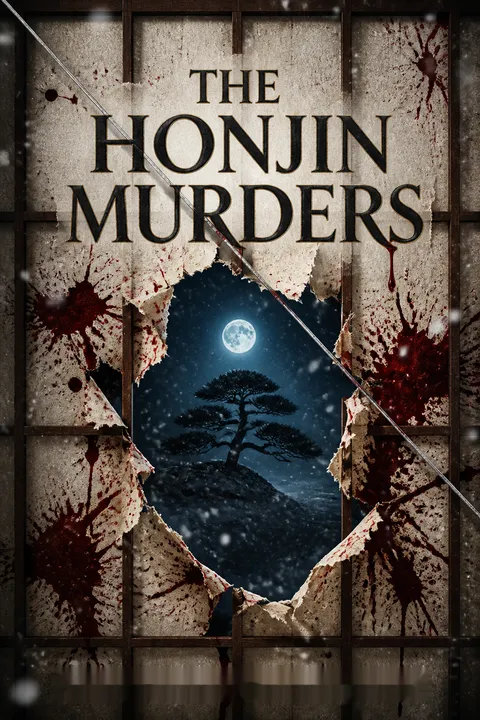


Plot Summary
The Three-Fingered Visitor
On 23 November 1937, two days before Kenzo Ichiyanagi's wedding, a ragged traveler stopped at a village tavern and asked directions toward the Ichiyanagi estate. His mask hid a long scar; when he lifted a glass, villagers saw that two fingers on his right hand were shortened.
Kenzo, the forty-year-old scholarly heir, had already passed the tavern in a rickshaw, determined to marry Katsuko Kubo, a schoolteacher from a family once of tenant farmers.
His widowed mother, Itoko, and cousin Ryosuke opposed the match because Katsuko lacked the pedigree their old honjin lineage prized. Kenzo's refusal to argue wore down their resistance. The villagers saw the stranger as a threat, but his arrival and the rushed wedding seemed only ominously close in time.
The opening makes social rank part of the mystery's machinery. Kenzo's marriage is not merely a private choice: it challenges a household that treats inherited status as a public order. The stranger's scar and damaged hand invite the village to turn visible difference into suspicion, while the family reduces Katsuko to her ancestry despite her education and independence. Both judgments reveal how quickly this community converts appearance into a story. The reader is positioned among the villagers, noticing a disturbing coincidence before knowing whether it carries meaning.
The Bride's Borrowed Koto
On the wedding evening, Kenzo's family held a small ceremony, though custom demanded that the heir's bride play the family's treasured Lovebird koto. Katsuko had not been told the tradition, so Kenzo's sister Suzuko played in her place; later, Katsuko performed at the annexe, where the newlyweds would spend the night. Before the ceremony, a masked stranger delivered a scrap of paper to the kitchen.
Kenzo read it in private, tore it apart, and hid the pieces in his sleeve. The guests drank late. Great-Uncle Ihei left with Saburo, Kenzo's idle younger brother, as heavy snow began to fall. Near two in the morning, after the family completed the final sake ritual and left the couple alone, the snow continued to cover the compound.
The wedding stages the conflict between chosen intimacy and inherited performance. Katsuko enters a house whose rituals are presented as family pride, yet she is not given the information needed to participate in them. Kenzo's decision to let Suzuko substitute keeps the ceremony moving, but the torn message hints that he is concealing something even as he insists on his own marriage. The koto binds ceremony to private life, and the snow changes from decoration into a condition that will determine what investigators can believe about movement through the grounds.
Blood Behind the Shutters
At about 4:15 a.m., Katsuko's uncle Ginzo woke to screams from the annexe, followed by frantic koto notes. He joined Ryosuke and a servant at the garden gate, but its bolt held; they broke it with an axe. Around the annexe, the snow appeared untouched. The front door and shutters were locked, and no one answered from inside.
A sword stood blade-down beside a stone lantern. After forcing a shutter, the men entered and found Kenzo and Katsuko dead in a room soaked with blood. The Lovebird koto lay nearby, one string broken and a bridge missing. A bloody three-finger mark stained the folding screen. With no visible way in or out, the wedding chamber became an apparent locked-room murder.
The murder scene turns domestic architecture into evidence. The closed shutters, garden gate, snow, and narrow openings make the house seem to testify that no outsider could have entered or left. Yet every object is ambiguous: the sword outside, the broken string, and the mark on the screen could be traces of violence or deliberate instructions for investigators. Ginzo's practical leadership contrasts with the family's inherited hierarchy, which temporarily loses force in an emergency. The scene's emotional shock is inseparable from its puzzle: the newlyweds' first night is transformed into a room that seems to reject any ordinary explanation.
A Letter from the Enemy
Inspector Isokawa's investigation found muddy footprints leading from the hillside into the annexe, a closet where someone had hidden, and bloody koto picks in the washroom. A note reconstructed from Kenzo's sleeve described an approaching attack by a mortal enemy.
In Kenzo's study, investigators found a photograph captioned as his enemy and three diaries with pages recently removed and burned. The scarred traveler seemed to fit the clues, and the tavern keeper's glass preserved his three fingerprints.
But Ginzo suspected Ryuji, Kenzo's doctor brother, had lied about arriving from a conference: Ginzo had seen him on the train the previous day. Saburo's clear alibi and his fifty-thousand-yen insurance benefit also drew attention. Ginzo sent for private detective Kosuke Kindaichi.
The clues seem to form a coherent biography of revenge: a photographed enemy, a threatening message, a scarred stranger, and a bloody handprint. Their persuasive force comes from narrative fit, not yet from proof. At the same time, the investigation exposes competing family incentives. Ryuji's unexplained movements look suspicious, while Saburo's alibi does not erase his financial interest. Ginzo's choice to summon Kindaichi signals a shift from accepting the police's leading theory to testing the connections between evidence. The case asks whether a story can be too neatly assembled to trust.
Kindaichi Finds the Stage
Kindaichi reached the estate on 27 November, looking too disheveled to match the villagers' picture of a celebrated detective. Ginzo told him that Suzuko had recently seen a masked, three-fingered figure by her kitten Tama's grave, where police later found matching prints.
Kindaichi inspected the grave, then Kenzo's study, where Saburo's shelves held a remarkable collection of mystery novels. The apparent locked-room murder now looked less like a random attack and more like a problem someone had deliberately composed.
Kindaichi discussed fictional locked-room tricks with Saburo, who eagerly defended mechanical solutions. Later, the koto sounded again in the darkness. When the family hurried to the annexe, Saburo lay badly wounded by the entrance, and the crime scene appeared to have repeated itself.
Kindaichi's first advantage is not authority but attention to how people arrange stories. The villagers see his untidy appearance as a mismatch with his reputation; he sees the mystery collection as a possible source of method and motive. Suzuko's account is easily dismissed because of her childlike manner, yet Kindaichi treats it as evidence worth testing. The second apparent attack raises the stakes while turning the family's fear into a performance for the investigator. Saburo's enthusiasm for fictional puzzles is both a clue and a social mask: his reading lets him speak confidently where the family's other members remain guarded.
The Lover's False Trail
The morning after Saburo was wounded, a message brought Kindaichi and Isokawa to a hospital, where the injured schoolteacher Shizuko Shiraki was recovering from a bus crash. She was Katsuko's friend and produced two letters. In the first, Katsuko had told Shizuko that she had disclosed a former relationship to Kenzo, who had accepted the truth.
In the second, she described unexpectedly encountering her former lover, Shozo Taya, shortly before the wedding and feared he might threaten her. Shizuko believed Taya could have killed the couple. But when Kindaichi showed her the photograph labeled as Kenzo's mortal enemy, she firmly said the man was not Taya. The apparent motive survived, but the photograph and the suspect no longer matched.
Shizuko's testimony restores Katsuko's interior life to a case that has mostly treated her as a bride, a family acquisition, or a body. Katsuko chose disclosure over carrying a private shame into marriage, and the letters show her trying to build intimacy through honesty. Yet the investigation immediately risks turning that honesty into evidence against her. Taya is plausible because fear and rumor make him legible as a villain, but the mismatch in the photograph interrupts the easy conclusion. The scene exposes a recurring danger in detection: a compelling motive can still be a false map of what happened.
A Hand in the Cat's Grave
Kindaichi found a koto bridge hidden in Itoko's kimono sleeve, then learned from Suzuko that the kitten's coffin had not been buried until after the first murder. She had concealed Tama in her room because she could not bear to bury him alone; afterward, frightened by Saburo's warnings, she placed the coffin in the garden.
Kindaichi dug it up and found a parcel containing a severed right hand with three fingers. The prints left by that hand had helped create the false trail.
He sent Sergeant Kimura to search the nearby village for the traveler's identity, then followed the clues to a charcoal kiln. Beneath its floor lay the scarred stranger's body, missing the same hand. The corpse's presence shifted the mystery from a living intruder to a staged one.
Suzuko's concealed grief becomes the unintentional hinge of the investigation. Her wish to protect a small dead animal is not a clever strategy, but it creates a hiding place that the adults would not think to search twice. Kindaichi's method depends on taking that private, seemingly childish act seriously and revising the timeline around it. The severed hand makes the evidence brutally material: fingerprints can be detached from the person they appear to identify. The dead traveler's body also restores his ordinary scale. He was not the supernatural intruder imagined by the household, but a stranger whose misfortune was recruited into someone else's design.
The Waterwheel's Verdict
Kindaichi staged an experiment in the annexe. A loop of koto string, drawn by the rice mill's waterwheel and guided through a koto bridge, a sickle, bamboo supports, and a stone lantern, pulled a sword out through the transom without opening the shutters.
The murderer's escape was an illusion: Kenzo had killed Katsuko, then used the mechanism to make his own death resemble murder. The traveler had died naturally from exhaustion; Kenzo used his corpse to rehearse, while Saburo later embellished the plan with a false enemy photograph, altered diary clues, and the severed hand.
Kindaichi connected Kenzo's rigid obsession with purity to Katsuko's former lover. Kenzo could not accept her past, feared public humiliation, and killed her before taking his own life.
The experiment resolves the physical impossibility, but the motive is the more disturbing answer. The waterwheel turns a familiar household system into an impersonal force that completes Kenzo's act after he has set it in motion. His precision is not evidence of moral control; it is the instrument through which he avoids direct confrontation with shame. The false clues reveal a second intelligence at work, Saburo's appetite for narrative construction, but the tragedy remains rooted in Kenzo's refusal to accept Katsuko as a person with a past. The locked room is therefore not simply a puzzle. It is a staged denial of responsibility.
Spider Lilies at the Honjin
After recovering, Saburo admitted helping Kenzo disguise the planned suicide, though he maintained that Kenzo never told him he meant to kill Katsuko. Saburo had pursued the insurance money and the thrill of improving his brother's scheme; he also staged the later attack and injured himself when his own imitation went wrong.
He was charged, then conscripted and killed in China before judgment. Suzuko died the following year. Ryosuke was killed in Hiroshima, while Itoko and Taeko remained at the diminished estate, and Ryuji stayed in Osaka.
Years later, the narrator returned to the property, now weakened by reform and financial loss, and saw red spider lilies growing where Tama had been buried. The flowers closed the story over a grave that had once concealed evidence.
The resolution refuses the comfort of a restored household. Saburo's confession distinguishes his role from Kenzo's, but his delight in manipulating evidence and his pursuit of insurance money make him more than a passive accomplice. The later deaths are not extensions of the murder plot so much as the arrival of a wider historical violence that reshapes the family and its estate. The narrator's return links the case's false graves to its real losses: the kitten's burial began as an act of tenderness, then became a hiding place, and finally a memorial image. The family survives only in fragments, stripped of the status it tried to defend.
Analysis
The Honjin Murders makes detection a contest between physical evidence and the stories people attach to it. A scarred stranger seems guilty because his appearance, fingerprints, and an artificial history converge. Kindaichi's work begins when he asks whether those clues belong together naturally or have been made to tell the same tale. The novel's intricate mechanism matters, but it is not the deepest source of horror. Kenzo turns the waterwheel, koto strings, garden tools, and snow into instruments of concealment because he cannot accept Katsuko's past without feeling that his own public identity has been compromised. His obsession with purity converts marriage into a test she cannot pass. Saburo's participation adds another form of moral failure: he treats a real household tragedy as material for a clever puzzle and pursues the insurance money while shaping the evidence. Against both men, Katsuko's decision to tell the truth to her future husband is an act of agency, though the family and the investigation repeatedly interpret her through status, sexuality, and reputation. The locked room becomes a social metaphor only because the plot makes it literal: the household seals itself around inherited rules, then mistakes that enclosure for innocence. The ending refuses a simple restoration. Saburo's confession closes the case, but war, death, and the decline of the estate scatter the family, while the narrator's return to the cat's grave leaves the reader with an image of tenderness entangled with evidence. The novel's final challenge is not simply to solve how the crime happened, but to notice how easily people mistake a persuasive explanation for a just one.
Review Summary
The Honjin Murders is a classic Japanese locked-room mystery that introduces detective Kosuke Kindaichi. Set in 1937, it follows the investigation of a newlywed couple's murder. Readers appreciate its homage to Golden Age detective novels, cultural insights, and clever plot. While some find the solution implausible, many enjoy the metafictional elements and Kindaichi's character. The book's translation allows English readers to experience this influential work, though opinions vary on its pacing and character development.
People Also Read




Characters
Kosuke Kindaichi
Unruly logic hunterA young private detective, Kindaichi is shabby, absent-minded in appearance, and prone to stammering when excited. Ginzo once helped him leave a period of aimless drift in America and supported his education; Kindaichi repaid that trust by choosing detective work. He approaches a case through careful comparison rather than theatrical authority, treating physical traces and inconsistencies as parts of one argument. His enthusiasm for mystery fiction is not escapism: stories give him a vocabulary for recognizing how a crime may have been arranged. Beneath the comic dishevelment is a patient observer who is willing to look foolish while pursuing a question others have dismissed.
Kenzo Ichiyanagi
Fastidious family heirThe forty-year-old eldest son of the Ichiyanagi household is a respected scholar whose ill health has kept him close to home. He is exacting, private, and intellectually serious, with a strong sense of justice that sits uneasily beside the privilege he inherits as head of a once-prestigious family. His habits suggest a mind that seeks order and control, while his family's expectations place him inside the very hierarchy he can question. Kenzo's decision to marry outside the lineage his relatives prefer reveals a stubborn independence, though his reserve makes it difficult for those around him to know what he believes or feels.
Katsuko Kubo
Independent schoolteacherKatsuko is an educated teacher in Okayama City, raised by her uncle after her father died. Her uncle's successful fruit farm gives her financial independence, so she works by choice rather than necessity. She meets Kenzo through an academic gathering and values his intelligence, but she also brings her own aims and judgment to the marriage. Katsuko's position exposes the difference between social pedigree and personal accomplishment: she has a career, resources, and a clear sense of what she wants, yet the Ichiyanagi family measures her by her father's origins. She is thoughtful and capable, and seeks a marriage built on candor rather than merely status.
Saburo Ichiyanagi
Restless puzzle enthusiastKenzo's younger brother is intelligent but has been expelled from school and has no settled occupation. He spends much of his time reading detective fiction and resents the lack of standing he feels within a family organized around inheritance and achievement. Saburo is playful, quick to improvise, and eager to display knowledge, especially when a conversation turns to fictional crimes. His humor can make him seem harmless, but it also lets him test other people's reactions while keeping his own motives obscure. He wants recognition, money, and the satisfaction of being the cleverest person in the room, needs that complicate his place in the household.
Ginzo Kubo
Protective orchard uncleKatsuko's uncle raised her after her father's death and built a successful fruit business through work in Japan and America. Practical, energetic, and less deferential to class than the Ichiyanagis, Ginzo supports Katsuko's marriage even while worrying about the treatment she may receive in the household. His affection is expressed through action: he finances her education and wedding, watches closely when danger arrives, and seeks Kindaichi when the police investigation leaves him unconvinced. Ginzo is accustomed to making decisions under pressure, but his protective certainty is tested by the knowledge that those closest to Katsuko may have kept painful truths from him.
Suzuko Ichiyanagi
Gifted koto playerThe youngest Ichiyanagi child is physically delicate and often treated as slow or childlike by her family. Everyday conversation can be difficult for her, but music is a different matter: Suzuko plays the koto with extraordinary skill and concentration. She is emotionally direct, deeply attached to the small things she loves, and capable of noticing details that others overlook. The family often assumes that her manner makes her unreliable, a judgment that obscures her particular forms of attention. Her place in the household is shaped by dependence, but her musical ability gives her a distinct source of competence and self-expression.
Inspector Isokawa
Methodical police investigatorIsokawa leads the official investigation and works through the crime scene with his sergeant, Kimura. He is experienced, cautious about premature judgments, and initially committed to following the physical evidence as he understands it. Kindaichi's unconventional manner irritates and intrigues him in equal measure, but Isokawa is open to revising his conclusions when stronger reasoning emerges. His role provides a grounded contrast to the detective's imaginative leaps.
Ryuji Ichiyanagi
Doctor and quiet brotherKenzo's second brother is a doctor employed at a major Osaka hospital. He is more sociable and outwardly composed than Kenzo, and is regarded by villagers as approachable. Ryuji has a close understanding of his elder brother, although he rarely makes his opinions known in the family. His medical training gives him practical authority in moments of crisis, while his loyalty and reserve make his private judgments difficult for others to read.
Ryosuke Ichiyanagi
Watchful family financierKenzo's cousin heads the branch family and manages the Ichiyanagi finances. He is shrewd with numbers, socially alert, and trusted by Itoko to handle practical affairs. Ryosuke's lighter manner can conceal how carefully he monitors the people around him. His position gives him influence without the status of the main heir, a tension that shapes his dealings with Kenzo and the wider family.
Itoko Ichiyanagi
Proud family matriarchThe widowed head of the household is meticulous in appearance and fiercely proud of the family's honjin ancestry. Itoko believes that customs preserve the family's standing and expects others to respect them, especially the bride of the heir. Her opposition to Katsuko's background reflects a social code she has inherited and helps maintain. Beneath her authority is a mother whose influence is challenged by Kenzo's determination to choose for himself.
Shizuko Shiraki
Katsuko's trusted friendA schoolteacher and close friend of Katsuko, Shizuko is observant, direct, and protective. She knows details of Katsuko's private history that the family does not, and her letters preserve the bride's own account of her fears and choices. Shizuko's confidence in her interpretation makes her a forceful witness, though the evidence she brings requires independent testing.
The Scarred Traveler
Mysterious passing strangerA worn, masked man with a long facial scar and a damaged right hand, he appears briefly in the village shortly before the wedding. His unusual appearance and uncertain destination make him an immediate focus of local suspicion. He is a traveler rather than a member of the Ichiyanagi circle, and his presence exposes how easily a community turns a stranger into a ready-made explanation.
Shozo Taya
Disreputable man from the pastTaya is a man whose reputation reaches the investigation through Katsuko's account and Shizuko's testimony. Once associated with Katsuko, he is described as deceptive and socially dangerous, with rumored ties to blackmail and criminal circles. He remains distant from the household, but the fear attached to his name gives investigators a plausible human motive to examine.
Akiko Ichiyanagi
Ryosuke's attentive wifeAkiko is Ryosuke's wife and part of the branch household. She helps with the wedding preparations, carries a message to Kenzo, and remembers practical details of the annexe and its objects. She is not a forceful presence in family arguments, but her attention to routine becomes valuable when investigators reconstruct who handled what and when.
Taeko Ichiyanagi
Eldest daughter abroadKenzo's elder sister lives in Shanghai with her husband. She objects strongly to his marriage to Katsuko, reflecting the family's concern with lineage and social position.
Ihei Ichiyanagi
Drunken great-uncleAn elderly relative from K-town, Ihei attends the wedding and drinks heavily. His complaints about the marriage keep the celebration going late into the night.
Detective Sergeant Kimura
Isokawa's investigating partnerKimura assists Inspector Isokawa at the scene and pursues leads for Kindaichi. His practical police work helps test the detective's deductions against people and places beyond the estate.
Kiyo
Household maid and witnessKiyo helps Itoko dress and assists with wedding preparations. Her knowledge of the household's clothing and routines gives investigators access to details the family might overlook.
Nao
Kitchen servantAn older servant working in the busy kitchen, Nao receives a scrap of paper from a masked visitor and passes it into the household. Her brief encounter becomes an important link in the investigation.
Genshichi
Farmhand at the sceneA servant and farmworker, Genshichi helps break into the annexe and is among the first to see the crime scene. His account of the snow and shutters informs the police reconstruction.
Shokichi
Rice mill workerShokichi tends the waterwheel and rice mill beside the Ichiyanagi property. His work routine establishes when the wheel operates, a detail that later matters to Kindaichi's reasoning.
Doctor F
Village physician and recorderThe local doctor examines the bodies and keeps detailed notes on the case. His medical observations and records preserve evidence that helps Kindaichi explain the deaths.
Plot Devices
The Locked Annexe
A room sealed from withinThe newlyweds are found inside a small house whose doors and shutters appear locked from the inside. Investigators find no ordinary passage large enough for a person to use, while snow seems to preserve the grounds outside. The architecture turns a domestic bedroom into an apparent impossibility and directs attention toward locks, openings, footprints, and the timing of the snowfall. It also creates the case's central question: whether the room was truly sealed in the way witnesses and police assume.
The Lovebird Koto
Music that doubles as evidenceThe family koto connects the wedding's inherited ritual to the crime scene. Suzuko plays it during the ceremony, Katsuko plays it later in the annexe, and investigators find a broken string, a missing bridge, and traces that suggest someone handled the instrument during the attack. Its sound also masks other noises in the grounds. The koto is not merely an atmospheric detail: its strings and fittings become usable materials, while its familiar music helps make strange sounds seem like part of the night's confusion.
Snow and Footprints
A misleading outdoor recordThe snow appears to preserve the scene by showing where no one walked. Investigators find traces that suggest a person entered from the hillside, but the snow has obscured the planned route outside the annexe. This apparent absence supports the locked-room theory even as it complicates the evidence. The weather is a material event with consequences: it changes what can be seen, conceals a prepared trail, and forces the killer's intended explanation into a different shape.
The Three-Fingered Prints
A stranger made into a suspectThe damaged hand of a passing traveler gives investigators a striking visual clue: matching three-finger impressions appear on a glass, the koto scene, and other objects. The photograph and old diary fragments seem to provide a motive linking him to Kenzo. The clues are deliberately arranged to turn a nameless outsider into a coherent suspect. Kindaichi eventually establishes that the handprints can be separated from the person they appear to identify, and that the story around the traveler has been constructed from borrowed pieces.
The Waterwheel Rig
A machine hides the exitA loop of koto string is attached to the sword and routed through supports around the annexe garden, including a koto bridge, sickle, bamboo, and stone lantern. The rice mill's waterwheel supplies the steady force that draws the string, pulling the weapon through a narrow opening and carrying it beyond the room without a person crossing the snow. Kindaichi reproduces the process in an experiment. The device explains how the scene was staged, but its most disturbing significance is that an ordinary household mechanism can finish an act after its maker has prepared it.
FAQ
Synopsis & Basic Details
What is The Honjin Murders about?
- Rural Japan, 1937: A wealthy family, the Ichiyanagis, prepares for the wedding of their eldest son, Kenzo, but a mysterious three-fingered man appears, foreshadowing tragedy.
- Locked Room Mystery: On the wedding night, Kenzo and his bride are found murdered in a locked room, with no apparent way for the killer to enter or exit.
- Detective's Arrival: A young, unconventional detective, Kosuke Kindaichi, is called in to solve the seemingly impossible crime, delving into the family's dark secrets and complex relationships.
Why should I read The Honjin Murders?
- Classic Locked Room: Experience a masterfully crafted locked-room mystery, a staple of the genre, with a solution that is both ingenious and surprising.
- Cultural Immersion: Explore the rich cultural backdrop of rural Japan in the 1930s, with its emphasis on family lineage, tradition, and social hierarchy.
- Psychological Depth: Delve into the complex motivations and psychological states of the characters, revealing the dark side of family pride and societal expectations.
What is the background of The Honjin Murders?
- Feudal Japan Legacy: The Ichiyanagi family are descendants of a "honjin," a high-class inn for nobility during the Edo period, which shapes their sense of pride and social standing.
- Rural Village Setting: The story takes place in a remote farming village in Okayama Prefecture, where traditional values and class distinctions are still deeply ingrained.
- Pre-War Japan: The novel is set in 1937, a time of social change and tension in Japan, adding a layer of historical context to the family's internal conflicts.
What are the most memorable quotes in The Honjin Murders?
- "The island agreement will shortly be executed.": This cryptic message, found torn up, foreshadows the murder and hints at a past conflict, driving the investigation.
- "My mortal enemy.": This phrase, written under a photograph in Kenzo's album, reveals the depth of his hatred and sets the stage for the mystery.
- "I feel I owe a debt of gratitude to the killer for devising such a fiendish method.": This quote from the narrator highlights the allure of the locked-room mystery and the author's fascination with the crime.
What writing style, narrative choices, and literary techniques does Seishi Yokomizo use?
- First-Person Narration: The story is framed by a first-person narrator, a detective novelist, who provides a meta-narrative perspective, commenting on the genre and the case itself.
- Detailed Descriptions: Yokomizo uses vivid descriptions of the setting, characters, and crime scene, creating a strong sense of atmosphere and immersing the reader in the story.
- Foreshadowing and Red Herrings: The author employs subtle foreshadowing and red herrings to mislead the reader, creating suspense and keeping the true solution hidden until the end.
Hidden Details & Subtle Connections
What are some minor details that add significant meaning?
- The Koto Bridge: The missing koto bridge, later found in a pile of leaves, is a crucial clue, revealing the killer's escape route and the use of the instrument in the crime.
- The Red Ochre Paint: The red ochre paint in the annexe house, initially described as a common color, later becomes significant as it camouflages the bloody fingerprints.
- The Hollowed Bamboo: The hollowed-out bamboo support, seemingly a minor detail, reveals the killer's meticulous planning and use of everyday objects in the crime.
What are some subtle foreshadowing and callbacks?
- Suzuko's Koto Mimicry: Suzuko's mimicking of koto playing with her fingers after hearing about the three-fingered man foreshadows the use of koto strings in the murder.
- The Waterwheel's Sound: The recurring sound of the waterwheel, initially a background noise, becomes a crucial element in the murder mechanism, a callback to the rural setting.
- The "Mortal Enemy" Phrase: The phrase "mortal enemy," first seen in the photo album, is echoed in the burnt diary pages, creating a false connection to the three-fingered man.
What are some unexpected character connections?
- Kenzo and the Three-Fingered Man: The three-fingered man, initially a suspect, is revealed to be an innocent bystander, whose death is exploited by Kenzo for his plan.
- Saburo and Detective Novels: Saburo's obsession with detective novels directly influences the crime, making him a key player in the deception, not just a passive observer.
- Katsuko and Shizuko: Katsuko's friendship with Shizuko, revealed through the letters, provides crucial information about her past and the potential motive for the crime.
Who are the most significant supporting characters?
- Ginzo Kubo: Katsuko's uncle, Ginzo, is a key figure, whose telegram summons Kindaichi and whose observations and actions drive the investigation forward.
- Detective Inspector Isokawa: The local police inspector, Isokawa, provides a foil to Kindaichi's unconventional methods, highlighting the clash between traditional and modern detective work.
- Doctor F—: The village doctor, F—, serves as a reliable source of information, providing detailed notes and insights into the medical aspects of the case.
Psychological, Emotional, & Relational Analysis
What are some unspoken motivations of the characters?
- Kenzo's Obsession with Purity: Kenzo's extreme need for purity and his inability to accept Katsuko's past drives him to commit the murders, a motivation not explicitly stated but implied through his actions.
- Saburo's Desire for Recognition: Saburo's desire to outsmart his brother and showcase his knowledge of detective fiction motivates his involvement in the plan, a hidden need for validation.
- Itoko's Fear of Social Disgrace: Itoko's fierce opposition to Kenzo's marriage stems from her fear of social disgrace and the tarnishing of the family's lineage, an unspoken anxiety.
What psychological complexities do the characters exhibit?
- Kenzo's Internal Conflict: Kenzo's internal conflict between his pride and his hatred for the system, coupled with his extreme emotional swings, reveals a deeply troubled psyche.
- Saburo's Psychopathic Tendencies: Saburo's fascination with death and his willingness to manipulate the crime scene for his own amusement reveal psychopathic tendencies.
- Ryuji's Passive-Aggression: Ryuji's seemingly meek demeanor hides a passive-aggressive nature, as he subtly provokes Kenzo, highlighting the complex dynamics within the family.
What are the major emotional turning points?
- Katsuko's Confession: Katsuko's confession to Kenzo about her past relationship is a major turning point, triggering his extreme reaction and setting the stage for the tragedy.
- The Discovery of the Severed Hand: The discovery of the severed hand in the cat's grave is a shocking moment, shifting the focus of the investigation and revealing the killer's deception.
- Kindaichi's Experiment: Kindaichi's experiment, demonstrating the murder mechanism, is a climactic moment, revealing the truth and exposing the meticulous planning behind the crime.
How do relationship dynamics evolve?
- Kenzo and Katsuko's Relationship: The relationship between Kenzo and Katsuko evolves from a seemingly loving engagement to a tragic end, revealing the destructive power of hidden secrets and societal expectations.
- Kenzo and Saburo's Dynamic: The relationship between Kenzo and Saburo shifts from one of sibling rivalry to a twisted collaboration, highlighting the complex power dynamics within the family.
- Ginzo and Kindaichi's Bond: The relationship between Ginzo and Kindaichi evolves from a benefactor-protégé dynamic to a close friendship, as they work together to uncover the truth.
Interpretation & Debate
Which parts of the story remain ambiguous or open-ended?
- The Three-Fingered Man's Motive: The three-fingered man's true motive for being in the area remains ambiguous, as he is ultimately an innocent victim caught in the crossfire.
- Ryuji's True Feelings: Ryuji's true feelings towards his brother and his role in the family's dynamics remain somewhat ambiguous, leaving room for interpretation.
- The Extent of Saburo's Knowledge: The extent of Saburo's knowledge of Kenzo's plan and his true motivations for participating in it remain open to debate.
What are some debatable, controversial scenes or moments in The Honjin Murders?
- Kenzo's Extreme Reaction: Kenzo's extreme reaction to Katsuko's past is a controversial point, raising questions about the nature of honor, pride, and societal expectations.
- Saburo's Manipulation: Saburo's manipulation of the crime scene and his willingness to exploit his brother's death for his own gain are morally questionable.
- The Use of the Corpse: The use of the three-fingered man's corpse for a practice run is a macabre and disturbing element, raising ethical questions about the characters' actions.
The Honjin Murders Ending Explained: How It Ends & What It Means
- Kenzo's Suicide: The ending reveals that Kenzo committed suicide after murdering Katsuko, driven by his twisted sense of honor and his inability to accept her past.
- The Accidental Locked Room: The locked-room aspect of the murder is revealed to be accidental, a result of the snow covering the planned escape route, highlighting the role of chance in the tragedy.
- The Tragedy of Lineage: The ending emphasizes the destructive power of family pride and the weight of tradition, revealing how the Ichiyanagi family's obsession with lineage led to their downfall.
Download PDF
Download EPUB
.epub digital book format is ideal for reading ebooks on phones, tablets, and e-readers.








