

Plot Summary
Prologue
In April 1951, a red-scarfed woman steps into traffic and is killed by a skidding van. At the hospital, doctors discover that the dead person is a man dressed as a woman. While the driver repeats his shock, a woman waits in the nearby K Apartments for Ladies for the man she dressed in her coat and scarf.
Seven years later, she is still waiting. Three days before the crash, a man and a woman carried a dead child into the building and sealed the body inside a cement-filled suitcase beneath an abandoned communal bath. Someone watched them work.
The opening makes mistaken identity more than a puzzle: a body is misread until death forces a correction, while the woman waiting in the apartments mistakes absence for a promise. The concealed child creates a second, literal burial beneath the building’s respectable routines. By placing the watcher in the shadows without naming them, the prologue makes observation itself suspicious. Nearly everyone in the story will later interpret partial evidence through private longing, and the opening warns that a vivid scene can still mislead about who died, who is waiting, and what has been hidden.
Tamura Borrows the Master Key
Six months before the building is due to move, receptionist Kaneko Tamura receives an anonymous tip directing her to the manuscripts of Toyoko Munekata, a proud, reclusive widow. Resentful of her former schoolmate, Tamura uses the master key to enter Toyoko’s room while she is away. The supposed scholarly work proves to be repeated pages of mathematical marks and nonsense, not the serious research Toyoko claims to be completing.
Tamura accidentally spills ink, then leaves the master key in the lock of Noriko Ishiyama’s door to make the key’s disappearance look like someone else’s doing. Receptionist Katsuko Tojo has observed her return. Noriko later finds the key, unaware that its arrival has placed her inside another person’s scheme.
Tamura’s trespass begins as a small appetite for excitement, sharpened by envy, rather than a plan to harm anyone. The key gives her access, but it also makes her actions visible to someone who understands how easily private motives can be steered. Her attempt to transfer suspicion onto Noriko shows the building’s moral economy: residents guard their rooms, yet gossip and curiosity repeatedly breach those boundaries. The nonsense manuscript matters less as a secret than as a lure. It turns Tamura’s insecurity into a reliable mechanism for someone else.
Noriko Finds the Violin
Noriko, an impoverished former art teacher who survives by collecting discarded scraps, discovers the master key in her door and keeps it. In a bundle of old newspapers she finds one dated 1933, the issue sought by a reward notice.
Its crime report describes the theft of a valuable Guarnerius violin from André Dore, a visiting musician, and names Suwa Yatabe as his favored pupil. Noriko connects the article to Suwa’s old violin case and becomes consumed by the thought that the instrument bears the thief’s fingerprints.
When Suwa leaves, Noriko enters her room with the master key. She finds the case on a high shelf, but Suwa returns before she can open it. Noriko escapes through a window, drops the case, then hides with it inside the courtyard incinerator.
Noriko’s suspicion grows from a warped but recognizable need to read guilt through touch. A policeman once frightened her with the idea that fingerprints remain on objects, and she now treats them as a permanent record of moral failure. The newspaper gives her a target and the stolen key gives her a way inside. Her own collecting habits make her both observant and vulnerable: she finds evidence others discarded, then risks everything to inspect it. The violin’s significance is not its price alone. For Noriko, it promises proof that another isolated woman has crossed the same line she has.
Fire in Room 305
Suwa discovers that her Guarnerius has vanished and identifies Noriko as the intruder from a torn fragment of the older woman’s distinctive skirt caught in the window. Noriko denies taking it, then turns Suwa’s accusation back on her by pointing out that Suwa herself stole the instrument decades earlier.
Suwa retreats, furious and frightened that her own history may be exposed. She returns at night with benzine-soaked rags and a bamboo pole, pushes a makeshift torch through Noriko’s fanlight, and sets the paper-filled room alight.
Noriko is badly burned while sleeping in a cupboard and is taken to hospital. No one finds the violin: Noriko had hidden its case in the incinerator, where it remains beneath the ash as the apartments prepare for construction.
The fire is a direct consequence of shame disguised as justice. Suwa tells herself she is punishing a thief, but the target is also a mirror of her own past. Noriko’s accusation strips away the protective distance Suwa has maintained between an old theft and her present respectability. The building’s social isolation enables escalation: instead of seeking help, Suwa uses the secret corridors and sleeping hours to make punishment private. Noriko’s survival leaves the conflict unresolved, while the concealed violin becomes a material trace that can outlast both women’s attempts to control the story.
Keiko’s Letter Reopens the Case
Retired Japanese teacher Yoneko Kimura has begun writing daily letters to former pupils to give structure to her lonely days. One reaches Keiko Kawauchi, whose four-year-old son George disappeared seven years earlier.
Keiko explains that her husband forbade her to contact police, then abandoned her and returned to America. A former playmate has recently recalled writing a school essay about George under the guidance of Chikako Ueda, a former teacher who lives in the same apartments as Yoneko.
Yoneko quietly investigates Chikako and steals the master key by switching it with her own. Her search nearly proves disastrous: a gas leak in Toyoko’s room requires an emergency entry, and the scattered papers expose Toyoko’s supposed scholarship as gibberish, making her a target of gossip.
Yoneko’s letters begin as a private remedy for retirement, but Keiko’s reply converts routine into responsibility. The former teacher is drawn by professional memory and by a desire to matter again; her investigation offers purpose, yet it also gives her access to other people’s private lives. The gas incident reveals the cost of acting without full knowledge: Yoneko’s key theft endangers Toyoko and humiliates her. At the same time, the episode establishes a pattern of mistaken interpretation. A room’s papers seem to prove one thing to the residents, but their certainty exceeds what they can actually understand.
Chikako’s Dinner for Two
Yoneko eventually uses the stolen key to enter Chikako’s room during one of the few moments the reclusive former teacher is out. A place setting for a man stands beside tins of food, though Chikako lives alone. In an exercise book, Yoneko finds an elegy about a child buried on March 29, with lines that suggest the child’s mother still hears him beneath dry ground.
A small mirror fixed to the window adds to Yoneko’s sense that Chikako watches for someone. She concludes that Chikako is waiting for a man who left years ago and may have been involved in George’s disappearance. The poem makes her suspect a child was buried, but she withholds this disturbing evidence from Keiko, unwilling to destroy hope on circumstantial clues.
The setting and poem give Yoneko a story before they give her proof. She reads Chikako’s daily preparation as evidence of abandonment, then reads the elegy through Keiko’s loss. Her inference is emotionally intelligible, but the act of entering the room has already narrowed what she can imagine. Yoneko’s decision to withhold the poem shows an emerging ethical hesitation: she recognizes that information can injure even when it is incomplete. The private ritual of setting a place for an absent person echoes her own letters, both attempts to keep a relationship present through repetition.
Suwa’s Miracle Turns Fatal
When construction workers clear the incinerator, they find the violin case Noriko hid there. A spiritualist group in the apartments claims its medium has contacted André Dore and that the group’s leader has restored the burned Guarnerius; Suwa’s long-paralyzed finger also straightens.
The apparent miracle draws residents toward the Three Spirit Faith. Suwa, however, receives a message urging her to give the violin to Dore’s son and surrender herself to the police. She recognizes that Dore had no son and suspects the supposed heir is part of a fraud.
Two nights before the building moves, she carries the violin to the roof and plays it alone. The next morning, residents find her body in the excavated earth below. Yoneko believes she jumped, but cannot explain why Suwa went upstairs without the instrument.
The miracle answers Suwa’s private wish so precisely that she briefly accepts what reason would normally reject. The repaired instrument and recovered finger appear to return the life she lost, yet the demand to confess exposes the bargain beneath the spectacle. Her recognition of the fraud comes too late to restore trust or safety. The violin functions as both artistic inheritance and incriminating object; Suwa cannot separate the two. Yoneko’s unanswered question about the instrument preserves a crucial gap between an apparent suicide and the concealed actions that produced it.
Yoneko Hears the Buried Child
At a later séance, Chikako asks the medium to locate a man from her past. Instead, the medium describes a terrified child trapped in a suitcase while adults seal him beneath concrete. Chikako becomes unresponsive, and Yoneko recognizes details that match the poem in her room.
She tells Keiko what she heard; Keiko comes to the apartments desperate for certainty about George. While registering her guest, Yoneko sees that Chikako’s visitor-book entry from 1951 lists a female cousin staying during the days after George disappeared.
Receptionist Tamura insists the visitor came alone. Yoneko realizes that a man could have used women’s clothing and the apartments’ rule against male guests as cover. She now believes Chikako helped hide the kidnapper and that the child beneath the building was George.
The séance seems to offer supernatural confirmation, but its power comes from how it activates clues already lodged in Yoneko’s mind. Chikako’s physical collapse becomes evidence in Yoneko’s case, while the visitor ledger transforms a mundane rule into a possible disguise. Each clue strengthens her theory without independently proving it. Keiko’s presence raises the emotional stakes: Yoneko is no longer speculating about an absent child, but shaping a mother’s chance to grieve. The section shows how conviction can form through cumulative suggestion, especially when grief makes one answer feel more bearable than uncertainty.
A Roof and a False Prophecy
Yoneko tries to make Chikako reveal where the child is buried, even disguising her voice during a threatening phone call. Chikako refuses to answer. As the building’s relocation approaches, Yoneko slips anonymous prophetic notes under Chikako’s door, claiming the move will expose the crime and return the child to life.
Rumors spread that the Three Spirit Faith has predicted the discovery of a kidnapped boy. Yoneko senses that someone is using the cult to shape events but cannot identify who.
On the final night before the move, she hears a violin on the roof and calls up to Suwa, receiving no answer. The next morning, Suwa’s death is treated as a suicide. Yoneko, already troubled by the missing violin, waits for the excavation to settle the question she can no longer put aside.
Yoneko has crossed from inquiry into manipulation. Her fabricated prophecy is meant to force a confession, but it repeats the very method she distrusts in the spiritualists: it uses another person’s fear to produce a desired response. The rumor that the cult knows her plan reveals that private investigation is no longer private. Suwa’s death gives the coming move a human cost, and the unanswered violin detail resists Yoneko’s neat explanation. Her need for an ending has become strong enough to make a public revelation seem worth the harm it may cause.
The Bath Beneath the Building
On moving day, residents lock themselves in their rooms with glasses of water to test whether the five-storey building can be shifted without spilling a drop. Yoneko instead goes to Chikako’s room and finds her dead beside an empty pill bottle and spilled water. Taking the suicide as confirmation of guilt, Yoneko remembers the poem’s dry lakebed and rushes to the disused communal bath in the basement.
She directs workers to break open its tiled floor. Beneath it lies a suitcase sealed in cement, exactly where the child’s body was hidden. Police arrive, and Yoneko is held for questioning over her use of the master key. The discovery seems to close Keiko’s long search, but the child’s identity has not yet been established.
The building’s physical movement turns a long-standing metaphor into an excavation, but discovery does not equal understanding. Yoneko treats Chikako’s suicide as a confession and immediately converts her poem into a map. Her certainty gives her the force to act, yet it also makes her vulnerable to a final misreading. The water-glass experiment and the hidden body offer contrasting tests: one measures structural stability, the other the moral stability of the residents’ stories. The suitcase beneath the bath answers where a child was buried, while leaving the more consequential question, whose child, unresolved.
The Wrong Child’s Grave
Katsuko Tojo’s later account reveals that she had watched Chikako and a disguised visitor bury a child years earlier. She built the Three Spirit Faith’s apparent miracles with her brother and the medium, planted clues for Yoneko, arranged the false search for the 1933 newspaper, and manipulated Suwa’s story. Tojo also admits that she and the medium killed Suwa and staged her death as a suicide.
But Yoneko’s central deduction is wrong: the child in the cemented suitcase was Chikako’s own deformed infant, whom she killed, not George. The press turns the discovery into spectacle, while the boy’s fate remains unknown to Tojo and Yoneko. Her elaborate direction has exposed one crime by manufacturing a false account of another.
Tojo’s confession reframes the novel as a contest between people who make stories and people who need them to be true. Her theatrical control depends on accurate psychological observations, but she mistakes manipulation for mastery: the body is real, while her intended meaning is not. Yoneko’s deductions were neither foolish nor baseless; they were assembled from evidence Tojo deliberately arranged. The distinction matters because the mistake does not erase the buried child’s reality or Chikako’s responsibility. It shows how a true clue can support a false conclusion when an observer controls the context.
Epilogue
In suburban Los Angeles, retired Major Kraft reads a brief report from Japan and thinks back to George’s supposed kidnapping. His confession to himself overturns the story Keiko had lived with: George’s disappearance was staged. Kraft had taken the boy to the airport and sent him to his American wife, who wanted to raise him.
He invented the kidnapping to conceal the truth from Keiko, then used a false ransom story to keep her from going to the police. As he sits with the memory, George’s teacher brings the boy into the garden, alive and growing up under his father’s roof.
The final revelation does not simply rescue George; it exposes the unequal power that made his disappearance possible. Kraft could move a child across countries, invent a crime, and rely on Keiko’s trust and social vulnerability to sustain the lie. Keiko’s long grief was not caused by an unknowable criminal but by a man who treated her marriage and motherhood as obstacles to his security. The living George offers a sharp counterpoint to the cemented child in Tokyo, yet it does not repair the years stolen from his mother. Survival and justice are not the same resolution.
Analysis
The novel’s central trick is not that every clue is false, but that accurate clues are arranged to support an inaccurate story. A child was buried. Chikako waited for someone. A disguised guest appears in the register. The medium describes a suitcase and concrete. Yoneko’s conclusion feels persuasive because the evidence is real, yet she mistakes the identity of the child and the nature of the larger crime. Tojo understands this vulnerability and treats other people’s desires as instruments, though her own elaborate plan is finally defeated by the difference between inference and fact.
The K Apartments sharpen the book’s concern with privacy. Built to protect single women, the building has rules, locks, receptionists, and one master key that can undo all of them. Its residents are not merely isolated; they have constructed private identities around work, memory, shame, and loss. The master key makes those identities accessible, while the visitors’ book shows how a rule can become a disguise. Secrecy is both protection and a source of power.
The women’s obsessions are concrete forms of survival. Noriko hoards refuse and watches for fingerprints. Suwa preserves a violin as proof of the artist she once was. Yoneko writes letters to reclaim a teacher’s purpose. Chikako repeats domestic rituals around an absence. These habits sustain each woman, but also make her susceptible to manipulation. Their loneliness is not a vague atmosphere; it is a condition that shapes what evidence they seek and which explanations they can endure.
The epilogue expands the mystery beyond the apartments and makes its moral stakes sharper. George was not lost to an unknowable criminal. His father knowingly manufactured a kidnapping story and used Keiko’s trust to conceal his decision. The buried infant and the living boy embody the novel’s distinction between what can be uncovered and what can be repaired. A body may settle one question, but truth arrives late, unevenly, and without restoring the years that deception has taken.
Review Summary
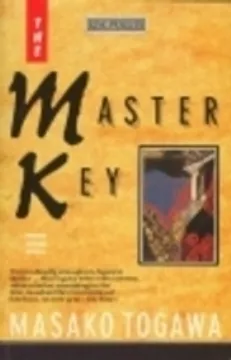
The Master Key is a unique Japanese mystery novel set in an apartment building for single women. Readers praise its intricate plot, atmospheric setting, and well-developed characters. The story revolves around a missing master key and hidden secrets, exploring themes of loneliness and aging. Many found the ending surprising and impactful. While some felt confused by the multiple perspectives and time shifts, most appreciated the book's clever construction and psychological depth. Overall, it's considered a compelling and unconventional crime novel with a distinctly Japanese flavor.
People Also Read

Characters
Yoneko Kimura
The retired investigatorYoneko is a former Japanese teacher living alone in the K Apartments for Ladies. After retirement leaves her days empty, she writes to former pupils, relying on routine and memory to give structure to her life. Her correspondence with Keiko draws her into an investigation involving Chikako Ueda and a missing child. Yoneko is observant, methodical, and capable of empathy, but her hunger for purpose can blur the line between compassion and intrusion. She tends to build orderly explanations from fragments, a habit shaped by her teaching career and by years of solitude. Her search forces her to confront how easily the need to help can become a wish to control what another person must believe.
Katsuko Tojo
The watchful receptionistTojo is a long-serving receptionist at the apartments, known for her crutch, careful habits, and extensive knowledge of the residents. She watches who enters, who leaves, and which rules the women still observe. Tojo is intelligent and patient, with an unusually strong ability to anticipate how small humiliations or private desires might shape a person’s choices. Her work places her at the threshold between the residents’ sealed private lives and the outside world. She presents herself as a practical caretaker, but beneath that reserve lies a deep need for human connection and a complicated relationship with loyalty.
Chikako Ueda
The isolated former teacherChikako is a former primary-school teacher who lives in a fifth-floor room and avoids the other residents. She supports herself through embroidery and maintains routines that suggest her attention is fixed on someone absent. Her delicate appearance and withdrawn manner make it easy for others to regard her as fragile or eccentric, but she has a strong capacity for attachment and an equally strong resistance to confronting painful facts. Chikako’s relationship with the past is not merely nostalgic: it shapes the way she inhabits her room and interprets the lives passing outside it. She stands at the center of the questions that bring Yoneko and Keiko together.
Kaneko Tamura
The sleepy desk clerkTamura shares the reception desk with Tojo and often passes long hours reading, knitting, or dozing. Her amiable manner makes residents comfortable, while her envy of Toyoko Munekata leaves her susceptible to an anonymous suggestion. She is not naturally malicious; boredom and a brief taste of daring draw her into using the master key. Tamura’s misjudgments matter because she treats a boundary-breaking act as a harmless private adventure, underestimating how quickly it can implicate others.
Noriko Ishiyama
The scavenger in Room 305Noriko is a former art teacher reduced to public assistance after illness and poverty narrow her life. She gathers discarded objects, lives among piles of paper, and follows a strict nocturnal routine. Her attention to fingerprints and stolen things reflects an anxious belief that contact leaves permanent evidence. Noriko can be resourceful and sharply observant, yet deprivation has made her suspicious and solitary. She recognizes in other residents a capacity for theft that they prefer to conceal, although her own judgment is often shaped by fear and obsession.
Suwa Yatabe
The fallen violinistSuwa is a retired musician whose former distinction has contracted into inexpensive violin lessons for local children. A paralyzed finger ended her performing career, leaving her to measure herself against the artist she once hoped to become. She is proud, disciplined, and sensitive to pity, but her artistic identity remains alive in her attachment to music and to the instrument she keeps close. Suwa’s past choices are entangled with ambition, class, and longing, and she has spent decades trying to give those choices a story she can bear.
Keiko Kawauchi
The searching motherKeiko is a former pupil of Yoneko’s who has spent years searching for her son after his disappearance. She once married an American officer and built her life around the hope that George might still be found. Keiko is persistent, loving, and painfully inclined to blame herself for events beyond her control. Her letters to Yoneko show both the strength of maternal attachment and the cost of being denied reliable information. She is not simply waiting for an answer; she is trying to recover the ability to make a life that is not organized around uncertainty.
George Kraft
The missing childGeorge is Keiko’s young son, remembered by adults through a disappearance that reshapes their decisions for years. At four, he is an ordinary child whose dependence on adults makes him vulnerable to choices he cannot understand. His place in the story is often mediated through essays, newspaper reports, and his mother’s memories, so the reader encounters him first as an absence surrounded by competing explanations.
Major D. Kraft
The American officerKraft is Keiko’s American husband, an officer who is concerned with his standing, financial security, and future after military service. He operates within the unequal social conditions of the Occupation, where nationality and money can give him options unavailable to the Japanese women around him. His public composure contrasts with the private calculations that shape his family life. He is a figure through whom the book examines how personal advantage can hide inside respectable explanations.
The Three Spirit Faith leader
The persuasive spiritualistThe leader of the Three Spirit Faith is a middle-aged man whose confidence and theatrical authority draw isolated residents into his meetings. He promises access to spiritual knowledge and relief from private troubles. His appeal depends on more than spectacle: he gives lonely people a sense of attention, community, and explanation. In a building where many residents have outlived their former roles, that offer has real emotional force.
Thumbelina
The childlike mediumKnown by her nickname, Thumbelina is a petite young woman who performs as the Three Spirit Faith’s medium. Her shrine-like costume, pale makeup, and intense trance performances make her a striking presence in the apartments. She is closely attached to the group’s leader and helps create the ceremonies that draw residents into the sect. Her apparent vulnerability and her command of the room sit uneasily together.
Toyoko Munekata
The guarded scholarToyoko is a reclusive widow who says she is completing the manuscripts left by her academic husband. She keeps visitors at a distance and refuses to surrender the papers to his former students. Her insistence on being the only person capable of reading them protects her authority and gives her days a demanding purpose. To the other residents, her pride can seem cold, but it also shields a private world from people eager to judge it.
André Dore
Suwa’s former teacherDore is a celebrated violinist who once taught Suwa in Japan. His Guarnerius and his departure from the country remain bound to her memory of artistic ambition, desire, and loss. Though he is absent from the main action, the story of his instrument continues to shape how Suwa understands her past.
Tomiko Iyoda
The eager sect recruiterIyoda is a resident who recruits neighbors for the Three Spirit Faith and hosts meetings in her room. She is defensive when the group is criticized, yet sincerely hungry for the reassurance and community it offers. Her devotion helps make the sect’s influence visible in everyday apartment life.
Plot Devices
The master key
A tool for trespassThe apartments’ master key can open every resident’s door, making it both a practical safeguard and a threat to privacy. Tamura uses it to enter Toyoko’s room, Noriko finds it and enters Suwa’s, and Yoneko steals it to investigate Chikako. Each transfer expands the chain of suspicion and exposes how easily access can be mistaken for knowledge. The key’s wooden tag and red ribbon also make it possible to substitute an ordinary room key, turning a small object into a means of concealment.
The visitors’ book
A disguise in plain sightThe building’s register records Chikako’s supposed female cousin staying during the days after George’s disappearance. Because overnight male guests are forbidden, residents accept the entry as proof that the visitor was a woman. Yoneko later recognizes that the rule itself could have provided cover for someone disguised as a woman. The book preserves a precise date while leaving identity dependent on memory and assumption, demonstrating how an official record can be accurate in its details yet misleading in its interpretation.
The Guarnerius violin
A past made tangibleThe violin connects Suwa’s frustrated career to a theft from André Dore decades earlier. Its disappearance, Noriko’s search, the fire, and its eventual reappearance give the residents a physical mystery to interpret. The Three Spirit Faith uses the instrument to stage a miracle, while Suwa’s attachment to it makes her vulnerable to renewed hope and fear. The violin is both an object of artistic value and evidence of an old moral compromise, so each person who handles it projects a different story onto its damaged body.
The Three Spirit Faith
Mystery as recruitmentThe sect offers séances, prophecies, and apparent miracles to residents hungry for connection or relief. Its ceremonies transform private anxieties into public events, while the leader claims authority to interpret whatever the medium produces. The group becomes a channel through which residents receive clues about the violin and the buried child. Its influence also lets the novel ask whether a revelation is trustworthy because it feels emotionally exact, or whether it may have been assembled by someone who knows what the audience longs to hear.
The building’s relocation
An excavation of secretsRoad widening forces the entire apartment building to be moved on hydraulic jacks, after months of work beneath its foundations. The relocation gathers residents, workers, and onlookers around a physical disturbance that promises to uncover what the building has concealed. Construction also clears the old incinerator, bringing the hidden violin back into the plot. The move creates a deadline for Yoneko’s investigation and ultimately makes it possible to reach the sealed bath beneath the apartments.
Download PDF
Download EPUB
.epub digital book format is ideal for reading ebooks on phones, tablets, and e-readers.








