

Plot Summary
Prologue
A signal crosses the dark with purpose. Something dormant stirs in its tanks, unfurls into waiting flesh, and begins to move toward a world where the harvest has become possible. The passage offers no names and no explanation, only the certainty that a call has been answered and that the arriving creatures have waited a long time.
The prologue turns an astronomical event into a biological one: the signal is not simply communication but a trigger, and the waiting creatures are not explorers in any ordinary sense. Its repeated emphasis on readiness makes the coming invasion feel less like a sudden attack than the completion of a plan already in motion. By withholding the plan’s meaning, the opening gives the later discoveries a chilling double effect. The reader initially sees an ominous presence; only later does the language of harvest become brutally literal.
Red Lights at Sanctuary
Seventeen-year-old Kenzie Cord is trying to distract herself from her parents’ announcement that her father, Colton, plans to transfer back to Earth, when Sanctuary’s alarms summon the crew. Her mother, station commander Angela Cord, sends guards toward the prison while Kenzie checks the feeds. A flicker reveals that the image of two prisoners, Cheung Hu and Alexei Danshov, is looping.
Angela warns the team that they may be loose, and a hacked turret opens fire on Colton and Rita Hernandez. Kenzie finds an unwanted loop in the turret code and deletes it, stopping the gunfire. With the senior guards in the prison, Angela leaves Kenzie in charge of the command center, trusting her to keep watch despite her age and inexperience.
The emergency gives Kenzie an early test of competence, but its emotional stakes are tangled with the family rupture she cannot control. She can repair a turret’s code and earn her mother’s trust; she cannot make her parents remain a team. Angela’s decision to leave her daughter in command is both professional reliance and a rare expression of confidence, which Kenzie experiences as proof that she may deserve her place. The scene also establishes the station’s central danger: people trust the AI and its rules because those systems appear more reliable than human judgment.
The Cellblock Stares Back
A shadow outside the command center briefly suggests another escape, but Kenzie restores the comm system and the AI eventually announces that the crisis was a simulation. The crew accepts the explanation, though Kenzie remains uneasy.
After wandering the station, she enters the prison without permission to verify that Hu and Danshov are still confined. Hu is awake, and his announcement that the prisoners have not been sleeping brings the whole cellblock to its bars.
Kenzie tries to leave calmly, but a prisoner throws an apple that strikes her head, and the others jeer as she flees. Hu’s parting warning leaves her unsure whether the drill was truly harmless. Her fear echoes an earlier assault by an anomalous child who nearly suffocated her and stole her identification card.
Kenzie’s unauthorized visit is not simple curiosity. She is trying to turn an unsettling possibility into something she can verify with her own eyes, a habit formed in a life where rules promise certainty. Instead, the cellblock makes the prisoners’ hatred physically immediate and revives the memory of helplessness from the alley. Her belief that confinement neutralizes danger proves emotionally false even while it remains technically true. Hu’s warning gains force because she cannot tell whether he is teasing, threatening, or both, and the ambiguity follows her back upstairs.
The Shuttle Leaves Earth
At the drill debrief, Colonel Trace explains that Omnistellar has ordered increased security ahead of the fiftieth anniversary of the mysterious probes that preceded the appearance of anomalous powers. Kenzie wonders why the company is suddenly concerned, but her work continues.
The next morning, Colton leaves for Earth with medical officer Jonathan and guard Noah, confirming that he will not return to Sanctuary as Angela’s partner. Kenzie and her mother retreat into work rather than discuss the separation.
Days later, Rita detects a merchant ship’s distress signal, but its transmission blocks Sanctuary’s communications. Kenzie finds no code tampering, and Angela decides that Rita must investigate while she and Kenzie remain at the station. Rita launches; almost immediately, alarms sound again.
The departure makes Kenzie’s private fear concrete: her father is no longer merely considering a transfer but physically leaving her behind. Work becomes the family’s substitute for conversation, reinforcing the corporate discipline that has shaped all three Cords. The probe anniversary quietly links personal dislocation to a larger uncertainty, while the distress signal tempts the crew to follow procedure even when its circumstances feel wrong. Kenzie’s instinct is becoming sharper, but she still lacks the authority to make caution decisive. The story’s crisis begins when obedience and intuition point in opposite directions.
Prison Doors Open
Sanctuary seals corridors and cuts Kenzie off from the command center. Angela orders her to reach an emergency airlock through the prison, but Hu and Danshov intercept her before she can suit up. They disable her implanted comm unit and prevent her from warning Angela.
Kenzie briefly escapes their grip, only to be caught again when Hu reaches her with anomalous speed. The sector’s prisoners are already free of their cells, and Hu’s twin sister, Rune, needs a guard’s access code to reach deeper station systems.
Kenzie refuses to help. The prisoners begin cutting the power-inhibiting chips from their own bodies, starting with Danshov. Unable to watch him suffer, Kenzie helps hold him still, then sees the others undergo the same brutal procedure.
The jailbreak strips Kenzie of the institutional protections she has treated as inevitable. Her comm, codes, and uniform make her valuable to the prisoners, but they do not make her safe. Her decision to help restrain Danshov complicates the simple division between guard and criminal: compassion appears before trust, and without erasing the coercion that brought her there. The chip removal makes freedom bodily rather than abstract. The prisoners reclaim their abilities through pain, while Kenzie witnesses the cost of a control system she had previously regarded as a necessary safeguard.
A Mother Chooses Omnistellar
The prisoners use Tyler’s mind-reading ability to extract Kenzie’s security code after she resists giving it voluntarily. Hu then forces her onto a video call with Angela and threatens her life to win control of Sanctuary.
Angela refuses to release the prisoners, insisting that the station’s security outweighs her daughter’s safety. Her refusal devastates Kenzie, who had believed that her mother would bargain for her even if she could not abandon her duty.
The prisoners reveal that Rune engineered the earlier escape drill to test Sanctuary’s systems and expose the limits of Angela’s control. Kenzie recognizes that the current crisis is real when a security alert reports an external threat. The prisoners prepare to investigate, and Kenzie agrees to help assess the danger.
Angela’s choice lands as a personal betrayal because Kenzie has been taught to understand sacrifice as a noble corporate principle, not as something a parent might impose on a child. The call makes the family’s emotional distance suddenly measurable: Angela can acknowledge love yet still treat Kenzie as one life among many. Kenzie’s hurt does not immediately become rebellion; she still tries to interpret the decision through procedure. Meanwhile, Rune’s fabricated drill shows that the supposedly infallible AI was penetrated from inside the prison. The systems Kenzie trusted were never as sealed as she believed.
Sector Four Is Empty
The prisoners discover that sector four has suffered a hull breach and that its inmates have vanished. The station sealed the damaged area, but the survivors find no people in the cells, workroom, or corridors. In the gym, Mia Browne finds Anya, a ten-year-old who hid during the disaster. Cage and the others bring Anya back to sector five, where Kenzie promises to help her if she explains what she saw.
Anya describes a four-legged creature dragging a prisoner away after the breach. The account sounds impossible, but Matt still senses an unfamiliar presence in the empty sector. Kenzie’s reluctance to dismiss Anya marks a change: she begins treating a prisoner’s testimony as evidence rather than assuming the company’s version must be right.
Anya’s age makes the prison’s abstractions difficult to maintain. She is not a statistic or a risk assessment but a frightened child asking whether anyone can protect her. Kenzie’s response draws on the training she once considered merely procedural, yet now uses it to listen rather than control. The empty sector also exposes the limits of the station’s reassuring design: sealed doors and automated life support can preserve a structure while concealing a catastrophe. Matt’s uncertain sense of life and Anya’s account do not yet explain the threat, but together they prevent the group from mistaking absence for safety.
Cage's Taipei Years
As the group checks the remaining prison sectors, Cage tells Kenzie how he and Rune grew up in gang-controlled Taipei. Their father used them as pickpockets, then sold their emerging abilities to criminal groups.
Cage eventually fled with Rune, but Omnistellar security caught her during an espionage job. He surrendered when a guard held a knife to his sister’s throat, and both twins were imprisoned as teenagers. Their history does not excuse the crimes, but it unsettles Kenzie’s belief that every sentence reflects a fair hearing.
The group finds no survivors in sectors one through three and reaches the station’s command area. Kenzie helps the prisoners arm themselves and search for Angela, although doing so means openly abandoning her old role as a guard.
Cage’s account shifts the meaning of his leadership. His protectiveness is not a decorative virtue but a survival strategy formed in a childhood where adults treated children as assets. Kenzie recognizes the parallel between his duty to Rune and her own pressure to serve Omnistellar, but the resemblance is imperfect: Cage’s loyalty protects a person, while the company’s demands routinely make individuals expendable. The conversation does not absolve him or settle the justice question. It instead breaks Kenzie’s habit of treating an official file as a complete moral biography.
The Creature Takes Mia
Near the command center, the group tracks unexplained movement through the security cameras, but Matt cannot sense the presence. Mia scouts ahead while invisible and is attacked in the corridor. Cage and Kenzie reach her after the creature disappears, finding deep claw wounds in her abdomen.
In the medical bay, Kenzie operates the scanner while Cage removes a curved black claw from Mia’s body and stitches her wound. The object proves that Anya did not invent the monster.
During the same examination, the scanner detects a small implant in Kenzie’s arm, positioned where the prisoners’ inhibitor chips sit. Kenzie demands another scan, and the matching serial code confirms that the chip is real. Her assumptions about her own place in the world collapse before she can understand why it was put there.
The attack changes fear from rumor into injury. Mia, usually the group’s most aggressive skeptic, becomes evidence that no one’s confidence or power offers reliable protection. Kenzie’s willingness to assist a wounded prisoner now has practical consequences: she and Cage cooperate as caregivers even while their alliance remains unstable. The discovery of Kenzie’s implant turns the medical bay into a personal threshold. Until this moment she has understood anomalous powers as something belonging to other people. The chip makes her body a question her family and employer have answered without her consent.
Kenzie Finds Her Chip
Kenzie insists that the chip be removed despite Cage’s warnings that an unknown ability could emerge dangerously. He performs the cut while Alexei restrains her, and afterward Kenzie begins understanding languages she has never learned.
Rune hacks a confidential file showing that Omnistellar tested Kenzie at age two, confirmed her unusual ability to acquire languages, and implanted the chip. Her parents surrendered her for testing, then took her home after the company’s investigation. Before Kenzie can process the revelation, Rita returns from the distress beacon and points a stun gun at Cage.
Kenzie stops Rita from firing and explains that the prisoners may be needed to survive. Rita remains suspicious, but reports that the beacon was a decoy that disabled her shuttle’s systems and left her stranded for hours.
The implant reframes Kenzie’s disciplined upbringing as something built around an undisclosed fear. Her gift is not merely a useful skill; it is evidence that adults intervened in her body before she could consent or even remember. The file makes parental love and corporate complicity difficult to separate, especially because the same act could have been intended as protection and still violated her autonomy. Rita’s return forces Kenzie to act across the divide she has just crossed herself. She cannot wait for perfect certainty before deciding whom to protect.
The Beacon Was Bait
Rita explains that a device at the beacon disabled her shuttle and prevented her from contacting Sanctuary. Before the group can question her further, an alien creature bursts into the medical bay. Cage and Kenzie stun it, but it escapes after injuring Rita again. When more creatures enter, Cage carries Kenzie away, leaving Rita behind in the attack.
They return to the prison, where the freed inmates gather, and Kenzie admits she no longer serves Omnistellar. She leads Cage and Matt to the command center. There, Kenzie restores the external view and finds a vast, black vessel between Sanctuary and Earth. The damaged shuttle cannot offer an easy escape, and the alien ship blocks any illusion that the attack is confined to the station.
Rita’s arrival briefly promises the restoration of the old guard team, but the attack destroys that comfort almost at once. Kenzie’s escape with Cage is a brutal practical choice, not a clean act of loyalty; she saves herself while leaving someone she cares about in immediate danger. The alien vessel turns the station’s isolation into a visible fact. For the first time, the threat has scale and location, but not explanation. The ship’s presence also widens the moral problem: escaping Sanctuary may no longer be enough if the same force can reach Earth.
The Harvest Room
With no safe route off Sanctuary, Kenzie and Cage cross the vacuum in emergency suits and enter the alien vessel through a fluid-sealing hatch. Its chambers hold rows of sleeping creatures suspended in liquid, but a separate area contains humans restrained and coated in the same substance.
Kenzie finds Rita and then Angela among the bodies. Both are dead, and Angela’s eyes, teeth, and nails have begun to change. The discovery ends Kenzie’s hope of confronting her mother about the implant or the failed hostage call.
A girl named Imani is still alive, though blind and weak. Her healing ability appears to be restoring her after the creatures removed her inhibitor. Kenzie and Cage free her and learn that the other captives may not all be beyond help.
The ship makes the cost of the invasion intimate by placing Kenzie’s mother and colleague among anonymous captives. Angela’s altered body suggests that death is only one part of what the creatures do, while her absence of life denies Kenzie any final explanation. Kenzie’s grief is interrupted by Imani’s survival, which demands attention before mourning can take hold. The sequence moves from recognition to responsibility: even when Kenzie cannot save the people she has lost, she can still act for someone living. The bodies also convert the mystery from a possible rescue operation into a question of what the aliens are making.
Words Beneath Her Fingers
Kenzie returns to the alien consoles and realizes that their raised symbols are meant to be read by touch, not sight. Her newly unblocked language ability begins to interpret them. She learns that the probes altered human DNA generations earlier, preparing selected populations to serve as hosts for the aliens’ reproductive cycle.
The anomalous prisoners are not simply criminals gathered in one place; their powers mark them as part of the harvest, and Sanctuary has conveniently concentrated them.
Kenzie also understands why ordinary humans such as Angela and Rita died while many prisoners remain alive: the creatures are transforming those with altered DNA. She and Cage decide their best chance is to move the survivors onto the alien vessel, take control of it, and destroy Sanctuary before any remaining threat reaches Earth.
The language power makes Kenzie’s body both the source of her difference and the instrument by which she can understand it. Reading the ship is not neutral research; the alien system floods her with knowledge and sensation, making comprehension feel like an invasion of its own. The revelation overturns two official stories at once: anomalies are not inherently monstrous, and the probes were not a mysterious historical footnote. Omnistellar’s prison has become a tool in a reproductive plan without intending to be one. Kenzie’s next choice converts knowledge into a practical rescue strategy.
The Airlock Trap
Kenzie and Cage return to Sanctuary to gather the prisoners, but an alien ambush drives a claw through Cage’s back. Kenzie gets him clear, then lures three creatures into an emergency airlock by opening its inner door and closing it once they rush inside.
She orders Rune to depressurize the chamber, and the aliens are expelled into space. The discarded XE suits leave Kenzie with fewer resources, but she and Matt carry the badly wounded Cage toward the prison. Another creature attacks in sector two.
Kenzie activates emergency lockdown so the electrified floor can stop it, but her shot also strikes Matt. The creature is incapacitated; Matt dies from Kenzie’s bullet. She and Cage conceal his body from the approaching prisoners, then prepare to move the survivors.
Kenzie’s first successful counterattack depends on using Sanctuary’s own machinery against its intruders, turning the architecture of confinement into a weapon. Yet the same tactical pressure produces an irreversible human cost. Her shot is meant for the creature, but it kills Matt, whose trust and gentleness had helped Kenzie see the prisoners as individuals. The concealment that follows is not triumph or absolution; it is an act of frightened expediency that will burden her later. Survival here is ethically untidy, and competence cannot prevent grief from becoming part of the plan.
The Shuttle Bay Snare
Kenzie leads the remaining prisoners toward the shuttle bay, hoping to evacuate them to the alien ship in groups. Mia and Tyler disappear while scouting, and Kenzie finds their trail through a maintenance vent.
The two have escaped several creatures that emerged from Sanctuary’s metalwork, but Alexei is still trapped in the bay, surrounded by four aliens. Kenzie sends Tyler’s thoughts to Alexei, then helps Mia rig fallen supply crates as a noisy distraction.
The plan works long enough for Alexei, Mia, and Tyler to reach the damaged shuttle. Mia is clawed as she climbs aboard, but Kenzie shoots the creature holding her. Tyler helps pull Mia inside, then is seized before the door closes. The shuttle shuts with Tyler outside, in the aliens’ grasp.
The shuttle bay turns rescue into a series of choices made under severe limits. Kenzie’s plan depends on each prisoner’s particular ability, but coordination cannot guarantee everyone’s return. Mia’s successful scouting and Tyler’s effort to save her make his capture especially painful: his courage arrives late in a story that has repeatedly treated him as fearful and easily overpowered. Kenzie’s tactical focus keeps the survivors moving, yet each success leaves someone exposed. The scene also marks the transition from hiding inside Sanctuary to trusting a damaged vehicle and an uncertain destination.
Tyler Is Left Behind
Kenzie launches the damaged shuttle while aliens tear at its hull. She overrides the safety system despite its warnings, and the opening bay doors throw supplies and creatures into space. Tyler’s body is carried out with them. Two aliens pursue the shuttle, so Kenzie leaves the controls to Alexei and exits in an XE suit to disable the signal drawing them toward their ship.
She breaks the transmitter loose by striking it with her body, injuring her foot and spending her thruster fuel. Alexei catches her before she drifts away and brings her aboard the alien vessel, where the others have regrouped. Mia survives, and Reed’s healing ability can tend the injured. Tyler does not return, adding another death to Kenzie’s growing list of losses.
The launch saves the living by accepting that Tyler cannot be recovered, a decision Kenzie must enact rather than merely endure. The external mission then makes her body a tool again: she disables the beacon by colliding with it, sacrificing mobility to protect the shuttle. That action succeeds because she has learned to treat her unusual abilities and training as resources rather than as proof of corporate ownership. Yet rescue does not cancel the deaths already incurred. The group reaches the alien ship with more survivors, but every new arrival carries the cost of someone who did not make it.
Mia Presses the Red Button
On the alien vessel, Kenzie and Rune learn how to operate enough of its systems to keep everyone alive. Twenty-three prisoners survive the transformation process, aided by Imani and Reed, though Imani’s sister Aliya is among the dead.
The group debates whether to vent the sleeping aliens’ chambers into space. Rune argues that killing them would make the survivors perpetrators of the same kind of extermination they suffered; Cage insists that leaving the creatures alive risks another harvest. Kenzie refuses to decide for everyone.
While the argument continues, the wounded Mia reaches the console and vents the chambers herself. Rune is horrified and withdraws from Cage, who had pressed her to reveal the controls. The ship’s stasis rooms are left empty, but the survivors’ disagreement remains unresolved.
The debate refuses the easy comfort of moral symmetry. The aliens have killed and transformed people, but the sleeping creatures are still beings whose intentions cannot be assessed individually. Rune’s refusal to equate survival with permission to exterminate them challenges Cage’s protective absolutism. Mia acts from experience of immediate violence and refuses to wait for consensus that might leave the group vulnerable. Kenzie’s reluctance to serve as judge recognizes the limits of her authority, but it also leaves the decision to someone else. The aftermath fractures the twins’ trust and gives the survivors a new burden alongside their grief.
Sanctuary Breaks Apart
Kenzie and Rune begin searching the alien vessel for weapons that could destroy Sanctuary, fearing that any remaining creatures might reach it or be found by rescuers. Before they can identify the cause, the station erupts and breaks apart in space.
The destruction removes Kenzie’s former home and any clear route back to her old life. The survivors bury the dead they can identify, including Matt and Tyler, while Kenzie also sends Angela and Rita into space with care.
She cannot tell the others the truth about Matt’s death, so grief is mixed with a lie she fears will remain permanent. Twenty-three prisoners have survived. With no safe case for returning to Earth, they choose to remain aboard the alien ship rather than surrender themselves to Omnistellar.
The station’s destruction is both material loss and severance from Kenzie’s former identity. She has no institution left to return to, but that does not mean she is free of its habits: she still carries responsibility, secrecy, and the impulse to keep working through grief. The funerals make the prisoners’ dead legible as people, countering the records and categories through which Omnistellar managed them. Kenzie’s lie about Matt’s death reveals that moral transformation is not clean. She has rejected the company’s account of justice, yet still protects herself through concealment.
A Ship Without Orders
Six days after leaving Sanctuary behind, Kenzie walks the alien ship as its young survivors adapt to life beyond the prison’s timetable. She and Rune have learned enough of the controls to keep the vessel functioning, while Cage has become the person others look to for reassurance. Kenzie still has to mourn her mother, confront the truth about Matt, and find a way to warn Earth without exposing the group to arrest.
Cage shows her Angela’s recovered pistol, and they acknowledge the uncertain future between them. Kenzie chooses to rest beside him for a while rather than immediately solve every danger ahead. The ship continues toward an unknown destination, carrying a community that escaped captivity but has not yet found a safe home.
The ending offers a pause, not a cure. Kenzie’s old life promised security through obedience and supplied a fixed identity as a guard; the new one provides neither certainty nor institutional protection. Her decision to sit with Cage is small but meaningful because she allows herself a present tense beyond duty and emergency. That intimacy does not erase the differences between them or settle what happened in Taipei, just as the ship’s freedom does not erase prison trauma. The novel closes with chosen companionship replacing inherited authority as Kenzie’s first fragile ground.
Epilogue
Six days after Sanctuary’s destruction, Kenzie and Cage sit together in the alien ship’s quiet interior. Their companions are learning to live without prison schedules, while Kenzie and Rune keep the vessel operating.
Kenzie knows she must eventually warn Earth, contact her father, and face what she has done, including the secret surrounding Matt’s death. For now, she lets Cage hold her hand. The ship moves onward without a settled destination, and the survivors have time to decide what freedom will require of them.
The final pause resists the fantasy that escape immediately repairs the people who escaped. Kenzie is still grieving, still concealing a death, and still unsure whether her father will understand her choices. What changes is the source of her next obligation. She no longer works because a corporation has assigned her a role; she and the other survivors must decide together how to operate their refuge and whether to contact the world that imprisoned them. The alien ship remains an uncertain shelter, but its movement gives the characters something Sanctuary denied them: the chance to choose a direction.
Analysis
Sanctuary builds its central conflict around the difference between safety and control. Omnistellar’s system appears humane because it contains dangerous young people without exposing the wider population to their powers. Yet the prison’s routines also erase individual histories, and Kenzie initially accepts that erasure because her own life has been organized by the same institution. The prisoners do not become innocent simply because the company is unjust; rather, their distinct motives, loyalties, and vulnerabilities make the official category of dangerous anomaly inadequate.
Kenzie’s transformation is therefore a change in how she knows. At first she trusts procedures, files, and corporate explanations. Then she notices the false video loop, listens to Anya, learns Cage’s history, and reads the alien system through a bodily gift hidden from her. Each step replaces inherited certainty with attention to concrete people and evidence. That shift does not produce moral purity. Kenzie helps kill aliens, loses friends, hides the truth about Matt, and remains unsure how to judge Mia’s choice to vent the sleeping creatures. The novel treats ethical action as consequential and compromised, not as a badge awarded to the side that wins.
The family story sharpens the political one. Angela’s devotion to Omnistellar gives Kenzie discipline and opportunity, but also teaches her that institutional duty can outrank intimate obligation. When her mother refuses to bargain, Kenzie experiences the doctrine of protecting the many as a private wound. Her later alliances do not simply replace a bad family with a good one. Cage’s protectiveness can become controlling, Rune resists being sheltered, and the prisoners disagree about what survival permits. The ending’s fragile hope lies in collective choice, not in a new authority guaranteed to be benevolent. Freedom begins when people must negotiate their responsibilities without pretending that rules, family, or good intentions can remove the cost.
Review Summary
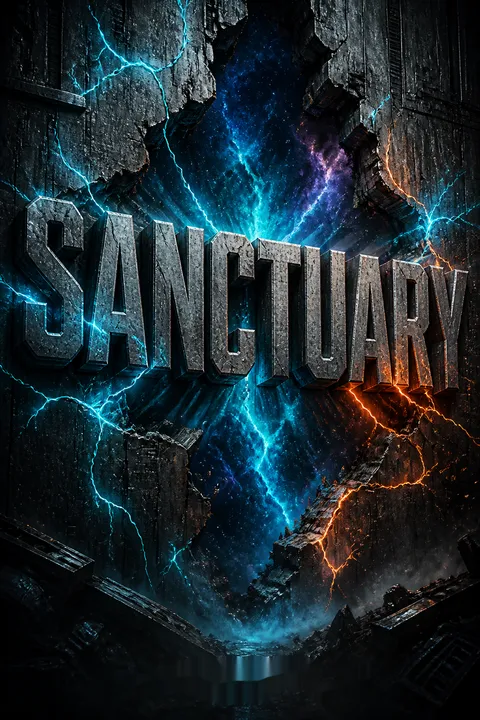
Sanctuary by Caryn Lix is a gripping young adult sci-fi novel set on a space prison for superpowered teens. Readers praise its intense action, creepy alien encounters, and well-developed characters. The story follows Kenzie, a guard who becomes a hostage during a prison break and must team up with inmates to survive. Many reviewers enjoyed the pacing, world-building, and diverse cast. While some found the romance rushed, most appreciated the book's blend of sci-fi, horror, and dystopian elements. The cliffhanger ending left readers eager for the sequel.
People Also Read



Characters
Kenzie Cord
The doubting young guardKenzie is a seventeen-year-old junior guard raised to regard Omnistellar Concepts as the source of safety, opportunity, and civilization. She is observant, technically capable, competitive, and eager to earn recognition from her strict mother. Her confidence in procedure coexists with a restless curiosity that leads her to test what official explanations leave out. Kenzie is also socially isolated, having sacrificed friendships and ordinary adolescence to training and company service. When circumstances force her to work closely with the prisoners, her judgments begin to depend on what she sees them do rather than what their files say. Her strength lies less in fearlessness than in repeatedly acting while afraid.
Cage
The protective escape leaderCage, whose family name is Hu, is Rune’s twin brother and the planner behind the prisoners’ escape attempt. Raised in gang-controlled Taipei, he learned early to read danger and make himself responsible for Rune’s safety. His easy humor and deliberate confidence help him command loyalty, but they also conceal how much he carries alone. Cage is resourceful, physically bold, and willing to make harsh decisions when he believes the group is at risk. His history gives him a deep distrust of corporate authority, while his attachment to his sister and friends makes him more than a self-interested rebel. He recognizes Kenzie’s intelligence even when their goals conflict.
Rune
The prison's living interfaceRune is Cage’s twin sister, a gifted computer infiltrator whose ability requires direct contact with technology. Her quiet manner and consideration for others contrast with her technical daring, and she often sees the consequences of a plan before her brother does. Cage’s protectiveness has shaped their relationship so thoroughly that Rune sometimes has difficulty separating care from control. She is loyal to the people around her, yet capable of challenging the choices they make in her name. Her response to captivity is not simply a desire to escape; she wants her abilities and decisions to belong to her again.
Angela Cord
The rule-bound commanderAngela is Kenzie’s mother and the disciplined commander of Sanctuary. She treats prison security as a moral responsibility because she believes the prisoners’ powers could endanger the wider population. At home, her affection is real but restrained, often expressed through expectations, training, and rare moments of praise. Angela’s identity is closely bound to Omnistellar’s rules, which have given her family status and stability. Her marriage to Colton has grown distant, though neither parent turns that distance into open hostility. To Kenzie, Angela embodies both protection and pressure, making her authority difficult to distinguish from love.
Colton Cord
The departing fatherColton is Kenzie’s father and Angela’s longtime colleague. Less ambitious and less rigid than his wife, he is warm with Kenzie and often softens the household’s professional atmosphere. His decision to seek a transfer reflects a marriage that has become more functional than intimate, though he tries not to make Kenzie feel responsible. Colton’s affection is visible in small gestures and promises to stay in touch. His departure leaves Kenzie caught between missing him and hoping he might change his mind.
Rita Hernandez
The sharp-tongued veteranRita is one of Sanctuary’s experienced guards and Kenzie’s closest source of informal camaraderie among the crew. She is physically confident, quick with a joke, and willing to challenge authority when she thinks a rule has become impractical. Her blunt advice helps Kenzie understand the emotional risks of getting close to prisoners, even as Rita herself remains capable of loyalty and concern. She treats Kenzie less like a commander’s daughter than like a younger teammate. Rita’s combination of irreverence and professionalism makes her a stabilizing presence in a crew built around strict procedure.
Alexei Danshov
The gentle giantAlexei is a physically imposing prisoner whose recorded power is pyrokinesis. His size and capacity for violence make a fearsome first impression, but he is attentive to the people he loves, especially Mia, and unexpectedly patient with children such as Anya. He often grounds the group when Cage’s plans become reckless, though he is not timid about defending his friends. Alexei’s tenderness does not erase his capacity for force; instead, the two traits coexist, challenging Kenzie’s habit of reading danger from appearance alone. His protectiveness is expressed through practical care rather than speeches.
Mia Browne
The invisible skepticMia is an Irish prisoner with the ability to turn invisible. She is sharp-tempered, physically daring, and suspicious of anyone who expects her to trust them. Her anger serves as armor, especially in a prison where privacy and control are scarce. Mia challenges Cage’s authority when she thinks he is treating people as pieces in a plan, but she is also a capable scout and a fierce defender of those she considers hers. Her bond with Alexei is intimate and complicated, marked by his concern and her resistance to being handled. Kenzie learns to take Mia seriously even when her methods are abrasive.
Matt
The loyal life-sensorMatt is a tall, considerate prisoner who can sense nearby human life. His ability is useful but imperfect, particularly when fear and emotional turmoil overwhelm his concentration. He is a steady friend to Cage and develops a gentle closeness with Rune, while also challenging plans that seem too dangerous. Matt is wary around weapons because violence has touched his family and community before. His caution is not cowardice; it is a hard-won awareness of how quickly a risky choice can become irreversible.
Tyler
The reluctant mind readerTyler is a frightened, younger prisoner whose telepathic ability lets him enter other people’s minds. He has learned to focus his power, but using it can feel invasive and exhausting, and he is often ashamed of what desperation makes him do. Tyler grew up in a mining family on Mars and was drawn into gambling by his mother’s use of his ability. He is frequently treated as the group’s least reliable member, yet he wants to help and is capable of acting despite fear. His sensitivity gives him a more complicated place in the group than his nervousness suggests.
Anya
The stranded childAnya is a ten-year-old prisoner who speaks Russian and can fly. She is frightened, observant, and reluctant to describe the disaster she witnessed in sector four. Her small size makes the prison’s treatment of anomalies impossible for Kenzie to regard as an abstract security measure. Anya’s family gave up corporate citizenship to avoid sending her into a mining colony, then struggled to support themselves after returning to Earth. Her circumstances reveal how a child’s attempt to help her family can be interpreted as a threat by powerful institutions.
Imani
The healing survivorImani is a prisoner from sector four whose ability allows her to heal quickly. She is close to her sister Aliya and has an instinct for endurance shaped by life in confinement. When Kenzie and Cage find her, Imani is frightened, thirsty, and unable to see clearly, but she remains determined to understand what happened. Her healing ability gives her a practical role among the injured, while her experience makes her a witness to the creatures’ transformation process. Imani’s faith and resilience provide a quiet counterweight to the group’s anger.
Aliya
Imani's missing sisterAliya is Imani’s sister and was beside her when the sector-four disaster began. Her close bond with Imani gives the younger woman a personal stake in understanding what happened to the prisoners. Aliya herself is mostly encountered through Imani’s memories and the search for her, which makes her absence emotionally important to the survivors.
Reed
The restorative healerReed is a prisoner whose ability lets him heal other people. Quiet and practical, he becomes valuable when the surviving group is injured and short of medical supplies. He is not one of the loudest voices in Cage’s circle, but his work helps turn the alien vessel from a temporary refuge into a place where people can recover. Reed represents a form of power directed toward care rather than intimidation.
Jonathan
Sanctuary's medical officerJonathan is Sanctuary’s medical officer and a comparatively inexperienced guard. He works alongside Colton and Noah and helps staff the station’s human medical services. His presence underscores how small the crew is relative to the danger they are meant to contain.
Noah
The youngest official guardNoah is Sanctuary’s youngest official guard and Kenzie’s friendly colleague at the command consoles. He brings levity to the crew but is still learning how to respond to Angela’s exacting command style. His exchange of shifts with Angela shows that professional loyalty can include looking after the people who lead.
Colonel Trace
Omnistellar's distant authorityColonel Trace represents Omnistellar’s senior command on Earth and reviews Sanctuary’s performance after the drill. Her concern about increased security around the probe anniversary hints that the company knows more than Kenzie does. She speaks for an institution whose decisions reach the station without making its leaders physically present.
Kristin
The wary cellmateKristin is Rune’s cellmate and one of the prisoners most openly skeptical of Cage’s leadership. She resents both his and Mia’s control of group decisions and worries that the escape plan is becoming more dangerous than the prison. Her challenges give voice to the fear and distrust shared by inmates who do not automatically follow the most charismatic person in the room.
Plot Devices
Inhibitor chips
Powers held under the skinOmnistellar implants chips in anomalous prisoners to block their abilities, with the station monitoring the devices as part of its security system. The chips are difficult to remove because they connect closely to the body, making self-surgery painful and dangerous. The prisoners’ escape depends on extracting them with improvised tools, and Kenzie’s own implant becomes evidence that the company concealed her ability from her. The device therefore operates as both a practical restraint and a symbol of institutional control over bodies considered dangerous.
Sanctuary's AI
A prison that locks itselfSanctuary’s AI runs the cameras, doors, alarms, feeding routines, communications, turrets, and emergency lockdown. The guards trust it as a near-perfect defense, while Rune’s ability lets her infiltrate and manipulate its systems. Kenzie’s visual coding skill gives her a different kind of access: she can find and repair loops the AI has failed to catch. The same automated systems that promise containment later become tools for trapping or expelling attackers, showing that technology is neither neutral nor infallible when people control its permissions.
The alien probes
A delayed biological signalThe probes arrived on Earth decades before the story and were blamed for the anomalous abilities that appeared in later generations. Their purpose remains obscure in public history, making their anniversary seem like an occasion for increased security rather than immediate danger. Kenzie’s language ability eventually allows her to read the alien vessel’s records and understand that the probes altered human DNA in preparation for a later harvest. This device links the novel’s historical mystery to the prison crisis and recasts the emergence of powers as part of an alien reproductive process.
Kenzie’s language ability
A key hidden in languageKenzie can acquire languages with extraordinary speed, though her implanted chip has concealed the ability throughout her life. Once the chip is removed, she begins recognizing speech she never studied. The power helps her understand Cage and the other prisoners, then becomes essential when she reads the alien vessel’s tactile symbols and interprets its records. The ability is not a weapon in the usual sense. It gives Kenzie access to other people’s meanings, making listening and interpretation the skills on which survival depends.
The alien vessel
A prison becomes a refugeThe alien ship first appears as a looming threat outside Sanctuary and later reveals itself as both a harvest vessel and a system the survivors can learn to operate. Its fluid doors, tactile consoles, stasis chambers, and communication signal create specific obstacles that Kenzie and the others must understand under pressure. The ship holds transformed captives, sleeping aliens, and the information that explains the probes. After Sanctuary is lost, the same vessel becomes the survivors’ uncertain home, turning an enemy structure into a place they can control together.
Download PDF
Download EPUB
.epub digital book format is ideal for reading ebooks on phones, tablets, and e-readers.








