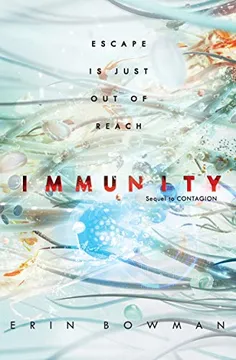


Plot Summary
Prologue
Seven levels beneath Paradox Technologies, a programmer5 has spent thirteen years building a device for the man8 who promised it would bring her home. Her only glimpse of her daughter1 comes through school records and official reports.
Then a news bulletin names the dead from an arctic disaster on Soter, including Althea Sadik.1 The programmer5 believes her daughter1 is gone, and her captor, Solomon Weet,8 uses that grief to keep her working. She has no proof the report is wrong, only a stubborn refusal to stop hoping.
The opening makes information itself feel like a prison. The programmer cannot reach her daughter, so she receives her life as a sequence of records, and a news report can turn that thin connection into apparent certainty of death. Solomon’s promise of eventual freedom depends on work he controls, making hope both her refuge and his instrument. The scene also plants the novel’s central question about agency: when someone’s choices are constrained by captivity, love, and incomplete evidence, persistence can look like strength, but it can also be the very mechanism that keeps them trapped.
The Paramount Prison
After surviving the contagion on Achlys, Thea Sadik1 and Coen Rivli2 are held aboard the UBS Paramount, a Union battleship commanded by Radical Lieutenant Christoph Burke.6 Thea1 dislocates her shoulder to crawl through her cell’s food hatch, frees Coen,2 and leads him toward a service ladder. They reach a chamber rigged with shock plates and sedative gas, where guards capture them again.
Burke6 makes clear that he wants to study the bacteria in their blood and reproduce their enhanced abilities for the Radical cause. When Coen2 and Thea1 are loaded into cryostasis for transport, their telepathic link still lets them share fears and plans. They promise each other a future because waiting together is better than being alone.
Thea’s escape begins as a practical calculation, not a heroic flourish: she accepts pain, uses the architecture against her captors, and gets Coen out with her. Yet the failed attempt teaches them that individual cleverness cannot defeat a system with surveillance, sedation, and military force. Their mental connection shifts the meaning of captivity. They cannot control their bodies, but they can offer one another companionship and a future to imagine. Burke, meanwhile, treats their survival as a technical resource, revealing how political ambition turns vulnerable people into tools.
Nova Wakes Elsewhere
While Thea1 and Coen2 sleep in cryostasis, pilot Nova Singh3 remains comatose in the Paramount’s medbay. Inside her mind, she repairs a failing space station alongside Dylan Lowe,10 the captain she lost on Achlys.10 Nova’s3 imagined station receives messages from Amber Farraday,4 a teenage medical intern who has been ordered to watch over her.
Amber4 uses Morse code blinks to learn Nova’s3 name and warn her that the teens taken from the Fringe are in danger. When the ship reaches its destination, the station’s self-destruct forces Nova3 into a drop pod, and she wakes in a medical bed on Kanna7, weak and disoriented. Amber4 helps her begin rehabilitation, and Nova3 slowly learns that her friends are imprisoned nearby.
Nova’s coma gives her an enclosed world where competence can survive even when her body cannot. Repairing the station lets her convert helplessness into tasks, while the imagined Dylan carries the habits and advice Nova needs to keep moving. Amber’s Morse-code exchange creates a fragile bridge between the real and imagined worlds, and the bridge works because Amber treats Nova as a person rather than an inert patient. Waking does not restore Nova’s independence; it exposes how much recovery requires accepting help, the very dependence she resists.
The Price of Testing
At Kanna7, Dr. Chesley Farraday7 tests Thea1 and Coen’s2 strength, senses, speed, and healing while Burke6 watches from behind glass. Coen2 fights Thea1 when Farraday7 offers contact with family, but the promised call becomes a photograph of Coen’s2 ill sister, Gina.11 During a later communication test, Burke6 proves the pair can exchange thoughts and cuts off Thea’s1 pinkie to force Coen2 to reveal a number.
Thea1 then exploits a sedative cycle, steals a guard’s mask, and escapes her cell. She reaches the station’s first level expecting a lobby, only to find docking bays opening onto space. Guards recapture her before she can reach a ship. Amber,4 meanwhile, finds her father’s7 human-experiment plans hidden behind animal trials.
The tests are designed to translate human capacities into military specifications, but the severed finger exposes the violence beneath that supposedly scientific procedure. Burke turns intimacy into leverage by threatening Gina, and Thea’s refusal to betray Coen makes loyalty costly rather than sentimental. Her brief escape also changes the geography of their problem: the captives are not merely underground in a facility, but isolated in orbit. Amber’s discovery of her father’s experiments gives the story an ethical witness inside the Radical project, though she has not yet chosen what that witness will cost her.
A Bond Beyond Hearing
After Thea’s1 recapture, Burke6 orders her held with Coen,2 then tests how long she can survive underwater. When she sinks unconscious, Coen2 breaks from his guards and performs CPR until she breathes again. The shock of nearly losing her deepens their connection: their thoughts, emotions, and memories begin flooding into each other without restraint.
They argue over the invasion of privacy, the motives behind their past choices, and whether their attraction is real or merely an effect of the contagion. Still, their closeness quiets the mental noise enough for them to sleep. Further tests show that their telepathy can reach across the station, giving them a way to plan even when guards separate them.
The bond is both an intimacy and an injury. It removes the privacy that usually allows people to shape what they reveal, forcing Thea and Coen to encounter each other’s fear, resentment, and desire without the usual protections. The drowning test turns that vulnerability into an instrument of control, but Coen’s rescue makes their attachment an action rather than an abstract feeling. Their central romantic uncertainty follows from the same mechanism: they cannot easily distinguish chosen love from a biological connection, so they must keep asking whether care remains meaningful when it is involuntary.
Four Flee Kanna7
Amber4 learns that Burke6 plans to test the contagion on young people, including her and Nova.3 When Burke’s6 team straps Nova3 down for an injection, Amber4 turns the needle on herself, accepting the infection rather than let the experiment proceed. She frees Nova3 and helps her reach a cargo hold, where Thea1 has escaped through a vent.
Coen,2 meanwhile, overpowers the crew of the shuttle carrying him away for a telepathy test. The four seize Halo, but Burke6 seals the hangar before Thea1 can board. She opens the doors from outside and stays behind as Nova3 flies Coen,2 Amber,4 and the stolen ship out under fire. Nova3 defeats the pursuing fighters, then cuts the tracking and communication systems so Burke6 cannot follow them.
Amber’s choice breaks the line between reluctant observer and participant. She cannot stop the institution from obtaining the contagion, but she can refuse to make Nova bear the danger alone. The escape succeeds only through distributed trust: Thea opens the hangar, Coen takes the shuttle, Amber gets Nova moving, and Nova flies. Yet the rescue costs Thea her freedom. Nova’s decision to leave her behind is rational and painful, echoing the crew’s earlier sacrifices on Achlys and deepening her fear that survival always means abandoning someone.
The Prisoner Becomes Patient Zero
Left on Kanna7, Thea1 is interrogated and kept apart from Coen,2 whose absence turns their mental silence into a new form of confinement. Hevetz owner Aldric Vasteneur9 visits and explains that the Radicals want to create an army of hosts, using implants to control their thoughts and actions. Thea1 becomes their blood source, while Dr. Farraday7 slowly reveals more of the plan during weekly draws.
On Bev, the imprisoned programmer Naree Sadik5 secures experimental AltCor fuel for Paradox’s unfinished drive. A worker shows her footage of his brother, Devon, apparently infected after exposure to AltCor. Naree5 secretly preserves the evidence but sends the shipment onward, believing the fuel may be the only way to reach her daughter.1
Thea’s isolation and Naree’s captivity mirror one another: both women are valuable to political projects precisely because others believe they can be possessed. Vasteneur’s implants make that logic literal, promising not simply to recruit young hosts but to suppress their ability to refuse. Naree’s decision to carry on after seeing Devon’s condition is morally compromised, but it is also driven by years of confinement and the hope of reaching her daughter. The parallel emphasizes how coercion narrows choices without erasing responsibility for what follows.
Paradox Opens Its Doors
Halo reaches Casey, but its military credentials prompt local security to fire on the ship. Nova,3 Coen,2 and Amber4 escape in a pod that crashes in the Inansi Desert, where Paradox Technologies takes them into custody. Coen2 recognizes Naree Sadik5 through Thea’s1 memories, and she learns that her daughter1 is alive and still mentally connected to him.
Naree5 recounts how Solomon Weet8 abducted her thirteen years earlier and separated her from Thea.1 Pressured by Naree,5 Weet8 reveals Paradox’s flux drive, which can move a ship instantly between mapped locations. The group shares what it knows about Burke’s6 plans and agrees that the drive may let them reach Thea1 and prevent a Radical takeover.
The reunion arrives through an unusual proxy: Coen carries Thea’s memories into the room where her mother stands. That makes the connection emotionally powerful and painfully incomplete, because Naree can speak to her daughter only through someone else. The scene also reframes Paradox. Its technology could resist Radical power, but the company’s founder has used secrecy and abduction to protect it. The story refuses a clean division between villainous state actors and righteous private inventors; both can claim noble ends while treating other people’s freedom as negotiable.
AltCor Powers the Jump
At Paradox, Naree5 demonstrates that AltCor can recharge the flux drive within seconds, and an off-planet test proves the ships can make repeated jumps. Nova3 and Amber4 grow closer as they train and confront the attraction neither has handled well. Amber4 then learns that Burke’s6 host implants depend on a remote logic unit, and she persuades Thea1 to ask Farraday7 to help disable it.
Thea1 offers Amber’s4 return as leverage, and Farraday7 agrees to act during the summit. Meanwhile, Naree5 hides the footage of Devon’s infection on Weet’s8 tablet, keeping evidence that AltCor itself may carry a dangerous contagion. Paradox and Casey prepare to reach Xenia before Burke6 can force the Union to surrender.
The technological breakthrough does not remove danger; it makes intervention possible while increasing the scale of the consequences. AltCor offers mobility, but Naree knows it may also be contaminated, and her silence preserves both the rescue plan and a future reckoning. Amber’s attempt to disable the logic unit is similarly grounded in relationship: she offers herself as the price Farraday might accept to act against Burke. The developing connection between Amber and Nova supplies a quieter counterpoint to Thea and Coen’s involuntary bond, suggesting that trust can also grow through choice, awkwardness, and repeated attention.
The Logic Unit Falls
On the day of the summit, Burke6 moves Thea1 from Kanna7 to the Paramount, where the remote logic unit is being carried. Farraday7 secretly approaches her, but Burke6 has discovered their arrangement. He kills Farraday7 and orders medics to implant Thea.1 She breaks her restraints, wounds one medic, and locks the other in the room with him, containing the first spread of infection only briefly.
Coen,2 Nova,3 and Amber4 use the flux drive to jump a fighter directly into Xenia’s docking bay. Coen2 reaches Thea,1 and together they turn off the logic unit. The freed hosts can think for themselves again, but the infected have already escaped confinement and reached the summit station.
Thea’s escape from the operating table is not a clean victory: she prevents the implant but infects a medic while trying to survive. The novel keeps bodily agency morally complicated, since a host’s blood can protect one person and endanger another. Farraday’s death also closes the possibility of gradual reform from within; his late choice cannot undo the years of cooperation that made the experiment possible. Turning off the logic unit restores the hosts’ minds, but timing matters. The act frees them at the precise moment when the larger outbreak has become impossible to contain quietly.
Xenia Breaks Apart
In the summit hall, Burke6 displays footage of Black Quarry and threatens the Union with his controlled teenage hosts. Once the logic unit goes dark, those hosts regain their thoughts; some help Amber4 move civilians while others flee.
Infected Paramount crew members attack the diplomats, and radiation from the risky jump begins damaging Xenia’s systems. As panicked passengers launch drop pods toward Eutheria, Nova3 receives orders to destroy them before the contagion reaches the planet.
She shoots them down, then escorts Thea,1 Coen,2 and the revived pilot Decklan Powell12 toward safety. Burke6 and Vasteneur9 confront them in cryostasis; infected crew overwhelm both men, and Thea1 shoots them. A missile strikes Powell’s12 shuttle during its descent, sending it crashing into Hearth City.
The climax offers no painless definition of rescue. Nova protects billions by destroying escape pods that may contain sick people, while Thea and Coen try to save the people still inside a failing station. Xenia’s radiation damage makes their attempt to help materially costly, turning an ambitious rescue into a second disaster. The newly freed hosts do not become a unified force on command; some act, others panic, and that uneven response feels more human than Burke’s fantasy of a perfectly obedient army. Responsibility is shared, but it is not evenly distributed.
Life After the Bond
After the crash, Thea1 gives Coen2 a transfusion when his injuries threaten his life. The bacteria strains in their blood neutralize each other, leaving Coen2 cured and immune; Thea’s1 blood may provide the basis for treatment. Galactic Disease Control quarantines survivors and investigates the disaster. Thea1 reunites with Naree5 in person, then visits Coen2 after surgery.
Their telepathic bond is gone, but they choose to try a relationship without it. Nova3 visits Amber,4 apologizes for pushing her away, and the two acknowledge what they mean to each other. Naree5 gives investigators the concealed footage showing AltCor’s danger and implicates Weet,8 who is arrested. The story ends with Thea1 and Coen2 leaving together to visit Gina.11
The resolution does not restore the lost bond, and that absence is essential. Thea and Coen must decide whether their intimacy can survive without involuntary access to each other’s minds; choosing to try makes their relationship more ordinary and more ethically meaningful. The cure turns the contagion from an irreversible weapon into a problem that can be studied, though it cannot undo the dead or repair every political inequity. Naree’s evidence against Weet completes her movement from captive instrument to witness with agency. The final visit to Gina redirects survival toward care for the living.
Analysis
Immunity makes control tangible through bodies. Burke’s6 program does not merely recruit young people; it infects them, tests their limits, and plans to install machinery that can overrule their choices. The hosts’ abilities promise power, but the same blood that heals a wound can transmit a catastrophe. That double function prevents the contagion from becoming a simple superpower. Every act of violence carries a biological consequence, and every act of restraint must be weighed against the chance that hesitation will expose someone else.
The novel also tests intimacy as a form of knowledge. Thea1 and Coen’s2 bond gives them extraordinary access to each other, yet access is not the same as understanding. Their thoughts arrive without consent, creating closeness while threatening the private space in which identity develops. Their final choice to pursue one another after the bond breaks is therefore more than a romantic resolution. It asks whether love is meaningful when it is no longer guaranteed by biology, and answers that commitment can begin again through imperfect, ordinary communication.
Nova3 and Amber4 offer a contrasting model of connection. Their relationship grows through care, conflict, embarrassment, and decisions that could have been avoided. Nova3 must learn that receiving help does not erase competence, while Amber4 must move beyond responsible observation and risk taking a position. Both relationships challenge the fantasy that strength means self-sufficiency.
Politically, the story refuses to let good intentions excuse coercion. Burke6 invokes independence, Weet8 invokes protection, and Naree5 invokes scientific progress, yet each project can endanger people who never consented to its costs. The cure and the failed summit do not restore a just society; they only make further choices possible. The book’s most durable claim is that survival is not enough if the survivors inherit the same logic of domination that put them in danger.
Review Summary
Immunity receives mixed but generally positive reviews, averaging 3.77 stars. Most readers enjoyed the satisfying conclusion and strong character development, particularly the relationships between Thea, Coen, Nova, and newcomer Amber. However, the most common criticism is that the sequel lacks the horror atmosphere of its predecessor, Contagion, leaning more into straight science fiction and political intrigue. Many found it less scary and atmospheric, though still fast-paced and unputdownable. Representation of PTSD and LGBTQ+ characters was widely praised.
People Also Read


Characters
Althea Sadik
The tactical survivorThea is a sharp, observant teenager whose instinct is to turn fear into a plan. Her small frame and analytical habits help her find physical openings others miss, while her willingness to endure pain makes her both resourceful and vulnerable to exploitation. She has spent much of her life relying on herself, so depending on Coen2 is frightening even when it offers comfort. Her search for her missing mother5 gives that self-reliance a personal direction: she wants evidence, not comforting guesses. Thea’s strength lies in assessing the next useful action, though the pressure to stay composed can make her treat her own needs as expendable.
Coen Rivli
The protective fighterCoen is a scavenger and practiced fighter whose physical skill becomes extraordinary after he hosts the contagion. He is shaped by his sister Gina’s11 illness and his family’s financial strain, which make home feel less like a place to return to than a responsibility he must reach in time. His protective instincts are sincere, but they can harden into control when he fears losing someone. Telepathic contact with Thea1 forces him to confront thoughts he would normally hide, while his memories of isolation make him especially sensitive to separation. Coen’s gentleness and capacity for violence exist side by side, each emerging under different kinds of threat.
Nova Singh
The determined pilotNova is a gifted pilot whose dream of serving in the military was blocked by a degenerative eye condition. She is skilled, competitive, and fiercely protective of her independence, partly because asking for help feels like admitting that she is less capable than she wants to be. Her coma leaves her with fragmented memories of Achlys and the losses she carries from the mission, including her cousin Sullivan14 and Captain Dylan Lowe10. Nova meets danger with action, but her confidence is repeatedly tested by decisions no training simulation could prepare her for. She values competence, yet gradually learns that trust and cooperation are not forms of surrender.
Amber Farraday
The principled medicAmber is a seventeen-year-old medical intern drawn into her father’s7 secret mission before she understands its purpose. Curious and compassionate, she notices contradictions others dismiss, especially when patients are treated as cargo rather than people. Her uncertainty about Radical independence reflects a genuine effort to think politically instead of inheriting her father’s7 convictions. Amber can be hesitant when a choice risks conflict, but her empathy becomes active when she sees what the experiments will do to Nova3 and the captives. Her relationship with Nova3 challenges her habit of expressing care through responsibility alone, asking her to be direct about what she wants.
Naree Sadik
The imprisoned programmerNaree is an accomplished programmer held by Paradox Technologies and kept working on a device whose political stakes she does not control. She is intelligent, strategic, and capable of suppressing her anger when a longer plan might restore her freedom. Years of captivity have taught her how to read Solomon Weet’s8 vanity and how to use what he wants. At the same time, her choices are not untouched by fear or ambition: she can knowingly accept risk when she believes it serves a larger goal. Naree’s defining conflict is between the work that has consumed her life and the personal connections that give that work meaning.
Christoph Burke
The Radical commanderBurke is the Paramount’s acting captain and a committed Radical who believes Trios independence justifies extraordinary measures. He is controlled in manner and adept at turning threats into procedure, which makes his cruelty appear administrative until someone resists. Burke views Thea1 and Coen2 as the beginnings of a military advantage, not as young people with families and futures. His confidence rests on surveillance, weapons, and the assumption that others will obey when the cost of refusal becomes personal. He represents a political vision in which security means control and loyalty is valuable only when it can be enforced.
Dr. Chesley Farraday
The compromised scientistAmber’s father7 is a physician and researcher whose Radical loyalties lead him to help study the hosts. He values scientific advancement and believes the work could strengthen the Trios, but his confidence in procedure makes him overlook what the experiments demand of their subjects. His relationship with Amber4 is marked by authority and condescension; he wants her obedience more readily than her judgment. Concern for his daughter4 complicates his allegiance, revealing a man who can recognize danger without immediately choosing to oppose the people creating it.
Solomon Weet
The elusive inventorWeet leads Paradox Technologies and protects a revolutionary drive from Radical seizure. Charismatic and self-assured, he knows how to present invention as service to a better society, but he also treats loyalty and personal history as resources he can spend. His complicated relationship with Naree5 exposes the gap between his ideals and his conduct. Weet is not simply a Radical adversary: his secrecy and technological ambition can create dangers of their own, even when his immediate enemy is more openly violent.
Aldric Vasteneur
The Hevetz power brokerVasteneur owns Hevetz Industries and supports the Radical project to turn compatible teenagers into controllable soldiers. Polished, patient, and self-possessed, he frames coercion as strategic necessity and treats people as components in a political design. His calm makes him unsettling: he does not need anger to justify the risks he accepts for others. Vasteneur’s belief in leverage over consent places corporate power alongside military power as a force capable of shaping people’s bodies and futures.
Dylan Lowe
Nova’s lost captainDylan is the captain of Nova’s3 crew and a decisive presence in the pilot’s3 memories. She is often blunt, difficult to read, and more protective than she lets on. During Nova’s3 coma, Dylan appears as a guide who helps her stay purposeful, but the figure also reflects Nova’s3 own knowledge and resilience. Their connection is complicated by the choices made on Achlys and by the grief Nova3 has not fully processed. Dylan’s influence persists as a measure of both Nova’s3 affection and her unresolved guilt.
Gina Rivli
Coen’s ill sisterGina is Coen’s2 younger sister, a talented artist whose illness has placed severe pressure on her family. Her octopus design becomes a tattoo Coen2 carries as a tribute to her resilience and creativity. Though she is mostly encountered through photographs and memory, Gina gives Coen’s2 choices a concrete purpose beyond survival. His fear of being unable to return to her shapes his protectiveness and his impatience with plans that delay homecoming.
Decklan Powell
The captured pilotPowell is a Hevetz pilot intercepted while trying to travel home and held in isolation before being placed in cryostasis. Amber4 monitors his confinement, while the others know little about his condition or what he knows. His piloting skill becomes important when the group needs someone familiar with military craft. Powell’s presence also shows that Thea1 and Coen2 are not the only people treated as secret cargo by Burke’s6 operation.
Dr. Lisbeth Tarlow
The earlier host researcherTarlow is a physician and researcher who encountered the contagion decades before the main events. Her experience established that some people can host it without suffering the destructive symptoms seen in others. Though she is absent from the present action, her research and the evidence left behind help explain what Thea1 and Coen2 have become. Tarlow represents an earlier attempt to understand the bacteria before political actors reshape that knowledge into a weapon.
Sullivan Hooper
Nova’s cousinSullivan is Nova’s3 cousin and a member of the crew caught in the Black Quarry disaster. His fate weighs on Nova3 because she had to confront him after the contagion changed him. His family and his request that Nova3 carry a message home make the memory especially painful.
Plot Devices
Psychrobacter achli
Power with a deadly costThe bacteria from Achlys kills or drives most infected people into violent madness, but certain young hosts can coexist with it. In those hosts, it enhances strength, healing, senses, and the ability to communicate mentally. Burke6 and Hevetz9 want to reproduce those abilities as military assets, while the risk of transmission makes every injury dangerous. The differing strains in Thea1 and Coen’s2 blood eventually become central to the possibility of a cure.
The host bond
Thoughts without privacyThe bacteria allows hosts to communicate telepathically, first as a controllable exchange and later, between Thea1 and Coen2, as an intense connection that carries memories and emotions as well as thoughts. Their bond extends across great distances, making it valuable to their escape plans and to Burke’s6 military ambitions. It also complicates their romance because they cannot be certain which feelings are freely chosen and which are intensified by the connection.
Cerebral logic unit
Remote control for hostsBurke’s6 new hosts receive cerebral implants linked to a centralized logic unit. The implants can restrict impulses and deliver shocks, while the unit provides remote instructions. This system converts biological abilities into an obedient military force. Thea1 learns that disabling the unit could restore the hosts’ ability to choose, making it a crucial target during the Xenia summit.
The flux drive
Instant travel across spaceParadox’s experimental drive folds space so a ship can move instantly to a mapped destination. The technology offers a way to outmaneuver the Radicals and reach Xenia without relying on ordinary routes. Its first tests reveal that the drive’s recharge cycle drains its power source and that a jump into a confined station may release dangerous radiation. The drive enables the rescue plan but also contributes to Xenia’s structural failure.
AltCor
Fuel that carries riskAltCor is an unusual fuel discovered on Bev, powerful enough to recharge Paradox’s flux drive rapidly. Naree5 secures it after seeing evidence that a worker exposed to it developed symptoms resembling infection. The fuel makes repeated jumps possible, but its apparent contamination goes undisclosed during preparations for the summit. It therefore functions as both the solution to Paradox’s immediate technological problem and a warning that a tool used to contain danger may carry another danger of its own.
Download PDF
Download EPUB
.epub digital book format is ideal for reading ebooks on phones, tablets, and e-readers.








